
A white tongue in a newborn is often just milk residue, and that usually isn’t a problem. Your baby’s mouth doesn’t need heavy cleaning, only a gentle wipe when it seems needed.
The goal is simple, safe care, so you can clean your newborn’s tongue without upsetting their mouth or skin. It also helps you spot the difference between normal residue and signs that need more attention, like oral thrush, which may need medical treatment.
If you want a calm, practical routine for how to clean your newborn’s tongue safely, keep reading for the steps and the signs that mean it’s time to call your pediatrician.
Why a newborn’s tongue can look white
A white tongue in a newborn usually has a simple explanation. Most of the time, it’s leftover milk sitting on the surface after a feed, especially in the first months when babies make less saliva. That coating often looks light, even, and harmless, and it may fade on its own between feedings.
The main job here is to tell the difference between milk residue and oral thrush. They can look similar at first glance, but the details matter. Where the white patches appear, whether they wipe away, and whether your baby seems uncomfortable can point you in the right direction.
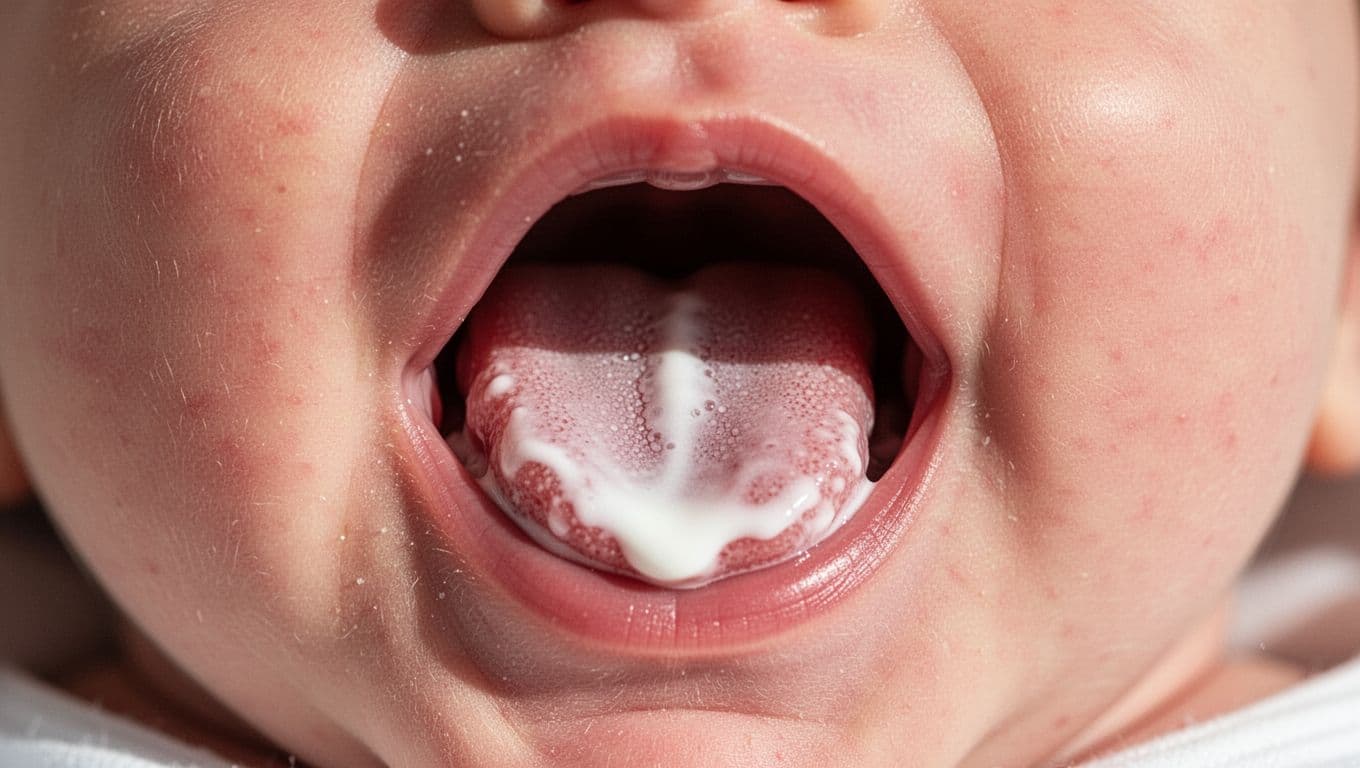
Milk residue usually wipes away easily
A thin white film on the tongue often comes from breast milk or formula. It usually shows up right after feeding and may be most obvious when your baby has just finished eating. In many babies, it looks like a light coating rather than thick patches.
This kind of residue usually stays on the tongue only and often wipes away with a soft, damp cloth. If it fades after a feed or clears as your baby makes more saliva, that is a good sign. A white tongue by itself is common and usually harmless.
If the coating is only on the tongue and comes off easily, milk residue is the most likely cause.
For a simple home care guide, see safe newborn tongue cleaning steps.
Signs the white patches could be thrush
Thrush looks different from a milk coating. The patches are often thicker, more patchy, and may stick to the mouth instead of wiping away. You may see it on the tongue, but it can also spread to the cheeks, gums, inner lips, or roof of the mouth.
Other signs can help too. Your baby may seem fussy during feeds, cry when sucking, or eat less than usual. A diaper rash can happen at the same time, and the mouth may look sore or red underneath the white patches. If you notice those signs, it’s time to ask your pediatrician about thrush, which may need treatment. You can also read how baby oral thrush is treated for more context.
For more medical detail, MedlinePlus explains newborn thrush symptoms clearly and in plain language.
What you need before cleaning your baby’s tongue
Before you start, keep the setup simple. Newborn mouths need gentle care, so you only need a few safe items and a light touch. The goal is to lift away milk residue without irritating soft tissue.
A quick prep makes the process easier for both of you. It also helps you avoid products that are too harsh for a tiny mouth.
The safest tools to use at home
For most babies, clean gauze, a soft washcloth, or a silicone finger brush made for newborns is enough. These tools are soft, bristle-free, and gentle on delicate gums and tongue tissue.
A clean cloth or gauze wrapped around your finger gives you the most control. A silicone finger brush can also work well if it is made for newborns and feels soft, not scratchy. Whatever you choose, use it gently and avoid any harsh pressure.
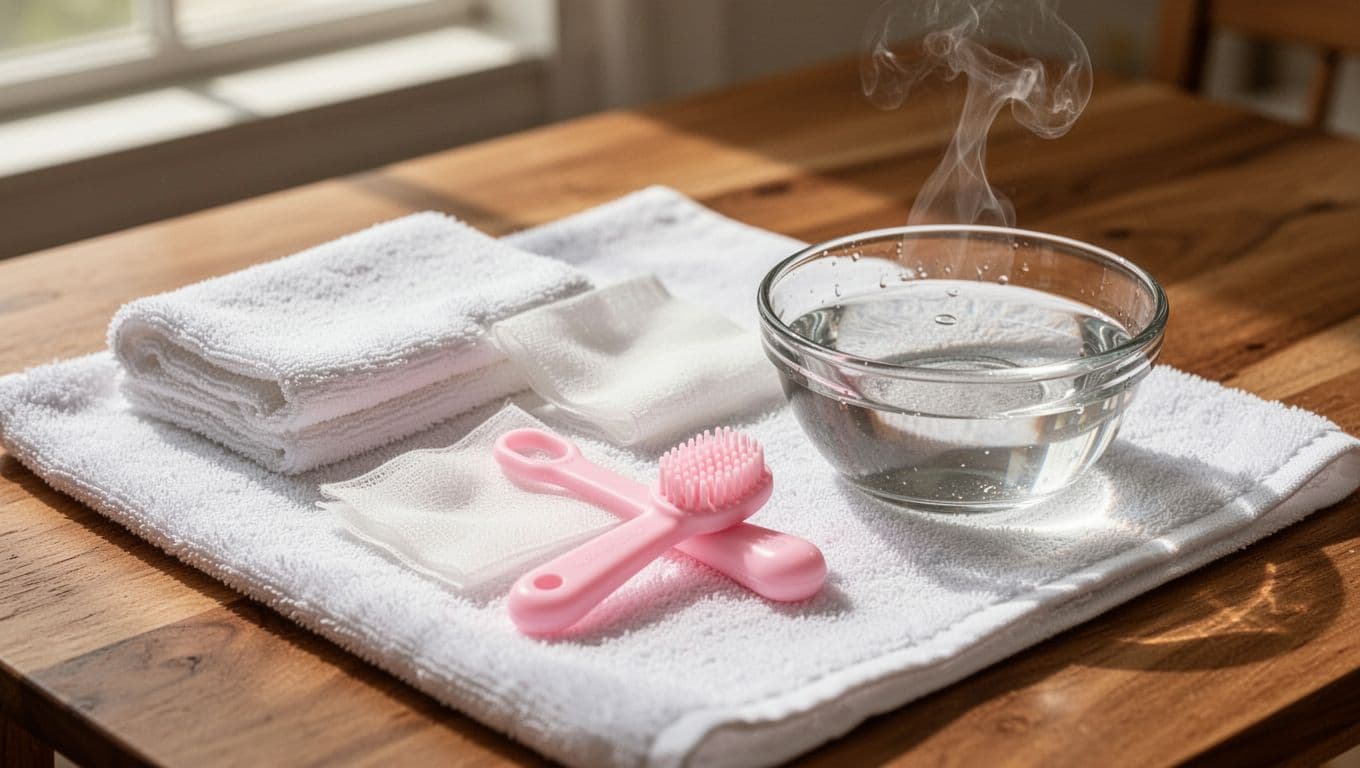
A few simple checks matter before you begin:
- Make sure the tool is clean before each use.
- Use only one finger and light pressure.
- Skip stiff toothbrushes and scrubbing tools.
- Stop if your baby gets upset, then try again later.
Soft tools are easier to control, and they lower the chance of scratching a newborn’s mouth.
For more detail on gentle mouth care, Cleveland Clinic’s newborn tongue cleaning guide explains the basics in plain language.
Why warm water is enough
Plain warm water is the safest choice for a newborn’s mouth. It helps loosen milk residue without adding anything that could sting or dry out the tissue.
You do not need soap, toothpaste, or mouthwash. Those products can irritate a baby’s mouth, and chemical rinses are far too strong for newborns. Warm water does the job with less risk, which is exactly what you want at this stage.
Keep the water warm, not hot, and dampen the cloth or gauze lightly. That small detail makes the cleaning feel gentle instead of harsh.
Step-by-step way to clean your newborn’s tongue safely
A gentle tongue wipe is usually enough for a newborn. Keep the routine short, calm, and simple, and stop if your baby starts fussing. The goal is to remove milk residue, not to scrub the mouth clean.

Wash your hands and get your baby comfortable
Start with clean hands. Wash well with soap and water, because your finger is going into a tiny mouth.
Then settle your baby in a cozy position. You can cradle your baby in your lap or hold them in your arm with the head supported. A calm time works best, such as after a feed or after a bath, when your baby is more likely to stay relaxed.
Keep your voice soft and your movements slow. A peaceful start makes the rest easier for both of you.
Gently wipe the tongue with light pressure
Wrap a clean piece of gauze or a soft cloth around your finger, then dampen it with warm water. It should feel moist, not dripping.
Open your baby’s mouth gently and lightly wipe the tongue from front to back. Use soft pressure and keep the motion brief. One or two gentle passes are usually enough.
Do not scrape or press hard. A newborn’s tongue is delicate, and rough cleaning can irritate it fast. If your baby turns away or gets upset, stop and try again later.
Clean the gums and inside of the cheeks if needed
If you still see milk residue, you can give the gums and inside of the cheeks a quick gentle wipe too. There is no need to scrub, and many babies do not need this every time.
A few light passes are enough to freshen the mouth. If your baby is teething later on, gentle gum cleaning after feeding for teething infants can help keep the mouth comfortable.
Keep the whole routine short. A calm, quick wipe is better than a long cleaning session. If the white coating does not come off, or your baby seems sore, pause and check with your pediatrician.
How often to clean a newborn’s tongue
For most newborns, tongue cleaning does not need to happen after every feed. A light wipe once a day is often enough, and some babies only need it a few times a week if the milk film is mild and their mouth looks healthy.
The key is to treat this like gentle upkeep, not a strict chore. Newborn mouths are soft and sensitive, so too much wiping can do more harm than good. If the tongue looks fine, your baby feeds well, and there is no discomfort, a calm wait-and-see approach is often the right one.
When once a day is enough
A once-daily wipe is usually plenty when you notice a light milk coating after feeding. That small amount of residue often clears with saliva on its own, so you do not need to keep cleaning it all day.
This works well for babies who mostly have a thin white film and no other symptoms. A soft cloth or gauze with warm water is enough, and a quick pass is better than a long scrub.
A simple routine can look like this:
- Clean once daily if the coating is light and easy to remove.
- Wipe after a feed if milk residue is more noticeable at that time.
- Skip extra cleaning if the tongue already looks normal.
More wiping does not mean cleaner. It can leave the mouth red, dry, or irritated.
If you want a quick medical reference on when cleaning is or is not needed, Cleveland Clinic’s baby tongue advice matches this low-touch approach.
When to skip cleaning and just watch
Sometimes the best choice is to do nothing at all. If your baby’s tongue looks normal, feeds are going well, and your newborn seems comfortable, there is usually no reason to wipe the mouth just because you noticed a little whiteness.
This matters because not every white tongue is a problem. A thin milk coating can come and go after feeds, and many babies do just fine without any cleaning that day.
You can usually pause and watch when:
- The coating is light and uneven.
- It wipes away easily on its own or after feeding.
- Your baby is eating well and acting comfortable.
- There is no redness, fussiness, or sore-looking skin in the mouth.
That simple rule keeps care gentle and realistic. You are not trying to keep the tongue spotless, you are just checking that it looks healthy. If the white patches stay put, spread, or come with feeding pain, that is the time to ask the pediatrician.
Common mistakes that can make things worse
A newborn tongue is delicate, so the biggest risks come from trying too hard. Gentle care is usually enough, and the safest routine is the one that leaves the mouth clean without causing stress or soreness.
If you keep the cleaning short and simple, you lower the chance of irritation. You also make it easier to spot when the white coating is something more than milk residue.

Scrubbing too hard or going too far back
Rough wiping can irritate a newborn’s tongue fast. It may leave the mouth red, sore, or more sensitive during feeds, and it can also trigger gagging if you go too far back.
Short, gentle strokes are enough. You only need to clean the front and visible areas, without forcing the cloth toward the back of the mouth. If your baby pulls away, that is a sign to stop, not push harder.
A light touch works better than pressure here. Think of it as wiping dust off glass, not scrubbing a pan.
Using toothpaste, honey, or home mixtures
Newborns should not use toothpaste, mouthwash, honey, baking soda, or DIY mixtures. These products are not made for infant mouths, and some can be unsafe.
Honey is especially risky for babies under 1 year because of the botulism risk. Toothpaste and mouthwash can also irritate delicate tissue, while homemade blends can sting or leave behind residue. A clean cloth and warm water are still the safest choice.
For more on why honey is off-limits for infants, see the CDC’s honey and botulism guidance. If the white patches seem to fit thrush, MedlinePlus on newborn thrush explains what to watch for.
Forcing the mouth open when the baby resists
Never hold a newborn down or force the mouth open. That can turn a simple mouth wipe into a stressful struggle, and it may make your baby more resistant next time.
If your baby is upset, stop and try again later. A calm moment after feeding, or after the baby settles, usually works better than pushing through crying. Gentle care should feel brief and easy, not like a fight.
When a white tongue needs a pediatrician’s help
A white tongue is often harmless in a newborn, but some signs point to more than milk residue. The big clue is persistence. If the coating stays put, spreads, or comes with feeding changes, it deserves a closer look.
That matters because oral thrush usually needs treatment from a pediatrician. Catching it early can keep your baby more comfortable and help you avoid a back-and-forth cycle if you are breastfeeding.
Signs the coating is not going away
Milk residue usually wipes away or fades after feeds. Thrush is different. The white patches may stick to the tongue, look thicker, or return soon after you clean them.
Watch for patches that do not wipe off, spots that bleed when touched, or a coating that keeps coming back. If the white areas spread to the cheeks, gums, inner lips, or roof of the mouth, that is another reason to call the doctor.
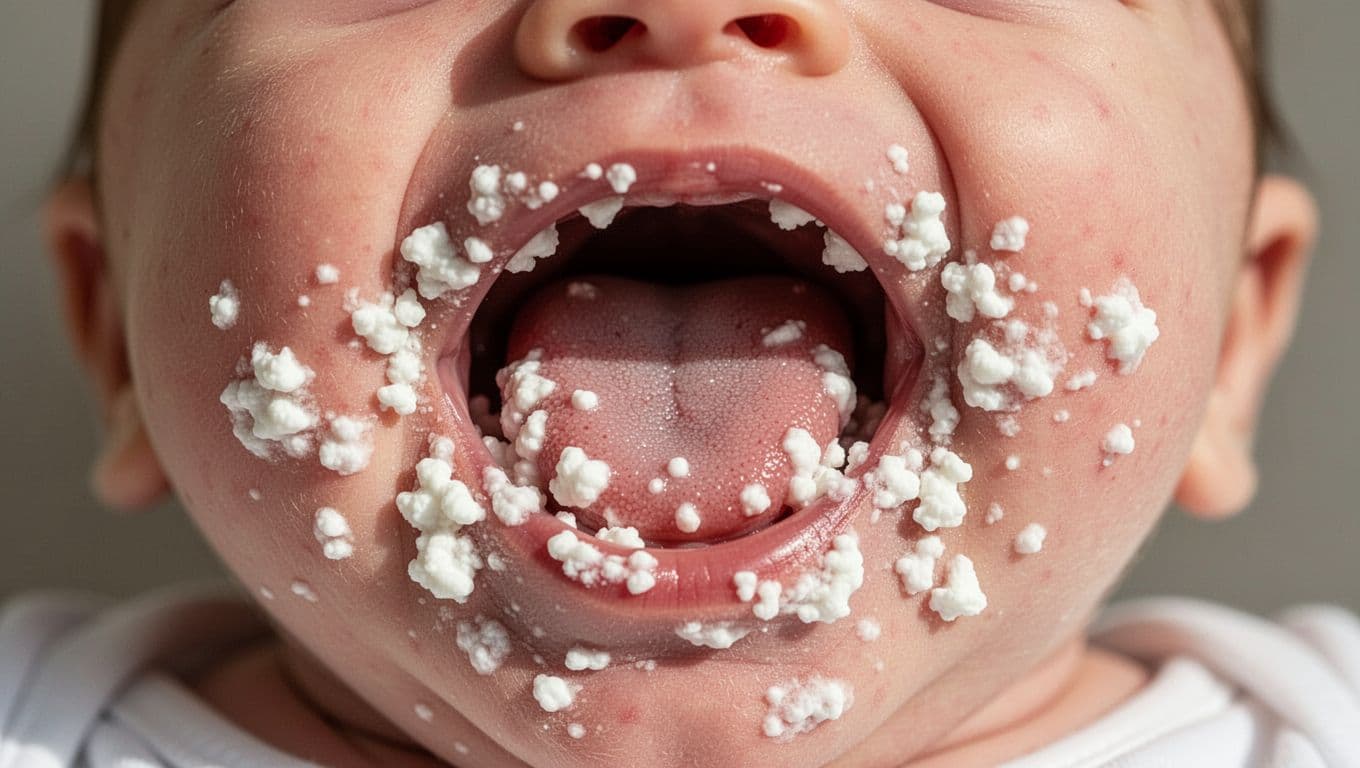
White patches that stay in place are more concerning than a light film on the tongue.
If you want a quick comparison, this newborn thrush guide shows how thrush usually looks in babies.
Symptoms that go beyond the tongue
A white tongue matters more when it comes with other signs. Poor feeding, fussiness, mouth pain, cracked corners of the mouth, or a diaper rash can all point toward thrush instead of simple milk residue.
You may also notice your baby crying during feeds, pulling away from the breast or bottle, or eating less than usual. That can happen because the mouth feels sore. In breastfeeding babies, nipple pain on your end can also fit the picture, especially if the infection keeps passing between you and your baby. Breastfeeding problems that can contribute to thrush can be part of that cycle.
A diaper rash alongside mouth patches is another clue. When these signs show up together, it is time to call the pediatrician rather than keep wiping and waiting. As UF Health notes on thrush in newborns, white sores that bleed when wiped and feeding trouble are common reasons to seek care.
A pediatrician can tell you whether the white tongue is harmless residue or a yeast infection that needs medicine. When in doubt, it is safer to ask than to keep scrubbing a sore mouth.
Conclusion
A newborn’s tongue usually needs only the gentlest care. In most cases, warm water and a soft cloth are enough, and a white coating is often just milk residue that clears on its own.
The safest routine is simple, short, and calm. If the coating does not wipe away, spreads, or comes with fussiness or feeding trouble, trust your instincts and call your pediatrician.
Save pin for later

- How to Help a Child Deal With Anxiety at Home - September 12, 2026
- How to Prepare Your Child for the First Day of School - September 12, 2026
- Age-Appropriate Chores for Kids by Age Group - September 12, 2026