
A baby’s white tongue often looks alarming, but it’s usually harmless and tied to leftover milk. Still, a white coating can sometimes point to oral thrush or another issue that needs attention.
If you’re trying to figure out what you’re seeing, you’re not alone. The difference between milk residue and thrush is often subtle, and it can be hard to know when a pediatrician should step in. Keep reading for the 10 most common reasons, plus the signs that mean it’s time to call your child’s doctor
The most common harmless reason is milk or formula buildup
A white tongue in a newborn often looks worrying, but the most common cause is simple milk residue. Babies spend so much time feeding, and their mouths are still learning how to clear leftover milk between feeds.

In many babies, this coating shows up after breast milk or formula sits on the tongue for a while. A newborn also makes less saliva than an older baby, so the mouth does not rinse itself as well yet. That can leave a light white film behind, almost like a thin dusting after a meal.
A white tongue by itself is often normal if your baby is feeding well and seems comfortable.
Why milk residue happens so often in newborns
Newborns feed often, sometimes every few hours or even more. With that much feeding, it’s easy for a little milk to linger on the tongue after each session.
Saliva also plays a big part. New babies do not produce much of it yet, so milk does not wash away as quickly. Their mouths are still getting used to life outside the womb, so the natural cleaning motion is not fully developed either.
That is why the white film can look more noticeable right after a feeding. It may fade on its own, or it may stay until the next gentle wipe or feeding break. For a fuller look at normal mouth changes in babies, HealthyChildren’s thrush symptom guide explains why a white tongue alone is often harmless.
How to tell milk residue apart from something more serious
The easiest at-home check is a gentle wipe. Use a soft, damp cloth and lightly swipe the tongue. Milk residue usually wipes off easily, while more concerning white patches often stay put.
A few simple clues can help:
- Milk residue usually stays on the tongue only.
- Milk residue often looks like a smooth, even coating.
- Milk residue does not usually bother your baby.
- Thrush or another issue may show white patches on the cheeks, gums, lips, or roof of the mouth.
- Thrush or another issue may not wipe away cleanly.
If your baby is feeding normally, acting happy, and only has a white tongue, that points more toward milk buildup. If the patch seems thicker, spreads beyond the tongue, or leaves the mouth looking raw after wiping, ask your pediatrician about it. This guide on oral thrush can also help you compare the signs more closely.
Oral thrush is the main cause parents should watch for
Oral thrush is one of the biggest reasons a baby’s white tongue deserves a closer look. It happens when Candida yeast grows too much in the mouth, and it can spread beyond the tongue fast.
A white tongue alone can still be harmless, but thrush usually leaves a more stubborn look. It often forms patchy spots, affects feeding, and may also show up with diaper rash or nipple pain in breastfeeding parents. If the white coating looks thick or keeps coming back, thrush belongs near the top of your list.
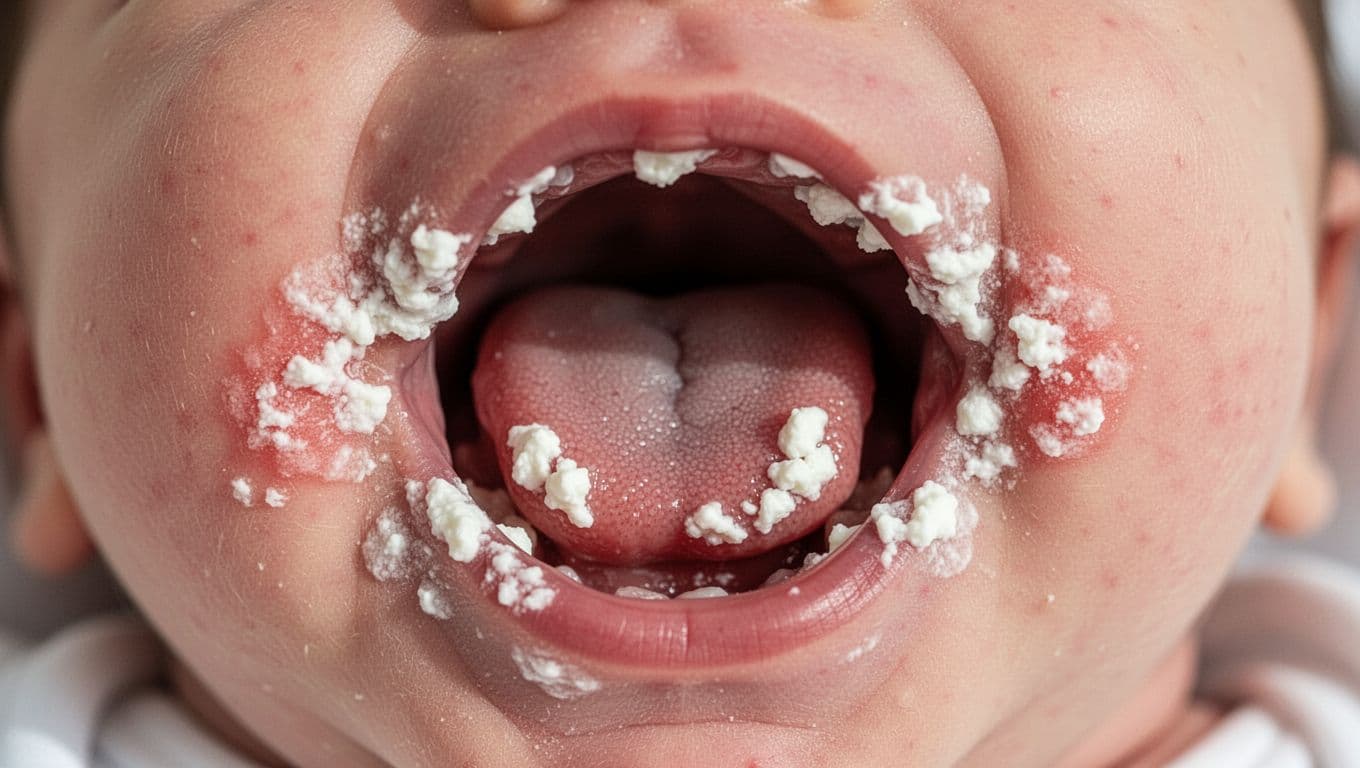
What thrush looks like in a baby’s mouth
Thrush usually looks like white patches, not just a light film. The spots may sit on the tongue, inner cheeks, gums, lips, or roof of the mouth, and they often look a little like cottage cheese.
A gentle wipe can help you tell the difference. Milk residue usually comes off easily, but thrush often stays stuck and may leave behind red, irritated skin underneath. That raw look matters, because it suggests the tissue is sore, not just coated.
Watch for signs like these:
- White patches that spread beyond the tongue
- Spots that do not wipe away cleanly
- Redness or irritation under the patch
- Fussiness during feeds
- A baby who pulls off the breast or bottle early
The NHS notes on oral thrush in babies explain that the patches often sit on more than one part of the mouth, which is a key clue parents can use at home.
Why babies are more likely to get thrush
Babies are easier targets for thrush because their immune systems are still developing. That makes it simpler for yeast to grow and settle in the mouth.
Antibiotics can raise the risk too. They lower the helpful bacteria that normally keep yeast in check, so Candida gets more room to spread. Newborns and young infants also spend a lot of time sucking, which can irritate the mouth and give yeast another opening.
You may notice a baby with thrush becomes extra fussy at feeds. Sucking and swallowing can hurt, so feeding may turn into a struggle. The infection can also appear alongside diaper rash, which can make the whole picture easier to miss if you only look at the mouth.
How thrush can pass between baby and parent
Thrush can move between baby and parent during birth or breastfeeding. If a parent has a vaginal yeast infection around delivery, or untreated nipple yeast while nursing, the yeast can pass back and forth.
That cycle matters because it can keep the infection alive. A baby may improve, then get exposed again during the next feed. Breastfeeding habits that may raise thrush risk can also play a part when soreness or latch issues lead to cracked skin.
If you notice white patches in your baby and sore nipples on your end, both should be checked. Treating only one side often lets the problem linger.
Feeding habits and mouth anatomy can make white tongue more likely
Sometimes a baby’s white tongue has less to do with infection and more to do with how milk moves through the mouth. If the tongue can’t sweep well, a thin coating can stay behind after feeds and look much whiter than it really is.
This is common in babies who are still learning to feed, but certain mouth shapes and feeding patterns make it even more likely. The good news is that these causes often point to a cleanup issue, not a serious illness.
Tongue tie can keep the tongue from moving normally
A tongue tie happens when the frenulum, the small band under the tongue, is too tight or too short. That tight tissue can keep the tongue from lifting, stretching, and moving side to side the way it should.
When the tongue can’t move freely, milk may stay pooled on the tongue after a feed. Instead of being brushed away by normal tongue motion, it sits there like a light film. This can make a baby’s tongue look white even when the rest of the mouth looks fine.
You may also notice feeding problems at the same time, such as:
- A shallow latch
- Clicking during feeds
- Fussiness at the breast or bottle
- Long feeds with little satisfaction
If you want a broader look at feeding habits that can affect mouth comfort, these common baby feeding mistakes offer helpful context. Tongue tie doesn’t always cause visible white patches, but it can make milk residue harder to clear.
A tongue that can’t move well often leaves milk behind, so the white coating shows up after feeds.
A high palate can trap milk on the tongue
A high or arched palate changes the shape of the roof of the mouth. That small difference can make it harder for the tongue to press milk upward and sweep it away after feeding.
In a baby with a high palate, milk may collect in spots instead of spreading and clearing normally. The result is a white coating that can linger on the tongue, especially after bottle or breast feeds. It may look stubborn, yet it still comes from milk sitting in the mouth.
This can happen along with a weak latch or frequent sucking breaks. Some babies also seem gassy or frustrated because they are working harder to move milk around. Milk tongue and feeding issues are often linked to this kind of mouth shape, along with tongue tie or a shallow latch.
Parents often notice that the tongue looks white soon after feeding, then clears a bit later. That pattern points more toward residue than thrush. Still, if the coating sticks to the cheeks or gums too, it deserves a closer look.
Pacifiers and bottles can contribute if they are not cleaned well
Frequent pacifier use and bottle feeding can leave extra residue in the mouth, especially when items are not cleaned well between uses. That gives yeast and milk buildup more chances to stick around.
Poor sterilization can also let Candida hang on to nipples, pacifiers, and bottle parts. Then the mouth keeps getting exposed again. That can blur the line between simple milk residue and oral thrush, which is why white tongue sometimes keeps coming back.
A pacifier can also change how often the tongue moves. Less movement means less natural cleaning inside the mouth. If you use one often, it helps to watch for a coating that appears after long sucking periods or after repeated feeds with the same nipple.
A helpful rule is to notice the pattern, not just the color. If the white layer shows up after feeds and wipes away easily, it usually points to residue. If it sticks, spreads, or comes with soreness, a doctor should check it.
When poor oral hygiene or recent antibiotics are part of the problem
A baby’s white tongue is often harmless milk residue, but mouth care and recent medicines can change the picture. If milk sits on the tongue too long, or if antibiotics upset the balance of bacteria in the mouth, yeast can get a better chance to grow.
That doesn’t mean every white tongue needs treatment. It does mean the pattern matters. A coating that lingers, spreads, or comes with fussiness deserves a closer look.
Why gentle mouth cleaning matters
Leftover milk can collect on the tongue after frequent feeds and leave a white film behind. In most babies, this is simple buildup, especially when the mouth isn’t gently wiped after feeding or the tongue isn’t moving much yet.
A soft, age-appropriate cleaning routine can help clear that residue before it dries into a thicker coat. A damp cloth or gauze after feeds is often enough, and it can also help keep gums cleaner as your baby gets used to mouth care.
Simple care matters most when feeds happen often. If you also want practical tips for keeping the mouth clean during early growth, gentle mouth care during teething is a useful place to start.
How antibiotics can lead to yeast overgrowth
Antibiotics can help with bacterial infections, but they can also reduce the helpful bacteria that keep yeast in check. When that balance shifts, Candida may grow more easily and cause oral thrush.
This can happen if your baby recently took antibiotics. It can also happen if a breastfeeding parent used antibiotics, because the change in bacteria can affect both sides of the feeding cycle. According to KidsHealth’s parent guide on thrush, antibiotics are a common reason yeast gets a chance to spread.
Signs that point more toward thrush include:
- White patches that stick to the mouth
- Spots on the cheeks, gums, or roof of the mouth
- Fussiness during feeds
- Red or sore skin after wiping
A recent antibiotic course does not mean thrush is certain. It does mean you should watch more closely, especially if the white coating does not wipe away easily or keeps returning.
How to know when a white tongue needs a doctor’s visit
A white tongue is often harmless, but the details matter. If the coating looks light, stays only on the tongue, and your baby feels fine, it usually points to milk residue. When the patch is stubborn, sore, or spreading, it’s time to call the pediatrician.

Signs it is probably just milk
Milk residue usually has a few calming clues. Your baby acts normal, feeds comfortably, and the white coating stays only on the tongue. It also wipes off easily with a soft, damp cloth, leaving healthy pink tissue behind.
That pattern matters. A baby with milk tongue often looks content before, during, and after feeds. There is no crying at the breast or bottle, no extra fussiness, and no red mouth underneath the coating.
A quick wipe can help separate milk from a bigger problem. If the film comes off without leaving irritation, that is reassuring. According to HealthyChildren’s thrush symptom guide, a white tongue by itself is usually not thrush.
Signs it could be thrush or another issue
White patches that stay put are a different story. If the coating does not wipe off, looks patchy instead of smooth, or leaves red, raw, or bleeding tissue underneath, call the doctor. Thrush also tends to show up on the cheeks, lips, gums, or roof of the mouth, not just the tongue.
Feeding changes are another big clue. A baby may pull away during feeds, cry while eating, or seem less interested in nursing or bottles. Mouth pain can make even a short feeding feel hard.
Look for the broader picture too:
- White patches spreading beyond the tongue
- Fussiness or pain during feeds
- Poor feeding or less milk intake
- Fever or unusual irritability
- Diaper rash that shows up with mouth symptoms
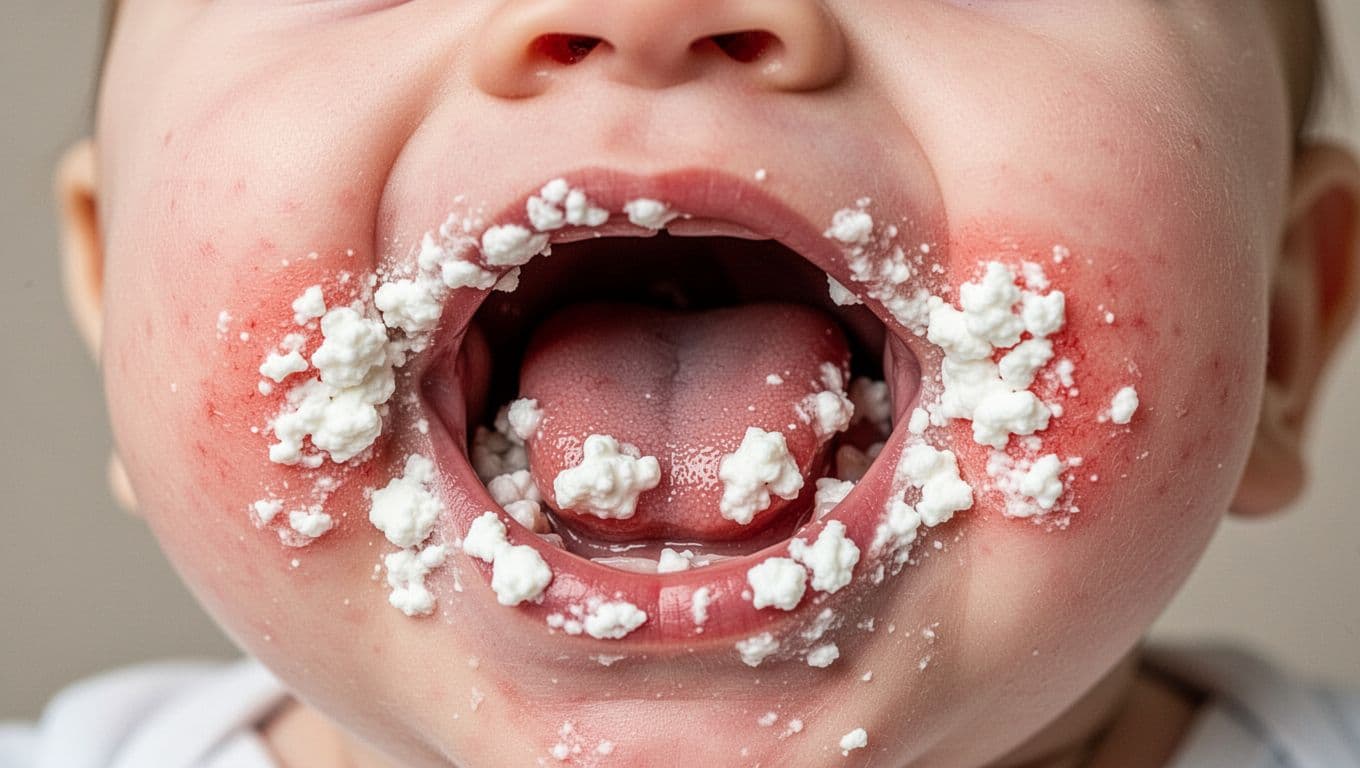
If you see these signs, the next step is a medical check, not guesswork. Thrush usually needs treatment from a pediatrician, and NHS guidance on oral thrush in babies notes that patches often affect more than one part of the mouth.
What parents can do before the appointment
Before you call or head in, take a close look at the patches. Note where they are, whether they wipe off, and whether your baby seems bothered. Small details help the pediatrician spot the pattern fast.
A photo can also be useful, especially if the white coating changes during the day. If feeding has changed, jot down when it started and what it looks like now. That gives the doctor a clearer timeline without you needing to remember every detail on the spot.
Keep the focus on observation, not treatment. If the coating is stubborn, your baby is feeding poorly, or you notice diaper rash or fever along with mouth changes, make the appointment soon.
Conclusion
A baby’s white tongue is usually just milk residue, especially when your baby feeds well and the coating wipes off easily. That simple white film is common, and it often fades as saliva and mouth control improve.
The main thing to watch for is thrush. If the white patches do not wipe away, spread beyond the tongue, or leave your baby uncomfortable during feeds, call your pediatrician.
Most of the time, this is a small feeding-related issue, not a big problem. A calm look at the pattern can help you know when to relax and when to get it checked.
Save pin for later

- How to Help a Child Deal With Anxiety at Home - September 12, 2026
- How to Prepare Your Child for the First Day of School - September 12, 2026
- Age-Appropriate Chores for Kids by Age Group - September 12, 2026