

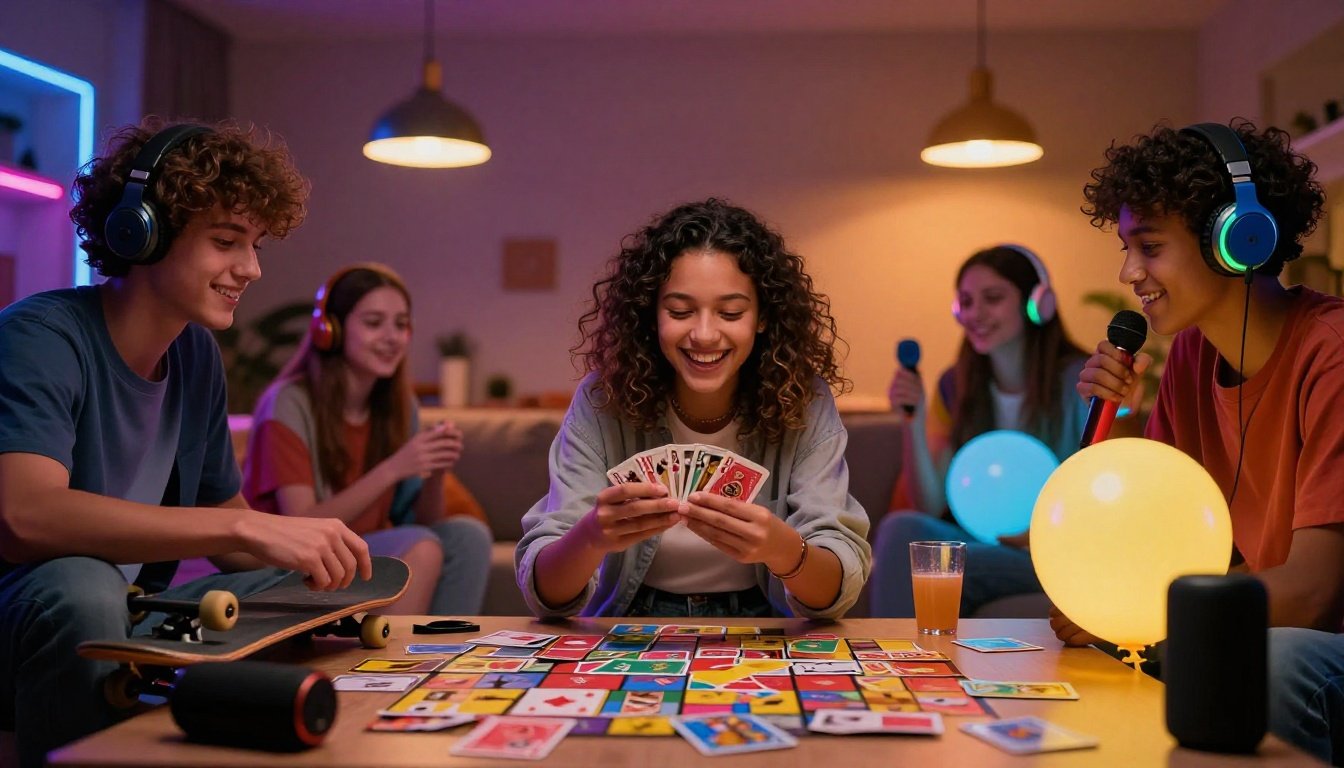
Planning a teen birthday, sleepover, holiday gathering, or casual hangout can get tricky when you need activities that feel fun instead of forced. The best party games for teenagers are easy to start, social without putting anyone on the spot, and flexible enough for different personalities and energy levels.
This list includes bluffing games, music challenges, active activities, creative contests, and no-prep conversation games, so you can build a lineup that suits your group. Each idea includes practical details about group size, supplies, setup, and simple ways to help shy guests join in comfortably. You may also find these creative birthday party activities helpful when planning the rest of the celebration.
Keep participation optional, especially for physical challenges, performance games, or personal questions. For a quick visual look at group game ideas, watch 7 Fun Party Game Ideas That Are Great for Groups, then start with the first teen-friendly favorite.
15 Epic Party Games Teenagers Will Love
The best party games for teenagers match the group’s mood. These ideas are grouped by energy and style, so you can quickly choose an active challenge, a creative contest, or a calmer conversation game. Keep participation optional, offer team roles, and choose age-appropriate prompts that won’t embarrass anyone.
For more ideas that fit birthdays and sleepovers, see these fun games for teen birthdays.
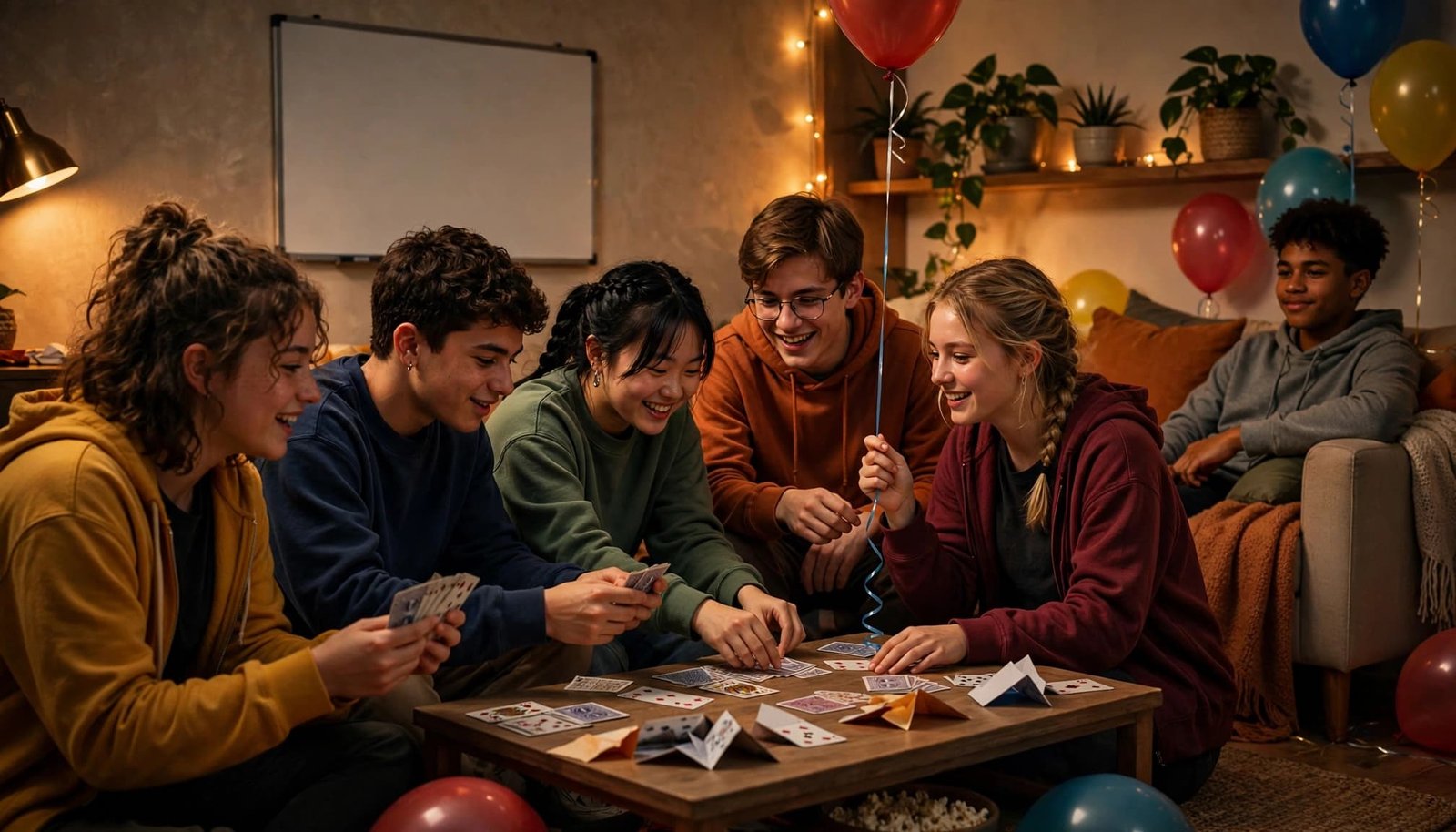
Mafia or Werewolf, Sardines, and Charades bring instant energy
Mafia or Werewolf works best for 6 to 15 players and takes about 10 minutes to set up. You need role cards, a moderator, and chairs in a circle. Players receive secret roles, discuss clues during short rounds, and vote privately or by secret ballot to eliminate suspected players. Eliminated guests can become observers, scorekeepers, or moderator helpers, so nobody sits out for long. Add a variation where each team gets one special role, such as a detective or healer.
Sardines is reverse hide-and-seek for 5 to 12 players. Set clear boundaries, remove unsafe hiding spots, and allow about five minutes for setup. One player hides, while everyone else searches; each person who finds the hiding place squeezes in silently until the last seeker discovers the group. For bad weather, use only approved rooms and leave doors open. A timer creates a simple variation for younger or less athletic guests.
Charades suits 6 to 20 players, needs almost no setup, and works with slips of paper or a notes app. Use categories such as movies, songs, school life, pets, and internet trends. Teams earn points for correct guesses, while pairs can act together if performing alone feels uncomfortable. A seated, gesture-only version helps guests with limited mobility or stage fright join comfortably.
Would You Rather, Truth or Dare, and Twenty Questions keep everyone talking
Would You Rather is ideal for 4 or more players, takes less than five minutes to prepare, and needs only paper if guests want to write prompts. Try harmless choices such as, “Would you rather have unlimited pizza or unlimited ice cream?” Players can create their own questions, then vote by moving to opposite sides of the room. Shy guests can submit anonymous prompts.
Truth or Dare works with 4 to 12 players and requires no supplies. Set firm rules before starting: no dangerous dares, unwanted contact, pressure to share private information, or recording without permission. Every player may pass. Keep dares silly and safe, such as speaking in a funny accent or doing a dramatic celebrity impression. Team dares offer an easy variation.
Twenty Questions suits 3 to 10 players and starts instantly. One person secretly chooses a person, place, object, movie, or fictional character, while everyone else asks questions with yes-or-no answers. Split guests into teams when the group is large, or let shy players write questions on cards. A themed round about school, favorite films, or travel keeps the guessing focused.
Name That Tune, karaoke, and a TikTok dance battle turn up the fun
Name That Tune works for 6 to 20 players and needs a playlist plus a speaker. Play short clips, hum melodies, use instrumental openings, or read a lyric without singing it. Teams earn one point for the title and another for the artist. A decade theme or soundtrack round gives the game a fresh variation.
Karaoke fits 4 or more players and takes about 10 minutes to set up with a screen, microphone, or lyric app. Offer age-appropriate songs, duets, and group numbers instead of forcing solo performances. Supportive applause should replace harsh judging. Guests can also be backup singers, playlist managers, or audience scorekeepers.
A TikTok dance battle suits 6 to 16 players and needs a speaker, open floor, and familiar dances or original moves. Keep teams friendly rather than competitive, and offer roles such as DJ, choreographer, judge, or scorekeeper. Recording should always be optional, with clear permission before anyone films or posts. Since privacy expectations differ, parents can review teen party safety guidance before the event.
Scavenger hunts, Minute-to-Win-It challenges, and Pictionary spark friendly competition
A team scavenger hunt works for 6 to 20 players and takes 15 to 30 minutes to prepare. Use indoor clues, photo prompts, or a supervised outdoor route. Set boundaries, a time limit, buddy systems, and a rule against entering restricted areas. A color hunt or neighborhood nature list creates an easy variation without requiring guests to photograph people.
Minute-to-Win-It challenges suit 6 to 16 players and need household supplies such as cups, balloons, cotton balls, paper, and plastic spoons. Players might stack cups, move cotton balls with a spoon, keep a balloon in the air, or build the tallest paper tower. Reward creativity as well as speed, so mixed abilities stay involved. Teams can nominate different players for each round.
Pictionary works for 4 to 16 players and needs paper, markers, a whiteboard, or a drawing app. Choose categories that teens know, including music, games, memes, movies, and school life. Team play reduces pressure, while a no-timer round gives careful artists more room. Guests can also describe the drawing’s category without revealing the answer.
Twister, Spoons, Murder Mystery, and one last guessing game
Twister is best for 4 to 8 players, takes five minutes to set up, and needs a mat or colored paper circles. Clear floor space first, and offer a no-contact alternative for anyone who dislikes close physical play. A seated hand-only round creates a gentler variation.
Spoons suits 5 to 10 players and needs a standard deck plus one fewer spoon than players. Deal cards while players pass them, trying to collect four of a kind before grabbing a spoon. The scramble needs calm supervision and a sturdy table. Use tokens or paper cups for a quieter variation.
A Murder Mystery fits 6 to 15 players and takes 15 minutes to prepare with a store-bought kit or homemade story. Give quiet guests roles such as detective, narrator, note-taker, or witness. A shorter mystery with team detectives keeps the plot manageable.
Never Have I Ever works for 5 or more players and needs no supplies. Use light prompts about food, hobbies, movies, travel, or school, rather than embarrassing secrets. Players can raise fingers, move between sides of the room, or answer anonymously on paper. Keep every prompt optional so conversation stays fun and respectful.
How to choose the best teen party games for your group
The best teen party games fit the people, place, and pace of the celebration. Before choosing activities, consider the guest count, available floor space, noise level, supplies, and supervision you can provide.
A game that works beautifully for six friends may feel chaotic with 20 guests. Likewise, a high-energy activity can fall flat during a late-night sleepover when everyone wants to relax. Plan two high-energy games, two calmer backups, and one no-prep option so you can adjust without making the party feel overplanned.
Match the game to the room, schedule, and guest count
Small groups have more room for conversation and strategy. Would You Rather, Twenty Questions, Name That Tune, Pictionary, and Mafia work well when four to 10 teens are gathered indoors. They need little space, and most guests can participate from a couch, chair, or spot around the table.
For larger groups, choose activities that divide guests into teams. Scavenger hunts, charades, Minute-to-Win-It rotations, and team music games keep 12 or more teenagers involved without requiring everyone to speak at once. Team play also helps new or quieter guests connect because they have a shared goal instead of facing the whole room alone.
The venue should guide your choices. An indoor party with limited floor space suits drawing games, guessing rounds, music quizzes, and social deduction. An outdoor party gives you more room for a scavenger hunt, relay challenge, or active team game, but set clear boundaries before anyone starts. For a sleepover, place louder games earlier and save Twenty Questions, Name That Tune, or a gentle guessing game for later.
Mixed-age gatherings need flexible rules. Pair older and younger guests, use simpler prompts, and avoid games that depend on speed alone. If you are planning food, decorations, and activities together, these birthday party planning checklists can help you organize the schedule and supplies.
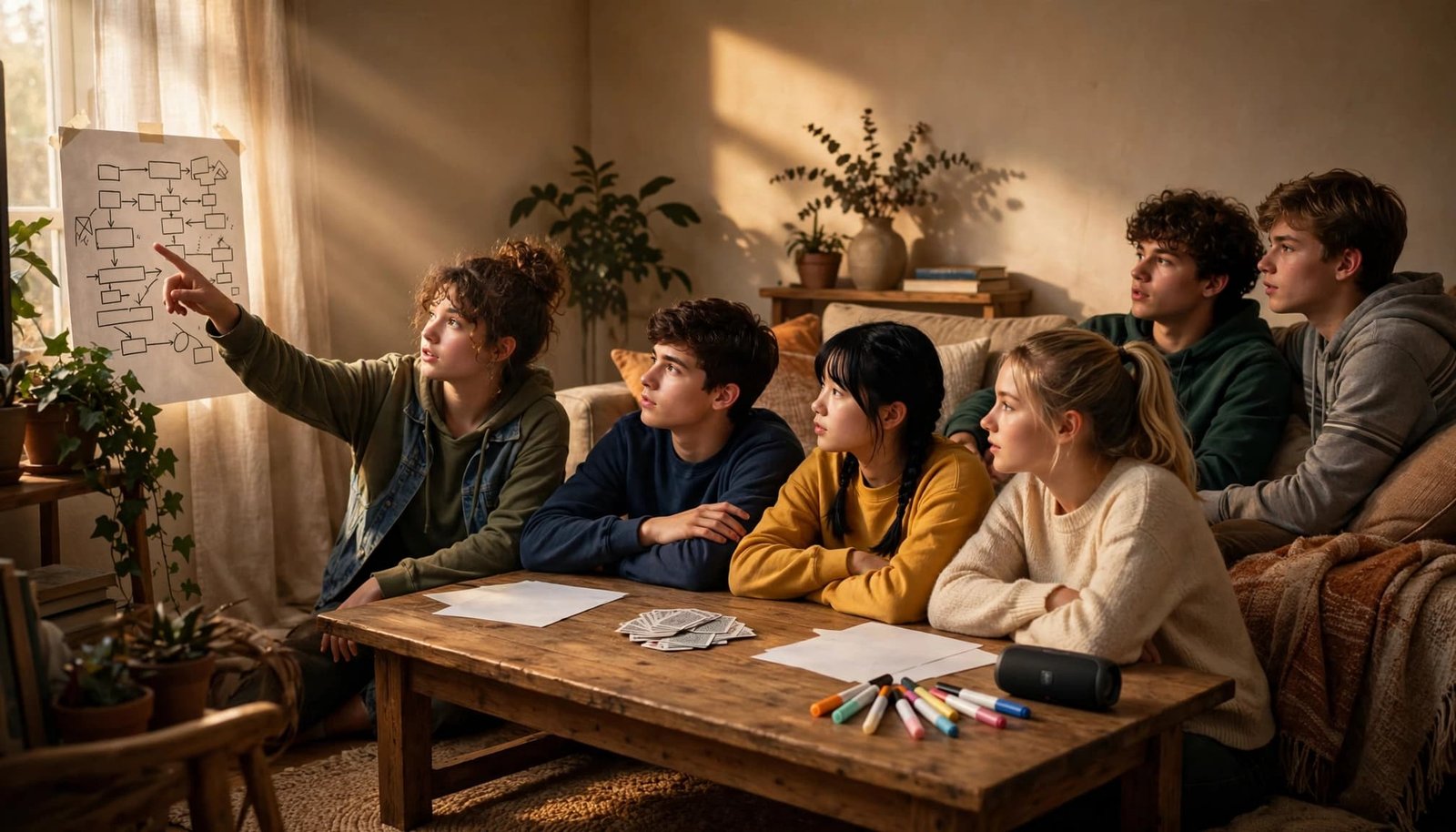
A simple party flow prevents awkward gaps:
- Start with an easy icebreaker, such as Would You Rather, for 10 to 15 minutes.
- Move into a main group game, such as Mafia, Pictionary, or a team music challenge, for 20 to 30 minutes.
- Pause for food, cake, and conversation.
- Add an active option, such as a scavenger hunt or Minute-to-Win-It rotation, for 30 to 45 minutes.
- Close with a relaxed game that guests can join or leave without disrupting the group.
Use this quick guide when you are deciding between several options.
| Party detail | Games that usually fit |
|---|---|
| Four to eight guests | Twenty Questions, Pictionary, Mafia, Name That Tune |
| Nine or more guests | Charades, team music games, scavenger hunts, rotations |
| Limited supplies | Would You Rather, Truth or Dare, Twenty Questions |
| Low noise needed | Drawing, guessing, card-based games, a mystery |
| Safe open space | Scavenger hunts, dance games, physical challenges |
| Close supervision available | Mystery games, outdoor hunts, timed challenges |
The main goal is variety. Give the group a clear beginning, a change of pace, and a calm way to finish.
Make competitive games welcoming for every teenager
Competition feels better when every guest has a useful role. Someone who dislikes performing can read clues, control the playlist, keep score, judge creativity, or draw the prompts. A teenager with limited mobility can join a seated team, direct a challenge, or choose answers while teammates handle movement.
Communication styles also vary. Some guests enjoy fast debates, while others need time to think before speaking. Offer written answers, visual prompts, partner play, and team discussion. Acting in pairs can make charades less intimidating, while anonymous submissions can help shy guests join conversation games.
Ask about access needs before the party, rather than guessing what someone can or cannot do. A clear path, comfortable seating, good lighting, lower-noise space, and easy bathroom access can make the gathering more comfortable. The inclusive youth activity guidelines also recommend flexible participation, accessible spaces, and quiet areas for young people who need a break.
Avoid forced participation, surprise filming, public embarrassment, and elimination that leaves someone watching for half an hour. Every guest should be able to pass without explaining why. If a game includes personal questions, keep prompts light and let players skip any round.
Short rounds make competition easier to enjoy. A single loss should not define the evening, so rotate players and reset the score often. You can also award bonus points for creativity, teamwork, kindness, or a clever answer instead of rewarding speed alone.
Cooperative scoring works especially well with mixed personalities. Set a group goal, such as earning 20 points before the timer ends, or let teams trade points for helpful hints. Guests still get the excitement of a challenge, but nobody becomes the night’s permanent loser.
Simple party setup makes every game run more smoothly
A little preparation keeps the party moving without making it feel overplanned. Before guests arrive, choose a few flexible games, place supplies where everyone can reach them, and keep a backup activity ready. Clear expectations also help teens relax because they know what is allowed, what is optional, and how to take a break.
Set friendly rules before the first round begins
Keep the safety talk short and conversational. You might say, “We are here to have fun, so stay within the marked outdoor area, use approved hiding spots, and skip anything that involves climbing, dangerous stunts, or unwanted contact. Speak respectfully, give people personal space, and ask before taking or sharing photos or videos.”
That last point matters, especially when phones are nearby. The American Academy of Pediatrics recommends treating image-sharing as a chance to teach consent and consider privacy, embarrassment, recognizable school details, and location information. A simple rule such as “Ask before you film, and ask again before you post” protects everyone. You can also review photo and video privacy guidance before the party.
Tell guests that passing is always allowed. Anyone can switch roles, sit out a round, or take a quiet break without explaining the decision. This matters during Truth or Dare, where nobody should face pressure to reveal private information, touch someone, complete a risky dare, or accept a question that feels uncomfortable. Keep dares silly and harmless, and let players suggest a replacement.
Physical games need a quick space check. For Twister or dance games, move furniture, secure loose rugs, check the flooring, and leave a clear path around the playing area. Offer seated or low-movement versions for guests who prefer them. With Spoons, use a sturdy table, remind players to keep hands controlled, and expect hand collisions during the grab. Stop the round if anyone feels hurt or crowded.
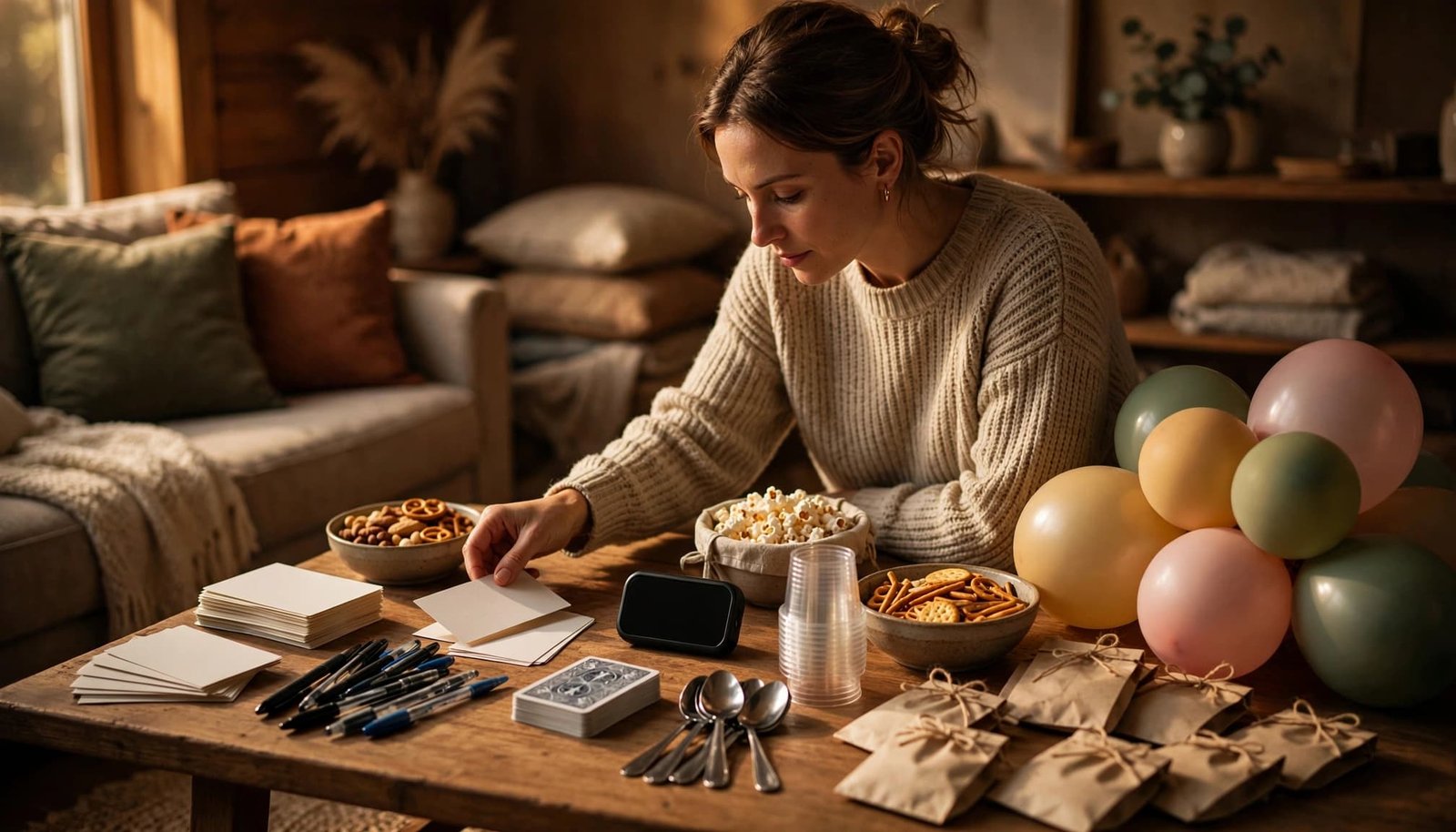
A short checklist can prevent most setup problems:
- Index cards, pens, paper, and markers cover prompts, scores, and drawing games.
- A speaker, phone, charger, and timer support music rounds and timed challenges.
- A standard deck of cards, spoons, plastic cups, and balloons cover several games.
- Snacks, water, napkins, and small prizes keep guests comfortable between rounds.
Prepare prompt cards before the doorbell rings. Write one idea per card, sort them by game, and remove anything embarrassing, unsafe, or too personal. Build a playlist with clean, familiar songs and download a few options in case the Wi-Fi fails. Assign one host to explain rules and one scorekeeper to track points, although those roles can rotate.
Explain each game in under a minute, then demonstrate one sample round. Guests understand faster when they can see how a card is drawn, how a turn ends, or how points are awarded. Also, stop while the game still feels fun. Ending on a laugh leaves people ready for the next activity.
Keep the momentum going when the room gets quiet
A quiet room does not always mean the party is failing. Teens may be eating, checking in with friends, or deciding whether they feel comfortable joining. Give them a moment, then make one small change instead of insisting that everyone continue.
Try one of these quick resets:
- Add a funny prompt, such as acting like a dramatic weather reporter or inventing a ridiculous product.
- Cut the group into smaller teams so guests speak with fewer people at once.
- Set a five-minute timer and give everyone one clear goal.
- Invite a new host to explain the next round or choose the prompts.
- Change a performance game into a team challenge, with guests writing, planning, judging, or managing music instead of performing.
For example, if karaoke feels too exposed, switch to Name That Tune. If a dance battle makes guests self-conscious, ask teams to create a short routine for a fictional movie scene. The activity stays playful, but the spotlight spreads across the group.
Food and music can reset the mood better than another rule explanation. Pause for snacks, lower the volume, refill water, or move outside if the weather allows. Have a low-battery plan, such as printed prompts and a phone-free guessing game. If rain cancels outdoor activities, use Charades, Pictionary, or card games indoors. A smaller turnout can become a partner game, while fading interest is a good reason to switch activities altogether.
Keep a few inexpensive prizes nearby, such as candy, stickers, funny certificates, or first choice of dessert. Most importantly, don’t measure the party by constant participation. A successful gathering can include one teen leading a game, another chatting over snacks, and someone else taking a quiet break before joining the next round.
Conclusion
The best party games for teenagers give the group choices. Mix a lively activity with a creative challenge, a music or guessing game, and a calmer conversation option. Before the party, choose one or two games that match your space, guest list, noise level, and available supplies. Then keep a few no-prep backups ready in case the mood changes or a planned activity falls flat. Conversation starters can also help fill quiet moments without putting anyone on the spot, such as these conversation-starting questions for teens.
Most importantly, make the rules simple and participation optional. A teen who doesn’t want to perform can keep score, choose prompts, manage the music, or join another round later. The strongest gatherings leave room for laughter, movement, creativity, and real conversation without demanding a perfect schedule.
Long after the prizes are forgotten, teens may remember the relaxed moments, the inside jokes, and how welcome they felt in the room. That sense of belonging is what turns a collection of party games into a celebration they enjoy.

- Dry Cough in Kids: 5 Causes and Safe Solutions - September 23, 2026
- How to Help a Child Deal With Anxiety at Home - September 12, 2026
- How to Prepare Your Child for the First Day of School - September 12, 2026