


Teen parties can fizzle fast when everyone is staring at their phones, so the best teen party games are easy to start and fun for mixed groups. The right game keeps loud players, creative kids, and competitive teens in the same circle without a long setup or a pile of supplies.
These ideas work for birthdays, sleepovers, and casual hangouts, and most of them fit indoors or outside. If you want even more ideas for mixed-age gatherings, age-appropriate activity ideas for teens can help you match the game to the group. From there, the list below makes it easy to pick a game that gets people laughing right away, whether you need something active, clever, or low-key.
What makes a party game a hit with teenagers?
Teenagers usually know within minutes if a game is worth their time. If the rules drag, the room gets restless fast, so the best teen party games feel simple, social, and a little unpredictable. They get people laughing first, then competing, then asking for one more round.
A strong party game also fits the mood of the group. Some teens want quick wins, some want goofy chaos, and others just want a reason to be on the same team. The sweet spot is a game that feels easy to join, hard to ignore, and fun enough to keep the whole room involved.
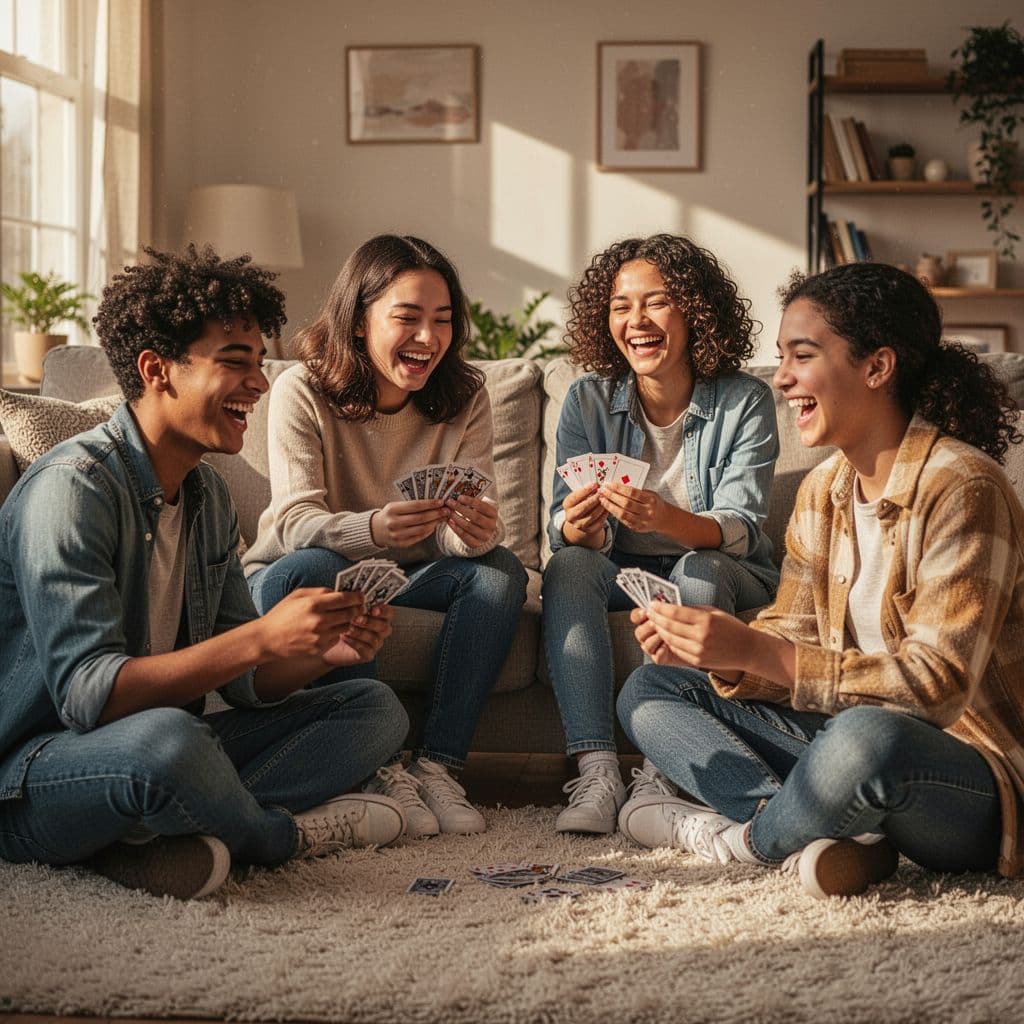
Look for games that start fast and do not need a long explanation
Teens lose interest quickly when they have to sit through a long setup. The best games get moving in under five minutes, because momentum matters more than a perfect explanation. If everyone can learn by watching one round, you already have a better shot at keeping the group engaged.
That is why quick, clear games usually work best for teen parties. Simple rules lower the pressure, and that makes it easier for shy guests to join in without feeling awkward. Parents planning a party can also use age-appropriate activity ideas for teens to match the energy level of the group before the first guest arrives.
If a game needs a long speech, it usually loses the room before it starts.
Fast games also fit real teen hangouts better. They leave room for snacks, music, jokes, and last-minute rule twists that keep things fun.
Mix competition, humor, and teamwork so everyone stays interested
Teens are not all drawn to the same kind of fun, so a good party game gives different personalities a reason to jump in. Some love guessing games, others enjoy acting out silly prompts, and plenty want something active that gets them moving. A mix of styles keeps the party from feeling one-note.
The best teen games often blend a little rivalry with a little chaos. Teams create hype, humor keeps the mood light, and a bit of unpredictability makes the game feel fresh instead of forced. For a broader look at what tends to work with this age group, party games for teens that don’t suck offers a helpful real-world perspective.
A balanced party usually includes:
- Competition for teens who like to win
- Humor for guests who want laughs over pressure
- Team play for mixed groups that need an easy way to join in
- Physical movement for teens who get bored sitting still
When a game combines those elements, more people feel included. That is what keeps the energy up and the teasing friendly, which is exactly what teen party games need to work well.
The best indoor party games when you want big laughs
Indoor parties need games that start fast and keep the whole group awake. That means low setup, simple rules, and plenty of room for awkward attempts, bad guesses, and dramatic reactions. The best picks work in living rooms, basements, classrooms, and anywhere teens can spread out without much prep.
These games also do well with mixed-age teen groups because they do not depend on a lot of skill. A shy player can guess, a loud player can act, and a competitive player can chase the win. If you want more screen-free options for a bigger crowd, fun screen-free indoor activities can help you fill out the rest of the night.

Charades keeps everyone guessing without needing any supplies
Charades still works because it turns familiar things into big reactions. Teens love clues based on movies, songs, trends, and internet jokes, since those are easy to recognize and fun to twist. A clue can be simple, but the acting gets funnier when someone overcommits to a goofy prompt or tries to mime something nearly impossible.
It also moves well at a party. Short rounds keep the energy up, and quick switching stops the game from dragging. For a solid rule set and extra teen-friendly clue ideas, this charades guide for teens is a handy reference.
A few things keep Charades lively:
- Use pop culture prompts that teens already know.
- Keep rounds short so the room stays loud and active.
- Let the actor get silly because that is where the laughs come from.
- Skip long pauses between turns so nobody checks out.
The best Charades rounds usually end with someone laughing before they even guess the answer.
Telestrations turns simple drawings into total chaos
Telestrations is easy to explain. One player draws a word, passes it on, the next player guesses, and then the guess gets drawn again. After a few rounds, the original idea has drifted so far that the final result barely makes sense, and that is exactly why teens love it.
The real fun comes at the reveal. Watching a clean idea turn into something wild feels like watching a rumor grow legs. It works best with creative, funny groups that do not mind bad art, messy lines, and unexpected guesses.
Because everyone draws and guesses at once, nobody sits around for long. That keeps the room buzzing, especially when the group likes jokes and quick surprises.
Codenames is perfect when your group likes strategy and teamwork
Codenames feels smart without being hard to learn. One player gives a one-word clue, and the team tries to connect that clue to the right words on the table. It sounds simple, but the game gets goofy fast when the clue leads the group in the wrong direction.
That mix of logic and chaos is a big part of the appeal. Bigger groups stay involved, and teens who like puzzles usually stay locked in until the last card is guessed. It also creates a lot of team chatter, which makes the room feel lively without needing a lot of movement.
If your group likes thinking out loud, this one fits well. The best rounds feel a little tense, a little clever, and a lot louder than expected.
Spoons brings fast hands and loud reactions to the table
Spoons is all about speed. Players pass cards as fast as they can, and once someone gets the right set, everybody scrambles for a spoon. Since there is always one fewer spoon than players, someone gets left out each round, which keeps the pressure high.
That pressure is what teens often like. The game feels competitive, quick, and just chaotic enough to get people yelling across the table. Still, it works best in a space with enough room for hands, cards, and sudden movement.
Keep the setup clear and the area safe. A crowded coffee table or a cramped floor can turn the fun into a mess, so give everyone space to move without bumping into each other.
Games that get shy teens talking and laughing
Some teen party games work because they take the pressure off. They give quieter guests a reason to join in without putting them on the spot. That mix of ease and humor helps the room loosen up fast, especially when the group does not know each other well.

A good low-pressure game feels more like shared hang time than a performance. It gives shy teens something to do with their hands, their voice, or their team, so conversation starts to happen naturally.
Just One is a team game that rewards clever clues
Just One gets everyone working toward the same goal, which makes it a strong pick for shy teens. One player guesses the word, while the rest of the group writes clues, and any matching clues get removed before the guesser sees them. That rule changes the feel of the game in a smart way, because everyone has to think a little harder.
The duplicate clue rule keeps each round fresh. A common answer might disappear, so players start aiming for more original words. That leads to better laughs, more surprise, and a lot less boredom than a standard guessing game.
It also works well for mixed groups because nobody needs to be the center of attention for long. For teens who like a little strategy without a lot of pressure, logic games and strategy play fit right in with this style of game.
Would You Rather is a no-stress way to keep the conversation going
Would You Rather is one of the easiest backup games to keep on hand. There is almost no setup, and you can start with a single question as soon as the room gets quiet. That makes it perfect when you want something low-key but still social.
The best questions are light, funny, and teen-friendly. They can reveal personality without making anyone feel exposed, which matters when some guests are still warming up. A silly choice between two weird options often gets the whole group talking.
To keep the game moving, skip questions that are too awkward or too long-winded. Instead, use quick prompts and let people answer in one or two sentences. If you need more ideas, teen party game lists often include easy conversation starters like this.
Human Bingo helps guests mingle right away
Human Bingo works especially well at the start of a party. Each guest gets a card with simple prompts, then they move around to find people who match each square. Since they have to talk to different guests, the game naturally breaks up those early awkward moments.
That movement helps shy teens too. It gives them a reason to start a conversation without feeling like they have to come up with the perfect line. They can ask one small question, check off a square, and keep going.
The setup is simple, which is part of the appeal. You only need a list of friendly prompts and a way for guests to mark their cards. As a first game, it creates quick social energy and makes the whole party feel more open.
Outdoor party games that burn energy fast
When the party moves outside, the games can get bigger, louder, and more physical. That is exactly what works for teens who want to run, compete, and laugh until they are out of breath.
These games are best for backyards, parks, or any open space with room to move. They keep the pace high, which helps the whole group stay engaged instead of drifting into small talk or phone time.

Capture the Flag adds real competition to any backyard party
Capture the Flag still feels exciting because it mixes strategy, speed, and teamwork. Teens have to plan, hide, guard, and sprint, so every round feels different. It also gives both competitive players and more cautious players a way to help the team.
The best part is how easy it is to set up. Divide the yard into two sides, mark each home base, and hide one flag on each side. Then let the teams build a quick plan before the first run starts.
For daytime play, use cones, bandanas, or bright objects that are easy to spot. For night play, swap in glow sticks or flashlights so players can still track the action. If you want more ideas for active group fun, outdoor adventure games for groups can help you fill out the rest of the party.
Tug of War is simple, loud, and always dramatic
Tug of War works because everyone understands it in seconds. Two teams, one rope, one pull, and a lot of noise. That simple setup makes it a great short challenge between bigger games, especially when the group wants something intense but easy to run.
Keep each round quick so the energy stays high. A short match feels more exciting than a long pull, and it gives teams a clean win or loss without dragging things out.
Safety matters here. Use sturdy rope and make sure the ground is flat, dry, and free of sharp objects. Grass, turf, or another soft surface works best, since kids can lose their footing when the pull gets strong.
Human Knot gets the whole group moving and laughing
Human Knot is a fast team challenge that works well when teens need a break from sitting around. Everyone stands in a circle, grabs hands with different people, and then works together to untangle the knot without letting go.
It gets funny fast. The game feels awkward, which is part of the appeal, and the group usually ends up laughing while they try to twist, duck, and step through the mess. It also works well for teens who want something active but not overly athletic.
Keep the instructions short, then let the group figure it out. The fun comes from the chaos, not from a long explanation.
The best outdoor games are the ones that get everyone moving within the first minute.
Laser tag or paintball gives teens a bigger thrill
If you want the party to feel like an event, book an outside venue for laser tag or paintball. These games work especially well for birthdays because they feel bigger than a normal backyard round. The whole group gets into the challenge, and the outing gives the party a clear highlight.
This is a smart choice when you want teens to remember the day as an experience, not just a game. It also takes some pressure off the host, since the venue handles the setup and pacing.
For families planning an active outing, this kind of group play pairs well with other summer party inspiration for teens. A single big activity can carry the whole celebration when the guests are ready for action.
Party games for teens who like creativity and a little drama
Some teen parties need more than speed and noise. They need games that let players perform, improvise, and make the room laugh with a bad accent or an overdone scene.
These picks work best with teens who like story twists, funny characters, and a little friendly chaos. They also keep everyone involved, even when the game leans more on imagination than athletic skill.

Monikers gets funnier as each round gets harder
Monikers starts simple, then gets messier in the best way. Players try to get their team to guess names from cards, first with full clues, then with only one word, and finally with no words at all. By the last round, everyone is acting out hints with full commitment, which is where the laughs really hit.
It works especially well when the group knows a mix of celebrities, characters, and current trends. That shared knowledge gives teens a fair shot at guessing, while the changing rules keep the challenge moving. Each round feels a little harder, so the game stays sharp instead of flat.
The fun builds because the clues disappear, but the drama gets bigger.
If your group likes inside jokes and wild guesses, this one is a strong pick. For teens who enjoy this style of play, Tell Me A Story is another option that keeps the room talking and laughing.
Murder mystery games make the whole party feel like a story
Murder mystery games are a great fit for teens who like role play and a little theatrical tension. Everyone gets a character, clues start dropping, and the whole party feels like a scene that keeps unfolding. That makes the game feel bigger than a simple round of questions and answers.
These games work best when the group is willing to stay in character just enough to make it funny. A dramatic whisper, a suspicious reaction, or a fake alibi can turn a normal party into something much more memorable. Smaller groups usually work best, especially for themed parties where everyone can buy into the story.
A good setup keeps the pace clear:
- Give each player a role before the party starts.
- Keep the clue trail simple so nobody gets lost.
- Let players ham it up if they want to, because that adds to the fun.
Exploding Kittens is quick, silly, and easy to replay
Exploding Kittens is a great teen party game because it moves fast and never takes itself too seriously. The art is funny, the turns are short, and the surprises keep coming, so it never feels stale. Even better, the rules are easy to learn in a few minutes.
It also gives competitive teens plenty to root for without turning the room tense. Since the game is light but still full of bluffing and sudden knockouts, it fits groups that want quick laughs and a little edge. The replay value is strong, which matters when everyone wants “one more round.”
How to choose the right game for your teen party
The best teen party games are the ones that fit your group instead of forcing your group to fit the game. A little planning saves you from awkward pauses, crowded spaces, and bored faces.
Start by thinking about who is coming, where they will play, and how much energy you want to bring. Once those three pieces are clear, the right game usually stands out fast.
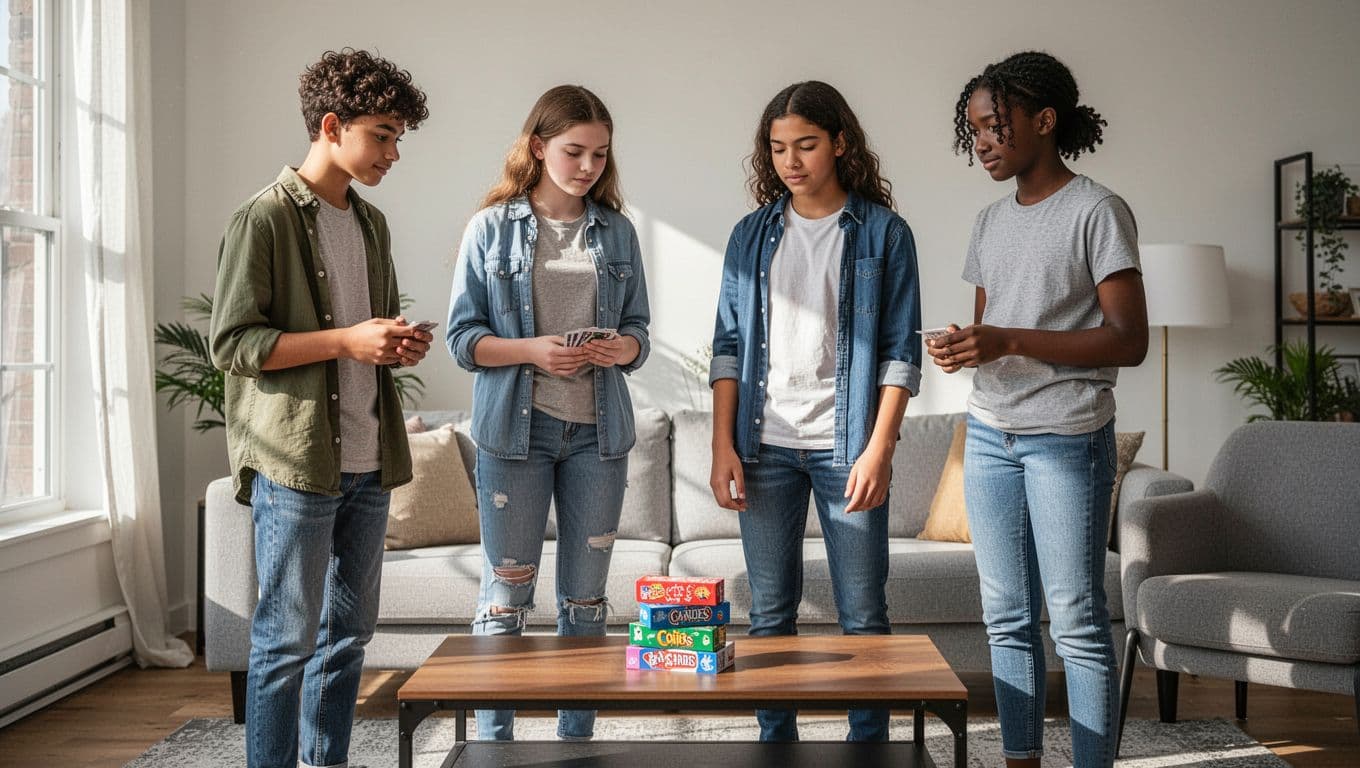
Match the game to the size of your group
Group size changes everything. Some games feel lively with four to six teens, while others need a bigger crowd to keep the energy up. A small group can handle games with more turns and more talking, but a big birthday party usually needs something that keeps multiple people involved at once.
For a small hangout, choose games like Would You Rather, Just One, or Telestrations. These work well when everyone can stay close and hear each other. For a larger party, pick games like Capture the Flag, Human Bingo, or Codenames, because they give more people a role and keep the room active.
If the game slows down when a few players sit out, it may not be the right fit. Bigger groups need games with quick turns, team play, or everyone participating at once. That keeps the party moving instead of splitting into bored pockets.
If half the group is waiting too long, the game is already losing momentum.
Think about your space before you pick
Space matters just as much as the game itself. Indoor games need less movement and fewer props, while outdoor games work best when teens can run, spread out, and make noise without worry. A game that sounds perfect on paper can become a headache if the room is too tight.
Table games like Spoons or Exploding Kittens need a flat surface and enough elbow room. Open-floor games like Charades or Human Knot need space to move around without bumping into furniture. Backyard games such as Tug of War or Capture the Flag need even more room, plus a safe surface.
Before you choose, look at the real setup. Is there a clear table? Can teens stand in a circle? Is there enough space for movement without breaking lamps or knocking over snacks? If the answer is no, pick a quieter game that fits the room instead of fighting the layout.
Use a mix of games so the energy stays high
A party feels smoother when the games change pace on purpose. Start with a simple icebreaker, move into one or two active games, then end with something calmer if the group still wants to hang out. That rhythm keeps the night fun without making anyone feel rushed or worn out.
A good flow might look like this:
- Start with Human Bingo or Would You Rather to break the ice.
- Follow with a louder game like Charades, Spoons, or Capture the Flag.
- Finish with a calmer choice such as Just One or Exploding Kittens.
That mix helps different personalities stay engaged. The talkative teens get their moment, the active teens get to move, and the quieter guests still have a way to join in. If you want more structured game ideas that work well for mixed energy levels, best party games for teens that aren’t awkward has plenty of solid options.
A little variety also keeps the party from feeling repetitive. One game should open the room, another should raise the noise, and another should let everyone settle in before the night winds down.
Conclusion
The best teen party games are the ones that get moving fast, keep people watching, and make everyone want another round. That is what turns a regular hangout into a party people remember.
If your group is loud, pick something active. If they need time to warm up, start with a low-pressure game, then add a bigger one once the room loosens up. Mixing a few games based on mood, space, and time keeps the night easy and fun.
Pick two or three from this list, set them up before guests arrive, and let the energy build from there. With the right game mix, planning a teen party gets a lot simpler.
Save pin for later


- 12 Things Pregnant Women Do When They’re Alone - June 7, 2026
- 25 Healthy Pregnancy Snacks You Should Try - June 7, 2026
- 100 Funny Baby Jokes That Will Make You Laugh - May 15, 2026