

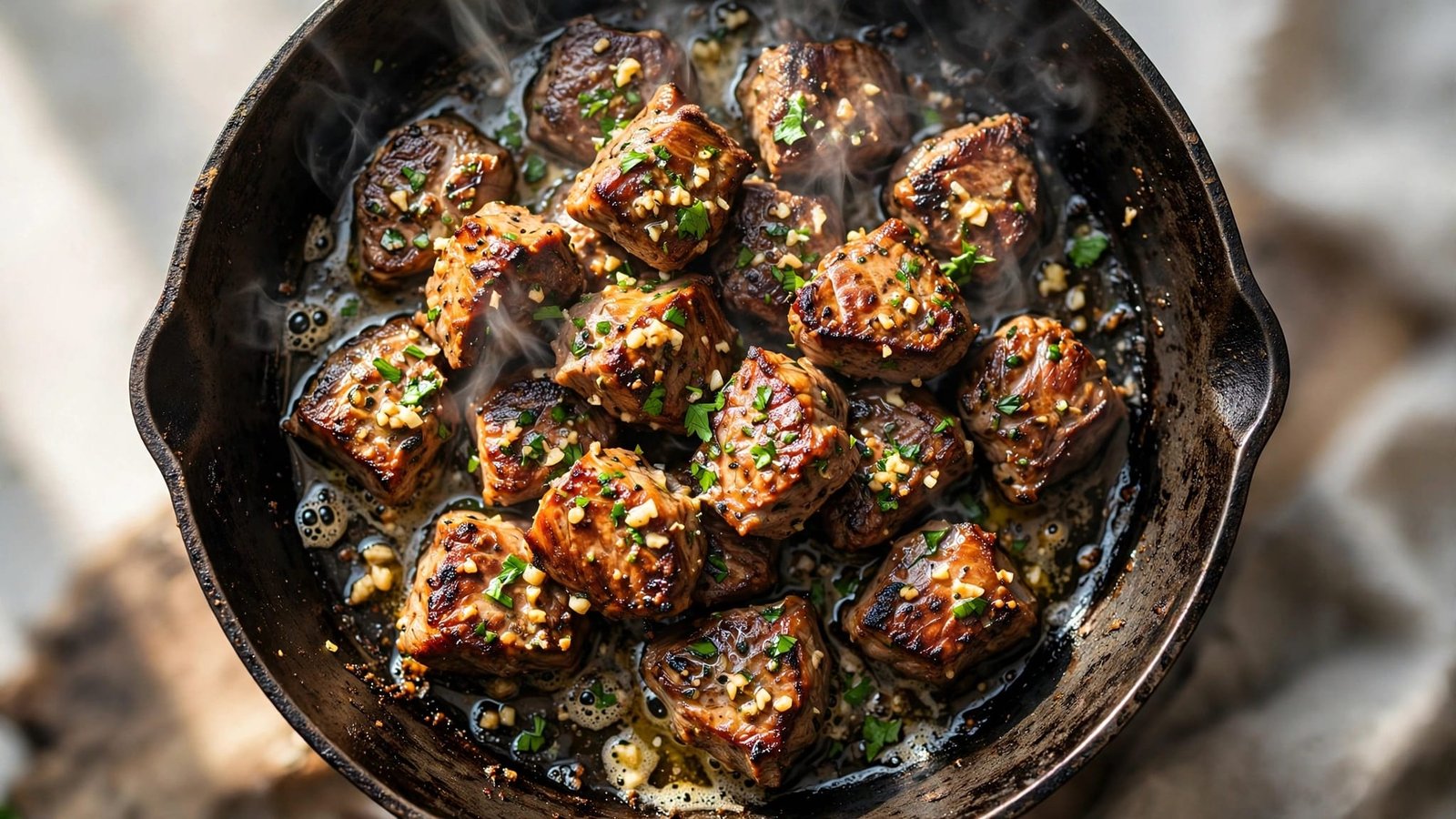
Juicy steak cubes with browned edges, glossed in warm garlic butter, make a quick skillet dinner feel special without adding fuss. The secret to a good sear is simple: pat the steak dry, leave space between the pieces, and lower the heat before adding garlic so it turns fragrant instead of bitter.
With those small details in place, these garlic butter steak bites come together fast and taste rich without a complicated method. Start with the ingredients and easy skillet steps below.
Garlic Butter Steak Bites: Ingredients and Easy Skillet Method
These garlic butter steak bites need a short ingredient list and a hot, roomy skillet. Keep the steak dry and cook it in batches for browned edges, then finish with butter, garlic, and parsley.
What you need for the steak and garlic butter
Use these amounts as a practical starting point for 1½ pounds of steak. Adjust the salt, pepper, and parsley to taste.
- 1½ pounds sirloin, cut into 1-inch cubes. The even size helps the pieces cook at a similar pace.
- 1 teaspoon kosher salt and ½ teaspoon black pepper, or to taste. They season the beef and complement the buttery finish.
- 1 tablespoon neutral high-heat oil, such as avocado or canola oil. It helps the beef sear without burning as quickly as butter can.
- 4 tablespoons butter and 4 minced garlic cloves. Together, they make the rich finishing sauce.
- 1 to 2 tablespoons chopped parsley, for a fresh, herbal finish.
Pat the steak dry before seasoning. Moisture on the surface can slow browning, so blot the cubes well with paper towels.
How to sear the steak and finish the sauce
- Season the steak. Toss the dry cubes with kosher salt and black pepper. Heat a heavy skillet over medium-high to high heat, then add the oil once the pan is hot.
- Sear in batches. Arrange the steak in a single layer with space between the cubes. Cook about 1 to 2 minutes per side as a starting point, turning when the undersides are deeply browned. Move each batch to a plate, and add a little more oil if the skillet looks dry. Crowding lowers the pan temperature and can leave the beef gray instead of seared, a useful rule for other quick skillet meals like this sirloin and broccoli stir-fry.
- Make the garlic butter. Lower the heat to medium-low. Add the butter, then stir in the minced garlic and cook briefly, just until fragrant. Garlic can turn bitter if it browns too much.
- Coat and serve. Return the steak and any juices to the skillet. Toss until the cubes are glossy with garlic butter, then finish with parsley.
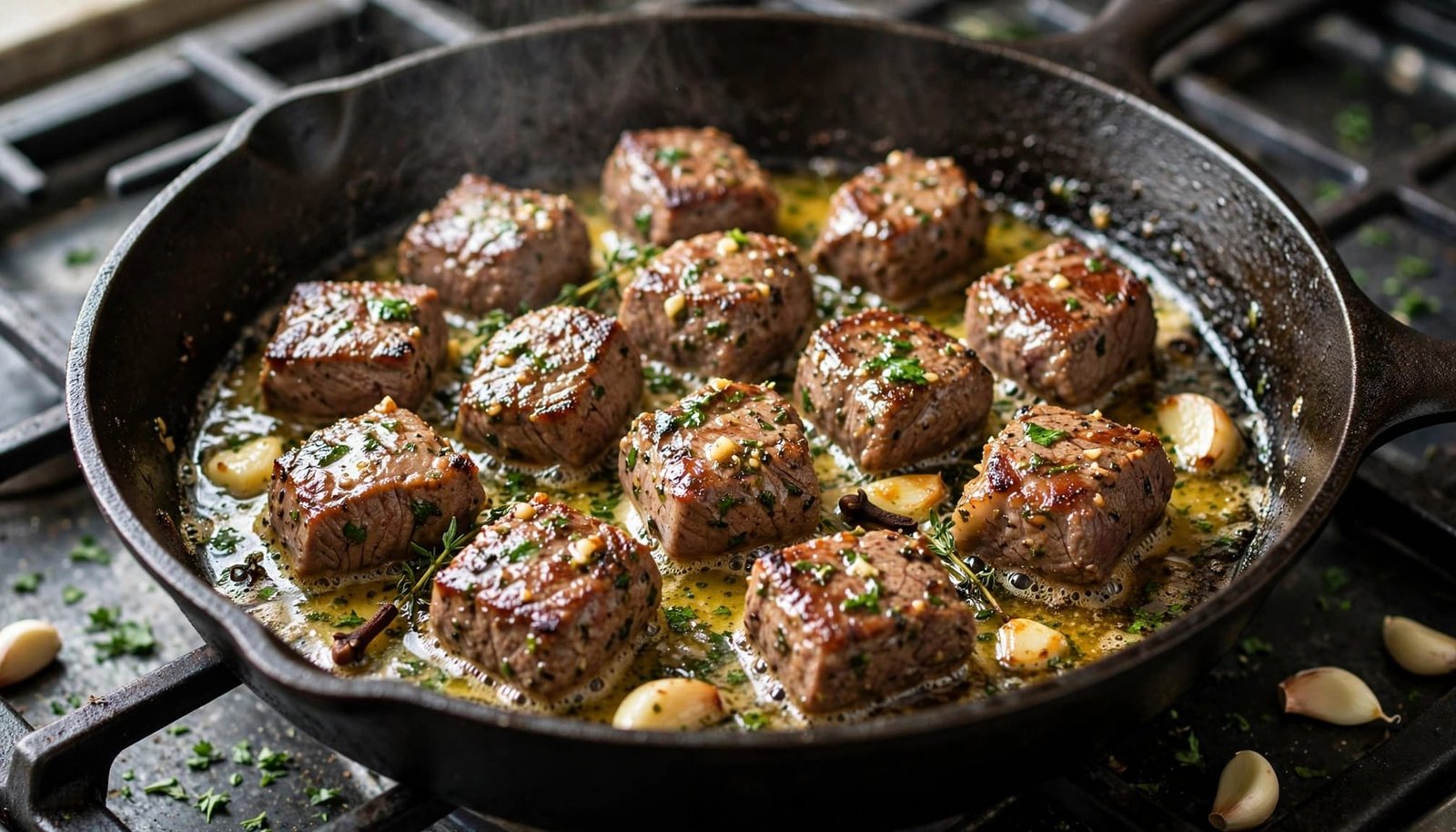
Cube size, pan heat, and preferred doneness all affect cook time, so use browning as a guide rather than relying on the clock alone. For a temperature check, the USDA safe temperature chart recommends 145°F for beef steaks, followed by a 3-minute rest.
Choose the Best Steak Cut for Tender, Juicy Bites
The cut you choose shapes how rich, tender, and beefy each bite tastes. For garlic butter steak bites, sirloin is a practical everyday pick, while ribeye and New York strip offer different levels of richness and tenderness.
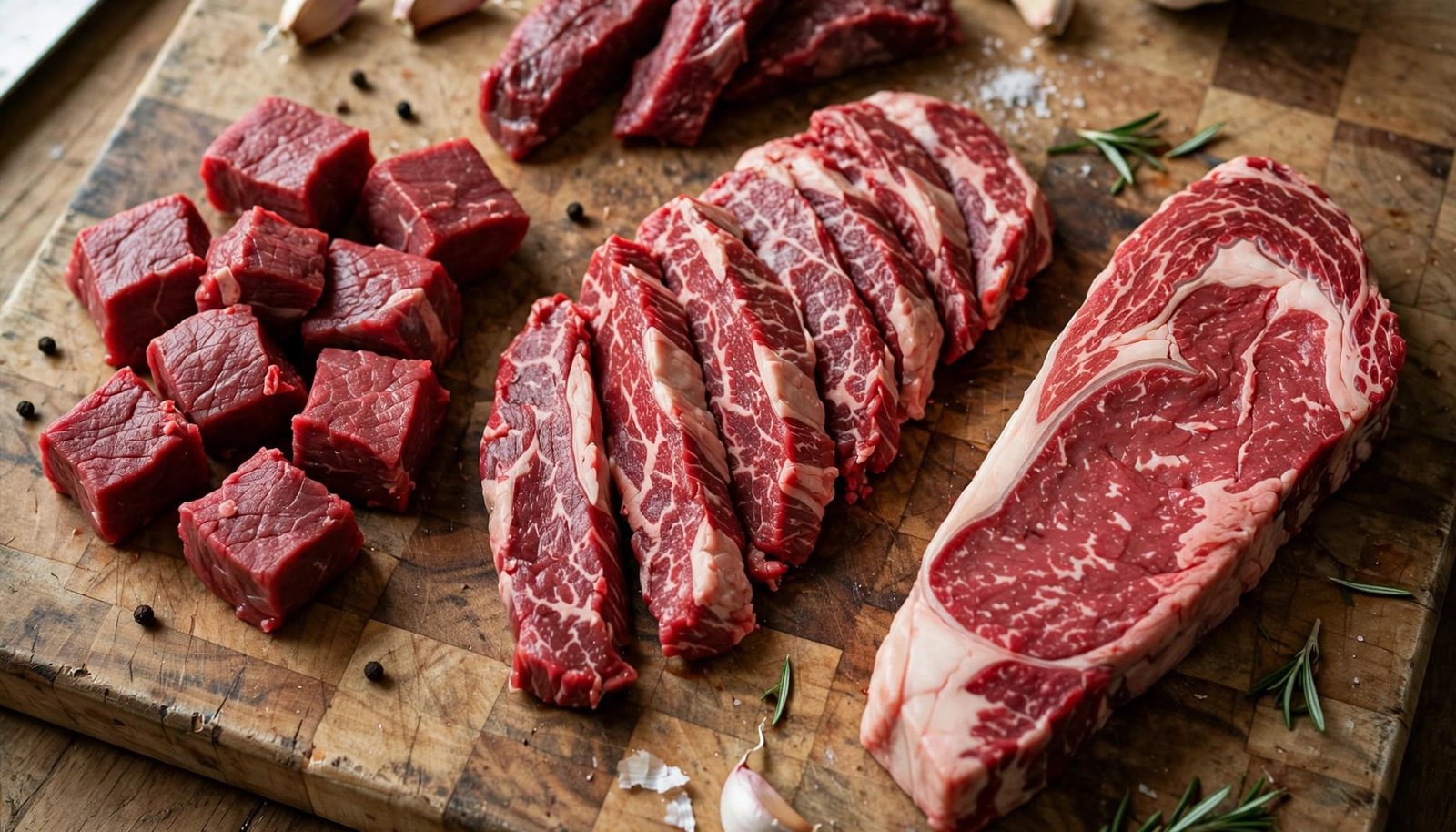
Compare sirloin, ribeye, and New York strip
Sirloin brings a bold beef flavor without as much fat as ribeye, and it’s often a more budget-friendly choice. Its leaner texture works well in bite-size pieces, especially when you avoid overcooking them.
For a richer result, choose ribeye. Its marbling melts as the meat cooks, giving the bites a buttery texture that pairs naturally with garlic butter. The USDA explains how marbling relates to beef quality in its guide to USDA beef grades.
New York strip lands between those options. It has a tender bite and a pronounced beef flavor, with less internal fat than ribeye. The name can vary at the counter, so the USDA’s guide to beef cut names can help clarify labels.
When flank steak works
Flank steak can make tasty steak bites, though it has a distinct grain and benefits from careful cutting. Choose a piece with an even thickness, cut it into similarly sized pieces, and watch the heat so the lean meat doesn’t dry out.
If you can see long muscle fibers, slice across them rather than parallel to them. Cutting across the grain shortens those fibers and helps each piece feel easier to chew, as in this sirloin and flank beef recipe.
Trim and cut for better bites
Before cooking, trim away large pieces of excess exterior fat. A little marbling adds flavor, but thick flaps of fat can render unevenly and make the bites greasy.
Aim for evenly sized pieces so they cook at a similar pace. When the cut has a clear grain, cut across it; that small prep choice matters most with flank and other visibly fibrous cuts.
The Small Cooking Details That Make Steak Bites Better
A browned crust and tender center depend on more than the cut of beef. Dry surfaces, space in the skillet, and careful heat control help garlic butter steak bites brown well without scorching the garlic.
How to keep garlic fragrant instead of bitter
Minced garlic cooks quickly, especially in a skillet that’s still ripping hot from searing the steak. If it hits that heat, it can darken in seconds and turn bitter. Once the steak comes out of the pan, lower the heat before adding the garlic.
Stir the garlic briefly, just until it smells fragrant. Then add the butter so it melts gently and coats the garlic instead of burning in the hot pan. Return the steak and any collected juices to the skillet, and toss to coat.
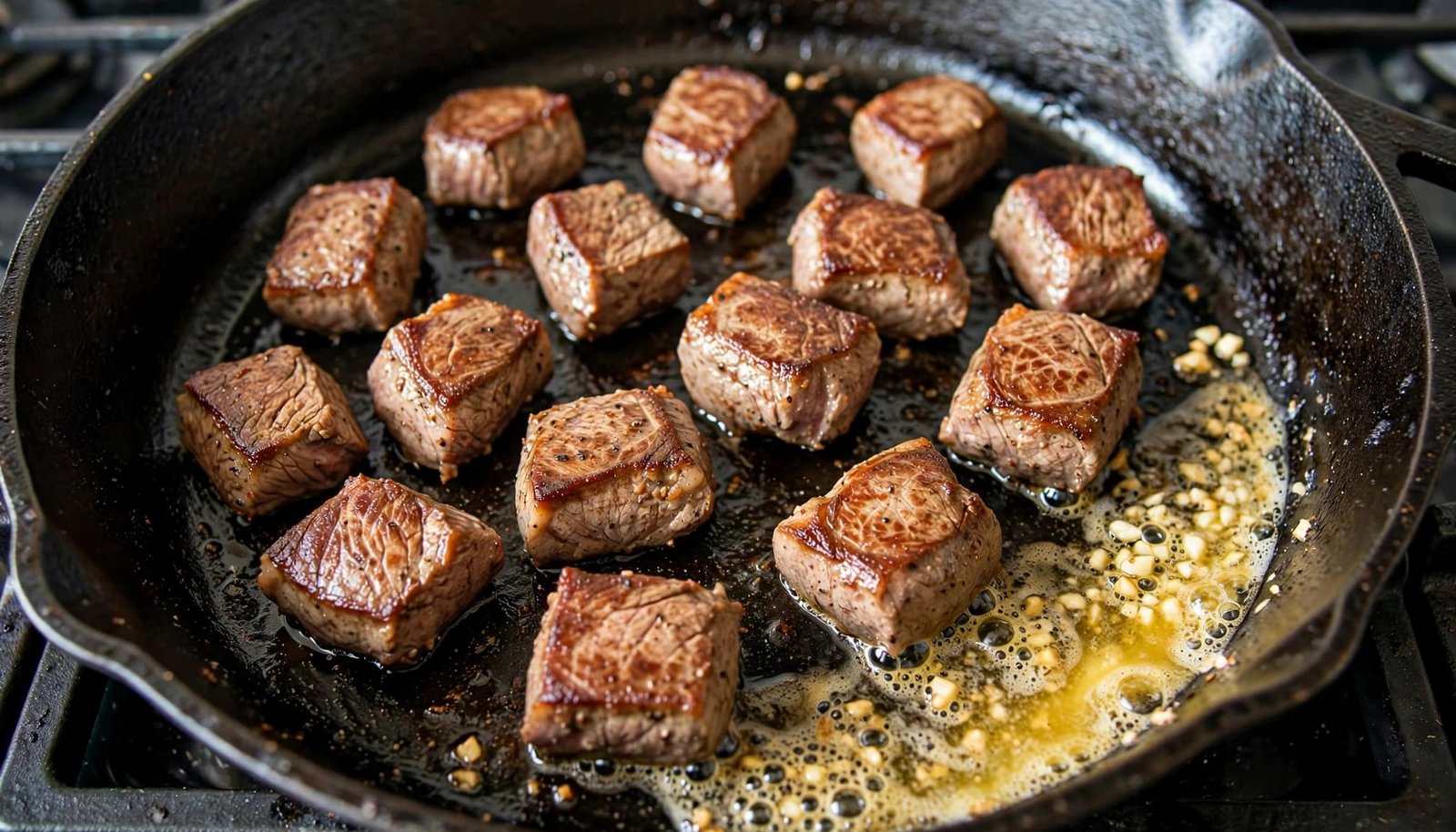
How to tell when the pan is too crowded
Before the steak goes in, pat the cubes dry and preheat the skillet. Add the oil when the pan is hot, then wait for it to shimmer. A dry surface and hot oil help the beef brown; moisture and crowding make the cubes release liquid and steam.
If liquid pools around the meat or the cubes look pale and soft, the skillet is holding too much steak. Cook in batches, leaving visible space between pieces. This same spacing helps with honey garlic chicken skillet recipes, where crowding can also hinder browning.
After searing, check the largest piece with a digital instant-read thermometer. Insert the probe from the side toward the center, and check a few pieces because small cubes can cook at different rates. The USDA’s food thermometer guidance recommends cooking whole cuts of beef to 145°F, followed by a three-minute rest.
Doneness below 145°F is a preference some diners choose, but it falls short of USDA guidance and carries a higher food-safety risk. Once cooked, rest the bites briefly while you finish the sauce; they stay juicy, and the thermometer reading has time to settle.
If browned bits left in the skillet look black or smell acrid, wipe them out before the next batch. That keeps burnt residue from clinging to the fresh steak or giving the garlic butter a harsh taste.
Easy Ways to Change Up the Garlic Butter Flavor
A few small additions can give garlic butter steak bites a different character without changing how you sear the beef. Add one or two at a time, and keep the amounts modest so the steak and garlic butter stay in the foreground.
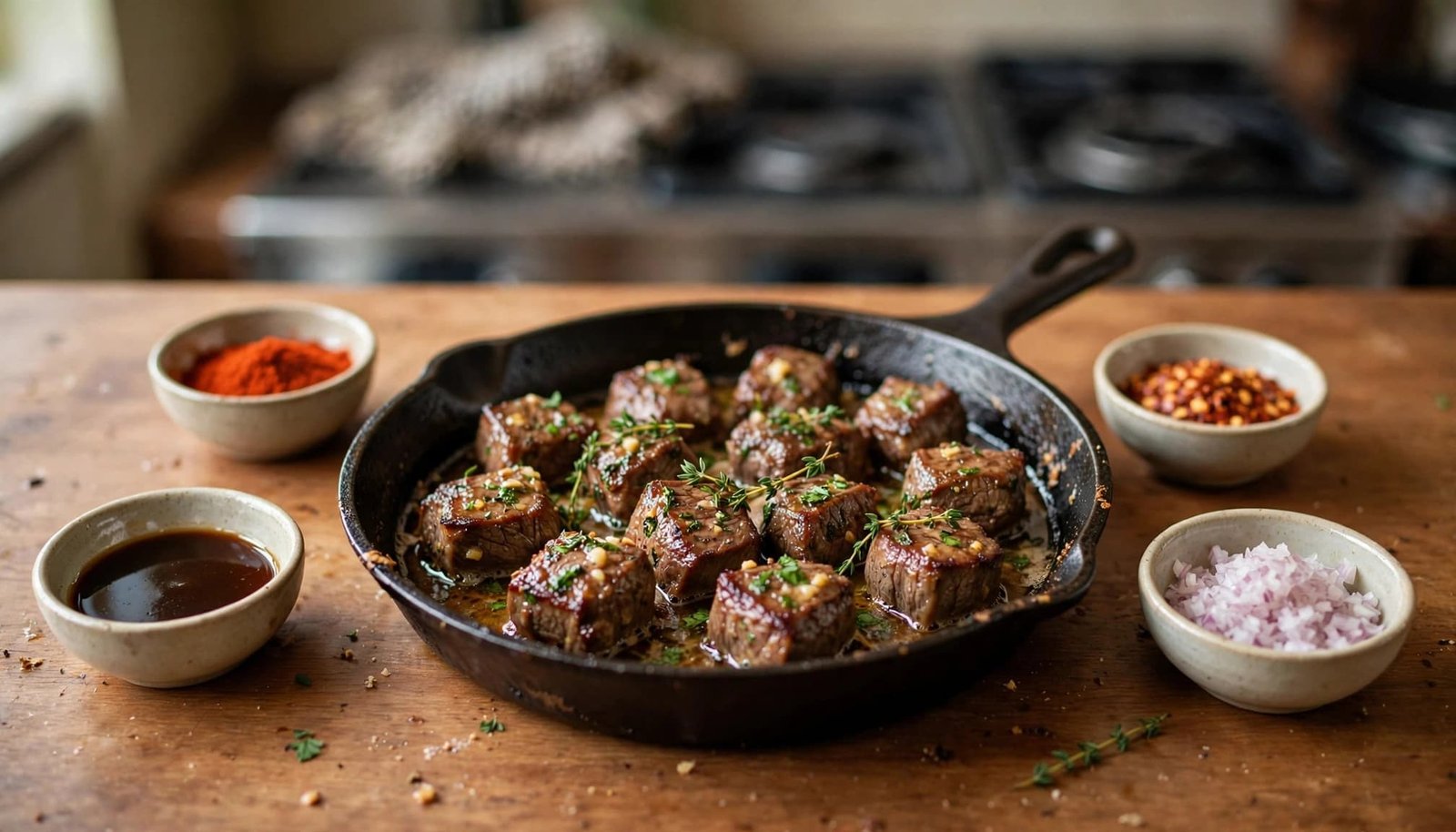
Add savory depth with Worcestershire
For a deeper, slightly tangy finish, stir 1 to 2 teaspoons of Worcestershire sauce into the melted butter after lowering the heat. It brings plenty of savory flavor, so start with a small splash and taste before adding more. If the sauce seems too salty, skip any extra salt at the end.
Bring gentle warmth with paprika or red pepper
For a warmer, rounder flavor, add ½ teaspoon of paprika to the butter. Smoked paprika gives the sauce a subtle smoky note, while regular paprika keeps the flavor mild. For heat, use a pinch of red pepper flakes instead, or add a very small pinch alongside the paprika.
Since spice can quickly take over a small pan of sauce, start light. You can always add another pinch after tossing the steak, but you can’t remove excess heat.
Soften the garlic with shallot
Finely mince one small shallot and add it to the skillet after lowering the heat, just before the butter. Cook it briefly until softened, then stir in the garlic and continue as directed. Shallot adds gentle sweetness that rounds out the butter without masking the beef.
Finish with fresh herbs
Chopped parsley keeps the finish clean and familiar. For a more earthy note, add a few fresh thyme leaves; both herbs pair well with savory foods, as shown in the University of Delaware’s herb and spice pairing guide. Stir the herbs in after the steak returns to the pan, or scatter them over the bites just before serving.
Use one herb or a small combination, rather than a large handful. If you have extra parsley, save it for a creamy white bean dip with herbs and lemon.
What to Serve With Steak Bites, Plus Storage Tips
Garlic Butter Steak Bites are rich and savory, so pair them with something that can catch the buttery pan sauce or bring a fresh contrast. Serve them hot from the skillet, then pack any leftovers promptly so the beef stays safe to eat.
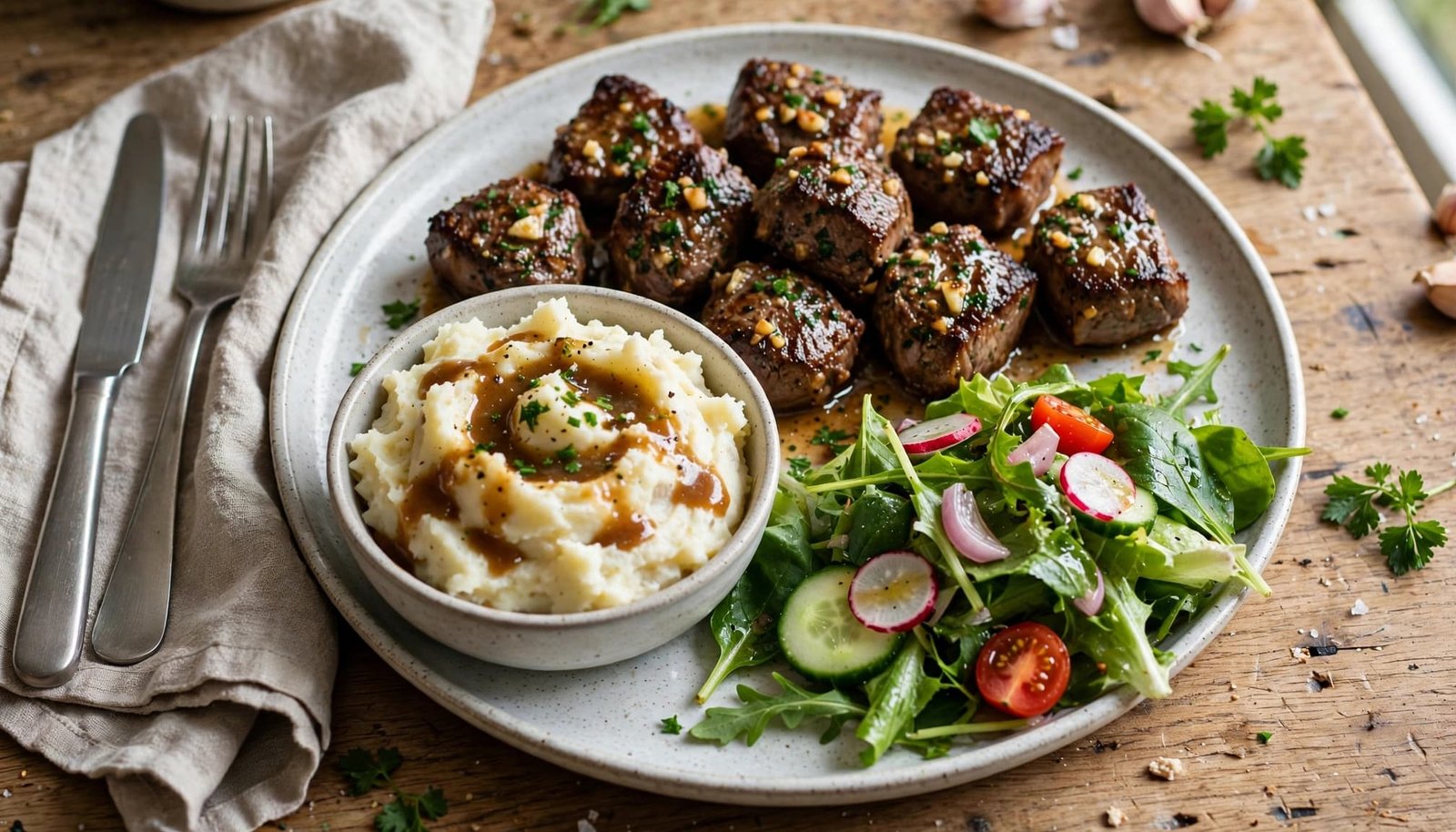
Choose sides that balance the buttery sauce
Creamy mashed potatoes make an easy match. Spoon the garlic butter from the skillet over the potatoes, or serve the steak bites on top for a hearty plate. Rice works just as well, especially when you want a simple side that soaks up the savory juices.
For a lighter dinner, add roasted vegetables such as Brussels sprouts, carrots, broccoli, or green beans. A crisp salad or tangy slaw cuts through the richness and brings freshness to each bite. Try these crunchy cabbage salad recipes for a cool, crisp side, or make roasted Brussels sprouts and carrots for a warm vegetable option.
Keep the sides simple and let the skillet sauce do extra work. A spoonful over rice, potatoes, or roasted vegetables adds flavor without needing another dressing or sauce.
Refrigerate and reheat leftovers carefully
Transfer leftover steak bites to a clean, sealed container and refrigerate them within two hours of cooking. The USDA advises keeping cooked leftovers refrigerated for 3 to 4 days and reheating them to 165°F; see its leftover storage and reheating guidance.
To reheat, place the steak bites and a small splash of water or broth in a skillet over low heat. Cover the pan and warm the beef gently, stirring once or twice, until it reaches 165°F. The added moisture helps keep the garlic butter from drying out, while low heat limits the time the steak spends cooking again.
Avoid leaving the bites in a hot skillet while you finish other parts of the meal. Steak cubes can toughen quickly when reheated, so serve them as soon as they’re hot.
Conclusion
A hot pan, dry steak, and enough space to sear give Garlic Butter Steak Bites their golden edges. Add the garlic butter with care, and it coats each tender piece without letting the garlic turn bitter.
Choose your favorite cut and pair the steak with a side that suits the meal, such as crisp garlic green beans with toasted almonds. Save the recipe for a busy night, or try it the next time you want a simple skillet dinner with a rich, savory finish.
Save the pin for later


- Classic Apple Crisp with a Golden Oat Topping - November 27, 2026
- Baked Ziti With Italian Sausage - November 27, 2026
- Ground Turkey Enchilada Skillet - November 27, 2026