
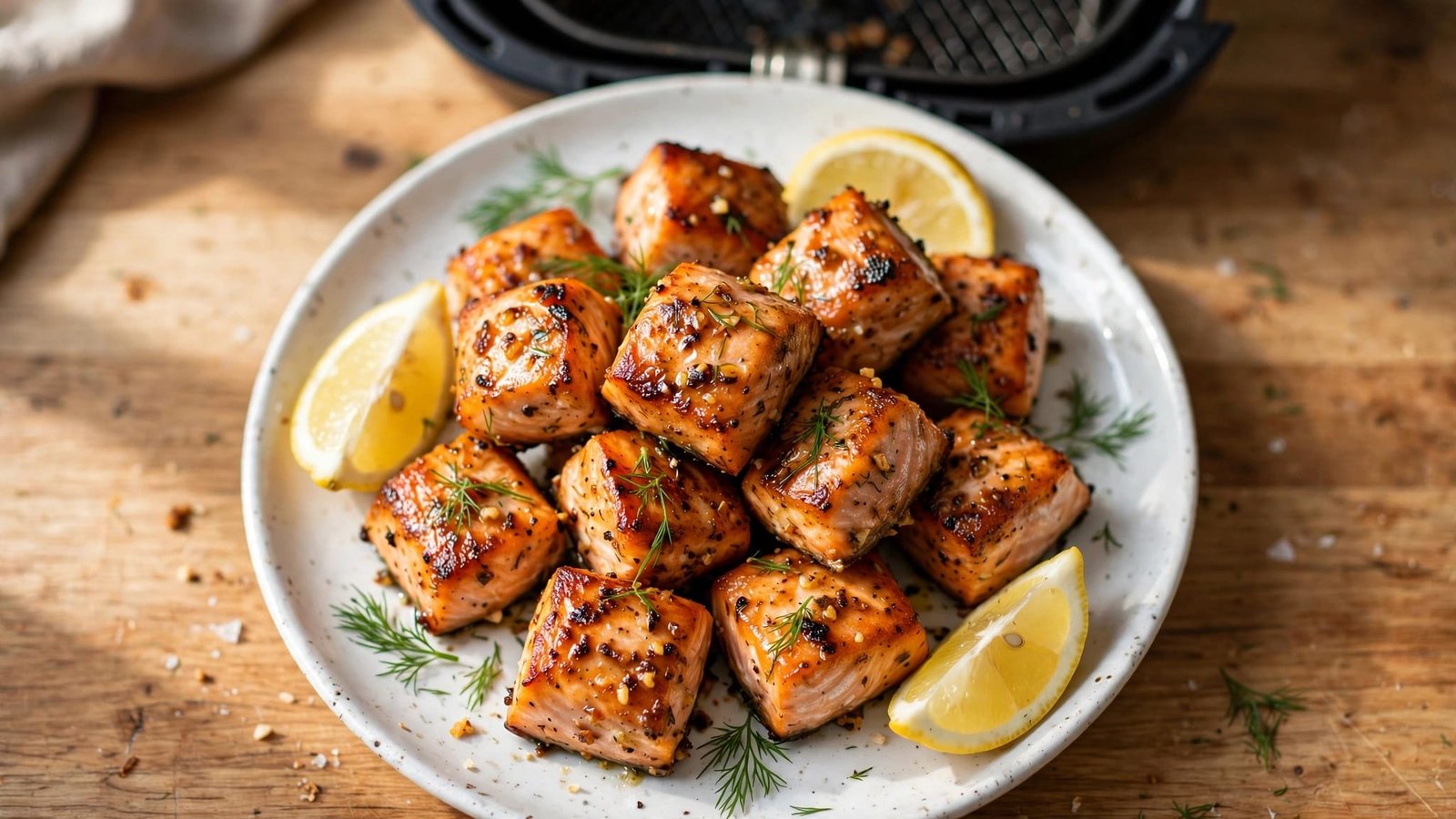
Golden edges, tender centers, and a hint of smoky garlic make these air fryer salmon bites a fast, satisfying meal. With simple ingredients and a short cook time, you can have flavorful salmon on the table without turning on the oven.
Cutting the fish into even cubes helps them cook at a similar pace, but an instant-read thermometer is the surest way to check doneness. Once the basic method is down, try a spicy or herb-filled seasoning, add a honey-soy glaze, or serve the bites over rice, greens, or roasted vegetables.
Start with the simple recipe, then adjust the flavor and sides to suit your meal.
Air Fryer Salmon Bites: Ingredients and Easy Steps
This family-sized batch makes 4 servings and takes about 10 minutes to prep and 6 to 8 minutes to cook, depending on your air fryer and the size of the pieces. Cut the salmon into evenly sized, roughly 1-inch cubes so they cook at a similar pace.
What you need for the basic recipe
Choose 1 1/2 pounds of skinless salmon that looks moist and smells fresh, with no sour or strong fishy odor. If using frozen salmon, thaw it in the refrigerator first, then pat it dry. Run your fingers over the flesh to check for pin bones, and pull out any you find with clean tweezers.
For four servings, gather:
- 1 1/2 pounds skinless salmon, cut into 1-inch cubes
- 1 1/2 tablespoons olive oil
- 3/4 teaspoon garlic powder
- 1 teaspoon smoked paprika
- 1/2 teaspoon salt
- 1/4 teaspoon black pepper
- 1 teaspoon brown sugar, optional, for extra browning
The brown sugar adds a subtle sweetness and helps the edges color, but the salmon tastes good without it. For another quick meal idea, try these air fryer salmon bites with yogurt sauce.
How to cook salmon bites in the air fryer
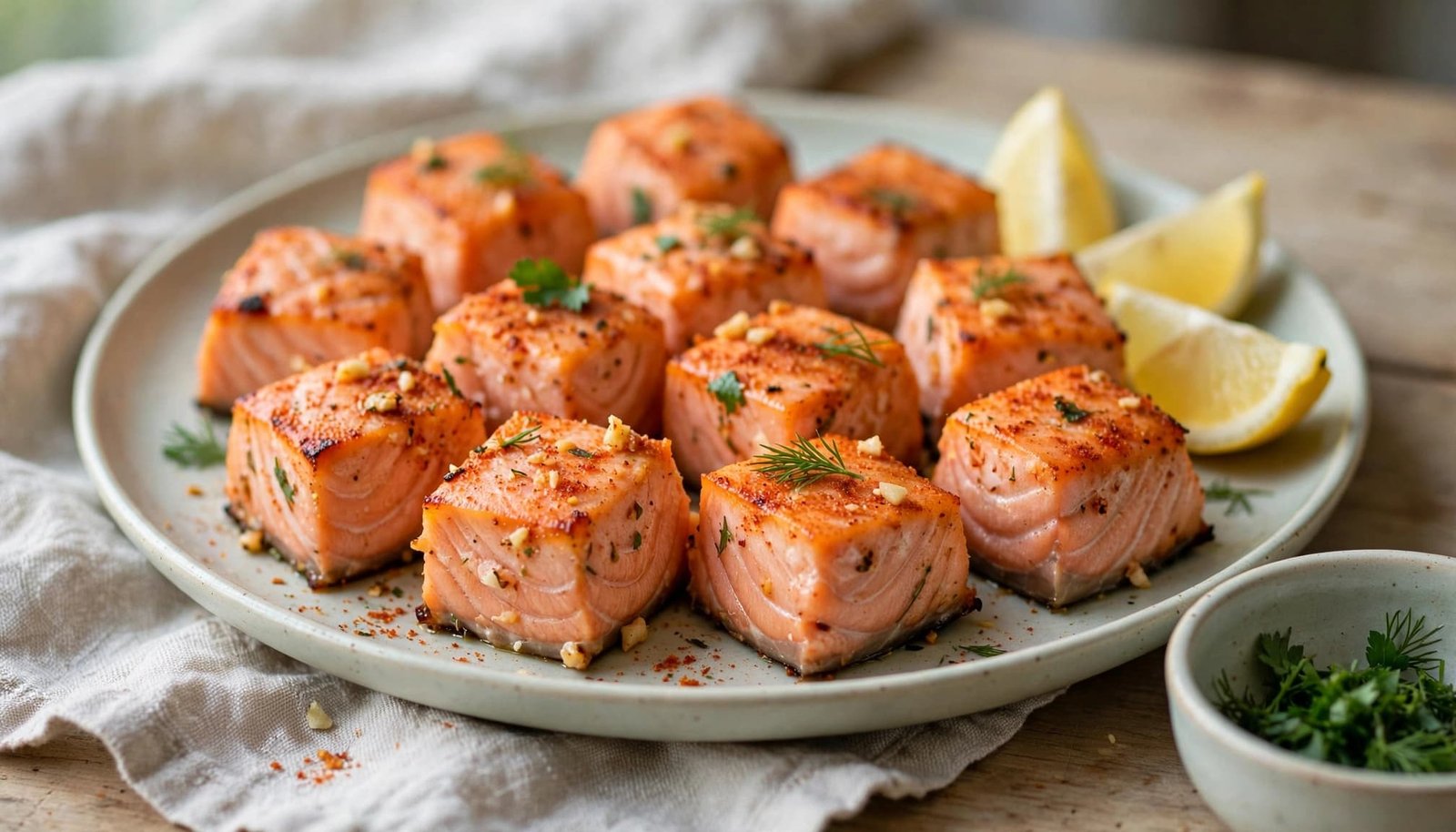
- Pat the salmon dry with paper towels. Cut it into cubes about 1 inch wide; pieces close in size cook more evenly and are less likely to dry out while larger pieces finish.
- Season the cubes. Add the salmon to a bowl with the olive oil, garlic powder, smoked paprika, salt, pepper, and brown sugar, if using. Toss gently until each piece has a light, even coating.
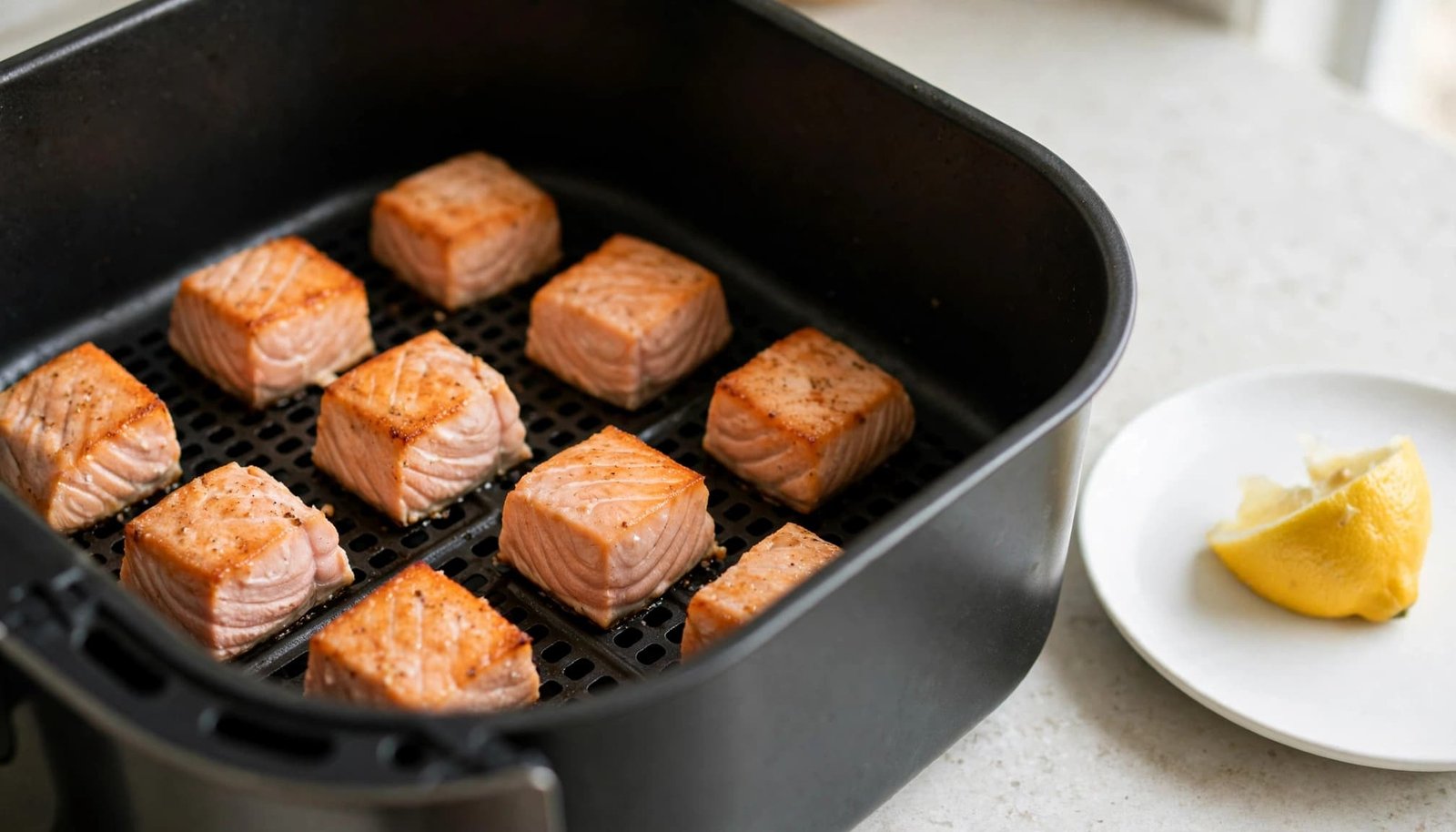
- Arrange the salmon in the air fryer basket in a single layer, leaving a little space between pieces. Work in batches if needed, since crowded salmon can steam instead of browning. Preheat the air fryer if your model recommends it.
- Air-fry at 400°F for about 6 to 8 minutes. Check the bites early because air fryers vary, and smaller cubes can finish quickly. Shake the basket or turn the pieces halfway through if they need more even browning.
- Check the thickest piece with an instant-read thermometer. The center should reach 145°F, the FDA’s recommended temperature for finfish. If it hasn’t reached that temperature, cook the bites for another minute and check again. FDA guidance on cooking seafood safely also recommends using a food thermometer to verify doneness.
Choose a seasoning or glaze that suits your meal
The basic garlic-paprika coating is easy to adapt without changing the air fryer method. Add dry seasonings before cooking, but save sugary or wet glazes for the final minutes or after the salmon comes out.
Try smoky, spicy, or herb-forward flavors
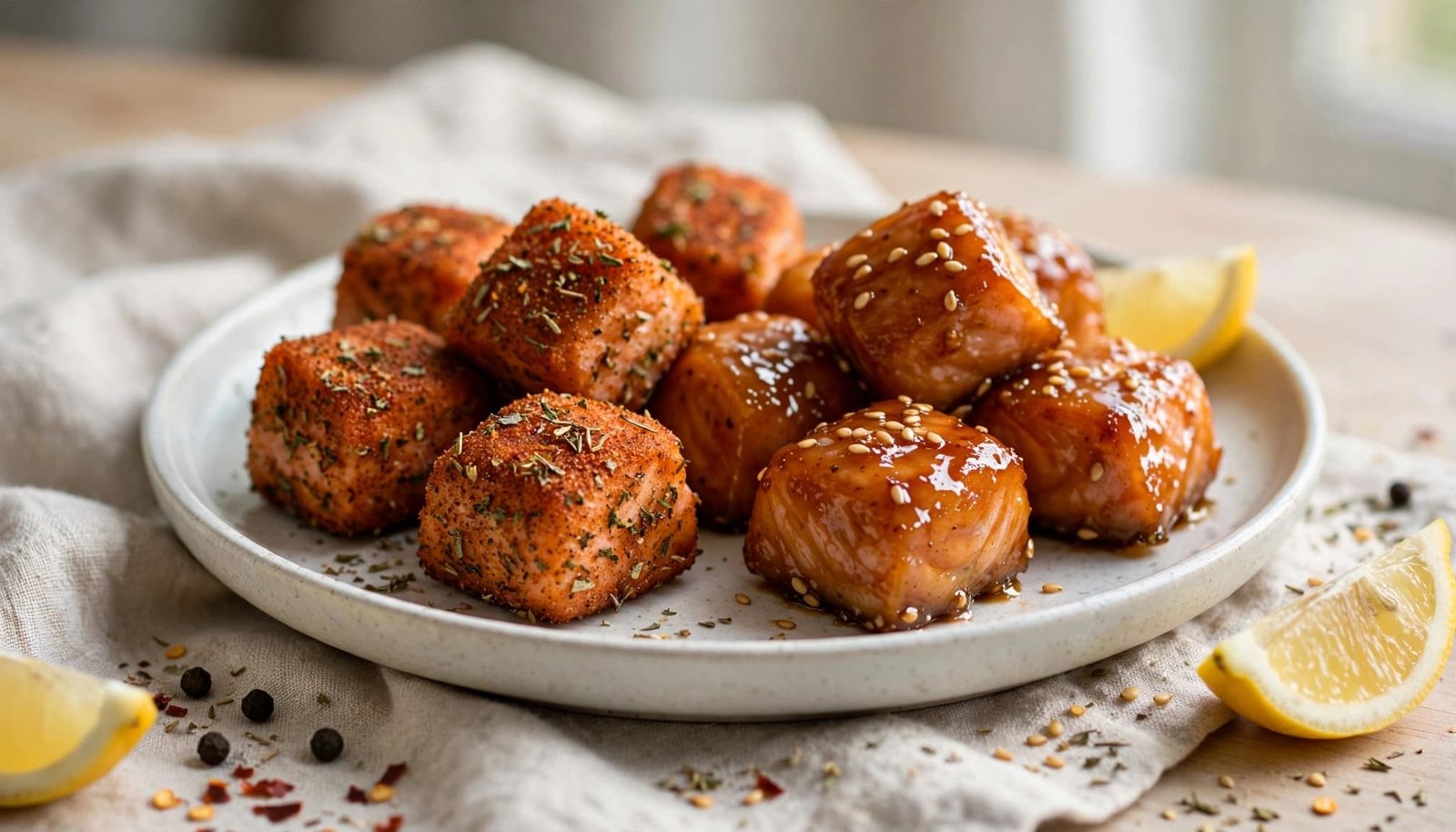
For a bolder smoky bite, add extra smoked paprika and a pinch of cayenne to the oil-coated salmon. Lemon pepper gives the pieces a bright, savory edge, while dried dill, thyme, or parsley adds an herbal note that pairs well with potatoes or greens.
Keep the changes simple: choose one flavor direction and season the salmon before it goes into the basket. If you use a premixed blend, check its salt content first and reduce the recipe’s added salt as needed. Some blends already bring plenty of salt, and extra can overwhelm the fish.
For a fresh finish, add lemon juice or chopped herbs after cooking rather than mixing them into the dry seasoning. The salmon’s mild flavor stays in balance, and each bite gets a little brightness. Serve the herbed version with baked salmon bowls with brown rice and cucumber for another easy meal pairing.
Make a honey-soy glaze without burning it
Stir together 1 tablespoon honey, 1 tablespoon soy sauce, a small amount of minced garlic and grated ginger, and a few drops of sesame oil. This makes a savory-sweet glaze for a family-sized batch; use low-sodium soy sauce or cut back on added salt if needed.
Before the glaze touches raw salmon, set aside a spoonful in a clean bowl for serving. Air-fry the bites with their dry seasoning, then brush on the remaining glaze during the final minute or two, or toss the cooked pieces with it just before serving. Honey browns quickly at high heat, so adding it early can leave the surface too dark before the salmon finishes cooking. Use a light coating, and keep an eye on the bites once glazed.
Because soy sauce and honey also work well over rice and vegetables, this flavor suits a bowl-style meal. For another example of that pairing, try salmon bowls with a honey-soy flavor.
Keep the Salmon Tender with These Air Fryer Tips
Air fryer salmon bites cook fast, so small differences in size and spacing can change their texture. A little attention before cooking, plus an early temperature check, helps prevent dry edges and underdone centers.
Avoid dry centers and unevenly cooked pieces
Aim for cubes that are close to 1 inch across. Smaller pieces can dry out while larger ones cook through, so uneven cuts often leave you with a mix of textures in the same batch. They don’t need perfect edges, but try to keep their thickness consistent.
Leave a little room around each piece in the basket. When salmon bites crowd together, hot air can’t circulate as well, and the pieces may steam instead of browning. If you can’t arrange them in a single layer with small gaps, cook in batches. The extra few minutes are worth it for more even browning and tender centers.
Air fryer timing is a guide, not a guarantee. Appliance strength, cube size, and a full basket all affect how quickly the fish cooks, so start checking toward the early end of the cooking range. Insert an instant-read thermometer into the thickest cube, taking care to reach its center. For more detail on spacing and doneness, see these air fryer salmon bites with yogurt sauce.
Know when the salmon is done
Lightly browned edges and flesh that flakes easily with a fork are useful signs that the salmon is close. However, color and texture can’t confirm a safe internal temperature. Check the thickest piece with a thermometer and cook until it reaches 145°F, the FDA’s recommended temperature for seafood. The FDA’s safe food handling guidance explains why a thermometer is the reliable way to check doneness.
Because small pieces cook quickly, check them before the timer ends rather than assuming every batch needs the full cooking time. If the thickest cube hasn’t reached 145°F, return the bites to the air fryer briefly, then test again. Once they reach that temperature, transfer them to a plate and let them rest for a couple of minutes. Carryover heat may continue to warm the fish slightly, but don’t count on resting to bring undercooked salmon to a safe temperature.
Serve Salmon Bites with Easy Sides and Sauces
Air fryer salmon bites fit a quick lunch or dinner because they work in bowls, on a plate, or tucked into warm tortillas. Pair them with a ready-to-serve grain or a fast vegetable, then add a bright sauce or fresh garnish.
Build a bowl, plate, or quick appetizer
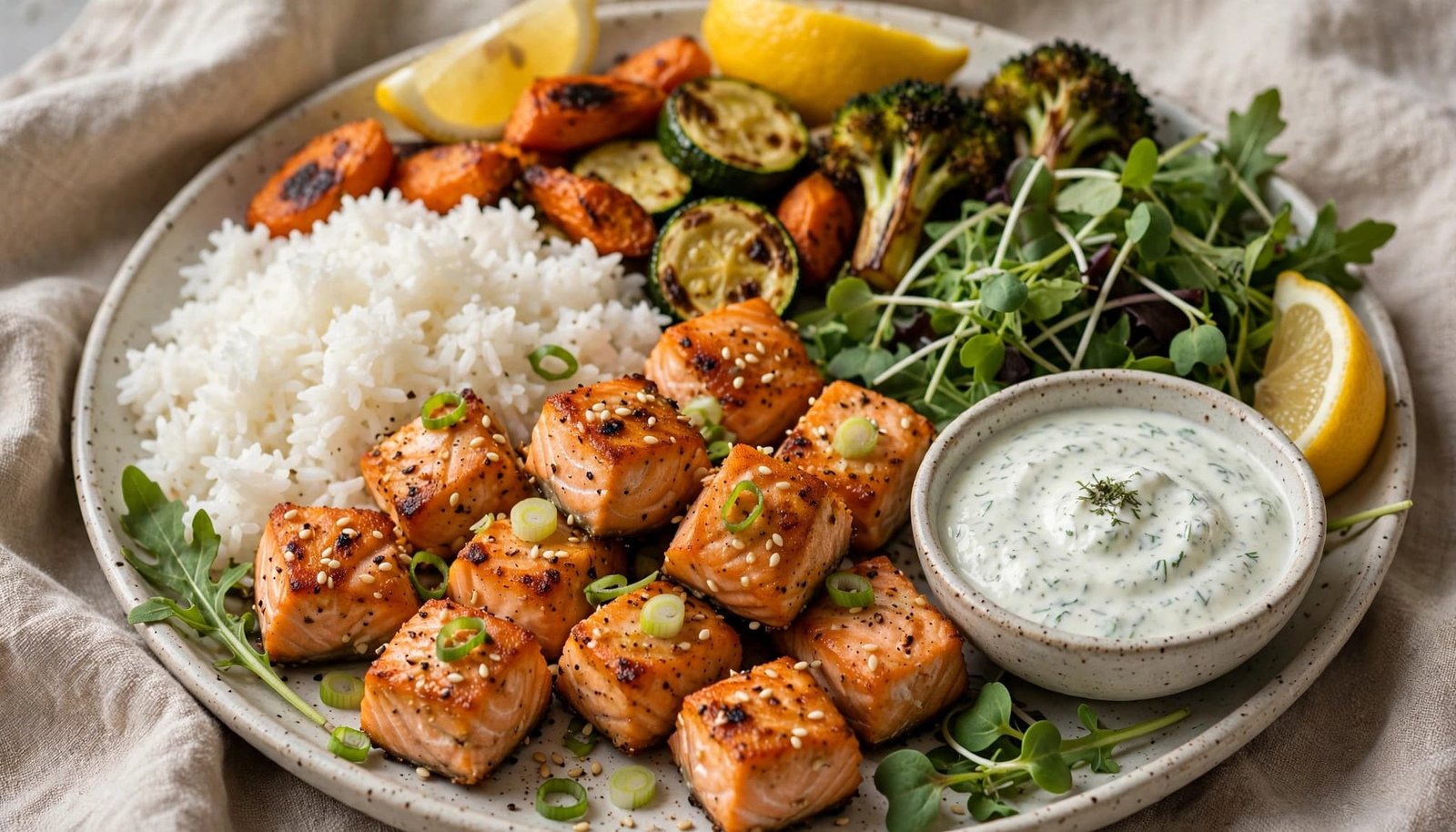
For a filling lunch, spoon the salmon over rice or quinoa and add cucumber, shredded cabbage, or a handful of greens. A squeeze of lemon and sliced scallions bring freshness, while sesame seeds add a little crunch. For more topping ideas, try these salmon grain bowls with roasted vegetables.
At dinner, plate the bites with roasted vegetables or steamed broccoli and a simple grain. Since the salmon cooks quickly, use leftover rice or vegetables, or choose a frozen vegetable that steams in minutes. USDA’s MyPlate guidance for balanced meals suggests filling half the plate with fruits and vegetables, an easy cue when adding sides.
For a casual meal, tuck the salmon into warm tortillas with shredded cabbage, avocado, and salsa. A little yogurt sauce or lime juice ties the fillings together. These salmon tacos with fresh toppings offer another easy way to set up a build-your-own dinner.
Pair the bites with sauces and simple sides
Keep the sides quick so they don’t slow down the meal. Cucumber salad adds a cool, crisp contrast to warm salmon, while steamed broccoli needs little more than lemon and a pinch of salt. A bagged slaw mix dressed with lime juice also makes a fast taco topping or bowl addition.
For a creamy dip, stir plain Greek yogurt with lemon juice, chopped dill, a small pinch of salt, and black pepper. Thin it with a teaspoon of water if you’d like a drizzle instead of a dip. It pairs especially well with smoky paprika seasoning, and it takes only a few minutes to mix.
If the salmon has a honey-soy glaze, serve it with rice, steamed broccoli, and sliced scallions. For a lighter plate, spoon the bites over greens and add cucumber, then use the yogurt sauce or a lemon dressing. Finish with lemon, sesame seeds, or herbs just before serving, so the salmon stays crisp and the fresh toppings keep their texture.
Store and reheat leftovers without drying them out
Air Fryer Salmon Bites taste best right after cooking, when the edges are lightly crisp and the centers are tender. If you have extras, chill them promptly and reheat only the portion you plan to eat.
Refrigerate leftovers and warm them gently
Transfer leftover salmon to a sealed container and refrigerate it within 2 hours of cooking, or within 1 hour if the room is above 90°F. Keep the refrigerator at 40°F or below, and use the salmon within 3 to 4 days. The USDA’s leftover food safety guidance covers these storage limits and when to discard food left out too long.
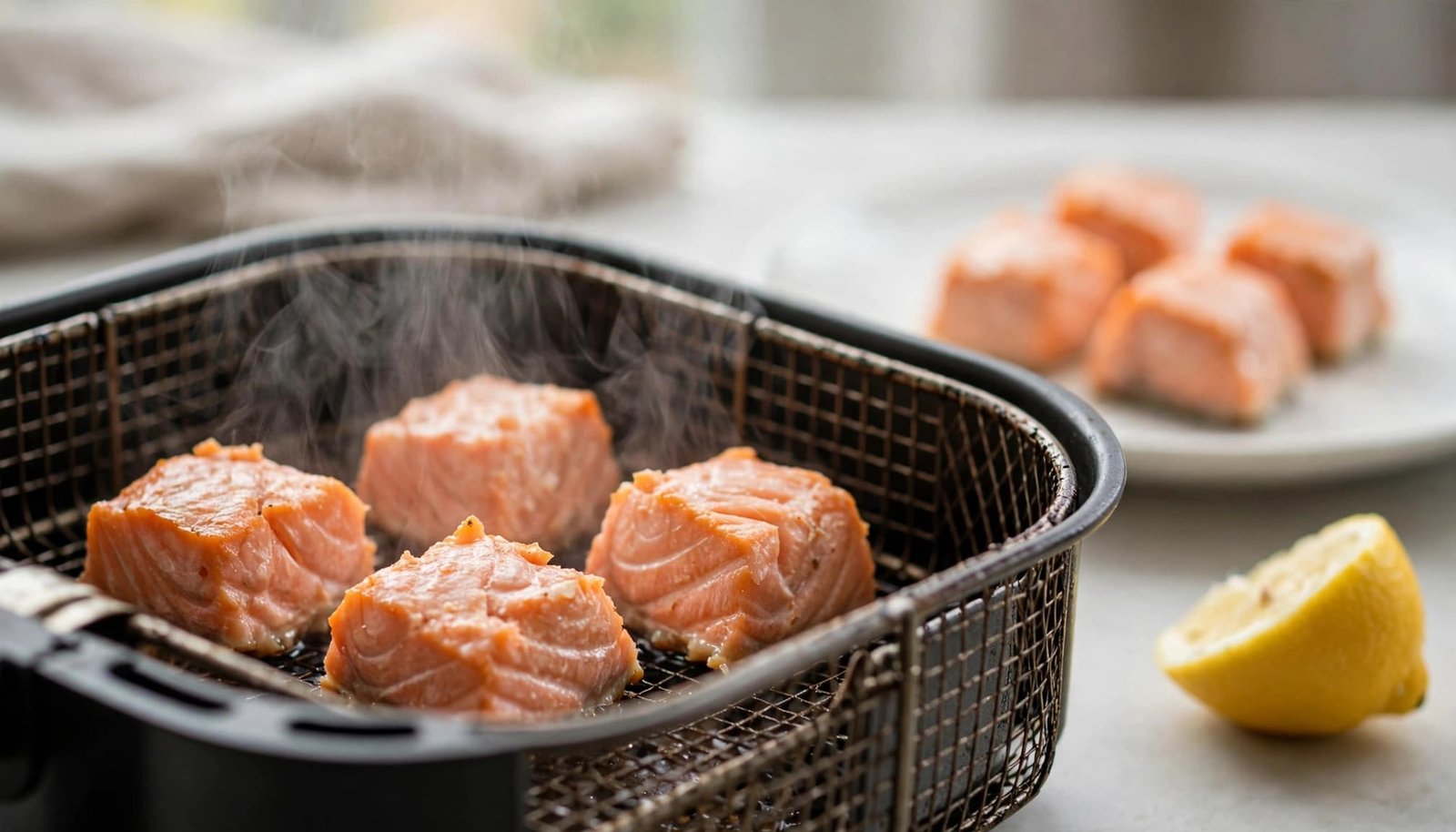
For a recipe-style reheat, arrange a single layer in the air fryer basket and warm the bites at 325°F for 2 to 3 minutes, checking after the first couple of minutes. The lower temperature and short time help limit moisture loss, but appliance strength and bite size vary. Add another brief interval only if needed.
The microwave is faster. Place a portion on a microwave-safe plate, cover it loosely, and heat in short bursts of about 20 seconds. Check between bursts so the fish warms through without spending extra time in the microwave.
For food safety, the USDA recommends reheating leftovers to 165°F. A thermometer gives you a reliable check; the air-fryer timing above is a recipe suggestion, not a guarantee that the salmon has reached a safe temperature. Avoid reheating the full batch repeatedly, since each round can leave the fish drier. Portioning leftovers before storage makes it easier to warm only what you need.
If you have more salmon than you can comfortably use, flake some into crispy salmon cakes with lemon dill yogurt sauce. This gives cooked salmon a different texture and flavor, while keeping the original bites from enduring another reheat.
Conclusion
Air Fryer Salmon Bites are simple to get right: cut the salmon into even cubes, leave space for hot air to circulate, and cook briefly at 400°F. Then check the thickest piece with a thermometer to confirm it reaches 145°F.
Once you’ve got the method down, switch up the seasoning or serve the bites over rice, greens, or vegetables. A few small choices make a quick salmon dinner easy to tailor to your taste.
Save the pin for later


- Classic Apple Crisp with a Golden Oat Topping - November 27, 2026
- Baked Ziti With Italian Sausage - November 27, 2026
- Ground Turkey Enchilada Skillet - November 27, 2026