
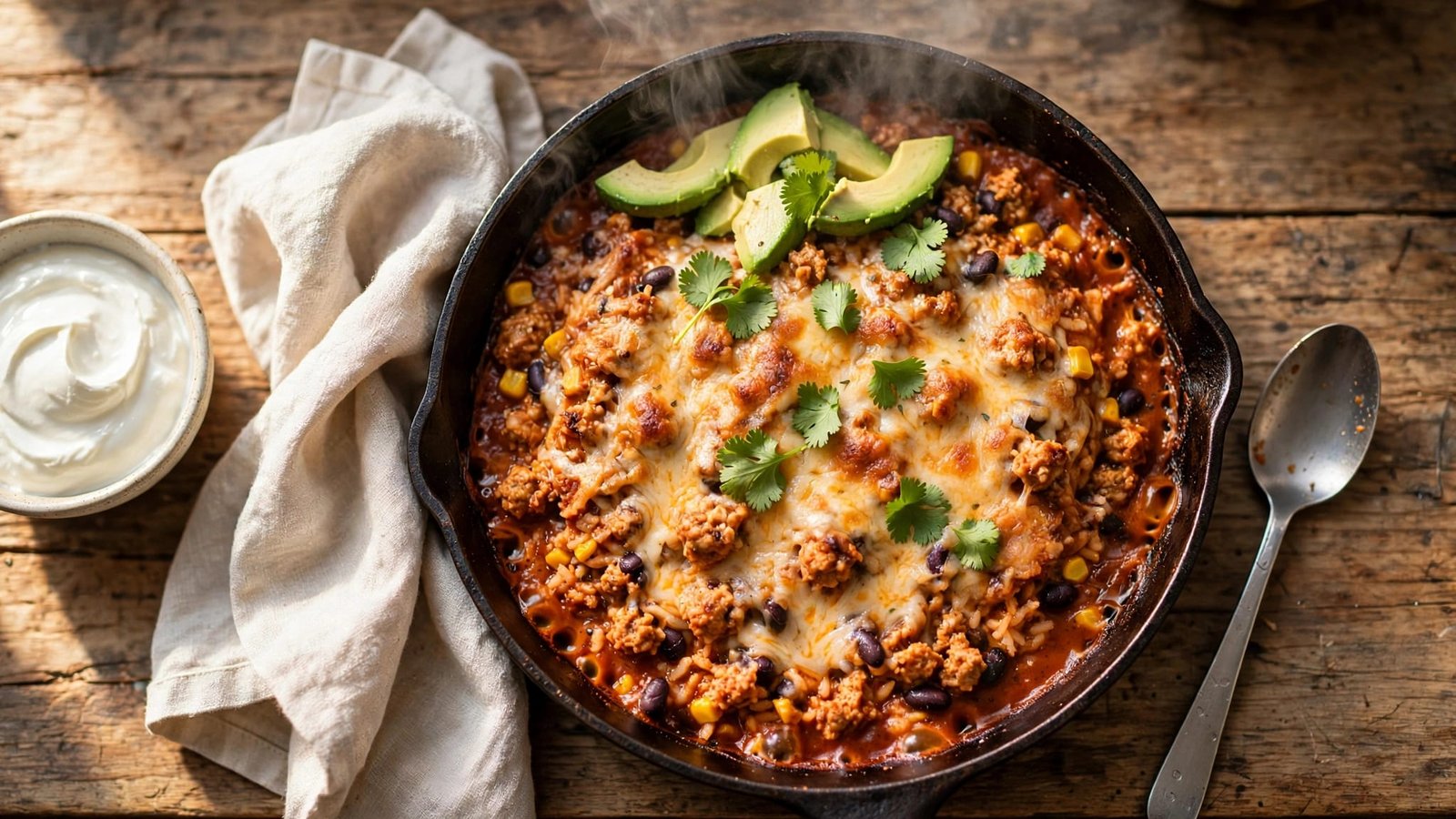
A cheesy ground turkey enchilada skillet brings the bold, saucy flavor of enchiladas to dinner without rolling tortillas or piling up pans. Ground turkey simmers with enchilada sauce, rice, black beans, and corn for a hearty one-pan meal that’s easy to finish with your favorite toppings.
Add cilantro, avocado, or a spoonful of sour cream at the table, and dinner is ready with little fuss. If you enjoy cozy skillet meals, try this one-pot pumpkin chili next; first, gather the ingredients for this enchilada-inspired dinner.
Ground Turkey Enchilada Skillet: Ingredients and Easy One-Pan Steps
This skillet brings together seasoned ground turkey, tender rice, beans, corn, and enchilada sauce in one pan. Gather everything before you start, especially the broth and cheese, so the rice can cook without interruption.
What to gather before you start
For the savory base:
- 1 tablespoon olive oil
- 1 pound ground turkey
- 1 medium yellow onion, diced
- 2 garlic cloves, minced
- 1 teaspoon ground cumin
- 1 teaspoon chili powder
- ½ teaspoon salt
For the skillet:
- 1 cup uncooked long-grain white rice
- 1 (15-ounce) can red enchilada sauce
- 1 cup low-sodium chicken broth or water, plus a little extra if needed
- 1 (15-ounce) can black beans, drained and rinsed
- 1 cup canned or frozen corn
- 1 (4-ounce) can diced green chiles
- 1 cup shredded cheddar or Mexican-blend cheese
For serving: Chopped cilantro, sliced avocado, sour cream, and lime wedges are all good finishing touches.
Use long-grain white rice for this method. Brown rice, instant rice, and other varieties need different amounts of liquid and different cooking times, so follow the recipe’s rice type and liquid ratio rather than swapping them one-for-one. Canned corn can go straight into the pan after draining; thaw frozen corn first. Rinsing canned black beans removes some of their starchy canning liquid, which can otherwise make the sauce thicker and saltier. If the turkey releases a lot of liquid while browning, drain the excess before adding the rice.
For a milder skillet, choose mild enchilada sauce and green chiles. Use hot sauce or hot green chiles if you prefer more heat. Shred cheese from a block when possible; it melts smoothly across the top.
How to cook the skillet from start to finish
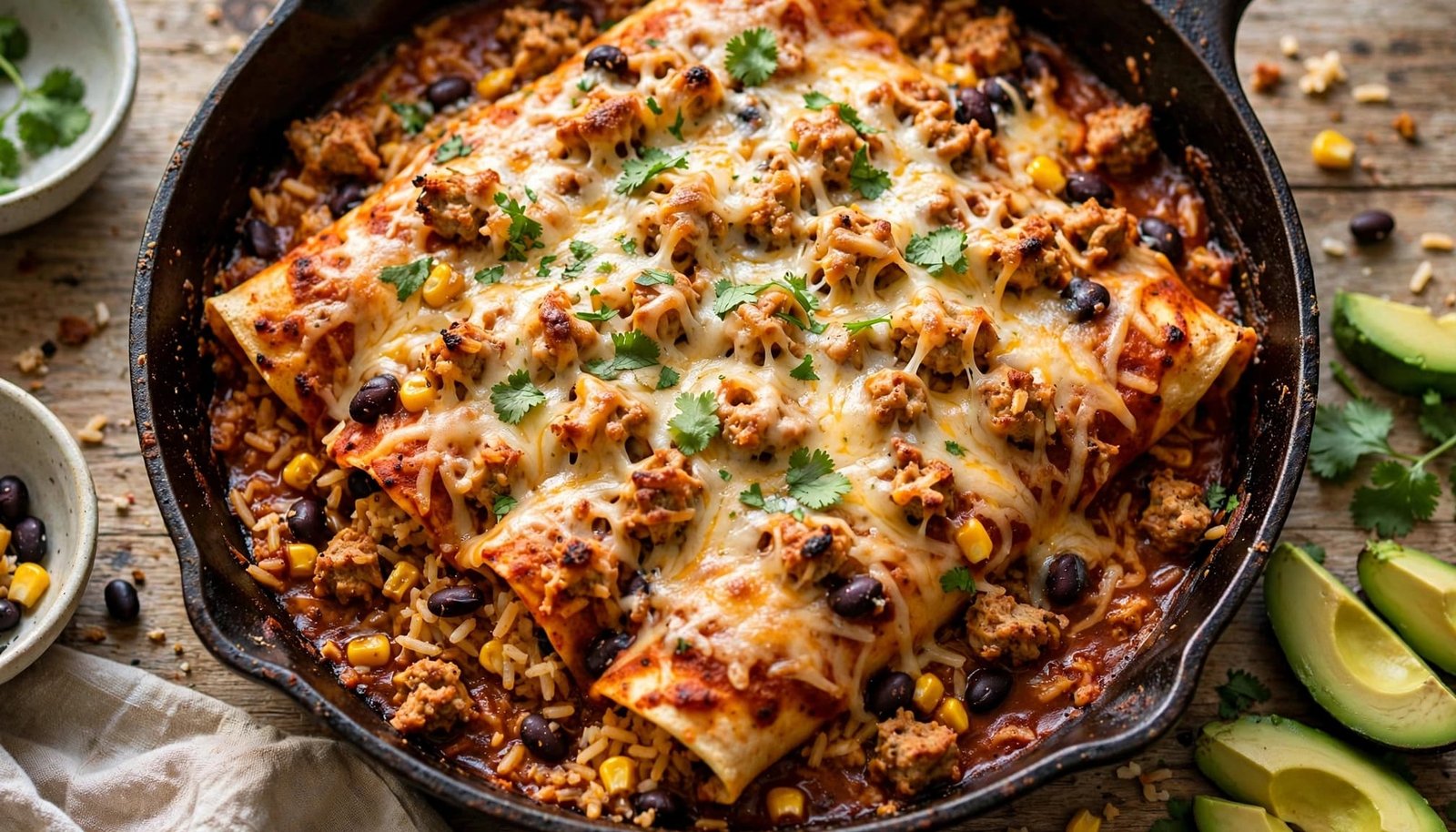
- Heat the olive oil in a large, deep skillet over medium heat. Add the turkey and break it into small crumbles as it cooks. When it’s no longer pink, check that it has reached 165°F with a food thermometer, the safe temperature for ground poultry according to the USDA safe temperature chart.
- Add the diced onion and cook, stirring occasionally, until it softens. Stir in the garlic, cumin, chili powder, and salt; cook for about 30 seconds, just until fragrant. If liquid has pooled in the skillet, carefully drain it before moving on.
- Stir in the rice, enchilada sauce, broth, beans, corn, and green chiles. Scrape the bottom of the pan to loosen any browned bits, then bring the mixture to a gentle simmer. Once small bubbles appear, reduce the heat to low and cover the skillet tightly.
- Cook with the lid on until the rice is tender and most of the liquid is absorbed. Check the package guidance for your rice, since cook time varies by type; stir once or twice during cooking to prevent sticking, then replace the lid promptly so steam stays in the pan. If the rice is still firm and the skillet looks dry, add broth a few tablespoons at a time.
- When the rice is tender, scatter the shredded cheese over the top. Cover the skillet again for a few minutes, until the cheese melts. Serve hot with cilantro, avocado, sour cream, or lime. For another meal with seasoned turkey and beans, try these healthy turkey tacos.
How to keep the turkey juicy and the rice tender
The best texture comes from watching the turkey and rice as they cook, rather than relying on the clock alone. Ground turkey is lean, so a few extra minutes over high heat can leave it dry, while rice needs steady moisture and gentle heat to soften evenly.
Brown the turkey without drying it out
Cook the turkey over medium heat, breaking it into small crumbles as it browns. Stop once it has lost its raw pink color and is cooked through; prolonged browning drives out moisture before the rice even goes into the pan. If the meat releases a pool of liquid, drain it before adding the other ingredients so the skillet doesn’t turn watery.
For food safety, check the thickest portion with a food thermometer. Ground turkey should reach 165°F, as outlined in the USDA’s guidance on checking doneness and safety. Color alone can’t confirm that the meat has reached a safe temperature.
Keep the rice at a gentle, covered simmer
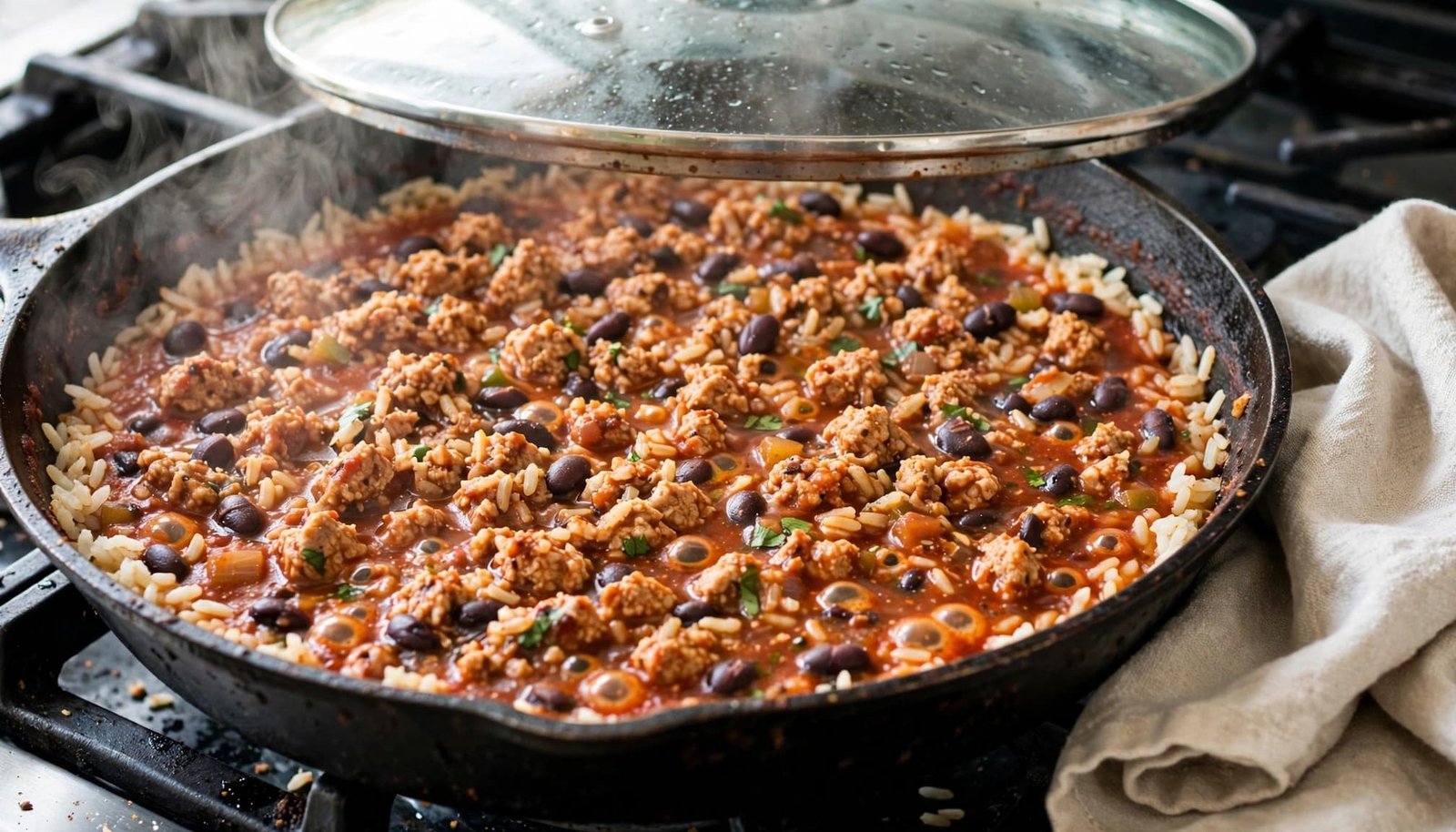
Once the sauce and broth reach a simmer, lower the heat and cover the skillet. A tight lid traps steam, giving the long-grain rice time to absorb liquid without boiling hard. Keep the heat low enough for small, steady bubbles; a rolling boil can cook off liquid too fast and leave some grains firm.
Stir once or twice if needed to prevent sticking, then replace the lid promptly. Frequent stirring and lifting let steam escape, which can slow the rice and make the cooking uneven. For another example of rice cooking in a covered skillet, see this chicken and wild rice skillet.
Adjust the liquid before serving
If the pan looks dry but the rice still feels firm, add a few tablespoons of warm broth or water, stir gently, and cover again. Check the rice after a few minutes, then repeat with a small splash if needed. Adding liquid gradually protects the sauce from becoming soupy.
If the rice is tender but extra liquid remains, uncover the skillet and let it simmer gently for a few minutes. Then turn off the heat and let the dish stand uncovered briefly; the rice will absorb a little more sauce as it settles. Once the grains are tender and the mixture looks moist rather than watery, add the cheese and finish the skillet.
Easy swaps for rice, quinoa, tortillas, and more
The rice, beans, corn, and enchilada sauce make this skillet easy to adapt without losing its savory, enchilada-inspired flavor. Keep an eye on moisture and cooking time when you change the grain or add vegetables, since those swaps can affect how the skillet cooks.
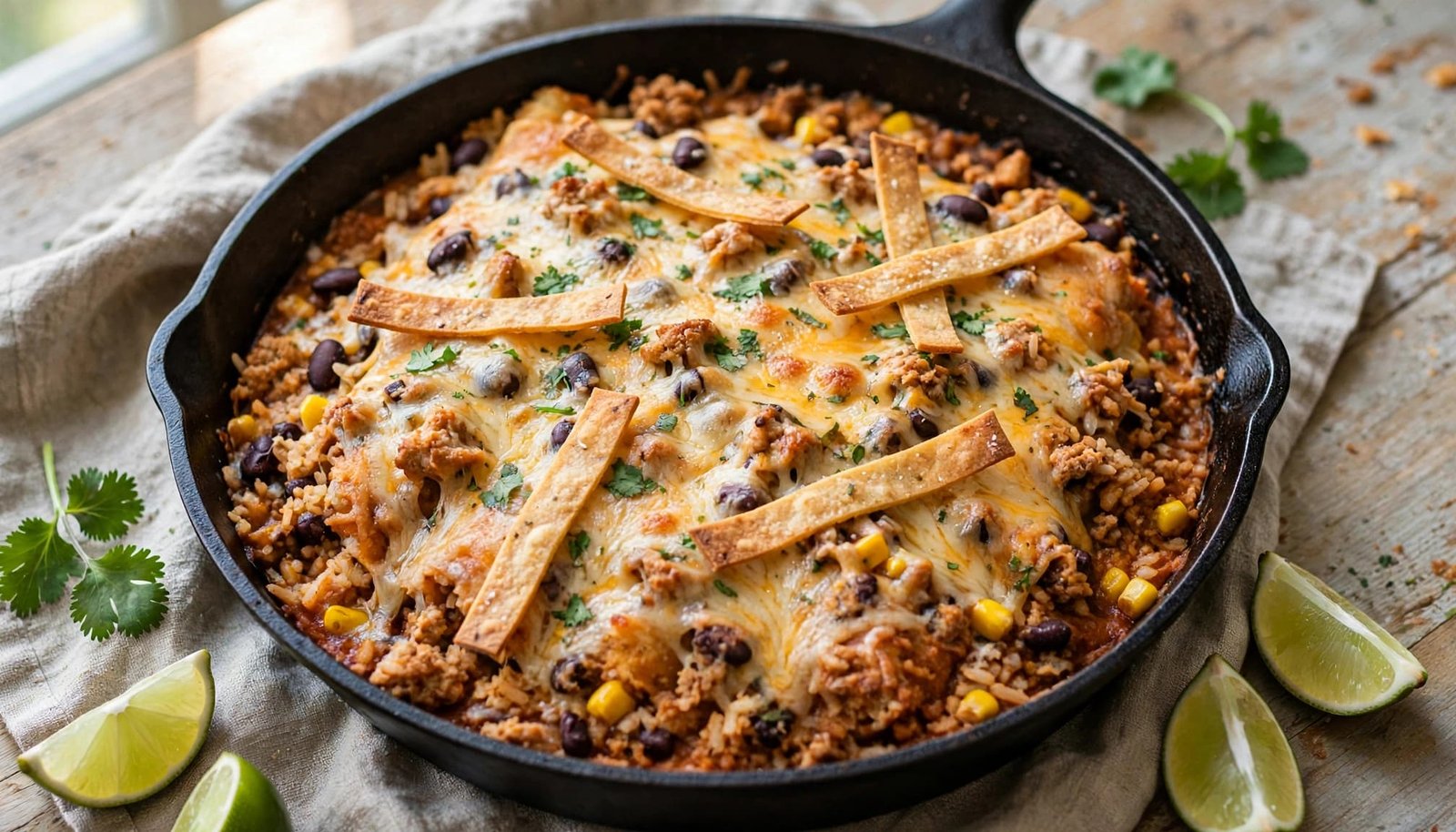
Swap the grain, tortillas, or protein
Quinoa works well in place of rice, but it needs its own liquid amount and cooking time. Follow the package directions or a tested guide to cooking quinoa, and check the skillet as it simmers. You may need to adjust the broth so the quinoa cooks through without leaving the mixture soupy. For another dinner idea with quinoa and beans, try these quinoa and black bean stuffed peppers.
For a tortilla-based version, stir in tortilla strips near the end of cooking, then top with cheese. Add tortilla chips just before serving instead, so they keep some crunch rather than turning mushy in the sauce. Ground chicken or beef can replace the turkey; brown it thoroughly before adding the other ingredients. Pinto beans also make an easy one-for-one swap for black beans.
Make it mild, spicy, or meatless
To keep the skillet mild, choose mild enchilada sauce and mild green chiles. For more heat, use hot sauce or hot green chiles, then add sliced jalapeño or a dash of hot sauce at the table so everyone can adjust their serving.
For a meatless skillet, leave out the turkey and add extra beans and vegetables, such as diced zucchini or bell pepper. Cook the vegetables with the onion until they soften, and add beans with the sauce. Since vegetables release moisture, start with less broth and add more only if the mixture looks dry. Grain and vegetable changes can affect both the liquid needed and the cook time, so check for tenderness rather than relying only on the clock.
Before serving, taste the skillet and adjust the seasoning. Extra beans and vegetables can soften the flavor, so a pinch of salt, cumin, or chili powder may help bring the enchilada-style seasoning back into balance.
Add toppings and sides that make each bowl your own
The cheesy enchilada skillet is hearty on its own, so a few fresh or crisp toppings can make each serving feel brighter. Set them out at the table and let everyone build a bowl to match their taste.
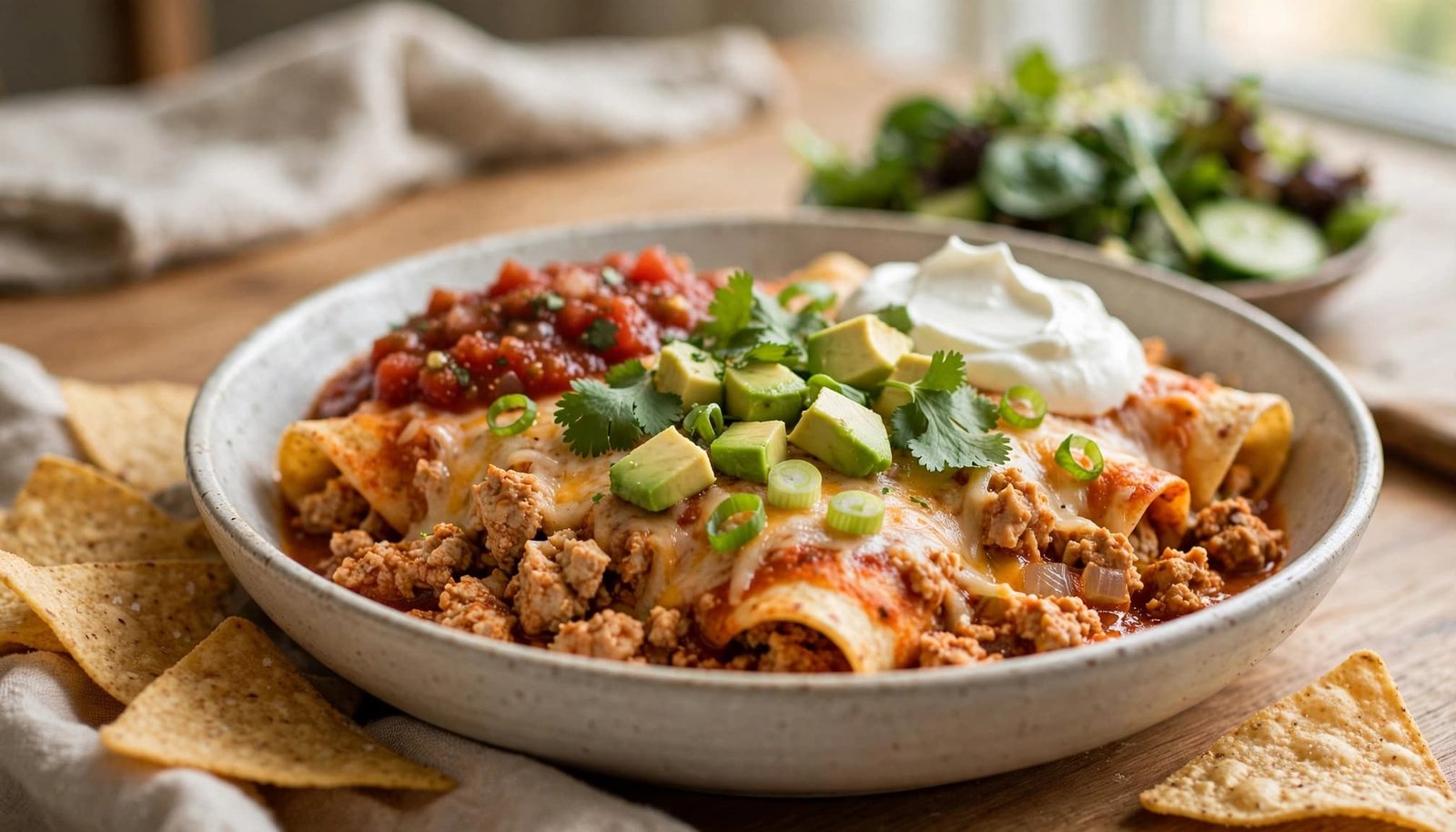
Mix fresh, creamy, and crunchy toppings
Cilantro adds a fresh, herbal note, while sliced green onion brings a mild bite. For a cool, creamy finish, spoon sour cream over the warm skillet or add diced avocado just before serving. A spoonful of salsa adds extra brightness and sauce; choose mild or spicy to suit the table.
For crunch, serve extra tortilla chips on the side or crumble a few over each bowl at the last moment. They pair especially well with the soft rice and beans, but keep them separate until serving so they don’t soak up the enchilada sauce. You can also offer lime wedges for anyone who wants a tangy squeeze over the top.
A few simple combinations make the topping spread easy to use:
- Add cilantro, avocado, and sour cream for a cool, creamy bowl.
- Spoon on salsa and sliced green onion for a brighter, sharper finish.
- Scatter tortilla chips over the skillet for a crisp contrast.
Pair the skillet with a light side
Since the skillet already includes rice, beans, and cheese, a simple green salad is an easy way to keep the meal from feeling too heavy. Toss tender greens with a light vinaigrette, or serve crisp cucumber and lettuce with lime. Keep the dressing on the side if you want the greens to stay fresh and snappy.
Slaw is another good match, especially when its crisp cabbage and tangy dressing cut through the rich, saucy skillet. For a quick side, toss shredded cabbage with lime juice, a little oil, and salt. Find more fresh cabbage slaw ideas if you want a few variations.
Add toppings at the table rather than stirring them into the full pan. That keeps avocado from browning, chips from softening, and fresh herbs from wilting. For leftovers, refrigerate the skillet promptly and store crunchy toppings separately; USDA guidance says cooked leftovers keep for three to four days in the refrigerator when handled safely. Read the USDA’s leftover storage guidance for safe cooling and storage details.
Make ahead, refrigerate, and reheat leftovers safely
You can prep part of this Ground Turkey Enchilada Skillet ahead, or save fully cooked portions for an easy lunch. Keep fresh toppings separate, and chill cooked food promptly so it stays safe and tastes its best.
Prep the turkey mixture ahead
Cook the turkey with the onion, garlic, and seasonings as directed, then let the mixture cool in a shallow container. Refrigerate it within two hours of cooking, or within one hour if the room is above 90°F. When you’re ready to make dinner, return the mixture to the skillet and continue with the rice, sauce, broth, beans, and corn.
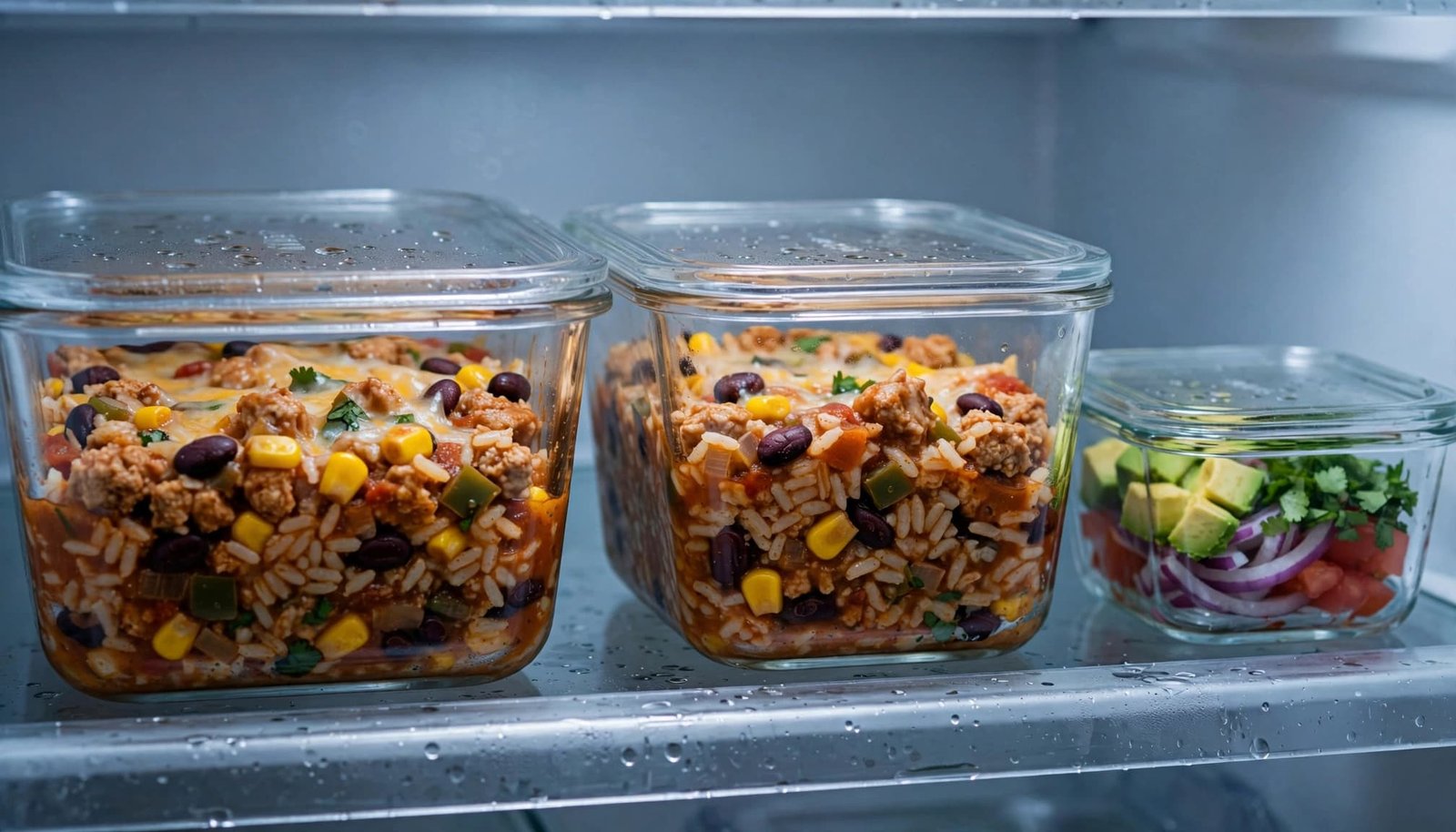
For the best texture, cook the rice when you finish the skillet rather than storing it with the turkey mixture. Keep avocado, cilantro, sour cream, salsa, and tortilla chips in separate containers, then add them just before serving. For another make-ahead turkey meal, see these storage tips for turkey lettuce wrap filling.
Store and reheat finished leftovers
Transfer the cooked skillet to a sealed container and refrigerate it at 40°F or below. Use leftovers within three to four days, following USDA guidance for safely reheating leftovers. Divide a large batch into smaller, shallow containers so it cools more quickly.
Reheat only the portion you plan to eat, either in a covered skillet over medium-low heat or in a microwave-safe dish. Stir partway through so the center heats evenly, and add a splash of broth or water if the rice has dried out. Check the center with a food thermometer and heat to 165°F before serving. Keep toppings chilled and separate until the skillet is hot.
Conclusion
This Ground Turkey Enchilada Skillet makes dinner hearty and simple, with tender rice, beans, and savory turkey in every spoonful. Best of all, it’s flexible enough to suit your kitchen and easy to finish with toppings everyone can choose for themselves.
Try the basic recipe first, then switch up the grain or toppings to match your taste. For another comforting dinner, make these ground turkey stuffed peppers.
Save the pin for later

- Classic Apple Crisp with a Golden Oat Topping - November 27, 2026
- Baked Ziti With Italian Sausage - November 27, 2026
- Ground Turkey Enchilada Skillet - November 27, 2026