
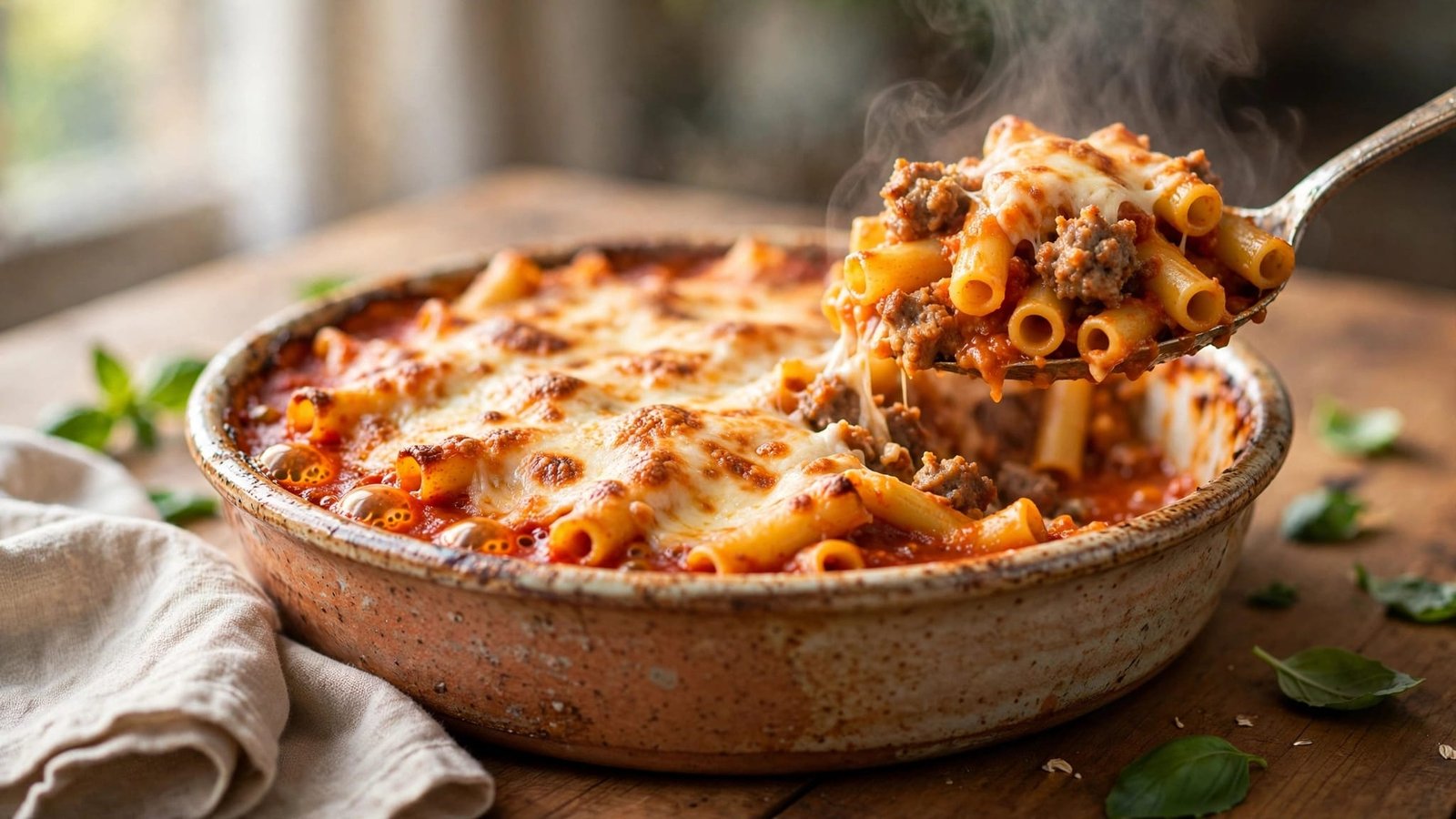
A hot pan of baked ziti comes from the oven with tomato sauce bubbling at the edges, browned cheese on top, and savory Italian sausage tucked between the pasta. It’s a hearty, shareable dinner that fits a family meal and can be prepared ahead for a busy night.
This recipe uses a 9-by-13-inch baking dish, a simple ingredient list, and clear steps. A few small choices, especially undercooking the pasta slightly, help keep every serving tender instead of mushy.
Start with the ingredients and easy method, then put this comforting casserole on the table with confidence.
Baked Ziti With Italian Sausage: The Ingredients and Easy Method
This baked ziti with Italian sausage makes 8 servings in a 9-by-13-inch baking dish. Sweet or hot Italian sausage both work, and the sausage may release enough fat that you can skip the olive oil.
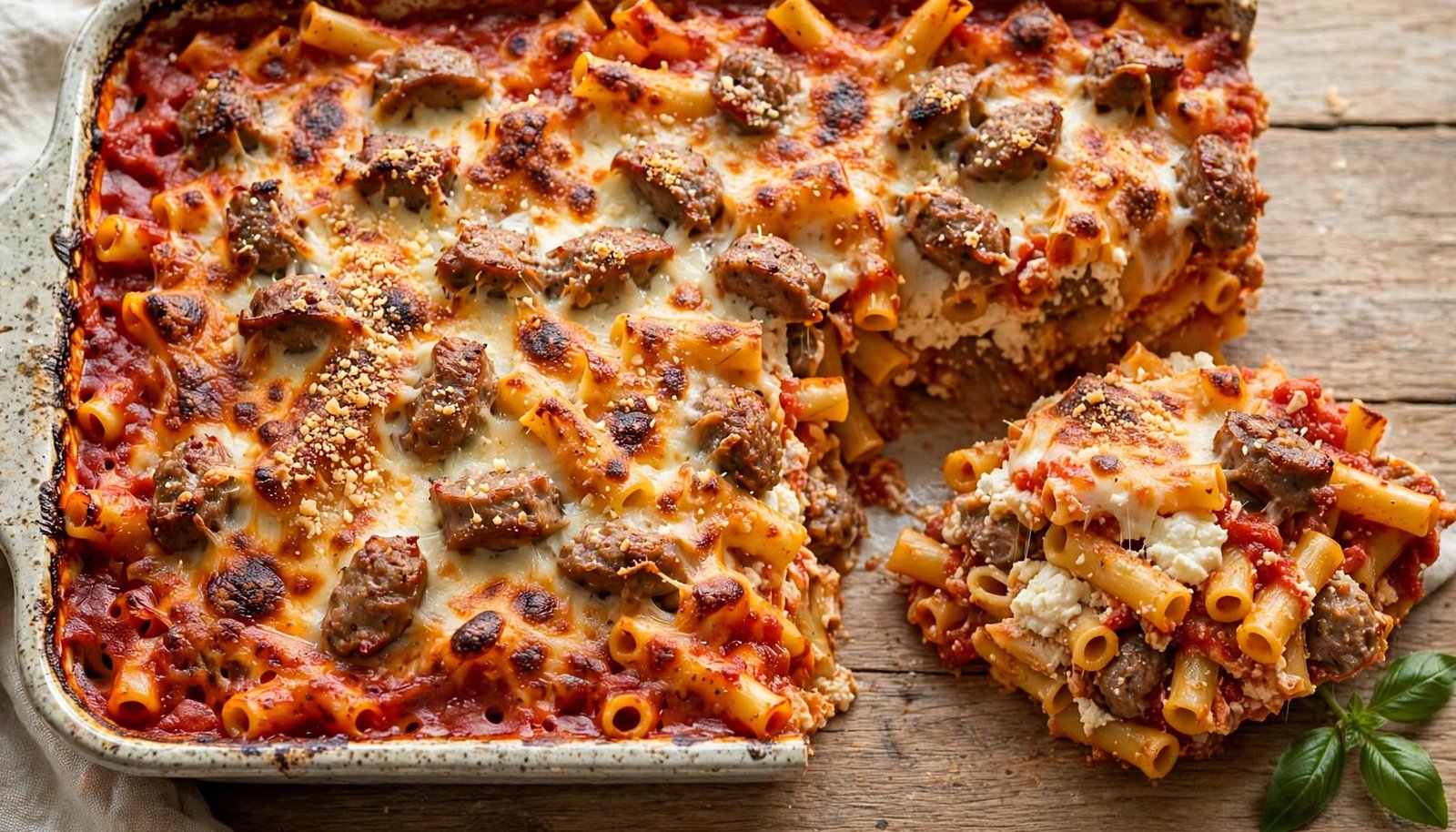
What You’ll Need for the Sausage, Sauce, Pasta, and Cheese
Group the ingredients by what they do in the casserole. Ziti is the traditional choice, but penne or rigatoni can stand in if that’s what you have.
Pasta and sausage
- 1 pound dry ziti
- 1 pound Italian sausage, casings removed
- 1 tablespoon olive oil, only if needed
Tomato sauce and seasoning
- 3 garlic cloves, minced
- 1 tablespoon tomato paste
- 1 can (28 ounces) crushed tomatoes
- 1 teaspoon dried Italian seasoning
- Salt and black pepper, to taste
Cheese and garnish
- 15 ounces ricotta
- 2 cups shredded mozzarella, divided
- 1/2 cup grated Parmesan
- Chopped fresh basil, for serving
Crushed tomatoes form the sauce, while tomato paste adds a deeper, more concentrated flavor. Ricotta makes creamy pockets between the pasta, and mozzarella with Parmesan creates a browned, savory top.
How to Assemble and Bake the Ziti
Cook the pasta just shy of tender, since it will finish in the oven. For comparison, Barilla’s al dente timing guidance shows why cooking times vary by shape, so use the ziti package directions as your guide.
- Heat the oven to 375°F. Bring a large pot of salted water to a boil, then cook the ziti for about 2 minutes less than the package directions. Drain it well.
- Meanwhile, heat a large skillet over medium heat. Add the sausage and break it into small pieces as it browns. If the pan looks dry, add the olive oil; otherwise, let the sausage’s fat do the work.
- Stir in the garlic and tomato paste, and cook briefly until fragrant. Add the crushed tomatoes, Italian seasoning, salt, and black pepper. Simmer the sauce for about 10 minutes, stirring now and then.
- In a bowl, mix the ricotta with about 1 cup of the mozzarella and half of the Parmesan. Toss the drained pasta with enough sauce to coat it evenly.
- Spread some sauced pasta in the baking dish, then add spoonfuls of the ricotta mixture and more sauce. Repeat the layers, finishing with the remaining sauce. Scatter the remaining mozzarella and Parmesan over the top.
- Bake until the casserole is hot and bubbling, about 20 to 25 minutes when assembled warm. If the cheese browns too quickly, cover the dish loosely with foil. A casserole assembled cold will need more time, so check that the center is hot and bubbling rather than relying on the warm-casserole timing.
Let the baked ziti rest for 10 minutes before serving. The brief rest helps the layers settle, and a little fresh basil adds a bright finish.
How to Keep Baked Ziti Tender, Saucy, and Full of Flavor
A few small adjustments protect baked ziti from dry edges, soft pasta, or a flat-tasting sauce. Keep the pasta slightly firm, coat it generously, and give the finished casserole time to settle before serving.
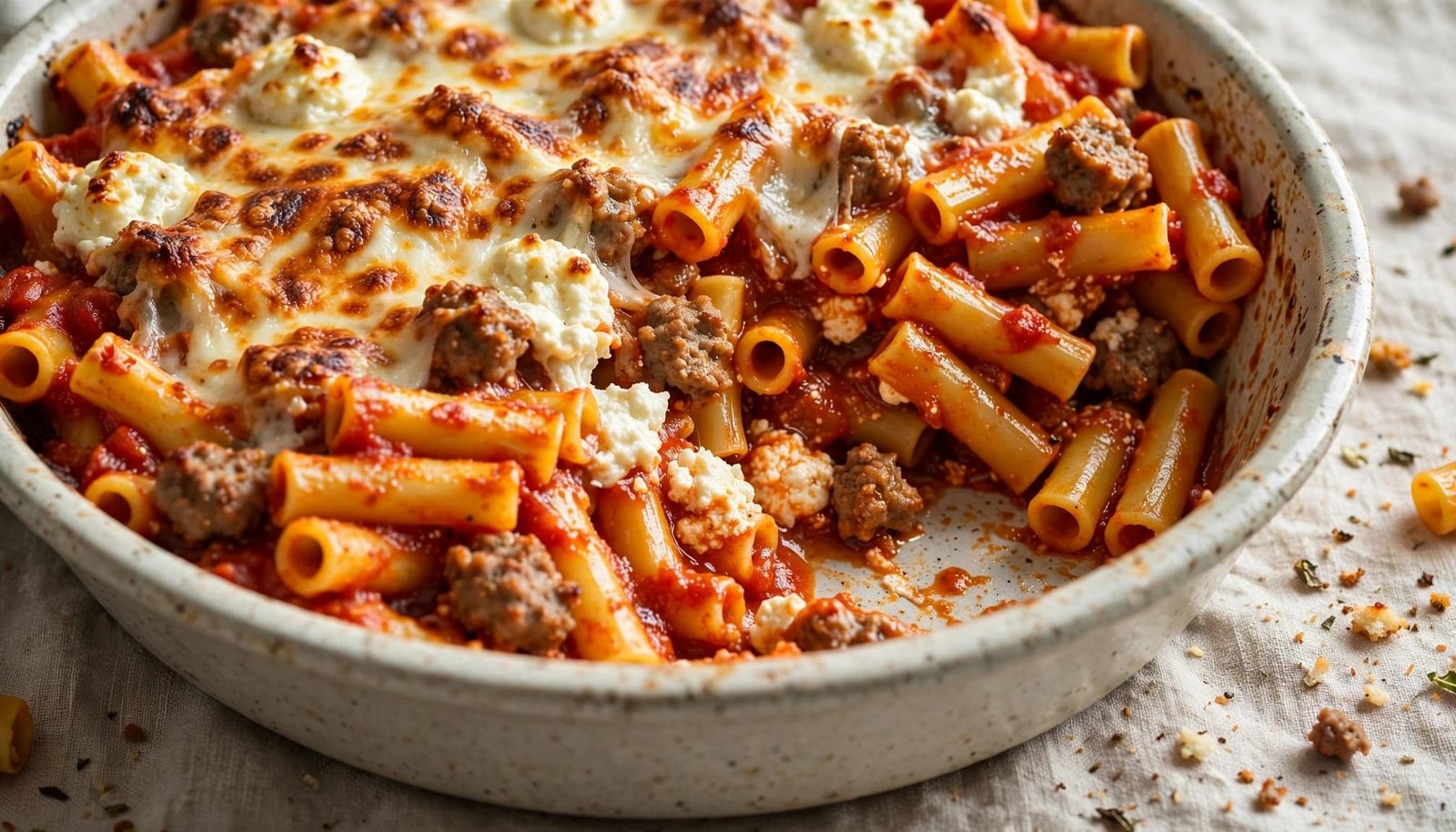
Undercook the Pasta So It Finishes in the Oven
Ziti keeps softening in the oven as it absorbs hot sauce. Cook it about 2 minutes less than the package’s al dente timing, so the pasta finishes tender without turning mushy. It should still have a little bite before baking, but it doesn’t need to feel hard or undercooked.
Drain the pasta well, and don’t rinse it. Rinsing washes away some of the surface starch that helps sauce cling. For more on how pasta starch affects texture and sauce, see Serious Eats’ guide to perfectly cooked pasta.
Balance the Sauce, Sausage, and Cheese
The pasta needs enough sauce to stay moist through baking, especially around the edges. Toss until each piece is coated, then add a little extra sauce if the mixture looks dry before it goes into the dish. Aim for glossy pasta, not a pool of thin liquid at the bottom.
Browning the Italian sausage builds savory flavor that carries through the tomato sauce. After it cooks, taste the sauce before adding salt: sausage and Parmesan can both bring plenty of salt, while black pepper and herbs can sharpen the tomato flavor without making the dish too salty. The same taste-before-salting approach works well in baked turkey meatballs with marinara and pasta.
Ricotta folded through the layers creates soft, creamy bites, while mozzarella on top melts into a golden finish. Once the casserole comes out of the oven, let it rest for about 10 minutes. The layers settle during that pause, so servings hold together instead of sliding apart.
Make Baked Ziti With Sausage Your Own
A few small changes can make this baked ziti with Italian sausage suit different tastes without changing its comforting, tomato-sauced character. Keep the pasta, ricotta, and sausage at the center, then choose one or two simple variations.
Choose Sweet or Hot Italian Sausage
Sweet Italian sausage gives the casserole a mild, savory flavor, with herbs and seasoning that blend easily into the tomato sauce. Hot Italian sausage adds noticeable spice, so it’s a good pick if you like heat in every bite. Either variety cooks the same way: brown it in the skillet, then add it to the sauce.
For a middle ground, use half sweet and half hot sausage. That keeps the flavor balanced, while a small dish of red pepper flakes at the table lets everyone adjust their own serving. You can also start with sweet sausage and add pepper flakes to the sauce if you want a little warmth throughout the casserole.
Add Vegetables or Change the Cheese
A modest amount of vegetables adds color and texture without crowding the pasta. Stir in a handful of wilted spinach, sautéed mushrooms, or cooked bell pepper. Since vegetables can release water as they bake, cook them first or drain them well; squeeze thawed spinach dry before adding it. For more ideas on pairing spinach with pasta, try this spinach pasta with white beans and Parmesan.
Mushrooms should cook until their released liquid evaporates, which helps keep the sauce from thinning. If you’re using spinach, wilt it and squeeze out excess moisture before stirring it in. This sautéed mushroom and spinach pasta recipe also removes excess water from the greens before combining them with pasta.
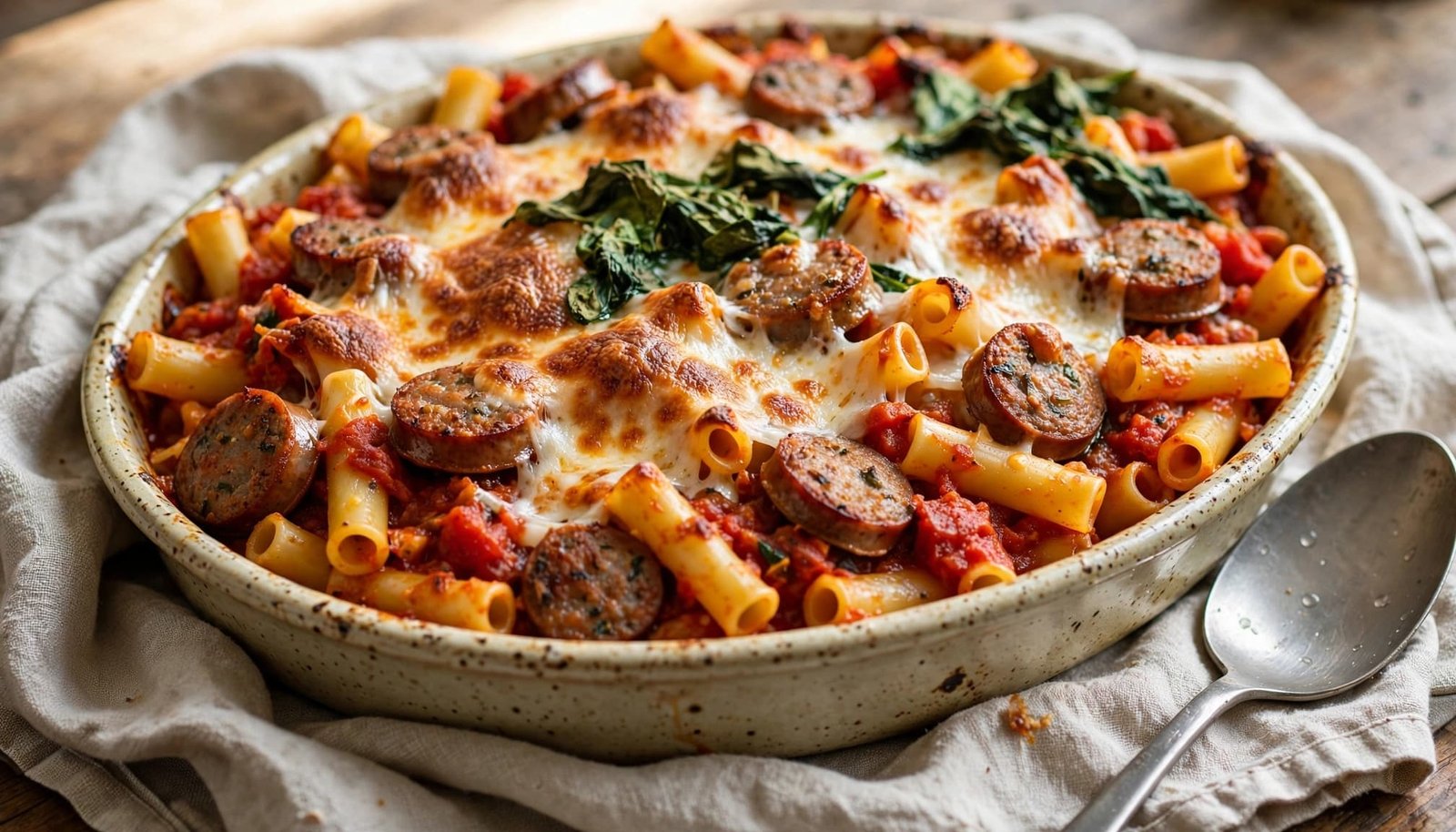
Keep ricotta as the creamy layer, then change the melting cheese if you want a different finish. Replace some of the mozzarella with provolone for a sharper, more pronounced cheese flavor, or use extra mozzarella for a familiar stretchy top. Parmesan still adds a savory finish.
Choose one vegetable and one cheese variation rather than loading the dish with extras. Too many add-ins can crowd the ziti and make the sausage flavor harder to taste.
Make Ahead, Freeze, Store, and Reheat Leftovers Safely
Baked ziti with Italian sausage is easy to prepare ahead, and careful storage helps keep the pasta saucy and the cheese tender. Choose the refrigerator for a short head start, or freeze the unbaked casserole when you need more time.
Prepare the Casserole Before Baking
Assemble the casserole, cover it tightly, and refrigerate it for up to 1 to 2 days before baking. Since it will start cold, allow extra time in the oven. Check the center for heat and bubbling rather than relying on the warm-casserole baking time alone.
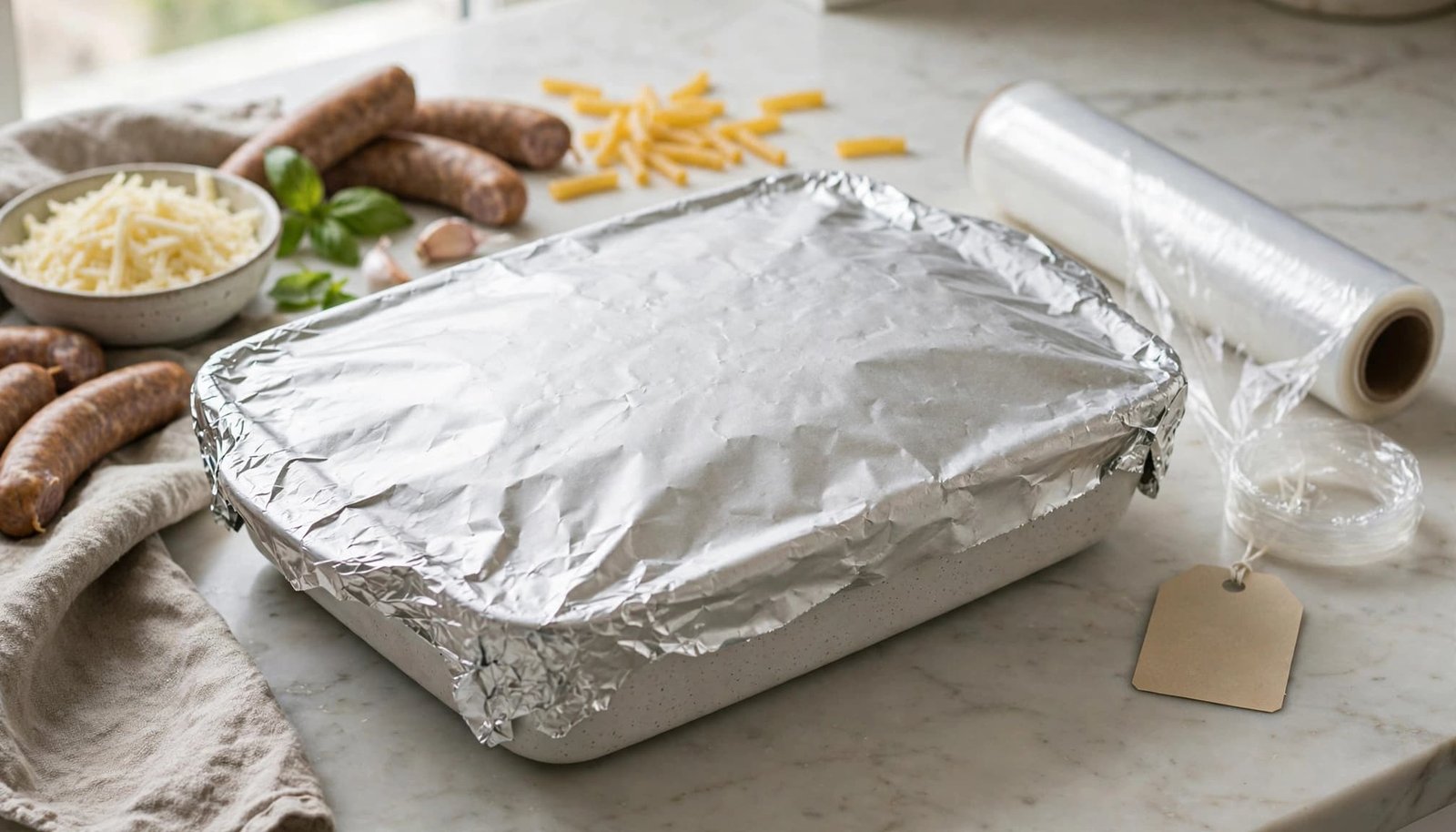
To freeze the unbaked ziti, use a freezer-safe dish and wrap it tightly to limit air exposure and help prevent freezer burn. Label the dish with the date, and use it within about 3 months for best quality. Thaw it overnight in the refrigerator before baking so it heats more evenly.
If you assembled the casserole in a glass dish, don’t move it straight from the freezer into a hot oven. Let it thaw in the refrigerator first, then bake once the dish is no longer frozen. Add baking time as needed, and make sure the center is hot and bubbling before serving.
Reheat Leftovers Without Drying Them Out
Refrigerate leftover baked ziti promptly, within two hours of cooking, and keep it covered in a shallow container. For food safety, the USDA recommends reheating leftovers to 165°F; check the center with a food thermometer, since melted cheese or a hot edge doesn’t prove the whole portion is ready. See the USDA’s leftover reheating temperature guidance.
For one serving, place the ziti in a microwave-safe dish, add a spoonful of water or extra sauce if the pasta looks dry, and cover it loosely. Heat until steaming throughout, stirring or turning the portion partway through so the middle warms evenly.
For a larger amount, cover the baking dish and warm it in the oven until hot in the center. Then uncover it near the end if you want the cheese to brown again. Reheat only what you plan to eat, and return any remaining portions to the refrigerator promptly. These safe pasta storage and reheating tips also help keep leftover pasta moist.
Conclusion
Baked ziti with Italian sausage brings savory meat, tender pasta, rich tomato sauce, and bubbling cheese together in one shareable pan. For the best texture, cook the pasta slightly shy of tender, then let the casserole rest for 10 minutes so the layers settle before serving.
It’s a comforting dinner for a full table, and it’s easy to get a head start by assembling it ahead. Make it for dinner tonight or prepare it for a busier evening, and enjoy a generous, cheesy scoop when it’s ready.
Save the pin for later

- Classic Apple Crisp with a Golden Oat Topping - November 27, 2026
- Baked Ziti With Italian Sausage - November 27, 2026
- Ground Turkey Enchilada Skillet - November 27, 2026