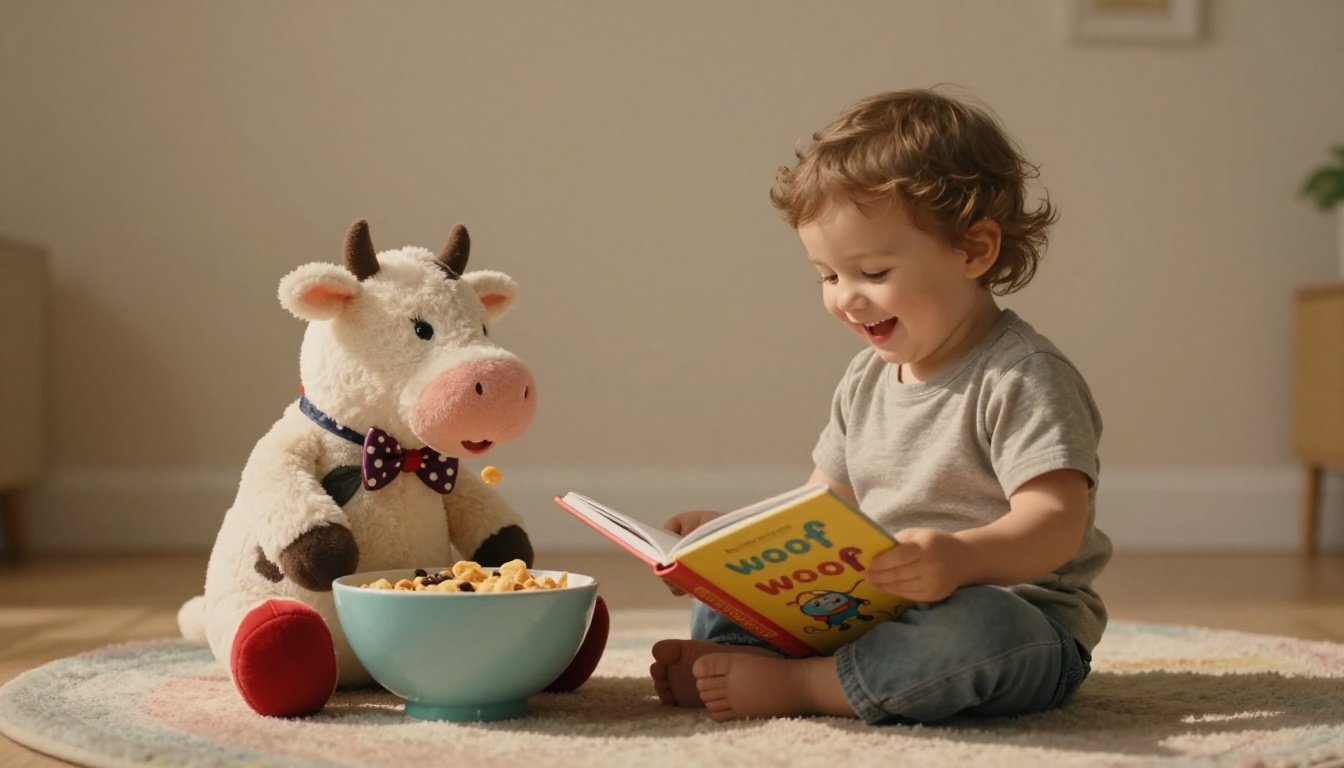
A toddler’s laugh can turn a quiet room upside down when a cow says “woof,” a shoe lands on the wrong foot, or a stuffed bunny tries to hide in a cereal bowl. At this age, funny stories for toddlers work best when they use simple problems, repeated phrases, playful sounds, and safe surprises instead of complicated plots or clever wordplay.
These five original, gentle story ideas are made for children roughly ages 1 to 3 and take only a few minutes to read during playtime, travel, or a calm bedtime routine. You can adjust the words, pace, voices, and ending to match your child’s attention span and sense of humor, then turn story moments into imaginative play ideas for toddlers. Start with the first silly tale, where one mixed-up animal discovers that making the wrong sound can lead to the right kind of fun.
Why Funny Interesting Stories for Toddlers Work So Well
Funny stories for toddlers work because they match the way young children learn, play, and connect with adults. A simple surprise, a familiar sound, or a silly mistake can hold attention better than a complicated plot. The humor feels like a shared game, especially when you pause and let your child join in.

The toddler-friendly humor formula
Physical comedy is an easy starting point. A hat slips over a bear’s eyes, a spoon gets stuck in a pocket, or a tiny character marches in the wrong direction. Animal sounds add another layer of fun, especially when a duck says “moo” or a cow answers with “woof.”
Silly mistakes also work because toddlers can understand the problem without following a long explanation. Keep the cause and effect clear: the bunny hides the ball, forgets where it is, then finds it in a surprising place. Repetition gives your child time to anticipate the next moment. You might repeat, “Where is the ball?” and pause while your toddler shouts, “There!”
A predictable punchline often gets the biggest laugh. Once your child knows that the character will sit on the hat instead of the chair, the waiting becomes part of the joke. Repeated interactive read-alouds help children participate, remember words, and notice new details. You can find more guidance on repeated interactive read-alouds.
Toddlers often enjoy knowing what comes next because prediction lets them feel like part of the storyteller’s team.
The humor should stay gentle. Avoid fear, cruelty, pain, humiliation, or jokes that make one character the target. Everyone can recover, laugh, and feel safe by the ending.
Keep stories short and flexible
For children ages 1 to 3, aim for about 3 to 7 minutes and one main idea. A toddler may listen for only a few minutes, then wander away and return later. Follow that cue instead of pushing through every page.
Near bedtime, reduce the sound effects and slow your voice. Choose a peaceful resolution, such as everyone finding a cozy place to rest. A predictable toddler bedtime routine can help funny storytime settle into sleep.
5 Funny, Interesting Stories for Toddlers to Read Aloud
Each story below uses one clear silly idea, a repeated action, playful participation, and a safe ending. Pause before each surprise so your toddler can guess what happens next, then invite them to make a sound or finish the repeated line. These simple techniques match guidance on interactive read-alouds for toddlers.
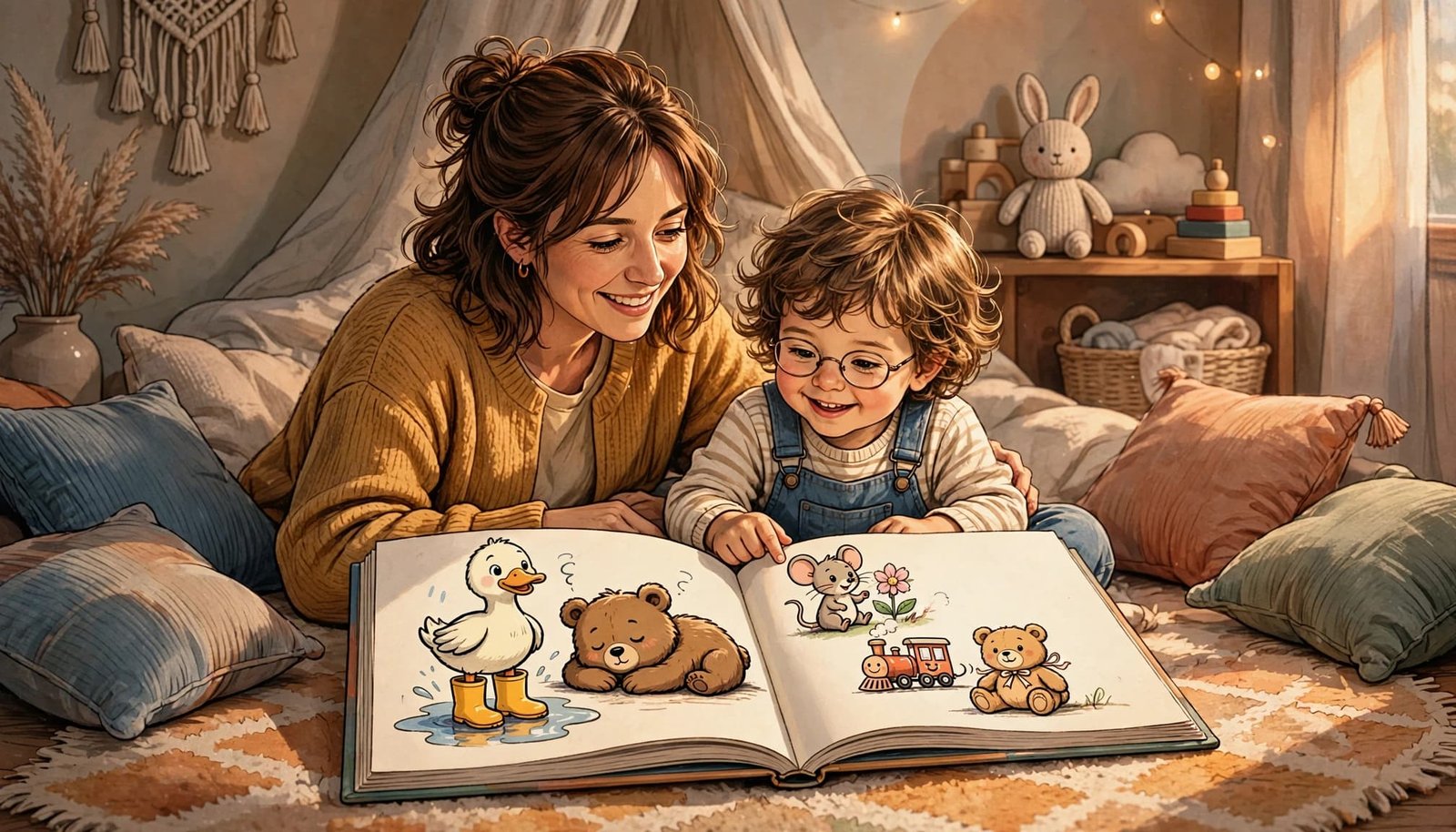
The Duck Who Wore Too Many Boots
Suggested age: 1 to 3 years
Dottie Duck woke up ready for a puddle walk. She found one red boot beside the door.
“Quack,” said Dottie. “One boot!”
She slipped it on her left foot. Then she spotted a tiny yellow boot. It belonged to the doll.
Dottie tilted her head. “Is one more boot a good idea?” (Pause. Use a wobbly voice.)
“Quack!”
On went the yellow boot. Next came a big green boot for the frog. Then came a blue boot for the teddy bear. Dottie added each one until she waddled like a tiny marching band.
“Quack, wobble, quack!” (Invite your toddler to count the boots.)
Dottie tried to walk. One, two, three, four little boots bumped and clumped. Her feet made a funny beat, but she couldn’t reach the puddle.
So Dottie shared. The frog took the green boot. The doll took the yellow boot. Teddy hugged the blue boot.
At last, Dottie wore two red boots. She stepped into one small puddle.
Splash, splash.
“Quack,” said Dottie. “Two boots are just right.”
Benny Bear’s Very Sleepy Picnic
Suggested age: 2 to 3 years
Benny Bear packed a sandwich, a carrot, a spoon, and a blanket for his picnic. However, everything looked ready for a nap.
First, Benny tucked the sandwich beneath the blanket.
“Sleep well, sandwich,” he whispered.
Then he placed the blanket over a carrot. “Goodnight, carrot.”
The spoon looked tired too. Benny sang, “Hush now, little spoon.” (Use a soft humming voice.)
What should Benny put to sleep next? Pause and let your toddler guess.
Benny tucked in the picnic basket. He patted the apple. He even gave one tiny yawn to a grape. Everything looked ready for a nap.
At last, Benny’s eyes grew heavy. He shared one last bite of sandwich with his friend, Bunny. Then he noticed the mistake.
“The blanket is for me!”
Benny curled beneath the real blanket. Bunny rested beside him, and the picnic grew still.
The leaves made a soft shhh sound. Benny closed his eyes.
“Goodnight, picnic,” he murmured.
Mimi Mouse and the Sneezing Flower
Suggested age: 1 to 3 years
Mimi Mouse found a bright flower beside her path.
“Hello, flower!”
“Achoo!” said the flower.
Mimi blinked. “Hello, flower?”
“Achoo-choo!” answered the flower.
Mimi tried a whisper. “Hello, flower.”
The flower gave a tiny, squeaky “achoo.” (Invite your toddler to make a gentle pretend sneeze.)
Mimi tried a deep voice. “HELLO, FLOWER.”
“Achoo!” said the flower in a deep, rumbly voice.
Then Mimi sang, “Hee-llo, flow-er!”
The flower answered with a long, musical, “Achooooo.”
Mimi giggled. Each hello made the same funny surprise. Soon, she noticed a little dust of pollen tickling the flower’s nose.
“Your pollen is tickly,” said Mimi. “Let’s find you some sunshine.”
She carried the flower to a warm sunny spot. The petals opened, and the sneezes stopped.
Mimi waved. “Hello, flower.”
The flower smiled. “Goodnight, Mimi,” it whispered.
The Little Train That Went Beep Instead of Choo
Suggested age: 2 to 3 years
Pip the little train was ready for a big trip. He puffed up his cheeks and tried to say, “Choo-choo!”
“Beep!”
Pip tried again. “Choo-choo!”
“Boing!”
The bus suggested, “Try honk-honk.” The boat suggested, “Try toot-toot.” Pip tried once more.
“Pop!”
Pip’s wheels stopped. “Maybe the trip can’t begin,” he said.
Then a lost duckling heard a sound behind the station.
“Beep! Boing! Pop!”
The duckling followed the gentle sounds and found Pip. “There you are!”
Pip smiled. His unusual sounds had helped the duckling find the train.
Soon, everyone joined in. The bus went, “Honk.” The boat went, “Toot.” Pip went, “Beep, boing, pop.”
(Start softly, then make each sound a little brighter without shouting.)
Together, they rolled away. Beep, boing, pop, toot.
Lola’s Backwards Pajama Party
Suggested age: 2 to 3 years
Lola put on her pajamas backwards. She looked at the buttons behind her and gasped.
“The room must be backwards too!”
Lola walked backward to the bathroom. She placed Teddy under the pillow and picked up a toothbrush.
“That is not where it goes!” (Pause so your toddler can spot the mistake.)
Lola tried to brush her hair with the toothbrush. Then she put the hairbrush beside the toothpaste.
“That is not where it goes!”
Finally, Lola turned her pajamas around. She moved Teddy back to his usual place and returned the brushes.
Teddy still looked pleased. Lola gave him one silly backwards hug, reaching around behind herself.
“That is not where it goes,” she giggled. “But Teddy likes it.”
Next, Lola chose one ordinary bedtime action. She read a book, hugged Teddy the usual way, and turned out the light.
The room rested in the right direction, and Lola fell asleep.
How to Make a Toddler Story Even Funnier at Read-Aloud Time
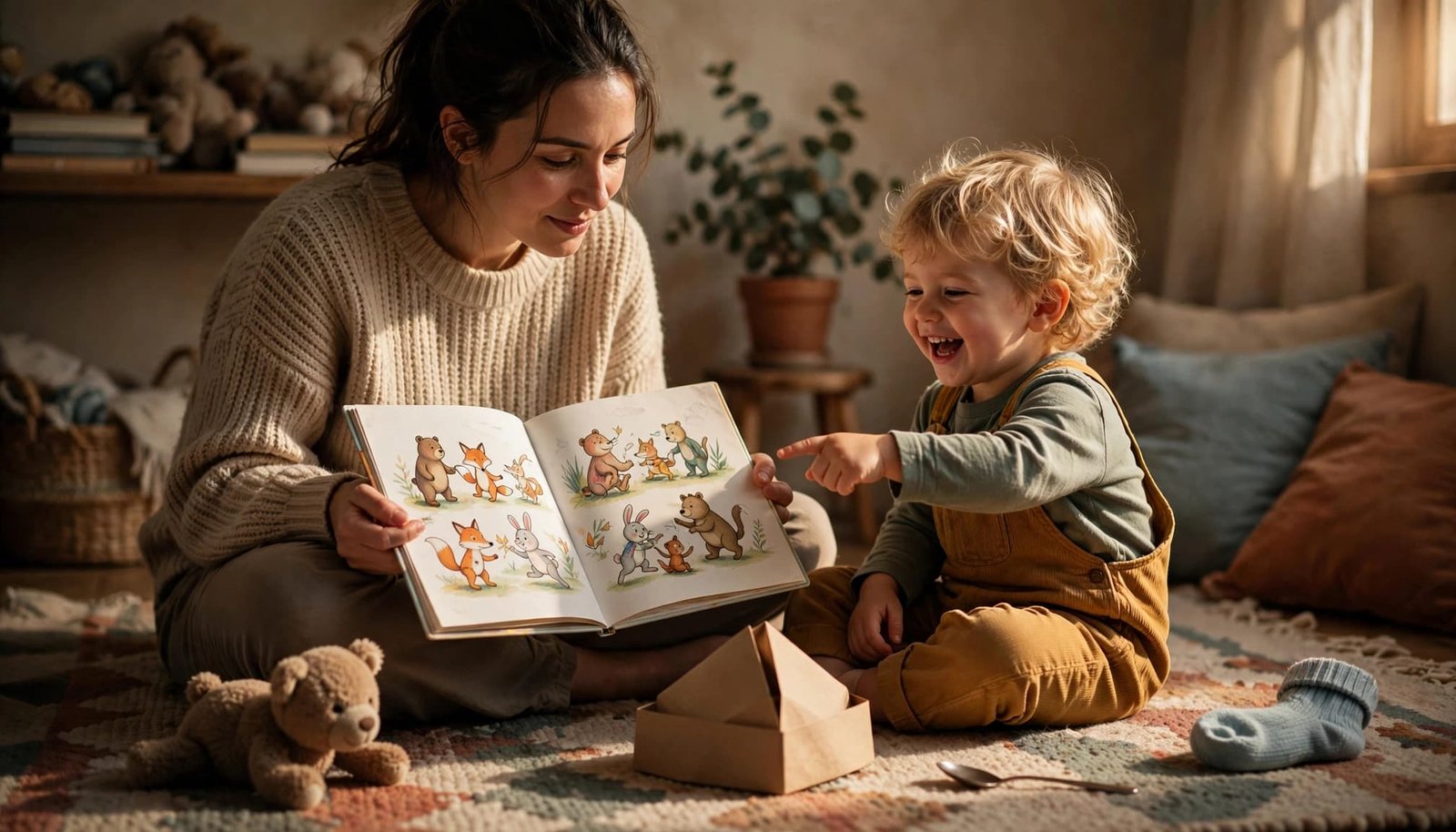
A funny toddler story becomes even better when your child gets to help tell it. You don’t need perfect voices or a dramatic performance. A few pauses, silly sounds, and playful reactions can turn a short story into a shared game.
Pause before the punchline
Slow down before the repeated funny part. In “The Duck Who Wore Too Many Boots,” pause before saying, “Splash, splash.” In “The Little Train That Went Beep Instead of Choo,” wait before the unusual sound. Your toddler may fill in the phrase, make a sound, or grin because they know what comes next.
Leave a few seconds of quiet after turning a page or asking a question. That pause gives your child room to point, count, copy an animal noise, or predict the next event. Guidance from interactive read-aloud experts also supports using gestures and short explanations without interrupting the story’s flow.
Use voices, faces, and safe props
Give each character a clear but gentle voice. Try a squeaky voice for Mimi Mouse, a low sleepy voice for Benny Bear, and a bright beep for Pip the train. Keep your facial expressions easy to read. Widen your eyes at a surprise, puff your cheeks for a sneeze, or tilt your head when a character makes a silly mistake.
Safe props can make the story feel real. A sock can become a boot, a spoon can play the sleepy picnic, or a stuffed animal can join the pajama party. A paper hat can sit on Teddy’s head while you ask, “Is that where it goes?” Choose large, sturdy items, and avoid small pieces that could become choking hazards. Keep the play calm enough that the story remains the focus.
You might invite your toddler to:
- Point to the character who made the mistake.
- Count boots, flowers, buttons, or sounds.
- Copy “quack,” “beep,” “achoo,” or another safe sound.
- Finish a repeated phrase.
- Show what happens next with a gesture or movement.
Participation matters more than perfect reading. If your child wanders from the exact words, follows a picture, or invents a new sound, follow that interest. You can simplify a sentence, describe the picture, or repeat your child’s message instead of reading every word.
Some toddlers answer with speech, while others respond with a smile, eye gaze, point, body movement, or excited wiggle. Accept each response as communication. Let your child hold the book, turn a page, or choose which prop appears next when they want to help.
Finally, watch your toddler’s cues. Shorten the story when attention fades, skip to the favorite funny part, or finish with a cuddle. Read-aloud time works best when laughter and connection matter more than reaching the last page.
Choosing the Right Funny Story for Playtime, Travel, or Bedtime
The best funny story depends on your toddler’s energy, surroundings, and mood. A lively story can turn playtime into a small adventure, while a gentle, predictable tale helps a tired child settle down.
Match the story to the moment
For active playtime, choose “The Duck Who Wore Too Many Boots” or “The Little Train That Went Beep Instead of Choo.” Both stories invite movement, counting, and cheerful sound effects. Your toddler can waddle like Dottie Duck, count imaginary boots, or make Pip’s unusual train sounds.
During a car ride or waiting-room visit, “Mimi Mouse and the Sneezing Flower” is easier to tell without props. The repeated “achoo” phrase gives your child a chance to join in, even when you need to keep your voice low and your movements small. You can tell the story from memory or shorten it to the flower’s repeated sneezes and Mimi’s different greetings.
For bedtime, choose “Benny Bear’s Very Sleepy Picnic” or “Lola’s Backwards Pajama Party.” Keep the voices soft, pause less often, and let the ending follow a familiar pattern. If your toddler needs extra help settling down, a short story can fit naturally into calming bedtime routines for toddlers.

Use a simple read-aloud routine
A tired toddler may need only one short story. An alert child might enjoy two, especially when the first story includes movement and the second one slows the pace.
Try this four-step routine:
- Preview the silly problem, such as too many boots or pajamas worn backwards.
- Read with participation by adding pauses, gestures, and familiar sounds.
- Repeat your child’s favorite line once more.
- Finish with a quiet closing sentence, such as, “Now the little train is resting.”
Don’t worry if your toddler requests the same story again and again. Repetition helps children remember patterns, learn new words, and feel confident joining the story. Research on repeated read-alouds and early language development supports giving familiar stories another turn. Each rereading lets your child notice a sound, phrase, or detail that seemed too small to catch before.
When a favorite line becomes part of your family’s routine, let your toddler lead it. That familiar moment may be the funniest part of the whole story.
Conclusion
Toddler humor doesn’t need complicated jokes or long plots. A duck with too many boots, a sleepy picnic, a sneezing flower, an unusual train sound, or backwards pajamas can turn a few minutes of reading into a joyful shared moment.
Choose one story, read it slowly, and leave space for your child to add a sound, gesture, word, or brand-new idea. The simplest formula works best: one silly situation, a little repetition, room for participation, and a gentle ending. Repeating a favorite story also helps toddlers anticipate the funny line and feel like part of the telling.
When the day is winding down, you can follow the laughter with gentle read-alouds for bedtime. Soon, your toddler may carry “beep, boing, pop” through the kitchen, retell the backwards pajama mistake to a stuffed bear, or settle under the covers with a smile and one last silly line.
Save pin for later

- Dry Cough in Kids: 5 Causes and Safe Solutions - September 23, 2026
- How to Help a Child Deal With Anxiety at Home - September 12, 2026
- How to Prepare Your Child for the First Day of School - September 12, 2026