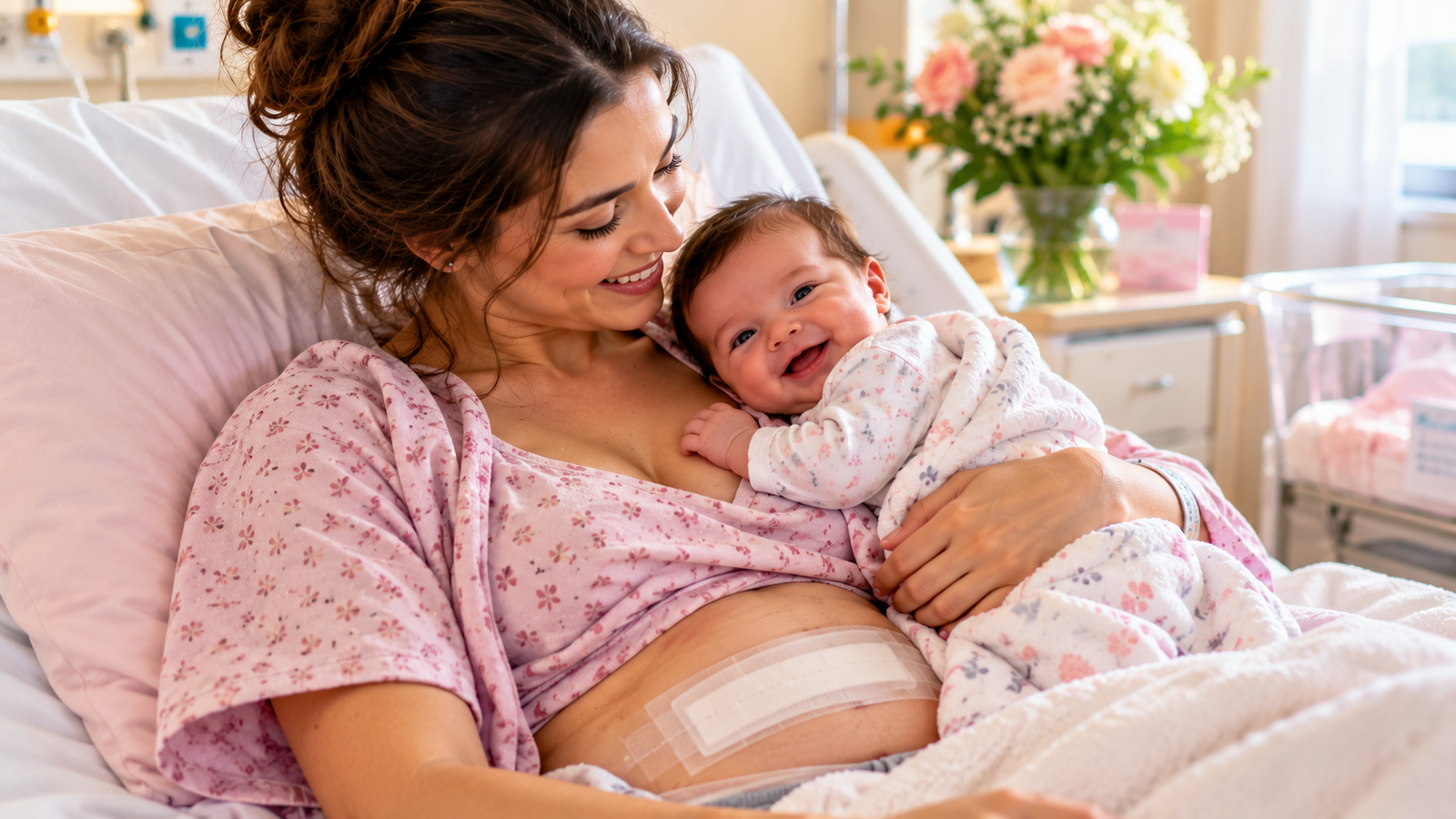
Your baby’s recognition of you develops gradually, so small responses may appear before they clearly prefer familiar people. Early signs can include looking toward your face, calming at your voice, or smiling back; those responses often become more distinct over the first several months.
There isn’t one exact age when every baby recognizes a parent, but the signs and rough timeline can help you know what to watch for. Learn how newborn sensory and social development unfolds, and when it’s worth asking your pediatrician about your baby’s progress.
How to Know When Your Baby Starts to Recognize You
Recognition develops in stages. In the first months, your baby may look at your face, settle when you speak, or respond to your smile. By around 6 months, knowing familiar people is a listed milestone, but babies reach milestones at different rates. The CDC describes milestones as signs most children can show by a certain age, not strict deadlines. Its 6-month milestone guide includes knowing familiar people.
Early signs include looking, calming, and smiling
Your baby may study your face during feeding or when you hold them close. They might seem pleased when you approach, relax after you pick them up, or smile when you talk or smile at them. These responses can become clearer as your baby has more chances to see and hear you.
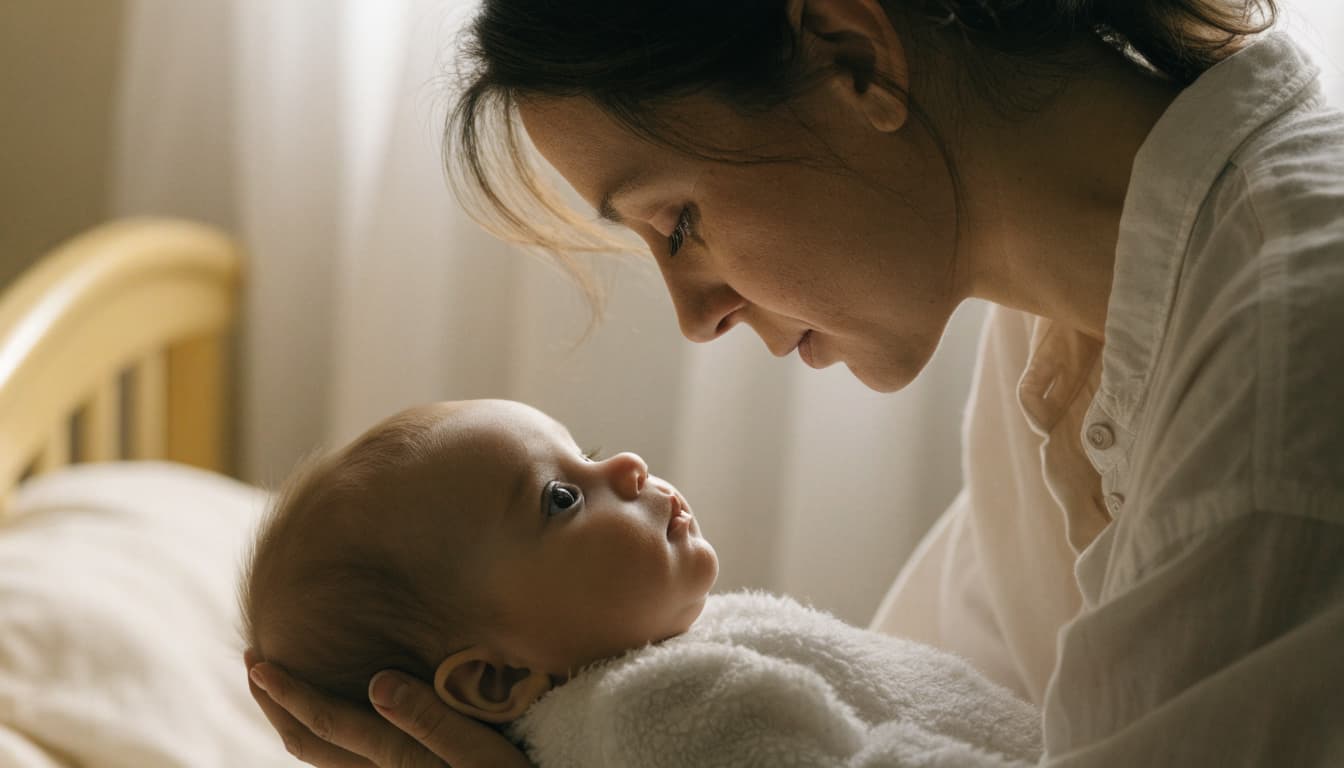
Still, one behavior alone doesn’t prove recognition. A baby may look toward a face because it’s close or visually interesting, and calming can happen for several reasons. Look for a pattern over time, such as your baby responding more readily to familiar caregivers. If you’re curious about prolonged eye contact, read more about why babies stare at familiar faces.
A familiar voice can be recognized before a clear smile
Before your baby reliably smiles back, they may pause, become still, or turn toward a voice they hear often. You might notice this during feeding, soothing, or a quiet moment when you speak from nearby. These small reactions can be easier to spot when the room is calm and your baby is alert.
Response timing varies, and babies don’t react the same way every time. A familiar voice can capture your baby’s attention or help them feel settled, but hearing and recognizing a voice doesn’t mean they understand the words. At this stage, tone, rhythm, and repeated exposure matter more than the meaning of a sentence. Over time, voice responses may appear alongside more obvious social cues, such as smiling or seeming excited when you approach.
What recognition can look like from birth through the first year
Recognition develops gradually, and babies don’t all show it on the same schedule. These age ranges are a guide to common patterns, not a test your baby needs to pass. A single response can be hard to interpret, so notice how your baby reacts to familiar people over time.
Newborn to 2 months: attention to faces and familiar voices
A newborn’s vision is still developing, but babies may focus best on faces held close, such as during feeding or cuddling. In these early weeks, attention may be brief and inconsistent.
By about 2 months, social responses often become easier to notice. The CDC lists looking at a caregiver’s face, seeming happy when they approach, and smiling when spoken to among common milestones at this age. Your baby may show some of these signs while still spending much of the day focused on basic needs like feeding and sleep.
Around 3 to 6 months: stronger social responses
Over the next few months, many babies engage more during face-to-face interaction. Around 4 months, a baby may make sounds back when you talk and turn toward the sound of your voice, as described in the CDC’s 4-month milestones. You may also notice more sustained eye contact or sounds that seem to invite you to respond.
By about 6 months, many babies know familiar people. That recognition can show up differently from one baby to another: some become animated, while others simply watch or settle more readily with someone they know. The CDC’s 6-month milestone guide offers a useful reference, but it doesn’t mean every baby will show recognition in the same way or at the exact same time.
Around 9 months: familiar people may feel safer
As babies become more aware of who is familiar, they may act cautious around strangers or cling more when a caregiver leaves. Some look, reach, or cry when a familiar adult goes; others show little reaction in a particular moment. The CDC includes reactions like these among its 9-month milestones.
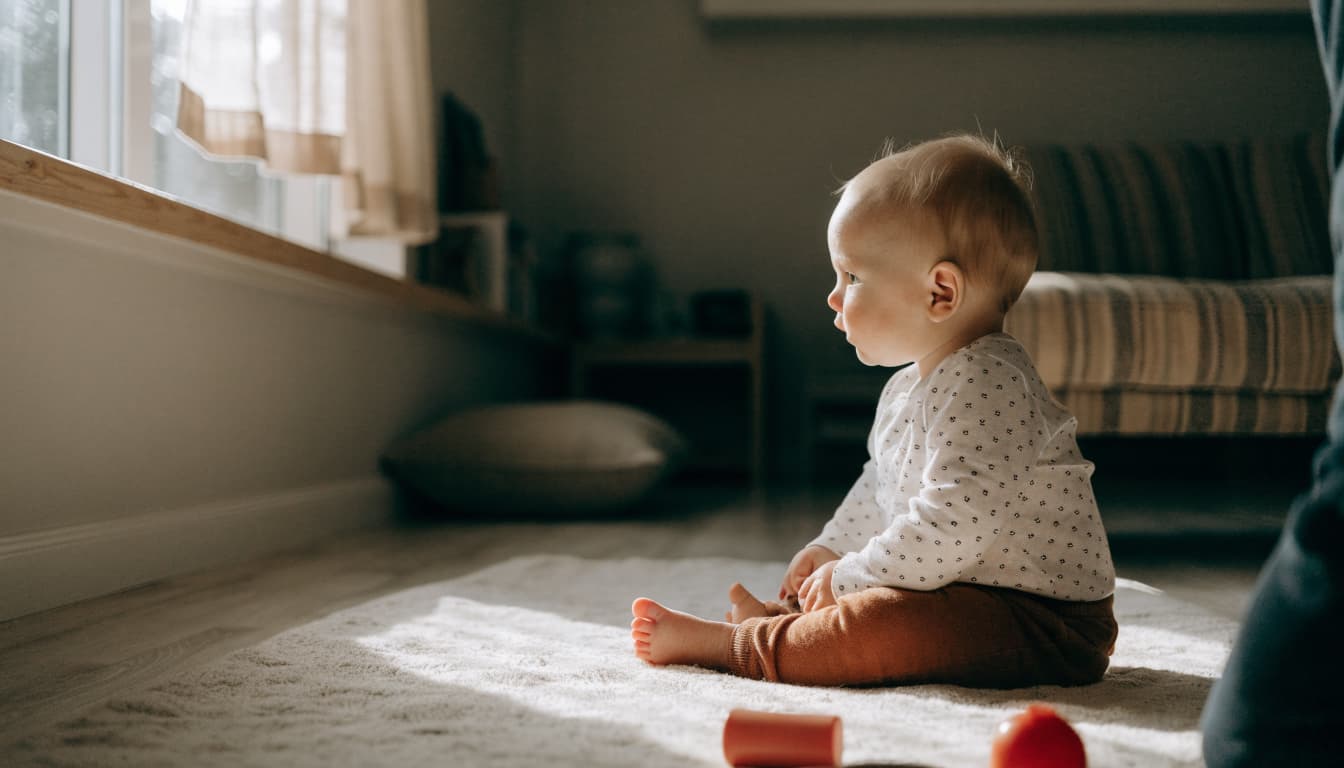
These responses can reflect growing familiarity, but they aren’t required signs of recognition. Temperament, tiredness, and the setting can affect how your baby responds. If separations are becoming difficult, see ways to ease separation anxiety in babies.
How babies learn to recognize a familiar caregiver
A baby’s recognition of a caregiver builds through repeated experiences, rather than appearing in one sudden moment. Each time you feed, soothe, talk to, or play with your baby, they encounter familiar cues. Over time, those cues can help your baby respond differently to people they know.
Faces and voices become familiar through daily interaction
During feeding and cuddling, your face is often close enough for your baby to study. Your voice also becomes familiar through everyday routines, whether you’re talking softly, singing, or reassuring your baby when they’re upset. These repeated encounters help your baby connect what they see and hear with the person who cares for them.
Early vision is limited, so a newborn may respond most clearly when your face is nearby. As eyesight improves over the first months, your baby can focus on faces for longer and notice you from farther away. That change can make recognition seem more obvious, even though familiarity has been building all along. Learn more about how newborn vision develops.
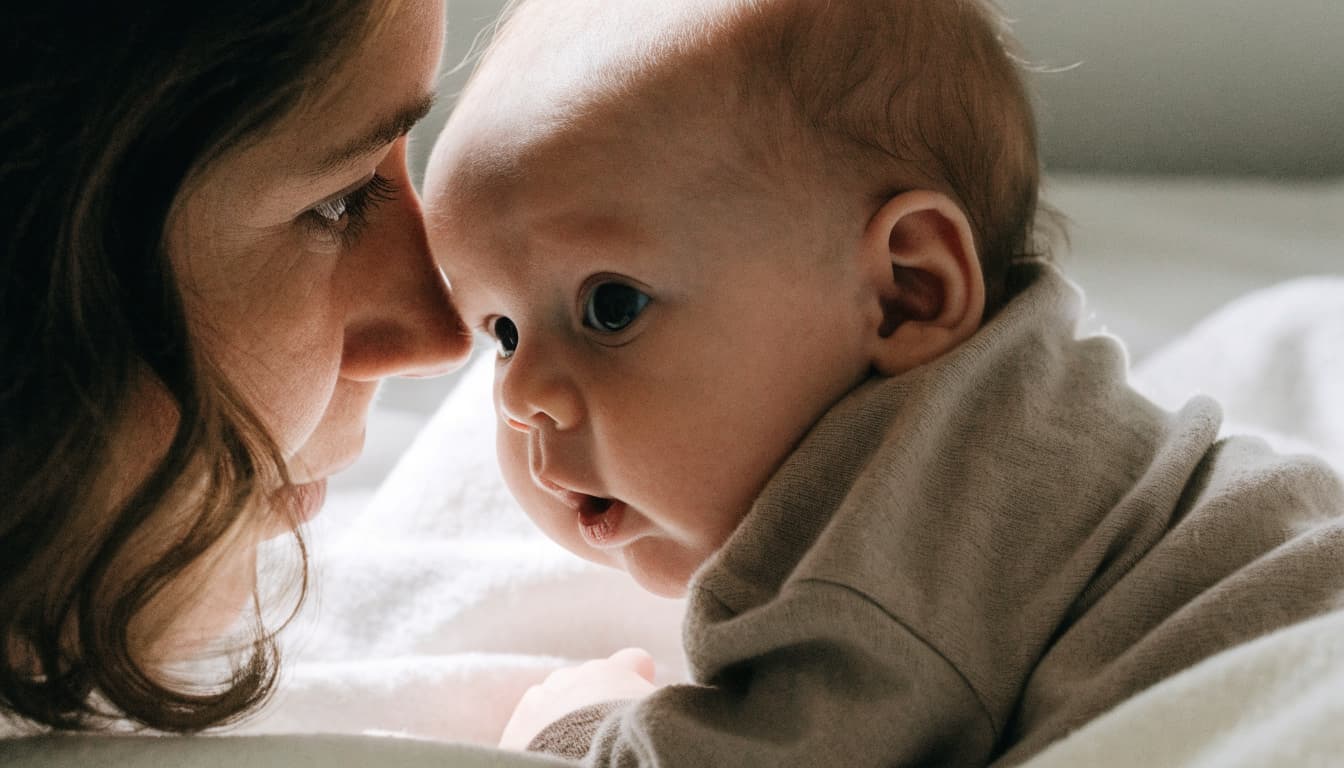
You may notice your baby looking toward you, settling when you speak, or smiling when you approach. These reactions can vary with mood and attention, so a single moment doesn’t prove recognition. Instead, look for a pattern across familiar routines. The CDC lists looking at a caregiver’s face and seeming happy when they approach among common 2-month milestones. By 6 months, “knows familiar people” appears as a milestone, though babies can show familiarity in different ways.
Smell may be familiar, but timing is hard to pin down
Babies can respond to familiar smells, and research suggests that newborns can distinguish their mother’s scent from other scents. Still, pediatric milestone guidance doesn’t set a clear age for recognizing a caregiver by smell.
That distinction matters: a sensory response observed in research isn’t necessarily a milestone caregivers can reliably identify at home. You don’t need to watch for a particular smell-related behavior or worry if you can’t spot one. Pay attention to the broader pattern of your baby’s responses to familiar people, while remembering that milestones describe common development, not a schedule every baby follows.
Simple ways to encourage connection without testing your baby
You don’t need to quiz your baby or compare their reactions with another child’s. Connection grows through ordinary moments of warm, responsive care. Follow your baby’s lead, and let small exchanges happen at their own pace.
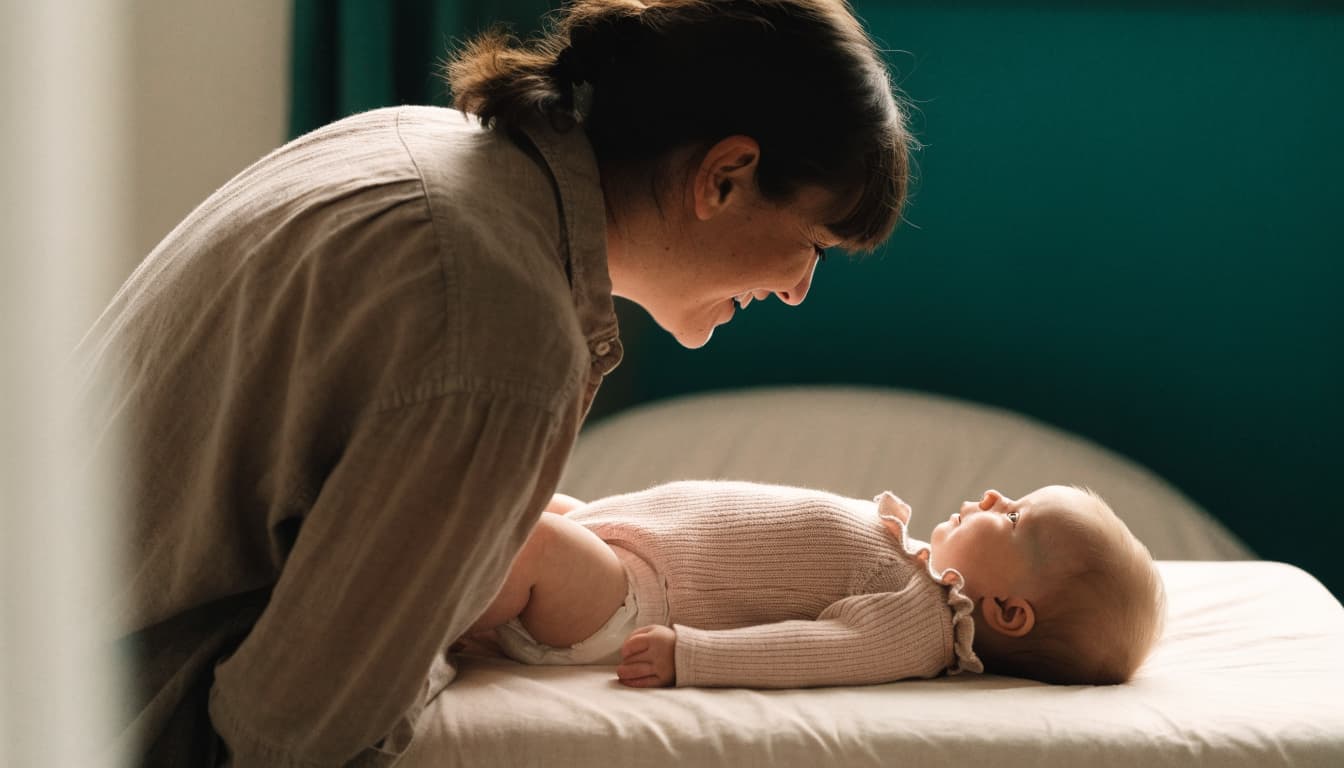
Talk, smile, and spend calm face-to-face time
Use care routines as chances to connect. While changing a diaper, feeding, or getting your baby dressed, speak in a gentle voice about what you’re doing. When your baby is alert and comfortable, smile and make soft eye contact, then pause. Your baby may look, move, make a sound, or simply take in your face. Those quiet pauses give them room to respond without pressure.
Follow your baby’s cues, though. If they turn away, fuss, or seem overstimulated, look away too, lower the stimulation, or take a break. Eye contact doesn’t need to be constant to be meaningful. The American Academy of Pediatrics’ guidance on early social development also encourages caregivers to notice and respond to their baby’s signals.
Let familiar routines build trust
Warm, consistent responses during feeding, soothing, and play help your baby learn that a familiar caregiver is there when needed. You might pick them up when they signal distress, talk softly as you settle them, or share a few calm minutes together after a nap. These everyday interactions support the growing bond, even when your baby doesn’t show an obvious reaction each time.
Caregivers can build a close connection while working, sharing care with others, or handling busy days. Your baby doesn’t need one person to be present every moment; familiar, caring adults can each offer comfort and attention. For more ideas about signs your baby feels safe and connected, notice patterns over time rather than treating any single smile or glance as a test.
When to bring questions about recognition to your pediatrician
A baby’s response can change with sleep, hunger, mood, and surroundings. One quiet visit or missed smile doesn’t tell the whole story. If you’re concerned, share what you’ve noticed over time and ask your pediatrician how it fits with your baby’s overall development.
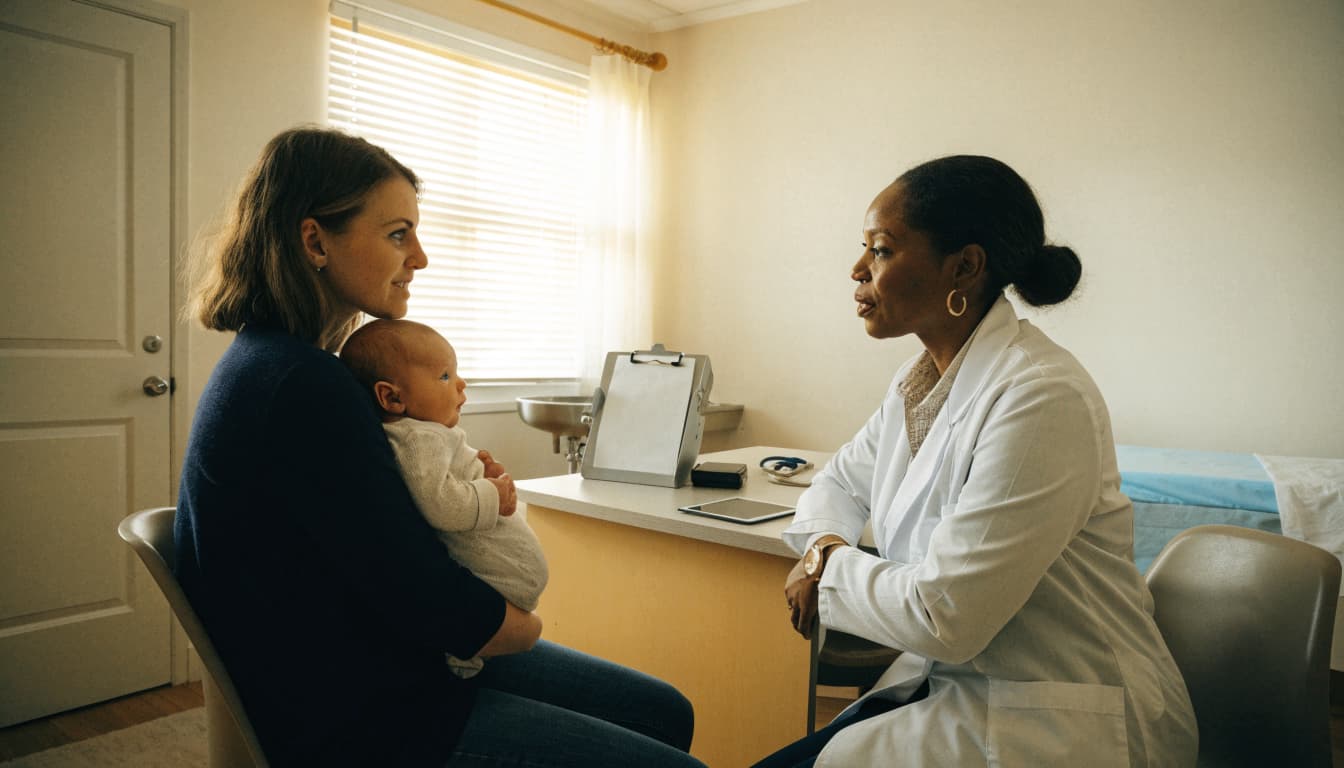
Look at several signs, not one moment
Keep track of patterns during ordinary routines rather than testing your baby. Does your baby look at faces, seem to notice a familiar voice, or respond with a smile, movement, or sound? Note whether these reactions happen more often when your baby is rested and alert, and whether they change across settings or caregivers.
At an appointment, describe what you see and when it happens. You might mention whether your baby turns toward voices, reacts to loud sounds, looks toward people, or engages socially over time. These details give your clinician more context than a single missed response. For a broader reference, review these early social and developmental milestones, and bring any questions to your visit.
Ask for guidance if responses are limited or milestones are lost
Consider checking in if your baby shows very limited interest in faces or social smiling by around 2 months, doesn’t seem to respond to sound or turn toward your voice by around 4 months, or doesn’t appear to recognize familiar people by around 6 months. These age ranges reflect common milestones, not a diagnosis or a deadline. The AAP’s guide to early developmental milestones can help you understand how responses may develop in the first months.
Also mention concerns about hearing, vision, or interaction, even if your baby shows other expected skills. Bring up any loss of a skill your baby previously had promptly, rather than waiting for the next routine visit. Your pediatrician can consider the full pattern, answer questions, and decide whether screening or follow-up would help.
Conclusion
Your baby may begin recognizing you through small responses to your face or voice, such as looking toward you or settling when you speak. Those signs often become clearer over time, and knowing familiar people is a common milestone by around 6 months.
Every baby develops at a different pace, so warm, everyday interaction matters more than looking for one perfect sign. If you have concerns about your baby’s responses or development, talk with your pediatrician and explore how babies recognize familiar faces and voices.
Save pin for later

- How to improve your baby’s hygiene - September 26, 2026
- 20 cortisol-reducing foods for moms - September 26, 2026
- How to properly clean your newborn - September 26, 2026