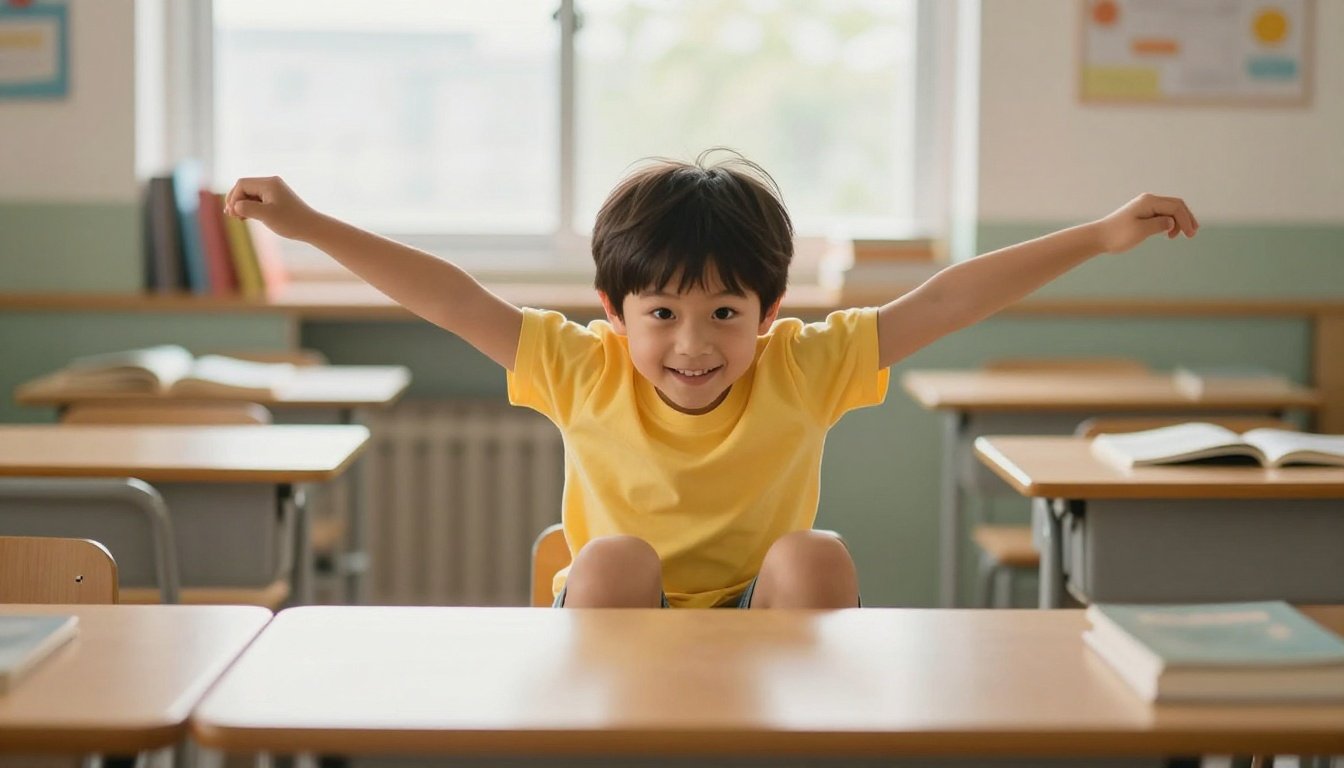
Homework has barely started, but your child is already squirming, staring out the window, or losing track of the instructions. After a long school day, sitting still can feel harder than the work itself.
Short, playful movements give kids a chance to reset their bodies and attention. Research supports structured physical activity and classroom movement breaks for improving attention and on-task behavior, although claims about Brain Gym itself should stay modest. These exercises aren’t a treatment or a guaranteed learning boost, but they can add a useful movement moment to your child’s routine.
The eight Brain Gym exercises for kids below are low-impact, easy to follow, and simple enough for home, homework time, or the classroom. You can also pair them with these playful learning activities for kids when your child needs a hands-on change of pace. Start with the first movement and let your child’s comfort guide the routine.
What Brain Gym Means for Children and Learning
Brain Gym usually refers to short, playful movements that connect body awareness with learning. Children may cross the middle of their bodies, stretch, balance, tap, or trace shapes while preparing for schoolwork. These activities can add variety to a routine, but they aren’t a cure for attention problems or a proven way to increase intelligence.
The stronger research supports movement in general, especially active lessons and brief classroom breaks. Brain Gym’s specific claims have much less consistent evidence, so it’s best viewed as one simple tool alongside sleep, nutritious meals, clear instruction, emotional support, outdoor play, and regular physical activity.
Why Movement Breaks Can Support Focus and Memory
A child who has been sitting through a long lesson may need a physical reset before reading, writing, or math. The Centers for Disease Control and Prevention reports that classroom physical activity can support concentration, on-task behavior, motivation, and engagement. Research on classroom “brain breaks” also connects short activity periods with greater participation and time spent working. You can review the findings in this classroom brain breaks study.
Movement can also make a lesson more active. For example, your child might:
- Act out vocabulary words with a gesture or whole-body movement.
- Trace a large letter or shape in the air while saying its name.
- March while practicing spelling patterns or counting by twos.
- Take a 30-second movement break before opening a book.
These activities don’t make information automatically stick. However, they may help a child return to a task with less restlessness and more readiness to listen. Physical practice can also support coordination, balance, and body control, which matter when children write, cut, draw, or sit comfortably for learning.
Movement breaks support the conditions for learning. They don’t replace teaching, practice, sleep, or professional support.
Memory deserves careful wording, too. A movement paired with a word, sound, or shape may give a child another way to remember the lesson, but short Brain Gym exercises haven’t been proven to improve memory in every child. For more ideas that connect movement with early skills, explore these coordination activities for school readiness.
How to Make These Exercises Safe and Comfortable
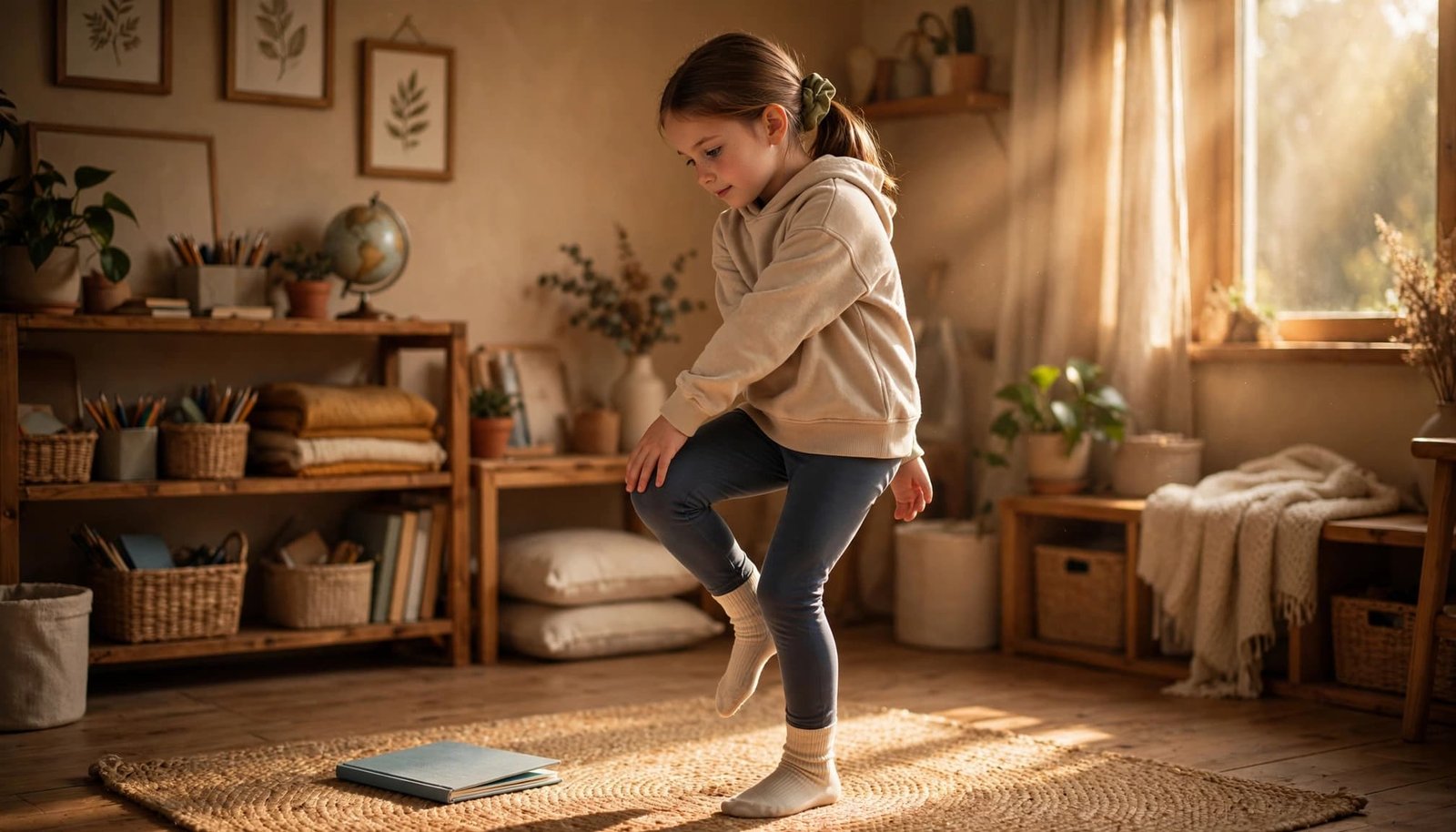
Keep each exercise gentle and brief. Ask your child to move slowly, breathe normally, and stop right away if anything hurts, feels uncomfortable, or causes dizziness. A clear floor, comfortable clothing, and water nearby make movement easier and safer.
Younger children should have adult supervision, especially during balancing or crossed-position exercises. Their eyes can stay open if closing them feels unsteady. Start with 30 to 60 seconds per exercise instead of requiring a certain number of repetitions. A child who enjoys the movement can repeat it later.
These activities are low-intensity learning breaks, not a replacement for active play, sports, or medical care. Children develop at different rates. Speak with a pediatrician, occupational therapist, or another qualified professional if your child has pain, unusual fatigue, balance concerns, dizziness, or ongoing learning and attention difficulties.
8 Brain Gym Exercises for Kids to Try at Home or School
This is the practical centerpiece: choose one or two exercises for a quick reset instead of asking your child to complete all eight. Keep the pace playful, and let comfort, accuracy, and interest guide the activity.
Cross Crawl for Whole-Body Coordination
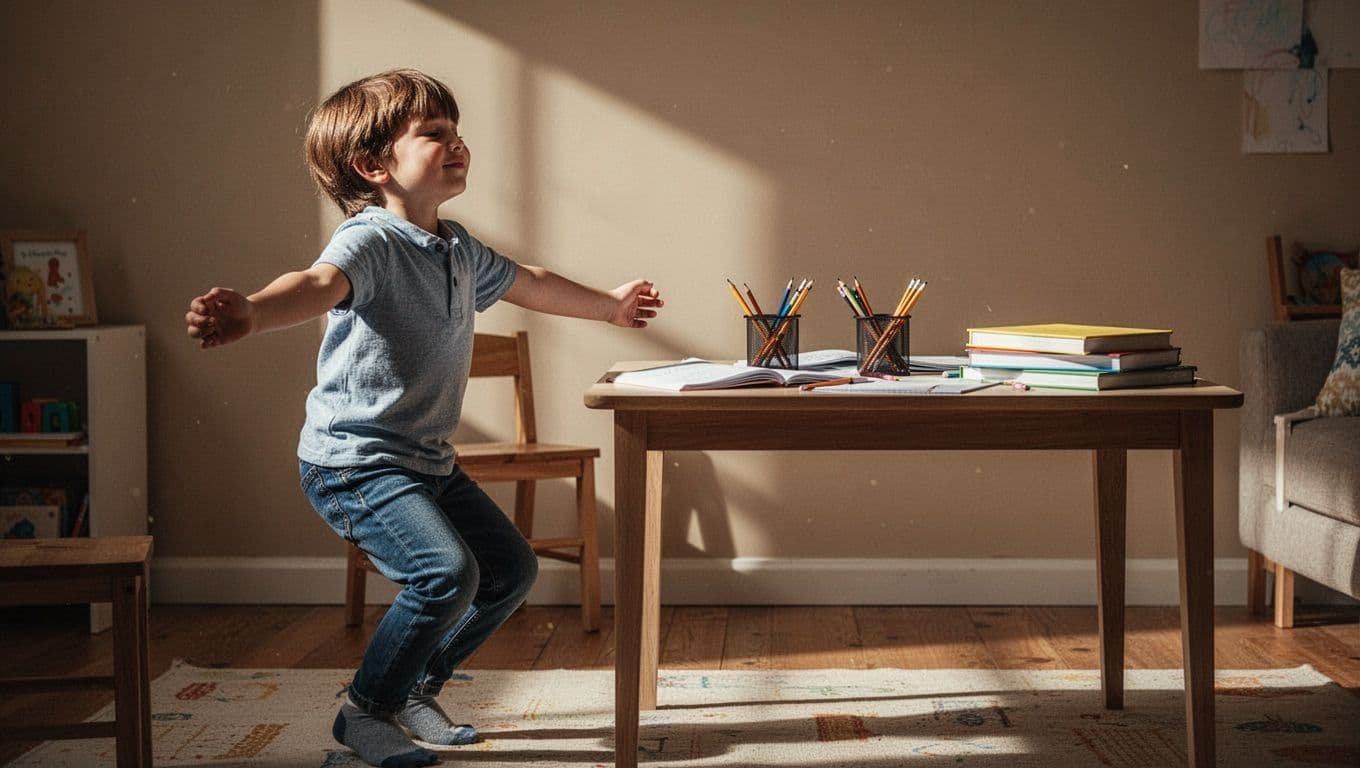
Have your child stand tall with feet hip-width apart. Ask them to lift the right knee and touch it with the left hand or elbow. Lower it, then switch sides by lifting the left knee toward the right hand or elbow.
Start slowly so your child can focus on matching the correct sides. Once the pattern feels comfortable, add a gentle marching rhythm. Cross Crawl asks both sides of the body to work together, making it a useful movement break before homework, reading, or a classroom task.
For a seated version, your child can lift one knee at a time while reaching across from a chair. Marching in place also works well when balance or floor space is limited. Accuracy matters more than speed.

Lazy 8s and Alphabet 8s for Visual Tracking
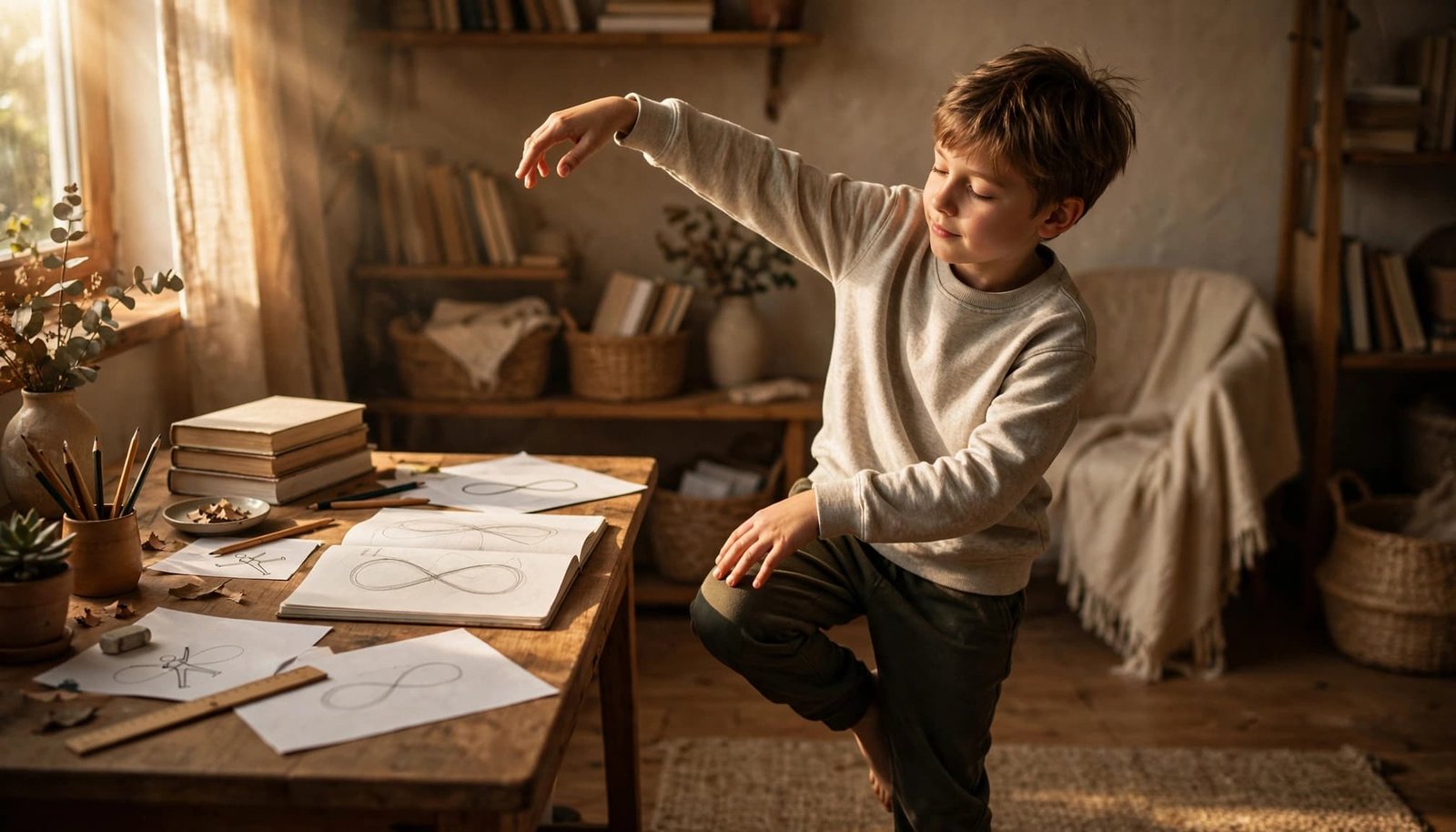
Ask your child to draw a large sideways eight in the air, on paper, or with one finger on a table. They can use a pencil, sidewalk chalk, or a finger dipped in shaving cream. Encourage them to follow the path with their eyes while keeping the head relaxed.
Alphabet 8s use simple letter-like pathways or repeated figure-eight patterns. These movements give children practice with hand-eye coordination and visual tracking. They may also add a creative pause before writing or reading.
A younger child can trace one large shape with a finger. An older child can draw matching patterns with a pencil while slowly naming directions, such as “up, around, and back.” These activities are not proven to correct vision problems. If your child squints, loses their place often, or reports eye discomfort, speak with an eye-care professional.
Double Doodle and Elephant for Creative Movement
For Double Doodle, give your child a crayon or marker in each hand. Ask them to draw matching or mirrored shapes at the same time on large paper or a whiteboard. Circles, waves, houses, and simple flowers are easy starting points.
Next, try a gentle Elephant movement. Your child extends one arm and traces a large sideways eight while following the hand with their eyes. Keep the shoulder relaxed and make the shape wide enough to avoid cramped movements.
Both exercises build coordination while leaving room for imagination. A seated child can draw at a table, which helps when standing feels tiring or unsteady. Remind your child to stay within a comfortable range and stop if the shoulder, neck, or arm hurts.
Brain Buttons and Hook-Ups for a Calm Reset
For Brain Buttons, one hand rests near the navel while the other gently rubs the soft area below the collarbones. Ask your child to breathe comfortably for about 30 seconds. Keep the touch light, and explain that the goal is simply to pause and notice the body.
For Hook-Ups, your child can sit or stand with the ankles crossed. They gently cross the wrists, rest the hands near the chest, and take a few slow breaths. Eyes can remain open if closing them feels uncomfortable or unsteady.
These activities can become a calm transition before a challenging task, but avoid claims that touching these areas activates specific brain regions. If crossed positions feel awkward, place both feet on the floor and take three comfortable breaths instead.
Belly Breathing to Settle Busy Bodies
Have your child place one hand on the belly. They breathe in gently through the nose and notice the hand rise, then breathe out slowly. Three to five comfortable breaths are enough.
Try this before bedtime, schoolwork, or a difficult transition. For a playful variation, ask your child to pretend to smell hot cocoa, then cool it with a slow breath out. The breathing should never feel forced, especially if deep breaths feel unpleasant.
These short activities pair well with other hands-on Montessori activities at home because children can move, notice, and return to a simple task. For school use, remember that these exercises are brief add-ons, not replacements for recess, physical education, or daily activity. The CDC recommends classroom physical activity as short movement periods that can support concentration and on-task behavior.
How to Build a Brain Gym Routine Kids Will Actually Enjoy
A useful Brain Gym routine should feel like a short reset, not another assignment. Choose two or three movements based on your child’s energy, keep the routine to three to five minutes, and finish with one clear next step, such as opening a book or starting a worksheet.
Consistency matters more than a long sequence. A predictable routine can fit before school, after screen time, during homework, or between classroom lessons. Short, planned breaks also match classroom guidance that encourages movement before demanding attention tasks. The CDC’s classroom strategies for children with ADHD include allowing time to move and exercise.
Match the Activity to Your Child’s Energy Level
Watch your child’s body before choosing an exercise. When they seem sluggish, restless, or stuck, try Cross Crawl, Double Doodle, or Elephant for a gentle movement boost. Cross Crawl adds a slow marching pattern, while Double Doodle and Elephant give busy hands and eyes something steady to follow.
If your child feels wound up, frustrated, or overwhelmed, choose a slower activity. Lazy 8s, Brain Buttons, Hook-Ups, or Belly Breathing can create a quieter pause before the next task. Still, every child responds differently. Some children become more alert after movement, while others settle. Observe what happens instead of assuming one exercise will work every time.
Adapt the routine to your child’s age:
- Preschoolers can trace one large eight, copy simple arm movements, or take three pretend “hot cocoa” breaths.
- Elementary-age children can complete two exercises and then move directly to reading, writing, or math.
- Older kids may prefer a private routine with headphones, music, wall space, or a timed three-minute break.
You can also find more ideas in these movement-based learning activities at home.
Use Playful Prompts Instead of Pressure
Children often resist when a movement feels like a test. Keep your voice light and offer a choice: “Want to try three slow crosses before we start?” or “Can you draw a giant eight with both hands?”
Adults can model the movement instead of correcting every detail. Draw your own wobbly shape, march beside your child, or take the first slow breath together. Let your child choose the music, marker colors, favorite exercise, or a silly theme, such as moving like a sleepy robot.
The goal is participation, body awareness, and a positive reset. If your child skips a step or invents a new version, the routine can still do its job. End while the activity remains enjoyable, then name what comes next: “Now we open the book to page five.”
Know When a Movement Break Is Not Enough
Brain Gym-style exercises can support a daily routine, but they can’t diagnose or treat ADHD, dyslexia, anxiety, developmental delays, vision problems, or motor difficulties. A movement break may help your child return to a task, yet persistent concerns need a closer look.
Talk with a pediatrician, teacher, school counselor, physical therapist, or occupational therapist when attention, learning, coordination, vision, or emotional regulation problems continue despite reasonable support. Seek guidance sooner if concerns interfere with school, friendships, sleep, safety, or everyday tasks.
You aren’t responsible for solving a complex concern with exercises alone. Your observations can help a professional understand what your child needs and identify better supports.
The Realistic Benefits and Limits of Brain Gym Exercises for Kids
Brain Gym exercises can give children a short, friendly pause before learning. The most realistic benefits come from moving, breathing, paying attention to the body, and shifting smoothly into the next task. These routines can support a child’s learning day, but they shouldn’t carry claims they can’t prove.
What Research Supports and What It Does Not Prove
Research supports physical activity, movement breaks, and movement-integrated lessons as useful learning strategies. Reviews have found that short active breaks can improve classroom behavior and on-task attention, while lessons that combine movement with academic content may support engagement and learning. You can read more about the findings in this review of learning through movement.
The evidence for Brain Gym’s specific branded claims is much more limited and mixed. Small studies may report improvements after children use these exercises, but those results don’t prove that Brain Gym creates a special brain pathway. A child may feel more alert because they stood up, changed activities, enjoyed playful attention, or took a few steady breaths.
That distinction matters. These exercises haven’t been shown to increase intelligence, permanently rewire the brain, or replace reading instruction, classroom support, occupational therapy, or other evidence-based help. A movement break can open the door to learning, but it doesn’t teach the lesson by itself.
Regular outdoor play, exercise, sleep, hands-on learning, and classroom movement lessons also deserve space in your child’s routine. For example, outdoor movement and learning ideas can give children more time to run, balance, climb, and explore.
Signs Your Child Is Responding Well
Look for practical changes instead of expecting an instant academic breakthrough. After a short routine, your child might:
- Return to the task more willingly.
- Sit comfortably for a little longer.
- Follow the next instruction without repeated reminders.
- Breathe more evenly.
- Enjoy the transition instead of arguing or shutting down.
Success doesn’t require perfect form. Your child may cross the wrong side, move slowly, or invent a different version. If the routine helps them approach the next task with less tension, it may be useful.
Try the same routine for one to two weeks and observe what happens. Adjust the timing, duration, or exercise choice if your child becomes overstimulated, bored, or frustrated. A two-minute break before homework may work better than a longer routine after attention has already run out.
Conclusion
Children don’t need a complicated program to benefit from a mindful pause and playful movement. Cross Crawl, Double Doodle, Elephant, and Lazy 8s support coordination and visual tracking, while Brain Buttons and Hook-Ups encourage a calmer reset. Belly Breathing adds a simple way to slow down, and these breathing and movement activities for kids can fit naturally into a busy day.
Choose the exercises that feel comfortable, keep expectations realistic, and treat the routine as support rather than a cure for learning or attention concerns. Try one simple exercise alongside your child today, then notice what helps them feel ready, connected, and confident.
Save pin for later

- Dry Cough in Kids: 5 Causes and Safe Solutions - September 23, 2026
- How to Help a Child Deal With Anxiety at Home - September 12, 2026
- How to Prepare Your Child for the First Day of School - September 12, 2026