
At bedtime, you settle beside your child, open the Bible, and watch curious eyes follow the story of David facing Goliath or Noah gathering the animals. These moments can turn a simple reading into a warm conversation about courage, kindness, obedience, and trusting God.
The best Bible stories for kids have memorable characters, clear challenges, and lessons children can connect with at home, at school, and with friends. This guide features 10 engaging stories, along with Scripture references, age-aware teaching points, and easy ideas to help children remember what they learn.
As you read, you can also play this gentle Bible stories for children video to keep younger listeners engaged. Let’s begin with a story that shows how faith can give a child courage.
10 Engaging Bible Stories for Kids That Build Faith and Imagination
These first five stories are strong starting points for younger children and early elementary learners. You don’t need to explain every detail in one sitting. Read a simple version, name the main characters and problem, then focus on one clear takeaway your child can carry into the day.
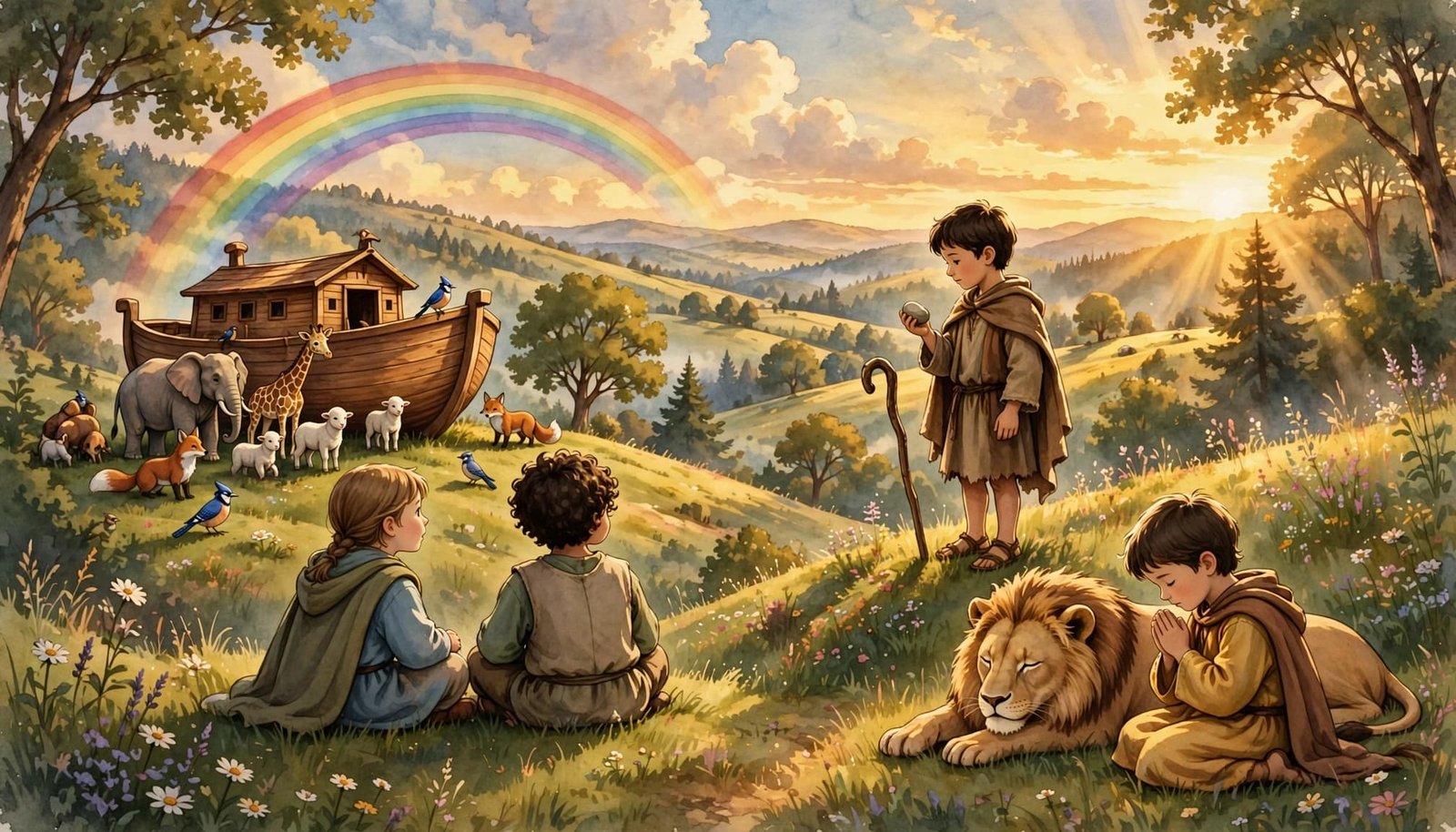
Creation: A Beautiful Beginning to the Bible
Bible passage: Genesis 1-2
Genesis opens with God bringing order and beauty into an empty world. He made light, separated the land and water, filled the earth with plants and animals, and created people in his image. After the work of creation, God rested.
You can invite your child to notice the wonder in ordinary things, such as birdsong, a garden, or the night sky. The story also teaches gratitude and responsibility. Children can learn that caring for animals, plants, and one another matters because God called creation good.
Read the Genesis 1-2 Bible passage, then ask, “What part of creation makes you feel thankful?” Your child could draw a favorite part, create a seven-part picture sequence, or name one way to care for the world around them. Remind them that every child has value because God made each person with care.
Noah’s Ark: Trusting God Through a Big Challenge
Bible passage: Genesis 6-9
Noah received a difficult assignment. He built an ark, gathered the animals in pairs, and trusted God while the rain fell. After the flood, the rainbow appeared as a sign of God’s promise and hope.
For young children, keep the retelling gentle. Focus on Noah’s obedience, the animals finding safety, and God’s promise afterward. Parents can explain that this is a serious story while still using simple words children understand. The Noah and the Flood passage can guide your reading.
Build an ark with craft sticks, sort toy animals into pairs, or draw a rainbow with one word that describes a promise, such as “safe,” “hope,” or “love.” Ask, “How can we show trust when something feels hard?”
Joseph and His Brothers: Choosing Forgiveness After Hurt
Bible passage: Genesis 37 and Genesis 50:20
Joseph’s colorful coat made his brothers jealous. Their choices separated him from his family, and Joseph faced years of hardship before gaining a position of leadership in Egypt. When his brothers came to him later, Joseph chose forgiveness instead of revenge.
This story fits older elementary children because it includes betrayal and painful separation. Explain that forgiveness doesn’t pretend the hurt never happened. It can help a person move toward healing while still allowing space for safety, honesty, and wise boundaries.
Create a story map with four parts: the problem, the turning point, Joseph’s choice, and the outcome. Then ask, “What could you do if a sibling or friend hurt your feelings?” A child might name the hurt, talk with a trusted adult, apologize when appropriate, or choose a peaceful response.
David and Goliath: Finding Courage When a Problem Feels Huge
Bible passage: 1 Samuel 17
David was a young shepherd, not a trained soldier. Still, he faced Goliath with courage and trust in God. David didn’t rely on heavy armor or physical size. He used the skill he already had and carried a simple sling.
Children may face their own oversized problems, such as starting school, speaking in front of a class, or standing up for someone. Courage doesn’t mean feeling no fear. It means choosing a wise action while fear is present.
Paint small stones with words such as “faith,” “hope,” or “courage.” After reading 1 Samuel 17, invite your child to name one problem they want to face bravely and one safe person who can support them.
Daniel in the Lions’ Den: Staying True Under Pressure
Bible passage: Daniel 6
Daniel continued praying to God even after an unfair law made prayer dangerous. His enemies used his faith against him, and the king sent him to the lions’ den. God protected Daniel, and the king saw that Daniel’s trust was sincere.
Keep the suspense mild for younger children by focusing on Daniel’s steady choices and the peaceful ending. Read Daniel 6, then talk about pressure to do something wrong. What could your child say or do when others push them toward an unsafe choice?
Make a paper den for role-play, create a memory verse card, or name one trusted adult your child can talk with. The lesson includes prayer and integrity, but children also need practical support. Difficult situations don’t always end with a miracle, so remind them to seek help when they feel pressured or afraid.
Bible Stories About Courage, Compassion, and Second Chances
The next five stories help children explore bravery, mercy, obedience, and hope. Kids remember lessons more clearly when they can see themselves in a character’s choices, especially when someone feels afraid, left out, stuck, or unsure what to do next.
Moses and the Red Sea: Trusting God When There Seems to Be No Way Forward
Bible passage: Exodus 14
The Israelites reached the sea with Pharaoh’s army behind them. They felt trapped, but Moses encouraged them to trust God. Then God opened a path through the water, and the people crossed safely on dry ground.
This story shows deliverance, leadership, and hope during an overwhelming moment. Your child may feel stuck while solving a difficult school problem, making friends, or adjusting to a major change. Remind them that asking for help and taking the next wise step are signs of courage.
Create a path through blue paper and let your child move a small figure across it. They can also act out the crossing with slow, safe movements or write a short prayer for help when worry feels large.

Esther Speaks Up: Using Your Voice to Help Others
Bible passage: Esther 5-6
Esther was queen, but she still faced danger when she approached the king without being summoned. She invited the king and Haman to a banquet, then carefully prepared to reveal Haman’s plan against her people. Meanwhile, the king learned that Mordecai had once protected him, and Haman was forced to honor the man he wanted to hurt.
Esther used wisdom and courage instead of rushing into action. Children can practice noticing when someone is excluded or treated unfairly. They can ask a trusted adult for advice and use their influence to include others.
Help your child make a courage card with a phrase such as, “You can sit with us,” or “That wasn’t kind.” Explain that children should get adult help when a situation involves threats, violence, or unsafe behavior.
Jonah and the Big Fish: Learning From Second Chances
Bible passage: Jonah 1-4
God sent Jonah to Nineveh, but Jonah ran in the opposite direction. A storm threatened his ship, and a great fish swallowed him after sailors threw him into the sea. Jonah prayed, returned to the task, and warned Nineveh. When the city changed its ways, Jonah struggled to accept God’s mercy.
The fish captures attention, but Jonah’s heart carries the main lesson. Children can learn about obedience, honest feelings, change, and second chances. Strong emotions still deserve care, so don’t teach children to hide sadness, anger, or fear. Instead, help them name those feelings and talk with a trusted adult.
Invite your child to draw four pictures labeled “run,” “pray,” “obey,” and “learn.” They can also act out the story with simple roles and discuss one change they want to make.
The Good Samaritan: Showing Kindness Beyond Our Comfort Zone
Bible passage: Luke 10:25-37
Jesus told of a traveler who was robbed and injured. A priest and a Levite passed by, but a Samaritan stopped, cared for the man’s wounds, and arranged further help. Jesus taught that loving our neighbor means showing mercy, even across differences.
Read the Good Samaritan Bible passage, then connect it to situations children recognize. They might include a lonely classmate, help someone who falls, or speak kindly to a person who looks, lives, or thinks differently.
Try a one-day kindness challenge or create a pretend first-aid kit with bandages and paper notes. Make safety part of the lesson. Children should involve a trusted adult whenever someone is seriously hurt.
The Feeding of the 5,000: Sharing What You Have
Bible passage: John 6:1-14
A huge crowd gathered around Jesus, and the disciples couldn’t find enough food. A child offered five barley loaves and two fish. Jesus gave thanks, shared the food, and provided enough for everyone, with leftovers gathered afterward.
This story teaches generosity and gratitude without asking children to give away everything they own. A small act can still bless someone. Ask, “What do you have that could help another person?” and “How could you share without feeling pressured or unsafe?”
Pack an extra snack for a family member, or make a paper basket filled with kind actions. Your child might offer time, share art supplies, or notice when someone needs encouragement.
How to Make Bible Stories More Engaging for Kids
Bible stories become more memorable when children do more than listen. Let them move, wonder, ask questions, and connect each story to something they face at home or school. A short, interactive reading often works better than trying to explain several stories in one sitting.
Choose Stories That Fit Your Child
Start with your child’s age, attention span, interests, and emotional readiness. Toddlers may enjoy Creation, Noah’s animals, or the story of Jesus welcoming children. Preschoolers can follow simple plots with repetition, while older children may be ready for stories about forgiveness, injustice, courage, and difficult choices.
Pay attention to your child’s reactions. A child who loves animals may connect with Noah’s Ark, while a child facing a new school year may relate to Joshua’s courage. If a story includes frightening danger, violence, loss, or separation, use a gentle retelling and decide whether your child can process the theme.
A helpful children’s Bible should use clear language, supportive illustrations, and a length your child can manage. This age-by-age children’s Bible guide can help you compare storybooks before choosing one.
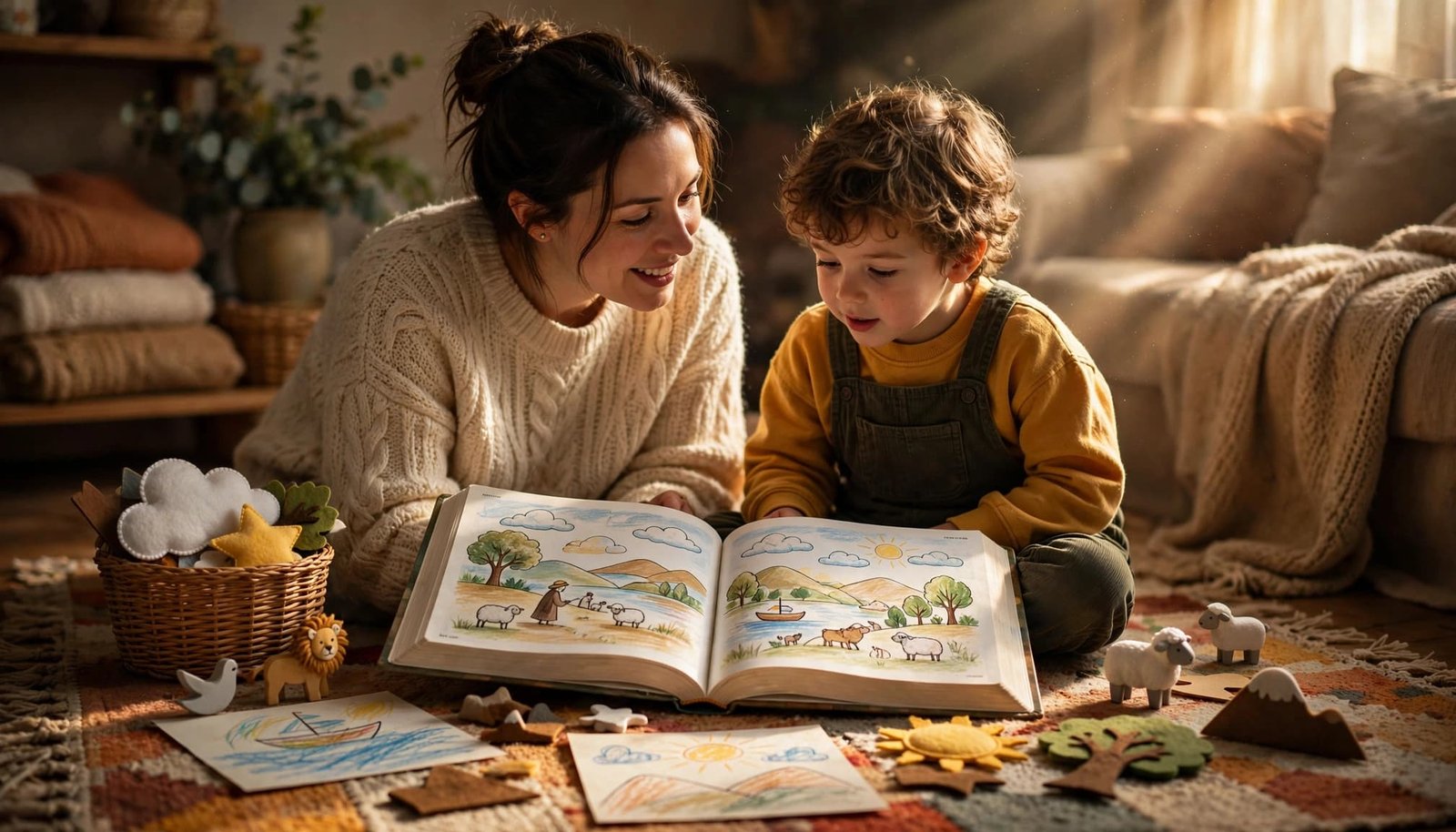
Picture books, simple props, drawings, felt-board pieces, and age-appropriate videos can support the experience. Use them as doorways into conversation, not replacements for it. A toy boat can help a child retell Noah’s story, and paper stones can bring David’s courage to life. A short video may hold a younger child’s attention, but pause afterward and ask what they noticed.
Use a Five-Step Story Routine
Keep the routine familiar so your child knows what to expect. You can follow these five steps with nearly any Bible story:
- Read the passage or a reliable child-friendly retelling. Use expression, pause for reactions, and explain unfamiliar words in simple language.
- Name the main problem. Was Daniel under pressure? Did the Israelites feel trapped? Naming the challenge helps children follow the story.
- Ask what choice the character made. Try, “What would you have done?” or “Why do you think David stepped forward?”
- Connect the lesson to real life. Ask, “Who needed help?” or “What can we practice this week?” Keep the application concrete, such as including a lonely classmate or telling the truth.
- Let your child retell or act it out. They can draw three scenes, use felt-board figures, or explain the story in their own words.
Children often remember stories they tell themselves. If your child changes a detail, gently guide them back to the main events without interrupting every sentence. You can also begin the story and let your child finish it, using prompts such as, “What happened next?” and “How did the character respond?”
When attention fades, stop while the experience still feels positive. One story, thoughtfully discussed, gives your child more to carry into the week than several rushed readings.
Choosing the Right Bible Story for Your Child’s Age and Stage
The best Bible story matches your child’s attention span, questions, and emotional readiness. Age ranges offer helpful starting points, but they aren’t strict rules. Two children the same age may respond very differently to stories about danger, loss, or conflict.

Preschoolers Need Concrete, Gentle Stories
Preschool children usually connect with familiar objects, repeated phrases, animals, and simple cause-and-effect plots. Start with stories such as:
- Creation, which invites children to notice light, animals, plants, and the goodness of God’s world.
- Noah’s Ark, with the focus on the animals, the ark, and the rainbow promise.
- The Birth of Jesus, told through the baby, the stable, the star, and the visitors.
- Jesus welcoming children, which shows that children matter to him. You can read Mark 10:13-16 together.
Keep the reading short, use pictures or simple props, and let your child repeat key parts. You might make animal sounds during Noah’s story or rock a doll while talking about Baby Jesus.
Early Elementary Children Can Follow Bigger Challenges
Children in early elementary school often enjoy stories with a clear problem, brave choices, and a satisfying resolution. David and Goliath can open a conversation about courage, while Daniel in the lions’ den introduces prayer and integrity. The Good Samaritan highlights mercy, Jonah raises questions about obedience, and the Feeding of the 5,000 encourages gratitude and generous sharing.
Ask one focused question after reading. For example, “What choice did Daniel make when he felt pressure?” Keep the answer connected to your child’s life, such as telling the truth or asking an adult for help.
Older Elementary Children Are Ready for Deeper Questions
Older children can explore Joseph’s forgiveness, Moses’ leadership, Esther’s courage, and the Prodigal Son’s lesson about mercy and responsibility. You can discuss unfair treatment, difficult emotions, wise decisions, and the difference between forgiveness and ignoring harm.
If a story feels intense, shorten the frightening parts, pause for questions, and return to it later. Your child may need more time before discussing violence, betrayal, or loss.
A simple weekly rhythm keeps Bible time manageable: one story, one main lesson, one activity, and one real-life action. That might mean reading Esther, talking about courage, making a courage card, and including someone who feels left out.
Conclusion
A bedtime Bible story can become much more than a few minutes of reading. Creation, David and Goliath, Esther, the Good Samaritan, and the other stories in this guide give children clear examples of courage, kindness, forgiveness, obedience, and hope. The strongest lessons often grow through simple conversations about the problems children face at home, school, and with friends.
Sharing these stories doesn’t require perfect storytelling, expensive materials, or long lessons. A few quiet minutes, a warm voice, and one question about everyday life can help your child connect Scripture with faith and wise choices. Let your child retell the story, draw a favorite scene, act out a character, or practice one lesson during the week.
Start with the story that best matches your child’s age, questions, or current struggles. Whether your child needs courage like David, patience like Joseph, or compassion like the Good Samaritan, a shared Bible story can offer a gentle place to listen, talk, and grow together.

- Dry Cough in Kids: 5 Causes and Safe Solutions - September 23, 2026
- How to Help a Child Deal With Anxiety at Home - September 12, 2026
- How to Prepare Your Child for the First Day of School - September 12, 2026