Your toddler doesn’t need formal lessons or alphabet drills to learn and grow. Play, everyday routines, close relationships, and safe chances to explore all give them meaningful ways to practice useful skills.
Small moments count: helping carry napkins, naming a feeling, or taking turns with a toy can become a natural part of the day. These 50 practical ideas offer ways to build independence, communication, and curiosity, with easy toddler activities to do at home for more play inspiration. Every child develops at their own pace, so follow your toddler’s interests and try the ideas that fit your family.
50 Things to Teach Your Toddler Instead of ABC
Everyday routines and play give toddlers plenty of chances to practice real-life skills. Follow your child’s interest, offer help when needed, and remember that trying is part of learning.
Build communication with words, gestures, and stories
Toddlers communicate with sounds, gestures, looks, and words. Respond to their attempts and add language naturally as you go.
- Point to ask for something. Pause at snack time so your toddler can point to the banana they want.
- Use words or gestures to make a choice. Offer two shirts and let them point or say which one they prefer.
- Name familiar people and objects. Talk about Grandma on a video call or name the cup at lunch.
- Learn body-part names. Point to your nose and invite your toddler to find theirs during bath time.
- Recognize and name basic feelings. Say, “You look happy,” when they grin at a favorite toy.
- Listen and respond during a short exchange. Ask where the stuffed dog is, then notice their point or answer.
- Take turns in a simple conversation. Trade comments about pictures in a book, giving your toddler time to respond.
- Follow a one-step direction. Ask them to bring a shoe while you get ready to leave.
- Try a two-step direction when ready. Invite them to get a book and bring it to the couch.
- Ask a trusted adult for help. Model saying “Help, please” when a snack container is hard to open.
The CDC tracks communication, play, learning, behavior, and movement as developmental areas. Its milestones by age two include pointing to things in a book when asked.
Practice independence through small daily jobs
These jobs take time, and toddlers often need hands-on help. Trying matters more than getting each task right; stay close and let your child do the part they can.
- Use a spoon or fork. Let them scoop yogurt at the table, even if some spills.
- Drink from a cup. Offer a small amount of water in a sturdy cup.
- Wash hands with help. Guide them to the sink before a meal, then help with soap and rinsing.
- Help brush teeth. Let them hold the toothbrush before you finish brushing.
- Pull off shoes or socks. Invite them to tug off socks before bath time.
- Try simple dressing steps. Hold a shirt open and let them push an arm through.
- Put toys in a basket. Make cleanup a short game after play.
- Carry a light item safely. Ask them to bring a clean washcloth to the bathroom.
- Use a napkin to wipe. Keep one within reach at lunch and show them how to dab their hands.
- Move between routines with a warning. Say, “One more book, then it’s time for bed.”
Grow social and emotional skills one interaction at a time
Toddlers need adults to model social skills and help them settle when feelings run high. They won’t share or calm down consistently yet, and that’s expected; your steady support teaches the next step. For more ideas, try these activities for developing emotional intelligence.
- Notice when they feel happy, sad, or frustrated. Name the feeling when a block tower falls.
- Try a simple calming action with an adult. Take a slow breath together after a frustrating moment.
- Wait briefly for a turn. Help them wait while a sibling rolls the ball back.
- Share with support. Set a timer for a short turn with a popular toy.
- Use gentle hands. Show them how to stroke a stuffed animal softly.
- Notice when someone else is upset. Point out that a friend is crying and offer comfort together.
- Practice repairing after upsetting someone. Help them return a toy or check whether a friend is okay.
- Use or respond to “stop.” Practice pausing play when someone says stop.
- Ask to join play. Model “Can I play?” before approaching another child.
- Separate from a caregiver and reconnect. Keep goodbyes brief, then greet them warmly at pickup.
Strengthen coordination with movement and hands-on play
Choose a safe space and simple materials. Children develop at different rates, so these activities are invitations to practice, not deadlines to meet.
- Walk and run in a safe space. Make room for a few trips across the living room.
- Climb with close supervision. Let them step onto a low, stable cushion beside you.
- Jump or try to jump. Bounce together on the floor without furniture or raised surfaces.
- Use stairs with an adult and handrail. Hold their hand as you practice one step at a time.
- Kick or roll a ball. Roll a soft ball back and forth in a clear hallway.
- Balance on a low, safe surface. Walk across a line of painter’s tape on the floor.
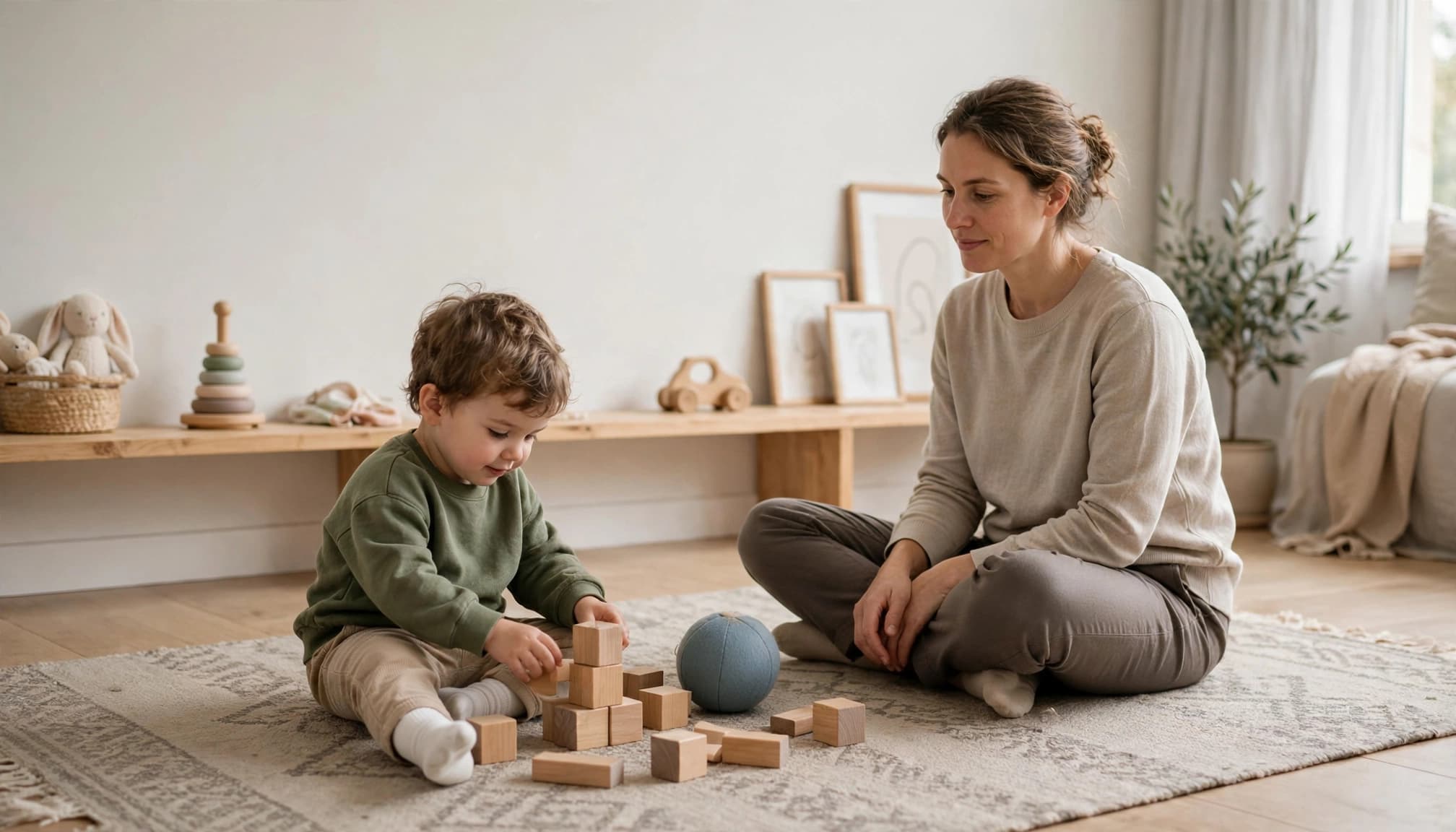
- Stack blocks. Build a short tower from blocks or clean food containers.
- Turn book pages. Let them help turn sturdy pages during story time.
- Make marks with a chunky crayon. Offer a large crayon and paper at the kitchen table.
- Open and close a simple container. Practice with a clean, empty plastic food container.
Explore problem-solving, curiosity, and basic safety
Small discoveries encourage toddlers to test ideas and notice their surroundings. Safety lessons help, but they never replace close adult supervision.
- Learn what happens when objects are pushed or dropped. Roll a soft ball down a short, clear path.
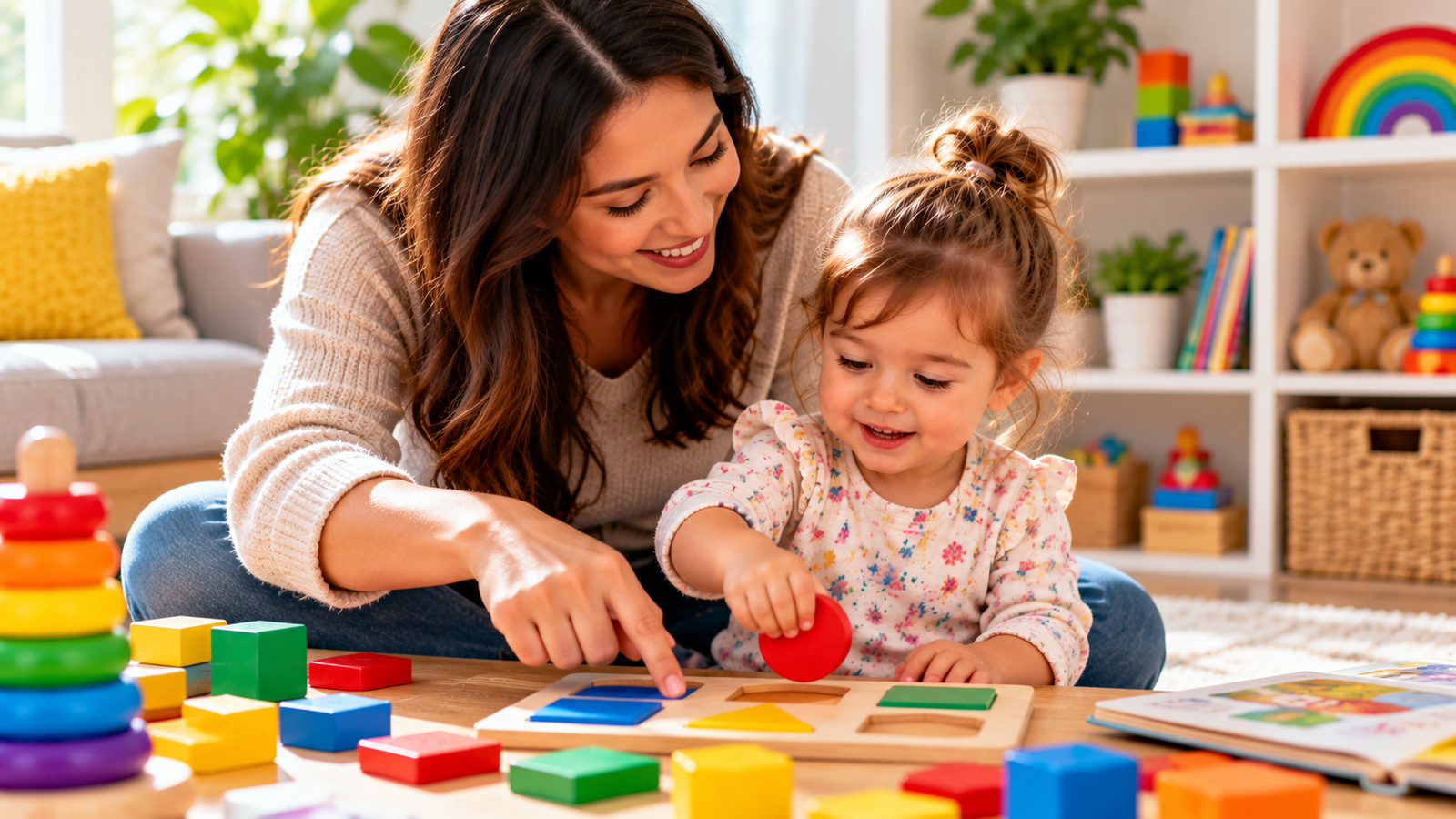
- Try a simple puzzle. Help fit a large piece into a chunky wooden puzzle.
- Pretend to care for a doll or stuffed animal. Offer a cloth for pretend bedtime or feeding.
- Match familiar objects. Pair clean socks or match toy cups by color.
- Spot simple patterns. Point out stripes on a shirt or alternating blocks.
- Count a few real objects during play. Count two toy cars as you put them away.
- Notice weather, plants, or animals. Look at rain from indoors or watch a bird from a safe distance.
- Identify a trusted adult to ask for help. Name the caregiver they can find at daycare.
- Hold an adult’s hand near roads and parking areas. Practice before crossing a driveway.
- Learn to stay away from medicine, cleaning products, and hot surfaces. Use simple words and store hazards securely out of reach.
Why toddler learning goes far beyond letters
Letters are one small part of early learning. Toddlers build useful skills while they play, copy the people around them, and take part in everyday routines. A basket of toys can become practice for following directions, moving carefully, and helping clean up.
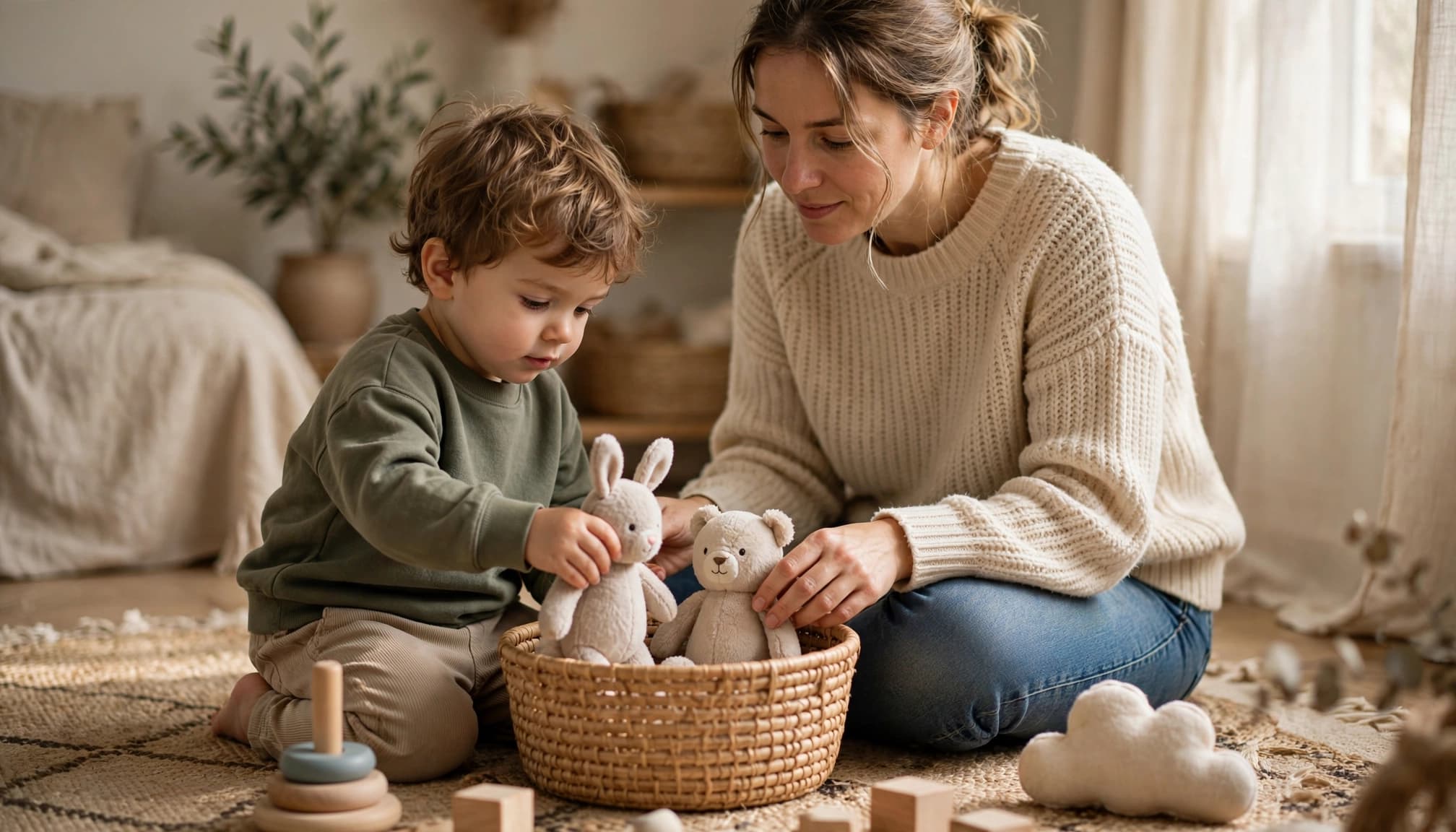
Everyday moments teach lasting skills
Toddlers learn through imitation, repetition, play, and warm interaction. When you name what you’re doing, respond to a gesture, or invite your child to try a small task, you give them a useful example to practice. Repeating the same routine helps a new action feel familiar.
Play offers another natural way to learn. As your toddler stacks blocks, pretends to feed a doll, or rolls a ball with you, they explore cause and effect, movement, and shared attention. Follow their interest and join in without turning the moment into a test. For more ideas, see these ways to encourage playful learning.
The 50 skills support more than one kind of growth
The ideas in this list touch several parts of development. Talking and listening build communication; climbing, drawing, and using utensils give toddlers chances to practice movement and coordination. Dressing, washing hands, and putting toys away support growing independence.
Social-emotional learning happens in ordinary interactions, too. With your help, a toddler can begin naming feelings, waiting briefly, or noticing when someone needs comfort. Puzzles, matching games, and simple household tasks invite problem-solving as children try an idea and see what happens.
Use milestones as guidance, not a deadline
The CDC’s developmental milestones describe skills many children show by a certain age. They can help you notice progress and decide what to discuss, but they are not pass-or-fail deadlines. Review the CDC’s milestone guidance as one tool, while remembering that children develop at different rates.
If you have concerns about how your toddler communicates, moves, plays, or learns, bring them up with your pediatrician. You can ask whether developmental screening would be helpful.
Make learning part of play and everyday routines
You don’t need to add lessons to a busy day. Choose one small skill, show your toddler how it works, then give them a chance to try. A few words and a familiar routine are often enough.
Show the skill, then pause
Use short, clear language as you model an action. At lunch, you might say, “Scoop with your spoon,” while demonstrating, then let your toddler take a turn. When it’s time to get dressed, show how to push an arm through a sleeve and wait while they try.
Your child may need help or lose interest quickly. That’s fine. Keep the moment brief, offer support, and try again another day. Repetition during familiar routines gives toddlers a chance to practice without pressure. For more ideas on making routines easier, explore these positive parenting strategies for toddlers.
Follow your toddler’s attention
If your child is fascinated by a puddle on a walk, pause to watch the ripples and describe what you see: “The water is moving.” That small exchange can invite observation and new words. During cleanup, you can model putting one block in the basket, then invite your toddler to add another.
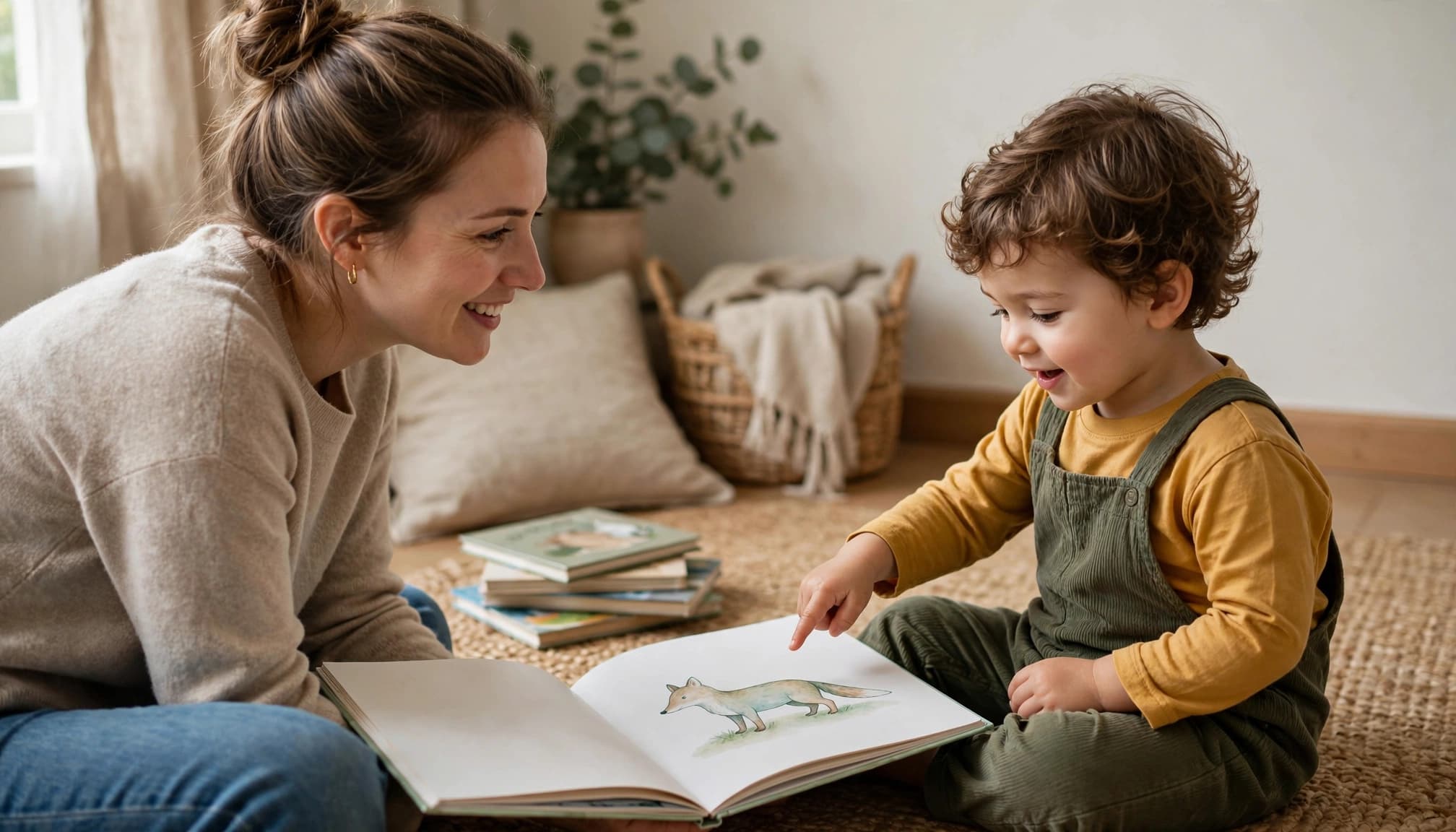
Shared books work the same way. Let your child point to a picture, name what they notice, or turn a page. You can add a word or comment without quizzing them. The NAEYC guide to playful learning describes play as active, meaningful, and socially interactive, qualities that fit naturally into these everyday moments.
Keep it simple and repeatable
Meals, dressing, outdoor walks, cleanup, and books already offer plenty of practice. Pick one opportunity that fits the moment, use a few simple words, and leave room for your toddler to respond. When they move on, follow their lead; you can return to the skill later.
A routine doesn’t need to go perfectly to be useful. Your toddler might only watch today, then try tomorrow. Each relaxed chance to join in helps make the skill familiar.
Choose skills that fit your toddler’s age and readiness
A toddler who has just turned one may need you to guide each step, while a child nearing three may want to take the lead. Use age as a rough guide, then watch how your child responds. The best skill to practice is one that feels useful, safe, and within reach with your support.
Adjust the task to your child, not just their age
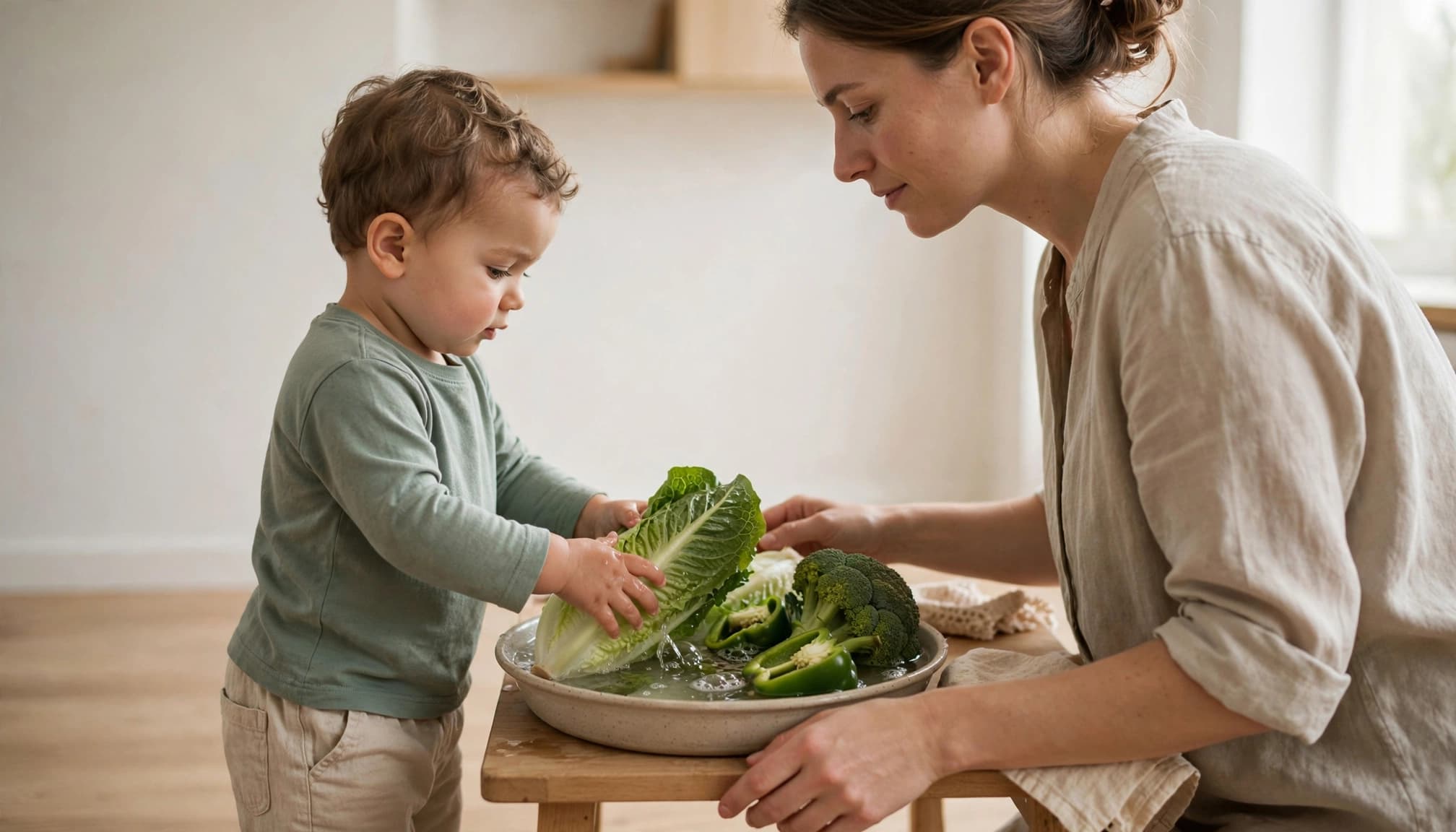
Younger toddlers often learn by watching and joining in for a moment. You might hand them a washcloth while you wipe the table, or let them place one toy in a basket. Keep instructions short and show the action as you describe it. If your child mostly watches, that still gives them a chance to see how the task works.
As toddlers get closer to three, many can take on more steps or follow a simple routine. For instance, your child might carry a napkin to the table, put it in a chosen spot, then help bring another one. The CDC’s 30-month milestones include following two-step directions, but children develop at different rates. Use milestones to guide what you notice, not to set a deadline for mastering a skill.
Make useful skills manageable
Choose just a few skills that fit your family’s daily life. Dressing, putting toys away, or helping with a simple household task can offer regular practice without adding formal lessons to the day. For ideas that match a child’s growing abilities, see these age-appropriate chores for kids.
When a task feels too hard, break it into smaller parts. To practice getting dressed, your toddler might start by pushing an arm through a sleeve while you hold the shirt. Later, they can help pull it down. Stay close, offer the help they need, and pause if frustration takes over. A task can wait until another day.
Praise effort in a way that tells your child what they did: “You put the blocks in the basket.” This helps them notice their own participation, even when you still need to finish the job. Progress may look like trying one step today and another next week.
Skills grow through repetition and warm interaction, not pressure to get ahead academically. Follow your toddler’s curiosity, and let connection matter more than how quickly they master a task.
Conclusion
Toddlers learn far more than letters through play, movement, conversation, close relationships, and small responsibilities. Those everyday moments give them room to explore and practice at their own pace.
You don’t need to teach all 50 skills at once. Choose one or two that fit a routine you already have, such as cleanup or getting dressed, and make space for your toddler to try. Learning can start with the ordinary moments you share. For more ideas, explore simple activities to support toddler language development.
Save pin for later

- Can I Give A Half-boiled Egg To My Baby? - September 25, 2026
- What Are The Nutritional Benefits Of Eggs For Babies - September 25, 2026
- When Should I Avoid Giving Eggs To My Baby? - September 25, 2026