


A gassy newborn can turn a calm feeding into a fussy, squirmy struggle, and that can leave you tired and second-guessing every burp break. Gas is common in the early weeks because babies swallow air while feeding and their tiny digestive systems are still learning the job.
The good news is that a few simple burping moves can ease trapped air and bring a little peace back to the routine. If you’re also trying to make feeding feel less overwhelming, these tips for feeding a newborn baby can help set a smoother pace before and after each feed. Here’s how to burp a gassy newborn in ways that are gentle, practical, and easy to try right away.
Why your gassy newborn may need help burping
A gassy newborn often isn’t dealing with “too much gas” so much as trapped air. That air can build up during feeding, crying, or a fast milk flow, and it can leave your baby tense, squirmy, and hard to settle. Burping helps release that pressure before it turns into a full-body protest.

You may notice the pattern right after a feed. Your baby may arch their back, pull their legs toward their tummy, gulp, squirm, or spit up more than usual. Those signs often point to swallowed air, which is common in the early weeks while feeding skills are still developing.
Common reasons babies swallow extra air
Newborns swallow air for simple, everyday reasons. During breastfeeding, a shallow latch can let air sneak in with the milk. During bottle-feeding, the nipple flow may be too fast, too slow, or not sealed well enough.
Crying before a feed can also add air to the stomach. The longer your baby cries, the more air they may swallow between breaths. Feeding in a too-flat position can make it harder for milk and air to move the right way, so gas stays trapped longer.
A few common triggers stand out:
- Fast feeding pace, which makes babies gulp instead of sip.
- Latch issues, which let air enter during breastfeeding.
- Bottle nipple flow that does not match your baby, especially if the milk rushes out too quickly.
- Crying before feeds, which pulls extra air into the tummy.
- A too-flat feeding position, which can make swallowing air easier.
A baby who gulps, coughs, or pulls off the nipple often needs a slower, calmer feeding rhythm.
For more on feeding-related gas, Texas Children’s explains common causes of gas in breastfed babies.
How to tell gas from normal newborn fussiness
Some newborn fussiness is just part of the day. A baby may be alert, overtired, hungry, or overstimulated without being gassy at all. The difference often shows up in how they act after a feed.
A gassy baby usually seems uncomfortable in a more physical way. They may tense their belly, squirm after eating, arch their back, or keep trying to pass gas. Spit-up can happen too, especially when air gets trapped in the stomach.
Watch for these simple clues:
- After-feeding squirming that starts soon after the bottle or breast.
- Legs pulled up to the tummy, as if your baby is trying to relieve pressure.
- Frequent burps or spit-up, especially along with fussing.
- A tight, bloated belly or repeated straining without much relief.
If you want help telling gas from a bigger issue, this guide to baby gas vs. colic can make the difference clearer.
The best burping positions that can help air come up
There’s no single perfect burping method for every newborn. Some babies burp fast in one position and stay stubborn in another, so it helps to try a few holds and watch what brings relief.
The main goal is simple: keep your baby secure, supported, and upright enough for trapped air to rise. A gentle pat or rub on the back often does the trick, but timing and position matter just as much as the motion.

If your baby seems tense after a feed, start with a familiar hold and give it a minute. When one position stalls, switch to another instead of forcing it. A good burping routine often comes down to trial, patience, and a calm grip.
For babies who also struggle with feeding comfort, these breastfeeding positions for newborns can make feeds easier before burping even begins.
Over the shoulder, with baby fully supported
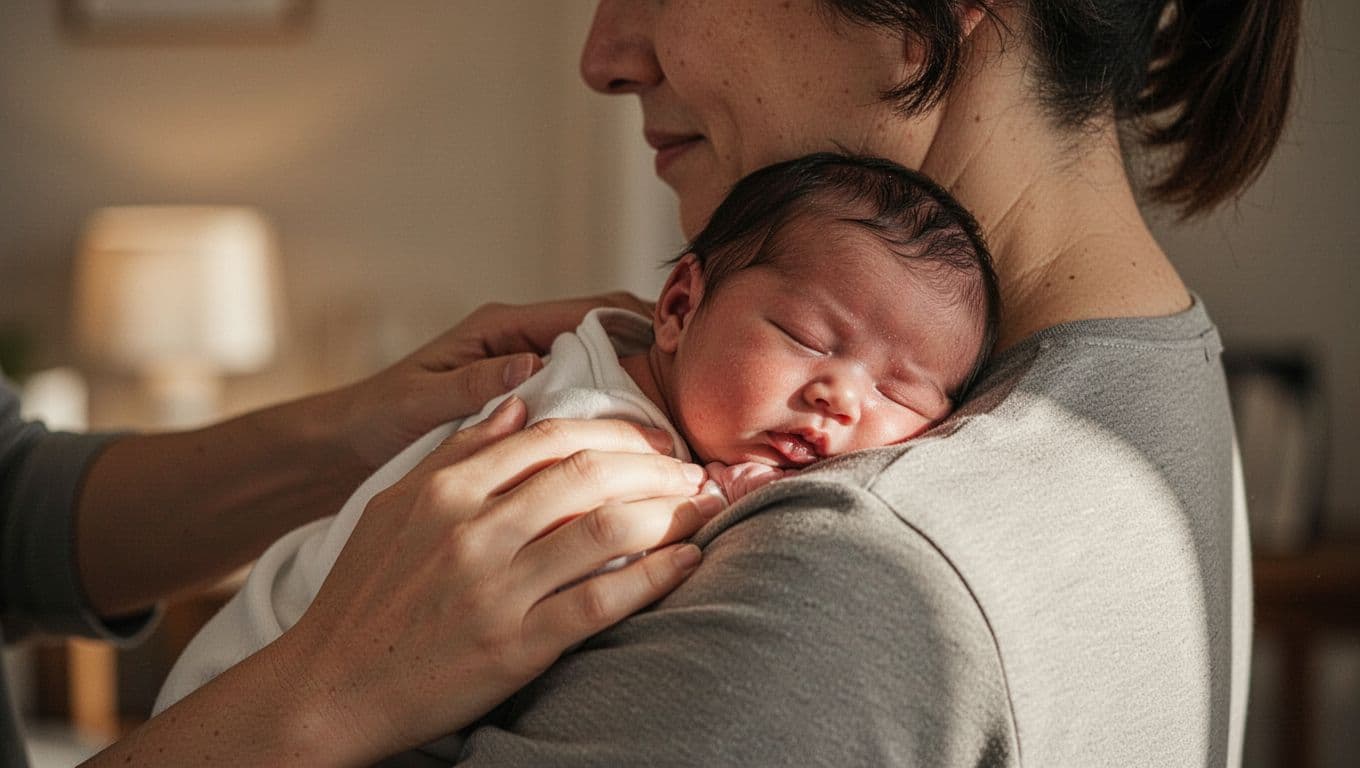
This is one of the most common burping holds, and for good reason. Place your baby upright against your chest so the chin rests on your shoulder, then support the neck and head with one hand.
Keep your baby close and steady, not dangling. With your other hand, gently pat or rub the back in small motions. A soft rhythm often works better than hard taps, since the aim is to relax the belly, not jostle it.
This hold is especially helpful when your baby feels snug in your arms. It also gives the stomach a nice upright angle, which can help trapped air move upward.
Sitting upright on your lap
Some babies burp best when they sit upright on your lap. Position your baby on your thigh, facing sideways or slightly forward, then support the chin and chest so the body leans just a little forward.
That small forward tilt matters. It keeps the airway open and gives gas a better path upward, while your hand and arm keep your baby balanced. Then rub or pat the back with a gentle, even touch.
This position often works well after a bottle. It can also help when the shoulder hold feels awkward or does not bring up a burp after a few minutes.
If one hold does nothing, switch positions. Babies often need a different angle, not more pressure.
Face down across the lap for stubborn gas
For some babies, a face-down hold across the lap helps when gas feels stuck. Lay your baby across your thighs with the head slightly higher than the chest, then make sure the body is fully secure.
One arm can support the chest and upper body while the other keeps the legs and hips steady. After that, rub or pat the back gently and watch your baby’s face and body language closely.
If your baby seems tense, cries harder, or arches away, stop and try a different hold. Comfort matters here, because a burping position should calm your baby, not add more strain.
The NHS also lists these same three positions as the main ways to burp a baby in its burping guide for babies.
5 simple burping tricks that can make a big difference
A gassy newborn often needs a little more than a quick pat after the feed. Small changes in timing, touch, and position can help trapped air move out before it turns into crying, arching, or spit-up.
Use these five tricks like a simple cheat sheet. They are easy to try, and they often work better than doing the same burp the same way every time.
Burp during the feed, not only after it
Some babies do best when you pause before they get too full. That mid-feed break can release air sooner, which often means less pressure by the end of the feeding.
This matters during bottle feeds, where air can build up fast. It also helps when breastfeeding and switching breasts, since a quick burp between sides can keep your baby more comfortable. The NHS burping guide gives the same simple advice, and it works because it keeps gas from piling up.
Try this pattern:
- Pause partway through the feed.
- Hold baby upright for a short burp attempt.
- Resume feeding once your baby settles.
If your baby gets fussy before the feed ends, don’t wait. Burp earlier and see if that takes the edge off.
Try gentle pats, then switch to rubbing if needed
A cupped hand gives you a soft but steady pat. That shape matters, because it cushions the blow while still helping air shift upward.
Start with slow, gentle pats on the middle of the back. If nothing happens after a minute or two, switch to a light rub. Some babies respond better to one motion than the other, and alternating between the two can help when the first try stalls.
Keep the rhythm calm. Fast, hard tapping can wake a sleepy baby or make a tense baby more upset. A steady hand usually works better than a hurried one.
If the burp does not come right away, stay patient. Sometimes the air needs a little more time to move.
Change positions when one hold is not working
A burp hold can miss the mark, even when you’re doing everything right. After a few minutes, change positions instead of repeating the same one over and over.
Some babies burp best over the shoulder. Others relax more when they sit upright on your lap or rest face-down across your thighs. That is why a different angle can make all the difference, especially when gas feels stuck.
The key is to stay realistic. One baby may burp in under a minute in one position and need a full switch in another. If a hold feels awkward or your baby keeps squirming, try a new one and give it another short chance.
For a quick visual reference, Unicef’s baby burping basics shows how simple position changes can help.
Keep baby upright after feeds
Once the feed is over, hold your baby upright for 10 to 15 minutes. That short pause gives gas time to rise and can also reduce spit-up.
This does not need to be complicated. A shoulder cuddle, a seated hold on your lap, or a quiet upright rest in your arms can all work. The goal is to keep pressure off the tummy while your baby settles.
This is a good habit after both breast and bottle feeds. It gives the stomach a calmer finish, especially if your baby tends to gulp or swallow extra air.
Watch for feeding habits that add extra air
A lot of burping problems start before the burp even happens. Feeding in a more upright position can help your baby swallow less air, and a comfortable latch or bottle flow can make a big difference too.
If breastfeeding feels shallow or bottle flow seems too fast, your baby may gulp more and trap more gas. Slowing the feed when possible also helps, because rushed feeding often brings more bubbles along for the ride.
Small adjustments add up:
- Keep baby a little more upright during feeds.
- Check that the latch feels comfortable.
- Make sure the bottle nipple flow matches your baby.
- Slow the pace when your baby starts to gulp.
A calmer feed usually means fewer gas bubbles to deal with later. That can make burping easier for both of you.
What to do when the burp still will not come
Sometimes a burp needs a little more time. That can feel frustrating, especially when your baby is squirming and you are trying everything you know.
When the air stays trapped, the best move is to stay calm and reset the moment. A short pause, a fresh hold, or a gentle change in motion can help the body relax enough for the burp to surface.

Pause, reset, and try again
If the burp feels stuck, stop for a minute and give your baby a tiny reset. Hold them upright, let them settle, and then try again with a softer rhythm. A baby who is less tense often burps more easily than one who is crying hard.
This works because crying can tighten the belly and pull in more air. A calmer baby has a better chance of releasing what is trapped. The Children’s Hospital of Philadelphia also suggests laying baby down for a brief moment, then bringing them upright again and retrying the burp.
You can keep it simple:
- Hold your baby upright for a short break.
- Rock gently or walk a few slow steps.
- Try the burp again in the same or a new position.
If you want more hands-on soothing ideas, gentle baby massage techniques can also help your baby relax between burp attempts.
Use gentle movement to help gas move
When the burp still does not come, light movement can help the gas shift. Rocking in your arms, slow walking around the room, or smooth bouncing on your hip can settle a fussy baby without adding pressure.
For awake babies, bicycle legs are another good option. Lay your baby on their back and move the legs in a slow pedaling motion. You can also gently draw the knees toward the tummy for a few seconds, then release them. The Children’s Health guide to newborn gas recommends these kinds of motions because they can help trapped air move through the belly.
Keep the movement soft, not forced. You are soothing the body, not trying to push the gas out.
A few gentle options often help:
- Rocking in your arms, which can calm the body and ease tension.
- Slow walking, which adds steady motion without upsetting baby.
- Bicycle legs, which can help wake up a sleepy tummy.
- Knee-to-tummy movements, which should stay light and brief.
If your baby is awake and alert, these motions can help. If baby seems upset or sleepy, keep the movement slow and easy.
If the gas still seems stubborn, a few more minutes may be all it needs. Then you can try burping again once your baby settles into a calmer rhythm.
When gassiness is normal and when to call the doctor
Mild gas is part of newborn life. Tiny tummies are still learning how to move milk, air, and stool, so some squirming, burping, and spit-up can be normal after feeds. If your baby feeds, settles, and has calm periods between the fussy ones, gas usually isn’t a problem.
Still, some signs deserve a closer look. A baby can seem gassy and also be dealing with something that needs medical care, so it helps to watch the whole picture, not just the belly.
Signs that usually point to normal gas
Normal gas often shows up after feeding. Your baby may squirm, pass gas, pull their legs up, or relax after a burp. These small bursts of discomfort can come and go, then fade once the air moves out.
A baby who is otherwise alert, feeding, and having regular wet diapers usually just needs time and a few soothing burping tries. If you want a simple place to compare symptoms, newborn gas relief tips can help you see what typical gas looks like.
Call the doctor if the gas comes with warning signs
Get medical advice if your baby has gas along with a swollen or hard belly, repeated vomiting, blood in stool, fever, poor feeding, trouble breathing, or unusual sleepiness. A baby who seems very unwell should also be checked right away.
The same caution applies if your newborn stops eating well or has fewer wet diapers than usual. Those changes can point to dehydration or another issue that needs prompt care. For a fuller list of urgent breathing signs, warning signs of infant breathing problems can help you act fast.
If your newborn is under 3 months old and has a fever of 100.4 F or higher, call right away.
Trust the bigger pattern
One fussy feed is usually not a red flag. A baby who keeps getting worse, won’t settle, or looks weak needs a doctor’s input. When in doubt, call your pediatrician and describe the feeding, stool, spit-up, and breathing changes you see.
Conclusion
Burping a gassy newborn often comes down to patience, a steady hand, and a willingness to try a new position when the first one falls flat. Small changes during and after feeds can ease trapped air and make your baby feel more settled.
The real takeaway is simple, notice your baby’s cues, keep the support gentle, and give each burp break a little time. When you stay calm and consistent, the routine gets easier, and so do those fussy little moments.
You’re not alone in this. With a few soothing habits and a little practice, you can help your newborn pass gas more comfortably and feel more at ease, one feed at a time.
Save pin for later


- Asperger’s Syndrome in Babies: Early Signs and Next Steps - October 7, 2026
- 12 Beautiful Baby Names That Mean Forest, Plus Woodland Picks - September 27, 2026
- 15 Fantastic Baby Nicknames for Boys, From Sweet to Playful - September 27, 2026