
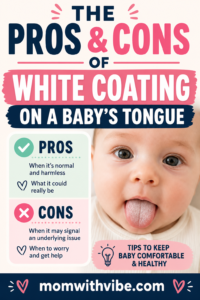
A white coating on your baby’s tongue is often just milk residue, and that can be completely normal after feeding. Still, a white tongue can also point to oral thrush, so it helps to know what you are seeing and what it means for your baby.
The good news is that the coating itself is harmless when it wipes away easily and stays on the tongue. The concern starts when it looks thicker, spreads past the tongue, or comes with fussiness, sore feeding, or red patches, which may call for a doctor visit or treatment like the home remedies for baby’s oral thrush.
What a white coating on a baby’s tongue usually means
A white tongue in a baby usually points to one of two things: milk residue or oral thrush. The difference matters, but the first clue is often simple, how the coating looks, where it sits, and whether it wipes away.
Most of the time, especially in young babies who feed often and make less saliva, the coating is just leftover milk. Still, a thicker white coating that spreads past the tongue needs a closer look.
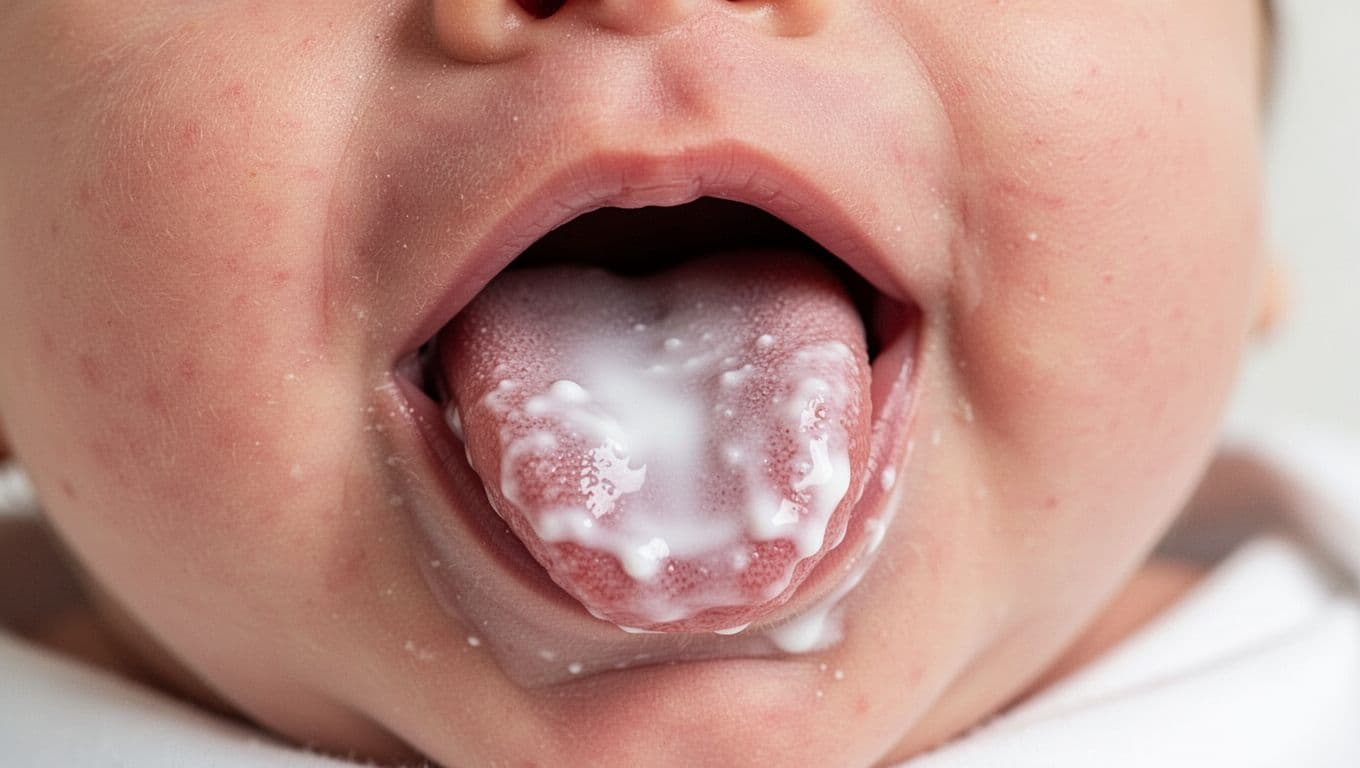
Milk residue is the most common and harmless cause
Milk tongue usually looks like a thin, even white film on the tongue after feeding. It often stays limited to the tongue and may fade after a while, especially as your baby makes more saliva.
A gentle wipe with a damp cloth often removes it easily. If the coating comes off and the tongue underneath looks pink and normal, that points to milk residue rather than an infection.
This is very common in newborns and young infants, since milk is their main food and their mouths stay moist with frequent feeds. On its own, it usually does not bother the baby or affect feeding.
Oral thrush can look similar at first
Thrush also causes white patches, but the appearance is different. The spots are usually thicker, patchy, and stubborn, and they can show up on the cheeks, gums, lips, or roof of the mouth too.
Unlike milk residue, thrush often does not wipe off easily. If you try to clean it, you may see redness or irritation underneath. Babies with thrush may also fuss during feeds or seem uncomfortable.
According to the Mayo Clinic’s overview of oral thrush, the white patches can spread beyond the tongue and may come with soreness. That extra irritation is one reason thrush gets attention sooner than milk tongue.
A white tongue that wipes away easily is usually milk residue, but white patches that stick around deserve a closer look.
The benefits of a white tongue coating when it is just milk tongue
A white coating on a baby’s tongue can look worrying at first, but when it is just milk tongue, it usually points to normal feeding. In that case, the coating is a simple sign that milk has been moving through your baby’s mouth as expected.
That matters because it can calm a lot of first-time-parent panic. If your baby is feeding well, seems comfortable, and has no other mouth changes, the white film is often harmless and temporary.

It often points to a well-fed, healthy baby
Milk tongue is common in babies who feed regularly, whether they breastfeed or take formula. Because babies make less saliva in the early months, milk can stay on the tongue and leave a thin white film behind.
That coating by itself does not mean something is wrong. In many cases, it simply tells you your baby has been eating milk often enough for residue to collect, which is why it shows up so often after feeds.
A baby with milk tongue usually looks otherwise well. Feeding stays normal, the tongue looks pink underneath when wiped, and there are no sore spots or patches inside the cheeks. That pattern fits a healthy mouth more than an infection.
It can help parents avoid unnecessary worry
Knowing the difference between milk residue and thrush can save a lot of stress. It also keeps you from reaching for extra products or treating a problem that is not there.
A simple wipe test helps here. Use a soft, damp cloth and check whether the coating comes off easily, then look at the rest of the mouth. If the tongue clears and the cheeks, gums, and lips look normal, milk tongue is more likely than thrush.
This small check can make your next step much clearer. If the white coating stays put, spreads, or comes with fussiness, then it deserves a closer look. If it wipes away and your baby is feeding well, you can usually relax and move on.
For a quick comparison of milk tongue and thrush, Cleveland Clinic’s guide to newborn tongue cleaning explains what to look for and why the wipe test matters.
The downsides of ignoring a white coating when it is not milk tongue
If the white coating on your baby’s tongue is actually thrush, waiting it out can make things harder fast. The biggest problem is that thrush can turn feeding into a sore job, and a sore mouth changes how a baby eats, sleeps, and settles.
A baby who feels mouth pain may start to pull off the breast or bottle, cry during feeds, or eat less than usual. Over time, that can affect weight gain and leave your baby more tired and unsettled. The Mayo Clinic’s oral thrush guidance also notes that babies can get fussy and have trouble feeding when thrush is present.

Thrush can make feeding painful and stressful
Thrush can turn a normal feeding into a struggle. The mouth may feel sore, so even sucking can bother your baby.
When that happens, babies may:
- Fuss at the breast or bottle
- Pull away during feeds
- Take in less milk
- Feed less often
That can snowball into poor sleep and less comfortable days for both of you. If feeding becomes a battle, it is a sign the white coating needs a closer look, not just more wiping.
It may spread or come back without treatment
Ignoring thrush also gives it time to spread inside the mouth. White patches can show up on the cheeks, gums, lips, or roof of the mouth, and the diaper area can get involved too.
The infection can also pass back and forth during breastfeeding. That means both baby and breastfeeding parent may need treatment at the same time, or the problem can keep returning. Stanford Medicine Children’s Health notes that oral thrush can cause painful white patches and feeding refusal in some babies.
A quick wipe test can give helpful clues, but it is not a diagnosis
A milk residue coating usually wipes away more easily. Thrush often sticks around or leaves a raw, red spot behind.
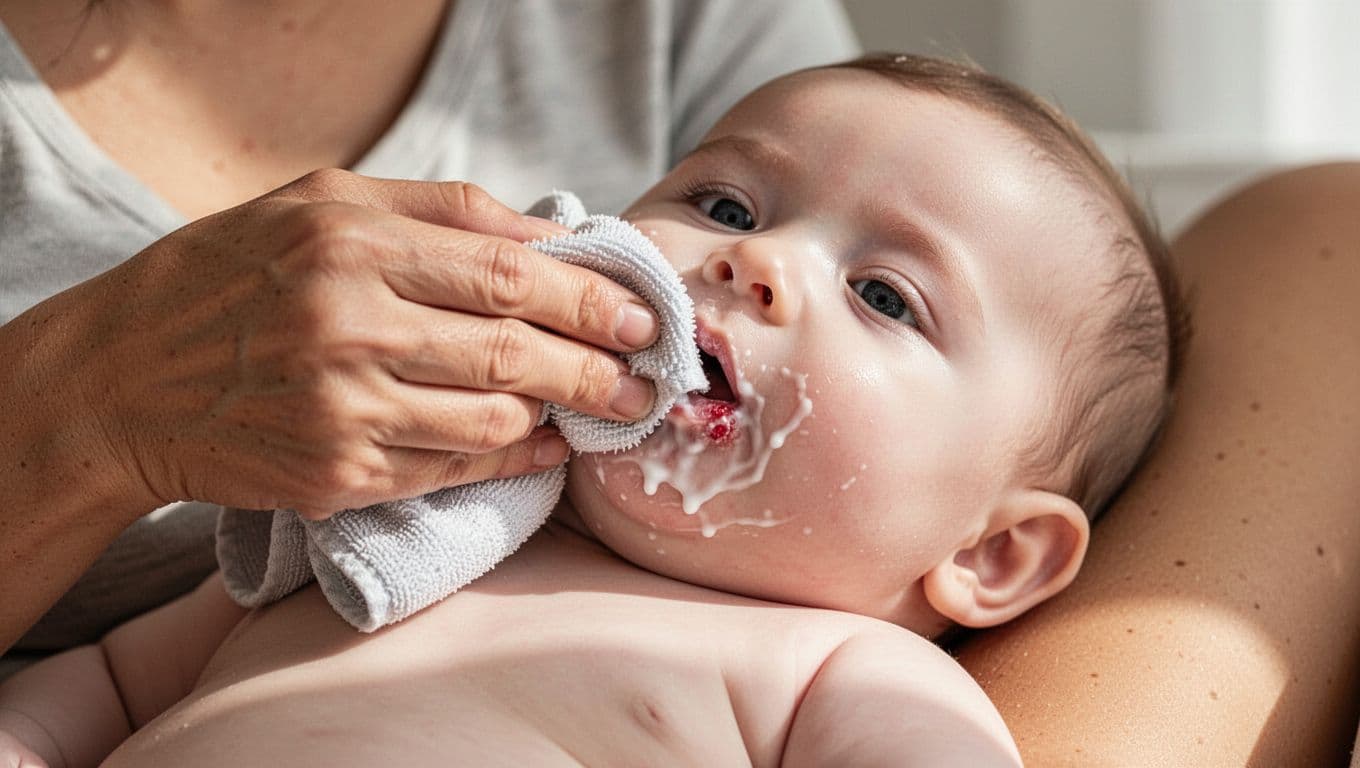
If the coating does not go away, spreads, or seems to bother your baby, a doctor should check it. That simple step can keep a small mouth problem from becoming a bigger feeding issue.
How to tell the difference at home without overcleaning
A quick home check can tell you a lot, but the goal is to look, not scrub. A baby’s mouth is delicate, so gentle cleaning is enough to reveal clues without causing irritation.
The main signs to watch are where the white coating sits, how it looks, and how your baby acts during feeds. If the coating stays on the tongue only and wipes away easily, it usually points to milk tongue. If it spreads or seems stuck, thrush becomes more likely.
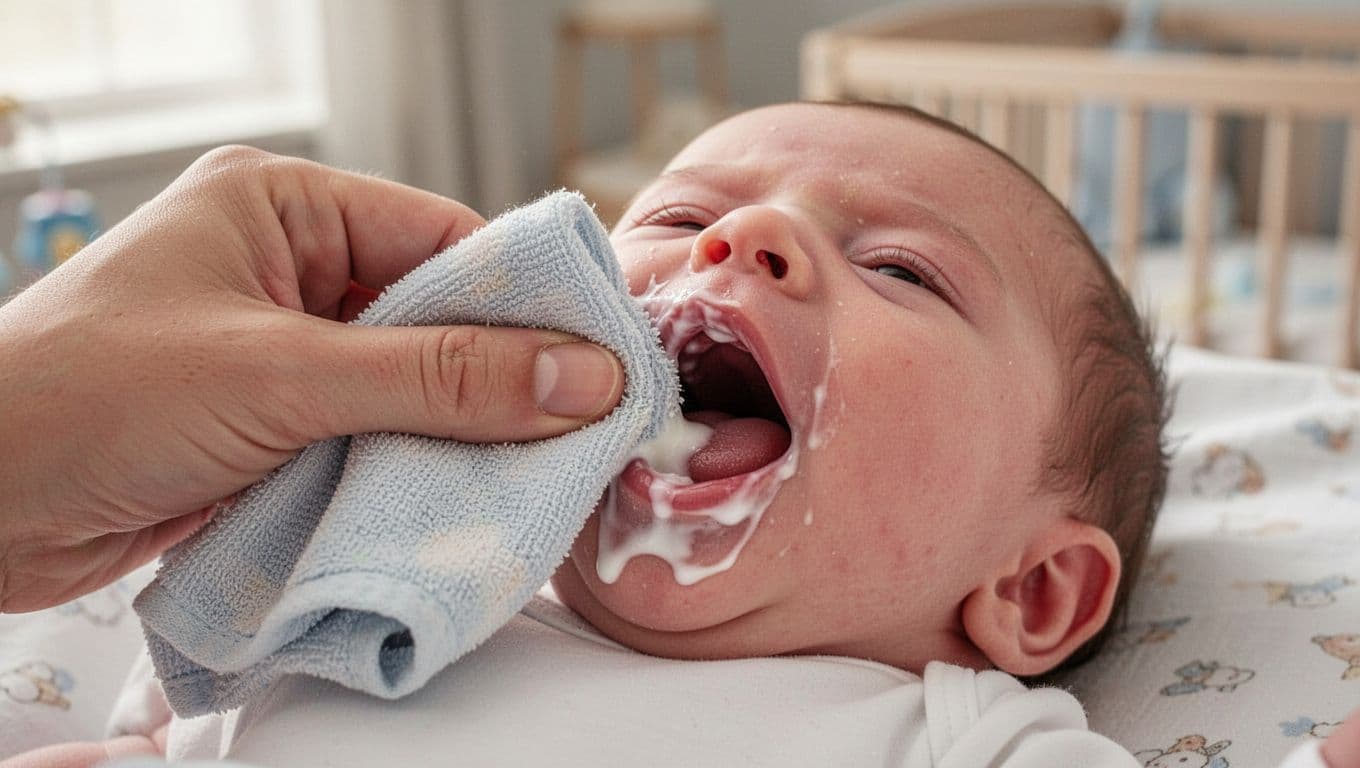
Look at where the white patches appear
Milk tongue usually stays on the tongue itself. It often looks like a thin, even film after feeding, almost like a light dusting that settled where milk pooled.
Thrush often spreads wider. You may see white patches on the tongue, inner cheeks, gums, lips, or roof of the mouth. That wider spread is more concerning because it points to a mouth infection rather than simple milk residue.
If you only see a white tongue and the rest of the mouth looks pink, milk residue is more likely. If you see patchy spots in several places, or the coating looks thick and stubborn, it deserves a call to your pediatrician. The HealthyChildren.org thrush symptom guide also notes that thrush often coats more than just the tongue.
Notice whether baby seems bothered by it
A baby with milk tongue usually feeds normally and acts like themselves. They latch, suck, and settle without much fuss.
Thrush can be different. It may cause fussiness, poor feeding, mouth soreness, or pulling away from the breast or bottle. If your baby seems uncomfortable during feeds, that matters as much as what you see in the mouth.
Keep an eye on the diaper area too. A stubborn diaper rash can be an extra clue that yeast is involved, especially when it shows up with mouth patches. If you breastfeed and you also have nipple pain, that can point in the same direction, so breastfeeding issues linked to thrush are worth checking.
Use a gentle cloth, not force or scraping
The safest at-home check is simple. Wet a soft cloth with warm water, wrap it around a clean finger, and wipe the tongue lightly once or twice.
If the coating lifts off and the tongue underneath looks pink, that fits milk residue. If it stays put, or the area underneath looks red or raw, stop there and call your child’s doctor. A simple wipe is enough to gather clues, but rough scrubbing can irritate the mouth and make things look worse.
Do not use your nails, hard pressure, or home remedies that sting or dry the tissue. If you feel like you need to scrape to get it off, that is a sign to stop and let a clinician check it instead.
When to call the pediatrician
A white tongue that wipes off easily usually needs no medical attention. The time to call the pediatrician is when the coating stops acting like milk residue and starts acting like a problem.

The biggest clues are simple: the patches stay put, spread, or come with pain and feeding trouble. If you also notice fewer wet diapers or a baby who seems less satisfied after feeds, don’t wait too long. For a quick reference on feeding patterns, signs baby is getting enough breast milk can help you compare what you’re seeing at home.
The white coating does not wipe away or keeps coming back
A stubborn coating needs a closer look, especially if it grows or returns quickly after cleaning. That pattern is less like milk residue and more like thrush or another mouth issue.
Call the pediatrician if the white patches stay on the tongue after a gentle wipe, or if they spread to the cheeks, gums, lips, or roof of the mouth. The HealthyChildren.org thrush symptom guide notes that thrush often sticks to the mouth instead of washing away.
If you need to scrub it off, that is a sign to stop and call.
Your baby seems uncomfortable, hungry, or hard to feed
Feeding should not feel like a battle. If your baby cries during feeds, pulls away, takes shorter feeds, or seems hungry soon after eating, the white coating may be affecting the mouth.
Watch for fewer wet diapers, poor weight gain, or a baby who tires out quickly at the breast or bottle. Those signs can point to reduced intake, and they deserve prompt medical advice.
You suspect thrush in a breastfeeding parent too
Thrush can pass between baby and parent during nursing, so nipple pain matters. Burning, cracked nipples, or a new yeast infection can mean both of you need treatment.
If that sounds familiar, call the pediatrician or your own doctor. The MedlinePlus thrush overview explains that thrush can move back and forth during breastfeeding, which is why both sides of the feeding pair may need care.
Simple ways to keep your baby’s mouth clean and healthy
Good mouth care for babies does not need to be complicated. In most cases, a light touch, clean feeding gear, and dry skin around the mouth go a long way.
The goal is to remove milk buildup and cut down on yeast-friendly moisture without irritating delicate tissue. If you keep the routine gentle and consistent, you support a clean mouth without turning every feed into a cleanup project.
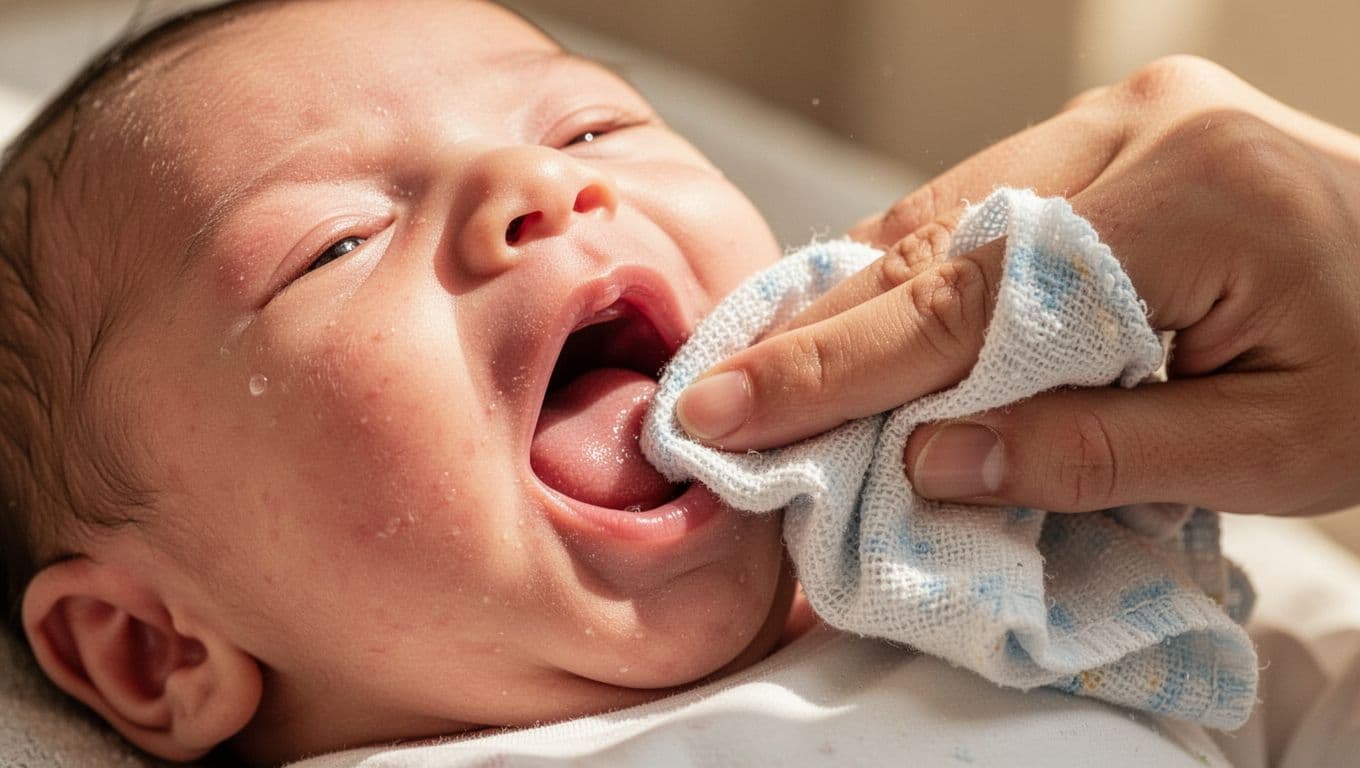
Use gentle daily mouth care
A soft, damp cloth is usually enough. After feeds, wipe the tongue and inner mouth gently if you see visible milk residue, then stop once the mouth looks clean.
Keep the motion light. You are not trying to scrub the tongue, just remove leftover milk. If you want a simple step to follow, wrap a clean finger with a damp cloth and use one smooth pass across the tongue, then check the cheeks and gums only if needed. For more ideas on gentle oral care during drooly phases, see these daily mouth care tips for teething infants.
Keep feeding items and nipples clean
Bottles, nipples, pacifiers, and pump parts need thorough washing after use. Warm soapy water or sterilizing, when your pediatrician recommends it, helps lower the chance of yeast sticking around and causing reinfection.
Babies put these items in their mouths often, so cleaning them well matters. Pacifiers and bottle nipples can hold onto moisture, which gives yeast an easy place to grow. The same goes for pump parts and any toy that ends up in the mouth.
If you breastfeed, keep nipples dry after feeds and change nursing pads often. Wet skin gives yeast an easy spot to spread, so drying matters just as much as washing.
Know what not to do
A few home ideas get shared a lot, but they are not proven fixes for baby thrush. Yogurt, probiotics, and random remedies should not replace proper care from your pediatrician.
Avoid scraping the tongue, using harsh cleaners, or trying products meant for older kids or adults. A baby’s mouth is sensitive, and rough treatment can make irritation worse. When in doubt, keep the routine simple, gentle, and clean, then ask your doctor if the white coating sticks around.
Conclusion
A white coating on a baby’s tongue is often just milk residue, and that is usually nothing to worry about. The main job is to look at the whole picture, because thick patches, spread beyond the tongue, or signs of discomfort point more toward thrush.
A gentle wipe test gives useful clues. If the coating comes off easily and your baby feeds well, it usually fits normal milk tongue. If it stays put, looks patchy, or makes feeding harder, it’s time to call the pediatrician.
Most cases are easy to sort out once you know what to watch for. A calm check, a light touch, and a quick call for help when the signs change can make the whole issue much simpler.
Save pin for later

- How to Help a Child Deal With Anxiety at Home - September 12, 2026
- How to Prepare Your Child for the First Day of School - September 12, 2026
- Age-Appropriate Chores for Kids by Age Group - September 12, 2026