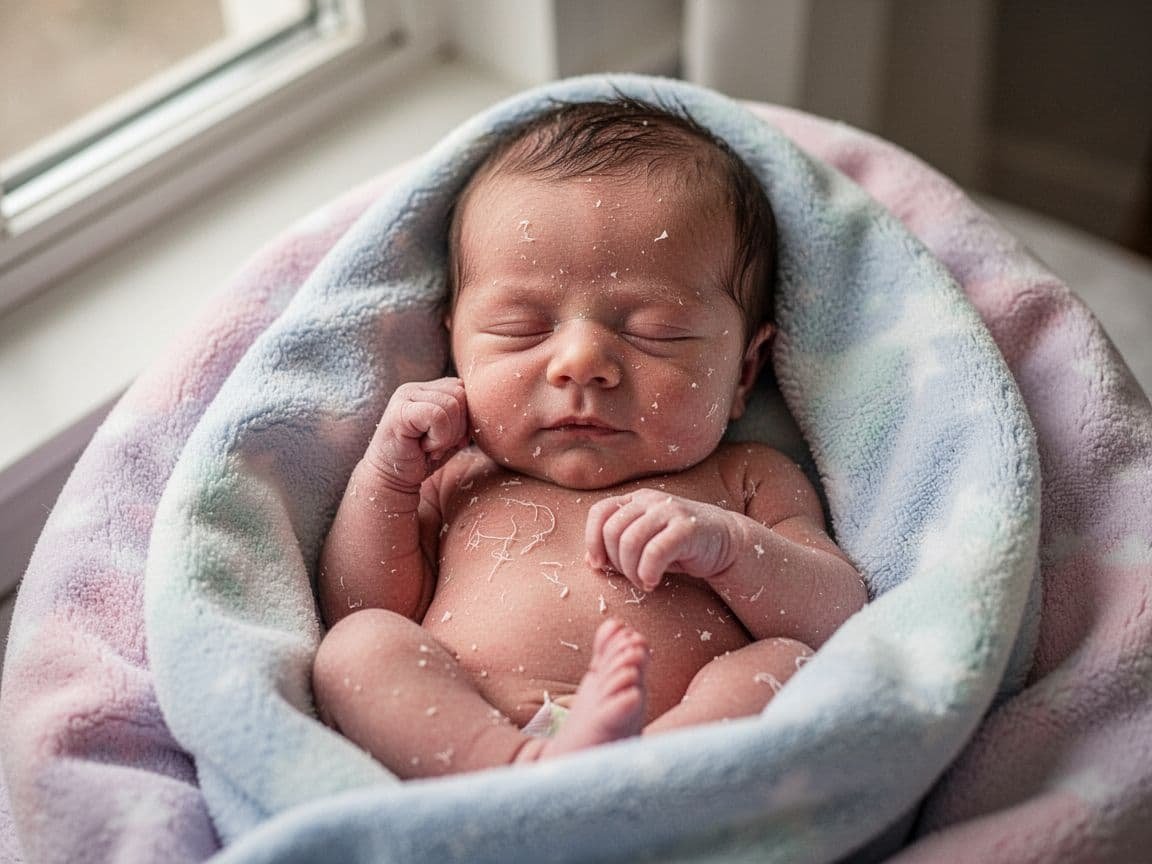
Newborn skin peeling can look surprising, but it’s often a normal part of the first days and weeks after birth. You may notice it most on the hands, feet, wrists, and ankles, especially if your baby was born a little late or has dry skin after leaving the womb.
Most of the time, newborn skin peeling needs only gentle care at home. A mild bath routine, a plain moisturizer, and soft clothing can help, while rough scrubbing and harsh soap can make things worse, so it helps to know the small habits that protect delicate skin, like these gentle bathing tips for sensitive infant skin.
Still, some peeling calls for a doctor’s attention, especially if the skin looks red, cracked, or painful. Keep reading for the common causes, safe treatments, and the warning signs that mean it’s time to call your pediatrician.
What causes newborn skin peeling in the first place?
Newborn skin peeling usually starts with simple, normal changes after birth. Inside the womb, a baby’s skin stays soft and protected in a very different setting. Once that baby meets air, room heat, and regular bathing, the outer layer begins to shed and adjust.
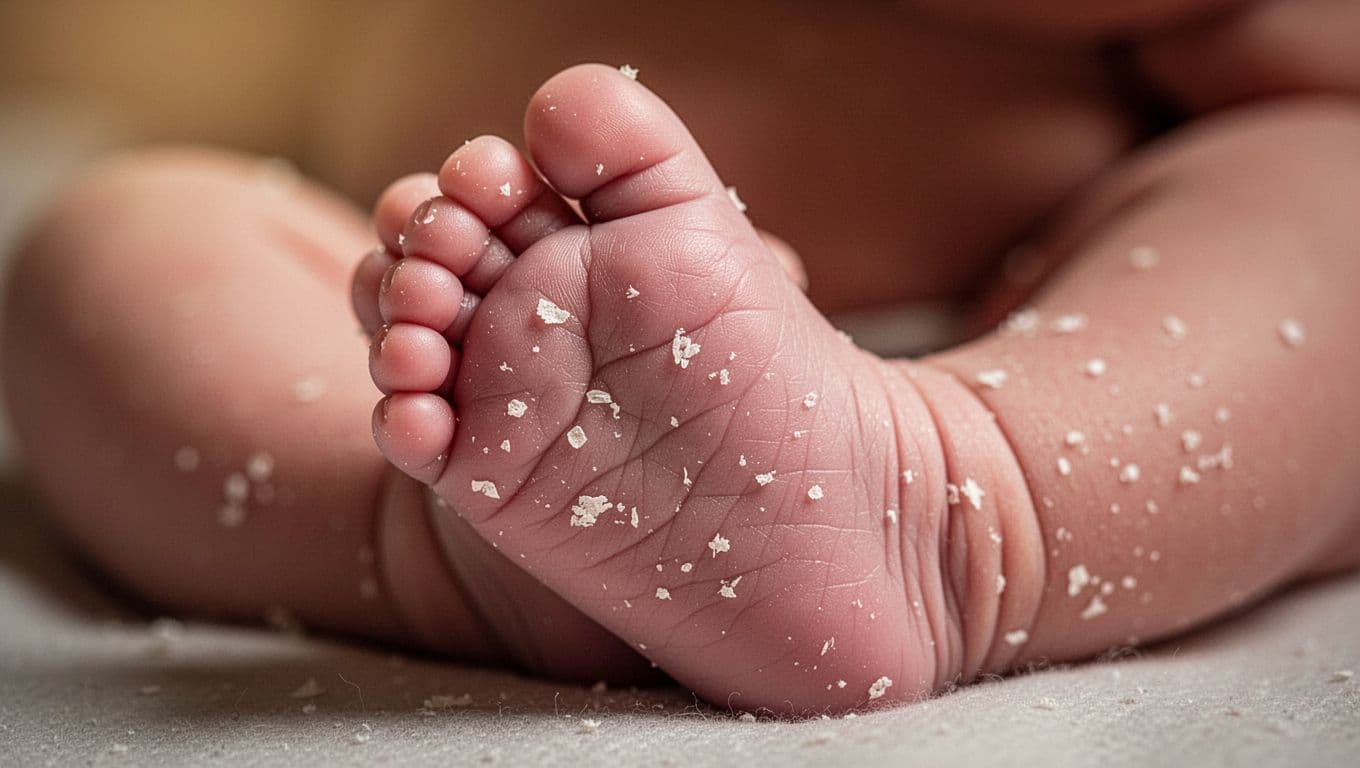
Normal shedding as your baby’s skin adjusts to the outside world
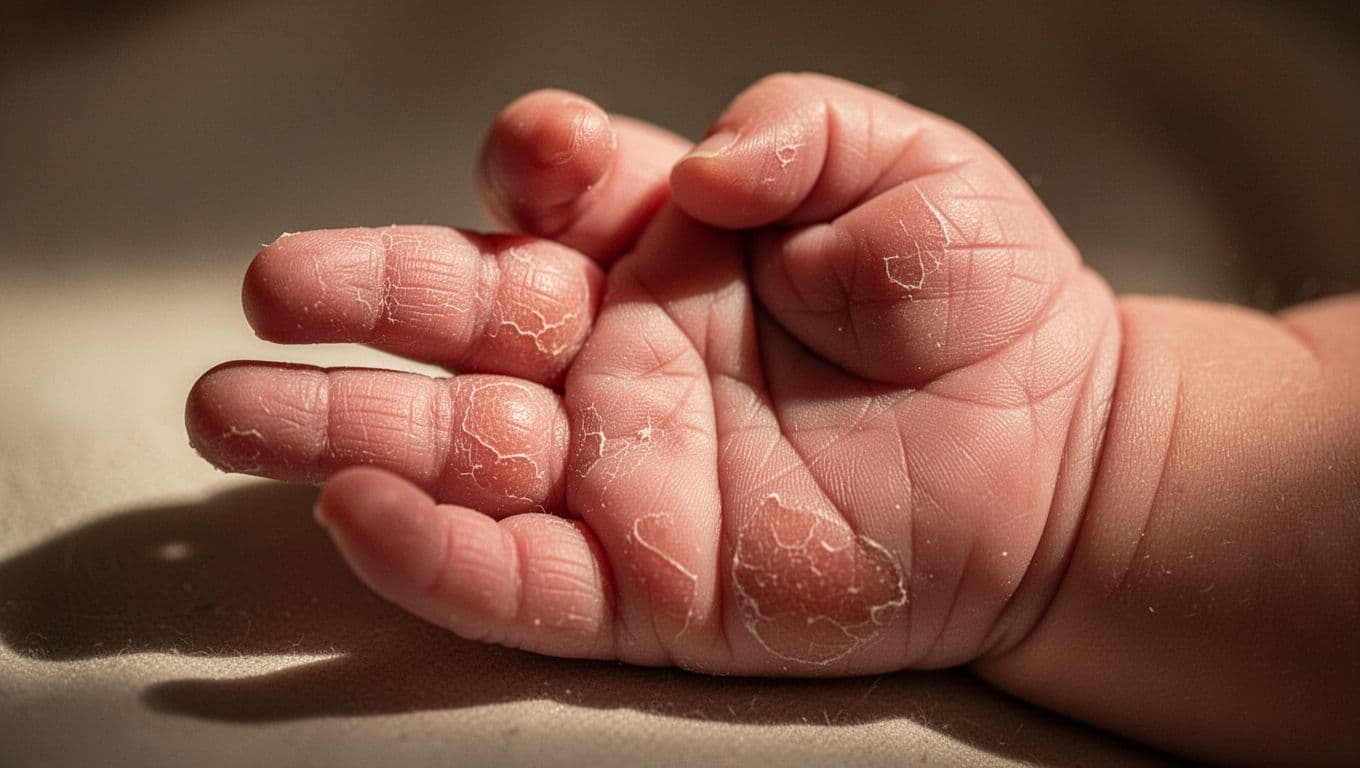
A newborn’s top layer of skin naturally sheds after birth. This is part of early skin renewal, and it often looks like thin, dry flakes rather than a rash.
You’ll usually see it most on the hands, feet, wrists, and ankles. The skin may look a little ashy or loose, but it should not seem swollen, painful, or bright red. In many babies, the flakes come and go on their own within the first days or weeks.
Mild peeling with no redness or pain is usually just part of your baby’s skin adjusting to life outside the womb.
Why overdue babies may peel a little more
Babies born after their due date often peel more because they have had less vernix left on their skin. Vernix is the white, creamy coating that protects a baby before birth. It acts like a soft shield, and when there is less of it left, the skin can dry out more easily.
That is why some overdue babies look a little more flaky at first. The peeling can seem stronger, but it usually settles down without treatment. If you want a clearer picture of how vernix helps protect newborn skin, the natural skin protection for newborns is a helpful place to start.
Dry air, frequent baths, and other skin-drying triggers
Even normal peeling can look worse when the air is dry. Cold weather, indoor heat, harsh soap, and too many baths all pull moisture from delicate newborn skin. Because newborn skin is thin, it loses water fast.
A few simple habits can help:
- Keep baths short and gentle.
- Use mild, fragrance-free soap only when needed.
- Pat the skin dry instead of rubbing.
- Dress baby in soft, breathable fabrics.
- Moisturize if the skin looks especially dry.
If you need product ideas, these gentle skincare essentials for new babies can help you choose safer options for dry, flaky skin.
When newborn peeling points to something more than dry skin
A little flaking is common in the first days of life. Still, peeling that looks angry, lasts longer, or seems to bother your baby can point to a skin problem that needs closer attention. The key difference is simple: normal peeling looks mild and improves with gentle care, while other conditions often look inflamed or uncomfortable.
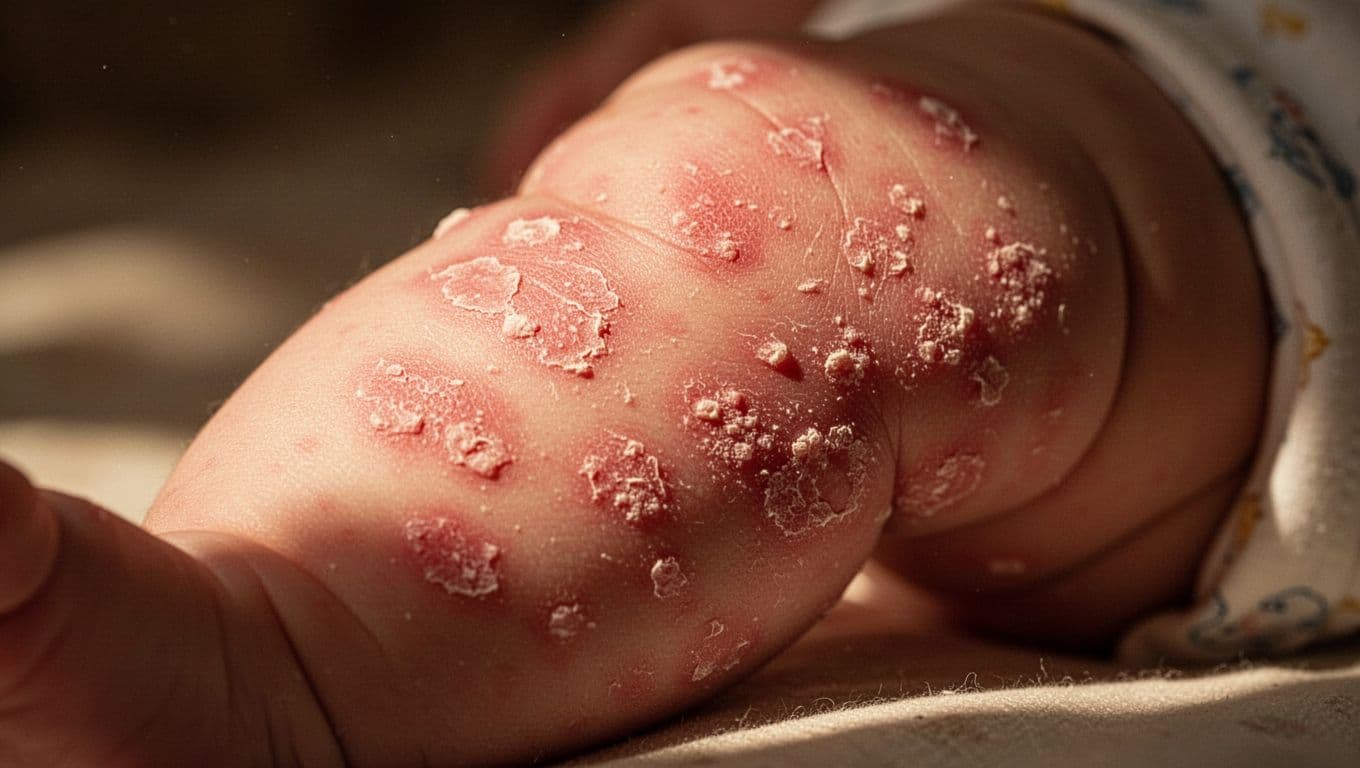
Signs of eczema that parents should not ignore
Eczema is a common skin condition that makes skin dry, rough, red, and itchy. In babies, it often shows up on the cheeks, scalp, arms, or legs, and the skin may look patchy instead of just flaky. For a quick comparison of mild dryness versus eczema, Cleveland Clinic’s baby eczema guide gives a clear picture of what to watch for.
Unlike normal newborn peeling, eczema usually looks irritated. Your baby may seem fussy, rub at the skin, or wake more often because the area feels sore or itchy.
A few common clues include:
- Red or darker patches that look inflamed
- Rough, dry, or bumpy skin that doesn’t smooth out
- Cracks, crusts, or oozing in more irritated spots
- Skin that keeps flaring up instead of fading
If the peeling comes with these signs, it deserves a call to your pediatrician. Gentle baby care still helps, and safe baby massage techniques can be useful once your baby’s skin is calm and comfortable again.
Less common skin conditions that can look like peeling
Some less common conditions can also cause ongoing flaking. Psoriasis may create thick, scaly patches, while ichthyosis can leave skin looking dry and fish-scale-like. These conditions usually do not improve much with basic moisturizing alone.
They are not the first explanation for every flaky patch, but they matter when peeling keeps coming back or looks unusually thick. If normal care doesn’t help, that is a sign to ask for medical advice rather than guessing at home.
Safe treatments for newborn skin peeling at home
Most newborn peeling looks worse than it feels. The skin flakes, loosens, and sheds while the new outer layer settles in. Gentle care is usually enough, and the goal is simple, keep moisture in and irritation out.
A calm routine works better than trying to fix every flake. Use soft products, light touch, and short baths. If the skin stays dry, a few small changes usually make a real difference.
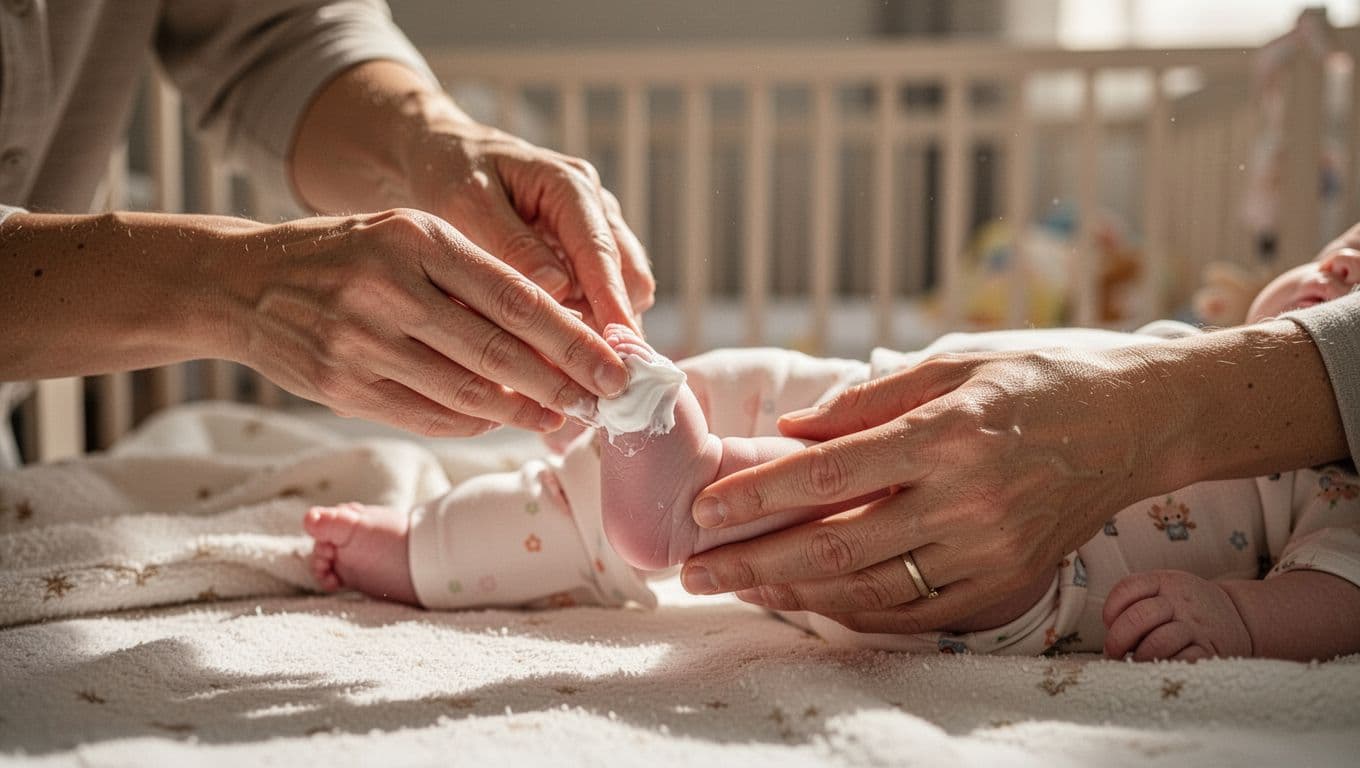
Use a gentle moisturizer right after bathing
Moisturizer helps when it goes on right after the bath, while the skin is still slightly damp. That timing helps trap water in the skin before it dries out. A fragrance-free lotion or plain petroleum jelly can work well for this.
You only need a small amount. A thin layer is usually enough to soften dry patches without coating the skin too heavily. Look for products made for babies, with simple ingredients and no strong scent. If a lotion stings, smells strong, or lists many extras, skip it.
A baby-safe moisturizer should feel plain, not fancy. The skin on a newborn doesn’t need special perfume or a long ingredient list. It needs a light barrier that helps hold in moisture.
A small, simple layer often does more good than a thick coat of many ingredients.
Keep baths short, lukewarm, and not too frequent
Long baths can pull moisture out of newborn skin. Hot water does the same thing, and it can leave the skin feeling tight and dry. Short baths in lukewarm water are easier on peeling skin and help keep the skin barrier from drying out.
You also don’t need to bathe a newborn every day. Many babies do fine with baths only when needed, especially in the first weeks. If the skin looks dry, less bathing can help more than extra washing.
A simple bath routine works best:
- Use lukewarm water.
- Keep the bath brief.
- Wash only the areas that need it.
- Pat the skin dry.
- Apply moisturizer right away.
For more general baby skin care guidance, The Royal Children’s Hospital recommends gentle cleansing and non-fragranced moisturizers for dry skin.
Choose mild soap and skip anything scented
Newborn skin does not need strong soap every day. In many cases, plain water or a very mild cleanser is enough. Harsh soaps can strip away natural oils, which makes peeling look worse.
Fragrance-free products are the safest pick. That includes washes, lotions, wipes, laundry detergents, and anything that touches the skin. Scented baby products may smell nice, but they can sting or dry out delicate skin fast.
It helps to read labels with a sharp eye. If a product is made to smell fresh, wake up the senses, or leave a scent behind, it may be too much for peeling skin.
Pat the skin dry and dress baby in soft fabrics
After a bath, use a soft towel and pat, don’t rub. Rubbing can tug at loose flakes and irritate the skin underneath. Gentle pressure is enough to lift away water without creating more dryness.
Clothing matters too. Soft, breathable fabrics like cotton are kinder to baby skin. Wool, rough seams, and stiff fabrics can rub against dry patches and make them feel raw.
If your baby seems fussier in one outfit, pay attention. Skin often tells you when a fabric feels wrong, even before redness shows up.
Keep baby comfortable in dry or cold weather
Cold air can dry out newborn skin quickly, and indoor heating can make it even worse. When the weather is harsh, protect baby from wind and cold air as much as you can. A soft hat or extra layer can help during outings, as long as baby doesn’t get too hot.
Dry indoor air can also make peeling linger. If the home feels dry, a cool-mist humidifier may help add moisture to the air. That small change can keep skin from losing water as fast.
When the air feels rough, think of the skin as a thin wall. The less moisture it loses, the faster it can settle and heal.
How long newborn skin peeling usually lasts
For most babies, newborn skin peeling is temporary. The flakes often show up in the first days after birth, then start to fade as the skin settles into its new routine outside the womb. Some babies barely peel at all, while others look dry for a short stretch and then smooth out on their own.
What improvement usually looks like week by week
In the first week, the flakes may look most obvious on the hands, feet, ankles, or wrists. Then the skin usually starts to feel softer, and the peeling becomes lighter and less patchy.
By the second or third week, many babies have only a few dry spots left. The peeling can also shift around a little, so one area clears while another still looks flaky for a bit. That slow change is normal and often easier to notice day by day than hour by hour.
A little patience goes a long way here. If you want a better sense of other common newborn changes, these normal newborn quirks can help put the skin changes in context.
Mild peeling that slowly improves is usually part of healthy newborn skin adjustment.
When peeling is taking too long to settle
If the skin keeps peeling for more than a few weeks, or seems to be getting worse, it’s time to call the pediatrician. Ongoing dryness can point to eczema or another skin issue that needs a closer look.
The same goes for skin that turns very red, cracked, or irritated. For a medical overview, Cleveland Clinic’s newborn skin guide also notes that peeling should usually ease within a couple of weeks.
Call the doctor if the peeling looks red, sore, or infected
Most newborn peeling is mild and fades with time. However, skin that looks angry, tender, or messy needs a closer look. A quick call to the pediatrician can bring calm and help you catch a skin problem early.
Skin changes that need a medical check
Call the doctor if the peeling skin looks red, sore, swollen, or warm. Other red flags include blisters, bleeding, open areas, crusting, pus, or weeping spots. A rash that spreads fast or peeling that seems severe instead of mild also deserves attention.
A baby who acts uncomfortable matters too. If your newborn seems fussy when the skin is touched, pulls away, or cries more than usual, the skin may be irritated or infected. Johns Hopkins Medicine notes that crusting, redness, and signs of infection are not the kind of peeling to watch passively, they need a medical opinion.
When skin looks raw or oozes, treat it as more than normal dryness.
If you notice fever, poor feeding, unusual sleepiness, or poor weight gain, call right away. Those signs can point to a bigger problem than skin alone.
When to ask the pediatrician for peace of mind
Sometimes the skin does not look infected, but something still feels off. If peeling lasts longer than expected, keeps flaring after gentle home care, or covers more of the body over time, it makes sense to check in.
Parents also often call when their baby has several small concerns at once. If skin changes come with feeding troubles or slow weight gain, the newborn health milestones to watch can help you think through what to mention.
A pediatrician can sort out whether the skin needs treatment, a different moisturizer, or a closer exam. When in doubt, trust the concern and make the call.
Conclusion
Newborn skin peeling can look a little startling, especially in those first days when every tiny change feels big. Most of the time, though, it is a normal part of your baby’s skin adjusting to life outside the womb, and it settles with time, soft clothes, short lukewarm baths, and a gentle fragrance-free moisturizer.
The main job is simple, protect the skin barrier and avoid anything harsh. If the peeling stays mild and the skin looks calm, it usually fades within a couple of weeks.
Call the pediatrician if the skin turns red, cracked, swollen, painful, or starts to ooze. Those signs need a closer look, and they matter more than dry flakes alone.
A little peeling is common, temporary, and usually easy to care for. With a soft touch and a watchful eye, most parents can feel confident their baby’s skin is doing exactly what it should.
Save pin for later


- Dry Cough in Kids: 5 Causes and Safe Solutions - September 23, 2026
- How to Help a Child Deal With Anxiety at Home - September 12, 2026
- How to Prepare Your Child for the First Day of School - September 12, 2026