
Filling out a medical form, preparing for childbirth, or wondering whether your blood type could affect your baby can make a simple question feel important. Your blood type is an inherited medical trait, and it matters most during blood transfusions, pregnancy, surgery, and blood donation.
The ABO system places blood into four main groups: A, B, AB, or O. The Rh system adds a positive or negative designation, such as O positive or A negative. Although blood type can affect medical care, it doesn’t define your personality or reveal your overall health.
During pregnancy, Rh status may require extra attention, especially when the pregnant parent is Rh-negative and the fetus may be Rh-positive. Blood bank testing and guidance from your healthcare professional should always shape medical decisions, rather than assumptions based on a family member’s type or an old record. First, let’s look at what the ABO and Rh systems actually mean. For a visual explanation, see how the Rh factor can affect pregnancy.
Things You Should Know About Your Blood Type and the Two Systems Behind It
Your blood type comes mainly from two systems: ABO and Rh. The ABO system identifies A and B markers on red blood cells, while the Rh system looks mainly for the D antigen. Together, they create the eight common blood type combinations used on medical records.
What Your ABO Type Reveals About Your Red Blood Cells
Red blood cells carry surface markers called antigens. Your plasma, the liquid portion of blood, contains antibodies that can react against unfamiliar antigens. A simple analogy helps: antigens act like name tags on your red blood cells, while antibodies work like security guards in your plasma. If a guard sees a marker that doesn’t belong, it may attack the cell.
The four ABO groups follow this pattern:
| ABO type | Antigens on red blood cells | Antibodies commonly found in plasma |
|---|---|---|
| A | A antigen | Anti-B antibodies |
| B | B antigen | Anti-A antibodies |
| AB | A and B antigens | No anti-A or anti-B antibodies |
| O | No A or B antigens | Anti-A and anti-B antibodies |
For example, someone with type A blood has A antigens on their red blood cells and usually has anti-B antibodies in their plasma. Those antibodies can react against B markers. Someone with type AB blood has both A and B antigens but usually lacks anti-A and anti-B antibodies. Type O blood has neither A nor B antigens, but its plasma commonly contains both antibodies.
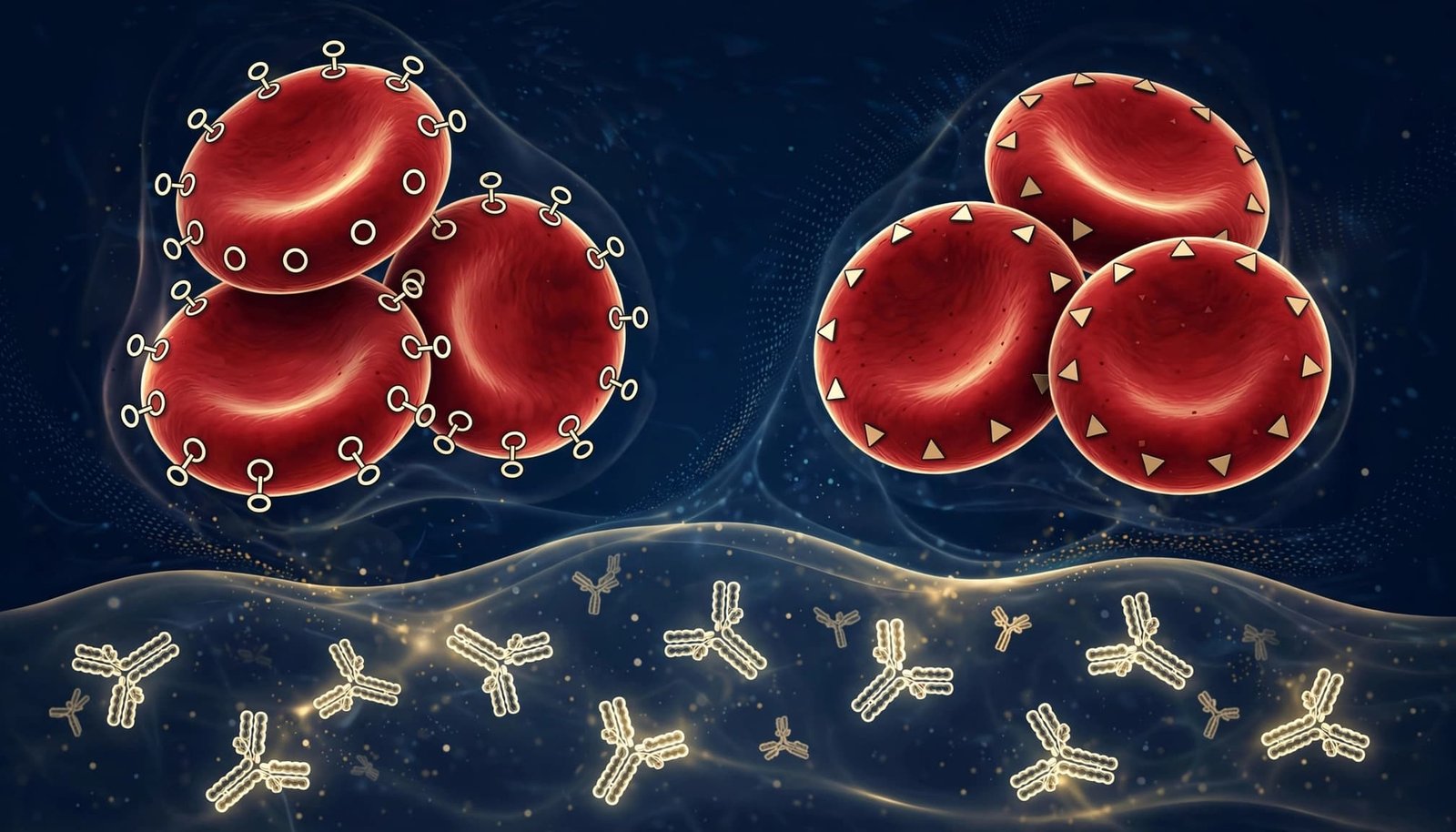
You can review the basic inheritance and classification of the four main blood groups through the NHS. During a transfusion, the match must account for the recipient’s antibodies and the donor’s red-cell antigens. Giving incompatible ABO blood can trigger a serious, potentially life-threatening transfusion reaction because antibodies may destroy the donated red blood cells.
Why the Plus or Minus Sign Matters
The plus or minus sign refers mainly to the D antigen, the key marker in the Rh blood group system. If your red blood cells carry the D antigen, you’re Rh-positive. If they don’t, you’re Rh-negative. Rh includes many other antigens, so the plus or minus label doesn’t describe every Rh trait, but D status is the one most people see on laboratory results.
Unlike ABO antibodies, Rh-negative people don’t naturally have anti-D antibodies simply because the D antigen is absent. However, exposure to Rh-positive blood can prompt the immune system to make them. This exposure may occur during a transfusion or pregnancy.
Once formed, anti-D antibodies can matter during a later pregnancy if fetal blood carries the D antigen. Your prenatal care team will use blood typing and antibody screening to assess that risk and decide whether preventive treatment is needed.
How Blood Type Is Inherited, Tested, and Recorded
Blood type begins with genes passed down by both biological parents. However, the result is not always obvious from the blood types written on a family medical form. The ABO and Rh systems each involve inherited traits, and several gene combinations can lead to the same blood type.
Can You Work Out Your Child’s Blood Type From the Parents’ Types?
Each parent passes one ABO gene version to a child. For example, a parent with type A may carry two A versions or one A version and one O version. That difference can affect the child’s possible blood type.
A parent with type B may also carry either two B versions or a B and an O version. When one parent has type A and the other has type B, their child could have type A, B, AB, or O, depending on the gene versions each parent carries. Two parents with type O generally have children with type O, while two parents with type AB usually have children with type A, B, or AB.
The Rh factor follows its own inheritance pattern. Two Rh-positive parents can sometimes have an Rh-negative child if both carry a version associated with Rh-negative status. Siblings can also have different blood types because each child receives a different combination of the parents’ gene versions.
Blood type can help describe possible inheritance patterns, but it cannot prove or disprove parentage by itself.
Blood type alone is not a parentage test. If a family needs a definite answer, a healthcare professional can explain appropriate genetic testing and its limits.
Where to Find Your Blood Type With Confidence
The most dependable answer comes from a documented laboratory test. You can confirm your type through:
- Asking your healthcare provider to review blood bank or laboratory records.
- Checking a patient portal for ABO and Rh results, then confirming the entry with the medical team.
- Reviewing blood donor records, while remembering that donor testing and patient transfusion decisions may use different procedures.
- Requesting blood typing when it is medically appropriate, such as during prenatal care, before surgery, or during treatment that could require transfusion.
During pregnancy, routine prenatal testing checks ABO and Rh status and screens for unexpected red-cell antibodies. Hospitals may also test before surgery or during emergency treatment. A type and screen identifies ABO and Rh type and looks for antibodies that could react with donor blood. A type and crossmatch goes further by testing the patient’s blood against specific donor red blood cells before those units are issued.

An old record may help a hospital verify your history, but staff still follow identity checks and compatibility procedures before a transfusion. Therefore, don’t rely on a family guess, social media post, handwritten card, or unverified home test when medical care depends on the result.
Blood Transfusions: Who Can Receive Which Red Blood Cells?
Red-cell compatibility depends mainly on the ABO and Rh systems, but those labels are only the starting point. The blood bank also checks for unexpected antibodies and confirms that the selected donor unit matches the recipient safely.

Why O Negative Blood Is So Valuable in Emergencies
For standard red-cell transfusions, the basic ABO rules are straightforward:
| Recipient’s type | Compatible red blood cells |
|---|---|
| O | O only |
| A | A or O |
| B | B or O |
| AB | A, B, AB, or O |
Rh status adds another layer. An Rh-positive recipient can usually receive Rh-positive or Rh-negative red cells. An Rh-negative recipient generally receives Rh-negative red cells, especially when supplies allow. You can review a detailed ABO and Rh compatibility chart for a component-by-component explanation.
When someone arrives after severe trauma, major bleeding, or urgent surgery, the medical team may not have time to wait for complete blood typing. In that situation, O-negative red blood cells are commonly chosen because they lack A, B, and RhD antigens. They can help protect a patient while the laboratory works to identify the patient’s blood type.
O negative is often called the universal red-cell donor type, but that description has limits. It does not make O negative universal for plasma or every blood product. Plasma follows different compatibility rules because the antibodies in the donor’s plasma matter. For example, AB plasma is commonly considered the universal plasma option, while O plasma contains anti-A and anti-B antibodies.
O negative is an emergency option for red cells, not a guarantee that every blood product is safe for every recipient.
Hospitals still perform testing as quickly as possible. Once the patient’s type and antibody history are available, the blood bank may switch to a more precise match. O-negative supplies can run low because emergency departments, operating rooms, and trauma centers rely on them when every minute matters.
Before issuing blood, the laboratory typically performs ABO and Rh typing, an antibody screen, and a crossmatch. The antibody screen looks for reactions against red-cell markers beyond the basic ABO and Rh labels. Crossmatching then checks the patient’s plasma against the chosen donor cells. These steps can identify a safer unit when a patient has antibodies from a previous transfusion or pregnancy. Blood bank staff select the compatible units, so patients should never try to direct their own transfusion choices. Blood type testing before transfusion explains why this testing matters.
How Your Blood Type Can Help Someone Else
Your blood type can guide donation decisions, but every blood type is needed. O-negative donors are especially important because their red cells may help in emergencies before a patient’s type is known. Other types remain essential for routine transfusions, scheduled surgeries, cancer care, childbirth complications, and patients who need a closely matched unit.
Donation eligibility depends on more than blood type. Age, general health, medications, recent illness, travel history, prior procedures, and local blood-center rules can affect whether you may donate. Requirements can also change as health conditions and public guidance change.
If you’re unsure, contact an approved blood donation center instead of assuming you cannot donate. Staff can review your situation privately, check current eligibility rules, and tell you whether your blood could help someone waiting for a transfusion.
What Your Blood Type Means During Pregnancy and Childbirth
Your blood type usually creates no pregnancy problems, but your prenatal team still checks it early because certain antibodies can affect a fetus or newborn. The main concern involves an Rh-negative pregnant person carrying an Rh-positive fetus, not the positive or negative label alone.
The Questions Your Prenatal Care Team Will Check
At your first prenatal visit, clinicians typically order ABO and Rh typing along with an antibody screen. Blood typing identifies whether you are A, B, AB, or O and whether you are Rh-positive or Rh-negative. The antibody screen looks for immune proteins that could attach to fetal or donor red blood cells.
That second test matters most. A person may be Rh-negative without having anti-D antibodies, or they may already have them because of an earlier pregnancy, transfusion, miscarriage, bleeding event, procedure, or injury. As ACOG explains in its guidance on Rh D alloimmunization, prevention and monitoring depend on whether sensitization has occurred.

If you are Rh-negative and the initial screen finds no anti-D antibodies, your team may repeat the antibody test later in pregnancy. They may also recommend preventive anti-D treatment when appropriate, based on your results, the baby’s likely Rh status, pregnancy events, and current clinical guidance. After birth, testing can help determine whether additional care is needed.
Small amounts of fetal blood can enter your bloodstream during pregnancy, delivery, vaginal bleeding, miscarriage, certain prenatal procedures, or abdominal trauma. If the fetus is Rh-positive, your immune system may recognize the D antigen as unfamiliar and form anti-D antibodies. Those antibodies can cross the placenta in a later Rh-positive pregnancy and damage fetal red blood cells.
ABO differences between a pregnant person and fetus are usually less concerning than Rh incompatibility. Still, prenatal care checks both systems because antibody findings can change the monitoring plan. Rh-negative status is not an illness, and it doesn’t mean your pregnancy will have complications.
Ask your prenatal care team:
- What are my ABO and Rh results?
- Did my antibody screen find anything?
- Will I need repeat testing or preventive treatment?
- What should I do if I have bleeding, an injury, a procedure, or pregnancy loss?
Share any known blood type with your care team, but let current laboratory testing guide decisions. After bleeding, abdominal injury, or a medical procedure, contact your prenatal provider promptly so they can decide whether evaluation or preventive treatment is needed.
Blood Type Myths, Everyday Decisions, and What to Remember
Blood type can matter during pregnancy and medical treatment, but it doesn’t define who you are. Many popular claims give ABO types far more meaning than medical evidence supports.
Personality, Romance, and Diet Claims
The idea that type A people are organized, type B people are free-spirited, or type O people are natural leaders comes from blood-type folklore. Research has not shown a reliable connection between ABO type and personality. Your blood type also cannot predict whether two people will make a good romantic match.
Blood-type diets make a similar promise, suggesting that each group needs a special menu. However, there is no good evidence that your ABO type tells you which foods will improve your health or help you lose weight. A balanced eating pattern should reflect your nutritional needs, health conditions, culture, budget, and advice from a qualified healthcare professional.
Blood type is a medical compatibility marker, not a personality profile, dating guide, or meal plan.
Your type may be linked with small differences in the risk of certain conditions, but that information doesn’t explain your full health picture. Family history, age, lifestyle, medications, pregnancy history, and other medical factors matter too. Never use a blood-type claim to replace screening, prenatal care, prescribed treatment, or a conversation with your clinician. You can review a plain-language explanation of what blood types mean when you want to refresh the basics.

Practical Steps to Keep in Mind
Your blood type is most useful when trained professionals apply it to transfusion safety, pregnancy care, blood donation, or certain transplant decisions. Keep these habits simple:
- Find your blood type in a reliable laboratory record, patient portal, donor record, or medical chart. If the result matters for care, ask whether testing should confirm it.
- Store important medical information where you or a trusted person can access it during an appointment or emergency.
- Tell your prenatal provider if you know you are Rh-negative, even though current testing will guide care.
- Consider donating blood if you meet the donation center’s current eligibility requirements. Every blood type can help patients.
- Let clinicians and blood bank staff make compatibility decisions. They check your sample, antibody history, and the available blood product.
In an emergency, a team may begin treatment before every detail is known. That doesn’t mean staff are guessing. They follow established emergency protocols, use initial testing, and adjust treatment as laboratory results become available. Your best role is to share accurate information and seek care promptly when pregnancy symptoms, bleeding, injury, or another urgent concern arises.
Conclusion
Your ABO and Rh labels are more than details on a medical form. They help healthcare teams prevent dangerous transfusion reactions, monitor pregnancy-related Rh concerns, and match blood for donation and treatment.
Blood type is inherited, so siblings may have different types, and family guesses can’t confirm yours. A laboratory test is the only dependable way to identify your ABO, Rh, and antibody status.
For parents and families, knowing this information can make medical conversations easier. Still, qualified healthcare professionals and blood banks make the final safety decisions. If you have concerns about pregnancy, transfusion, or your child’s blood type, contact your provider instead of relying on internet myths or family assumptions.
Save pin for later

- Dry Cough in Kids: 5 Causes and Safe Solutions - September 23, 2026
- How to Help a Child Deal With Anxiety at Home - September 12, 2026
- How to Prepare Your Child for the First Day of School - September 12, 2026