
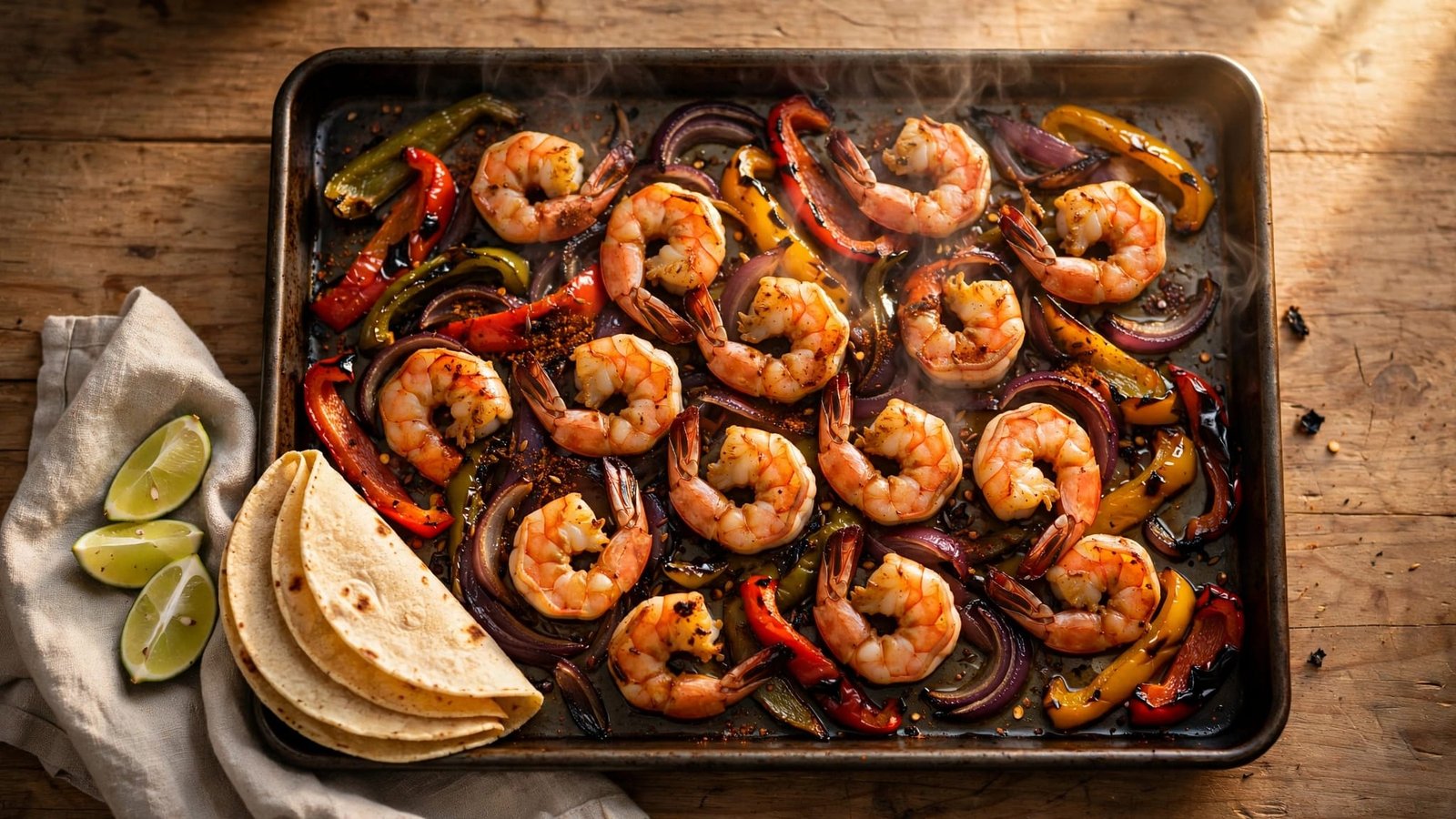
Tender shrimp, sweet peppers, and warm spices make these sheet pan shrimp fajitas a colorful dinner with very little cleanup. They’re ready in about 30 minutes, so they fit busy weeknights when you want something lively without a long stretch at the stove.
The key is timing: roast the peppers and onion first, then add the shrimp so it cooks quickly and stays tender. Start with the simple ingredient lineup, then get the pan into the oven.
Sheet Pan Shrimp Fajitas: Ingredients and Recipe at a Glance
These sheet pan shrimp fajitas make about 4 servings and take approximately 25 to 30 minutes from prep to table. Roast the peppers and onion first, then add the shrimp so it cooks quickly without turning rubbery.
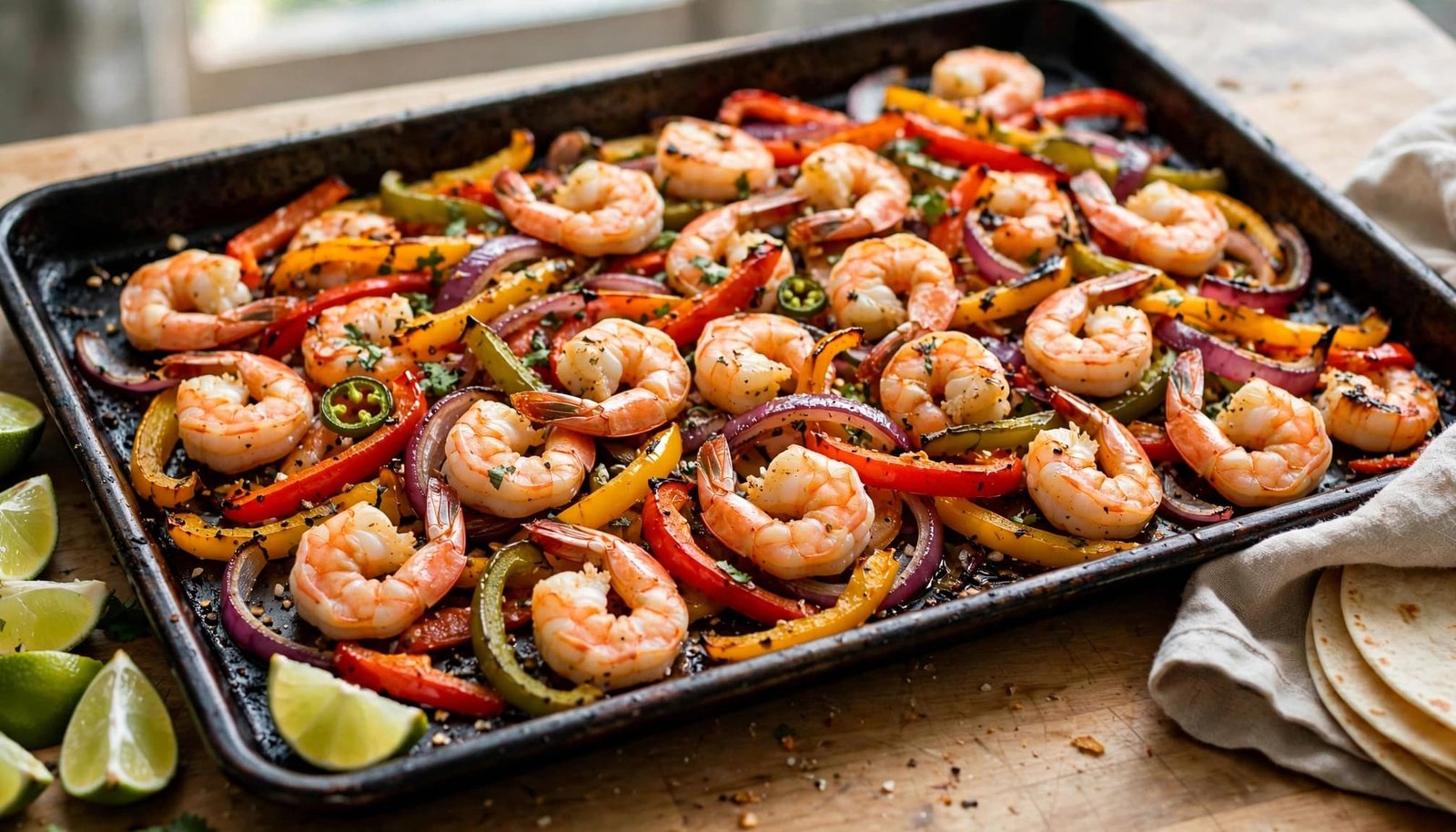
Gather these ingredients before you start:
- 1 pound large shrimp, peeled and deveined
- 3 bell peppers in assorted colors, sliced
- 1 red onion, sliced
- 2 tablespoons olive oil, divided
- 1 tablespoon chili powder
- 1 teaspoon ground cumin
- 1 teaspoon paprika
- ½ teaspoon garlic powder
- ½ teaspoon salt
- Black pepper, to taste
- 1 lime
- 8 small flour or corn tortillas
For a simple variation, use whichever bell pepper colors you have on hand, or choose flour or corn tortillas to suit your preference. Optional cilantro and toppings can go on the table when you serve.
What to look for when choosing shrimp
Large peeled and deveined shrimp are easy to prep and cook quickly, which makes them a good fit for a fast sheet-pan dinner. Sizes vary between brands, so choose by the package description rather than relying on a fixed shrimp count.
Frozen shrimp work well, too. Thaw them fully, then pat them dry before seasoning; excess moisture can leave the pan watery instead of helping the ingredients roast. Remove the tails before cooking if you want to tuck the shrimp into tortillas without stopping to pull them off.
For more tips on preparing shrimp for a quick meal, try this shrimp and broccoli stir-fry with brown rice. Cook the shrimp just until they turn opaque and firm, or check that they reach the USDA’s recommended safe temperature for fish and shellfish.
A quick note on the fajita seasoning
Chili powder and cumin bring warmth, while paprika adds a smoky note. Garlic powder, salt, and black pepper round out the blend with savory flavor. Toss the spices with the oil so they coat the shrimp and vegetables evenly.
Store-bought fajita seasoning is a handy shortcut if you already have a favorite blend. Since salt levels vary between brands, check the label and taste before adding extra salt.
How to Make Shrimp Fajitas on One Pan
For tender shrimp and vegetables with browned edges, cook the fajitas in two stages. The peppers and onion need a head start, while the shrimp only needs a few minutes in the oven.
Season and roast the peppers and onion first
Set the oven to 425°F. Slice the peppers and onion into similar-size strips so they soften at about the same pace. If you’ve just washed them, pat them dry first; excess moisture can make the vegetables steam instead of brown. For more prep guidance, see these tips for cutting vegetables evenly.
Toss the vegetables with about half the oil and seasoning, then spread them in a single layer on a rimmed sheet pan. Leave a little room between the strips so hot air can circulate. If the pan looks crowded, use a second sheet pan rather than piling the vegetables up.
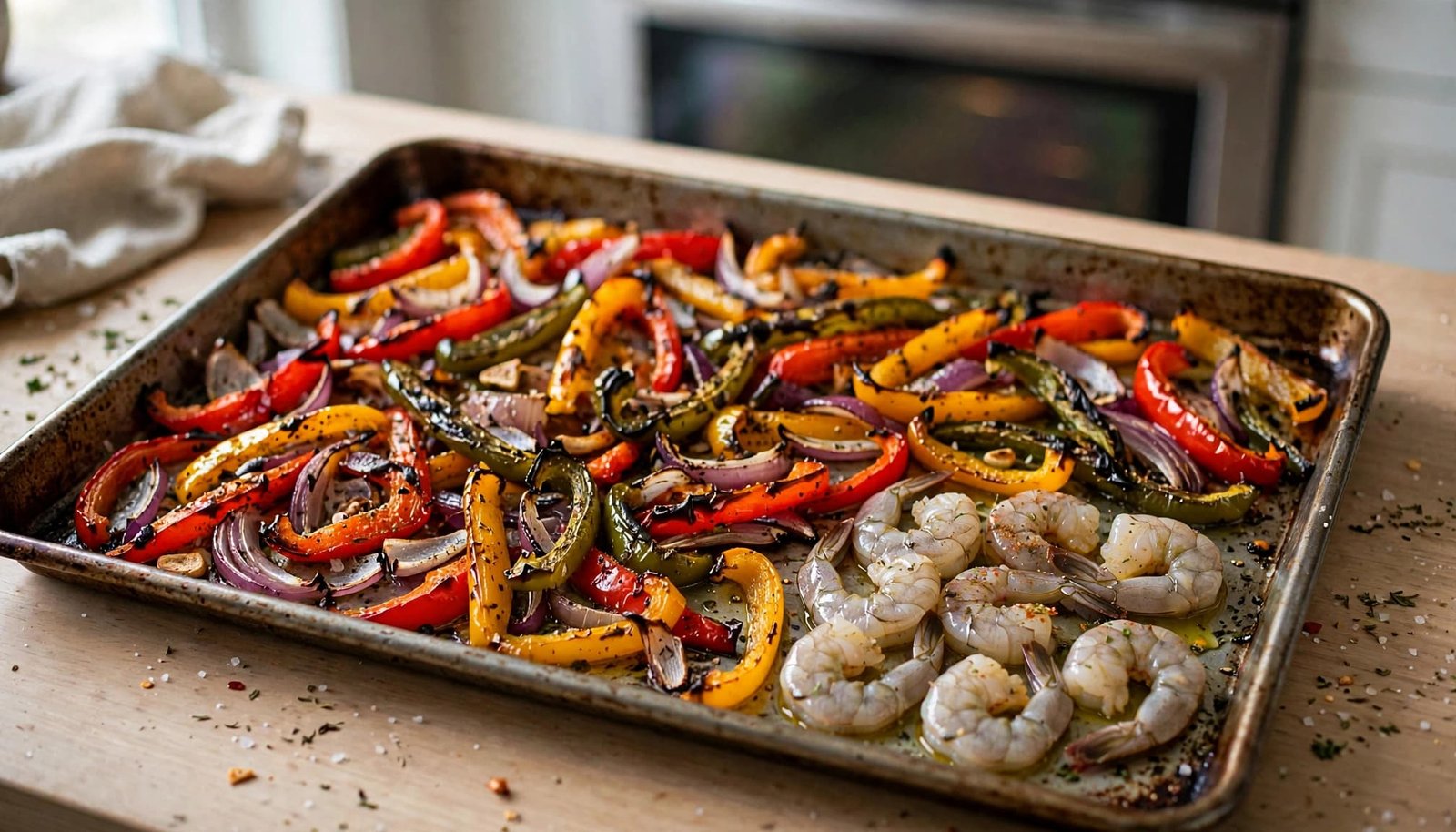
Roast for 10 to 12 minutes, until the vegetables begin to soften and show browned edges. They’ll continue cooking after you add the shrimp, so they don’t need to be fully tender yet.
Add the shrimp and finish cooking
Pat the shrimp dry, then toss them with the remaining oil and seasoning. Arrange them in a single layer among or beside the vegetables, leaving space where you can. Return the pan to the oven for about 5 to 8 minutes, and check early because shrimp size and oven performance affect the timing.
Look for shrimp that have turned pink and opaque, feel firm, and curl loosely into a C shape. A thermometer should read 145°F; the USDA lists that temperature for fish and shellfish in its safe minimum temperature chart. If the shrimp finish before the vegetables, transfer them to a plate while the vegetables roast a little longer.
Squeeze lime juice over the hot pan, then add chopped cilantro if you like. This bright finish balances the warm spices without adding another step to the cooking.
Warm the tortillas while the pan finishes
Use the last few minutes of roasting to warm the tortillas. Heat them in a dry skillet, wrap them in foil and place them in the oven, or microwave them briefly under a damp paper towel.
Meanwhile, set out toppings such as salsa, sliced avocado, or sour cream. Once the shrimp are cooked, bring the pan and warm tortillas to the table so everyone can fill their fajitas while everything is hot. For another easy oven dinner with peppers and tortillas, try these sheet-pan chicken fajitas.
Simple Tips for Juicy Shrimp and Well-Roasted Vegetables
Sheet pan shrimp fajitas depend on a little breathing room and close attention near the end of cooking. If the vegetables turn soft and watery or the shrimp feel rubbery, small adjustments to spacing, moisture, and timing can make a noticeable difference.
Give every ingredient room to brown
When vegetables and shrimp crowd the pan, trapped moisture turns to steam. Peppers and onions can come out limp instead of tender with browned edges, while shrimp may cook unevenly. Spread everything in a single layer, leaving a little space between pieces, and keep the shrimp beside the vegetables rather than piled on top.
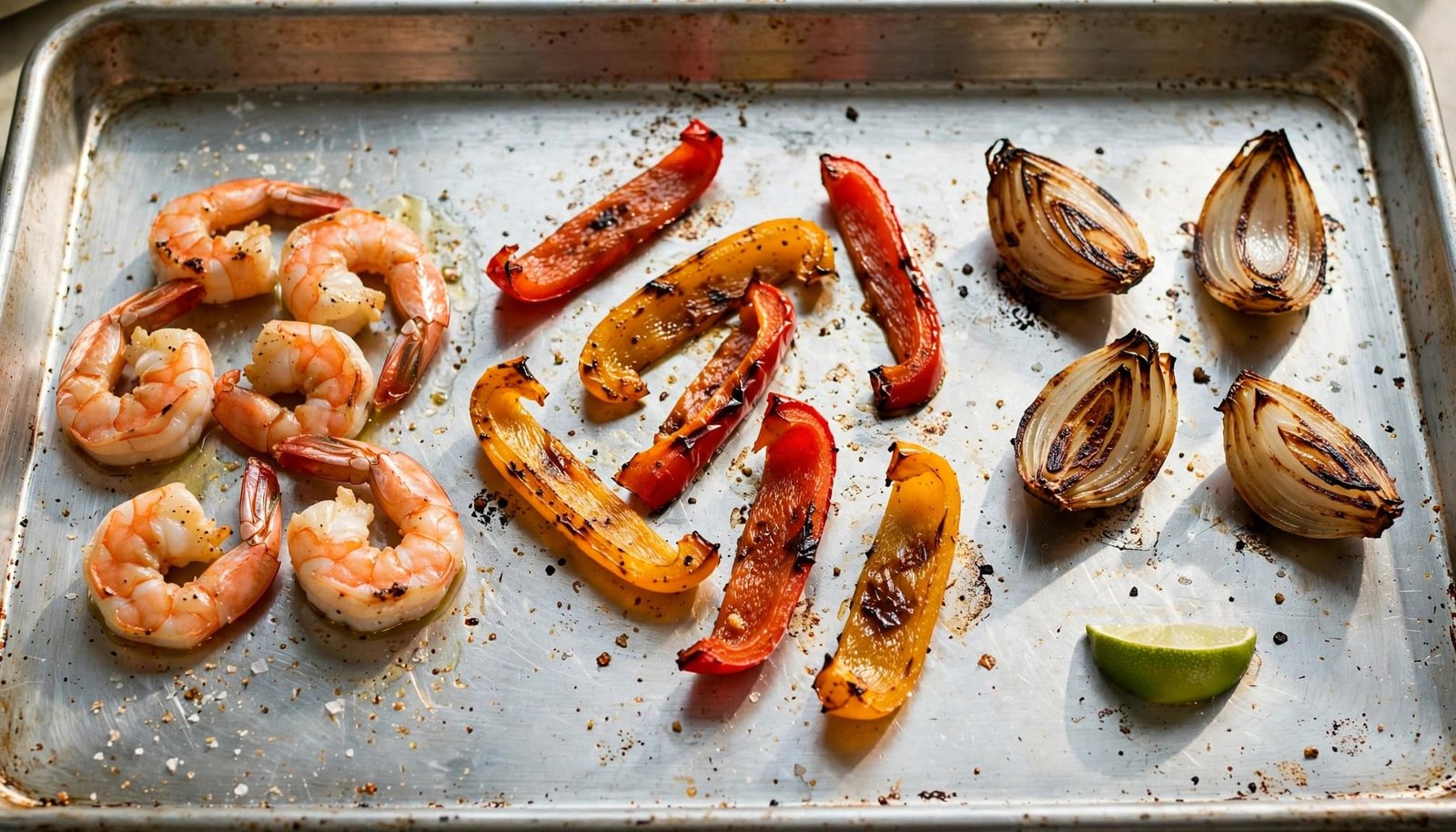
If the ingredients won’t fit without overlapping, divide them between two pans. That extra pan gives hot air room to circulate, which helps the vegetables roast instead of steam. The same spacing principle works for other oven dinners, such as sheet-pan sausage and vegetables.
Surface moisture can also hold back browning. Pat thawed shrimp dry, and dry washed peppers and onions before adding oil and seasoning. This helps the oil cling to the ingredients and keeps excess water from pooling on the pan.
Keep a close eye on the shrimp
Shrimp can shift from tender to rubbery in just a few minutes, especially when they’re small. Check them at the early end of the recipe’s cook time rather than waiting for the timer to run out. They’re ready when the flesh is opaque and pink, the shrimp feel firm, and they curl loosely into a C.
Size and oven performance both affect timing, so use those cues instead of treating the clock as exact. For a temperature check, the FDA’s seafood cooking guidance recommends cooking shrimp to 145°F. If the shrimp finish while the peppers and onion need more time, move the shrimp to a plate and let the vegetables continue roasting.
Adjust the spice without losing flavor
The fajita seasoning can lean mild or hot, depending on what your table prefers. For less heat, reduce the chili powder while keeping the cumin, paprika, and garlic powder; those spices still give the vegetables and shrimp a warm, savory flavor.
For more kick, add a pinch of cayenne, scatter sliced jalapeño over the pan, or pass hot sauce at the table. Start with a small amount, then taste and adjust. That way, everyone can season their fajitas to suit their own heat preference.
Toppings and Easy Ways to Change Up Your Fajitas
The roasted shrimp, peppers, and onion are flavorful on their own, so extra toppings are optional. A few fresh, creamy, or spicy additions let everyone tailor a tortilla without adding much prep.
Finish each tortilla with bright, creamy toppings
Set out lime wedges, chopped cilantro, avocado or guacamole, salsa, sour cream, shredded cheese, and pickled jalapeños. A squeeze of fresh lime balances the smoky seasoning and brightens each bite.
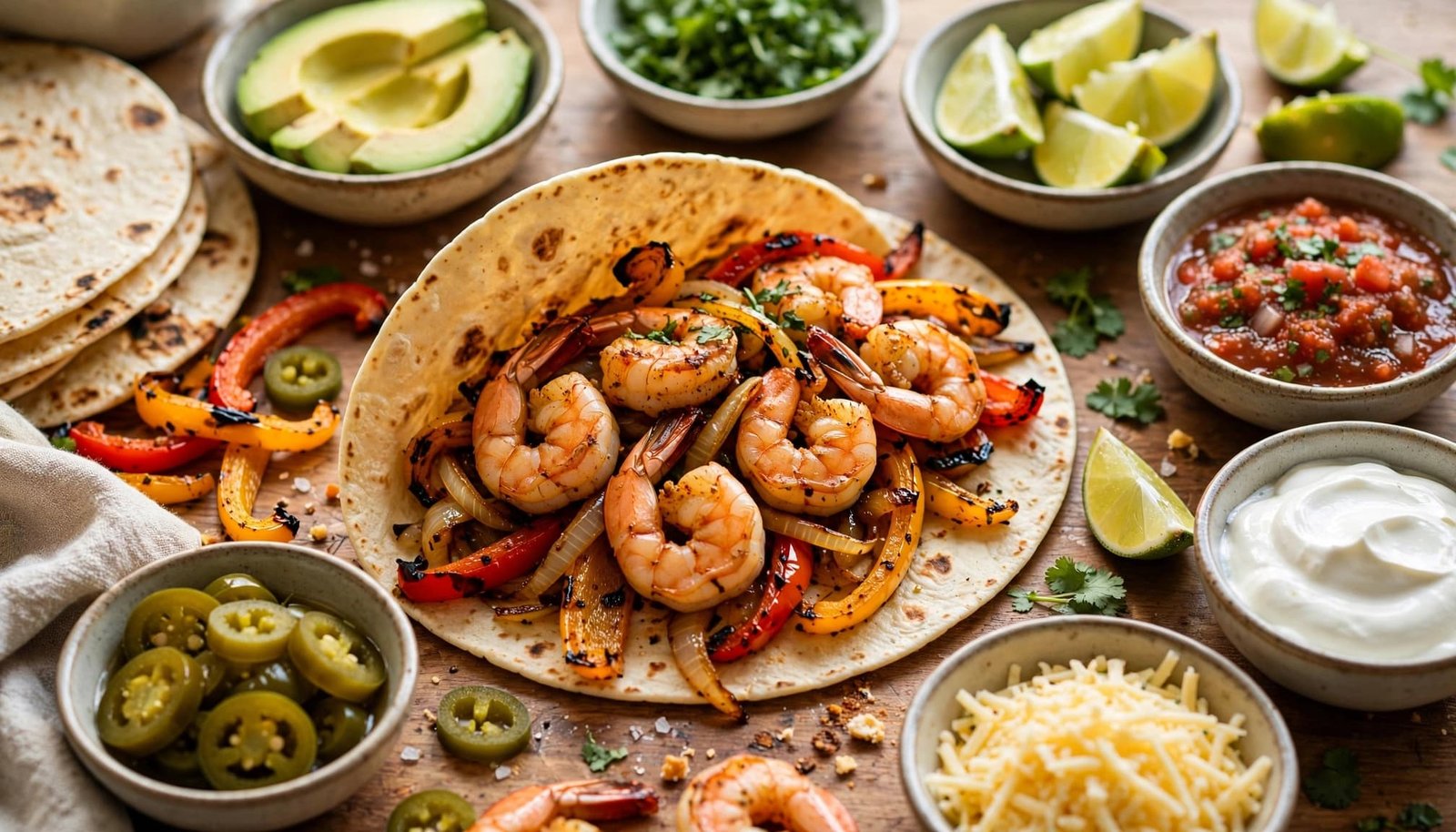
Keep the toppings in separate bowls so diners can build their own tortillas. For a simple spread, choose one creamy topping, one fresh option, and salsa or jalapeños for heat. If you want more ideas for a family-style meal, browse these Mexican-inspired meals with tortillas and beans.
Swap the vegetables or add a side
Bell peppers and onion give these sheet pan shrimp fajitas their familiar flavor, but you can make small changes with what’s on hand. Replace some of the bell pepper with sliced poblano for a deeper, mild chile flavor, or add a small amount of sliced zucchini.
Cut any vegetables into similar-size pieces so they roast at a similar pace. Zucchini releases moisture, so use it sparingly and leave space on the pan. Too much watery produce can soften the vegetables instead of helping them brown.
For a fuller dinner, serve the fajitas with rice, beans, or a simple salad. These sides round out the meal without competing with the seasoned shrimp, and they’re easy to set out while the tortillas warm.
Make the recipe fit different diets
Corn tortillas make it easy to serve the fajitas gluten-free, but check the package label, especially if you need to avoid cross-contact. The FDA’s gluten-free labeling guidance explains what the claim means on packaged foods. Also review the seasoning blend, since ingredients and allergen statements vary by brand.
For a lower-carb meal, spoon the shrimp and roasted vegetables into lettuce cups or serve them over a bed of greens. Keep toppings optional and offer them on the side, so each person can choose what fits their meal.
Make-Ahead, Leftover, and Reheating Tips
A little advance prep makes sheet pan shrimp fajitas easier to get on the table, while careful storage and gentle reheating help preserve the shrimp’s tender texture. Keep uncooked shrimp chilled until it’s time to cook, and handle cooked leftovers promptly.
Prep the vegetables and seasoning ahead
Slice the bell peppers and onion up to a day ahead, then refrigerate them in a covered container. You can also mix the dry spices in advance and store them separately, so they’re ready to toss with the oil when you start cooking.
Keep raw shrimp refrigerated in its original packaging or a covered container, and add it to the pan only when you’re ready to cook. Avoid leaving it at room temperature in a long marinade; shrimp cook quickly, and the recipe’s staged cooking keeps them from spending extra time in heat.
Store and reheat leftovers gently
Transfer cooked shrimp and vegetables to an airtight container and refrigerate them within two hours. Use the leftovers within 3 to 4 days, following the USDA’s leftovers storage and reheating guidance.
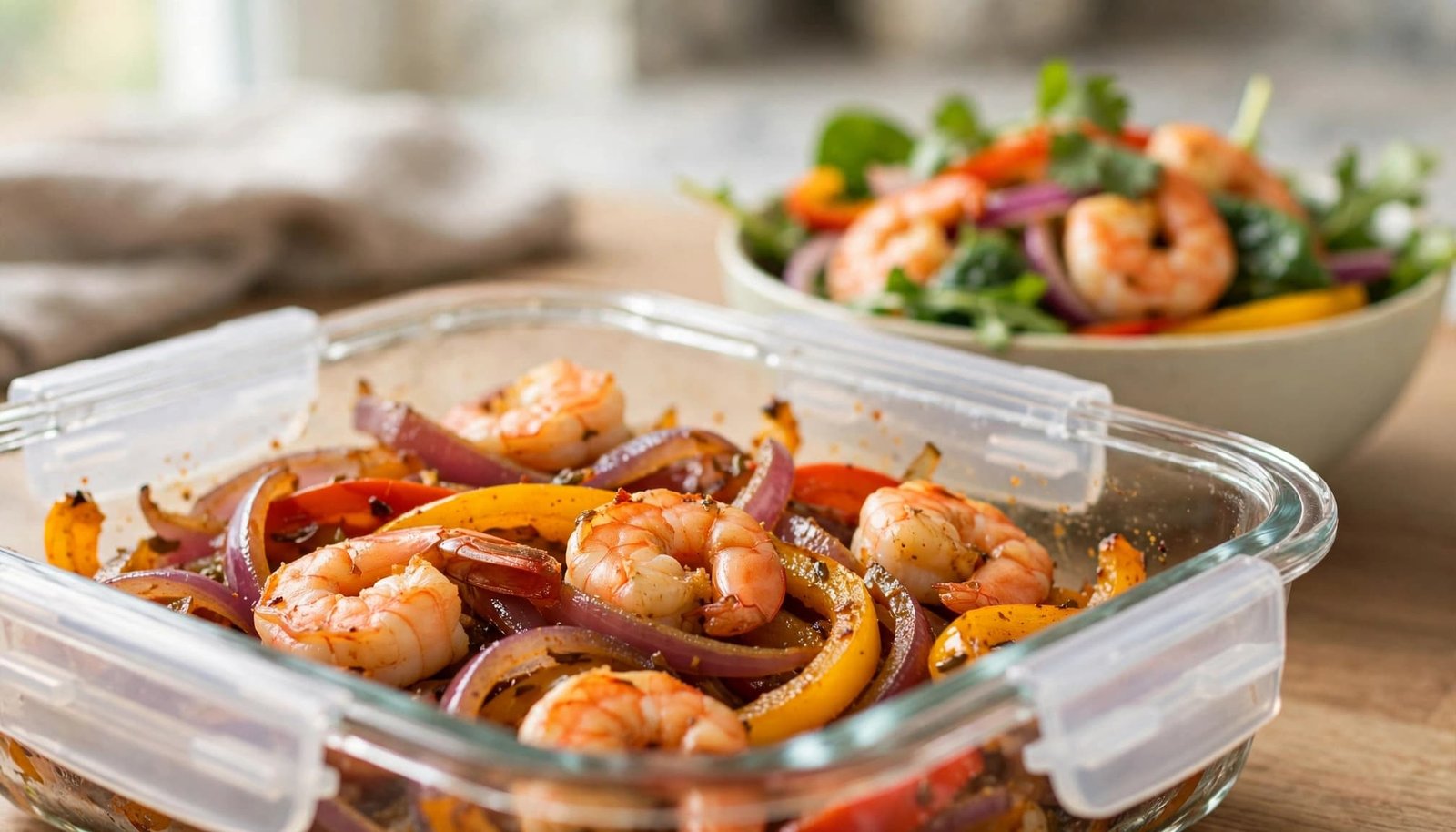
For the best texture, reheat only the amount you plan to eat. Warm it briefly in a skillet over low heat, stirring gently, or microwave it in short bursts until hot throughout. The USDA recommends reheating leftovers to 165°F; stop as soon as they reach that temperature, since extra cooking can make shrimp firmer and drier.
If you use the microwave, cover the dish loosely and stir partway through so the vegetables and shrimp heat evenly. Keep fresh toppings, such as salsa or avocado, separate until serving. Cold leftovers also work well over greens or rice; for another make-ahead bowl idea, see these baked salmon bowls with brown rice.
Conclusion
Sheet Pan Shrimp Fajitas bring a lively dinner to the table without a long prep session or a sink full of dishes. Familiar ingredients, flexible toppings, and one pan make them easy to fit into a busy evening.
For tender shrimp, give the peppers and onion a head start in the oven, then watch the shrimp closely and pull them as soon as they turn pink and opaque. Add warm tortillas and let everyone build a fajita their way. When you want another quick option, browse these easy 30-minute shrimp dinners.
Save the pin for later


- Classic Apple Crisp with a Golden Oat Topping - November 27, 2026
- Baked Ziti With Italian Sausage - November 27, 2026
- Ground Turkey Enchilada Skillet - November 27, 2026