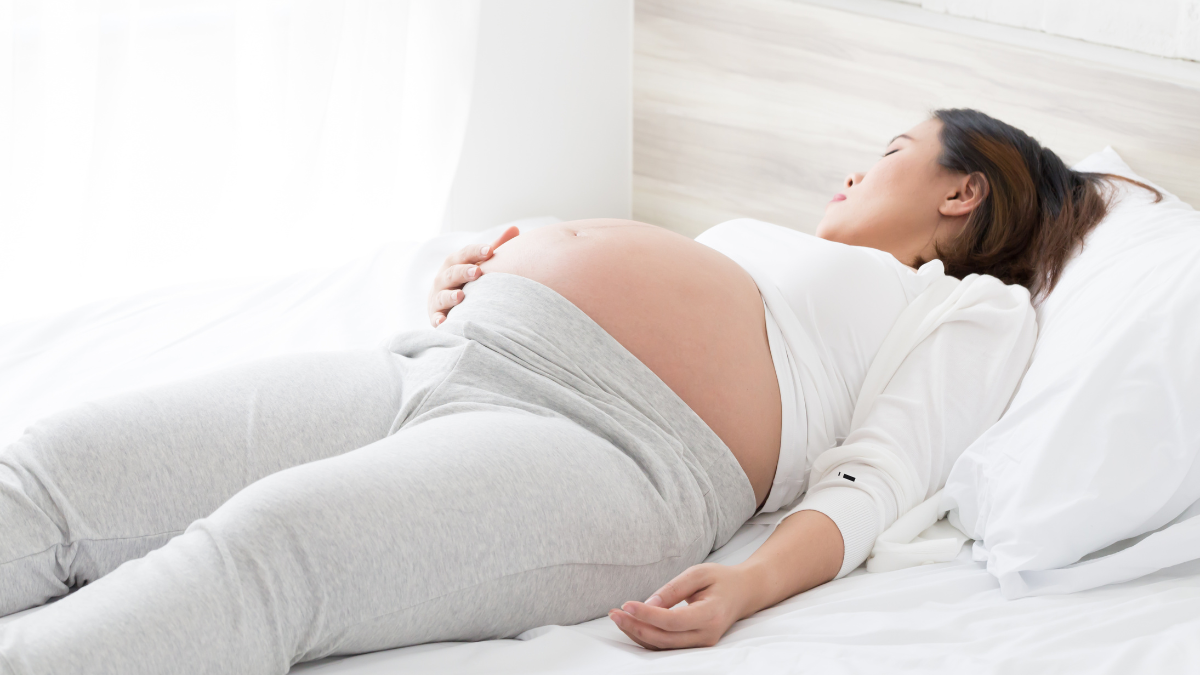

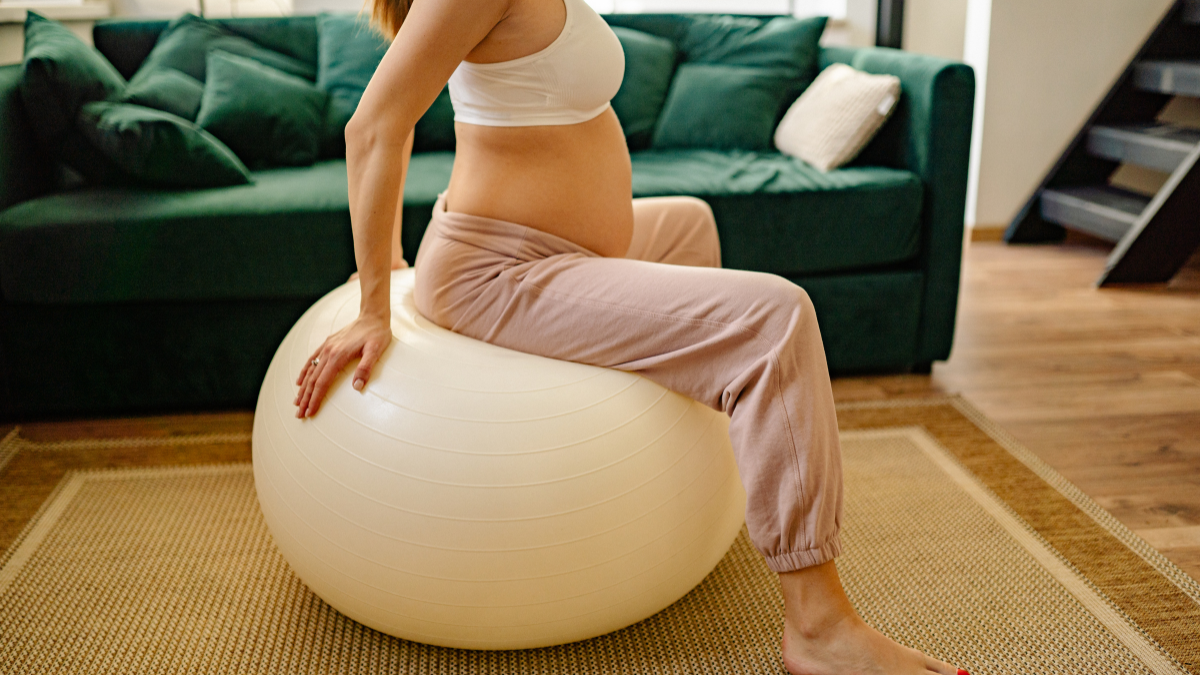
Lower back pain is one of the most common pregnancy complaints, and it can make even simple moves feel like a chore. Gentle prenatal yoga poses for lower back pain relief can help ease tension, improve mobility, and support your changing body without pushing too hard.
If your back aches after sitting, standing, or sleeping, you’re not alone, and the right stretches can make a real difference. For extra comfort at night, safe sleeping positions during the second trimester can also help take pressure off your lower back. Pregnancy Back Pain Relief
Why lower back pain happens during pregnancy
Lower back pain during pregnancy often comes from a mix of body changes, not one single cause. As your baby grows, your posture shifts, your joints loosen, and the muscles that support your back work harder than usual.
That is why the ache can feel dull, sharp, tight, or all three at once. The pain is common, but if it becomes severe, sudden, or comes with bleeding, fever, numbness, or trouble walking, it needs medical attention.
How growing belly weight changes your posture
As the belly grows, your center of gravity moves forward. To stay balanced, your body often leans back a little, which increases the curve in your lower spine and puts more pressure on the muscles there.
You may notice this when standing at the sink, walking across the room, or trying to sit up from bed. The change can feel small day by day, but over time it adds up, and your lower back ends up doing more of the work.
Even simple habits can make it worse. Long periods of standing, slouching on the couch, or carrying extra weight in one position can leave your back feeling tired and sore.
Why relaxin can make joints feel less stable
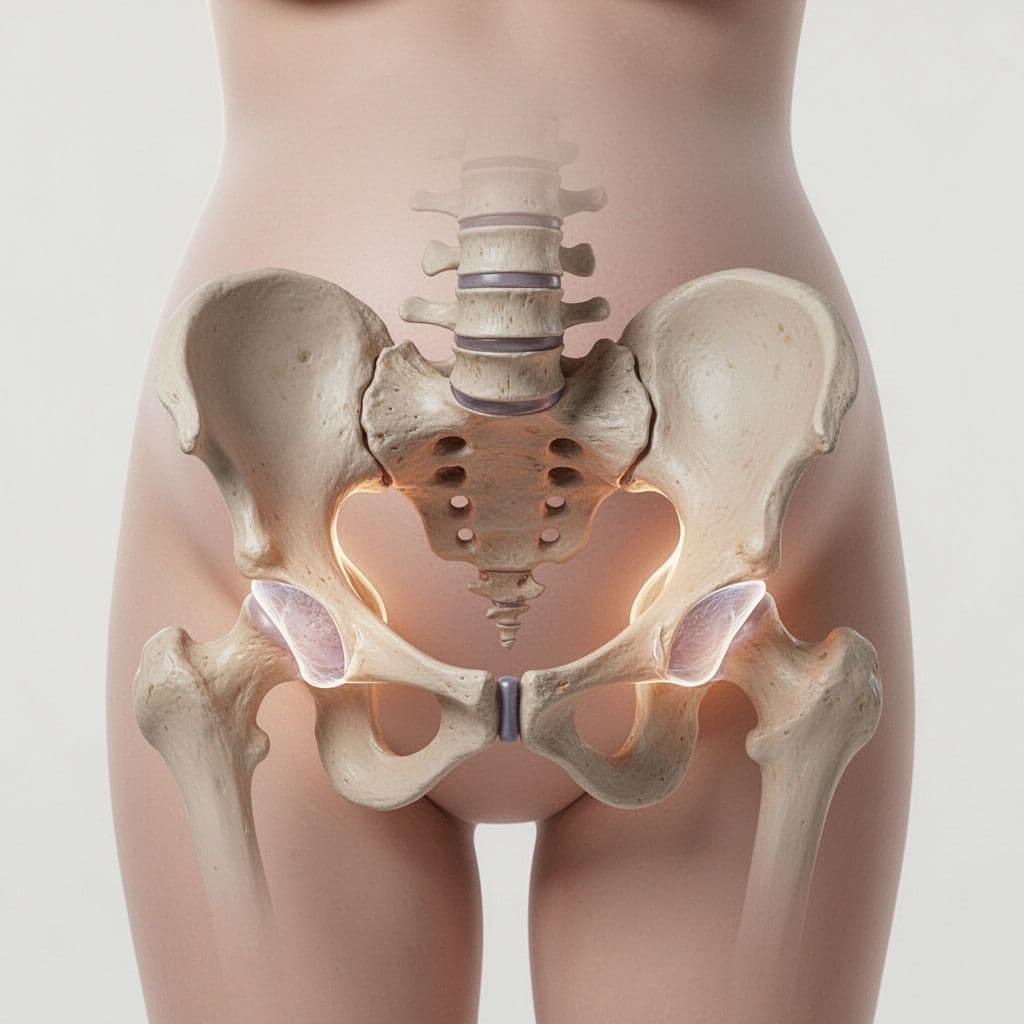
Pregnancy also brings a hormone called relaxin. In plain terms, it helps loosen ligaments so your body can prepare for birth.
That softening is useful, but it can also make the joints in your pelvis and lower back feel less stable. When those support bands are looser, your muscles have to step in and hold things together, which can lead to strain and pain.
The Mayo Clinic’s guide to back pain during pregnancy explains how these hormone shifts, along with posture changes, often work together. If your back feels wobbly or uneven, relaxin may be part of the reason.
Tight hips, glutes, and hamstrings can add to the pain
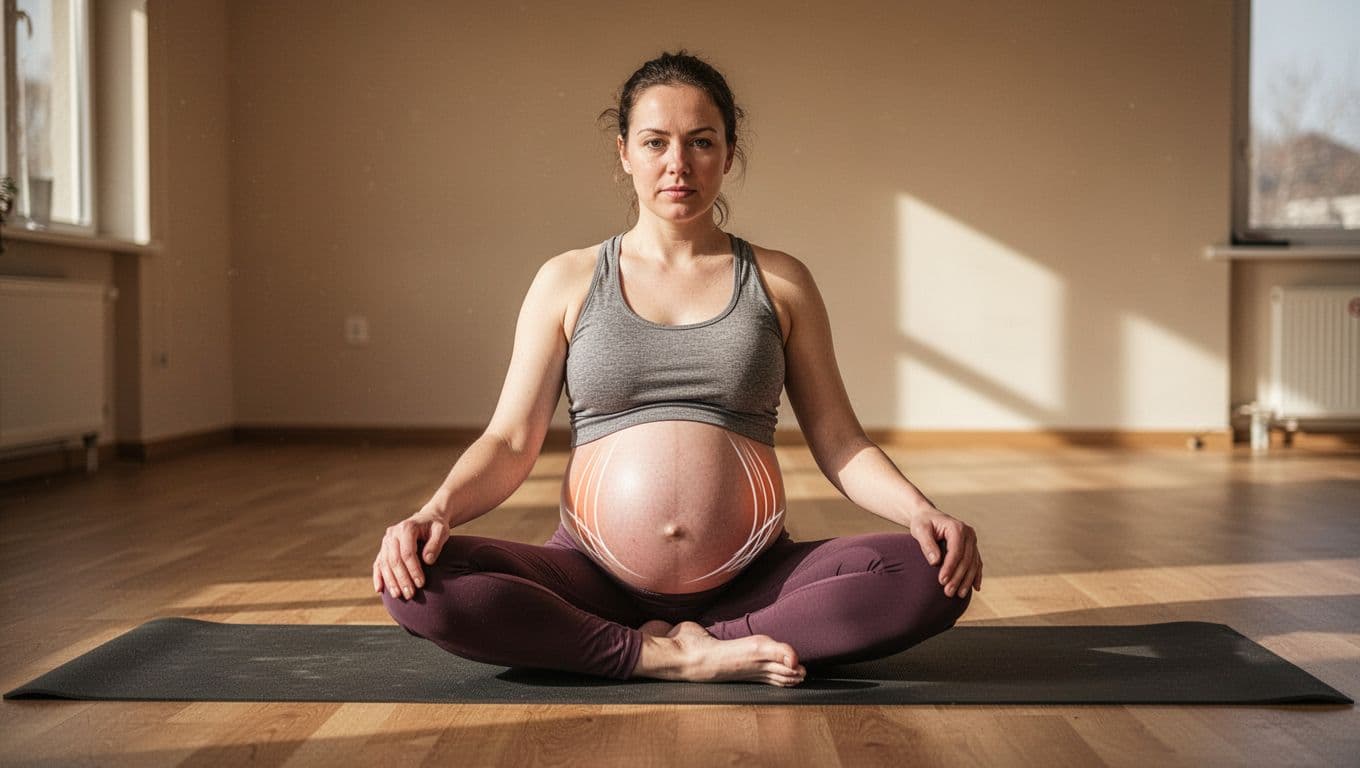
When your belly changes your posture, the muscles around your hips and legs can tighten up. The hips, glutes, and hamstrings often take the hit first, especially if you sit a lot or move less because you feel tired.
Tight muscles can pull on the pelvis like twisted ropes on a tent. That pull can make lower back pain feel stronger, especially when you bend, climb stairs, or get out of a chair.
This is also why gentle movement matters. Prenatal yoga can help lengthen tight areas and give your back a break, which is why poses later in this post can feel so relieving.
A few areas often work together here:
- Hip flexors can shorten from sitting and tip the pelvis forward.
- Glutes can tighten and limit smooth pelvic movement.
- Hamstrings can pull on the sitting bones and add tension in the lower back.
If you want a broader look at gentle movement during pregnancy, prenatal yoga easing pregnancy back pain is a helpful place to start.
Extra strain on the core and pelvic area
Your abdominal muscles stretch as your belly expands, so they support your spine less than before. At the same time, your pelvic area carries more load, which can make the lower back and hips feel overworked.
This combo matters because your core and pelvis act like a support system. When one part weakens or loosens, the back often picks up the slack.
That is also why back pain can show up during ordinary tasks, like getting dressed, turning in bed, or lifting one leg to put on pants. Your body is doing more with less support, and that effort shows up as soreness, stiffness, or aching by the end of the day.
Safety rules to follow before you start prenatal yoga
Prenatal yoga can be a gentle way to ease back tension, but safety comes first. Your body changes fast during pregnancy, so the same pose that felt fine before may need a modification now.
The goal is simple: move with support, keep the breath steady, and stop early if something feels off. A few smart rules can help you stay comfortable and make each pose work for your changing body.
When to get medical advice before exercising
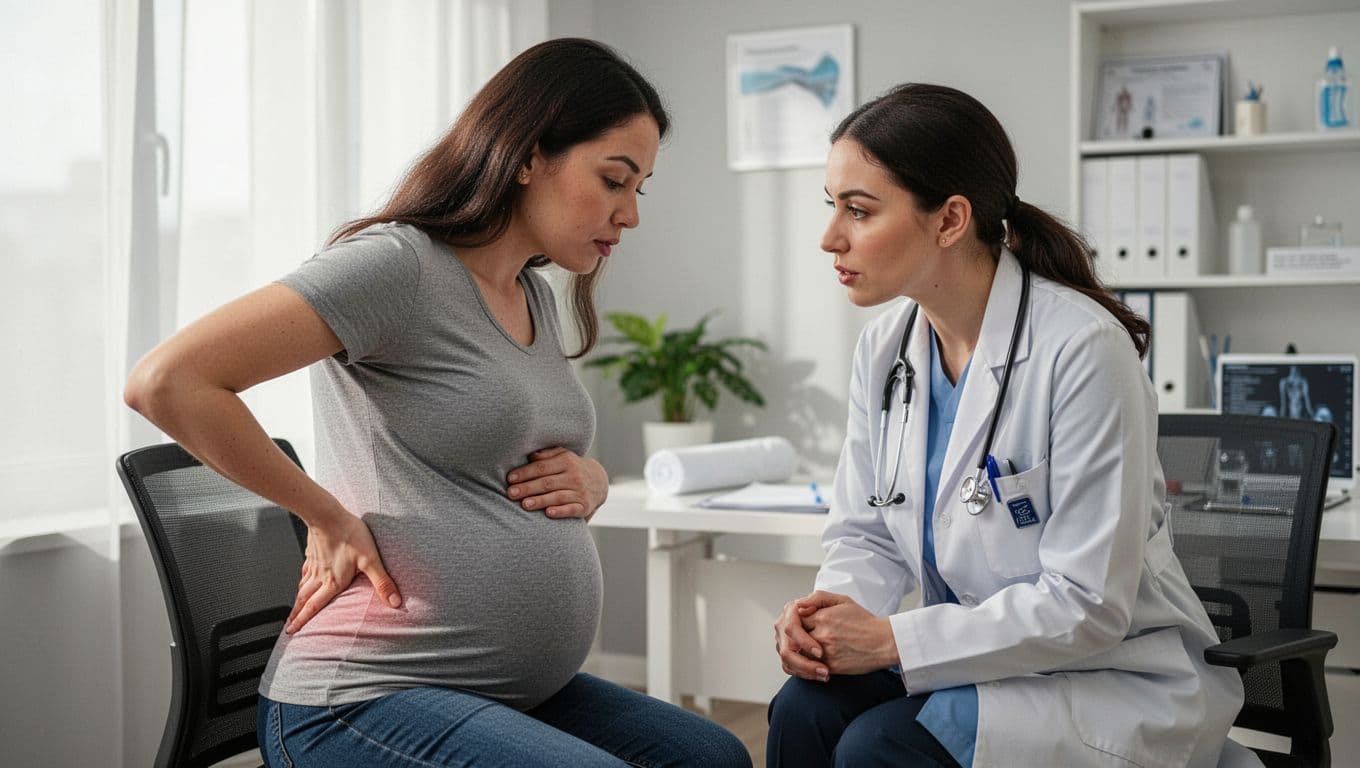
Before you start, ask your doctor or midwife if you have severe, sudden, or one-sided pain. You should also check in if your pain comes with bleeding, dizziness, contractions, shortness of breath, or any other warning sign.
That advice matters even more if you have a high-risk pregnancy, a medical condition, or a history of complications. The ACOG guide to exercise during pregnancy also says to pause and get guidance if a workout feels unsafe or brings on unusual symptoms.
If a pose causes pain, pressure, or dizziness, stop right away and get medical advice.
A quick conversation with your provider can save you a lot of guessing. It also helps you choose the right pace, especially if you want prenatal yoga for lower back pain relief without adding strain.
Poses and movements to avoid during pregnancy
Some regular yoga poses are not a good fit during pregnancy. Deep backbends, strong twists, belly-down poses, and anything that presses hard into the abdomen can create unnecessary strain.
Skip poses that crunch your belly or make you hold your breath. That includes forceful core work, fast transitions, bouncing stretches, and long periods flat on your back later in pregnancy. Gentle, open movements are the safer choice.
A simple rule helps here. If a pose feels tight, compressed, or unstable, it probably needs a modification or a full break. In many cases, prenatal yoga by trimester can guide you toward movements that fit your stage of pregnancy better.
For a safe practice, avoid:
- Deep backbends that place extra stress on the lower spine.
- Strong twists that squeeze the abdomen.
- Belly-down poses that press into your bump.
- Jerky or fast moves that can throw off balance.
- Any posture that causes strain, pressure, or pain.
The Mayo Clinic’s pregnancy back pain advice also supports gentle exercise and careful pacing. That same mindset works well in yoga, where calm control matters more than depth.
How props make poses safer and more comfortable
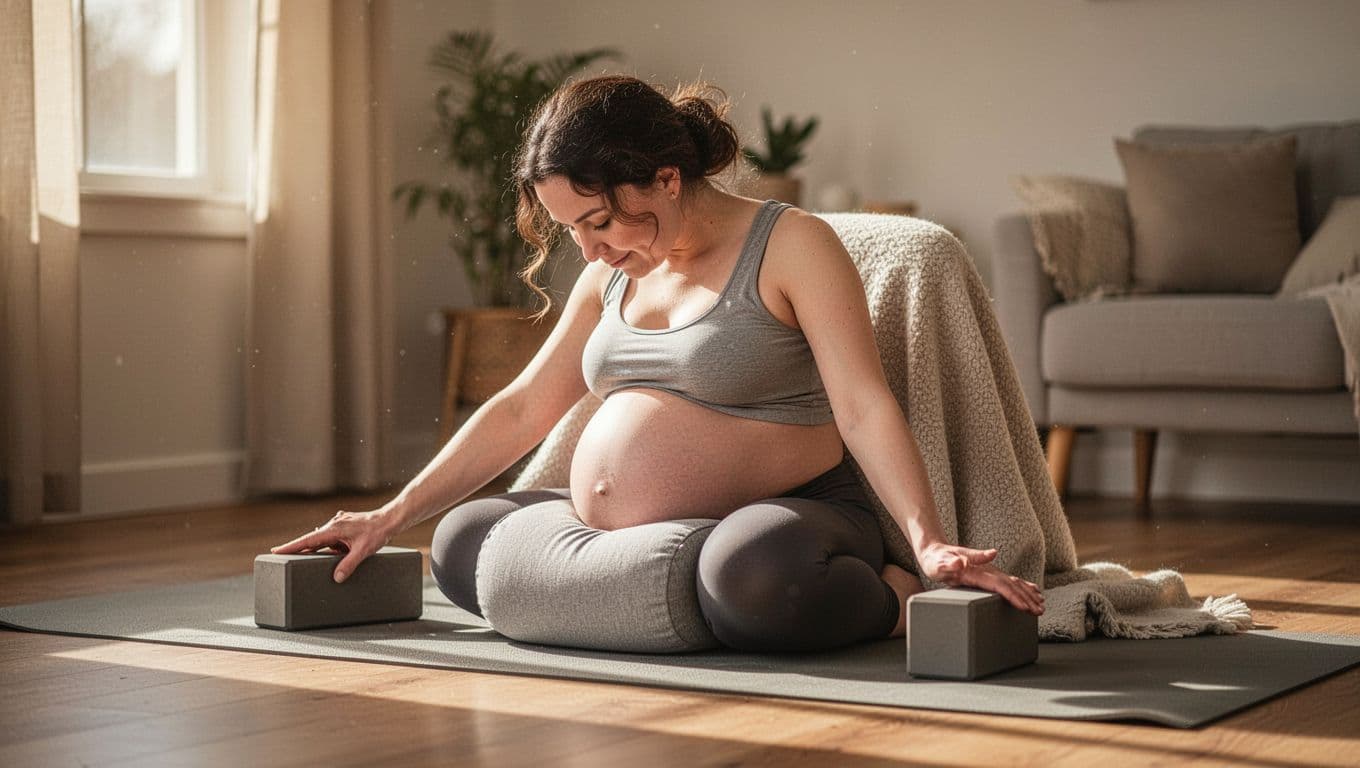
Props can turn a good pose into a much safer one. A pillow, bolster, blanket, block, or wall adds support where your body needs it most.
A bolster or pillow under the belly can reduce pull on the low back. Blankets soften the floor and support the knees or hips. Blocks bring the ground closer, so you don’t have to strain to reach it. A wall helps with balance and gives you a steady point of contact.
These tools also help if flexibility changes from day to day, which is common during pregnancy. If you want an easy way to start, try a supported seated stretch, a side-lying rest, or a wall-assisted pose instead of forcing a deeper shape.
Props can help in a few specific ways:
- They support the belly in forward bends and seated poses.
- They reduce pressure on the hips, knees, and lower back.
- They make balance poses feel more stable.
- They help you stay in a comfortable range of motion.
Hydration matters too, especially if you feel warm or tired. Sip water before class, take breaks often, and work with a prenatal yoga instructor when possible. A trained teacher can spot unsafe alignment fast and offer modifications that fit your body today, not your body from before pregnancy.
If you keep the pace slow, use props freely, and stay alert to warning signs, prenatal yoga can feel supportive instead of stressful.
The most helpful prenatal yoga poses for lower back relief
The best prenatal yoga poses for lower back relief do more than stretch. They help the spine move with less strain, soften tight hips, and give your lower back a chance to settle.
The key is to start gently and pick poses that feel supportive, not intense. A slow, steady practice often works better than chasing a deep stretch.
Cat-Cow to warm up the spine and ease stiffness
Cat-Cow is often the best place to start because it wakes up the spine without asking for too much. The gentle back-and-forth motion can ease that stiff, pulled feeling that builds up after sitting or standing too long.
Come to hands and knees, with your wrists under your shoulders and knees under your hips. Inhale as you let your belly soften and your chest open a little, then exhale as you round your spine and tuck your chin. Keep the movement smooth and small, and avoid dropping too far into the low back.
Slow breathing matters here. Each inhale gives the ribs room to expand, and each exhale helps release tension through the lower back, hips, and shoulders. If your belly feels heavy, place a folded blanket under your knees or widen them a bit for more space.
This pose works well because it restores motion without pressure. Instead of forcing a deep arch, you guide the spine through a comfortable range and let the breath do most of the work.
Wide Child’s Pose for rest and gentle back release
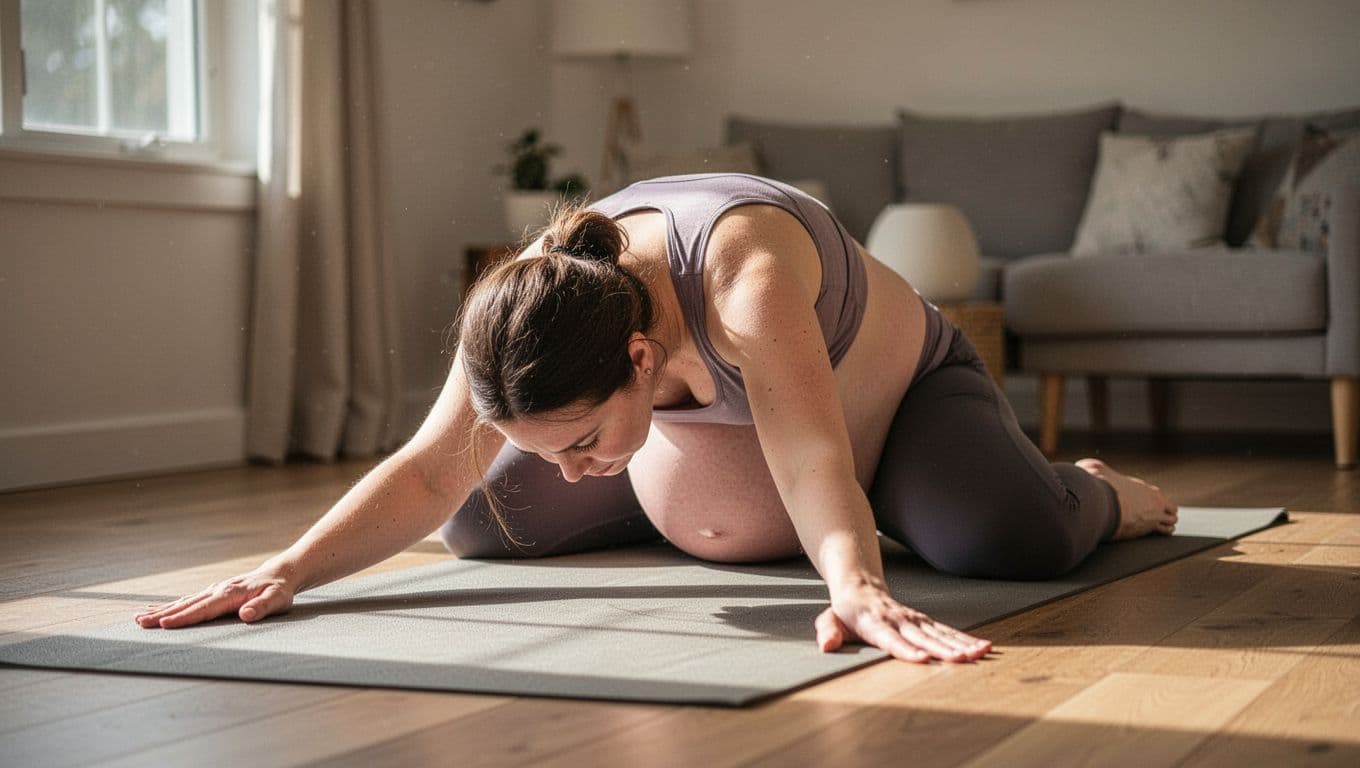
Wide Child’s Pose is a calm reset when your back feels tired and tight. It gives you a place to rest while gently lengthening the lower back.
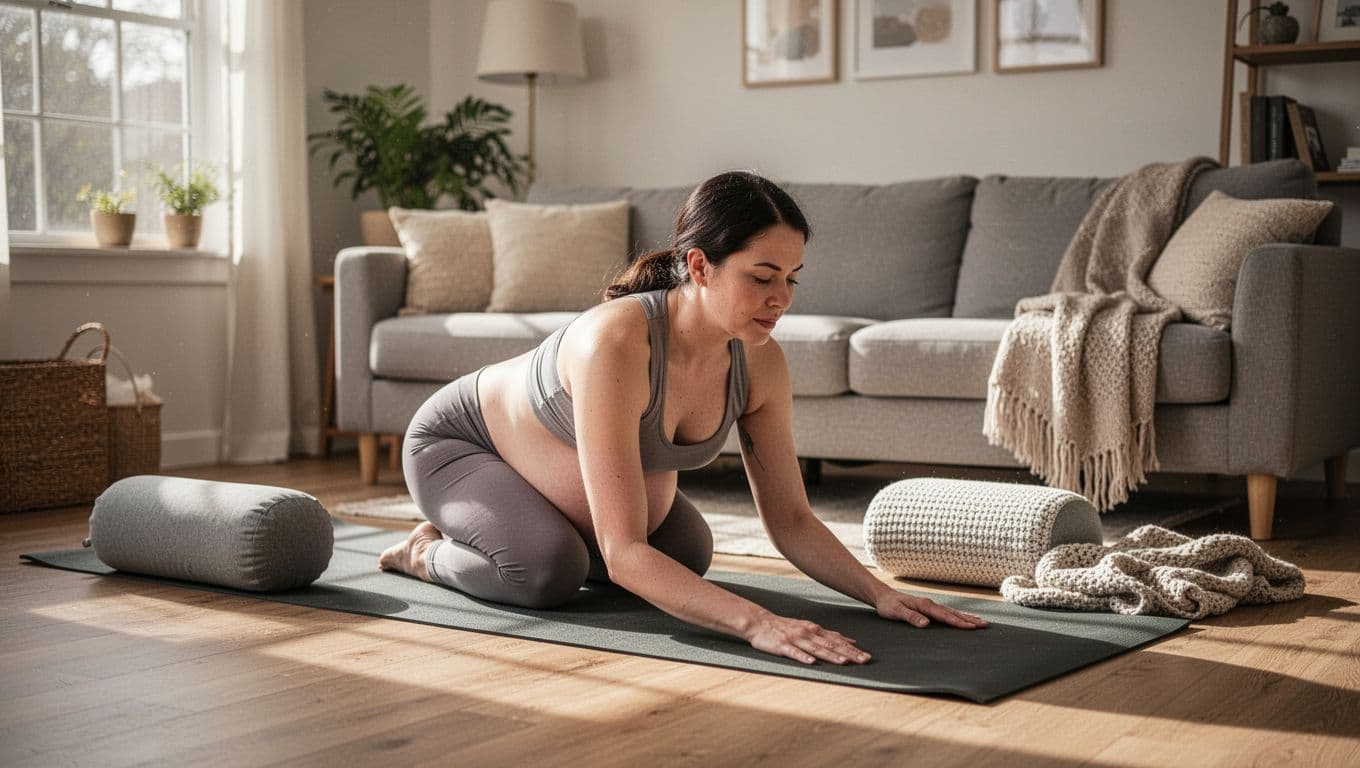
Open your knees wide so there’s room for your belly, then bring your big toes together. Fold forward and rest your forehead on the mat, a pillow, or a bolster. If the floor feels too low, place a bolster lengthwise under your chest so you can relax without sinking too far.
Comfort matters more than shape here. Your hips do not need to touch your heels, and your arms do not need to reach far. The goal is to let your back soften, not to deepen the stretch.
If your knees or hips feel sore, add more support under your seat or chest. A small change can make this pose feel like a true rest stop instead of a strain.
Supported Pigeon Pose for tight glutes and hips
Supported Pigeon Pose can help when the glutes and outer hips are doing too much work. Tight hips often tug on the pelvis, which can show up as low back pain.
A prenatal-friendly version matters here. Come into the pose only as far as feels comfortable, and use a bolster, folded blanket, or cushion under the front hip so you do not sink too low. If the full shape feels sharp or unstable, stay more upright or switch to a figure-four stretch on your back only if your provider has said that position is okay for you.
The stretch should feel broad and steady, not jammed. You want space in the outer hip, not pressure in the knee or sacrum.
If the pose feels pinchy in the knee or pelvis, back out right away and choose a smaller stretch.
For a fuller explanation of how this pose supports the low back, prenatal yoga for rib discomfort also shows how hip-opening work can ease nearby tension in the body. That same idea applies here, since the hips and lower back often tighten together.
Supported Bridge Pose for a gentle hip and spine reset

Supported Bridge Pose can feel like a reset for tired hips and a sore lower back. When you place support under the hips, the back can relax while the front of the body opens a little.
Lie on your back only if it feels safe and comfortable for your stage of pregnancy, and only for a short time. Bend your knees, keep your feet planted, lift your hips slightly, then slide a bolster, pillow, or block under them. Let your weight rest there instead of holding the shape with effort.
This gentle setup can reduce pressure across the low back and create a mild opening through the hips and hip flexors. It also feels good after a day of standing or walking a lot.
If lying flat is no longer comfortable, skip this pose and choose a side-lying or hands-and-knees option instead. Pregnancy changes fast, and your best setup can change with it. A pose that felt fine last month may need a new version now.
A simple way to use these poses
A short sequence often works best. Start with Cat-Cow, move into Wide Child’s Pose, then add Supported Pigeon or Supported Bridge if your body wants more release. Keep your breath slow, use props freely, and stop before the stretch turns into strain.
These poses work because they support the whole chain, from hips to spine. When the surrounding muscles soften, the lower back often feels less overworked and more at ease.
Simple standing poses that help support your back all day
Standing poses are easy to skip, but they matter a lot during pregnancy. They help you work on balance, open tight hips, and wake up the muscles that support your spine. When your back feels tired by mid-afternoon, these upright moves can bring steady relief without asking you to lie down on the floor.
A small amount of daily practice goes a long way. Even a few slow breaths in each pose can help you feel more centered, more stable, and less pulled through the lower back.
Goddess Pose for hip opening and leg support
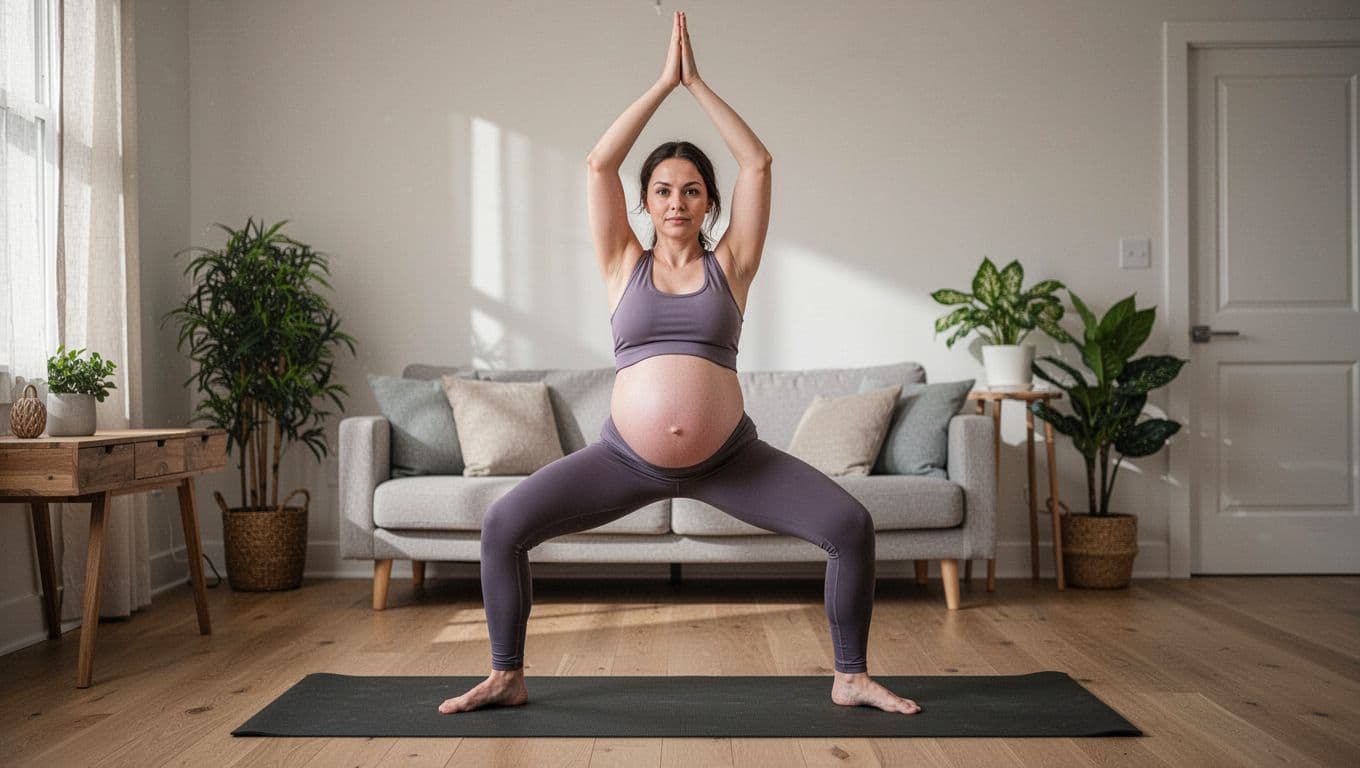
Goddess Pose is one of the best standing poses for pregnancy because it works the legs while opening the hips. Your thighs, glutes, and inner legs help hold you up, and that support can take pressure off the lower back.
Stand with your feet wider than your hips and turn your toes slightly out. Bend your knees in a comfortable range, keep your chest lifted, and bring your hands to your heart or overhead if that feels good. The shape should feel grounded, like you are sitting into a strong base without sinking too low.
This pose can also help when your pelvis feels tight or uneven. As your hips open, your back often has more room to relax. A standing prenatal yoga sequence can pair this pose with other gentle hip openers if you want more support later.
Keep these cues in mind:
- Press through all four corners of each foot.
- Keep your knees tracking in line with your toes.
- Stay tall through the spine, even with bent knees.
- Rise out of the pose slowly.
Triangle Pose with a block for a safe side stretch
Triangle Pose can be very helpful when your side body feels tight and your lower back needs space. The trick is to focus on length, not depth. A block under your lower hand, or even support on your shin, keeps the pose safer and easier to hold.
Step your feet wide, turn your front toes forward, and keep a soft bend in both knees. Reach forward first, then tip into the pose so your torso stays long. Rest your hand on a block, your shin, or another steady surface, and lift the other arm up only if your neck and shoulders feel relaxed.
That long line from your hip to your ribs can ease the pull that builds in the lower back during pregnancy. It also helps you stretch the side body without collapsing into the front hip. The best standing poses for pregnancy back pain often use this same idea, because support matters more than how far you reach.
If your belly gets in the way, move your stance a little wider and keep the pose smaller.
Sumo squat with a side stretch to ease tension on both sides
A sumo squat with a side stretch is a simple combo that can loosen the hips and release the waist at the same time. It also gives your legs a gentle strength challenge, which helps your back by giving it more support from below.
Start in a wide stance with your toes turned out. Bend your knees into a shallow squat, keep your chest lifted, and bring your hands to your thighs if that feels steady. Then reach one arm overhead and lean lightly to the opposite side, keeping the movement smooth and easy.
After a few breaths, return to center and switch sides. The squat opens the hips, while the side stretch lengthens the muscles along the waist and lower back. Because both parts move slowly, the pose stays friendly for pregnancy and easy to repeat during a busy day.
A few good habits make this pose work better:
- Keep the squat shallow if your pelvis feels sensitive.
- Move side to side without forcing the stretch.
- Keep your breath steady and even.
- Stop if you feel pressure, strain, or wobble.
These standing poses fit well into real life because you can do them without much setup. A wall, chair, or block can add support when you need it, and that extra stability often makes all the difference on days when your back feels heavy.
How to build a short prenatal yoga routine at home
A short prenatal yoga routine works best when it feels easy to repeat. You do not need a full class or a perfect setup, just a few steady poses that help your back, hips, and breath settle down.
Keep the pace gentle and the sequence simple. On busy days, a little movement done often helps more than a long session you skip.
A 15 to 20 minute sequence for busy days
Start with a few rounds of Cat-Cow to warm up your spine. Then move into Wide Child’s Pose for rest, Supported Pigeon for tight hips, Supported Bridge if lying on your back still feels okay, and finish with a standing pose like Goddess Pose or Triangle Pose.
Hold each pose for 3 to 5 slow breaths, or about 30 to 60 seconds. If your energy is low, stay on the shorter end and repeat the sequence only once. That still gives your body a helpful reset.
A simple home flow can look like this:
- Cat-Cow for 1 to 2 minutes.
- Wide Child’s Pose for 1 minute.
- Supported Pigeon on each side for 1 minute.
- Supported Bridge for 1 minute, or skip it if you feel better upright.
- Goddess Pose or Triangle Pose for 1 minute on each side.
You can also stop after the first three poses if fatigue hits hard. That is still a real routine, and it still counts. For another gentle option, the 15-minute prenatal yoga flow is a helpful model to follow at home.
How to know if you are doing too much
Your body usually gives clear signs when a routine needs to get smaller. Pain is the biggest one, but dizziness, shortness of breath, belly pressure, or a feeling of heaviness in the pelvis also mean you should back off.
A good stretch feels open and steady. A bad one feels sharp, pinchy, shaky, or hard to breathe through. If that happens, come out of the pose, sit down, and rest.
Watch for these signs during practice:
- Pain in your back, hips, belly, or knees.
- Dizziness or feeling faint.
- Shortness of breath that does not ease quickly.
- Belly pressure or a sense that the pose is too compressed.
- Wobbling or strain that makes balance feel unsafe.
If you notice any of these, shorten the practice or stop for the day. Some days your body wants five minutes, not twenty, and that is fine. Pregnancy yoga should feel supportive, not like a test.
Breathing tips that make each pose more relaxing
Slow breathing can change the whole feel of a pose. It helps your ribs expand, lowers tension in your shoulders, and gives tight muscles a better chance to soften.
Try breathing in through your nose for a slow count of four, then out for a slow count of six. Keep the exhale a little longer if you can, because that often helps the body relax. You do not need deep breaths that strain your belly, just smooth ones that feel calm.
While you hold each pose, let the breath set the pace. Inhale to make space, exhale to release a little more. That rhythm works well in Cat-Cow, Child’s Pose, and any standing pose where you feel your back tighten.
A few simple cues help:
- Keep your jaw loose.
- Drop your shoulders away from your ears.
- Let your belly move naturally with the breath.
- Pause between poses if you need to reset.
The goal is calm, daily movement, not effort. A short routine done most days gives your back regular relief and helps your body stay more comfortable as pregnancy goes on.
Conclusion
Prenatal yoga can be a safe, soothing way to ease lower back pain when you choose gentle poses and move with care. The best results come from simple habits, like using props, keeping your breath steady, and stopping when a stretch feels wrong.
Your body will tell you when it needs a smaller range of motion or a full break. If the pain feels unusual, severe, or comes with other symptoms, check in with your doctor or midwife before you keep going.
A short routine still matters. A few mindful minutes of prenatal yoga each day can bring real relief over time and help your back feel more supported as pregnancy goes on.
Save pin for later

- What Causes a Flat Head Shape in Babies? - September 20, 2026
- Baby Massage for Gas Pain: Step-by-Step Instructions - September 20, 2026
- Newborn Skin Peeling: Common Causes and Warning Signs - September 20, 2026