
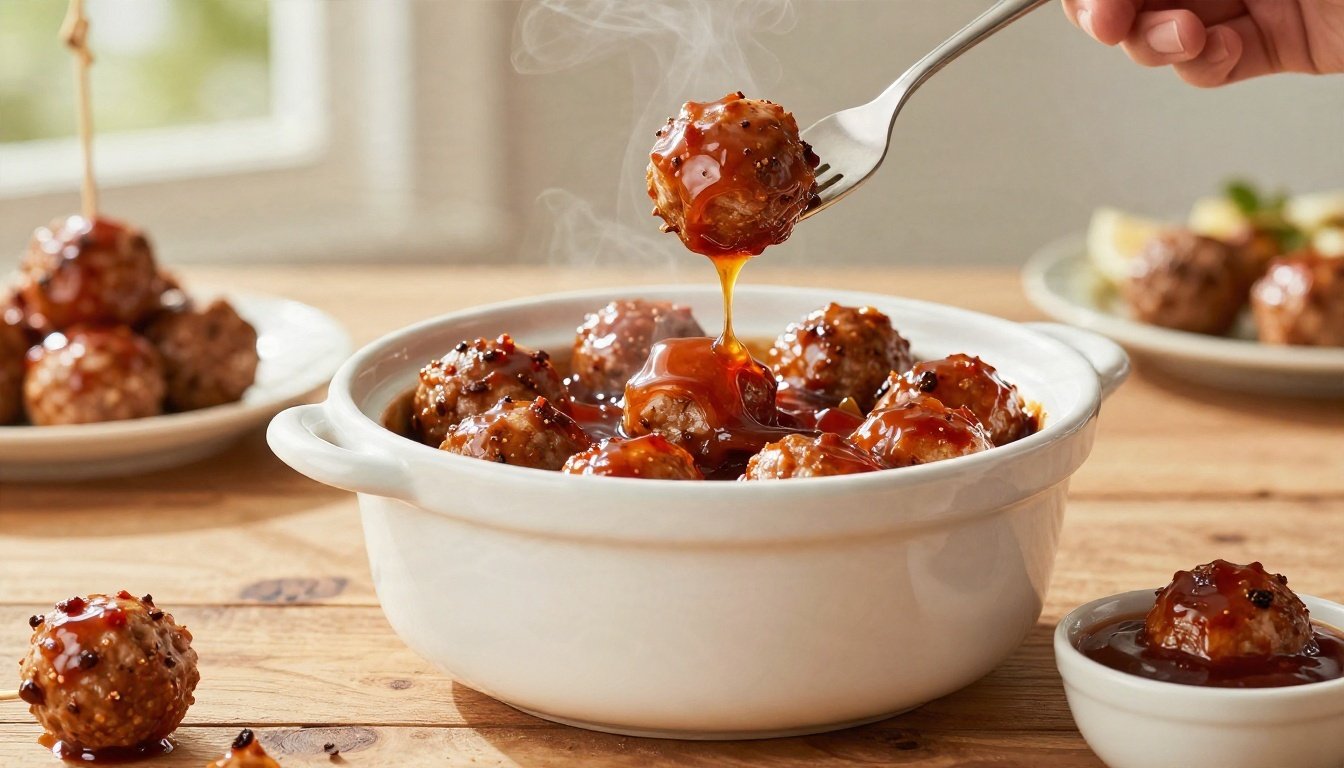
When the party table fills with snacks, a slow cooker of glossy, sweet-and-tangy meatballs is always easy to reach for. This simple appetizer combines frozen, fully cooked meatballs with grape jelly and tomato-based chili sauce for a crowd-friendly bite with little prep.
Keep the lid on while they heat, then check that the meatballs are hot throughout before serving. We’ll walk through the basic recipe and share practical tips for serving and storing leftovers safely.
Party Meatballs with Grape Jelly and Chili Sauce
This classic slow-cooker appetizer takes only a few minutes to assemble. The sauce turns glossy and clings to the meatballs as they heat, while optional seasonings let you dial the sweet, tangy, and spicy notes to your taste.
What you need for the classic party meatball sauce
For a standard batch, gather:
- 32 ounces frozen, fully cooked cocktail meatballs
- 2 cups tomato-based chili sauce
- 1 cup grape jelly
- 1 teaspoon Dijon mustard, optional
- 1 teaspoon cider vinegar, optional
- A few dashes of hot sauce, optional
In this recipe, chili sauce means a thick, tomato-based condiment, not necessarily a hot chile sauce. It gives the jelly a savory, tangy balance. Brands vary in sweetness and heat, so taste the sauce before adding hot sauce or extra vinegar.
Frozen, fully cooked meatballs are a convenient shortcut, especially when you’re preparing several dishes for a gathering. Homemade meatballs work too, but cook them safely before adding them to the sauce. Don’t put raw ground meat into the slow cooker for this recipe.
How to make the meatballs in a slow cooker
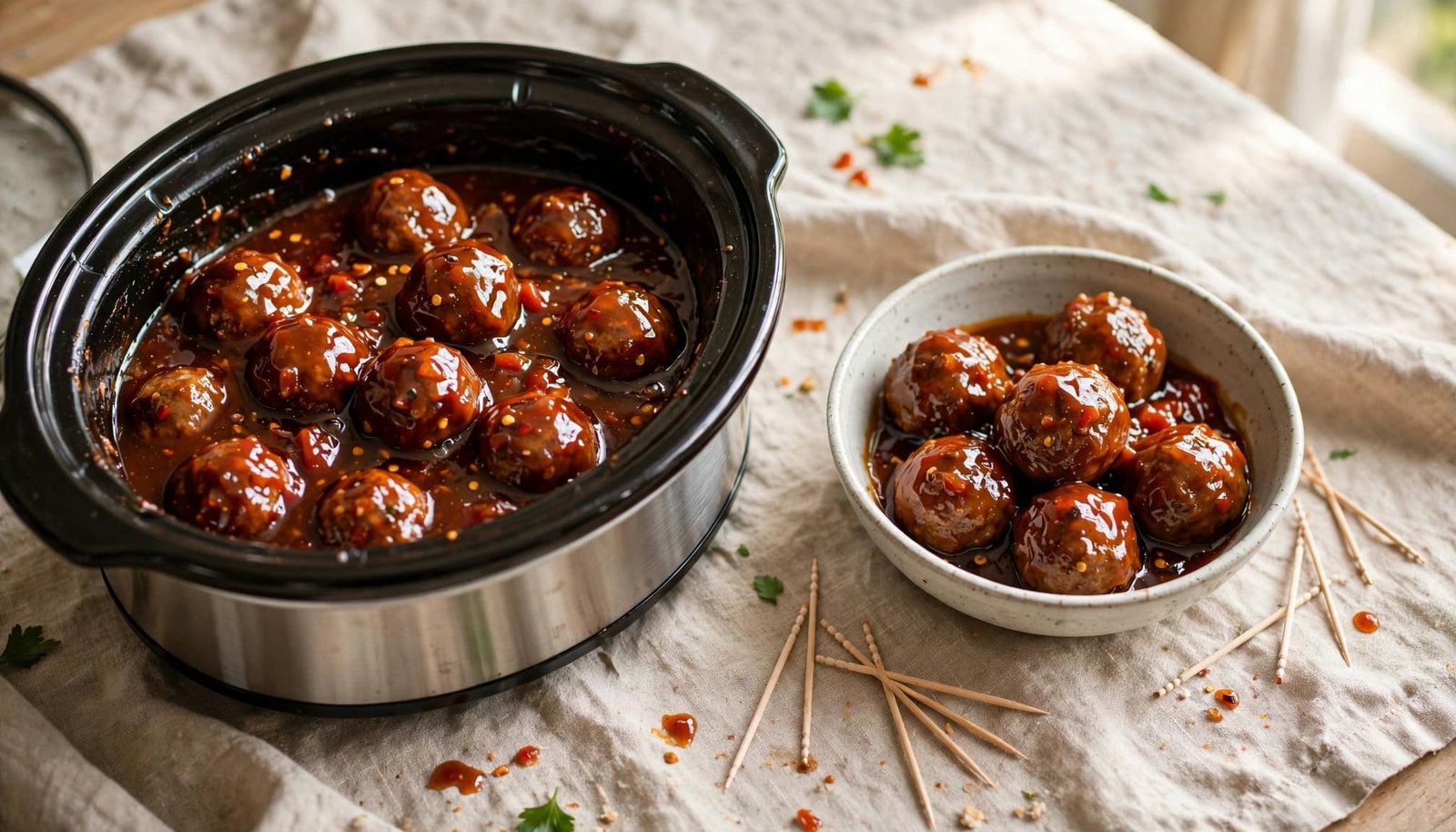
- Stir the sauce smooth. Add the grape jelly and chili sauce to the slow cooker. Whisk or stir until the jelly breaks down and the mixture looks mostly smooth. Small bits of jelly will melt as the sauce heats.
- Season to taste. Stir in Dijon, cider vinegar, or hot sauce if you’re using them. Start with a small amount, since you can add more after the sauce warms.
- Coat the meatballs. Add the cooked meatballs and gently stir so the sauce covers them. Keep the lid on during cooking to hold in heat.
- Cook until hot throughout. Follow the meatball package and slow-cooker directions. As a general guide, frozen fully cooked meatballs may take about 2½ to 3 hours on High or 5 to 6 hours on Low. If your package gives different instructions, use those instead. A food thermometer is the reliable way to check: check the center of several meatballs and heat them to 165°F.
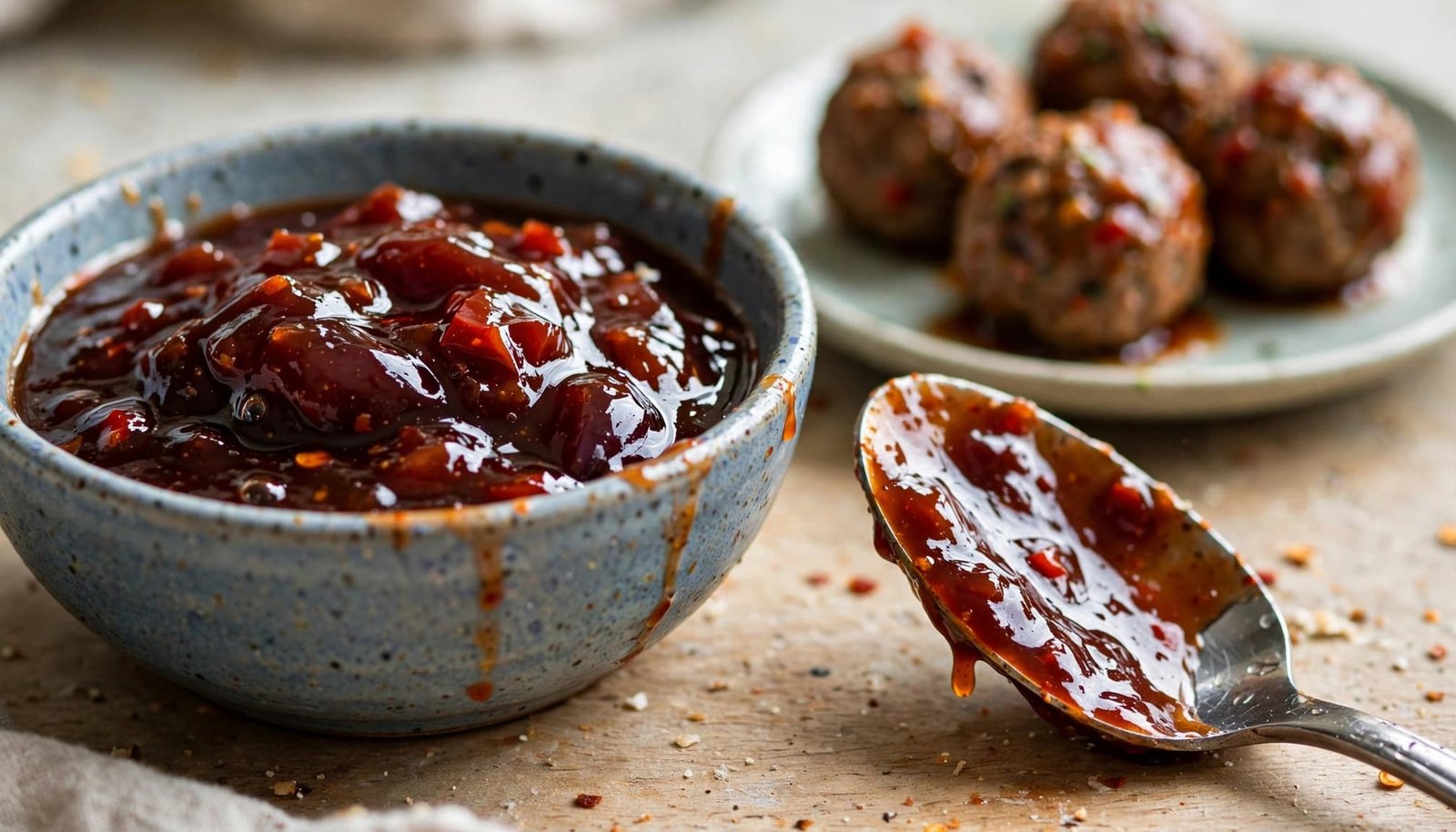
The sauce is ready when it’s smooth, hot, and coats the meatballs instead of pooling thinly at the bottom. Stir once the jelly has melted, then taste and adjust. Add a little vinegar for sharper tang, more jelly for sweetness, or hot sauce for extra heat.
Keep the lid on as much as possible. Each time you open it, heat escapes and the meatballs take longer to warm.
Once hot, switch the cooker to its Warm setting for serving only if it keeps the food at 140°F or above. Check with a thermometer rather than relying on the setting alone. The slow cooker heats this batch and can hold it hot, but it shouldn’t reheat leftovers. Warm refrigerated leftovers on the stove, in a microwave, or in a conventional oven until they reach 165°F, then transfer them to a preheated slow cooker if you need to keep them warm. For another meal idea with cooked meatballs, try this meatball pasta bake.
Simple ways to make the sauce and meatballs turn out well
A few small adjustments can keep the sauce glossy, the meatballs tender, and the flavor balanced. Most problems come from adding liquid, lifting the lid too often, or leaving the meatballs on heat longer than needed.
How to adjust the flavor without losing the classic taste
Grape jelly brings sweetness, while tomato-based chili sauce adds tang and savory flavor. Once the jelly has melted and the sauce is warm, taste it before changing anything. Then adjust in small amounts so the familiar sweet-and-tangy balance stays intact.
If the sauce tastes too sweet, stir in a little Dijon mustard or cider vinegar. For more heat, add a few dashes of hot sauce or a pinch of cayenne. If you prefer a sweeter glaze, mix in a spoonful of grape jelly and give it time to melt before tasting again.
Keep changes gradual, especially when serving guests. You can always add another small splash or spoonful, but it’s harder to correct an over-seasoned batch.
Prevent watery sauce and uneven heating
Avoid adding water or broth to loosen the sauce. The meatballs release some moisture as they heat, and extra liquid can leave the glaze thin. Keep the slow cooker covered so the heat stays steady and condensation doesn’t build from repeated lid lifting.
Stir gently once the jelly has melted and the sauce looks smooth. After that, leave the meatballs alone unless the sauce needs a quick check. Frequent stirring lets heat escape and can break tender meatballs apart.
For an evenly heated batch, don’t pack the cooker beyond the amount recommended in its manual. If you’re making more than it can comfortably hold, cook the meatballs in separate batches rather than piling them high. Use slow cooker meal prep tips when planning larger batches.
Keep the meatballs tender and serve them safely
Fully cooked meatballs can dry out if they stay on heat for too long, even when they’re covered in sauce. Once they’re hot throughout, switch to Warm only if the cooker keeps the food at 140°F or above. Check the temperature with a food thermometer, since a Warm setting alone doesn’t confirm that the food is safely held.
When reheating cooked meatballs or leftovers, heat them on the stove, in a microwave, or in a conventional oven until they reach 165°F. Then transfer them to a preheated slow cooker for serving. The USDA’s leftover food safety guidance explains the reheating temperature and safe handling basics.
For homemade meatballs in a future batch, tips for keeping poultry meatballs moist can help if you use ground chicken or turkey.
Easy Party Meatball Variations for Different Guests
Party meatballs are easy to tailor without changing the sweet-and-tangy sauce for everyone. Choose the meatball style that fits your prep time, then offer a mild batch alongside a spicier or less-sweet option.
When to use frozen, homemade, or a different meatball style
Frozen, fully cooked cocktail meatballs are the simplest choice when the oven is busy or you’re preparing several dishes. They’re already bite-size, and you can add them to the sauce according to the package directions. Check that the center is fully hot before serving, especially if the meatballs started frozen.
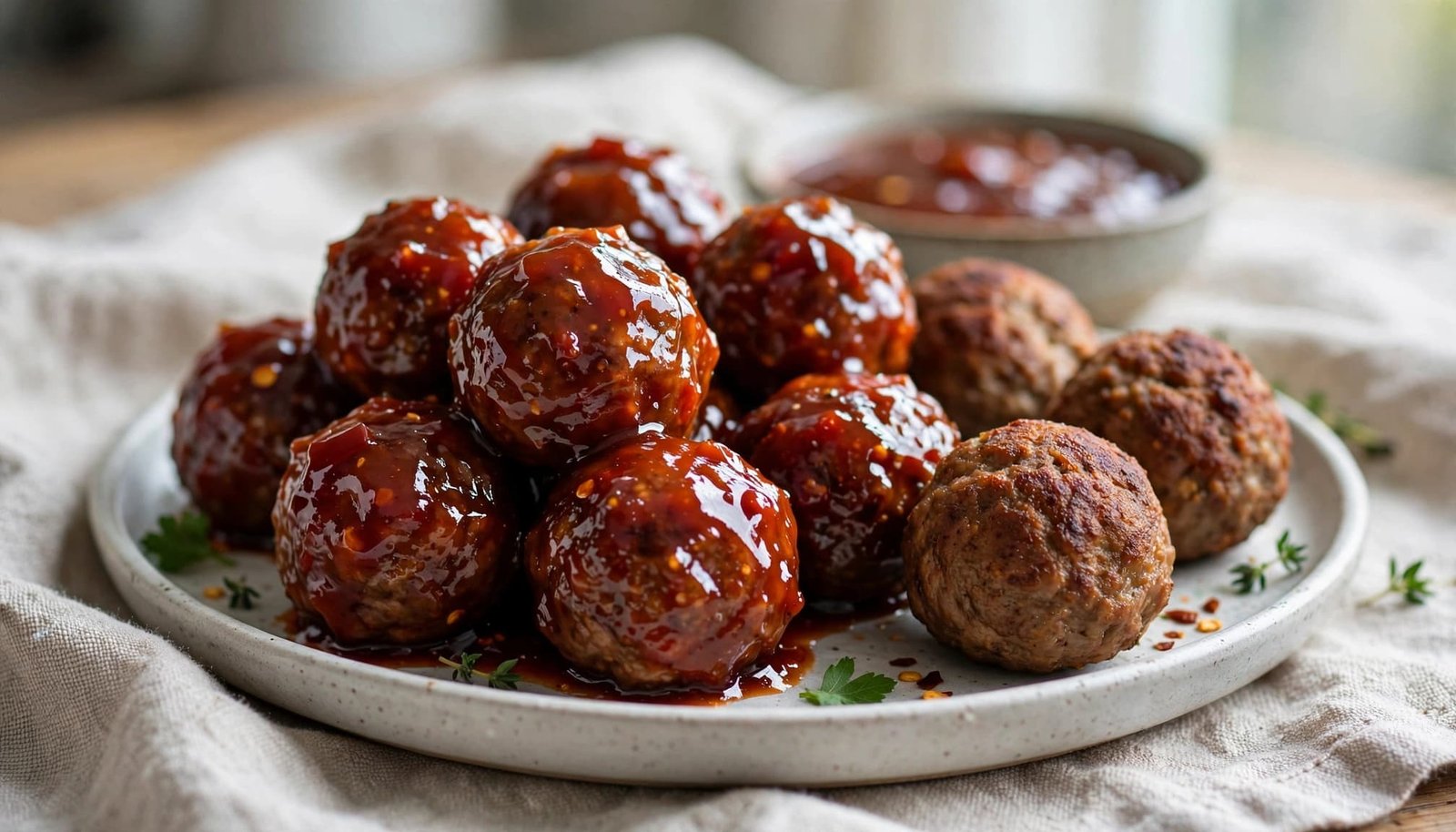
Homemade baked meatballs take more prep, but you control their size and seasoning. Combine ground beef or a beef-and-pork blend with breadcrumbs, egg, garlic, salt, pepper, and any herbs or spices you like. Shape the mixture into evenly sized small meatballs, then bake them until safely cooked before adding them to the sauce. Their cooking time depends on their size and the recipe, so check the center with a food thermometer. The USDA lists 160°F for ground beef and 165°F for ground poultry in its safe temperature chart.
Smaller homemade meatballs can be easier for little guests to manage. If children will be sharing the appetizer table, serve them in a separate dish and cut them to an age-appropriate size. For more ideas for little ones, see these toddler-friendly finger foods.
Turkey or plant-based meatballs may suit guests who prefer a different option. Follow the package cooking directions for either type, and check that the center is fully hot before serving. Since sizes and preparation methods vary, the package is the best guide for heating time.
To make a spicier batch, stir hot sauce or a pinch of cayenne into a portion of the grape jelly and chili sauce before coating the meatballs. Start with a small amount, then taste the warmed sauce and add more if needed. Keeping this batch separate lets guests choose their preferred level of heat.
For a less-sweet sauce, reduce the grape jelly and add a little Dijon mustard or cider vinegar to maintain a tangy balance. Make the adjustment gradually, since different chili sauces vary in sweetness and seasoning. If you’re feeding a mixed crowd, prepare the classic sauce as written, then set out the spicy and less-sweet versions in separate bowls.
How to serve, hold, and store party meatballs safely
A little planning keeps the meatballs easy to serve and safe to eat throughout the gathering. Set out a modest portion at a time, keep the rest hot, and refrigerate leftovers promptly when the party winds down.
What to serve alongside the meatballs
Set out toothpicks so guests can help themselves without needing extra plates or utensils. Sliced cucumbers, bell peppers, and carrots add a crisp contrast to the sweet, tangy sauce. Crackers or small rolls work well for guests who want something more filling, but a few simple choices are plenty.
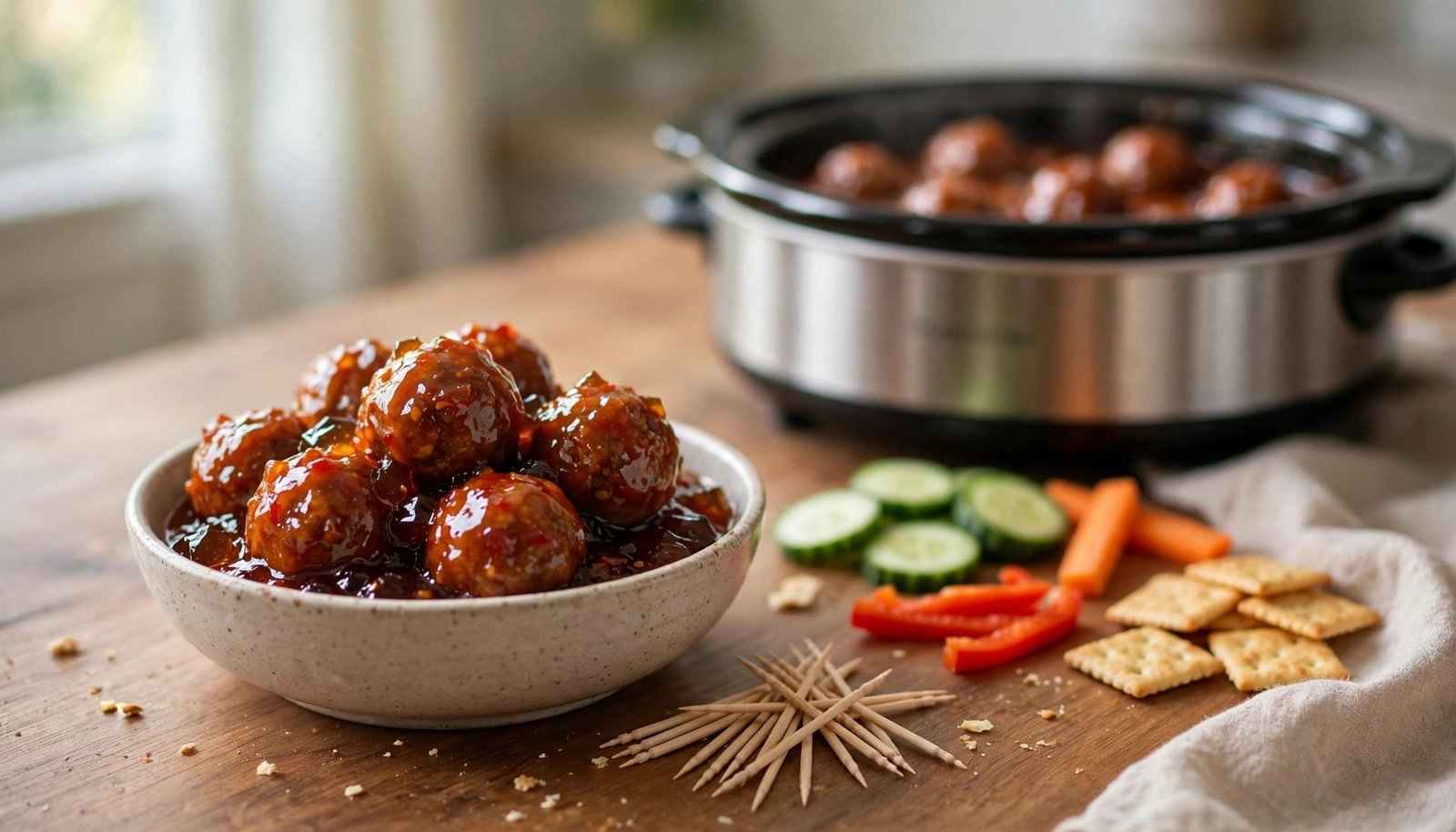
Keep the slow cooker nearby and serve the meatballs in a small bowl. Refill it from the cooker as needed instead of setting the full batch out at room temperature. Use a clean serving spoon for each refill, and keep toothpicks beside the bowl rather than in the sauce.
If you make a spicy batch or offer a different meatball option, serve it in a separate dish and label it clearly. That helps guests choose what suits them and keeps the batches distinct.
Keep the meatballs hot during the party
Cooked party meatballs should stay at 140°F or above while they’re being served. Check the temperature with a food thermometer, since the slow cooker’s Warm setting doesn’t confirm that the food is hot enough. If the temperature drops below 140°F, reheat the meatballs to 165°F on the stove, in a microwave, or in a conventional oven before returning them to a preheated slow cooker.
For hot buffet foods, the USDA recommends maintaining at least 140°F. Its safe handling guidance for take-out foods also explains the two-hour limit for food left at room temperature. In a warm room or outdoor setting, keep the cooker shaded and out of direct sun, and check the meatballs periodically.
Refrigerate leftovers and reheat them properly
After the party, move leftover meatballs into shallow, covered containers and refrigerate them within 2 hours. If the room or outdoor temperature is above 90°F, refrigerate them within 1 hour. Shallow containers help the food cool more quickly, and prompt refrigeration keeps it out of the temperature range where bacteria can grow rapidly. For more practical guidance, see our tips on refrigerating leftovers safely.
When you’re ready to serve leftovers, reheat them to 165°F on the stove, in a microwave, or in a conventional oven. Stir during microwave reheating so the meatballs warm evenly, then check the center of several pieces with a thermometer. Once they reach 165°F, transfer them to a preheated slow cooker for hot holding if needed.
Don’t reheat refrigerated leftovers in the slow cooker. It heats food too slowly for safe reheating. Use one of the faster methods first, then let the slow cooker keep the meatballs hot for serving.
Conclusion
Party meatballs earn their place on the table because frozen, fully cooked meatballs and a quick grape jelly and chili sauce glaze make a warm, crowd-friendly appetizer with very little prep. The sweet-tangy sauce is easy to adjust, while the slow cooker keeps the meatballs ready to serve.
Before guests dig in, check that the meatballs are hot throughout, then keep them at 140°F or above during service. With the classic recipe as a simple starting point, you can tailor the flavor and serving plan to fit your gathering.
Save the pin for later


- Christmas Jam Recipes: A Simple Berry Freezer Jam - November 7, 2026
- Christmas Cake Ideas for Every Holiday Table - November 7, 2026
- Christmas Baking Recipes for a Festive Cookie Tray - November 7, 2026