
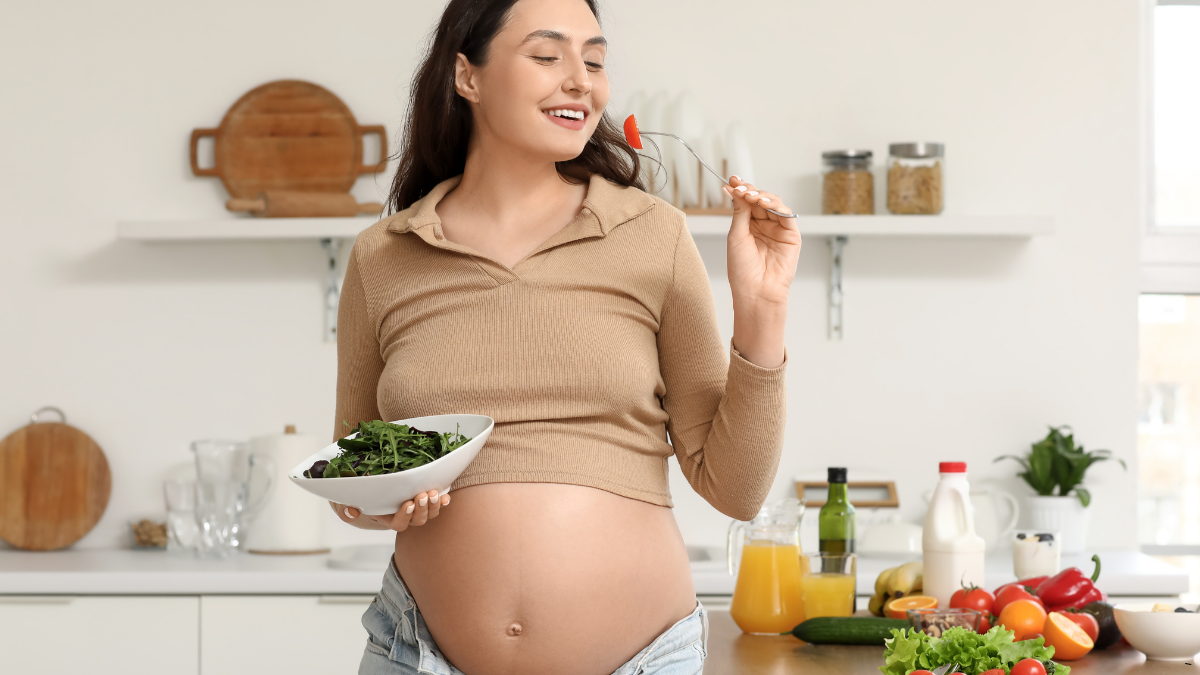
A healthy pregnancy starts on your plate, and many of the nutrients you need are already in everyday foods. Best prenatal vitamin food sources can help cover folate, iron, calcium, choline, and DHA, but food alone doesn’t always meet every need.
That’s why it helps to know which foods do the heavy lifting, and how to build meals around them without stress. If you’re also sorting out supplements, these prenatal vitamin basics for first-time moms can help you see where food fits, because a prenatal vitamin may still be needed as backup.
In this post, you’ll find the most important pregnancy nutrients, the foods that provide them, and simple ways to make them part of your routine.
Why food matters so much in a healthy pregnancy
Pregnancy puts extra work on your body, and food is what helps meet that demand. A steady mix of nutrient-rich meals gives you vitamins, minerals, protein, fiber, and healthy fats that support both you and your baby.
That matters before pregnancy too. When your nutrient stores are already in good shape, your body has a stronger starting point for early growth, when so much is happening fast.
How prenatal nutrients support baby’s growth and mom’s health
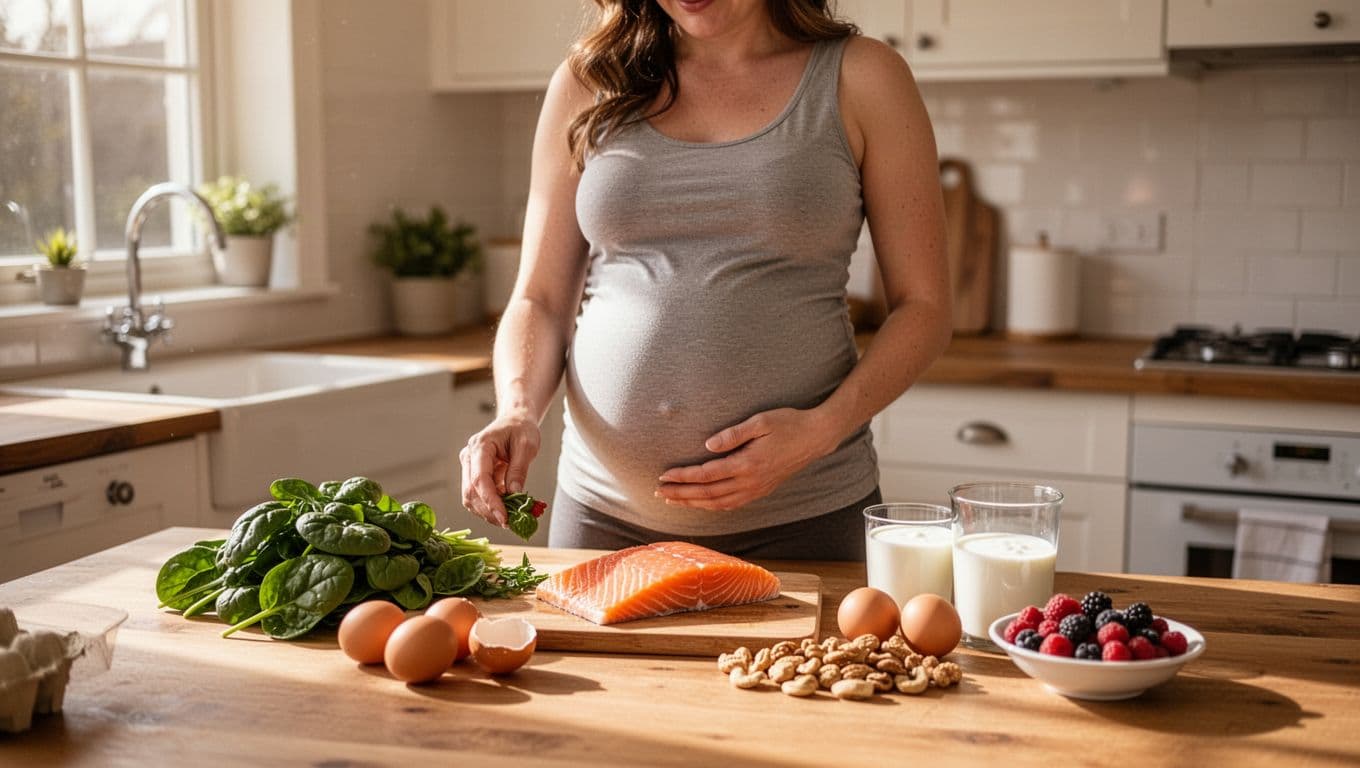
Prenatal nutrients do a lot of heavy lifting in a short amount of time. Folate helps form the neural tube early on, iron helps build blood that carries oxygen, calcium supports bones and teeth, and protein helps form new tissue as your baby grows.
Several nutrients also support brain development. Choline, iodine, and DHA are especially important for the baby’s brain and nervous system, while iron helps prevent anemia in mom, which can leave you tired and run down. The ACOG guidance on healthy eating during pregnancy also points to calcium, vitamin D, and healthy fats as key parts of pregnancy nutrition.
Food matters because it does more than fill one need at a time. A bowl of yogurt with berries gives calcium, protein, and vitamin C support in one meal. Salmon offers protein plus DHA. Leafy greens bring folate, fiber, and other plant compounds that supplements do not provide.
Food supports growth in layers, not one nutrient at a time.
That layered support helps your body too. Enough protein, iron, and fiber can make meals feel more satisfying, help with energy, and support smoother digestion when pregnancy slows things down.
Why a food-first approach works best for most families
A food-first approach gives you a wider mix of nutrients than a pill usually can. Real meals bring vitamins and minerals along with water, fiber, protein, and healthy fats, which work together in ways that single nutrients often can’t.
It also helps you build habits that last beyond pregnancy. When your plate includes fruits, vegetables, whole grains, dairy or fortified alternatives, and lean proteins, you’re not just chasing nutrient targets. You’re building a pattern that supports daily energy and steadier eating.
Here is why that balance matters:
- More nutrient variety: Foods often provide several helpful nutrients at once.
- Better digestion support: Fiber from beans, oats, fruit, and vegetables can help keep things moving.
- More staying power: Protein and healthy fats help meals feel more filling.
- Easier routine building: Repeating balanced meals makes healthy eating simpler over time.
Food is also easier to enjoy and stick with. A prenatal vitamin can fill gaps, but it cannot replace the value of regular meals and snacks that actually satisfy you.
The USDA still notes that some key pregnancy nutrients can be hard to get in full from food alone, which is why supplements may still have a place. Even so, the base should come from meals built around real foods, not capsules. If you need help turning that into a plan, these pregnancy immunity foods for moms offer another look at nutrient-rich choices that fit into everyday eating.
The most important prenatal nutrients and the foods that give them
The best prenatal vitamin food sources are the ones that do more than fill one gap. They support early growth, steady energy, and your own health at the same time. That matters because pregnancy raises the need for several nutrients, and some, like iron and choline, become harder to get enough of through food alone.
A smart plate can cover a lot of ground. Folate, calcium, vitamin C, DHA, iodine, and zinc all show up in everyday foods, but they each play a different role. When you know what to look for, meal planning gets much simpler.
Folate, iron, and vitamin C: the foundation for early pregnancy
Folate matters most in the early weeks, when the baby’s neural tube is forming. The usual pregnancy target is 600 mcg DFE per day, and many people are told to get 400 mcg folic acid before pregnancy and during the first trimester. That is why folate-rich foods are so helpful, even if you also take a prenatal.
The best food sources include spinach, beans, asparagus, and fortified cereals. These foods are easy to build into real meals, like a spinach omelet, bean soup, or a breakfast bowl with fortified cereal and fruit. The Dietary Guidelines food sources chart is a useful reference if you want to compare nutrient-rich foods side by side.
Iron needs rise during pregnancy, too, because your blood volume increases. Most pregnant women need about 27 mg per day. Plant-based iron from beans, spinach, and fortified cereals works best when you pair it with vitamin C.
That is where citrus, berries, and bell peppers help. Vitamin C improves iron absorption, so a meal with lentils and peppers, or cereal with strawberries, does more than one job.
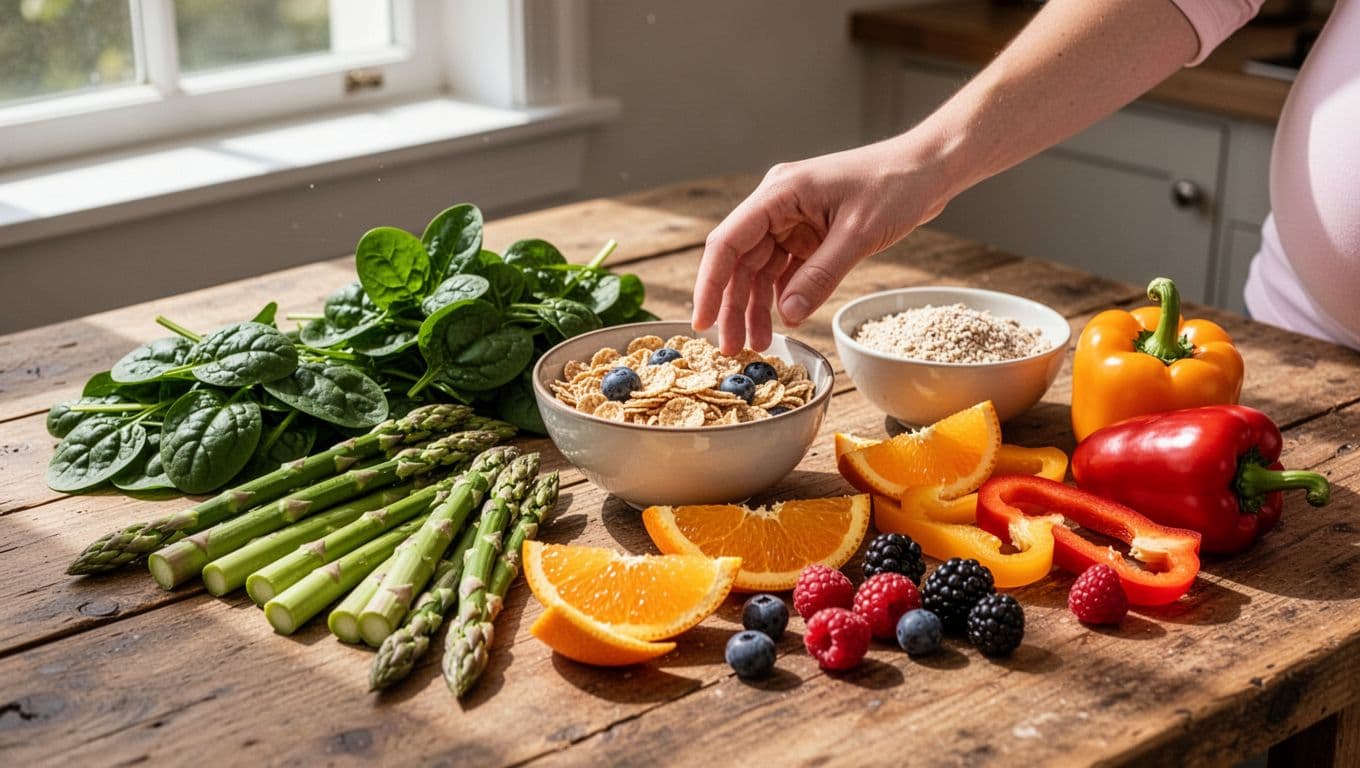
Pair iron foods with vitamin C foods when you can. It helps your body use the iron more efficiently.
Calcium and vitamin D for strong bones and teeth
Calcium and vitamin D work as a team. Calcium builds bones and teeth, while vitamin D helps your body absorb and use that calcium. During pregnancy, most women still need about 1,000 mg of calcium daily, yet many do not get enough from food.
The easiest sources are milk, yogurt, and cheese. If dairy does not work for you, look for fortified foods like fortified milk alternatives or cereals. These can help fill the gap without making meals complicated.
Vitamin D is harder to get from food alone, so food and sunlight both matter. Fatty fish, salmon, sardines, and eggs can help, but they usually do not provide everything on their own. For many pregnant women, a mix of fortified foods, a prenatal, and sensible sun exposure is the most realistic way to stay on track.
DHA and other omega-3 fats for brain and eye development
DHA is one of the most important omega-3 fats in pregnancy because it supports the baby’s brain and eye development. Fish is the strongest food source of DHA, and low-mercury choices are the best fit for most pregnancy plans.
Good options include salmon, sardines, and anchovies. These foods give you DHA along with protein, which makes them a strong choice for lunch or dinner. Many prenatal plans aim for 200 to 300 mg of DHA per day, and food can do a lot of that work.
Plant foods like chia seeds and hemp seeds still matter, even though they do not provide DHA in the same way fish does. They give alpha-linolenic acid, which your body can convert into DHA in small amounts. That makes them a helpful backup, especially if you eat little or no fish.
If you want more food ideas that support brain growth, these baby brain-boosting foods include several pregnancy-friendly choices too.
Iodine, choline, and vitamin B12 for healthy nerve and brain development
These three nutrients often get less attention than folate or iron, but they matter just as much. Iodine supports thyroid health and brain growth, vitamin B12 helps form red blood cells and nerves, and choline supports the baby’s brain and spinal cord development. Choline is especially important, and many prenatals do not provide enough of it.
You can find these nutrients in a mix of animal and fortified foods. Eggs, dairy, seafood, salmon, meat, and fortified foods all help. Beans and broccoli also add useful support, especially when they are part of a balanced meal.
Most pregnant women need about 450 mg of choline per day, but food alone can fall short fast. Egg yolks are one of the easiest sources, and dairy and meat add more. Iodine is often found in dairy, seafood, and iodized salt, while B12 shows up in animal foods and fortified foods.
The Mayo Clinic pregnancy nutrition guide also highlights how hard it can be to meet these needs without planning ahead, especially for iron, calcium, and vitamin D.
Vitamin A and zinc for growth, immunity, and cell development
Vitamin A supports cell growth, vision, and immune function, but the source matters. Food-based vitamin A from fruits and vegetables is safe and helpful, especially when it comes from beta-carotene-rich foods. The concern is too much preformed vitamin A from supplements, which can be harmful in high doses.
The best food sources are sweet potatoes, carrots, and leafy greens. These are easy to add to soups, roasted trays, and salads. Eggs can also help, and they fit well into meals when you need something simple and filling.
Zinc works alongside vitamin A to support growth, immunity, and cell division. Most pregnant women need about 11 mg per day. You can get it from lean meats, beans, nuts, and whole grains, with small amounts in eggs and dairy too.
Together, these foods give you a steady base without overdoing anything. That balance is the point. A prenatal vitamin can cover gaps, but a varied food pattern gives your body the steady supply it needs every day.
How to build meals that cover more prenatal needs naturally
The easiest way to eat well during pregnancy is to stop thinking in single nutrients and start thinking in meals. One plate can cover folate, iron, protein, calcium, and healthy fats if you pair foods with a plan.
That does not mean every meal has to be perfect. It just means you can stack good choices together so your food works harder for you. A simple meal formula keeps things realistic on busy days, and it helps you avoid the feeling that you need to track every vitamin by hand.
Easy breakfast, lunch, and dinner combos that work
A good pregnancy meal usually starts with a protein, then adds a color or two. From there, you can build in fiber, calcium, iron, or healthy fats without making dinner feel complicated.
A few family-friendly combos make that easy:
- Eggs with spinach and toast: Eggs bring protein and choline, while spinach adds folate and iron. Add whole-grain toast for staying power.
- Yogurt with fruit and nuts: Greek yogurt gives calcium and protein, berries or oranges add vitamin C, and nuts bring healthy fats.
- Salmon with broccoli and sweet potato: This gives you DHA, protein, vitamin D, vitamin C, and vitamin A support in one meal.
- Bean bowls with citrus on the side: Beans add folate, iron, and fiber, while orange slices or strawberries help your body absorb more iron.
If you want more meal-planning structure, this pregnancy meal plan guide gives a helpful day-by-day view. The main idea is simple, build a plate that mixes protein, produce, and a smart carb.
A balanced plate can do more for you than a snacky, random meal ever will.
Smart snack ideas for busy pregnancy days
Snacks matter more than people think. When nausea, hunger, or fatigue hits, a smart snack can add nutrients without a lot of prep.
Keep a few easy options on hand so you can eat well between meals:
- Yogurt for calcium and protein
- Nuts or nut butter for healthy fats and steady energy
- Hummus with carrots or whole-grain crackers for fiber, folate, and protein
- Fruit with cheese for vitamin C plus calcium
- Fortified cereal for iron and folate
- Hard-boiled eggs for choline and protein
These snacks work because they do more than fill you up. They also help spread nutrient intake through the day, which is useful when full meals feel too large.
A snack like apple slices with peanut butter or yogurt with berries is easy, filling, and family-friendly. If you need a quick list of what to skip during pregnancy, these foods to avoid during pregnancy can help you steer clear of the riskiest choices.
Simple food pairings that help your body absorb more nutrients
Some nutrients work better together, so small pairings can make a real difference. You do not need a science lesson at every meal, just a few smart habits.
Use these combinations when you can:
- Iron plus vitamin C helps your body absorb iron better. Try beans with oranges, spinach with strawberries, or lentils with bell peppers.
- Fat plus vitamin A helps your body use vitamin A from plants. Sweet potatoes, carrots, and leafy greens work well with eggs, avocado, olive oil, or salmon.
- Calcium-rich foods spread through the day are easier to use than one huge serving at once. A little milk at breakfast, yogurt at snack time, and cheese at lunch can add up fast.
This kind of pairing is simple, but it works. It turns everyday food into a more complete prenatal plan without extra stress or complicated prep.
Foods to limit or avoid while trying to get prenatal nutrients from food
Food gives you a strong start with prenatal nutrition, but a few choices deserve extra caution during pregnancy. The main concerns are mercury, bacteria, and too much preformed vitamin A. Once you know which foods to limit, it becomes much easier to focus on the safer options that still bring in the nutrients you need.
Why high-mercury fish and raw foods need extra caution
Some seafood is rich in protein and omega-3s, but not all fish are a good fit in pregnancy. High-mercury fish like shark, swordfish, king mackerel, bigeye tuna, marlin, orange roughy, and tilefish should be avoided, because mercury can affect a baby’s developing brain and nervous system. The FDA’s fish advice for pregnancy gives clear guidance on choosing lower-mercury seafood instead.
Raw and undercooked foods also carry more risk during pregnancy. That includes sushi with raw fish, sashimi, ceviche, raw oysters, undercooked meat, soft-cooked eggs, and unpasteurized dairy. These foods can carry bacteria or parasites that are easy to avoid with simple food safety habits.
A safer approach is easy to follow:
- Choose cooked seafood like salmon, shrimp, cod, or canned light tuna.
- Cook meat until there is no pink inside.
- Use fully cooked eggs in meals and baking.
- Pick pasteurized dairy and fully heated leftovers.
Safer, cooked foods still give you plenty of prenatal nutrients, without the extra food-safety risk.
If you want a broader look at pregnancy food safety, these foods to avoid during pregnancy pull the main warnings into one place.
How to watch out for too much vitamin A from supplements and liver
Vitamin A is helpful in pregnancy, but the source matters. Plant-based vitamin A, like the beta-carotene in sweet potatoes, carrots, and leafy greens, is safe and useful. The concern is retinol, the preformed kind found in high-dose supplements and large amounts of liver.
Liver is the main food to watch here. It can contain so much vitamin A that eating it often, or in large portions, can push you too high. That is why many pregnancy food guides recommend skipping liver and liver products during pregnancy.
A simple rule keeps this manageable:
- Choose colorful vegetables for vitamin A support.
- Check prenatal labels so you do not stack extra vitamin A from supplements.
- Avoid liver unless your clinician gives you a clear reason to use it.
The goal is balance, not fear. You can still get the nutrients you need from safer foods, and that makes your prenatal food plan both practical and steady.
When food is not enough, and a prenatal vitamin still helps
Food should stay at the center of pregnancy nutrition, but real life can make that harder than it sounds. Appetite changes, nausea, food aversions, and diet restrictions can all leave gaps, even when you try to eat well. A prenatal vitamin helps fill those gaps so your body still gets steady support.
That support matters because pregnancy needs rise fast. Most women can cover a lot with meals, yet a supplement can back up folate, iron, iodine, vitamin D, and other nutrients that are harder to get every day. The goal is not to replace food. It is to work with food when your plate comes up short.
Common reasons pregnancy diets miss key nutrients
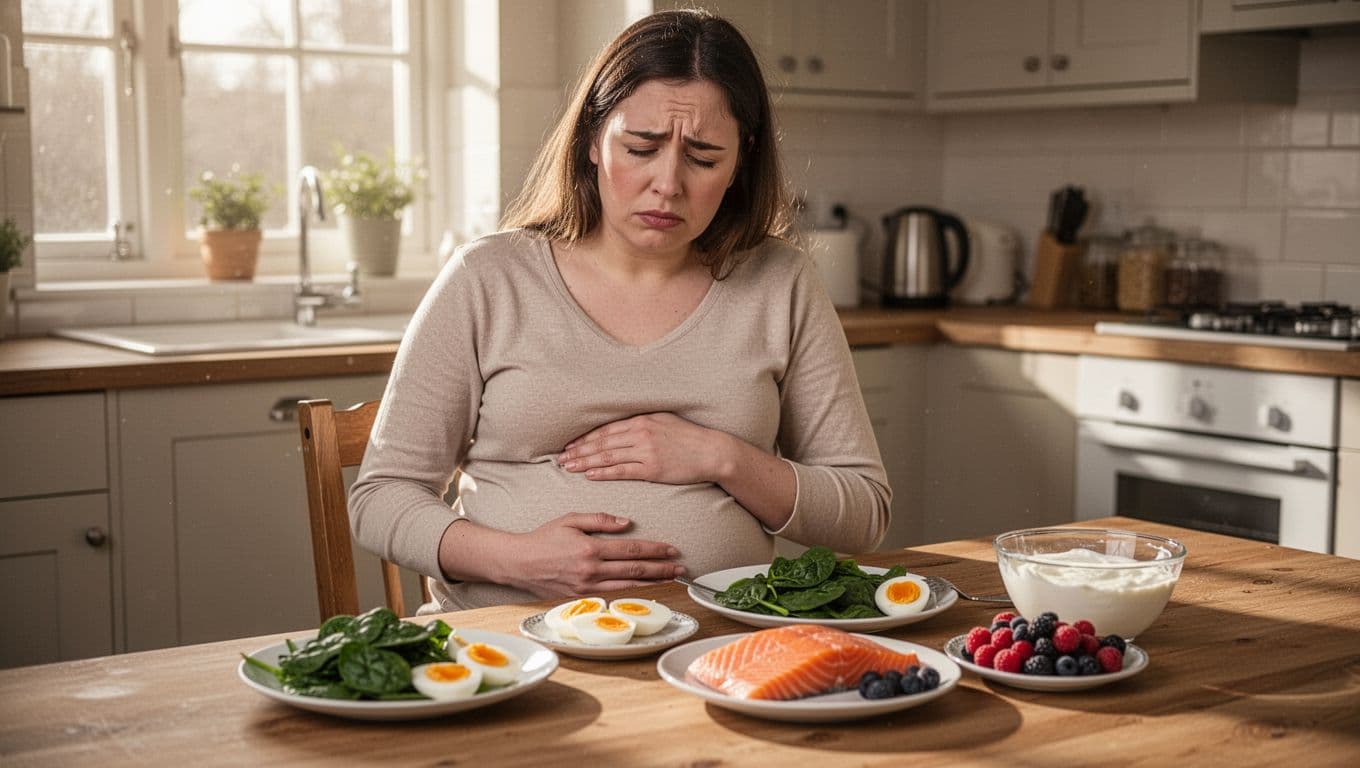
Morning sickness can make even favorite foods hard to tolerate. Some days, a smell, texture, or taste that used to feel fine suddenly feels impossible, so balanced meals turn into crackers, toast, or plain carbs.
Limited access to fresh foods can also get in the way. When groceries are expensive, transportation is limited, or your schedule is packed, it gets harder to keep produce, fish, dairy, and other nutrient-rich foods on hand. That matters because pregnancy nutrition works best when it is consistent, not occasional.
Diet patterns can create gaps too. Vegetarian and vegan diets can be healthy in pregnancy, but they need more planning for nutrients like iron, B12, choline, DHA, iodine, and vitamin D. The NIH Office of Dietary Supplements pregnancy fact sheet notes that many pregnant women still fall short on key nutrients, even with a solid diet.
Food cravings can also crowd out variety. If you can only stomach one or two foods for a while, your meals may give you energy but miss important nutrients. That is where a prenatal vitamin acts like a safety net, especially during the first trimester when nausea is strongest.
If your diet changes day to day, a prenatal vitamin can help keep nutrient intake more stable.
A prenatal is especially useful when you cannot rely on appetite. It gives your body a baseline while you work around symptoms and food limits.
Questions to ask your doctor or midwife about supplements
Your provider can help you figure out whether your prenatal vitamin is enough or whether you need anything extra. Bring the label with you, because the details matter.
Ask about these key nutrients:
- Folate type: Find out whether your prenatal uses folic acid or another form of folate, and whether the dose fits your needs.
- Iron amount: Ask if the iron level is right for you, especially if you feel tired or have a history of anemia.
- Choline: Many prenatals do not include enough choline, so it helps to ask if your diet covers the rest.
- DHA: Not every prenatal includes DHA, and some people need a separate supplement.
- Iodine: Ask whether your vitamin contains iodine, since this is often missed.
- Extra supplements: If your diet is limited or your labs show a gap, ask whether you need more vitamin D, iron, or another nutrient.
The March of Dimes guide on pregnancy nutrients is also a helpful reference for the nutrients that often need extra attention.
A simple question can go a long way: “Does my prenatal cover what my food is missing?” That keeps the focus on balance, which is exactly what most pregnancies need.
Conclusion
The best prenatal vitamin food sources come from a wide mix of whole foods, not one perfect item. Greens, beans, eggs, dairy, fish, fruits, vegetables, nuts, and fortified grains all bring different nutrients to the table, and that variety is what makes pregnancy eating work.
No single food covers folate, iron, calcium, choline, DHA, and vitamin D on its own. That is why a food-first approach feels more manageable, and why a prenatal vitamin can still help fill the gaps when nausea, food aversions, or busy days get in the way.
When you build meals around real foods, pregnancy nutrition feels less stressful and more doable. Keep the focus on balance, keep your plate varied, and let your prenatal vitamin back you up when you need it.
Save pin for later

- What Causes a Flat Head Shape in Babies? - September 20, 2026
- Baby Massage for Gas Pain: Step-by-Step Instructions - September 20, 2026
- Newborn Skin Peeling: Common Causes and Warning Signs - September 20, 2026