
Noticing that your baby communicates or responds differently can bring up a lot of worry. Asperger’s syndrome is now included under autism spectrum disorder (ASD), but one behavior, such as limited eye contact or not responding to a name, can’t confirm autism on its own.
What matters is your child’s development over time, including how they communicate and interact. You can track baby developmental milestones, then share your concerns with your pediatrician and ask whether screening or an evaluation is appropriate. Next, learn which signs to watch for and how to seek support early, even before a diagnosis.
Asperger’s Syndrome in Babies and What to Do
Asperger’s syndrome is an older diagnostic term. In the United States, clinicians now use autism spectrum disorder (ASD), which includes people who might previously have received an Asperger’s diagnosis. The change reflects updated diagnostic criteria, not a sudden change in a child’s needs or personality.

What the term means for babies
Parents often search for Asperger’s signs in babies, but clinicians don’t diagnose a baby with Asperger’s as a separate condition. If a child’s development raises concerns, a healthcare professional can assess whether the child may be autistic or need support in particular areas.
Some differences in social communication or behavior may become noticeable during the first 12 to 18 months. However, babies develop at different rates, and one behavior cannot confirm ASD. For instance, when to discuss your baby’s development with a pediatrician depends on the broader pattern, not a single moment of eye contact or attention.
The CDC says ASD can sometimes be identified at 18 months or younger. By age 2, an experienced professional can often make a reliable diagnosis. Even so, an evaluation considers a child’s development over time, and families can ask questions before those ages.
What parents can reasonably expect
Pediatricians monitor development during well-child visits and recommend autism-specific screening at 18 and 24 months. General developmental screening also takes place at 9, 18, and 30 months. These are routine checkpoints, not reasons to wait if you already have concerns.
You can raise a concern at any age, even if your baby is younger than 18 months or hasn’t reached a screening visit. Share what you notice, when it happens, and whether you’ve seen changes over time. Your pediatrician may recommend screening, an evaluation, or a referral to an early intervention program. For details on timing and diagnosis, see the CDC’s autism screening guidance.
Support can begin before a formal diagnosis. If your child has a developmental delay, ask what services are available in your state and whether an evaluation is appropriate. Early help may address specific communication or developmental needs while clinicians continue to assess your child.
You don’t need to settle on a label before asking for help. Keep notes about your concerns and bring them to your child’s next visit, or contact the pediatrician sooner if you’re worried.
Early autism signs parents may notice in babies and toddlers
Autism can affect social communication, play, behavior, and sensory responses, but signs vary from child to child. Look for a pattern over time rather than treating any single behavior as a diagnosis. The CDC’s overview of autism signs notes that signs may appear in the first year or become clearer later.

Social communication and gestures to watch
Some babies make less eye contact or smile socially less often. They may not consistently turn when someone calls their name. If your child rarely responds by around 12 months, mention it to their pediatrician, especially if you notice other communication differences.
Babbling and gestures also help babies connect with people. A child may babble less, wave goodbye infrequently, or not point to show you something interesting. They may also fail to look toward an object when you point to it, or seem less interested in sharing attention. These behaviors matter most as part of a broader pattern, not as isolated moments.
Play, routines, and sensory reactions
As toddlers grow, differences may show up in how they play and respond to change. A child may imitate actions less often, show limited pretend play, or repeat movements such as rocking or hand flapping. They might focus strongly on a particular object or part of a toy, or become upset when a familiar routine changes.
Sensory responses can vary, too. For example, some children react strongly to sounds, certain textures, or touch, while others seem less responsive to sensory input. These traits have many possible explanations and aren’t diagnostic on their own. Consider how often they happen and whether they affect your child’s communication, play, or daily routines. As children get older, autism traits may look different, including social communication differences in Level 1 autism.
Why losing a skill deserves prompt attention
Contact your child’s healthcare professional promptly if they stop using words, babbling, gestures, or social skills they once used. This applies at any age. Share what changed and when you first noticed it, rather than waiting for the next routine screening.
Losing a skill can have different causes, and it doesn’t always mean autism. Still, a clinician can review your child’s development and decide whether screening, an evaluation, or another kind of support is appropriate.
When can autism be screened for and diagnosed?
Autism screening can happen during routine toddler visits, while developmental monitoring starts much earlier. Screening helps identify children who may need a closer look, but only a diagnostic evaluation can determine whether a child meets criteria for autism spectrum disorder (ASD).
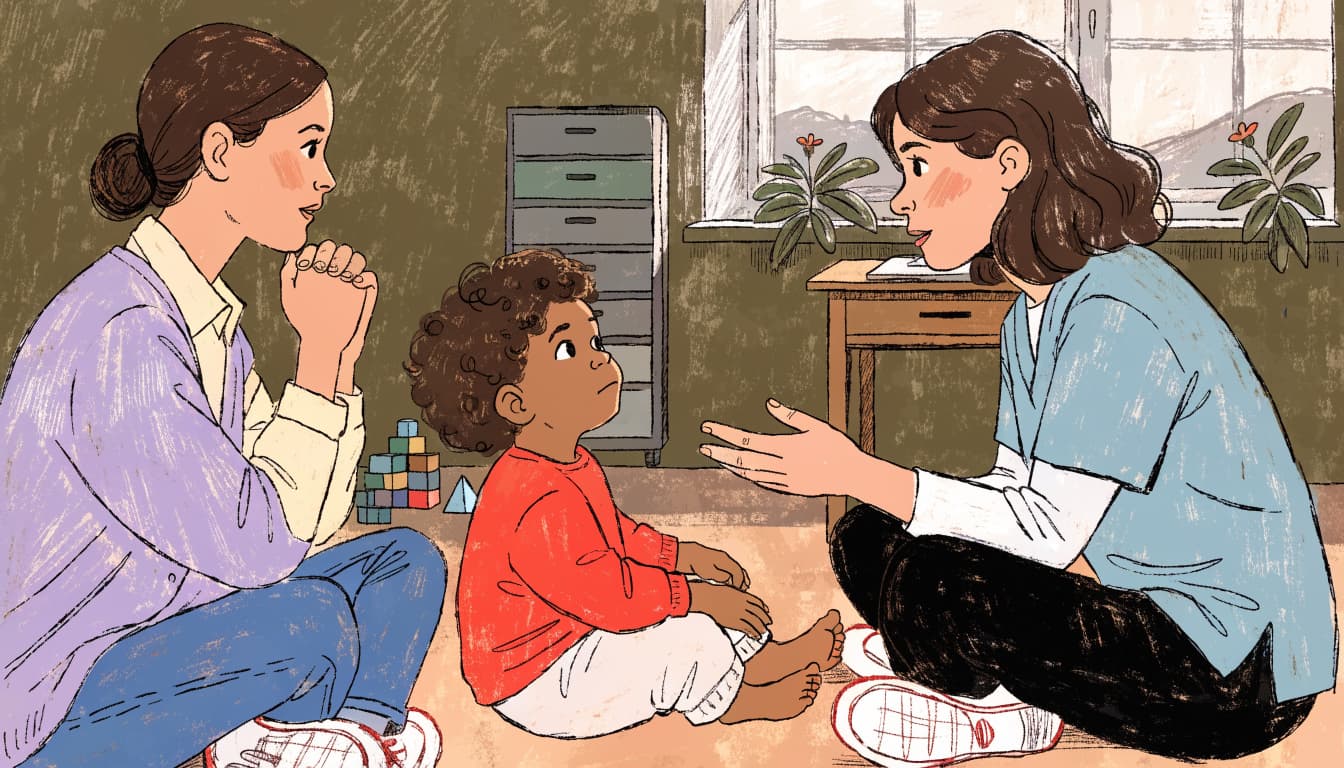
Developmental checks and autism screening ages
Developmental monitoring happens at every well-child visit. Your pediatrician may ask about communication, play, movement, and social interaction, while you can share changes or concerns you notice at home. These ongoing check-ins help track development over time.
Standardized developmental screening uses a questionnaire or other validated tool to check for possible delays. In the United States, general developmental screening is recommended at 9, 18, and 30 months. Autism-specific screening is recommended at 18 and 24 months. The CDC’s autism screening guidance outlines these routine screening ages.
You don’t have to wait for a scheduled visit if something concerns you. Ask your child’s clinician about screening or next steps at any age. A screening result is not a diagnosis: a positive result means more assessment may be needed, while a negative result doesn’t rule out concerns that appear later.
What happens during an autism evaluation
If screening or developmental monitoring raises concerns, a clinician may recommend a diagnostic evaluation. The specialist will review your child’s developmental history, ask about skills and behaviors across settings, and observe how your child communicates and interacts. They may also use standardized assessment tools and consider whether hearing differences or other developmental needs could affect what you’re seeing.
Evaluations may involve a developmental-behavioral pediatrician, child psychologist, child neurologist, or multidisciplinary team. The right path depends on your child’s needs and the services available in your area. An experienced professional can sometimes diagnose autism by age 2, although some children need follow-up as they grow and their developmental pattern becomes clearer.
If your child has delays, ask about support while you wait for an evaluation. Services may address specific developmental needs before a clinician reaches a diagnosis.
What to do if you are worried about your baby’s development
If you notice a pattern that concerns you, contact your child’s pediatrician instead of waiting for the next routine screening. Your observations can help the clinician decide whether your baby needs screening, a hearing check, an evaluation, or early support. You can also review when to discuss developmental concerns with a pediatrician if you’re unsure how to raise them.

Bring clear examples to your child’s doctor
Before the visit, write down what you notice, when it happens, and how often. Include skills your child has gained, skills they don’t seem to use, and any changes or loss of skills. For example, note whether your baby turns toward familiar voices, responds to their name, uses gestures, or shares attention during play.
Short videos can help if a behavior is hard to describe or doesn’t happen during the appointment. Ask the clinician whether your child should have developmental screening and autism-specific screening. If your child doesn’t seem to respond to sounds or their name, request a hearing check, too. Hearing differences can affect responses to voices and sounds, so checking hearing may be part of understanding what you’re seeing.
Ask for an evaluation and early intervention referral
A screening result doesn’t diagnose autism. However, a positive screen or continuing concern can lead to a diagnostic evaluation with a qualified clinician. Ask who will arrange it, what records or referrals are needed, and how long you should expect to wait.
If your child is under 3 in the United States, contact your state’s Part C Early Intervention program, sometimes called “Birth to Three.” You can find your state’s contact information through the CDC’s early intervention guidance for concerned families. State processes and eligibility rules vary, so ask the program how to request an evaluation.
Most importantly, don’t wait for an autism diagnosis to seek help for an identified developmental delay. Early intervention can assess your child’s needs and, when eligible, provide services before an autism evaluation is complete. A delay in communication or another area deserves attention on its own.
Keep following up if your concerns are not addressed
Before ending the appointment, ask what happens next and when you should expect an update. If a referral hasn’t moved forward by then, contact the office or program to check its status. Keep routine well-child visits, since development changes over time and new concerns may become clearer.
If your concern remains after a screening that didn’t raise an alert, bring it up again. Screening is one checkpoint, not a final answer, and your observations at home matter. You can also seek a second opinion or ask for another evaluation if concerns persist.
How to support your baby while you wait for answers
Waiting for an evaluation can feel uncertain, but you can support your baby’s communication and comfort now. Everyday interaction is enough; you don’t need to turn play into a lesson or treat it as a way to prevent autism. Follow your child’s cues, and ask a qualified professional for guidance that fits their needs.

Build connection through everyday play and routines
Talk or sing during ordinary moments, such as getting dressed, feeding, or changing a diaper. Read a short book, take turns making sounds, or copy your baby’s babbles and gestures. Then pause and give your child time to respond in their own way. A look, movement, sound, or smile can all be part of an exchange.
Follow what holds your baby’s interest instead of directing every moment. If they turn away, seem tired, or get fussy, slow down or take a break. For more age-appropriate ideas, explore these simple ways to play with your newborn.
Predictable routines may help some babies feel more settled. You might use the same gentle steps before naps or bedtime, while staying flexible when your child needs something different. These interactions support connection and communication, but they don’t diagnose or prevent autism.
Choose qualified, child-centered support
If a professional recommends services, ask about their training, the goals they suggest, and how they’ll include you as a caregiver. Useful support should reflect your child’s strengths and needs, and help with practical areas such as communication, daily activities, or interacting with others.
You can also ask whether your child may qualify for an early intervention evaluation. In the United States, families can request an evaluation for children under 3 without waiting for an autism diagnosis. The CDC’s early intervention guidance explains how to contact your state’s program.
Be cautious of anyone who promises a cure, guarantees a particular outcome, or urges you to stop needed services. Instead, discuss concerns with your child’s pediatrician and seek advice from licensed providers who respect your child’s cues and your family’s priorities.
Conclusion
Possible early signs of autism are a reason to ask questions, not to blame yourself or label your baby. Share specific examples with your pediatrician and ask whether screening or a developmental evaluation makes sense. If your child has a delay, contact your state’s Early Intervention program to ask about an evaluation, even while you wait for other appointments.
Your observations matter, and support can address your child’s needs without a final diagnosis. For another perspective on early signs of developmental concerns in babies, review what to notice and discuss with your clinician.

- Asperger’s Syndrome in Babies: Early Signs and Next Steps - October 7, 2026
- 12 Beautiful Baby Names That Mean Forest, Plus Woodland Picks - September 27, 2026
- 15 Fantastic Baby Nicknames for Boys, From Sweet to Playful - September 27, 2026