Your baby is tugging at a wet diaper, watching you use the bathroom, or sitting on the potty for a moment, and you’re wondering, “Are we ready?” Baby potty training is a gradual developmental skill, not a race or a test of your parenting. Most children begin showing readiness between 18 and 24 months, although some need more time.
A calm approach helps your child build confidence without turning bathroom trips into a daily battle. This step-by-step guide will walk you through readiness signs, potty setup, simple routines, accidents, constipation, and regression, so you can move forward at a pace that suits your child. If your child has ongoing pain, severe constipation, or unusual changes in urination or bowel habits, check with your pediatrician.
Start by looking for the small signs that show your child may be ready, then build the routine one gentle step at a time.
Watch a potty-training video guide
The Step-by-Step Guide for Baby Potty Training Every Parent Should Know
Baby potty training works best when you follow your child’s development instead of a strict birthday deadline. Toilet learning often begins between 18 months and 2 1/2 years, although some children show readiness later. Readiness matters more than age, and pressure can turn a simple skill into a daily struggle. The American Academy of Family Physicians’ toilet-training guidance also places emphasis on developmental readiness rather than one fixed starting age.
Understand what your child needs to learn
Typical toddler potty training involves several connected skills. Your child needs to notice the urge to pee or poop, understand what that feeling means, signal the need, reach the potty, sit safely, and manage basic clothing and hygiene.
Infant potty communication is different. Some parents watch for a young baby’s body cues and offer a potty before elimination, often called elimination communication. This approach responds to patterns and signals, but it doesn’t require a baby to control their bladder or bowel movements. You don’t need to begin formal toilet training during infancy.
Follow a gentle sequence
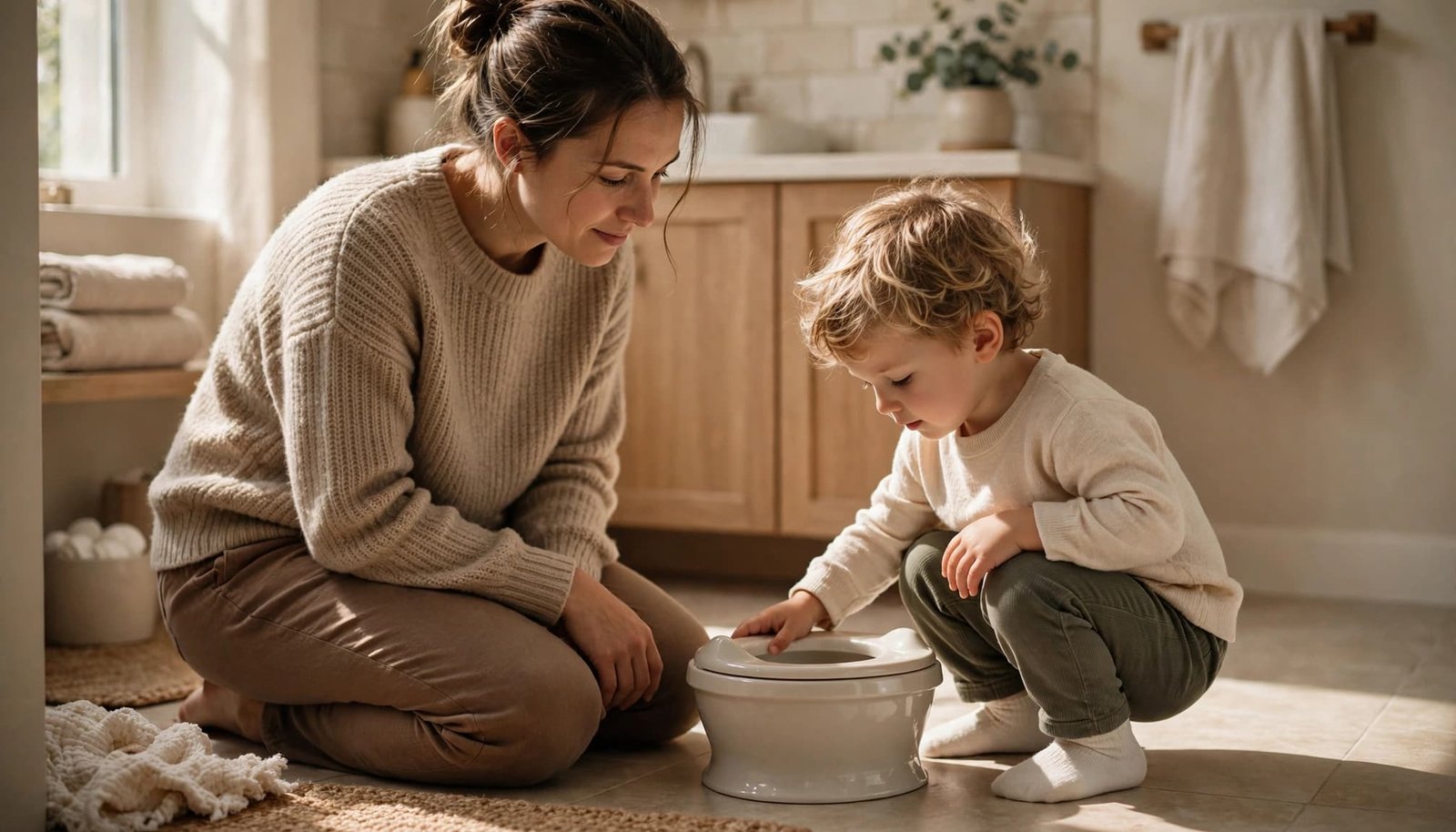
Use this order as your starting map, then adjust it to fit your child’s pace:
- Watch for readiness, such as staying dry for longer stretches, hiding to poop, showing interest in the bathroom, or pulling at a wet diaper.
- Prepare the bathroom with a stable potty, a step stool if needed, easy-to-remove clothing, and soap within reach.
- Introduce the potty without demanding that your child sit. Let your child look at it, touch it, and learn what it is for.
- Build a simple routine around waking, meals, baths, and bedtime.
- Teach clothing, wiping, flushing, and handwashing in small steps.
- Respond calmly to accidents and praise cooperation, body awareness, and attempts.
- If progress stalls, pause, check for constipation or stress, and try again later.
The goal is cooperation and body awareness, not perfect dryness. A child who learns to recognize and communicate bodily signals is making real progress, even when accidents continue.
How to Tell When Your Child Is Ready for Potty Training
Readiness depends on several small skills coming together, not one perfect sign or a certain birthday. Your child may be ready when they notice body signals, communicate a need, move to the potty, and show some willingness to take part.
Readiness Signs That Matter Most
Look for several of these behaviors over a few days:
- Your child stays dry for about two hours or wakes from a nap with a dry diaper.
- Bowel movements happen at fairly predictable times.
- Your child pauses, squats, hides, or moves behind furniture before peeing or pooping.
- They tug at a wet or dirty diaper, show discomfort, or ask to be changed.
- They tell you before or after going by saying “pee,” “poop,” “wet,” or “dry.”
- They point toward the bathroom or potty, imitate your bathroom routine, or want to flush.
- They can follow simple directions, walk to the potty, and pull pants up and down with some help.
Communication doesn’t need to sound like a sentence. Pointing, touching a diaper, making a certain sound, stopping play, or bringing you to the bathroom all count. Curiosity alone is different from readiness. A child may enjoy sitting on the potty, watching you flush, or wearing underwear without yet recognizing the urge to go or wanting to cooperate.
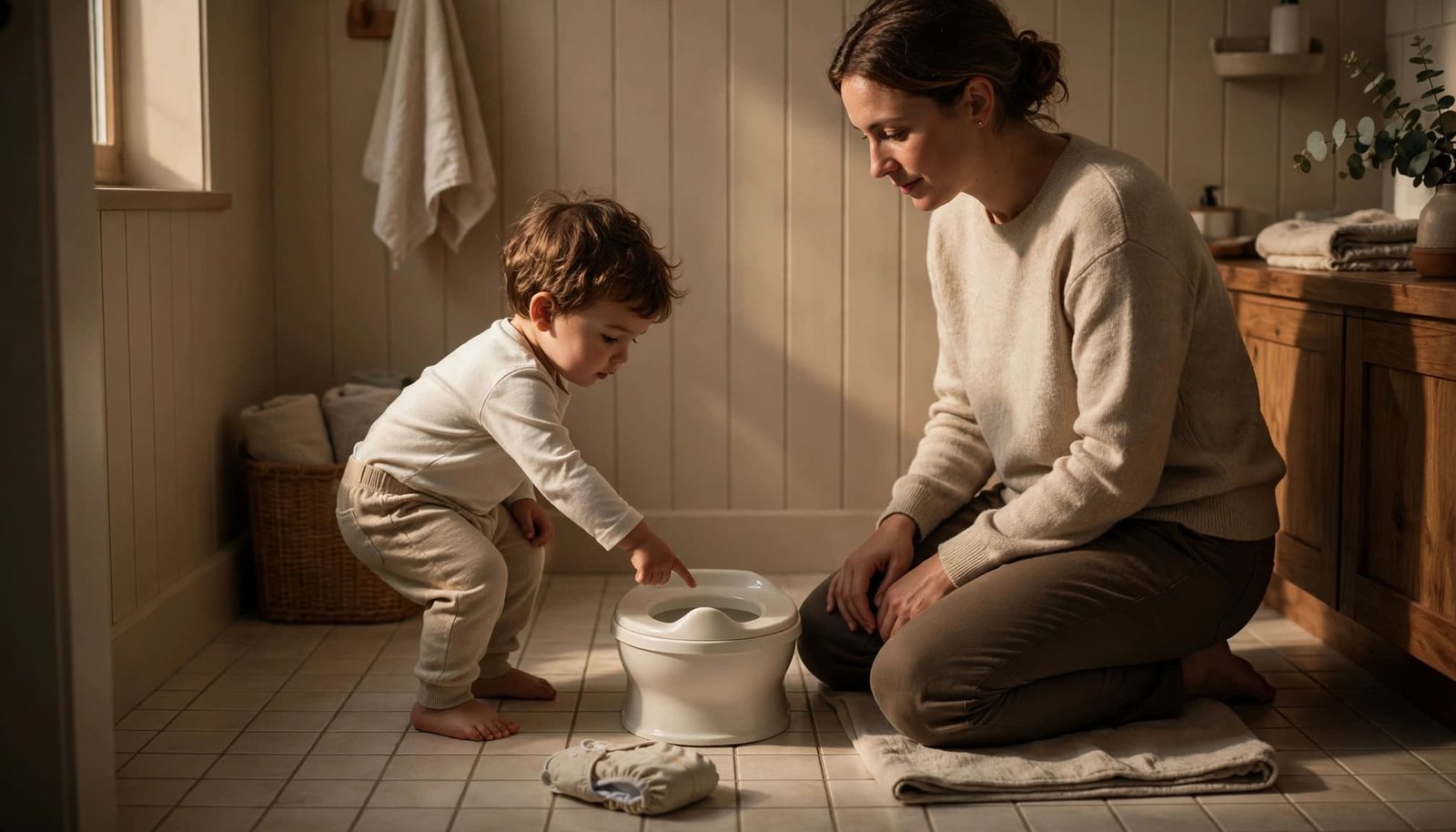
Try a simple readiness check. For three or four days, note dry periods, bowel movement patterns, body signals, communication, and your child’s response when you mention the potty. Several signs together suggest a good time to begin. Your child doesn’t need every skill, and boys can start by sitting for both urination and bowel movements.
The American Academy of Pediatrics potty-training guidance also emphasizes the physical and cognitive skills involved in toilet learning.
When It Is Better to Wait a Little Longer
Pause if your child frequently refuses, cries with fear, or resists every bathroom attempt. Painful stools, ongoing constipation, or no awareness of wetness also suggest that more time may help. Contact your pediatrician about persistent pain, hard stools, blood, or major changes in urination or bowel habits.
Timing matters, too. Illness, travel, a move, a new sibling, or a major childcare change can make toilet learning feel overwhelming. During a pause, keep building familiarity through calm diaper changes, simple words such as “wet” and “dry,” and brief bathroom observation. Waiting is a caring response, not a failure. When your child feels settled and curious again, offer the potty without pressure.
Prepare the Potty and Bathroom for Easy, Safe Practice
A welcoming bathroom can make potty training feel familiar instead of intimidating. Before expecting results, give your child time to explore the setup, practice sitting, and learn what each item is for.
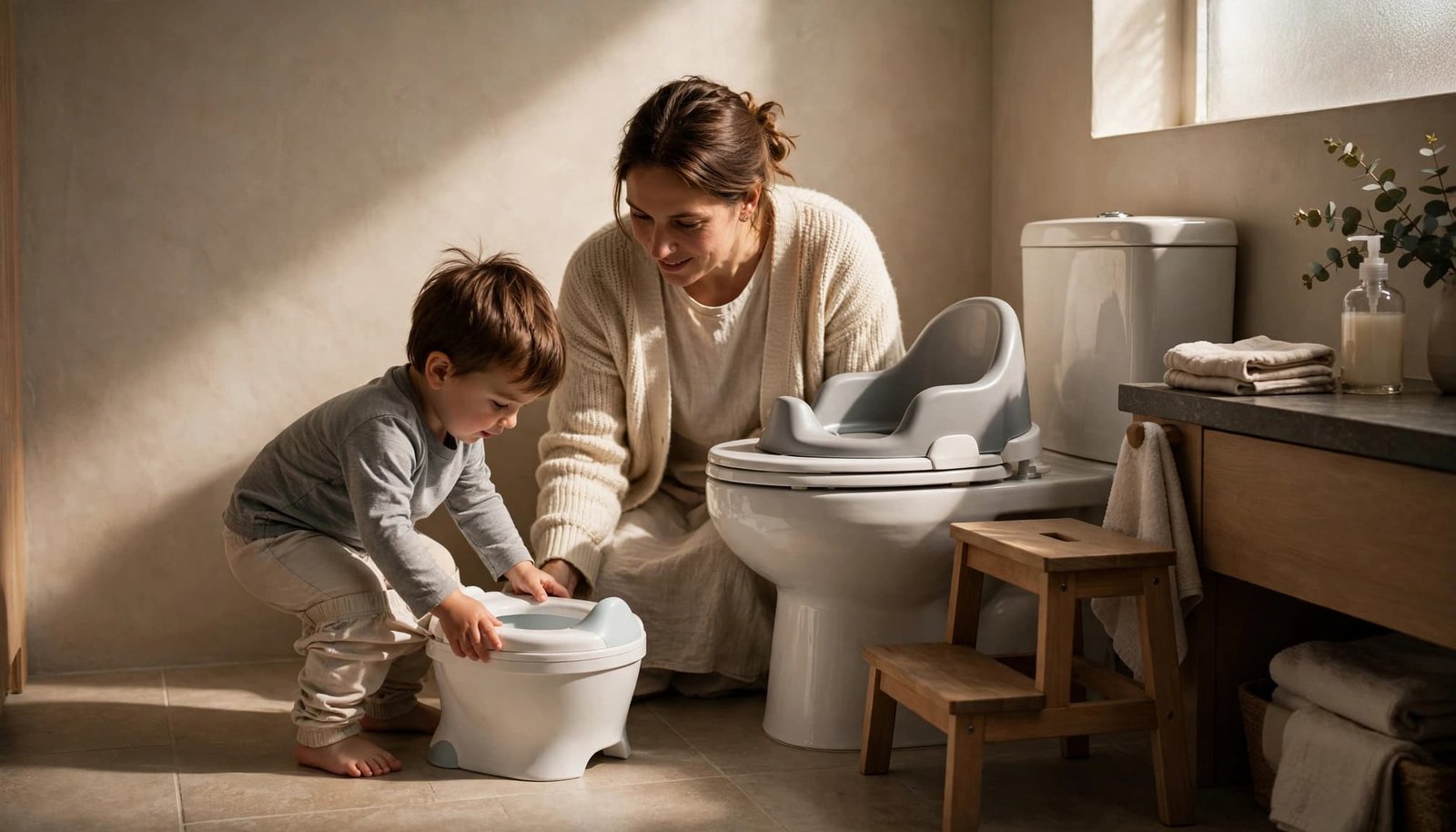
Choose the Right Potty Setup for Your Home
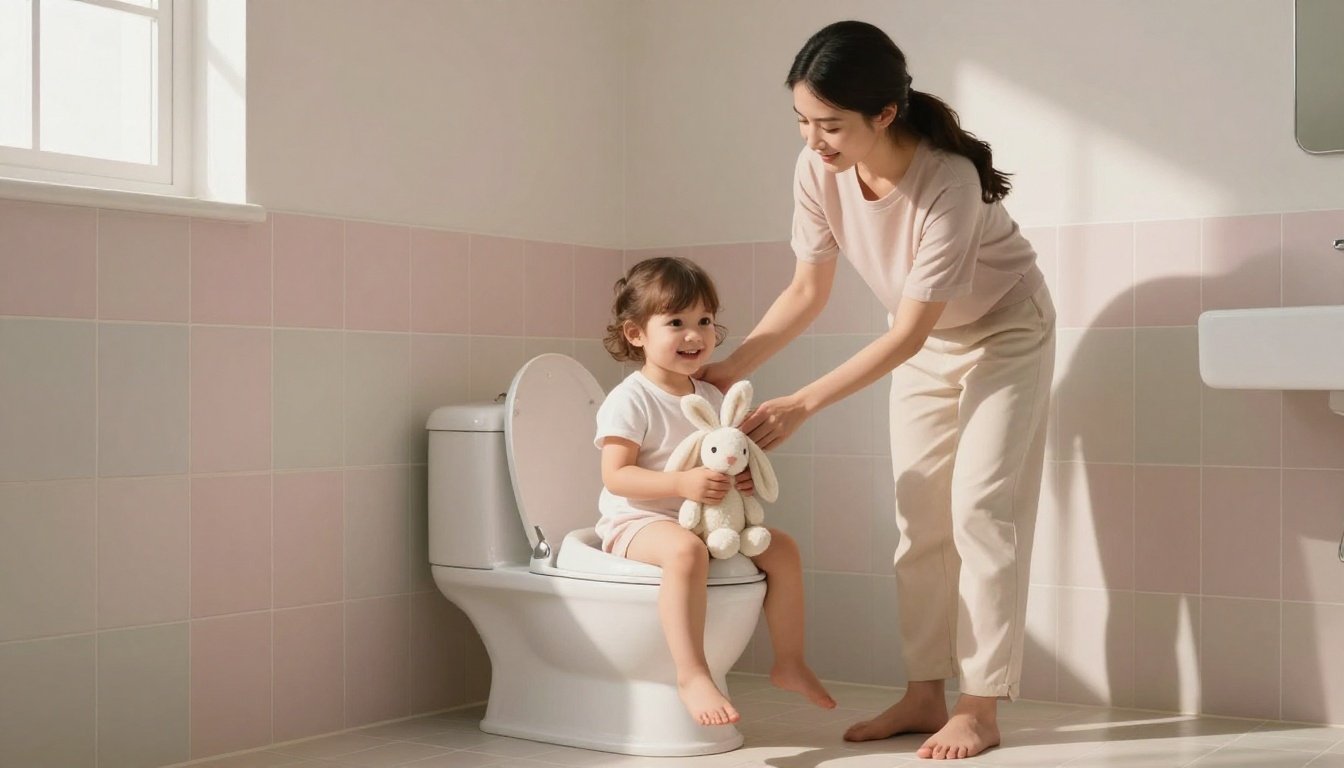
A standalone potty chair sits on the floor and gives your child a small, stable place to practice. Your child can place both feet firmly on the floor, which may feel safer than sitting high above the ground. It is also easier to reach quickly and works well for bowel movements because your child can relax and push with proper foot support. The drawbacks are cleaning the removable bowl and helping your child transition to the regular toilet later.
A child-sized toilet seat insert fits over the household toilet. It saves space and helps your child become familiar with the toilet they will eventually use. However, the seat must fit securely, and your child needs a sturdy step stool. Dangling feet can make a bowel movement uncomfortable and may leave your child feeling unsteady. Seattle Children’s potty-training guidance also recommends foot support when children use a toilet insert.
Choose one main setup at first so your child knows exactly where to go. You can still use a travel potty during outings or offer the insert in another bathroom when needed. Place the potty in a familiar area, then let your child sit on it fully clothed. Read a short book nearby, but keep practice brief. Never leave your child alone on a potty or toilet.
Keep easy-to-remove pants, toilet paper or wipes, and hand soap within reach. Clean the potty promptly after use, and store cleaning products where your child cannot access them.
Make Bathroom Language Simple and Consistent
Use the same plain words each time, such as “pee,” “poop,” “potty,” “toilet,” “wet,” and “dry.” During your own routine, you might say, “I need to pee. Then I will wipe, flush, and wash my hands.” This narration teaches the sequence without asking your child to perform.
Keep your voice neutral and respectful. Avoid teasing, disgust, punishment, or shame, especially after accidents. HealthyChildren’s potty-training guidance supports teaching bathroom skills without forcing a child to sit. Handwashing belongs to every routine, but the potty should remain a practical learning space rather than a reward zone or a place for long sitting sessions.
Follow This Gentle Daily Potty Training Routine
A gentle potty training routine gives your child repeated chances to practice without turning the day into a series of reminders. Offer the potty during natural transitions, then let your child decide whether to sit. Short, predictable opportunities work better than pressure.
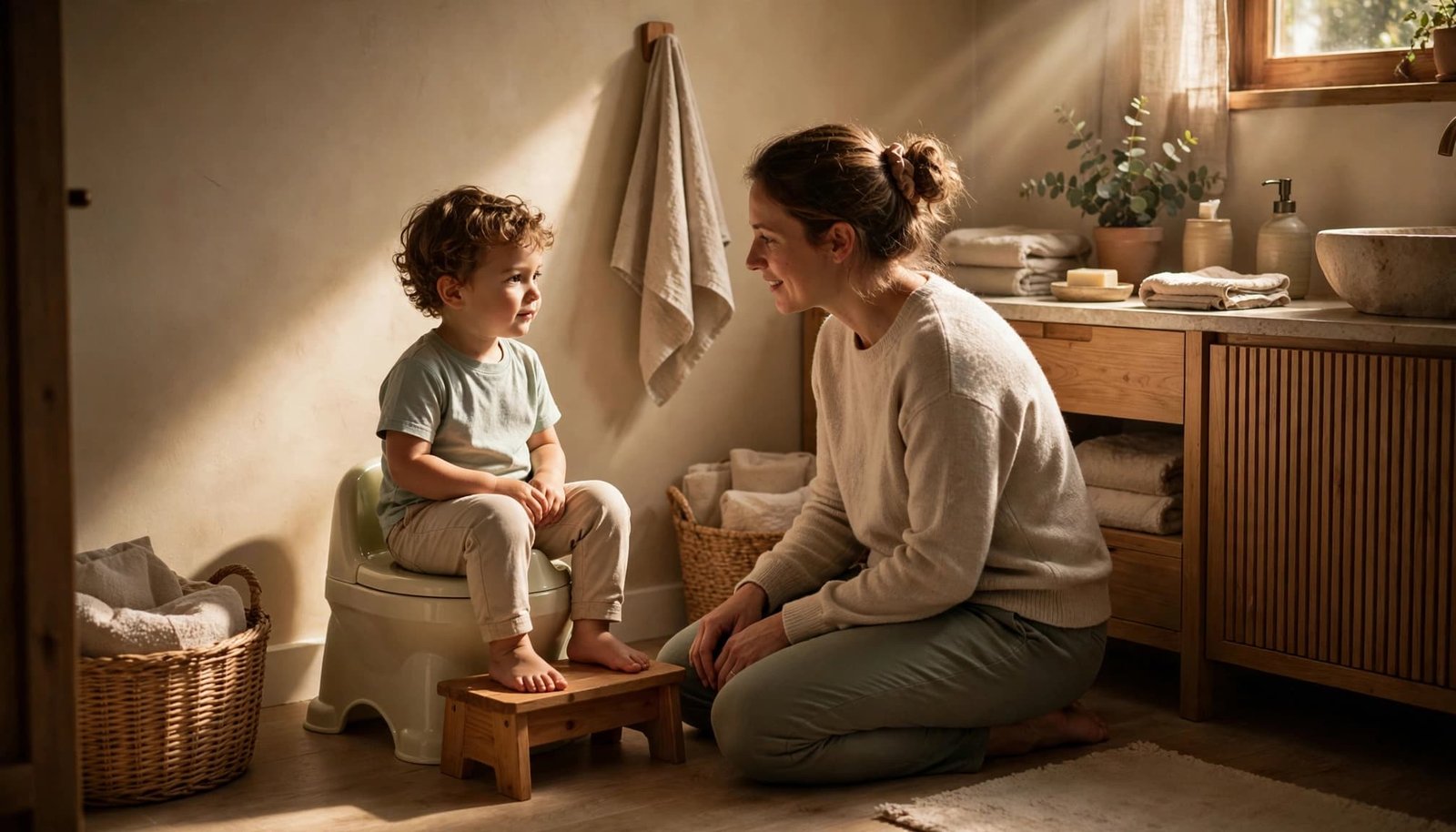
Build Predictable Potty Opportunities Into the Day
Invite your child to sit after waking, after meals, before a nap, before leaving home, and before bed. You might also offer the potty when your child pauses during play or shows a familiar pee or poop signal. Children may sit for both pee and poop at first, so keep the language simple.
A flexible day could look like this:
- Offer the potty after your child wakes, without expecting results.
- Try again after breakfast or another meal, when bowel movements may be more likely.
- Offer a brief sit before a nap and before leaving the house.
- Provide another chance after returning home, especially if your child stayed dry.
- End the day with a calm potty visit before pajamas and bedtime.
Every child follows a different pattern. Repeated reminders every few minutes can make the potty feel like a demand, so leave space between opportunities. The American Academy of Family Physicians’ toilet-training guidance supports relaxed, developmentally appropriate toilet learning rather than pressure.
Teach Independence One Skill at a Time
Break the routine into small steps. First, help your child notice the urge, stop playing, and walk to the potty. Next, practice lowering elastic-waist pants, sitting with feet supported, trying for a short time, and pulling clothing back up.
Then teach wiping with your help, flushing when appropriate, and washing hands. Children often need adult assistance with wiping after bowel movements for quite a while, so offer just enough help and step back as their skills grow. Easy clothing makes practice easier than buttons, belts, or overalls.
Respond to Successes and Accidents Calmly
Praise effort and body awareness, not only a dry result. Say, “You listened to your body,” or “You tried sitting,” when your child cooperates. Warm, specific praise builds confidence without making treats the center of training.
When timing is missed, use neutral words: “Your clothes are wet. Let’s get clean.” Help your child change, clean the potty or floor, and continue the day without punishment, bribes, ridicule, or embarrassment. Accidents are part of learning, not a power struggle.
Daytime dryness usually comes before nighttime dryness. Naps and overnight training may take much longer because nighttime bladder control develops separately, so continue using protection at night until your child is ready.
Handle Constipation, Resistance, and Potty Training Regression
Potty training rarely moves in a straight line. A child may cooperate for several days, then refuse the potty, have accidents, or ask for a diaper again. Before adding reminders or pressure, check for pain, constipation, stress, and changes in your child’s routine.
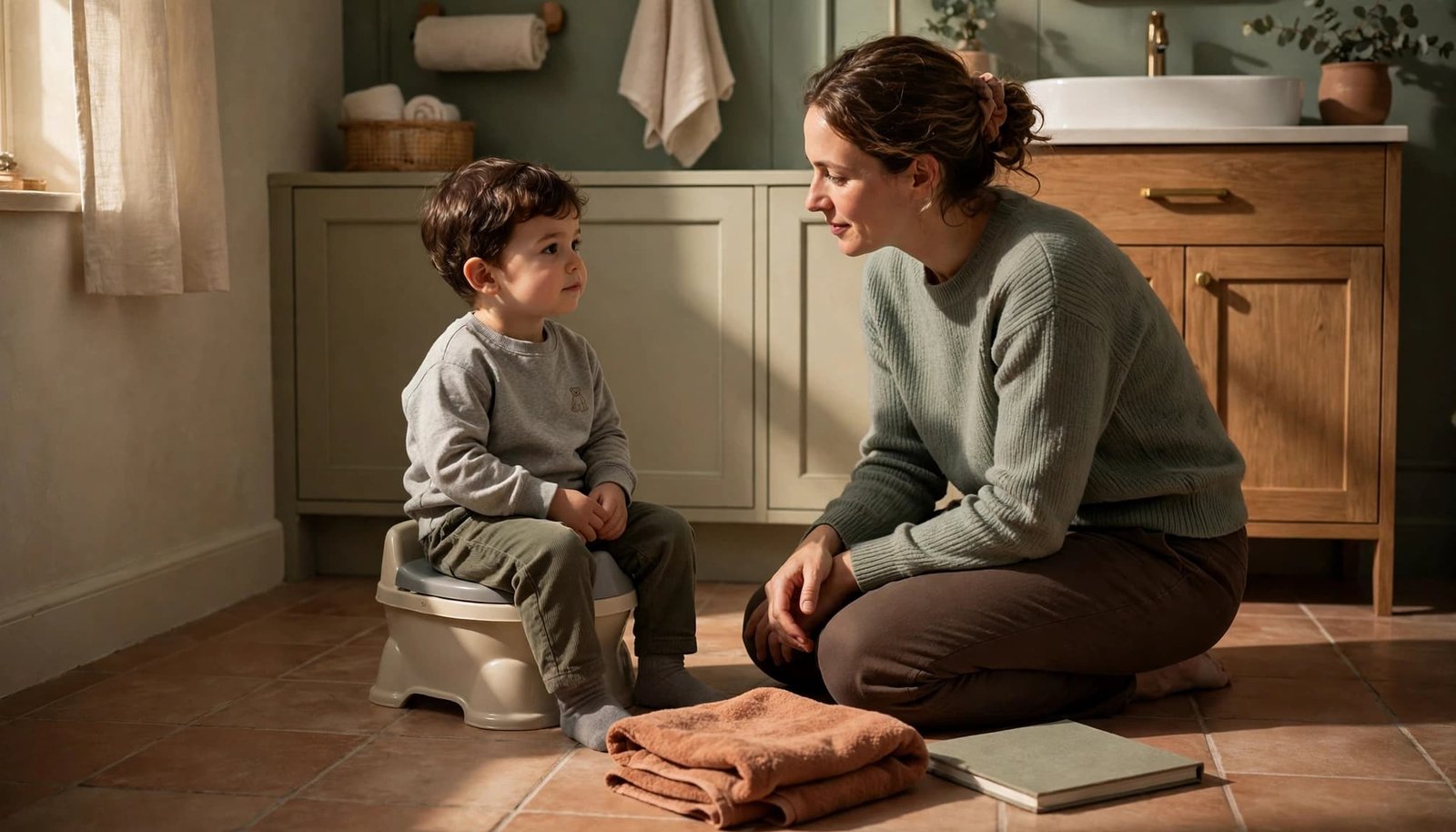
What to Do When Your Child Refuses the Potty
Refusal is communication, not misbehavior. Your child may feel worried, tired, rushed, uncomfortable, or simply unready for the next step. Holding your child down, forcing long sits, or making play depend on producing pee or poop can turn the potty into a source of fear.
When resistance continues, step back for a week or two. Keep the potty visible and available, but reduce reminders and return to low-pressure practice. You can read potty books, use simple bathroom words, and let your child watch your routine without asking them to copy it.
Limited choices give your child some control without handing over the whole routine. Ask whether they’d like to use the small potty or the toilet seat, or whether they’d like to try before or after a bath. If your child says no, accept the answer and offer another chance later.
Know the Difference Between a Setback and a Health Concern
Hard, dry, pebble-like stools, painful bowel movements, straining, stool withholding, or going less often can point to constipation. The NHS describes healthy stools as soft and occurring at least every other day, while its guidance on constipation in children lists hard stools, pain, and fewer bowel movements as warning signs.
Address constipation before pushing your child to stop diapers. A painful bowel movement can make a child hold stool, which makes the next bowel movement harder and may create more fear. The American Academy of Pediatrics also recommends checking for physical causes, including constipation, when potty-training regression appears. See its advice on toilet-training regression for additional guidance.
Accidents may follow illness, travel, a new sibling, preschool changes, family stress, or starting before your child was ready. Contact your pediatrician about ongoing pain, blood in the stool, repeated urinary pain, fever, unusual thirst, strong urgency, persistent constipation, extreme fear, or accidents that continue after a period of reliable control. When symptoms continue, medical advice is more helpful than punishment or another intense training attempt.
Keep Potty Training Positive at Home, Daycare, and On the Go
Potty training feels easier when every caregiver follows the same general plan. The routines don’t need to look identical, but your child should hear the same words, receive similar encouragement, and get a calm response after accidents.
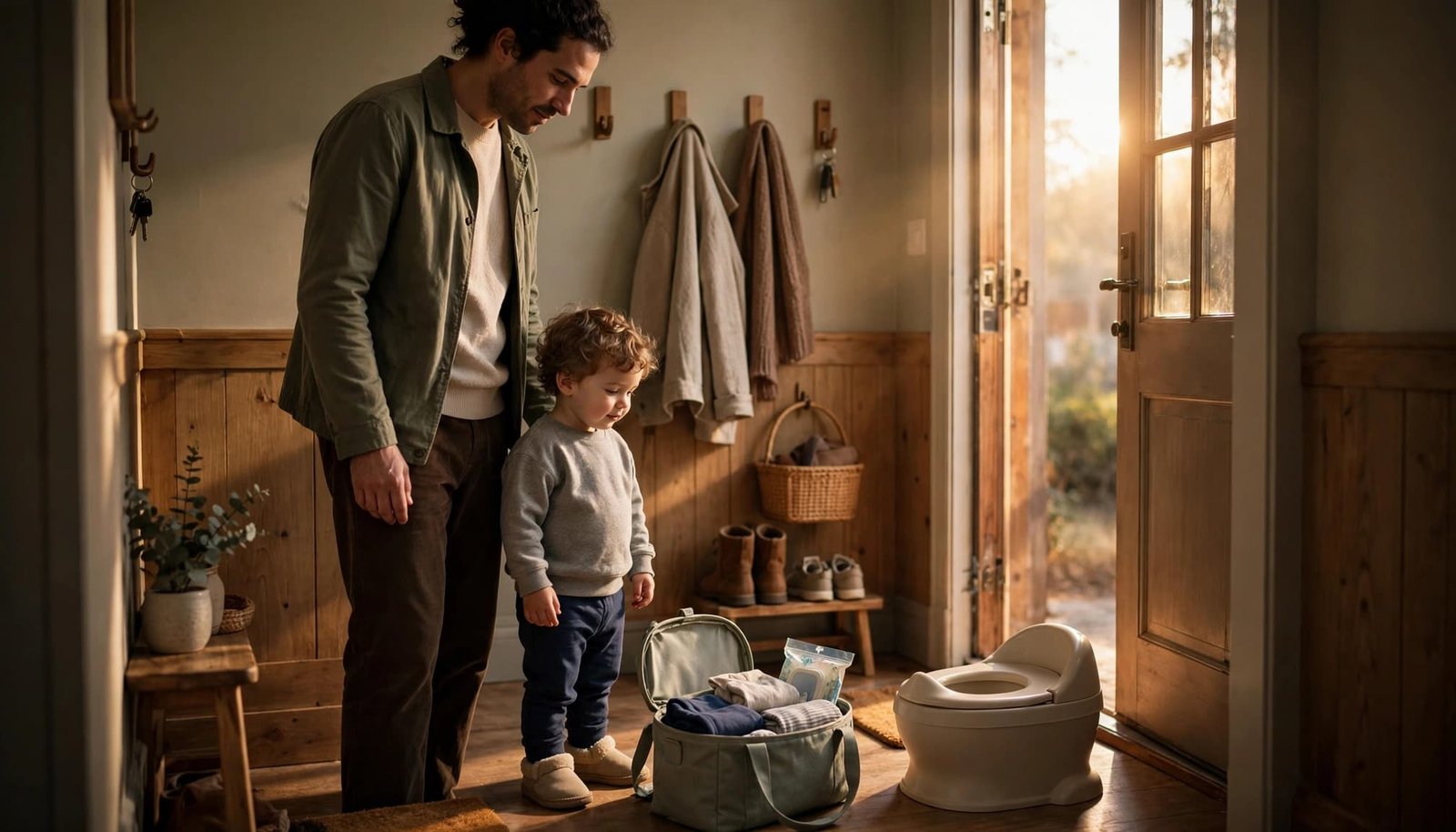
Create One Consistent Plan for Every Caregiver
Write a short plan for parents, grandparents, babysitters, and daycare staff. Include:
- Your child’s pee and poop signals, such as hiding, pausing play, or touching a diaper.
- The words your family uses, such as “potty,” “pee,” “poop,” “wet,” and “dry.”
- Routine times for offering the potty, including after waking, after meals, and before leaving.
- The help your child needs with clothing, sitting, wiping, flushing, and handwashing.
- Your preferred praise, such as “You listened to your body,” instead of praise based only on staying dry.
- A calm accident response, such as, “Your clothes are wet. Let’s get cleaned up.”
Daycare doesn’t need to copy your home schedule minute by minute. However, sharing your child’s current stage prevents mixed expectations. Ask caregivers to avoid comparisons with siblings, classmates, or other children. A child may be ready for underwear at home but still need training pants during naps or busy childcare hours.
Prepare for Naps, Nights, Travel, and Childcare
Daytime toilet learning, nap dryness, and nighttime dryness are separate milestones. Use a waterproof mattress cover, keep spare sheets nearby, and let your child wear a diaper or training pants for naps and overnight if needed. Nighttime dryness often develops later, so a diaper at night doesn’t mean daytime training failed. Mayo Clinic’s potty-training guidance also recommends protection during sleep and long trips.
Before leaving, offer one relaxed potty visit. Avoid asking every few minutes during the trip, which can create tension. Pack extra clothes, wipes, a plastic bag for wet items, and a portable seat if public toilets feel unfamiliar. Plan bathroom stops on long rides, supervise closely in public restrooms, and wash hands afterward. Diapers or training pants remain useful when bathrooms are far away, including long car rides, naps, and overnight travel.
Family members can help by praising effort and following your plan. If visitors pressure or tease your child, step in kindly and protect the calm routine.
Progress may look like your child:
- Notices an urge.
- Reaches the potty with help.
- Has fewer accidents.
- Manages clothing more often.
- Stays comfortable and willing to keep practicing.
Conclusion
Potty training is a gradual lesson in body awareness, communication, and independence. Wait for signs of readiness, create a safe and comfortable setup, and offer a gentle routine that gives your child time to learn without pressure. Praise effort and cooperation, expect accidents, and keep bowel movements soft so using the potty doesn’t become painful.
Children develop at different speeds, so daytime progress may come before nap or nighttime dryness. If stress, fear, constipation, or resistance grows, pause and return to simple, low-pressure practice. A calm relationship matters more than finishing by a certain age, and your child needs reassurance more than constant reminders.
Keep following your child’s signals and celebrate small steps. Each calm attempt helps your child understand their body and build confidence, and those small steps add up with patience.

- Dry Cough in Kids: 5 Causes and Safe Solutions - September 23, 2026
- How to Help a Child Deal With Anxiety at Home - September 12, 2026
- How to Prepare Your Child for the First Day of School - September 12, 2026