

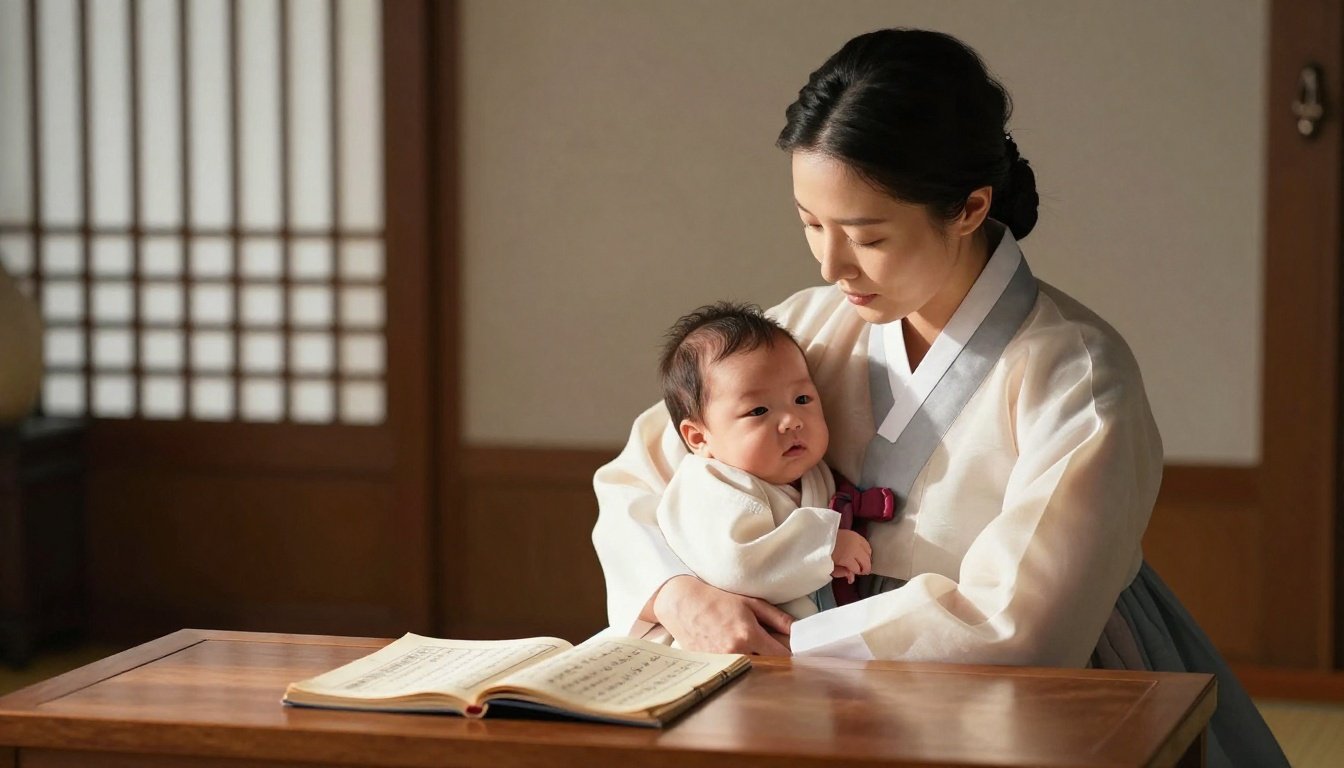
Choosing your baby’s name can feel like holding a tiny future in your hands, hoping each syllable carries beauty and meaning. Korean names often pair a family name with a two-syllable given name, such as Kim Min-jun, while the exact meaning depends on the hanja characters chosen, so each interpretation is a possibility rather than a fixed definition.
This guide introduces more than 10 Korean boy names, including Hangul spellings, common English spellings, and possible meanings for names such as Min-jun (민준), Seo-jun (서준), Ji-hoon (지훈), Woo-jin (우진), and Gun-woo (건우). You’ll also find practical tips for checking pronunciation, romanization, hanja, and how the full name sounds aloud, along with ways to choose a meaningful baby name. Start with these beautiful Korean names and the stories their possible meanings can tell.
What Makes Korean Baby Names Unique and Meaningful?
Korean baby names often follow a clear pattern: the family name comes first, followed by a two-syllable given name. A full name such as Kim Min-jun places the family name, Kim, before the given name, Min-jun. Korean names usually don’t include a Western-style middle name.
Hangul is the Korean writing system used to show how a name sounds. Hanja are Chinese characters traditionally chosen to give each syllable a specific meaning. Because several hanja can share the same pronunciation, one Hangul spelling may have multiple possible interpretations. Korean naming customs explain why parents should confirm the exact hanja before treating a name meaning as fixed.

Some families also follow dollimja, or generational naming. Siblings or cousins may share one syllable in their given names, connecting them to the same generation or family line. Other parents choose native Korean names, whose meanings come from Korean words rather than hanja. With that background in mind, these popular choices offer a helpful starting point.
Min-jun, 민준, for a clever and talented son
Min-jun is a familiar modern choice with a smooth, friendly sound. Depending on the hanja, the name may suggest cleverness, quick thinking, gentleness, talent, or handsomeness. That range gives parents room to choose an interpretation that fits the qualities they hope their son will develop.
The Hangul spelling 민준 shows the pronunciation, but it doesn’t identify the exact meaning by itself. Parents should confirm the selected hanja before recording the name officially. Minjoon sometimes appears as an informal English variation, although Min-jun is the more common romanized form.
Seo-jun, 서준, with an auspicious and gifted feel
Seo-jun sounds polished, current, and easy to say in both Korean and English. Its possible hanja meanings can connect with comfort, auspiciousness, talent, or handsomeness. The final interpretation depends on the characters chosen for 서 and 준, so the same spoken name may carry different wishes.
In English, Seo-joon is a common spelling. Seo-jun and Seo-joon can refer to the same Korean name because romanization often varies when Korean sounds are written with the Latin alphabet. The spelling may change, but the Korean pronunciation and chosen hanja remain the key details.
Do-yun, 도윤, for a thoughtful path in life
Do-yun has a gentle, reflective quality. The first syllable may connect with a path, way, or guiding principle, while the second can carry meanings related to permission, kindness, or allowance. Together, the name can suggest a child who follows a wise and steady path.
As with other Korean names, 도윤 doesn’t have one automatic definition without the hanja. Parents who like meaningful names may choose Do-yun for its sense of direction and grace. Do-yoon is a common English spelling and may represent the same name.
Ha-jun, 하준, a bright name with modern charm
Ha-jun feels fresh, warm, and easy to pronounce. Possible hanja meanings may relate to summer, greatness, approval, or permission, creating an upbeat image for a baby’s name. Still, those meanings come from the selected characters, not from the Hangul spelling alone.
Ha-joon is a familiar alternate spelling in English. Both versions can describe the same Korean name. With its short sound and cheerful tone, Ha-jun suits parents who want a contemporary choice with room for a personal meaning.
Woo-jin, 우진, for protection and truth
Woo-jin can combine hanja linked with the universe, help, or protection with characters connected to truth, sincerity, or genuineness. That pairing creates an appealing image of someone grounded, dependable, and honest.
U-jin is another romanization readers may encounter. However, the English spelling cannot identify the exact hanja. Families should check the Korean characters to understand whether their chosen meaning emphasizes protection, support, truth, or another quality.
Seong-ho, 성호, with a successful and shining spirit
Seong-ho has a traditional feel, yet it can still suit a modern baby. Its possible meanings may relate to success, flourishing, brightness, or daybreak. Those ideas create a picture of a child who grows with confidence and brings light to the people around him.
The hanja determines the final meaning, so parents don’t need to treat every published definition as universal. Choosing the characters first makes the name’s interpretation clearer and connects its traditional sound with a personal family wish.
More Korean Boy Names With Strong, Gentle, and Hopeful Meanings
These additional Korean boy names offer a mix of calm strength, wisdom, talent, and protection. Since the meaning depends on the chosen hanja, treat each definition as a meaningful direction rather than a fixed translation. For more inspiration, browse these meaningful baby name ideas before comparing your favorite choices with your family name.

Ji-ho, 지호, for wisdom and a generous heart
Ji-ho is short, memorable, and easy to pronounce in many languages. Depending on the hanja, 지호 may suggest wisdom, knowledge, greatness, protection, or a broad and generous spirit.
That flexibility lets parents choose characters that match their hopes for their child. Ji-ho may also be used more broadly in some Korean settings, so consider how the name sounds and feels within your own community before deciding.
Hyun-woo, 현우, a thoughtful name with quiet strength
Hyun-woo has a calm, steady sound. Its hanja may connect with virtue, wisdom, brightness, protection, or help, giving parents several thoughtful ways to shape the name’s meaning.
The name suits families who want something strong without a flashy edge. Hyeon-u follows a more formal Revised Romanization style, while Hyun-woo is familiar to many English-speaking families. The National Institute of Korean Language’s romanization guidance explains why both styles may appear.
Jun-ho, 준호, for talent and a warm presence
Jun-ho is a classic two-syllable name with a friendly, dignified sound. Depending on the selected hanja, 준호 may suggest talent, excellence, handsomeness, greatness, or brightness.
Because the name feels familiar without sounding dated, it can work comfortably across cultures. Remember that jun has no single universal meaning. Its interpretation changes with the hanja chosen for the syllable.
Ji-hoon, 지훈, with wisdom and purpose
Ji-hoon is a well-known name that may carry ideas of wisdom, understanding, instruction, achievement, or merit. Parents might choose hanja that express a child who learns with care and uses knowledge responsibly.
Ji-hun is another possible romanization. However, spelling alone cannot confirm the meaning. Check the exact hanja before adding a definition to official records, family keepsakes, or a birth announcement.
Tae-hyun, 태현, for greatness and virtue
Tae-hyun can combine hanja linked with greatness, vastness, excellence, wisdom, or virtue. The sound feels confident, yet it remains warm enough for everyday use.
If you plan to register the name in South Korea, check which hanja are approved for personal names. The same Hangul pronunciation may allow several character choices, but not every hanja is available for legal registration.
Gun-woo, 건우, a strong and protective choice
Gun-woo is a sturdy modern option. Its hanja may suggest building, health, strength, protection, help, or the universe, depending on the characters selected.
Geon-u is the formal Revised Romanization style, while Gun-woo is a common English-friendly spelling. The name can express a family hope for strength and support, but it doesn’t determine a child’s personality. The meaning should feel like a loving wish, not a rule the child must follow.
How to choose the right Korean name for your baby
Choosing a Korean baby name takes more than finding a beautiful sound or a popular meaning. Compare the writing, pronunciation, family connection, and everyday use before you make your final choice. A name should feel meaningful to your family and comfortable for your child to carry.
Check the Hangul, hanja, and romanization before deciding
A Korean name has three details to check:
- Confirm the Hangul spelling. Hangul shows how the name is written and pronounced in Korean. For example, 민준 is the Hangul spelling for Min-jun.
- Confirm the exact hanja. Hanja characters give each syllable its specific meaning. The same Hangul name can have several meanings because different hanja may share one pronunciation.
- Choose a consistent English spelling. Decide whether your family will use Min-jun, Min-joon, or another spelling on documents and keepsakes. Consistency helps teachers, relatives, and friends pronounce the name correctly.
A baby-name website that lists one fixed definition without showing the characters deserves caution. Hangul alone doesn’t prove that a name means “wisdom,” “strength,” or any other single quality. Ask for the exact hanja before accepting a meaning as final.
South Korean naming rules can also limit which hanja may appear on official records. The approved list has expanded over time, but families still need to check that their chosen character and reading are permitted. The Korean name overview explains why official records may restrict personal-name hanja.

Before you settle on one option, say the full name with the family name. Listen to it in both Korean and English, then check the initials, spelling, likely pronunciation, and possible nicknames. A name that sounds smooth in one language may need more explanation in another.
Names such as Ji-ho, Jun-ho, and Min-jun are often approachable for English speakers because their syllables are familiar and easy to separate. Names with sounds that English doesn’t use naturally may still be wonderful choices, but relatives and teachers might need a little guidance. Choose the level of explanation your family feels comfortable giving.
Consider family traditions without feeling pressured
Some Korean families use a dollimja, or shared generational syllable, in the given names of siblings, cousins, or members of the same family line. That syllable can connect a baby with relatives and preserve a naming pattern that reaches across several generations.
Ask grandparents or older relatives whether your family already uses a particular syllable. They may know its hanja, the generation it belongs to, or a story that doesn’t appear in a name book. You can also ask whether the syllable carries a special family meaning before adding it to your shortlist.
Still, dollimja is a tradition, not a requirement. Many families today choose names without a shared generational syllable. Your decision can reflect the qualities you value, whether you prefer a traditional, modern, nature-inspired, or virtue-based name. Browse these timeless baby names if you want another way to compare family history with personal style.
A Korean name can hold genuine meaning even when the parents aren’t Korean. Cultural respect matters, so avoid treating the name as a decorative trend or assigning a meaning without checking its source. Before finalizing the hanja, consult a Korean-speaking family member, a qualified naming expert, or a trusted reference that shows the original characters.
Important Details to Know About Korean Name Meanings
Korean name meanings can look simple in English, but the full picture often depends on spelling, family tradition, and personal choice. A name such as Min-jun or Ji-ho has a familiar pronunciation, yet its meaning may change when a family chooses different hanja characters.
One Korean name can have several meanings
Hangul records how a Korean name sounds and appears in writing. Hanja, when used, gives each syllable a particular meaning. Since multiple hanja can share one pronunciation, the same Hangul name may carry different meanings in different families.
For example, a syllable may connect with wisdom in one name and brightness in another. The English spelling cannot reveal which character a family selected. Before describing a name as meaning “strong,” “talented,” or “wise,” check the exact hanja.
South Korea also maintains an approved list of hanja for personal names. Families registering a name there should confirm that their chosen characters and readings meet current requirements. The Supreme Court of Korea’s personal-name hanja information is the best place to verify official registration details.

Some Korean names use native Korean words
Not every Korean name comes from hanja. Some families choose native Korean words whose meanings come directly from the Korean language. These names may relate to nature, affection, seasons, or everyday hopes for a child.
A name such as Haneul, meaning “sky,” follows a different naming path from a hanja-based name. Its meaning comes from the Korean word itself, not from matching Chinese characters to each syllable. This distinction matters when you research a name, because a traditional hanja explanation won’t always apply.
Native Korean names can also have a modern, gentle sound. They may suit parents who want a name connected to Korean language and imagery without selecting individual hanja characters.
A boy’s name may also be unisex
The phrase “Korean boy name” describes how a name is being used in this article, but it doesn’t mean the name is reserved for boys. Korean names and syllables can be unisex, with gender associations changing by generation, region, and family preference.
Names that include syllables such as Yoon, Su, or Myung may be used across genders. A name that feels masculine in one setting may sound gender-neutral in another. Therefore, focus on the name’s pronunciation, meaning, and connection to your family rather than treating a label as a strict rule.
Naming traditions can include sound, saju, and stroke count
Families may consider more than meaning when choosing a name. Some compare how the given name sounds with the family name, while others look for balanced syllables, a shared generational character, or a pleasing rhythm when the full name is spoken aloud.
Some families also consult saju, a traditional practice based on a child’s birth date and time. A naming practitioner may select hanja linked with certain elements or examine the number of strokes in each character. These customs vary widely, so they shouldn’t be treated as universal requirements or guarantees about a child’s future.
The best choice is one your family can explain accurately and use comfortably. Confirm the spelling, pronunciation, and hanja when applicable, then choose a name that carries meaning without placing expectations on the child to become a particular kind of person.
Conclusion
Korean boy names can carry a beautiful connection to language, family, and hope. Min-jun, Seo-jun, Do-yun, Ha-jun, Woo-jin, Seong-ho, Ji-ho, Hyun-woo, Jun-ho, Ji-hoon, Tae-hyun, and Gun-woo each offer different sounds and possible meanings, so your favorite may depend on the feeling you want the name to hold.
Remember that Hangul shows how a name is written and pronounced, while hanja characters provide a specific meaning when they are used. Because one Hangul spelling can match several hanja combinations, verify the exact characters and confirm that they are approved before registering the name.
The best name is one your family can say with love and confidence. Choose a name that gives your son a strong connection to family, culture, and the hopes surrounding his arrival.

- Dry Cough in Kids: 5 Causes and Safe Solutions - September 23, 2026
- How to Help a Child Deal With Anxiety at Home - September 12, 2026
- How to Prepare Your Child for the First Day of School - September 12, 2026