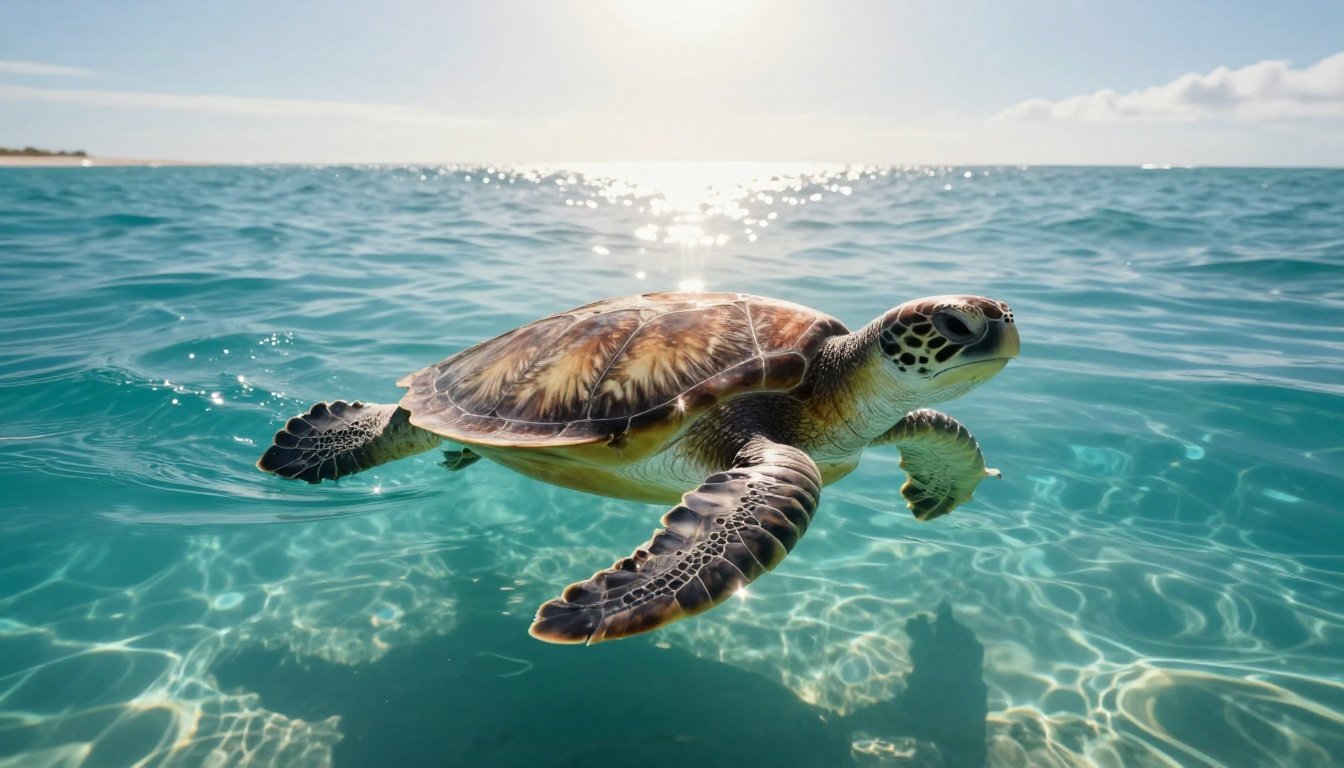
Picture a sea turtle gliding through clear blue water, its flippers sweeping gently as sunlight dances across its shell. Kids love these ocean travelers because they look peaceful and ancient, yet each species has surprising skills, favorite foods, and long journeys to share.
There are seven sea turtle species worldwide: leatherback, loggerhead, green, Kemp’s ridley, olive ridley, hawksbill, and flatback. Their size, diet, nesting habits, and travel distance can vary widely. A leatherback may cross thousands of miles while feeding on jellyfish, while a green turtle often eats seagrass and algae. As you learn these facts, you’ll also discover how turtles lay eggs, what dangers they face, and how children can help protect them by keeping beaches clean, respecting nests, and reducing plastic waste.
Turn this lesson into hands-on nature learning with a beach-themed activity, then begin with these memorable sea turtle facts. For an engaging visual introduction, watch Sea Turtle Facts | 7 Species & Adaptations.
The Fact About Sea Turtles Kids Should Know: They Are Built for Ocean Life
Sea turtles are air-breathing reptiles, not fish. They spend most of their lives in the ocean, but they must swim to the surface for every breath. Their bodies are shaped for long journeys through open water, shallow bays, coral reefs, estuaries, mangroves, and coastal feeding areas.
Seven sea turtle species live around the world: green, hawksbill, Kemp’s ridley, olive ridley, loggerhead, leatherback, and flatback. Six occur in U.S. waters. The flatback is the exception because it lives around Australia and Papua New Guinea.
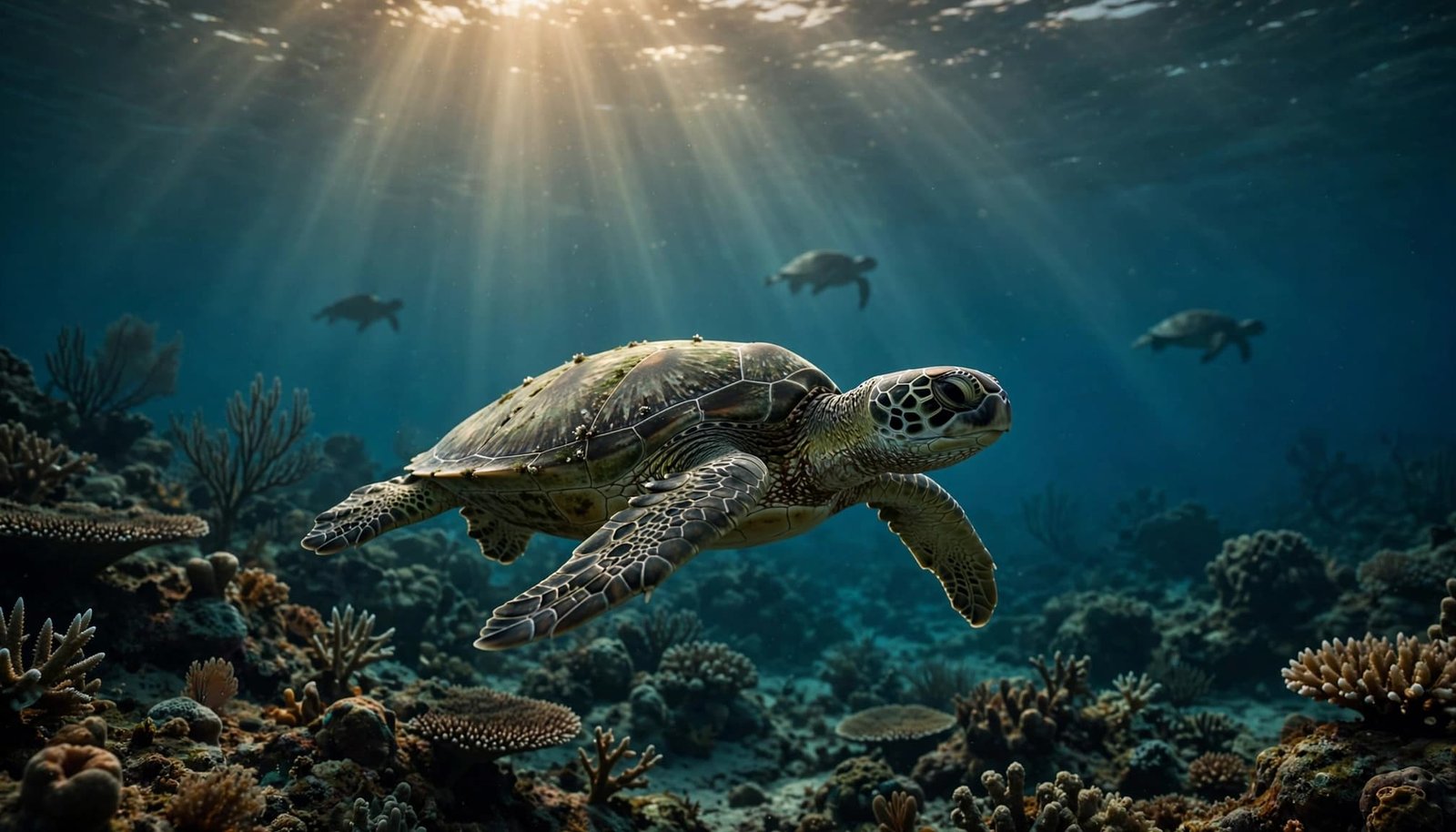
Seven Species, Seven Different Turtle Stories
Each species has its own shape, diet, habitat, and habits. Children shouldn’t assume every sea turtle looks or behaves the same way.
- Green turtles are the largest hard-shelled sea turtles. Adults can grow to about 3 feet long and weigh 300 to 350 pounds. Many adults feed on seagrass and algae.
- Hawksbills have narrow heads and pointed beaks that help them reach food around coral reefs. Their beaks give them a birdlike appearance.
- Kemp’s ridleys are the smallest sea turtles. Many females gather to nest during daylight, a rare event called an arribada when large groups come ashore together.
- Olive ridleys often travel through warm tropical waters and may also nest in large groups.
- Loggerheads have large, powerful heads for crushing hard-shelled prey. Young loggerheads spend time in the open ocean before moving toward coastal waters as they grow.
- Leatherbacks are the largest sea turtles. They can reach about 6 to 9 feet and weigh up to 2,000 pounds. These wide-ranging turtles travel extremely far and eat jellyfish. Learn more about their long-distance ocean adaptations.
- Flatbacks live around Australia and Papua New Guinea. They usually stay in shallower coastal waters than leatherbacks.
For a hands-on way to compare animal traits, try these nature-based STEM activities for kids.
How Flippers, Shells, and Body Shape Help Turtles Survive
A sea turtle’s front flippers work like strong swimming paddles. They push against the water and move the turtle forward, while the smaller rear flippers help with steering. A sleek body reduces resistance, so the turtle can glide instead of fighting every wave.
The shell protects the turtle’s organs, but leatherbacks have a flexible, leather-like shell instead of a hard, bony covering. That softer shell helps their bodies handle deep dives and long travel.
Sea turtles can stay underwater for extended periods, depending on their species, activity, and water temperature. However, they cannot breathe underwater. A resting turtle uses less oxygen than one swimming quickly, so every sea turtle eventually needs to surface for air.
What Sea Turtles Eat and How Far They Travel
Food and travel shape a sea turtle’s entire life. A young turtle may spend years in open water, while an older turtle may settle near a reef, bay, or seagrass bed. Its species, age, and food supply all help determine where it goes.
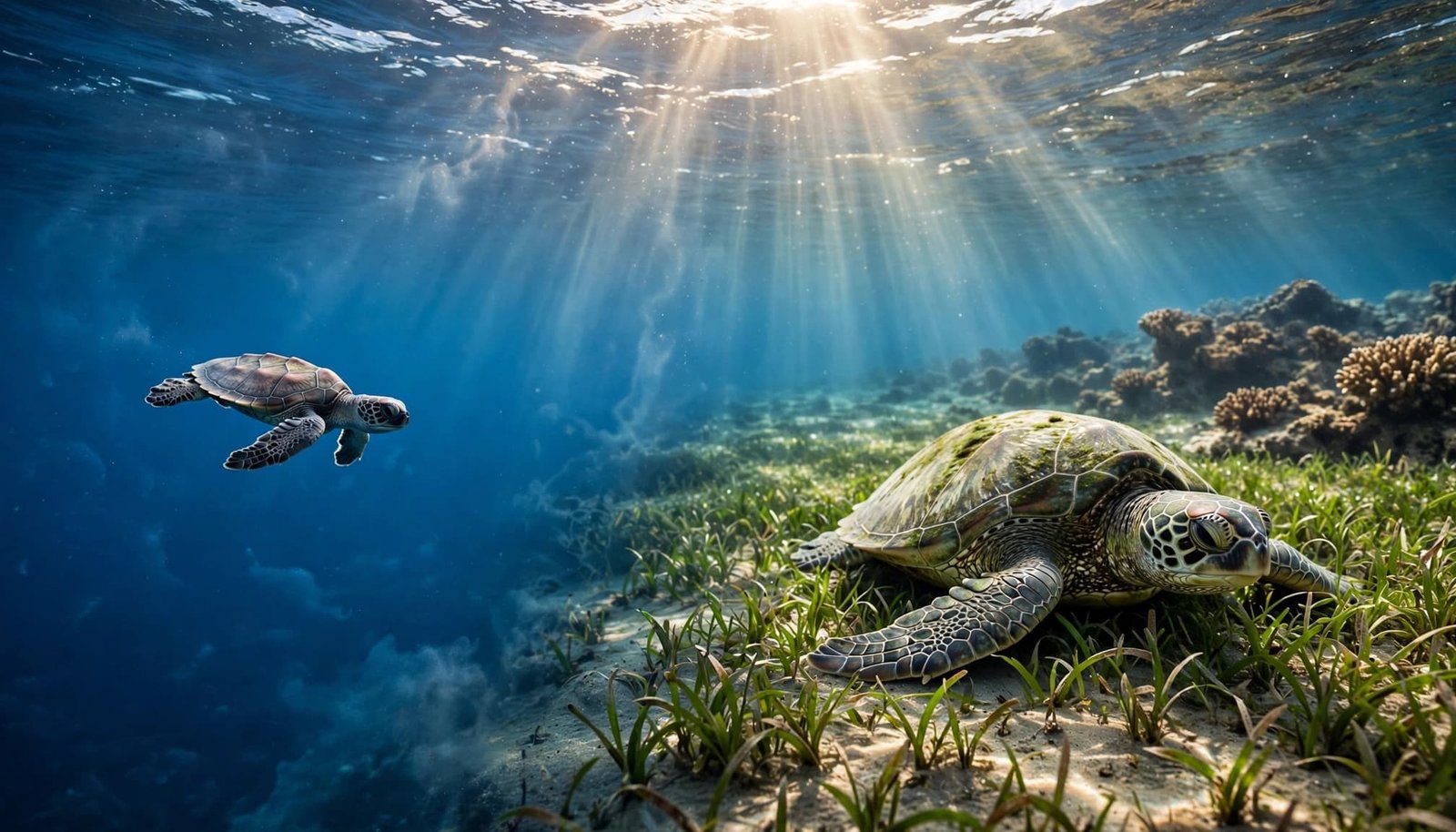
Why Sea Turtles Move Between Open Water and the Coast
Hatchlings and young sea turtles often begin life far from shore. Ocean currents can carry them through open water, where they drift, swim, and search for small food. As they grow stronger, some move toward coastal waters with richer feeding grounds.
Older turtles may spend time around coral reefs, bays, estuaries, or seagrass beds. These places offer different meals and shelter, but every species uses habitats in its own way. For example, young loggerheads can remain in the open ocean for about 7 to 15 years before moving closer to shore to feed. NOAA describes this long open-ocean stage in its information about loggerhead turtle development.
Migration also connects feeding areas with nesting beaches. A turtle may travel hundreds or thousands of miles, then return to a familiar region when it’s time to lay eggs. Routes don’t look the same for every species, and individual turtles may follow different paths as ocean conditions and food supplies change.
A leatherback can travel more than 10,000 miles in one year, which is similar to crossing the United States several times.
A Sea Turtle’s Menu Changes With Its Species
Calling every sea turtle a plant eater or meat eater is inaccurate. Their diets differ by species, and a turtle’s menu can change as it grows.
- Adult green turtles are mostly herbivores. They eat plants such as seagrass and algae, which they graze from shallow coastal habitats.
- Hawksbills rely heavily on sponges around coral reefs. Their narrow heads and pointed beaks help them reach food tucked into reef crevices.
- Young turtles may eat a wider mix of plants and small ocean animals before their diets become more specialized.
Leatherbacks mainly eat jellyfish, while other species search for different prey in coastal waters. These food choices explain why sea turtles don’t all gather in the same places. A child-friendly collection of sea turtle facts can help you compare each species’ body shape, habitat, and favorite foods.
From Tiny Hatchling to Nesting Mother
A sea turtle’s life begins on a sandy beach, then stretches across years of ocean travel. Most sea turtles take roughly 20 to 30 years to reach adulthood, although some green turtles may mature even later. When a female finally begins nesting, she may return to the beach where she hatched many years earlier.
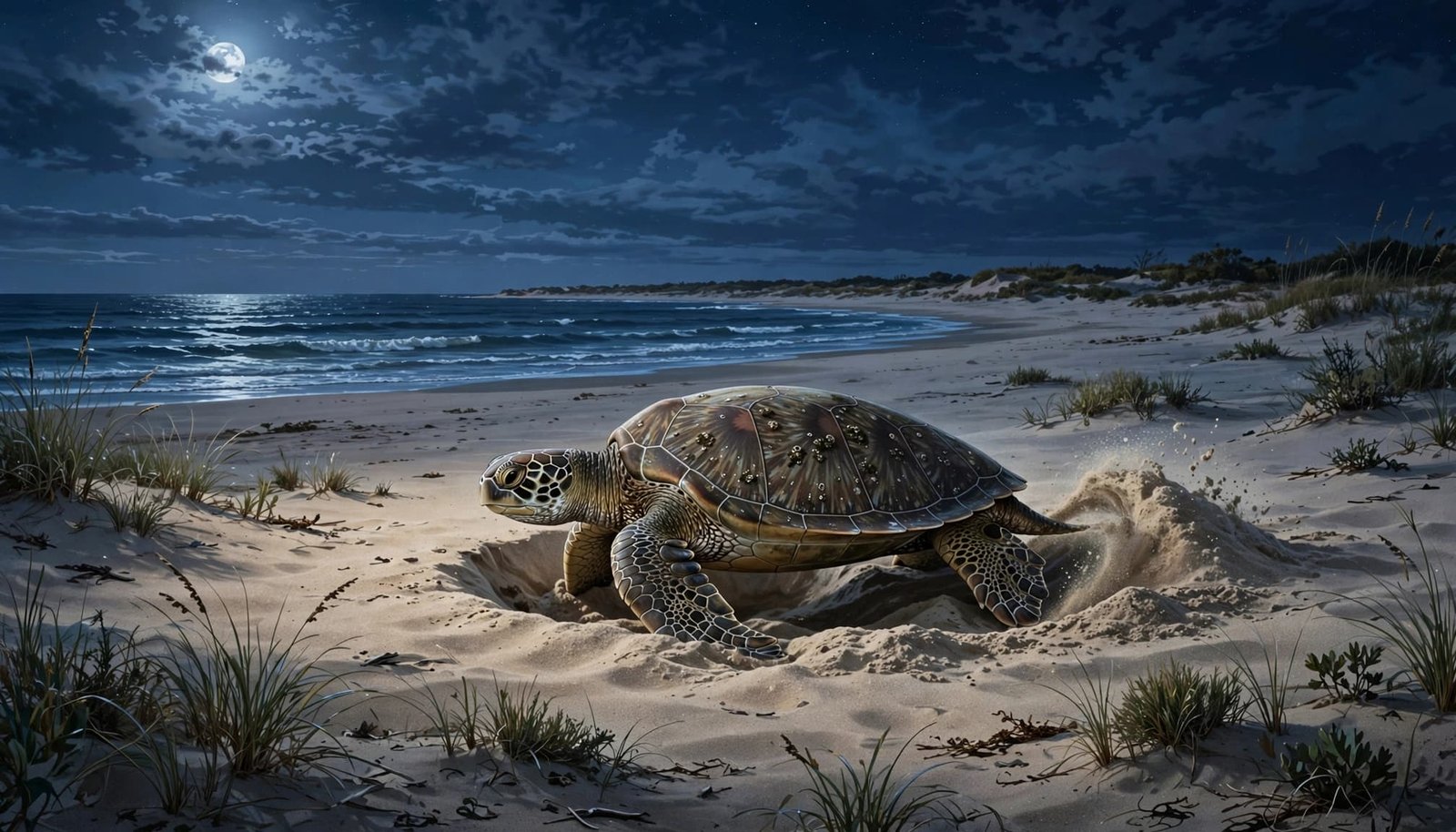
How a Mother Turtle Builds a Nest
After swimming close to shore, the female crawls above the waterline and searches for a safe place in the sand. Most species nest at night, when cooler temperatures and darkness offer some protection. Kemp’s ridley turtles are the unusual exception because they usually nest during the day.
Using her front flippers, she clears away loose sand. Then her rear flippers scoop out a rounded nest chamber beneath her body. Nest building can take about one to three hours, so the process requires patience and energy.
When the chamber is deep enough, she lays a clutch of eggs. A nest may hold around 100 eggs, but the number varies by species and by individual turtle. She then pulls sand over the eggs and smooths the surface, hiding the nest from view before returning to the sea.
A female may lay several nests during one nesting season, often returning to shore more than once. NOAA reports that loggerhead females may lay three to five nests in a season, with about two weeks between nesting trips. You can find more details in NOAA’s guide to the loggerhead turtle life cycle.
The mother does not stay to raise her young. Once she leaves, the eggs develop beneath the sand, and the hatchlings begin life on their own. People should watch nesting turtles only from a safe distance and follow local beach rules. Approaching, touching, or shining lights on wildlife can cause harm.
The Risky Dash From Nest to Sea
Inside the nest, hatchlings often wait until many are ready to leave. Working together, they push upward through the sand. This group effort helps them reach the surface and begin their journey at nearly the same time.
Hatchlings usually emerge at night, when the beach is cooler and some predators are less active. They use the slope of the beach and the soft natural light reflected from the ocean to find the water. Artificial light near the shore can confuse them, so dark, quiet beaches give them a better chance.
The trip is short, but it is risky. Birds, crabs, raccoons, and foxes may prey on hatchlings before they reach the waves. Reaching the ocean is only the first step in a difficult life, because young turtles still face predators, storms, pollution, and limited food.
Sand temperature also affects the hatchlings before they emerge. Warmer sand tends to produce more females, while cooler sand tends to produce more males. Exact temperatures vary by species and location, but incubation often lasts about 55 to 60 days. NOAA explains more about temperature-dependent sex determination.
Children can study this life cycle without disturbing wildlife through playful nature learning activities, such as drawing each stage or observing animal tracks from a respectful distance.
Why Sea Turtles Need Protection and What Kids Can Do
Sea turtles have survived for millions of years, but human activities now create serious dangers. All six sea turtle species found in U.S. waters, including green, loggerhead, leatherback, hawksbill, Kemp’s ridley, and olive ridley turtles, are protected under the Endangered Species Act.
Fishing gear can trap turtles underwater, while boats, pollution, and marine debris can cause additional injuries. Some turtles and their eggs are still harvested in certain places. Nesting beaches also shrink when buildings, roads, and heavy foot traffic disturb the sand. Natural predators, such as crabs, birds, raccoons, and foxes, eat eggs and hatchlings too, but people can reduce the extra dangers.
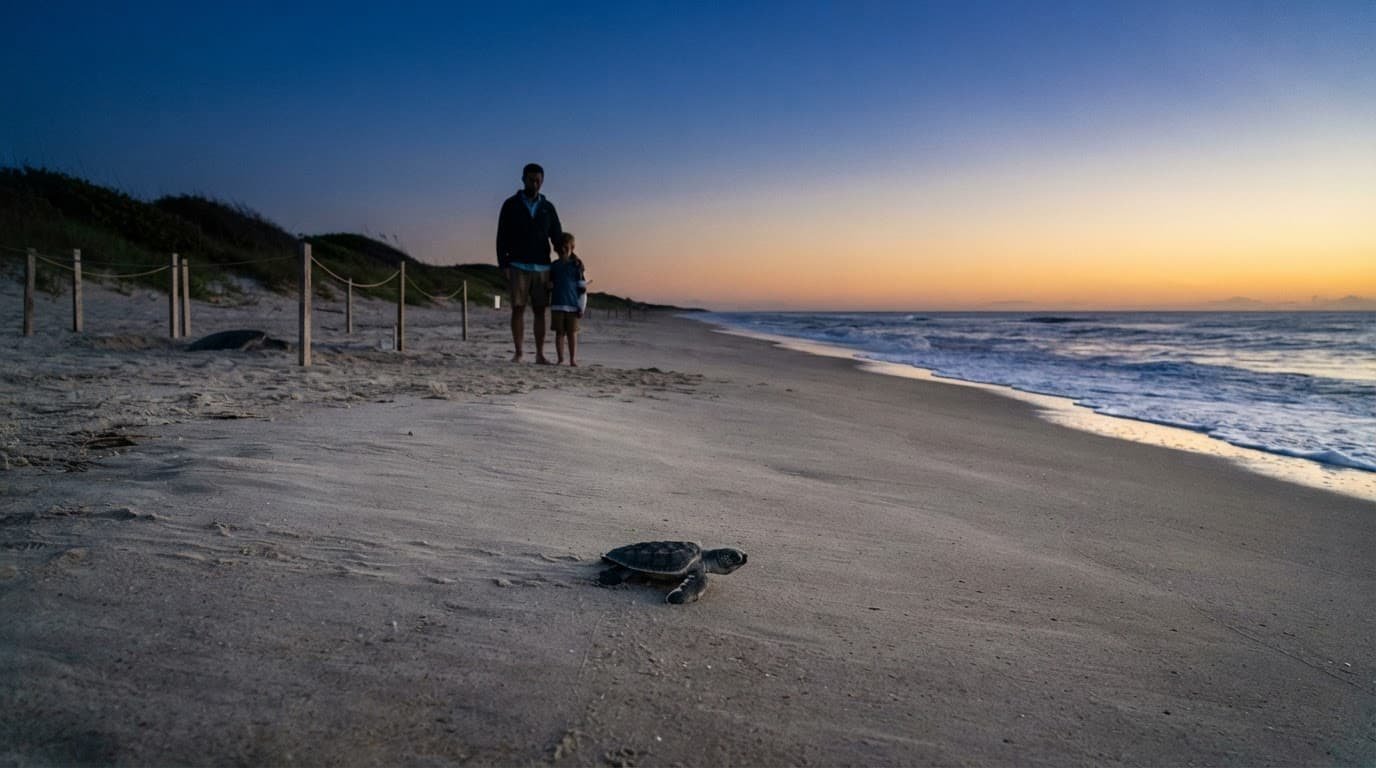
Small Beach Choices Can Make a Real Difference
Children can help protect sea turtles during every beach visit. Each simple action removes one obstacle from a turtle’s difficult journey.
- Stay away from nesting females and hatchlings. Crowding can frighten a mother turtle or block a hatchling’s path to the water.
- Turn off or shield beach lights when local rules require it. Bright lights can confuse nesting females and send hatchlings inland instead of toward the ocean.
- Fill in sand holes and knock down sandcastles before leaving. Turtles can fall into holes, and large sand structures can block their route across the beach.
- Take all trash home, including fishing line. Plastic bags, food wrappers, and line can be swallowed or wrap around flippers and necks.
- Never touch or disturb marked nests. The signs and stakes protect eggs from footsteps, pets, vehicles, and accidental digging.
At home, children can also learn where their waste goes. Litter that reaches a storm drain may travel into a creek, river, or ocean. These pollution facts for kids can help families connect everyday choices with cleaner waterways.
How to Be a Responsible Sea Turtle Observer
Wildlife watching should feel more like borrowing a moment than taking control of it. Stay at least 10 feet away when local guidance gives that minimum, and follow any larger distance required by park staff.
Keep your voice low, avoid flash photography, and never shine a flashlight or phone light toward the ocean. A turtle needs a clear route, so don’t stand in front of it, surround it, guide it, feed it, or try to carry it. Listen to trained volunteers, lifeguards, park rangers, and other staff because beach rules differ by location.
If you see an injured, stranded, or tangled turtle, tell an adult immediately. The adult should contact the local wildlife rescue group, park office, or official stranding hotline. Procedures vary, so families should use local instructions instead of handling the turtle themselves. Protecting sea turtles takes teamwork among children, families, scientists, parks, fishing communities, and wildlife organizations.
Sea Turtle Facts Kids Can Remember and Share
Sea turtles are ocean-going reptiles with a surprising set of skills. There are seven species worldwide: green, hawksbill, Kemp’s ridley, leatherback, loggerhead, olive ridley, and flatback. Each species has its own body shape, favorite foods, and favorite places to travel.
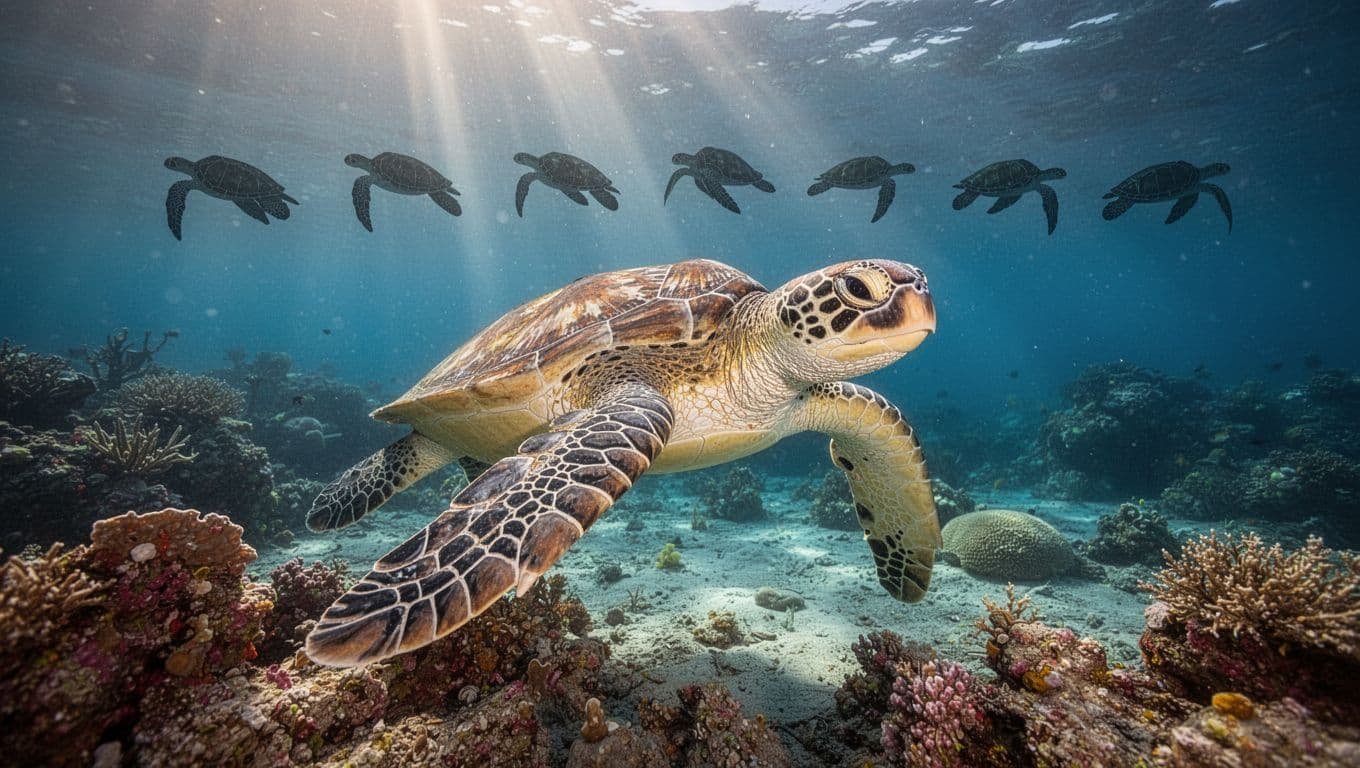
Quick Facts About Sea Turtle Bodies and Diets
- Sea turtles breathe air, even though they spend most of their lives underwater. They must swim to the surface for each breath.
- Their powerful front flippers push them through the ocean like underwater wings. Smaller rear flippers help them steer.
- Leatherbacks are the largest sea turtles. Adults can reach about 6 to 9 feet long and weigh up to 2,000 pounds. Their shells are tough and flexible instead of hard and bony.
- Green turtles mostly eat seagrass and algae as adults. Hawksbills use pointed beaks to reach sponges around coral reefs.
- Loggerheads have strong jaws for crushing crabs, conchs, and other hard-shelled prey. Leatherbacks mainly eat soft animals such as jellyfish and salps.
The numbers above are estimates. Size, diet, travel distance, and growth can vary by species, location, age, and ocean conditions.
Amazing Nesting and Hatchling Facts
Some sea turtles migrate hundreds or thousands of miles between feeding areas and nesting beaches. Females often return to the region where they hatched to lay their own eggs. After roughly 55 to 60 days, hatchlings may push through the sand and head toward the ocean.
At night, baby turtles use the beach’s natural light to find the brightest horizon, which usually points toward the sea. Artificial lights can confuse them and lead them away from the water. NOAA’s explanation of temperature-dependent sex shows another surprising fact: the nest’s temperature helps determine whether hatchlings develop as male or female. Cooler sand tends to produce more males, while warmer sand tends to produce more females, although exact patterns vary.
Ask your child or students to choose a favorite fact, draw a sea turtle’s life cycle, compare the seven species by size, or explain one way to protect a nesting beach. A simple answer, such as turning off beach lights or taking plastic home, connects knowledge with care.
Conclusion
A sea turtle gliding through the ocean carries a story that began millions of years ago. Its flippers, shell, diet, and remarkable migrations help it survive, yet even these ancient reptiles depend on clean water, safe food, and quiet nesting beaches.
Children don’t need to become scientists to help. They can respect wildlife, pick up litter, leave nests alone, keep beach lights off or shielded, and share accurate sea turtle facts with others. Families can also continue the lesson through screen-free beach learning activities that build care for coastal habitats without disturbing real animals.
Each thoughtful choice gives a turtle a clearer path through the waves or across the sand. When kids protect the places sea turtles need, they become ocean stewards who help these ancient travelers continue their journey.
Save pin for later

- Dry Cough in Kids: 5 Causes and Safe Solutions - September 23, 2026
- How to Help a Child Deal With Anxiety at Home - September 12, 2026
- How to Prepare Your Child for the First Day of School - September 12, 2026