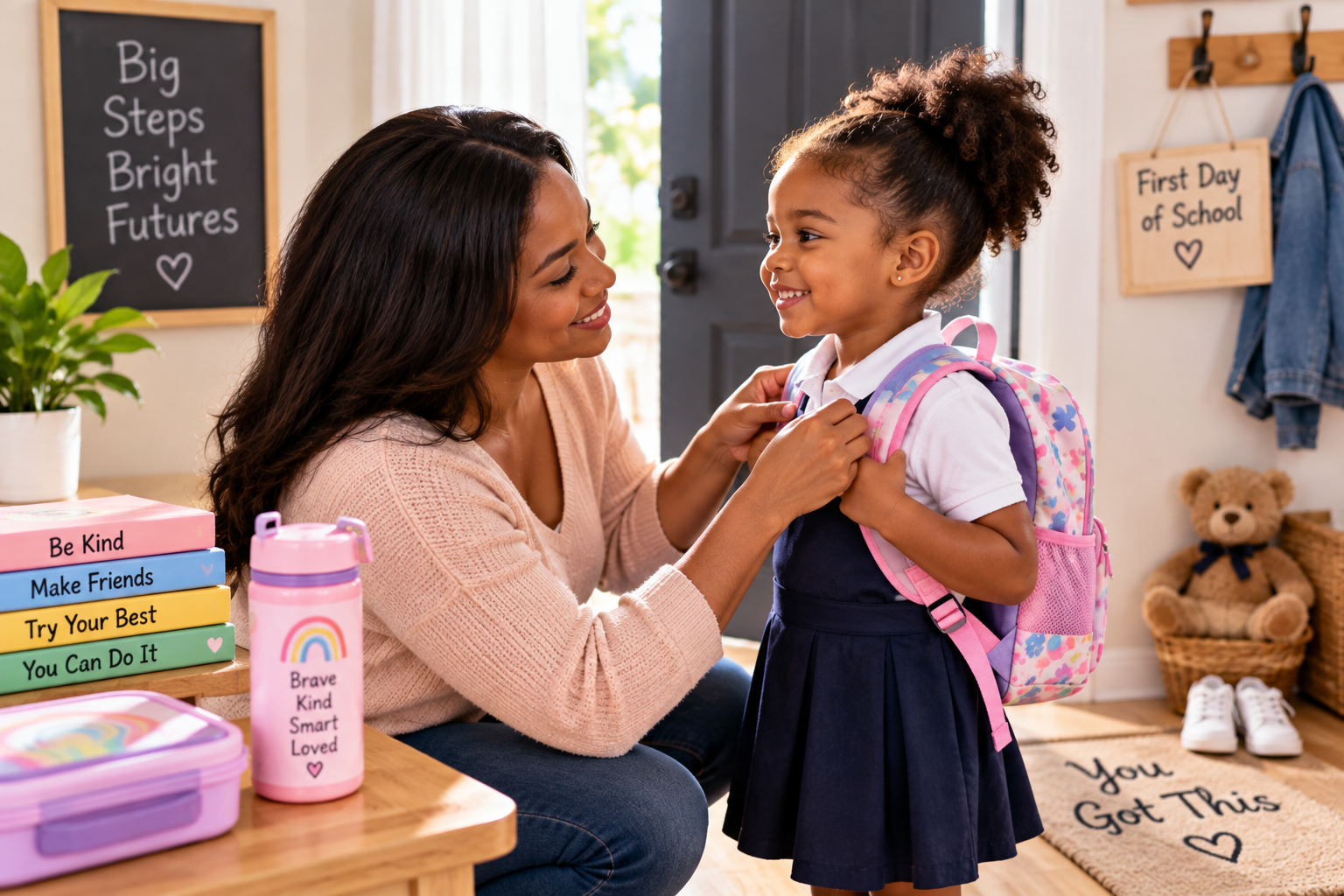
The first day of school is a big milestone, and it stirs up feelings for everyone in the house. Your child might bounce between excitement and worry, and honestly, you probably feel the same mix.
The good news? A little preparation goes a long way. Kids handle new situations better when they know what to expect, and that’s where you come in. This post covers three things: how to get your child emotionally ready, how to build simple routines that make mornings easier, and what to do on the actual day to keep things calm.
You don’t need a perfect plan or a Pinterest-worthy countdown calendar. You just need a few practical steps and some patience, with your child and yourself.
Let’s start with the part that matters most: helping your child feel ready on the inside.
How To Prepare Your Child For Their First Day Of School
First day of school preparation works best when you split it into two buckets: emotional readiness and practical readiness. Emotional readiness means your child knows what school is, feels safe talking about it, and expects good things from it. Practical readiness covers the mechanics, like a workable morning routine, a packed backpack, and a name they can recognize on their own lunchbox.
Start both about two to three weeks before the big day. Kids adjust to new routines slowly, and so do tired parents. If you wait until the night before, you’re asking everyone to handle a mountain of change at once. Spread it out, and each step feels small instead of scary.
Start Talking About School Weeks Before It Begins
Bring school into everyday conversation long before it starts. Mention it while driving past the building, at dinner, or during bath time. Keep the tone light and positive, and let your child ask whatever questions pop up.
Picture books help a lot here. Stories let kids explore big feelings from a safe distance. Some favorites worth borrowing or buying:
- The Kissing Hand by Audrey Penn, a classic about separation and a mother’s reassurance
- Llama Llama Misses Mama by Anna Dewdney, which normalizes missing a parent
- The Pigeon HAS to Go to School! by Mo Willems, for kids who worry but love to laugh
Reading together also gives you a natural opening to ask, “How do you think she feels?” That tiny question builds emotional vocabulary better than any lecture.
Visit The School And Meet The Teacher Ahead Of Time
Familiar places feel safe. Most schools offer an orientation day or open house, so put it on your calendar and treat it as a priority. Walk the halls, find the bathroom, and locate the cubby where the backpack will live.
If your school doesn’t run an orientation, ask for a quick walkthrough or simply spend ten minutes on the playground. Playing on the actual equipment turns an unknown building into “my school.” Practicing the drop-off route in real traffic also removes surprises, because a dry run beats a frantic first-morning detour every time.
Meeting the teacher matters just as much. A friendly face on day one changes everything. Send a short email introducing your child if an in-person meeting isn’t possible, and check whether your school shares teacher photos or welcome videos online. For more ideas on easing those first-week jitters, our guide to separation anxiety strategies covers what to do when the tears start at the classroom door.
A child who has already walked the hallway and met the teacher walks into day one with a mental map instead of a mystery.
Do these two things, conversations early and visits before the first bell, and your child starts school already feeling like they belong.
Ease Your Child’s Worries About Starting School
Worry is a normal part of starting school, and your job isn’t to erase it. It’s to give your child tools for handling it. Kids feel braver when they’ve practiced the scary parts in advance and know exactly what goodbye will look like. Two simple strategies cover most of the groundwork: pretending the day together before it happens, and building a goodbye ritual your child can count on.
Role-Play The First Day Together At Home
Pretend play lets your child rehearse the unfamiliar while sitting on your living room floor. Take turns being the teacher and the student, and run through the moments that trip kids up most:
- Hanging the backpack on an actual hook
- Raising a hand before speaking
- Asking the teacher to use the bathroom
- Figuring out what to do at recess if no one asks them to play
That last one deserves extra attention. Practice a friendly opener together, something like “Can I play too?” Rehearsed in advance, those four words feel like a tool instead of a gamble.
Keep the whole thing playful and silly. If your child giggles when you pretend to hang your coat in the wrong cubby, that’s a win. Laughter lowers the stakes and makes the real version feel familiar.
Kids who have practiced a moment once walk into it feeling like they’ve done it before.
Create A Goodbye Ritual That Makes Drop-Off Easier
A predictable goodbye gives your child something to hold onto when you walk away. Pick something short and repeat it every single day. Some families use a hug-kiss-high-five sequence. Others draw a tiny heart on the child’s palm, so a piece of the goodbye stays with them all morning. A simple phrase works too, like “See you after snack,” because it tells your child exactly when you’ll be back.
Whatever you choose, keep it brief and confident. Lingering at the door sends the message that something might be wrong, and kids read that instantly. A thirty-second ritual with a smile at the end beats a ten-minute negotiation every time. If tears come, hand your child to the teacher and go; teachers handle this daily, and most kids settle within minutes. Trust the ritual, and it will start working for both of you.
Build Routines That Make School Mornings Stress-Free
Mornings fall apart when everything happens for the first time at once. Spread the adjustment across two weeks and day one feels almost boring, which is exactly the goal.
Shift Bedtimes And Wake-Up Times Two Weeks Early
Sleep is the foundation of every calm morning. The American Academy of Pediatrics recommends that kids ages 5 to 12 get 9 to 12 hours of sleep per night, so work backward from your wake-up time to find the right bedtime. If school starts at 8:00 a.m. and your child needs 10 hours, lights out probably belongs around 8:30 p.m.
Don’t move it all at once. Shift bedtime and wake-up earlier by 15 minutes every couple of nights until you hit the target. This gentle slide keeps everyone from fighting a sudden two-hour jump. Summer late nights fade quietly instead of becoming a battle.
Keep screens off during the last hour before bed, since the light they emit makes falling asleep harder. A consistent wind-down routine, like bath, pajamas, and a story, does the rest.
Practice The Morning Routine As A Dry Run
At least three or four days before school starts, run a full rehearsal. Wake your child at the real time, get dressed, eat breakfast, pack the bag, and walk out the door at the exact drop-off time. Treat it like a fire drill for the family.
For younger kids, post a simple picture checklist at eye level: toothbrush, clothes, backpack, shoes. They can mark each box with a sticker, which turns the routine into a game instead of nagging.
Dry runs expose the real bottlenecks, like a breakfast that takes too long or shoes that spark a protest, and you can fix them while nothing is at stake.
The first actual morning will feel like the fourth, because for your child, it already is.
Get School Supplies, Clothes, And Backpacks Ready
Now comes the fun part: gathering the gear. Shopping early gives you time to check everything off the teacher’s list without a last-minute scramble, and it builds your child’s excitement along the way.
Shop The Teacher’s Supply List First
Most schools post supply lists in early summer, either online or at local stores. Stick to the list, because teachers choose those items for a reason. Crayola crayons, Elmer’s glue sticks, and the specific folder colors often matter more than you’d think. Buy a few extras of the cheap stuff, like pencils and erasers, since they tend to vanish by October.
Label Everything With Your Child’s Name
Backpacks, lunchboxes, jackets, water bottles, even individual crayons: label it all. Thirty kids own identical supplies, and unmarked items disappear fast. Waterproof name labels or a permanent marker both work fine.
Let Your Child Choose The Backpack And Lunchbox
Kids feel proud of gear they picked themselves. Give two or three parent-approved options and let them make the final call. That ownership turns the backpack into something they’re excited to carry, not just another bag.
Practice Opening Containers And Packing Up
Before school starts, hand your child their lunchbox and let them open every container themselves. Twist caps, zipper pouches, and juice boxes trip up small hands. If they can’t open it, swap it for something easier. Practice zipping the backpack too.
Choose Clothes And Shoes They Can Manage Alone
Pick elastic-waist pants, simple pullover shirts, and shoes without tricky laces unless your child has mastered them. Gym class and bathroom trips go smoother when kids can dress themselves quickly and confidently.
What To Do On The Actual First Day Of School
The big day is here, and your prep work pays off now. Keep the morning simple, calm, and predictable.
Start With A Solid Breakfast
Serve something familiar and filling, like oatmeal, eggs, or toast with fruit. Skip anything new; an untested food on a nervous stomach is a gamble. Leave plenty of time so nobody eats standing up.
Arrive Early And Stay Positive
Plan to get there ten to fifteen minutes before the bell. An early arrival means no rushed goodbye and time to find the classroom at an unhurried pace. Keep your own energy light, because kids mirror your mood more than your words.
Snap A Quick Photo Without Chaos
Take the classic first-day photo, but do it before the morning begins. Snap one shot by the front door right after breakfast, then put the phone away. Ten posed attempts turn a fun moment into a schedule killer. One imperfect photo beats a stressful twenty.
Make The Goodbye Short And Confident
Use the goodbye ritual you practiced, keep it under a minute, and leave with a smile even if tears show up. Teachers handle drop-off emotions every year, and most kids settle within minutes.
A calm exit tells your child the day ahead is safe.
Plan A Small Celebration After School
Give your child something to look forward to, like ice cream at the local shop, a trip to the park, or a special dinner they choose. Keep it low-key so a tired kid can enjoy it.
Ask Better Questions When They Get Home
“How was school?” gets a shrug. Trade it for specific ones like “What made you laugh today?” or “Who did you sit next to at lunch?” These questions open real conversations instead of one-word answers.
Once you’ve heard the stories and celebrated the day, you’re ready to pull everything together into one final plan.
Conclusion
A few tears and wobbly mornings are completely normal, and they don’t mean anything has gone wrong. Most kids settle into the school rhythm within two to three weeks, and yours will too.
Your prep comes down to a few basics: talk about school early, visit beforehand, role-play the tricky moments, shift sleep schedules gradually, and keep the first morning itself calm and simple. Each step removes a little uncertainty, and uncertainty is what kids fear most.
Trust the work you’ve put in. Your child walks into that classroom carrying your confidence, not just their backpack.
What helped your family get through the first day? Share your own tips in the comments so other parents heading into this milestone can borrow from your experience.
Save pin for later


- Signs Your Baby Is Ready For Solid Foods - September 23, 2026
- First Trimester Survival Guide For Working Moms - September 23, 2026
- White Noise For Babies: Does It Really Help? - September 23, 2026