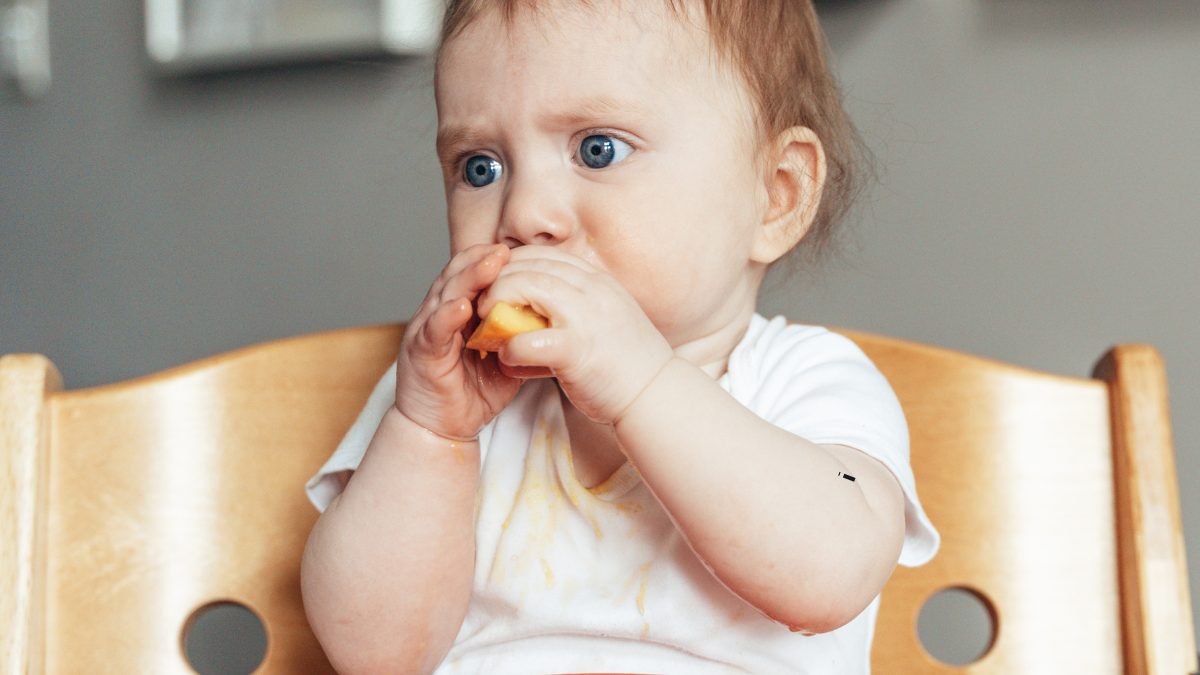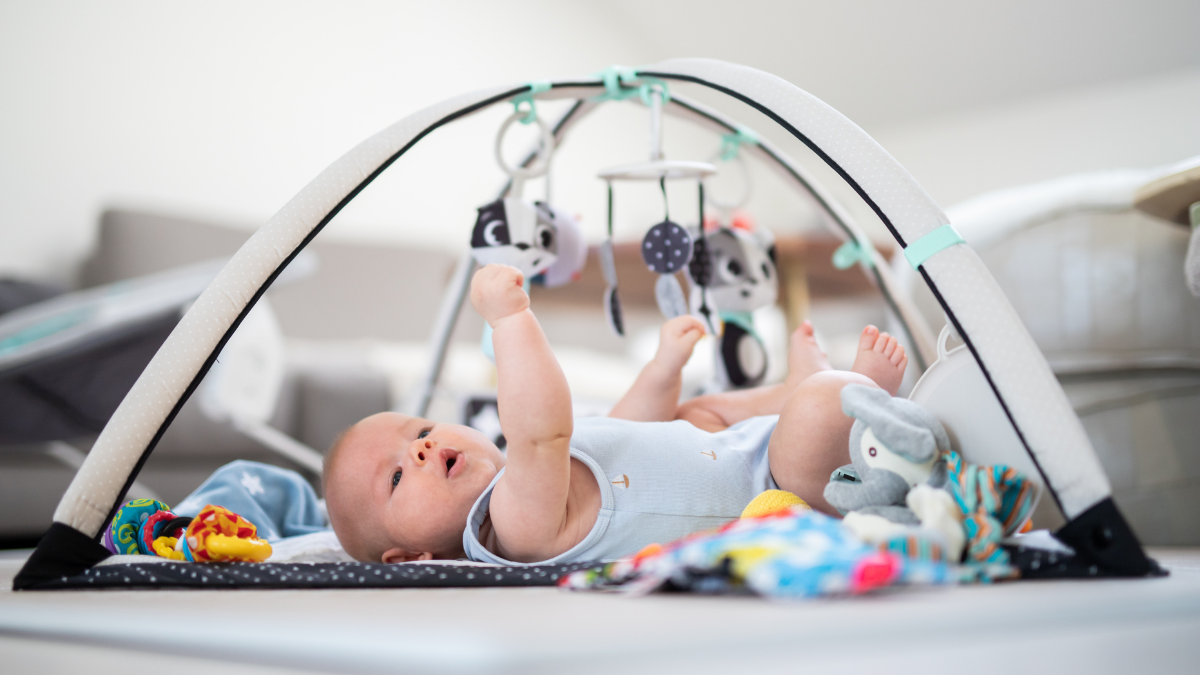

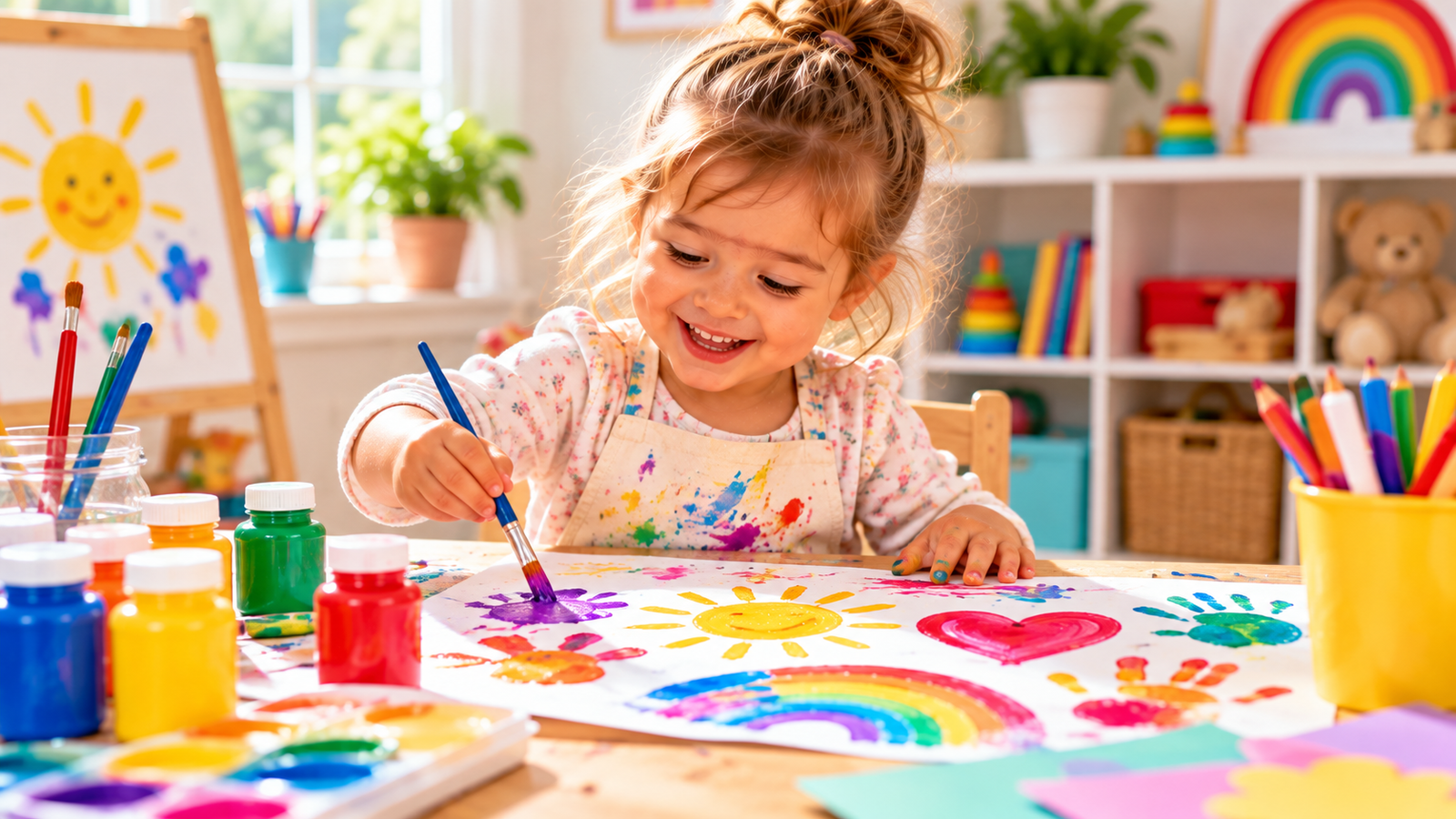
Simple art and sensory play can be low-mess, using everyday supplies and a little space on the floor. Your baby doesn’t need to make a perfect keepsake; exploring color, texture, and movement is the point.
These 25 easy ideas offer ways to share that exploration without expecting your baby to create independently. Stay close throughout, and choose materials suited to your baby’s age and mouthing habits, since babies often explore by putting objects in their mouths. For more inspiration, browse these baby-friendly art and sensory activities.
Very Simple Art and Craft Ideas for Babies to Try at Home
Keep each activity brief, prepare the space before bringing your baby over, and stay within arm’s reach. Choose washable, age-appropriate materials, since babies often mouth what they touch. These simple art and craft ideas for babies are about noticing color and sensation, not making a finished picture.
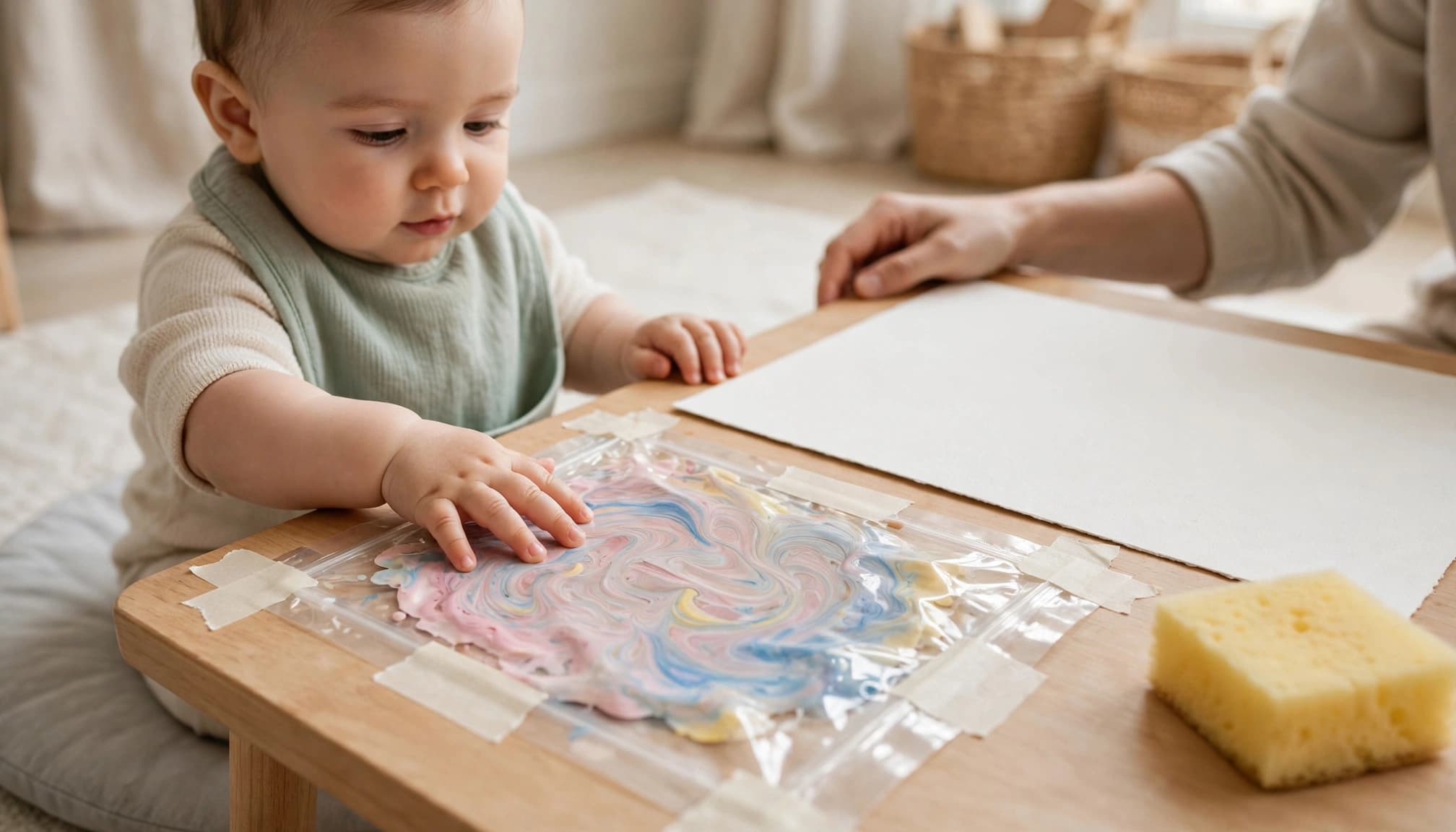
Make a mess-free painting bag
Materials: A sturdy clear plastic pouch, washable non-toxic paint, tape, and a table or smooth floor. Put a small amount of paint inside, seal it, then place it inside a second sturdy layer and seal again. Tape the pouch flat so your baby can press and swipe across it from the outside. The paint shifts under their hands without touching their skin. Before play, check every seal for leaks, and supervise the entire time. When you finish, remove the pouch and wipe the surface.
Try edible yogurt finger painting
Materials: Plain yogurt, a little smooth puree, and a washable tray. Tint a small amount of yogurt with puree, then spread it thinly over the tray. Your baby can pat and smear the cool, soft mixture while noticing its color and texture. Use this only if your baby is ready for those foods, and check for allergies first. Food play is separate from feeding, so keep your baby’s usual safe feeding setup. Clean the tray and your baby’s hands promptly.
Paint with a large sponge
Materials: A large soft sponge, washable non-toxic paint, paper, and tape. Secure the paper to the floor or table, then let an adult dip the sponge and guide gentle dabs across the page. Your baby can watch the color appear and explore the sponge with support. Choose art materials labeled for children, as KidsHealth’s toy-safety guidance recommends nontoxic art supplies. Wash the sponge and wipe the work surface after the session.
Make broad crayon marks
Materials: A chunky, age-appropriate washable crayon and a large sheet of paper. Secure the paper, then offer the crayon while you guide your baby’s hand to make a few broad marks. Let your baby watch the line grow and feel the crayon’s shape, without expecting them to hold it alone. Stay close, remove any broken pieces right away, and put the crayon away when the activity ends.
Create a simple handprint keepsake
Materials: Baby-safe washable paint, paper, and a damp cloth. An adult can spread a thin layer of paint over the baby’s palm, press the hand gently onto paper, then wash the skin promptly. If your baby resists, stop and try another time. For a footprint, support the baby carefully and never force their leg or foot into position. Clean the paint from your hands and the work area.
Stamp big shapes with a soft sponge
Materials: A large sponge, washable paint, paper, and tape. Select or cut a simple shape from a sponge, making sure it is too large to swallow. Check it for loose pieces before and after use. An adult can dab it in paint and help the baby press it onto secured paper. Your baby can explore the changing shape and color pattern; wash the sponge and tray when you’re done.
Easy Baby Crafts That Explore Texture and Sensory Play
Babies can explore texture through simple, oversized materials they can see, touch, and hear. Set up one activity at a time, stay within arm’s reach, and put loose items away as soon as play ends. Because babies often mouth what they touch, skip small fillers and anything that can tear into swallowable pieces.
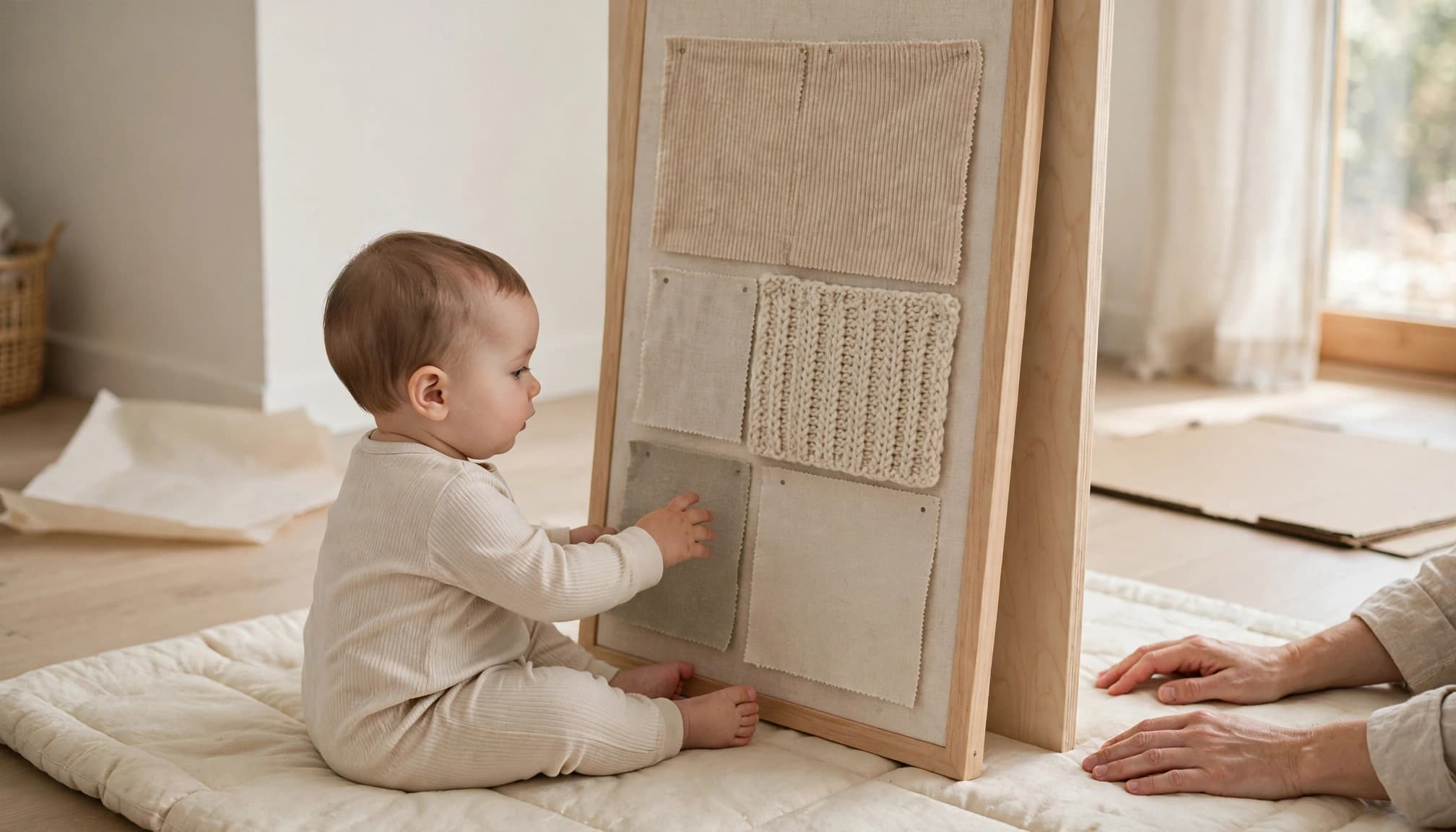
Make a touch-and-feel fabric collage
For a hands-on board, attach a few large fabric patches securely to a sturdy, flat surface. Choose clear contrasts, such as smooth cotton, soft fleece, and nubby terry cloth. Let your baby pat each patch while you name what feels different. Check the attachments before every session, and remove the board if a piece loosens.
You can also offer a few oversized fabric squares for supervised exploration on the floor. Hold or place one square at a time within reach, then watch your baby rub, squeeze, or wave it. For more gentle ideas, try these ways to explore textures with your baby. Put every loose square away when the activity ends.
Explore big paper textures
Place one large sheet of tissue paper on the floor and let your baby press or crinkle it while you hold an edge. The crackly sound changes with each movement, and the paper’s light feel offers a different sensation from fabric. Keep it away from your baby’s mouth, and remove it immediately if it tears into small pieces.
Next, offer a large piece of corrugated cardboard for gentle touch. Guide your baby’s hand over the ridges, then let them look at the lines and shadows. Check for staples, rough edges, or loose bits first, and stay close throughout.
Paint with water on a dark surface
Dampen a large, soft brush with plain water and let your baby make marks on a dark slate board or a safe outdoor surface. The wet strokes appear clearly, then fade as they dry. An adult should control the brush and stay close, especially if your baby mouths objects.
Choose a stable surface with no splinters, tipping risk, paint, or chemical residue. Keep the session brief, then remove the brush and wipe the area.
Build a supervised sensory basket
Offer a small selection of large, washable household items, such as a soft washcloth and a silicone spoon. Let your baby touch each item while you describe its smooth or soft feel. Check items for cracks or loose pieces, and make sure each one is too large to swallow.
For a cool sensation, place a few large, smooth ice cubes on a tray and let your baby briefly explore them while you hold them. Check the temperature against your own skin first, and remove cubes as they melt or become slippery. Avoid water beads and similar fillers, which can cause serious harm if swallowed, as HealthyChildren explains about water beads.
Simple Nature-Inspired Art Projects for Babies
Outdoor colors and shapes can inspire art without bringing loose nature finds within your baby’s reach. Use clean paper, washable materials, and adult-held objects or images. Leaves and flowers can be choking hazards, and some plants are toxic, so choose a known, non-toxic plant, keep it in your control, and discard it after the activity.
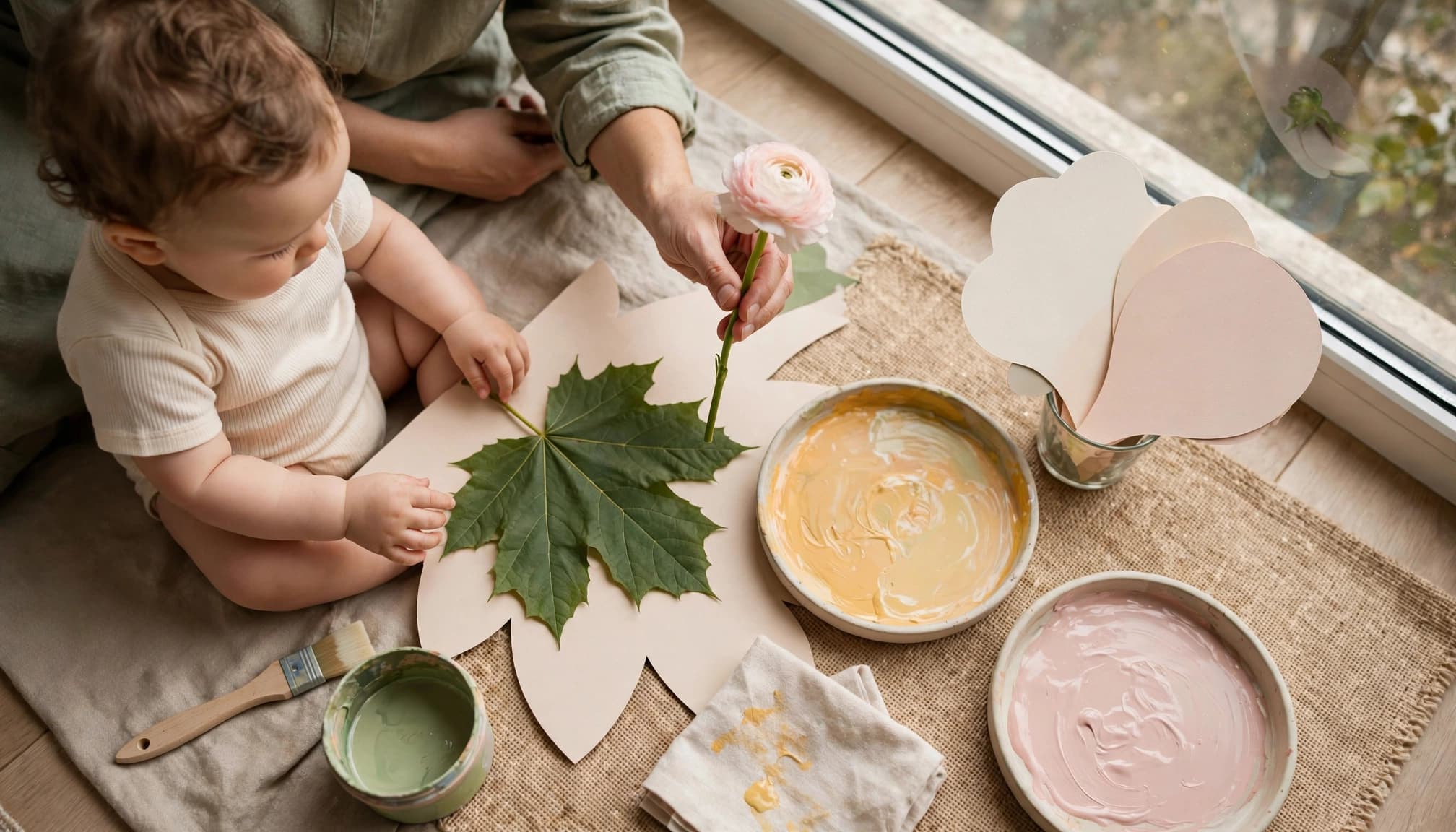
Print with large leaves and flowers
For a leaf print, place a large leaf on paper and let an adult brush washable paint across its surface. Press the leaf onto the page, then lift it to reveal the veins. Keep the leaf and paint out of your baby’s mouth and clean up promptly.
For a simple flower-color study, hold a known, non-toxic flower where your baby can see its petals. Name the colors and let your baby look or point, but don’t let them pull or mouth it. Discard the flower after the activity.
Make a sunshine or rainbow collage
Make a sunshine collage with large yellow paper shapes. An adult can glue a big circle and broad rays onto a sheet while your baby watches, points, or makes supervised marks nearby. Put away any extra paper pieces immediately, since scraps can become a choking hazard.
A rainbow is another easy paper project. Use broad bands of washable color on a large sheet, or let your baby make a few supervised marks with an age-appropriate art tool. You can also show a rainbow image from a book or printed picture and name the colors together. For more ideas with natural shapes, explore these outdoor learning activities for children, which may suit older siblings too.
Try a nature-color water painting
Add a little smooth, baby-safe food puree to a shallow amount of water, then offer it on a washable tray. Choose a puree your baby already eats, and check food readiness and allergies first. The CDC says babies are generally ready for solid foods around 6 months, though readiness varies; its solid-food guidance can help you assess timing.
Keep the mixture shallow and the session supervised. Let your baby pat the color or watch an adult move it across the tray, then clean the baby and area promptly.
Create a keepsake with a large leaf print
For a second leaf project, an adult can brush washable paint onto a large leaf and press it onto paper to make a keepsake print. Let your baby watch the reveal or touch the dry page with support. Keep the leaf and paint under adult control, away from the mouth, and discard the leaf afterward.
More Baby Art Ideas for Music, Movement, and Everyday Play
Sound and familiar objects can make a simple art session feel new. Keep activities brief, stay within arm’s reach, and let your baby watch or respond at their own pace. For more age-appropriate inspiration, try these gentle music and sensory activities for babies.
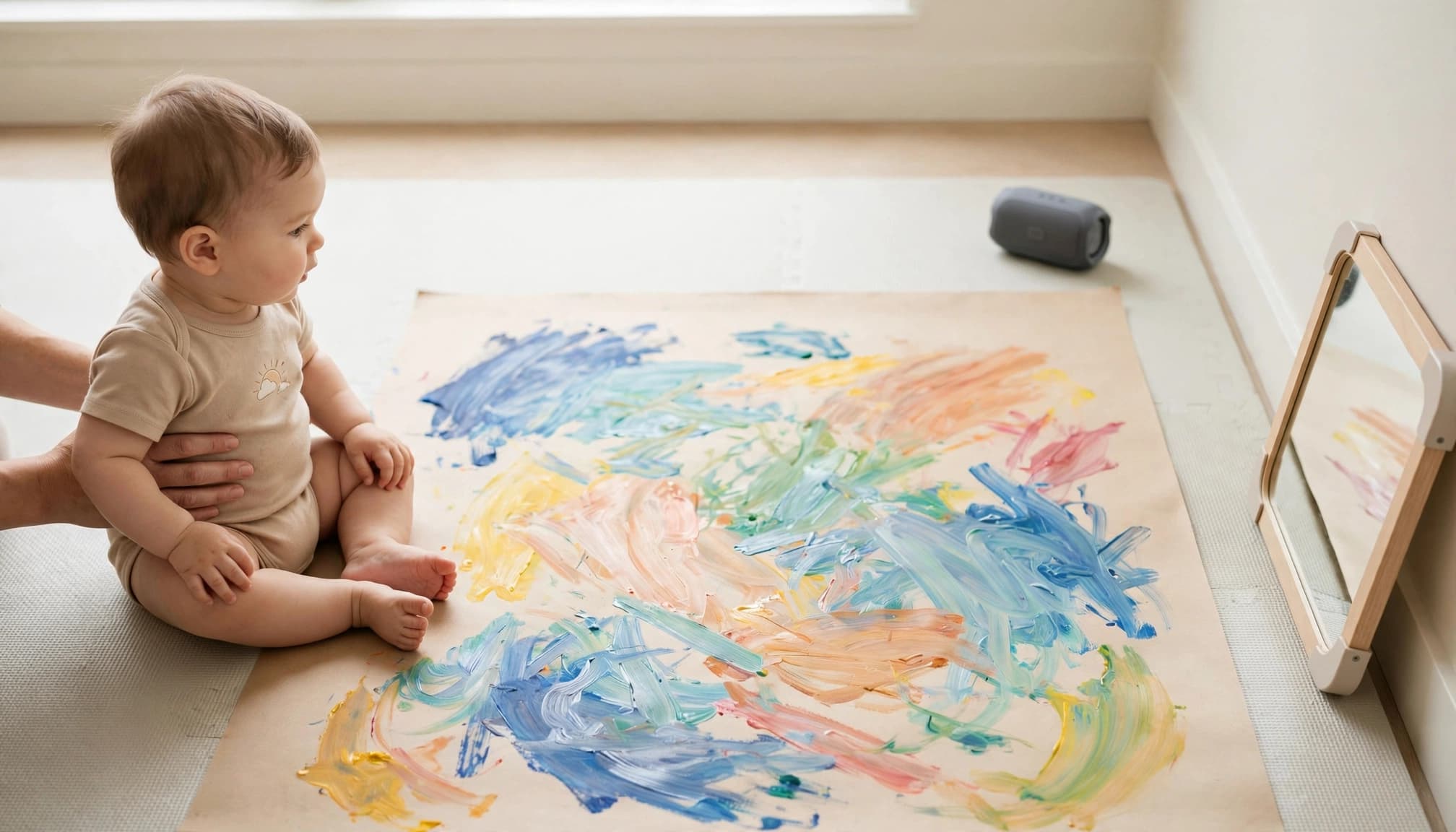
Make a gentle sound-and-mark session
Set out a large sheet of paper and washable paint, then secure the paper to a stable surface. As soft music plays nearby, an adult can make broad strokes with a sponge or brush while the baby watches. Keep the sound comfortable, low enough for easy conversation, and turn it off if your baby seems unsettled. The American Academy of Pediatrics’ guidance on noise exposure notes that babies rely on adults to move them away from excessive noise.
For another variation, make wide paint marks in time with a gentle song. The adult should hold and move the painting tool, rather than placing it in the baby’s hand. Choose washable paint intended for children’s use, and supervise closely so paint stays away from the mouth.
Explore a mirror and baby-safe reflections
Place a shatterproof baby mirror beside a large sheet of paper with a few adult-made color marks. Secure the mirror so it cannot tip or slide, then let your baby look between their reflection and the bright shapes. You can point to a color or make a slow gesture for your baby to follow.
Check the mirror for cracks or damage before each session. Use a purpose-made baby mirror only, never glass or small reflective pieces, and stay close enough to prevent your baby from pulling it down.
Make a seasonal color page
For a spring page, an adult can add broad green and yellow marks to secured paper with a soft sponge. In autumn, make large orange and brown shapes instead. Your baby can watch each color appear or touch the page with support once the paint is dry.
Keep seasonal decorations flat and firmly attached. Avoid loose leaves, tiny cutouts, or other parts your baby could pull off and mouth.
Turn a cardboard box into an art space
Lay a clean, large cardboard panel flat on the floor, then offer a chunky washable crayon or let an adult guide a soft sponge across the surface. The broad area gives your baby room to notice marks without needing to sit at a table. Keep the session short, and put the materials away afterward.
Before play, check for staples, sharp tape edges, and torn cardboard. Keep the panel flat, and never place your baby inside a box.
Keep Baby Art Time Safe, Simple, and Fun
A few simple precautions can make all 25 projects easier to enjoy. Choose materials based on your baby’s age, development, allergies, and tendency to mouth objects, not just the age range printed on a craft label.
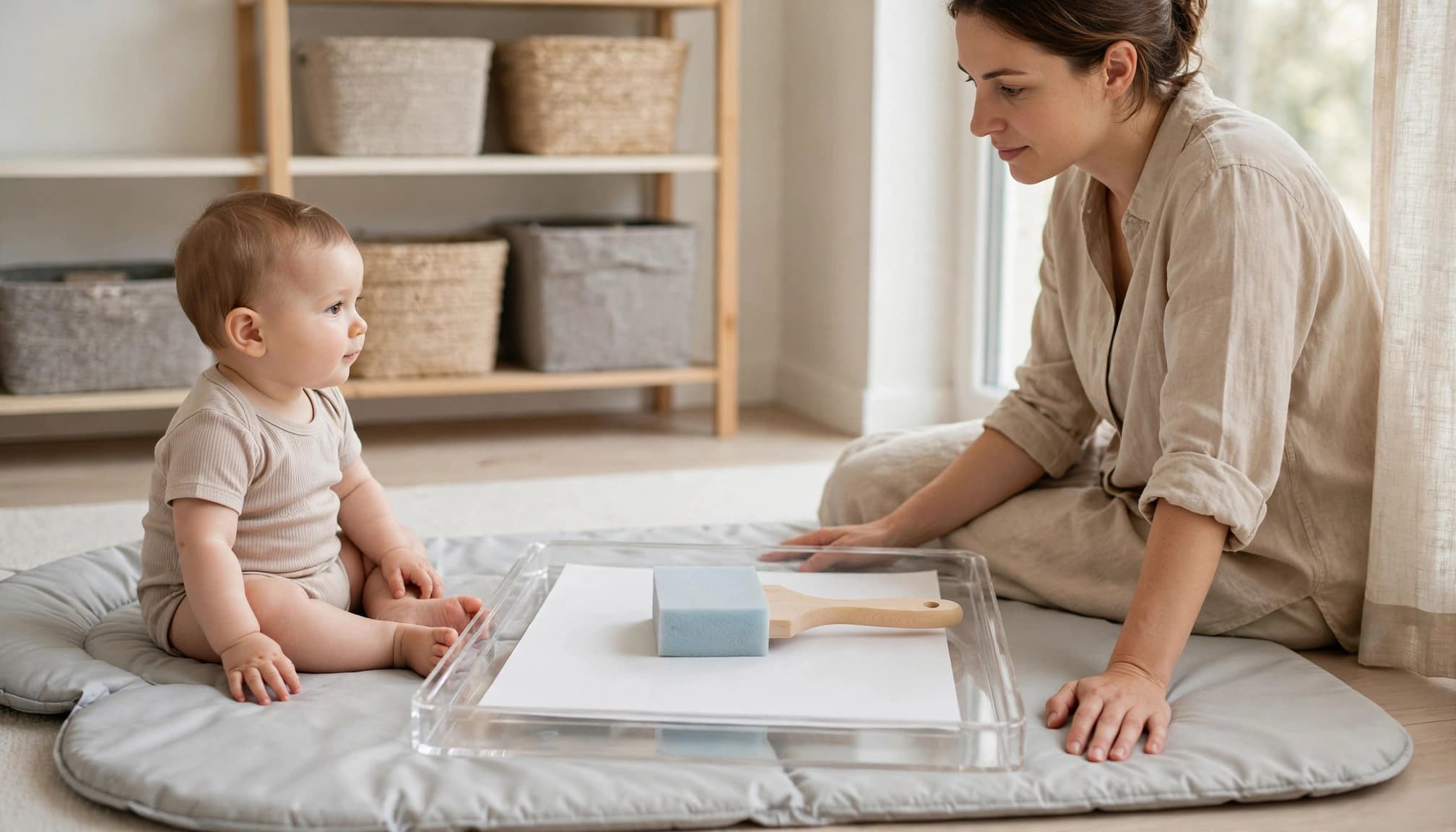
Choose materials babies can safely explore
Use age-appropriate art supplies with clear safety labels. For children’s art materials, look for products marked “conforms to ASTM D4236” and the ACMI AP (Approved Product) seal. Choose large-format tools that are easy to see, washable paints, and surfaces you can clean quickly. Avoid solvents, powders, and supplies with warning labels such as “Danger” or “Keep Out of Reach of Children.”
Even products labeled non-toxic aren’t edible or safe to swallow. Keep paint, crayons, and other supplies out of your baby’s mouth, and remove them if your baby starts chewing. Skip small or breakable items, including beads, buttons, magnets, caps, balloons, broken crayons, and loose dry fillers. Water beads are especially dangerous if swallowed, as the CPSC’s water bead safety guidance explains.
Supervise closely and set up a clean space
Stay within arm’s reach for the entire activity. Before you bring your baby to the play area, cover the floor or table with a washable surface and set out only a small amount of the material you need. Keep extra supplies and containers beyond reach, and return materials to their original containers after play.
Watch closely so paint and tools stay away from your baby’s mouth. Then wash your baby’s hands and clean the work area when the activity ends. Stop if your baby becomes tired or upset, or tries to eat the supplies. A short, calm session is safer and more enjoyable than pushing through.
Match activities to your baby’s stage
Young babies may enjoy watching colors move or feeling a texture with your support. Older infants may reach, pat, or make marks, but each baby develops at a different pace. Offer only what your baby can explore safely, and keep sessions brief.
If you’re choosing activities around a particular stage, these tummy time ideas for babies by age offer another way to think about age-appropriate play. Check with your pediatrician if you have concerns about allergies, sensitivities, or your baby’s developmental needs.
Conclusion
Baby art is about safe discovery, not a perfect finished project. Choose one simple idea, prepare the space before bringing your baby over, and follow their cues. If they lose interest or try to mouth the materials, stop and put everything away.
With close supervision and age-appropriate materials, a brief activity can give your baby a chance to notice color, texture, and movement. The best result is a calm moment of exploration together.
Save pin for later

- Can I Give A Half-boiled Egg To My Baby? - September 25, 2026
- What Are The Nutritional Benefits Of Eggs For Babies - September 25, 2026
- When Should I Avoid Giving Eggs To My Baby? - September 25, 2026