When to consult a pediatrician before serving eggs
Once your baby is ready for solid foods, usually around 6 months, you can offer well-cooked egg as part of a varied diet. There’s no official rule that babies must eat eggs every day or a set number of times each week.
Breast milk or formula remains your baby’s main source of nutrition during the first year, while solids add variety and nutrients. Read on for guidance on when to start, how often to serve egg, and how to prepare it safely, including safe ways to serve eggs to infants.
For a visual guide, watch how to safely feed eggs to babies 6 months and older.
How Often Should Babies Eat Eggs?
There’s no required daily egg serving for babies and no official weekly quota. U.S. guidance supports introducing egg during infancy, once your baby is ready for solid foods, then including it regularly as part of a varied diet. The guidance does not prescribe a schedule or say that serving egg a certain number of times each week prevents food allergies.
There is no required daily egg serving for babies
Egg provides protein and nutrients such as choline, but it’s one of many suitable foods for babies. You can serve it alongside other protein-rich choices, such as beans, lentils, tofu, meat, or fish, while also offering fruits, vegetables, and grains.
Variety matters more than repeating one food at every meal. As your baby develops, offer textures that match their eating skills, such as mashed foods and soft pieces. For age and readiness guidance, see the CDC’s advice on introducing solid foods and allergens.
Offer egg regularly after your baby tolerates it
Once your baby has tried egg and tolerates it, keep it in the food rotation when it fits a meal. “Regularly” doesn’t mean daily or on a fixed number of days each week. Your baby might have egg at breakfast one day, then eat beans, yogurt, or another protein at a later meal.
The American Academy of Pediatrics advises families to keep allergenic foods in a baby’s diet routinely after introduction, using developmentally appropriate portions. However, it doesn’t set a universal weekly egg schedule. Offer a suitable amount and let your baby’s hunger and fullness cues guide how much they eat. If appetite varies from one meal to the next, that’s normal.
For practical ideas that mix egg with other foods, browse these meal ideas for 9-month-old babies.
When Can Babies Start Eating Eggs?
Most babies can try egg at about 6 months, once they’re ready for complementary foods. Don’t start solids before 4 months, and use your baby’s developmental signs, not age alone, to guide the timing. Breast milk or infant formula remains the main source of nutrition through the first year; egg and other solids add variety.
Look for signs your baby is ready for solid foods
Your baby should be able to sit upright with support and hold their head and neck steady. They may watch you eat, reach toward food, or open their mouth when you offer a spoon. Just as important, they should be able to move food back and swallow it rather than pushing it straight out with their tongue.

If your baby slumps in the seat, can’t keep their head steady, or repeatedly pushes food out, wait and try again later. These skills help make eating safer and more manageable. For more cues to watch for, see these signs your baby is ready for solid foods.
Introduce egg during the first year instead of waiting
Once your baby is developmentally ready, you can offer well-cooked egg along with other age-appropriate complementary foods. Serve it in a soft texture and shape your baby can manage. There’s no need to wait until after the first birthday: delaying common allergenic foods such as egg has not been shown to prevent food allergies. The American Academy of Pediatrics’ guidance on introducing allergens supports introduction once babies are ready, typically around 6 months.
If your baby has severe eczema or has had an immediate reaction to a food, talk with their pediatrician before offering egg. They can help you decide whether to introduce it at home or follow a more individualized plan. Continue breast milk or formula as your baby’s primary milk source while solids gradually become part of meals during the first year.
How much egg should you serve at a time?
There’s no single portion that suits every baby. The amount your baby eats can change with age, appetite, and experience with solid foods, so offer a little and let their cues guide you. Egg can be one part of a meal, but it doesn’t replace breast milk or formula during the first year.
Start with a small taste and follow your baby’s cues
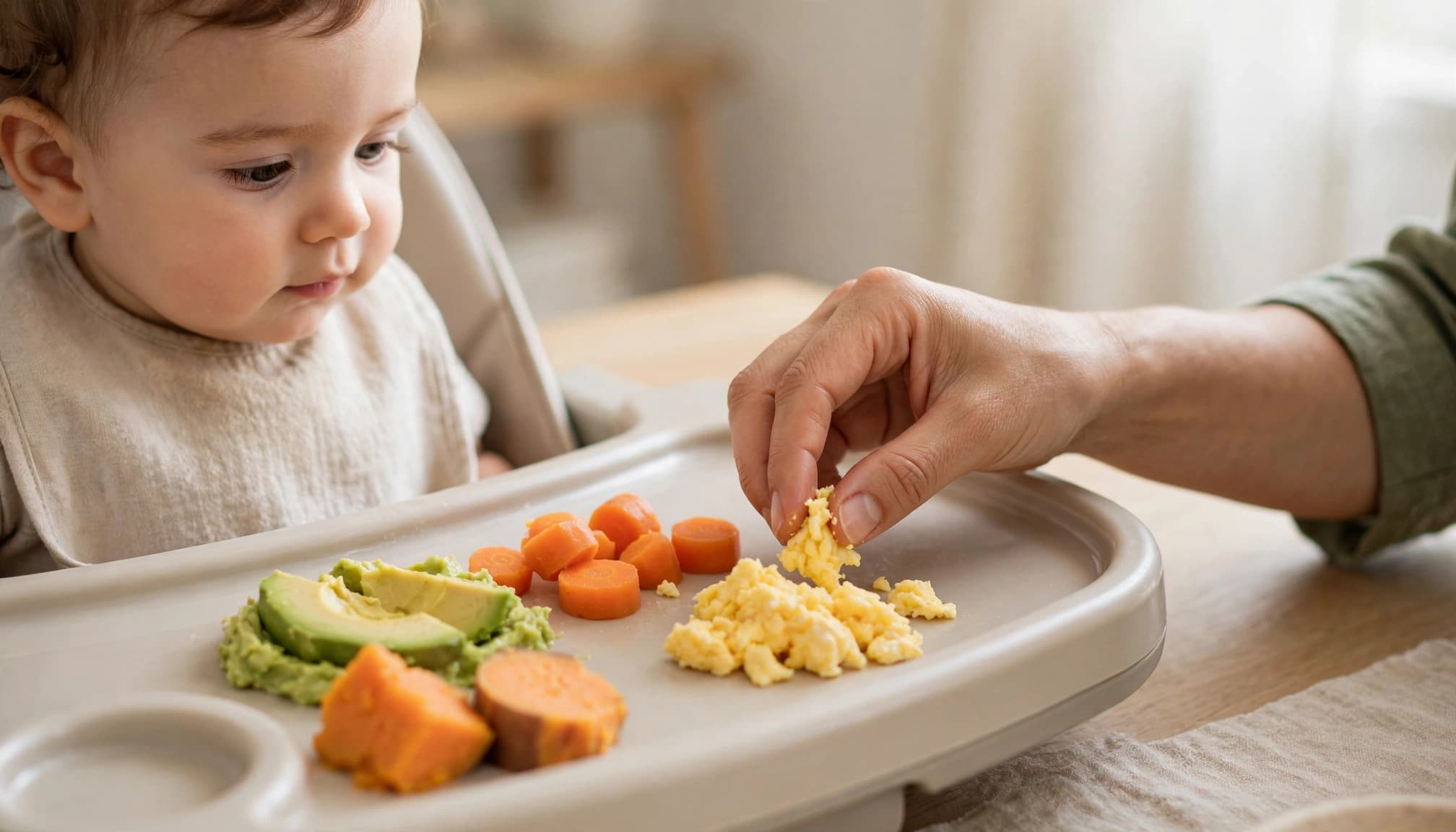
Begin with a small amount of well-cooked egg in a soft, age-appropriate texture. If your baby opens their mouth, leans toward the food, or reaches for another bite, offer a little more. There’s no need to measure out a fixed serving or encourage your baby to finish what’s on the tray.
On the other hand, turning away, closing the mouth, pushing food away, or losing interest can mean your baby is full or ready for a break. Pause or end the meal when those cues appear. Appetite may vary from one meal to the next, especially as your baby gets used to new tastes and textures. You can find more examples of baby fullness cues to watch for.
USDA infant meal-pattern amounts apply to childcare programs that participate in the Child and Adult Care Food Program. They help providers plan meals, but they aren’t required serving sizes for meals at home. For details, see the USDA’s CACFP infant meal pattern.
Fit egg into a varied diet
Egg is one option to include at meals, alongside other foods that provide protein and iron. Depending on your baby’s age and eating skills, you can also offer soft, appropriately prepared meat or fish, mashed beans or lentils, and iron-fortified infant cereal.
Variety helps your baby experience different flavors and textures, while providing nutrients from more than one food. You don’t need to serve egg every day or rely on it to meet all your baby’s nutrition needs. Keep breast milk or formula in your feeding routine, and offer other complementary foods that your baby can safely manage.
Prepare eggs safely for your baby’s age and texture skills
Serve eggs fully cooked, then adjust their texture and shape to match what your baby can manage. Safe preparation helps reduce foodborne illness and choking risks while your baby learns to eat.
Choose soft, fully cooked forms of egg
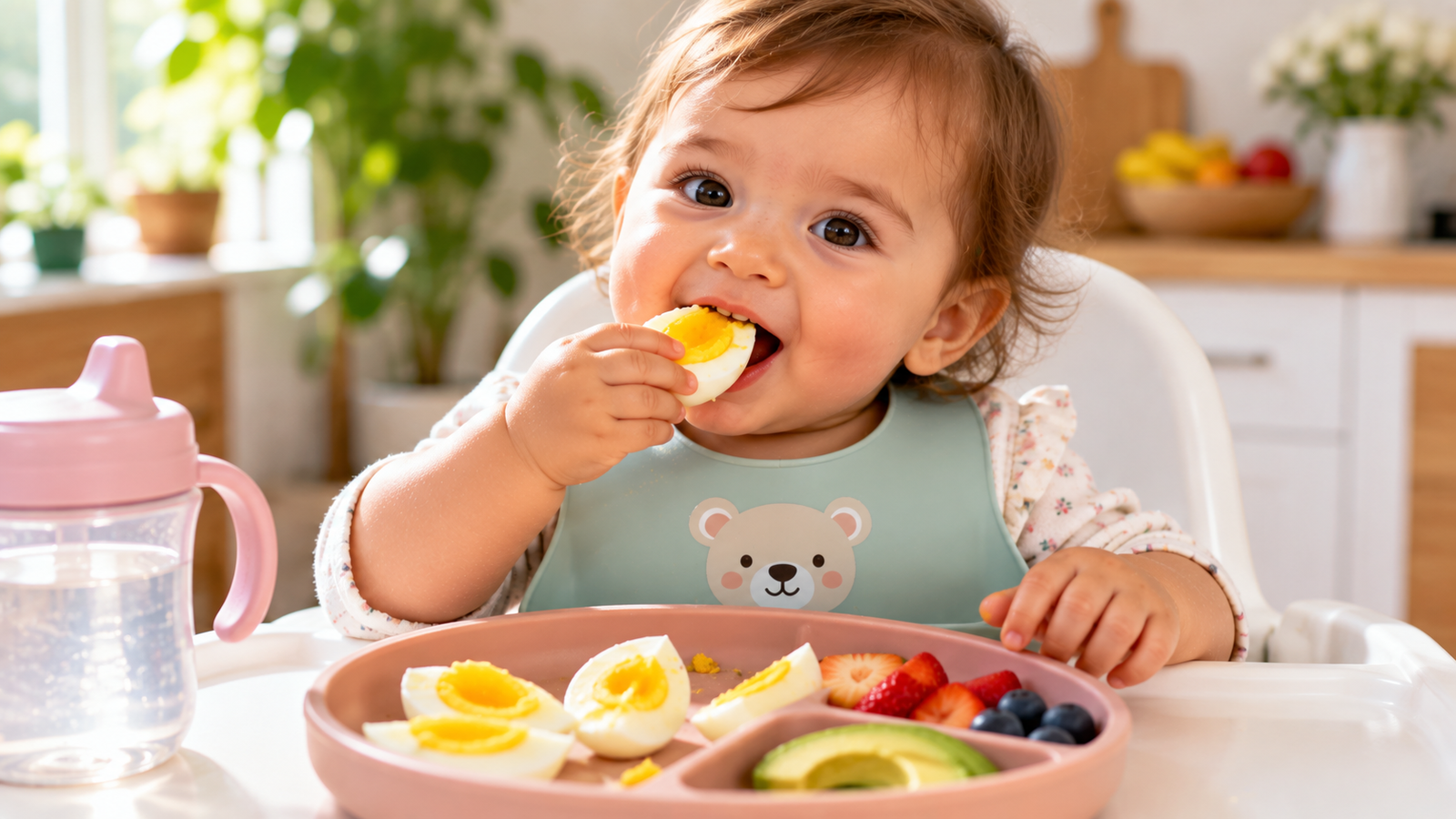
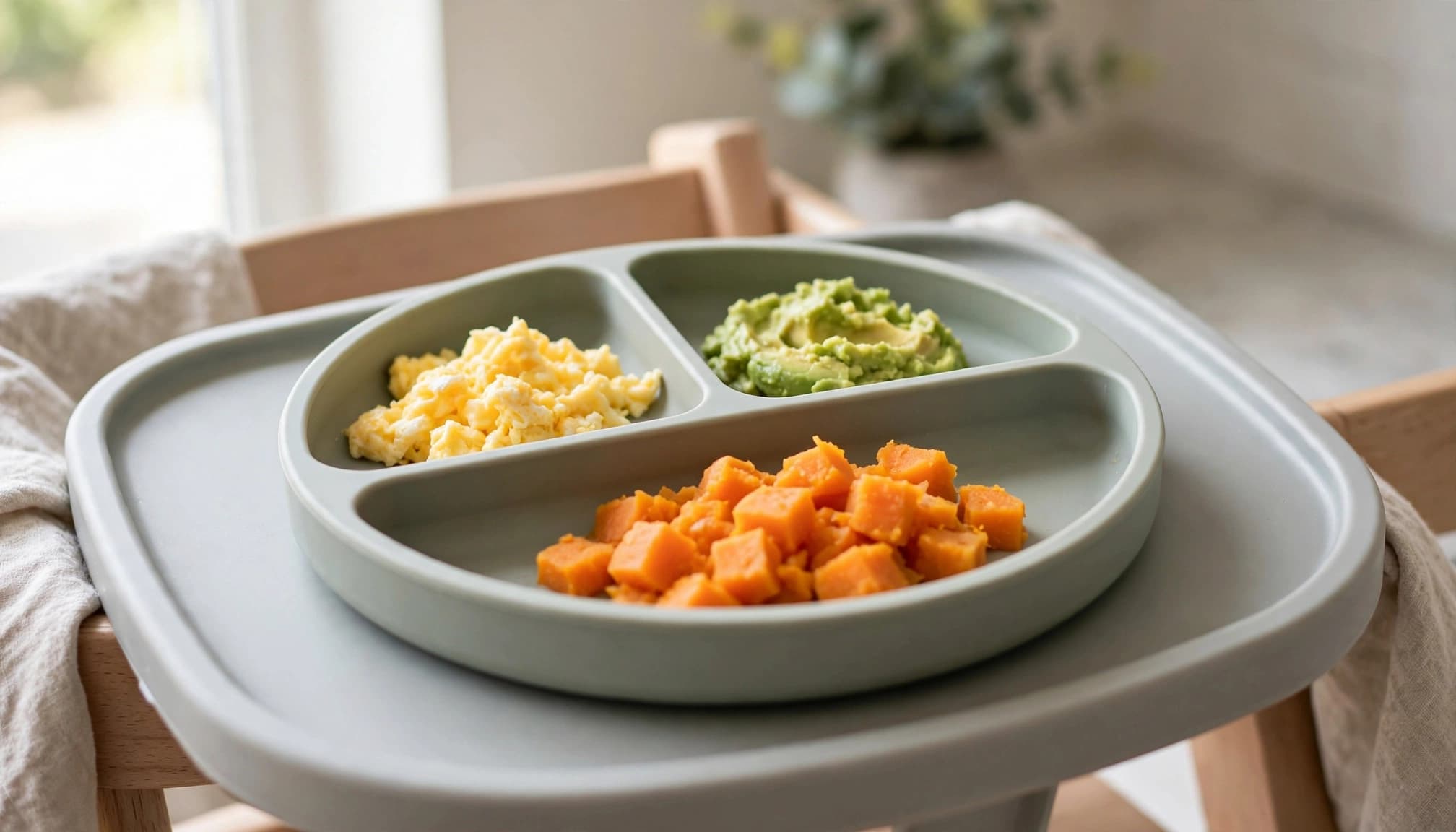
Cook both the white and yolk until firm. Good options include mashed hard-boiled egg, soft scrambled egg cooked through, or finely chopped egg mixed into a familiar, moist food. If you prepare a casserole or another egg dish, cook it to 160°F, using a food thermometer to check the center. The FDA also advises against runny scrambled eggs and recommends safe cooking temperatures for egg dishes.
Avoid raw batter, runny yolks, and partially cooked egg dishes. These can expose babies to harmful bacteria. For a drier hard-boiled egg, mash it with a little breast milk, formula, or water to make it easier to swallow. You can find more ideas for soft egg textures for babies.
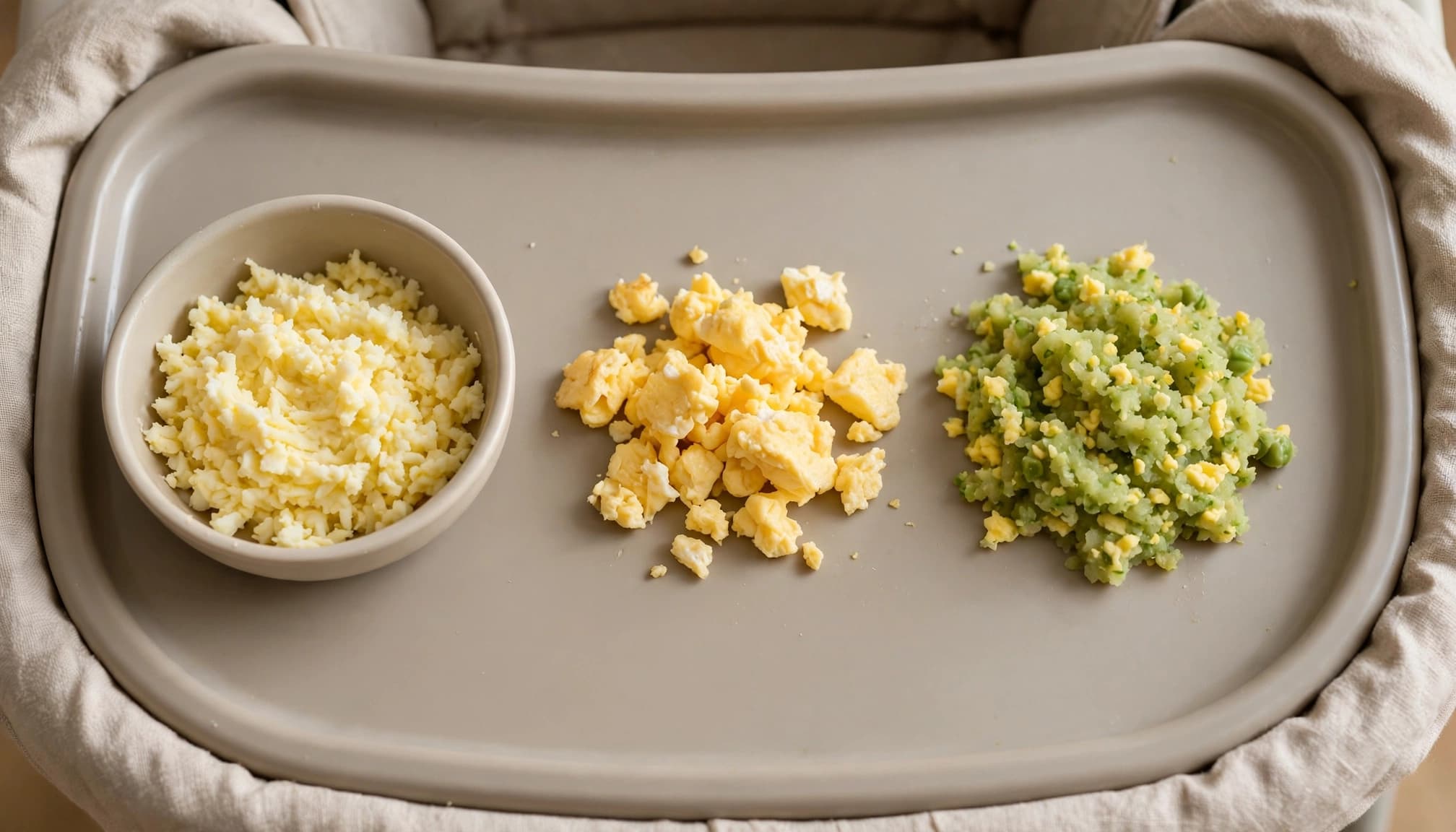
Adjust the shape and texture as skills grow
Early eaters may do best with smooth or mashed egg. As your baby gains experience picking up and chewing food, offer soft, small pieces they can manage with their fingers. Keep pieces moist and tender, and avoid hard chunks or firm, round pieces that may be difficult to chew and swallow. The texture should yield easily when pressed between your fingers.
At every meal, seat your baby upright in a high chair with their head steady. Stay within arm’s reach and watch while they eat, rather than stepping away or relying on a screen. These habits matter even when the food is soft and cut small.
Practice basic kitchen hygiene, too. Wash your hands, utensils, and preparation surfaces before and after handling raw eggs. Refrigerate eggs promptly, discard cracked eggs, and keep cooked egg separate from raw egg and its utensils. Offer only what your baby can eat during the meal, and refrigerate leftovers promptly.
Watch for egg allergy symptoms and know what to do
Offer egg when your baby is well, during a calm meal when you can watch closely. After the first taste, keep an eye on your baby, especially during the first couple of hours. Reactions can begin within minutes or up to two hours after eating.

Know the signs of an allergic reaction
A reaction may cause hives or an itchy rash, swelling, or vomiting. A few spots of hives or a rash limited to one area may be less severe, but they still warrant a call to your child’s clinician. See egg allergy symptoms in babies for other signs to watch for.
Get emergency care right away if your baby has trouble breathing, wheezing, a persistent cough, swelling of the tongue or throat, or seems pale, limp, or unusually weak. Repeated vomiting or symptoms affecting more than one part of the body can also indicate a severe reaction. Call 911, and if your baby has a prescribed epinephrine auto-injector, use it as directed. Don’t wait to see if breathing symptoms improve.
For any suspected reaction, stop feeding egg and contact your child’s clinician for advice. A clinician can assess what happened and determine whether further evaluation is needed. Don’t deliberately offer egg again at home to see if the reaction returns unless a medical professional advises you to. The Mayo Clinic’s egg allergy guidance describes symptoms that can range from mild to serious.
Ask the pediatrician about higher-risk babies
Before introducing egg, ask your pediatrician for individualized advice if your baby has severe eczema or had an immediate reaction to another food. The clinician can help you decide whether to introduce egg at home or follow a different plan.
These risk factors don’t mean every baby needs allergy testing or a specialist appointment. Your pediatrician can consider your baby’s history and recommend next steps. For babies without these concerns, families can generally introduce well-cooked egg when the baby is ready for solid foods, while watching closely for symptoms.
Build a simple egg-feeding routine without making it a rule
A flexible routine can help you keep egg in your baby’s food rotation without turning meals into a schedule. The goal is to introduce it safely, then offer it regularly alongside other foods your baby enjoys.

A sample approach for offering egg
When your baby is ready for solids, offer a small taste of fully cooked egg in a soft, age-appropriate form. Choose a time when your baby is well and you can watch for possible allergy symptoms. If there’s no reaction, offer egg again as part of meals that include other foods.
For example, you might serve soft scrambled egg with mashed vegetables one day, then offer beans, yogurt, or another protein at a later meal. You could include egg in the rotation several times during the week if it works for your family, but that’s an example, not a required schedule. U.S. guidance doesn’t set a specific number of egg meals per week. The AAP’s review of early food introduction supports introducing allergenic foods during infancy, while individual feeding plans can vary.
For more ideas that pair egg with other foods, see these easy meals for 8-month-old babies.
Let appetite and family routines guide you
Some days your baby may eat several bites; other days, they may turn away after a taste. Appetite can change from meal to meal, so follow your baby’s hunger and fullness cues rather than pushing a set portion or frequency. Continue offering breast milk or formula as your baby’s main source of nutrition during the first year.
If your baby has severe eczema, a previous food reaction, or you’re unsure how often to offer egg, discuss your plan with the pediatrician. They can help you adapt feeding to your baby’s health needs and development.
Conclusion
Babies who are ready for solid foods can generally eat fully cooked egg during the first year. There’s no official guidance requiring egg every day or setting a weekly amount, so offer it regularly as part of a varied diet rather than following a strict schedule.
Serve egg in a soft texture your baby can manage, and supervise closely while they eat. Watch for allergy symptoms, and ask your pediatrician for advice before introducing egg if your baby has severe eczema or a history of food reactions. Above all, follow your baby’s hunger and fullness cues and keep offering a range of nutritious foods.
Save pin for later


- Can I Give A Half-boiled Egg To My Baby? - September 25, 2026
- What Are The Nutritional Benefits Of Eggs For Babies - September 25, 2026
- When Should I Avoid Giving Eggs To My Baby? - September 25, 2026