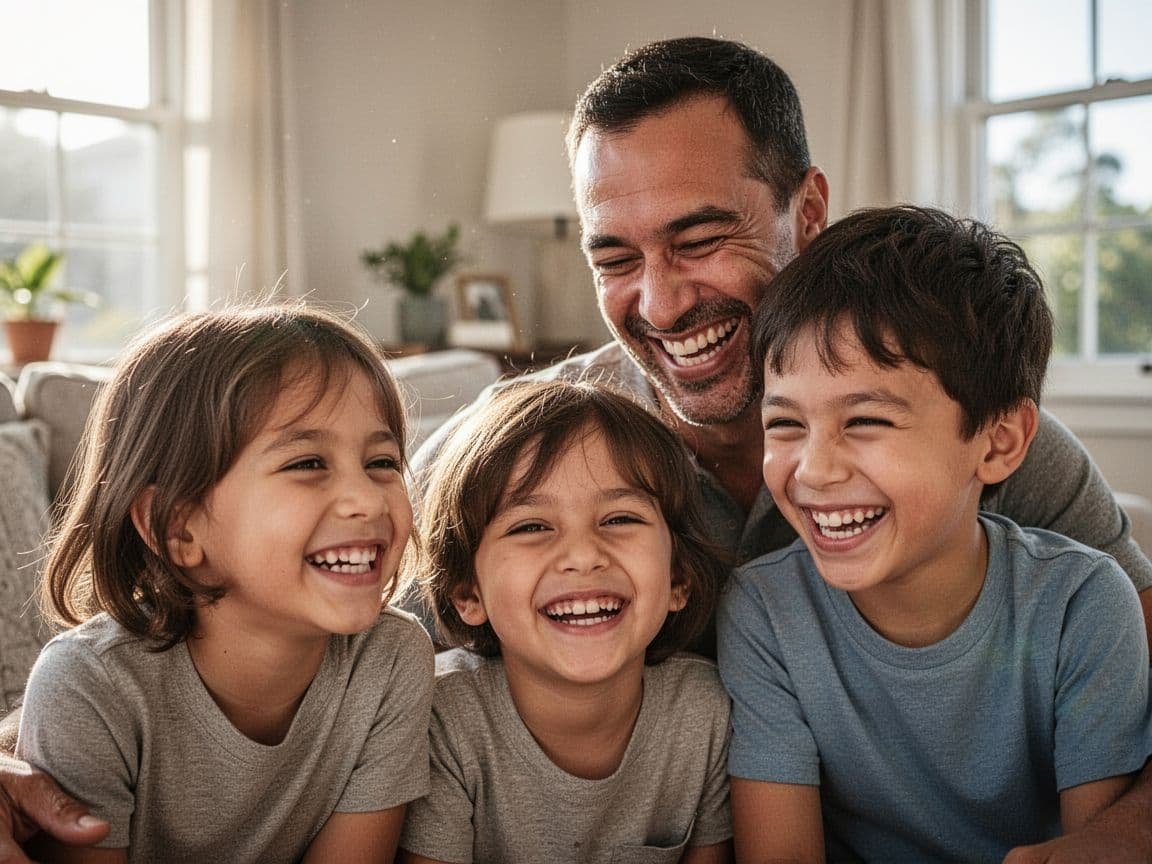
Dad jokes win kids over because they’re short, silly, and easy to catch. A clean pun or goofy one-liner can turn an ordinary afternoon into a room full of giggles, eye-rolls, and repeat requests for “one more.”
If you want funniest dad jokes to make kids laugh, the best ones are simple enough for little ears and corny enough to spark a grin. You’ll also find easy tips for writing your own jokes, plus a few ways to use humor to brighten family time, whether you’re at the dinner table, in the car, or winding down before bed.
Why kids love dad jokes so much
Kids gravitate to dad jokes because they are easy to follow, easy to repeat, and funny in a way that feels harmless. The joke does not ask for much, which is part of the charm. It lands like a paper airplane, light and wobbly, but still fun to watch.
They also fit the way children enjoy humor at home. At bedtime, in the car, or during mealtime, a quick pun can break the routine and turn a normal moment into a shared laugh. That simple little burst of fun often matters more than a perfect punchline.

Silly humor feels safe and easy to enjoy
Children usually laugh hardest at jokes that feel safe. Dad jokes rarely tease, insult, or confuse in a harsh way, so kids can relax and enjoy the silliness without worry. That matters, because humor feels better when no one is getting picked on.
The best dad jokes stay gentle, clean, and a little ridiculous. A joke about a banana slipping on a peel or a cow telling a corny line gives kids something simple to grab onto. They do not have to decode hidden meaning, and they do not have to wonder if someone is being mean.
That is why kids often love the comfort of familiar humor at home. A joke told during a bedtime routine can feel like a soft landing before sleep. A pun at the dinner table can turn plain rice and chicken into a moment everyone remembers.
Harmless humor gives kids permission to laugh freely, without stress or second-guessing.
Kids also like jokes they can share back. Once they learn one silly line, they can retell it to a sibling, a grandparent, or a friend. That makes the joke feel like a small prize they get to keep.
For more playful ideas that keep the mood light, see these fun activities to do with kids.
Surprise endings keep kids guessing
A dad joke usually starts in one direction, then turns at the last second. That twist is the spark. The brain expects one answer, then gets a different one, and that tiny shift is often enough to make kids giggle.
For example, a child hears, “Why did the cookie cry?” and expects a serious answer. Then the punchline gives them something odd, like “Because its mom was a wafer.” The joke works because the answer sounds just wrong enough to be funny.
Repetition also helps. Kids enjoy hearing the same kind of setup again and again because they start to predict the pattern. Once they know a joke is about to take a weird turn, they wait for the punchline like a game.
That is why dad jokes fit car rides so well. The setup keeps kids listening, and the twist gives them something to react to. It is quick, low-pressure entertainment that works without screens or props.
A useful way to think about it is this:
- Setup: It leads the child in one direction.
- Punchline: It flips the meaning at the end.
- Reaction: The surprise is what makes the laugh happen.
Simple wordplay keeps that surprise clear. Research on dad jokes points to the same idea, that the humor is often in the cheesy twist itself, not in a clever story or a big payoff. A short explanation from the British Psychological Society backs up that playful awkwardness is part of the joke.
Groans can be part of the win
Kids do not always laugh in a neat, tidy way. Sometimes they laugh first, then roll their eyes, then beg for another joke. Sometimes they groan because the punchline is so corny, and that groan is part of the fun.
A groan from a child does not mean the joke failed. In many cases, it means the joke landed exactly where it should. The silliness was obvious, the punchline was obvious, and the child still enjoyed the ride.
That mixed reaction is common in family humor. A kid may say, “That was so bad,” while grinning from ear to ear. In dad joke language, that usually counts as a success.
It also makes the joke feel shared. The child hears the punchline, sees the parent’s proud grin, and joins in the playful back-and-forth. That little loop of joke, groan, and laugh is often what they remember most.
Groan-worthy jokes work especially well in everyday moments like these:
- Bedtime, when kids want one last laugh before sleep
- Car rides, when everyone needs a quick break from boredom
- Mealtime, when a silly line can loosen up the whole table
Kids often respond best when the humor feels familiar and safe. That is why a corny dad joke can beat a big, fancy joke any day. It gives them surprise, repetition, and a chance to laugh at the awkwardness without taking anything too seriously.
The funniest dad jokes to make kids laugh right away
The best kid-friendly dad jokes work fast. They use simple words, clear pictures, and a punchline that lands before the attention span wanders off. That makes them perfect for the car, the dinner table, or any moment that needs a quick smile.
A good joke can also turn a normal routine into a shared memory. If you want more easy ways to bring humor into the day, these fun activities to do with kids fit right alongside a stack of silly one-liners.
Classic pun jokes that never get old
Classic puns are the backbone of dad humor because kids can spot the joke right away. The trick is to keep the setup short and let one word do the funny work.
Here are a few that stay simple and clean:
- Why did the math book look sad? It had too many problems.
- What do you call cheese that isn’t yours? Nacho cheese.
- Why did the bicycle fall over? It was two tired.
- What do you call a fake noodle? An impasta.
- Why can’t your hand be 12 inches long? Because then it would be a foot.
- Why did the cookie go to the doctor? It felt crummy.
- What key opens a banana? A mon-key.
- Why did the scarecrow win an award? He was outstanding in his field.
Short puns work best when kids can hear the twist in one second flat.
These jokes are great because they sound obvious after the punchline. That tiny “ohhh” moment is often what makes kids laugh the hardest.
Animal jokes that are extra cute and silly
Animal jokes are easy wins because children can picture the scene right away. A sheep in a car or a bear with no teeth turns into instant cartoon fun in their heads.
A few favorites include:
- What do you call a toothless bear? A gummy bear.
- What kind of car does a sheep like to drive? A lamborghini.
- Why are spiders so smart? They can find everything on the web.
- What do you call an alligator in a vest? An investigator.
- Why are pigs so bad at sports? They always hog the ball.
- Why do bees have sticky hair? Because they use a honeycomb.
- What do you call a sleepy cow? A bovine napper.
- Why did the chicken join a band? Because it had the drumsticks.
A joke like this works because it paints a picture before the punchline lands. Kids see the animal first, then the silly twist makes the whole thing feel even funnier.
Food jokes that get easy laughs at the table
Food jokes are perfect for mealtime because they fit right into the moment. A banana joke during breakfast or a bread joke at dinner feels natural, not forced.
Try these easy table-time lines:
- What did the banana say to the doctor? I find you a-peeling.
- What do you give a sick lemon? Lemon-aid.
- What do you call a sad piece of bread? A loaf without love.
- Why did the egg hide? It was a little chicken.
- What do you call a fancy pasta? An impasta.
- Why did the milk cross the road? It was in a carton hurry.
- What kind of snack do clouds eat? Lightning bolts.
- Why did the peanut butter go to school? To become a spread scholar.
These jokes are easy for kids to repeat, which matters more than people think. If a child can say the joke out loud on their own, the laughter often follows faster.
School and homework jokes kids will remember
School jokes hit because kids know the setting well. Pencils, backpacks, teachers, and homework all give the joke something familiar to hold onto.
A few quick ones that fit that world:
- Why was the pencil so calm? It had a good point.
- Why did the student eat his homework? The teacher said it was a piece of cake.
- What do you call a math teacher who loves the ocean? A sum-mer lover.
- Why did the book join the gym? It wanted better bindings.
- Why did the backpack feel heavy? It was carrying a lot of class.
- What did the ruler say to the pencil? You measure up.
- Why did the teacher wear sunglasses? Her students were so bright.
- Why was the computer cold at school? It left its Windows open.
Kids usually laugh harder at jokes that feel tied to their own day. A quick line about homework can land even better when they just finished a worksheet.
Family jokes that feel playful, not cheesy in a bad way
Family jokes work best when they sound affectionate. A good one makes kids feel included, not targeted, so the humor stays warm and easy.
These lines keep the mood light:
- Why did dad bring a ladder to the kitchen? He heard the cookies were on the top shelf.
- What did the sibling say to the messy room? “You’re really pushing my buttons.”
- Why did mom sit on the clock? She wanted to be on time.
- What do you call a dad who tells jokes while doing chores? A pun-isher.
- Why did the child smile at the vacuum? It was a little swept up in the moment.
- Why did the family dog refuse to play cards? It was afraid of cheetahs.
- What did the kids say when the chores were done? “We cleaned up our act.”
- Why did the couch blush? The family kept sitting on it with compliments.
Family jokes land well because they feel like inside jokes everyone can share. They do not need sharp edges or big setups, just a playful wink and a clean punchline.
When you mix these joke types, you get a full toolbox for different moments. Use puns for quick laughs, animal jokes for younger kids, food jokes for the table, school jokes for familiar fun, and family jokes when you want the whole room smiling together.
How to make your own dad jokes at home
You don’t need a joke book to come up with fresh dad jokes. A good one usually starts with a familiar idea, stays short, and ends with a silly turn. That simple pattern works because kids catch on fast, then laugh even harder when the ending flips what they expected.
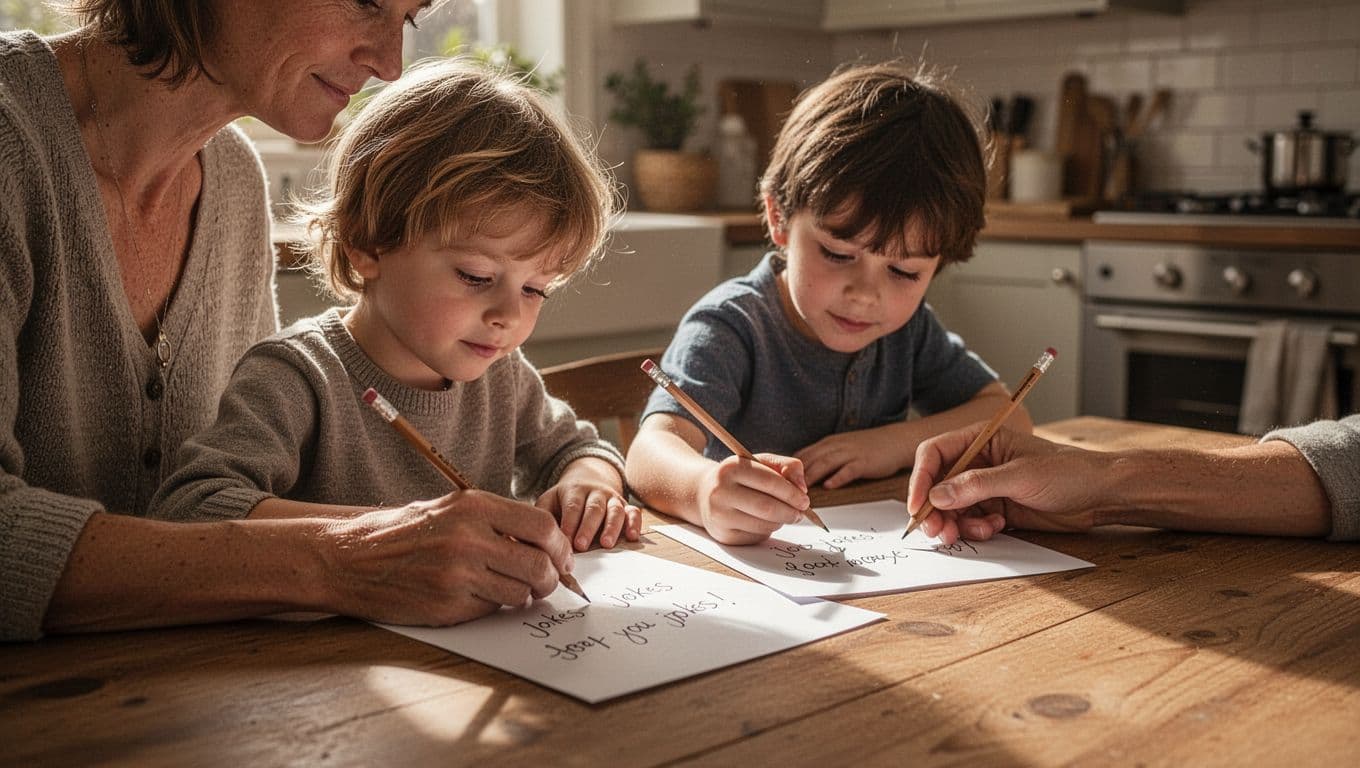
Start with something kids already know
The easiest jokes come from everyday things kids already understand. Pets, food, school, weather, toys, and family routines all work well because they need no extra explanation.
A joke about lunch or homework lands faster than a joke about something abstract. Kids can picture the scene right away, so the punchline has a clear place to land. That is half the magic.
Try starting with a few simple topics:
- Pets: dogs, cats, fish, birds
- Food: bananas, pizza, cereal, cookies
- School: pencils, books, backpacks, tests
- Weather: rain, sunshine, wind, snow
- Toys: blocks, balls, dolls, cars
- Family routines: bedtime, breakfast, car rides, chores
If you want more ideas for turning ordinary moments into fun, screen-free indoor activities for kids can give you plenty of playful settings to joke around in.
Use a question, then flip the answer
Most dad jokes follow a simple shape, and kids can learn it quickly. You ask a question, build up one expectation, then give a silly answer that twists the meaning.
A basic formula looks like this:
- Ask a question
- Lead the listener toward one answer
- Flip it with a pun or surprise
For example: “Why did the banana go to the doctor?” The listener expects a normal reason. Then you answer, “Because it wasn’t peeling well.” The joke works because the word “peeling” sounds like “feeling.”
You can also use a statement instead of a question. “I wanted to tell a joke about pizza, but it was too cheesy.” That setup still creates a small surprise at the end.
The best punchlines feel obvious only after you hear them.
For more examples of this style, see how to write the best and worst dad jokes. It shows how a plain setup and a playful twist can do most of the work for you.
Keep the wording short and simple
Short jokes work better for kids because they get to the punchline fast. Long setups lose the room, especially when the joke depends on one tiny twist at the end.
Use easy words, plain sentences, and clear timing. If a child has to stop and think too long, the laugh can disappear before it starts. Simple is stronger here.
A few quick tips help:
- Keep the setup under one sentence when you can.
- Use words kids say every day.
- Leave out anything extra that doesn’t help the joke.
- Pause right before the punchline so it lands cleanly.
The rhythm matters too. Say the setup like you’re telling a normal story, then slow down just a little before the final word. That small pause gives the joke room to breathe.
Try puns and playful word twists
Puns are the heart of dad jokes. A pun uses a word that sounds like another word, or has two meanings, and that is what makes the joke funny.
For kids, puns work best when they are easy to hear. “I used to be a baker, but I couldn’t make enough dough” is funny because “dough” means bread money and bread mix. That little double meaning is enough to get a grin.
You can make your own pun by swapping one word in a common phrase. Try these steps:
- Pick a normal phrase, like “I am on a roll.”
- Find a word that sounds similar or has a second meaning.
- Change the phrase so the new meaning sounds silly.
A few homemade examples can help you start:
- “I told my shoe a joke, and it was laced with laughter.”
- “The clock got in trouble because it kept tocking back.”
- “The tomato went to school because it wanted to ketchup.”
Kids love these because the joke feels smart without being hard. It is a tiny word trick with a big payoff, and that is exactly what makes dad jokes fun to share at home.
When and how to use dad jokes for the biggest smiles
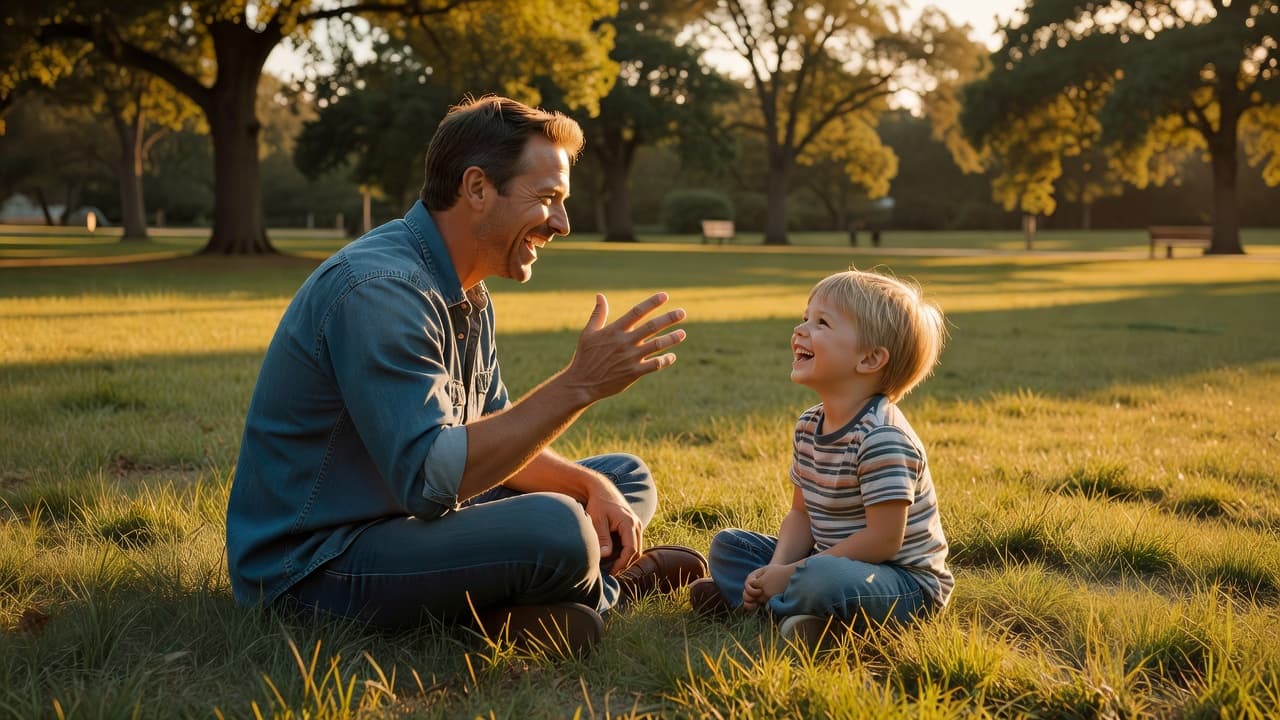
Dad jokes work best when the moment is right and the delivery stays calm. A corny line can get a huge laugh at the right time, but it can also fall flat if the room feels rushed or tense. The sweet spot is simple, a short joke, a steady voice, and a moment where kids are ready to play along.
Timing matters just as much as the punchline. A joke before school can lighten a sleepy mood, one during a long drive can break up boredom, and one after a rough day can soften the edges of the evening. Humor also helps kids feel relaxed around adults, which is why a good dad joke often does more than earn a giggle.
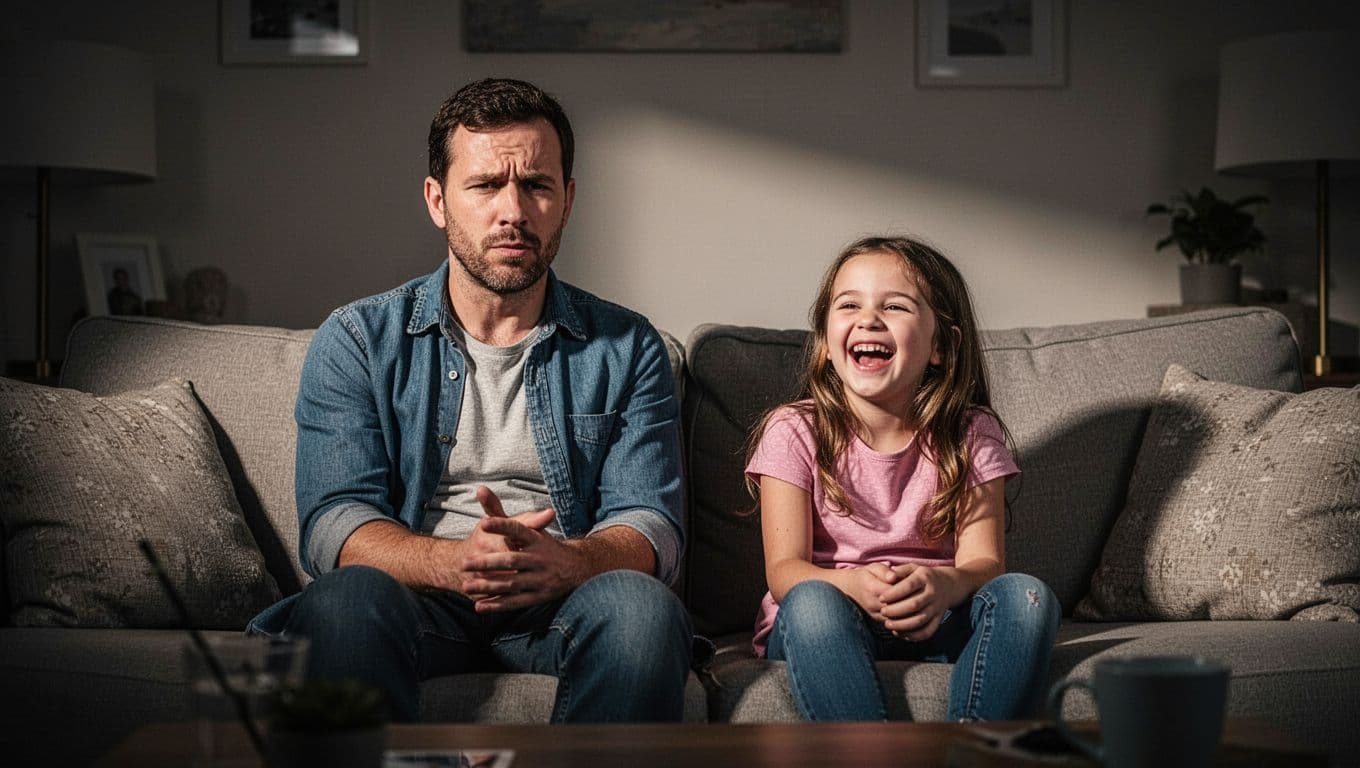
Use a confident voice and a straight face
A dad joke gets funnier when you act like it deserves a serious response. Say the line with a straight face, keep your tone calm, and let the punchline do the work. That deadpan style makes the joke feel even sillier, which is exactly why kids love it.
Confidence matters here, even if the joke is painfully cheesy. If you smile too early or laugh before the punchline lands, the joke loses some of its surprise. Play it completely straight, then pause long enough for the twist to sink in.
A simple delivery can look like this at home:
- Start with a normal tone, as if you mean every word.
- Pause before the punchline so kids can guess.
- Hold your expression just a little too seriously.
- Let the laugh happen after the joke lands.
A straight face turns a small pun into a bigger moment.
That kind of delivery works well because it creates contrast. The more serious you sound, the more ridiculous the joke becomes. For younger kids, keep the wording simple. Older kids usually catch the wordplay faster and enjoy the deadpan style even more, especially with jokes built on a quick twist.
For a stronger parent-child bond, humor like this fits naturally with positive parenting techniques for bonding.
Match the joke to the moment
The same joke can land in very different ways depending on where you tell it. A bedtime joke should feel soft and playful. A joke on the school run can be faster and a little more energetic. At dinner, a food pun usually feels right at home.
Think about the mood before you speak. If your child is tired, keep the joke gentle. If they are bored, use something with a sharper punchline. The best dad jokes fit the moment like a puzzle piece, not a random sticker.
Here’s a simple way to match the joke to the setting:
| Moment | Best joke style | Why it works |
|---|---|---|
| Before school | Quick one-liner | It wakes kids up with a smile |
| Long drive | Silly pun or riddle | It breaks boredom without screens |
| Dinner time | Food joke | It feels natural at the table |
| After a rough day | Soft, harmless joke | It lightens the mood without pressure |
| Bedtime | Gentle, cozy joke | It ends the day on a warm note |
A joke told at the wrong moment can still be funny, but a well-timed one gets a bigger reaction. You can even save your best lines for moments when the house feels heavy. One quick pun can shift the whole room.
Turn jokes into little family traditions
The biggest smiles often come from jokes kids start expecting. A joke at breakfast, one tucked into a lunchbox, or one before bed can become part of the day’s rhythm. Kids love repetition when it feels warm and familiar, because they know another laugh is coming.
That kind of routine also gives humor a home. You might tell one joke every morning while filling water bottles, or slip a pun into a lunch note before school. Over time, the joke becomes part of the family script, and children begin to wait for it.
A few easy traditions can work well:
- A breakfast joke before everyone heads out.
- A lunchbox note with a tiny pun.
- A bedtime joke after teeth brushing.
- A car ride joke on the way home.
Family humor works best when it feels shared, not forced. A regular joke can calm a tired child, brighten a quiet kitchen, or make a long day feel lighter. It also gives parents a simple way to connect without a big plan or a special event. For more ideas that bring the whole family together, these easy family night inspiration for working parents can pair well with your joke routine.
A funny line in the right moment can feel like a tiny spark. When you use it with care, that spark turns into a smile kids remember.
Conclusion
The funniest dad jokes to make kids laugh are usually the simplest ones. A small pun, a silly twist, or a clean little surprise can turn an ordinary moment into a burst of shared laughter.
Kids don’t need perfect comedy. They just need something playful, unexpected, and kind, the kind of joke that feels safe enough to repeat and fun enough to remember.
Keep the jokes light, keep the smiles easy, and let the groans count as wins too. When a home has room for a little silliness, everyday life feels lighter, one corny punchline at a time.
Save pin for later


- What Causes a Flat Head Shape in Babies? - September 20, 2026
- Baby Massage for Gas Pain: Step-by-Step Instructions - September 20, 2026
- Newborn Skin Peeling: Common Causes and Warning Signs - September 20, 2026