
Yes, formula can leave a white coating on your baby’s tongue, and most of the time it’s just milk residue, not a serious problem. Newborns don’t make much saliva yet, so formula can cling to the tongue and leave a thin white film after feeds.
That said, a white tongue can also be a sign of oral thrush, which needs different care. If the white patches don’t wipe off easily, spread to the cheeks or gums, or seem to bother your baby during feeds, it’s worth taking a closer look. For parents who want help spotting the difference, this guide to baby oral thrush can be a useful next step.
The good news is that milk residue and thrush don’t look the same for long. Next, let’s go through the signs that help you tell them apart fast.
What that white coating usually is
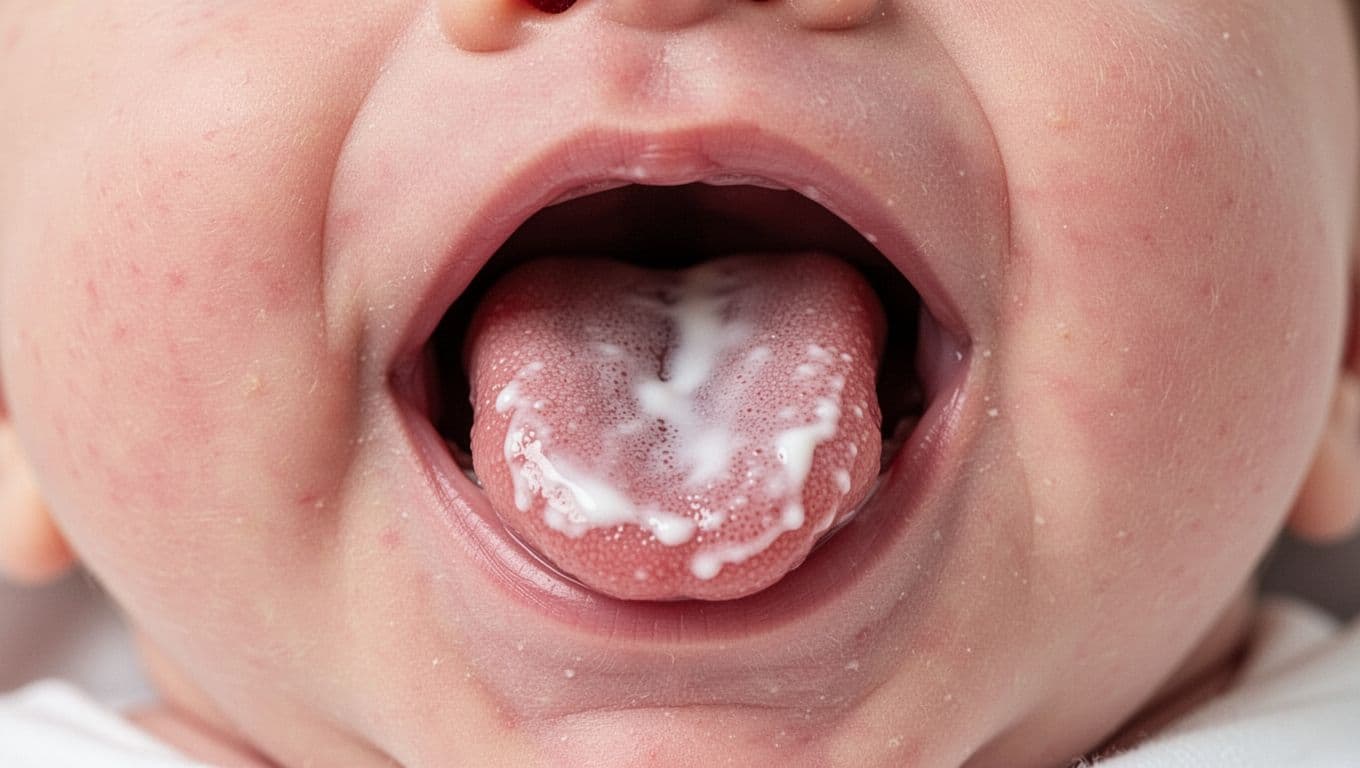
In most formula-fed babies, a white tongue is just leftover milk. It often looks like a thin film after a feeding, and it usually stays on the tongue more than anywhere else.
That can look a little alarming at first, but it’s common in the early months. Babies don’t make much saliva yet, so their mouths do a weaker job of rinsing milk away. Formula can also cling a bit more than breast milk, which makes the coating easier to see.
Why formula can leave more residue than breast milk
Formula is usually thicker, so it can stick to the tongue more easily. That does not mean anything is wrong. It just means the milk can sit on the surface longer, especially when a baby is very young and saliva is still limited.
In the first months, babies are still learning how their mouths work. They swallow, suck, and breathe in a careful rhythm, but their natural saliva flow is still low. As a result, a thin white coating after feeding is often just normal milk residue.
A white tongue by itself is usually harmless. In fact, a smooth, thin coating that stays mostly on the tongue is one of the biggest clues that it’s milk, not an infection. For a general pediatric reference, HealthyChildren.org explains what a white tongue means in babies.
How long milk residue should last
Milk residue often fades within a few hours, or after the next feeding. Sometimes it clears faster if baby swallows well and starts making more saliva.
The pattern matters more than the color. If the coating keeps coming back all day, spreads beyond the tongue, or does not improve after feeding, it deserves a closer look. A white tongue that lingers like that can point to something else, including thrush, which needs different care.
If you want a simple rule, use this one: milk residue comes and goes; thrush tends to stick around. That difference helps you know when a white coating is just part of normal feeding and when it needs a call to the pediatrician.
How to tell milk residue from oral thrush
A white tongue after feeding can look scary, but the details usually tell the story. Milk residue tends to sit lightly on the tongue and clears with gentle wiping, while thrush often shows up as thicker patches that cling to the mouth and may bother your baby.
The easiest way to compare them is to look at texture, location, and how they react after a feed. Those three clues help you separate a normal milk coating from a yeast infection that needs treatment.
What milk residue looks and feels like
Milk residue usually looks like a thin white film on the tongue. It often appears right after a bottle or breastfeed and stays mostly on the tongue, not the cheeks or gums.
If you gently wipe it with a soft, damp cloth, it usually comes away easily and leaves a normal pink tongue underneath. That clean pink surface is the big clue that you’re dealing with leftover milk, not thrush.
A few signs point more toward milk residue:
- The coating is thin and even.
- It stays on the tongue more than anywhere else.
- It fades after feeding or a gentle wipe.
- Your baby seems comfortable and feeds normally.
Milk residue often looks worse when a baby has just eaten and less obvious a little later. In other words, it comes and goes, which is very different from a stubborn mouth patch that hangs around.
What thrush looks and feels like
Thrush usually looks thicker and patchier than milk residue. The spots can look white or creamy, almost like cottage cheese, and they may show up on the tongue, inner cheeks, gums, or roof of the mouth.
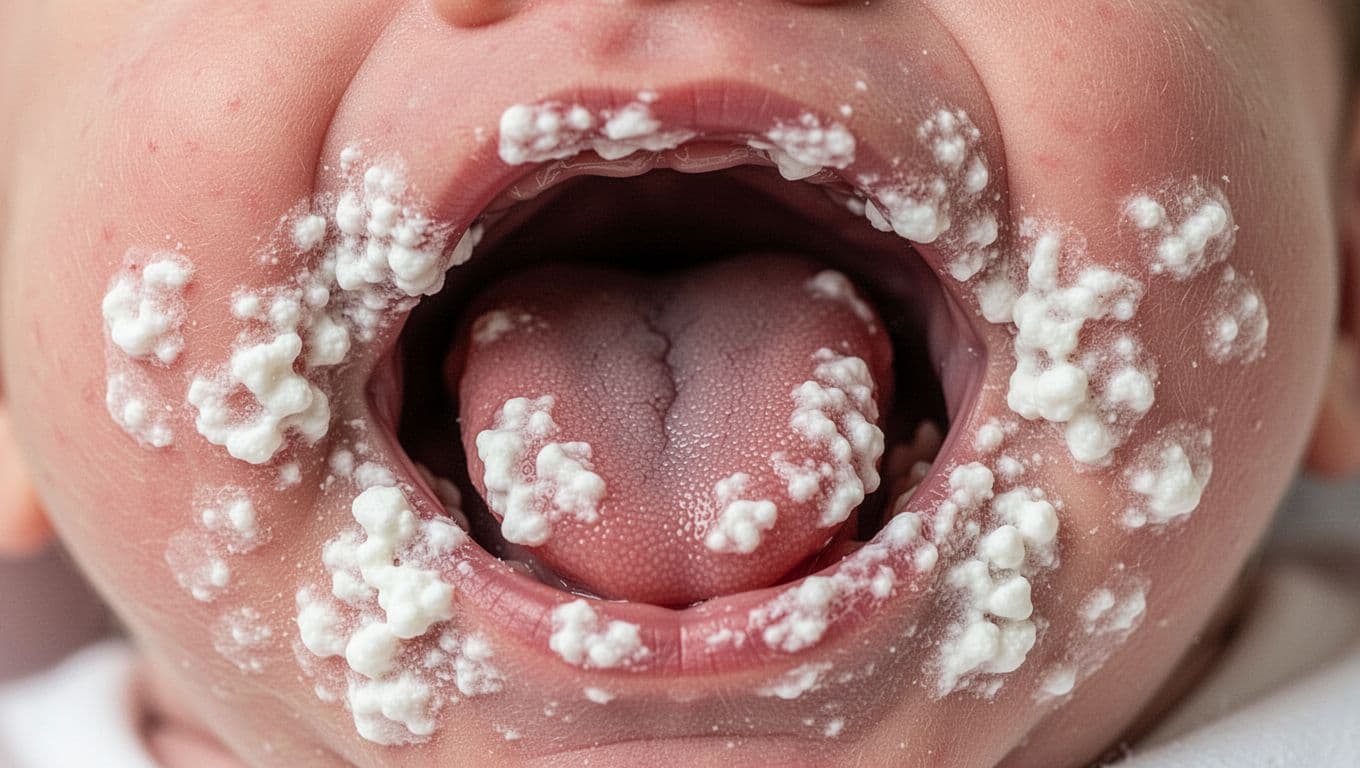
Unlike milk residue, thrush does not wipe off easily. If you try to clean it, the patches may stay put or leave behind red, raw skin. That raw look matters because it often means the tissue is irritated.
Thrush can spread beyond the tongue, so a white tongue alone is not the full picture.
The American Academy of Pediatrics notes that thrush often sticks to the mouth and can make feeding painful, which is why parents sometimes notice more than just white spots. HealthyChildren.org’s thrush guide is a helpful reference if you want a visual comparison.
Other clues that point to thrush
Your baby may also act different during feeds. Fussiness, pulling off the bottle or breast, or crying while eating can all point to mouth soreness. If you see cracked mouth corners, a diaper rash that does not improve, or a baby who just seems uncomfortable, thrush moves higher on the list.
It helps to watch for patterns, because symptoms can vary. Some babies look fine except for the mouth patches, while others seem clearly bothered. If the white coating keeps coming back, spreads, or does not wipe away, a doctor should check it.
If breastfeeding is part of the picture, mouth thrush can sometimes connect with nipple pain or breast discomfort. Breastfeeding mistakes that can lead to thrush are worth avoiding, especially if feeding has started to feel painful or off.
A simple rule works well here: milk residue wipes clean, thrush usually does not. When in doubt, take a closer look after the next feed and call your pediatrician if the patches stay put or your baby seems uncomfortable.
A simple at-home check parents can try
A gentle wipe test can help you tell the difference between formula residue and thrush. It’s simple, quick, and safe when you do it with a light touch.
Use it after a feeding, when the white coating is easy to see. The goal is not to scrub the mouth clean. It’s just to see whether the film comes off easily or stays put.

How to do the wipe test safely
Start by washing your hands well. Then take a soft, clean cloth or a piece of gauze and dampen it with warm water. The cloth should feel wet, but not dripping, and the water should never be hot.
Hold your baby gently and wipe the tongue with a light touch. Move softly across the surface, and stop if your baby pulls away. Do not scrub, scrape, or press hard, because the mouth is delicate and force can irritate the tongue or gums.
A few simple tips make the check easier:
- Use warm water only, with no soap or toothpaste.
- Wipe once or twice, lightly.
- Look at the tongue, cheeks, and gums.
- Stop if the area looks red or sore.
If you want a visual guide, Cleveland Clinic’s baby tongue cleaning guide shows the same gentle approach parents are told to use at home.
What the result means
If the white film comes off easily and the tongue looks pink underneath, it is more likely milk residue. That usually means the coating is just from feeding, especially if it shows up after formula and fades later.
If the white patch does not come off, spreads to the cheeks or gums, or leaves the mouth looking irritated, thrush is more likely. In that case, call your pediatrician. Thrush often needs treatment, and it can make feeding uncomfortable for your baby.
A gentle wipe test should never leave the mouth red or sore. If it does, stop and get medical advice.
The wipe test gives you a good first clue, but it does not replace a pediatric exam when the white coating looks stubborn or your baby seems uncomfortable.
When a white tongue needs a doctor’s attention
A white tongue after formula is often harmless, but some signs call for a pediatrician’s eye. The key is watching how the coating behaves, where it shows up, and how your baby acts during feeds.
If the white film stays put, spreads, or seems tied to pain, treat it as more than leftover milk. Early checking is smart, and it helps you get the right care before feeding becomes harder.
Signs it is more than normal residue
A simple milk coating usually wipes away and stays limited to the tongue. When it looks stubborn or your baby seems uncomfortable, pay closer attention.
Watch for these red flags:
- The coating will not wipe away with a gentle damp cloth.
- You see raw, red, or bleeding spots after trying to clean it.
- White patches show up on the cheeks, gums, lips, or roof of the mouth, not just the tongue.
- Your baby starts feeding poorly or pulls off the bottle often.
- Fussiness ramps up during feeds, as if the mouth hurts.
- A diaper rash appears at the same time, especially if it does not improve.
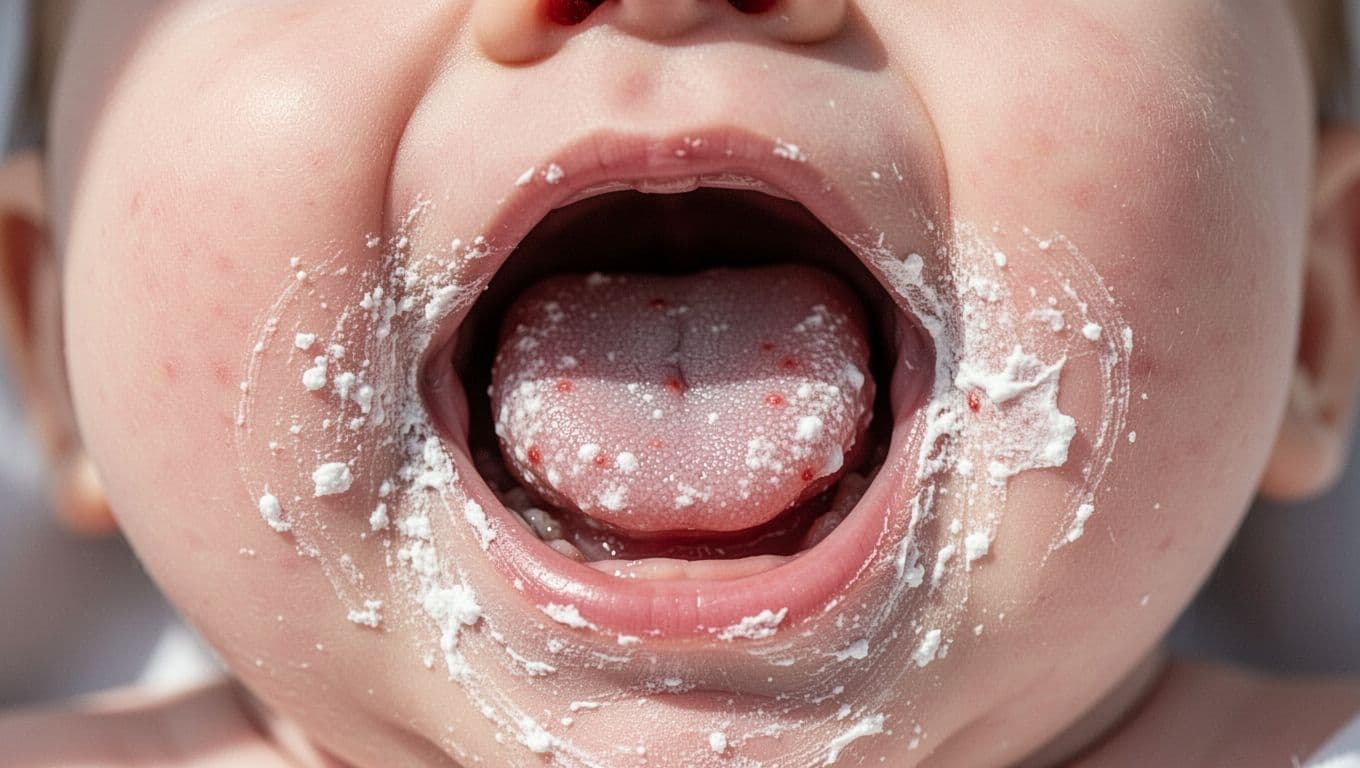
That pattern fits thrush more than formula residue. MedlinePlus also notes that thrush can cause sore spots, fussiness, and diaper rash, which is why the whole picture matters, not just the tongue alone. MedlinePlus on thrush in newborns gives a clear breakdown of the warning signs.
Why quick treatment matters if it is thrush
Thrush can make feeding painful, so babies may eat less and get crankier at the breast or bottle. It can also spread to other parts of the mouth or come back if it isn’t treated the right way.
That matters even more if breastfeeding is part of the routine. Both baby and parent may need medical guidance, since yeast can pass back and forth during feeds. The HealthyChildren.org thrush guide explains when a doctor should check it and why treatment may be needed.
If the white patches persist, feeding gets harder, or a rash joins in, call your pediatrician. A quick visit is not overreacting, it’s the safest next step.
How to keep your baby’s mouth clean without overdoing it
A baby’s mouth does not need a harsh cleaning routine. In most cases, simple daily care is enough, especially before teeth come in. The goal is to keep milk, drool, and germs from building up, while still treating the mouth like the soft, sensitive space it is.
Clean feeding gear matters just as much as mouth care. Leftover formula can dry in nipples and bottle parts, then sit there as a place for yeast or bacteria to grow. For a clear step-by-step guide, the CDC’s infant feeding item cleaning advice is a solid reference.

Bottle and nipple hygiene that helps
Wash bottles, nipples, rings, and pacifiers after use so milk does not dry on them. Rinse first, then wash with hot soapy water or run them through the dishwasher if they are dishwasher-safe. If your baby is under 2 months old, was born early, or has a weaker immune system, daily sanitizing is a smart extra step.
Keep it practical:
- Take bottle parts apart before washing.
- Clean nipple holes well, since milk can hide there.
- Let everything dry fully on a clean rack.
- Replace nipples or pacifiers that crack, stick, or look worn.
That routine keeps feeding items clean without turning baby care into a full-time scrubbing job. If you also use pacifiers, gentle cleaning matters there too, since they spend a lot of time in the mouth.
Gentle mouth care for young babies
For newborns, mouth care should stay light. A soft, damp cloth or gauze can wipe the gums and tongue only when needed, such as after a messy feed or if milk is pooling. You do not need to do it after every bottle.
Use a light touch and stop if your baby resists. Aggressive cleaning can irritate the mouth, and newborns do not need that kind of attention. If you want a broader look at soothing mouth habits during the baby stage, these teething mouth cleaning tips fit well with this same gentle approach.
A clean mouth is the goal, but a calm mouth matters just as much.
For babies this young, simple habits work best. Clean the feeding tools, wipe the mouth when needed, and let the rest stay easy.
Conclusion
Formula can leave a white coating on a baby’s tongue, and most of the time it’s just harmless milk residue. The easiest clue is simple, a thin layer that wipes off easily usually points to formula, while thick white patches that stay put are more concerning.
If the coating spreads to the cheeks or gums, leaves red spots, or makes feeding seem painful, oral thrush is more likely. That’s the point where a pediatrician should take a look.
Trust your instincts if the mouth does not seem normal. A quick check after feeding can give you a clear first clue, and it can help you decide when the white tongue is just milk and when it needs medical advice.
Save pin for later

- How to Help a Child Deal With Anxiety at Home - September 12, 2026
- How to Prepare Your Child for the First Day of School - September 12, 2026
- Age-Appropriate Chores for Kids by Age Group - September 12, 2026