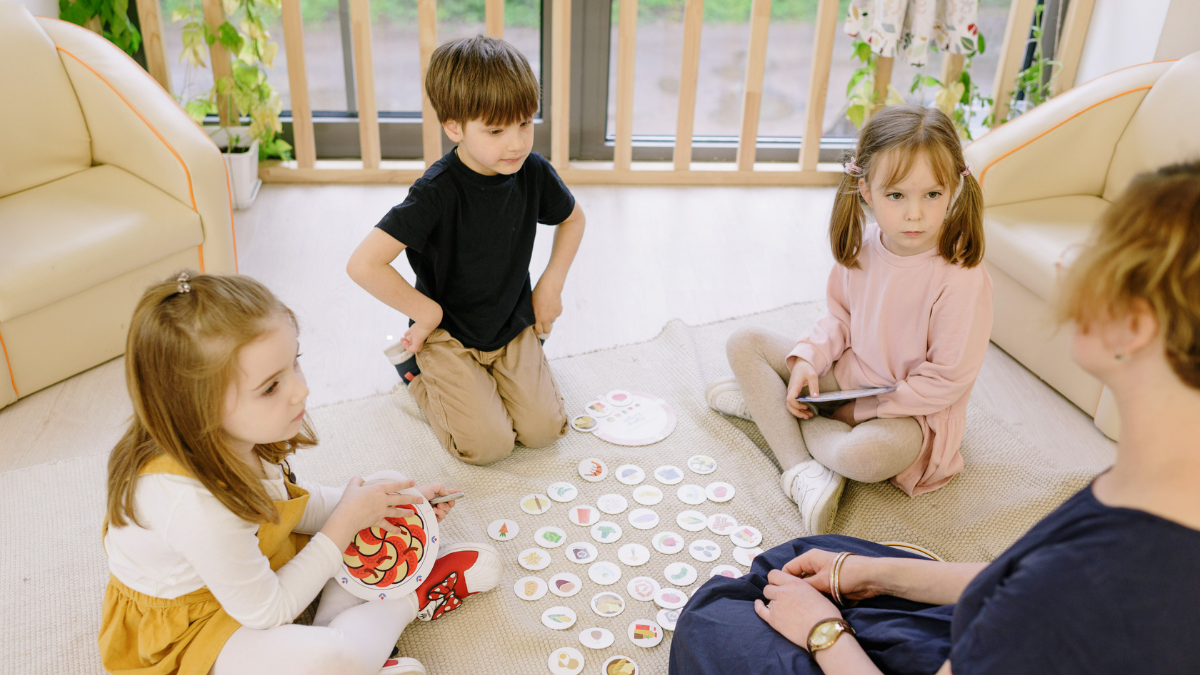
A child’s brain doesn’t learn everything at the same pace, and timing matters more than most parents realize. Critical periods are short windows when the brain is especially open to certain skills, so the right support at the right age can make a real difference.
From pregnancy through the preschool years, those windows shape everything from attachment to language and self-control. This guide walks through seven key stages and shows what parents can do at each one, including the newborn phase, where simple newborn routines for better adjustment can make the first months easier. For a quick visual companion, this video on sensitive periods in brain development is a helpful watch.
What a critical period means in child development
A critical period is a short window when a child’s brain is especially ready for a certain kind of experience. During that time, input has a bigger effect, so the brain builds those pathways more easily.
Many child development writers also use the term sensitive period. That phrase is a little broader. It means the brain is still highly open to learning, but progress later is still possible with more effort.
A critical period is about timing, not perfection.
These windows matter because the brain does not treat every skill the same way. Language, attachment, movement, and sensory growth all depend on early input in different ways. Some skills are easier to shape early because the brain is building its first maps. Others stay open longer, so children can catch up with practice and support.

Critical period vs. sensitive period
The difference matters, even though the terms are sometimes used together. A critical period is stricter, because the brain needs the right input at the right time. A sensitive period is more flexible, because learning is easier then, but not impossible later.
Harvard’s overview of timing and critical periods explains this well. Early experience has the strongest effect when the brain is wiring itself fast, especially in the prenatal years and early childhood.
Here is a simple way to compare them:
| Term | What it means | What it feels like in real life |
|---|---|---|
| Critical period | A narrow window when certain input is needed for normal development | Missing the input can make the skill much harder to build later |
| Sensitive period | A wider window when learning is easier and faster | Later learning is still possible, but it may take more time and support |
The takeaway is simple. Critical periods are tighter. Sensitive periods are broader. Both matter, but they do not carry the same level of urgency.
Why early input matters so much
Early input shapes the brain when connections are forming at a rapid pace. That is why a baby benefits from hearing speech, feeling safe touch, and getting room to move. The brain uses those early signals to organize itself.
A few areas are especially time-sensitive:
- Language: Babies need frequent speech sounds, back-and-forth talk, and rich word exposure.
- Attachment: Warm, consistent responses help babies build trust and calm their stress response.
- Movement: Tummy time, reaching, crawling, and play help build coordination.
- Sensory growth: Sight, sound, touch, and balance all develop through repeated input.
The good news is that these windows are not a pass-fail test. If a child misses some early support, growth can still happen. Still, the brain often learns fastest when the right experiences show up early, and that is why these periods matter so much in the first years.
Prenatal development lays the first foundation
The first critical period begins before birth. During pregnancy, the brain is not just growing, it is organizing itself into a system that can see, hear, move, and learn once the baby arrives.
That early work happens fast. Cells multiply, move into place, and start forming connections that will later support attention, language, memory, and emotion. Because of that, what supports the pregnancy also supports the baby’s early brain wiring.
The prenatal months are the setup phase for everything that comes next.

How the baby’s brain starts wiring before birth
Before birth, the brain builds its basic structure in stages. First, brain cells form in huge numbers. Then they move to the right places and begin connecting with one another. Those early links are the start of the brain’s communication network.
By the second and third trimesters, the fetus is also picking up sensory input. The baby can respond to sound, light, movement, and touch in limited ways. A recent review on fetal brain networks shows that these connections develop in distinct patterns across pregnancy, not all at once, which helps explain why timing matters so much for prenatal care. See the research on fetal brain network development in utero for a closer look.
That early sensory growth matters because the brain learns through repetition. Gentle sounds, a steady routine, and a calm body can all shape the environment the baby develops in.
Healthy pregnancy habits that support brain growth
Good prenatal care does not have to be complicated. Small, steady habits often matter more than perfect choices. Start with the basics, then build from there.
A few supportive habits are simple and realistic:
- Keep prenatal visits so your provider can track growth, blood pressure, and nutrient needs.
- Eat balanced meals with protein, fruits, vegetables, whole grains, and healthy fats.
- Drink enough water because hydration helps your body work well during pregnancy.
- Use gentle movement like walking, stretching, or prenatal yoga if your clinician says it’s safe.
- Protect sleep by keeping a regular bedtime and cutting back on late-night screens.
- Lower stress when you can with rest, breathing exercises, prayer, journaling, or short quiet breaks.
- Avoid smoking, alcohol, and harmful substances because they can interfere with fetal growth and brain development.
If food choices feel confusing, a focused guide can help. This list of foods to avoid during pregnancy is useful for spotting common risks, including high-mercury fish and alcohol.
Support also includes emotional calm. Reading aloud, playing soft music, and talking to the baby may feel simple, but they help create a steady rhythm around pregnancy. That rhythm matters, especially when stress runs high. If you want practical ideas for emotional support, these simple ways to stay happy during pregnancy can help keep things manageable.
Pregnancy does not need to be perfect to support healthy development. What matters most is consistency, care, and a safe environment. When a parent keeps showing up for meals, rest, prenatal care, and calm routines, the baby benefits from that foundation before birth even begins.
The newborn stage is all about first bonding and survival learning
The first weeks after birth are short, but they carry a lot of weight. Your baby is learning how to eat, sleep, settle, and recognize comfort, all while adjusting to a world that feels very different from the womb.
That is why simple care matters so much now. Repeated feeding, soothing, touch, and sleep cues teach the baby one steady lesson: this world is safe enough to trust.
Why calm, responsive care builds trust fast
Newborns don’t understand words, but they learn fast from patterns. When a baby cries and someone responds with feeding, holding, or soothing, the brain begins to link distress with relief. That repeated cycle builds the first layer of attachment.
This is often called serve-and-return care, because the baby sends a signal and the caregiver answers. Over time, that back-and-forth helps the baby feel protected, and that sense of protection supports early memory, stress control, and bonding. Research on early parent-infant contact found that the first hours after birth can be a sensitive period for attachment behavior, which shows how quickly these patterns begin in secure attachment research.
A newborn doesn’t need perfect parenting. A baby needs predictable care. That means noticing cues, responding with calm hands, and repeating the same comfort many times a day.
Skin-to-skin contact helps here too, because it gives the baby warmth, scent, heartbeat, and voice all at once. For more ideas, skin-to-skin contact benefits can fit naturally into those early bonding moments.
The baby learns safety through repetition, not through one perfect moment.
Simple routines that help newborns feel secure
Routine gives a newborn something solid to hold onto. Even in the earliest days, small patterns can make feeding, sleeping, and soothing feel less random.
You don’t need a rigid schedule. Instead, use familiar cues that repeat in the same order when you can:
- Holding and rocking help your baby settle through steady motion.
- Eye contact gives your baby a calm face to focus on.
- Soft voices help the baby hear your rhythm and tone.
- Predictable feeding teaches the baby when comfort and hunger relief usually come.
- Regular sleep cues signal that rest is near, especially when you use the same steps each time.
These habits work because newborns are pattern learners. They begin to expect what happens next, and that expectation lowers stress. A bedtime sequence can help too, especially when it includes dim lights, a quiet room, and a familiar hold. If you want a deeper look at that piece of the routine, bedtime routines for babies can make sleep cues easier to repeat.
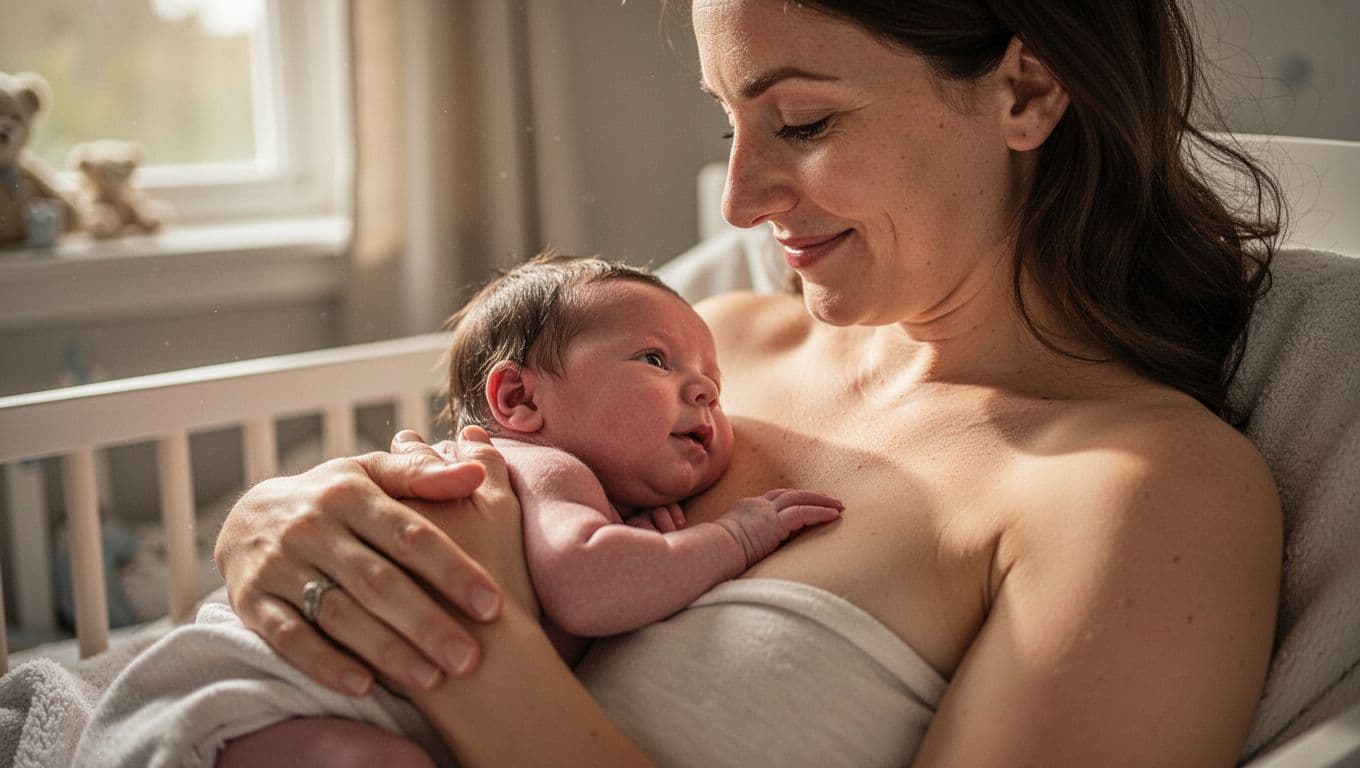
Feeding also shapes this stage more than many parents expect. When you respond to hunger early, your baby learns that needs get met without a long wait. That consistency matters because it supports trust, and trust is the base for later calm and independence. For parents who want more support around nursing and closeness, bonding during nursing sessions can help make feeding part of the attachment process.
This stage passes quickly, but it leaves a long imprint. When your baby feels held, fed, soothed, and heard, the world starts to feel predictable, and that is the first real step toward security.
From two to six months, emotional connection shapes the brain
Between two and six months, babies start reading the people around them with more focus. They watch faces, listen for tone, and notice what happens next after a cry, a smile, or a coo.
This period matters because the brain is building early pathways for emotional regulation, social connection, and communication. A baby who feels seen and soothed begins to expect comfort from people, and that expectation helps shape how stress and trust grow.

How babies learn emotions from caregivers
A baby does not understand words yet, but the brain is already studying the room. Tone of voice tells the baby if the world feels calm or tense. Facial expressions and body language add even more clues, because babies look for patterns in the people they depend on.
By this age, many babies start to recognize familiar faces and voices. They also begin to match what they see with how they feel. A soft smile, a relaxed shoulder, or a warm voice can tell the baby, “You are safe.”
Research on infant brain and emotional development shows that these early interactions help shape brain architecture during the first months of life. A study on nurturing positive relationships explains how repeated caregiving experiences build trust through the brain’s emotional systems.
A few early skills start to show up here:
- Cooing invites back-and-forth talk.
- Smiling helps babies connect faces with comfort.
- Turn-taking teaches simple social rhythm.
- Face-to-face play helps babies practice attention and connection.
When a caregiver answers a baby’s sound or expression, the baby learns that communication has a response. That is the beginning of social understanding.
Everyday interactions that strengthen early attachment
Small daily moments matter more than grand gestures. Diaper changes, feedings, and bedtime routines all give babies repeated chances to feel calm with a familiar person. If you want simple ways to make play and bonding fit into the day, these age-appropriate activity ideas for kids include gentle infant-friendly ideas too.
You can build attachment through ordinary care:
- Talk during diaper changes so your baby hears your voice in a relaxed setting.
- Sing while rocking or feeding to create a familiar sound pattern.
- Make eye contact during calm alert times so your baby can study your face.
- Answer cries with patience, because quick comfort teaches trust.
- Pause after you smile or coo, then wait for your baby to respond.
That back-and-forth is small, but it is powerful. It teaches the baby that people are predictable, responsive, and worth reaching for.
The baby is not just hearing you. The baby is learning what connection feels like.
Face-to-face play also helps babies practice attention and emotion at the same time. A simple grin, a widened eye, or a soft sound gives the baby something to track, copy, and return. Those tiny exchanges are the first steps toward later conversation, empathy, and self-soothing.
Around six to nine months, movement and the senses take off
This is the stage when many babies get noticeably busier. Rolling turns into sitting, sitting turns into reaching, and reaching turns into crawling attempts, scoots, and pivots across the floor.
That movement is not just physical exercise. It helps the brain sort balance, body awareness, and cause-and-effect. As babies move, they learn how their hands, eyes, and muscles work together.
The senses grow fast here too. Touch, sound, sight, and even taste give the brain more signals to organize. That is why this stage often looks messy, curious, and wonderfully active.
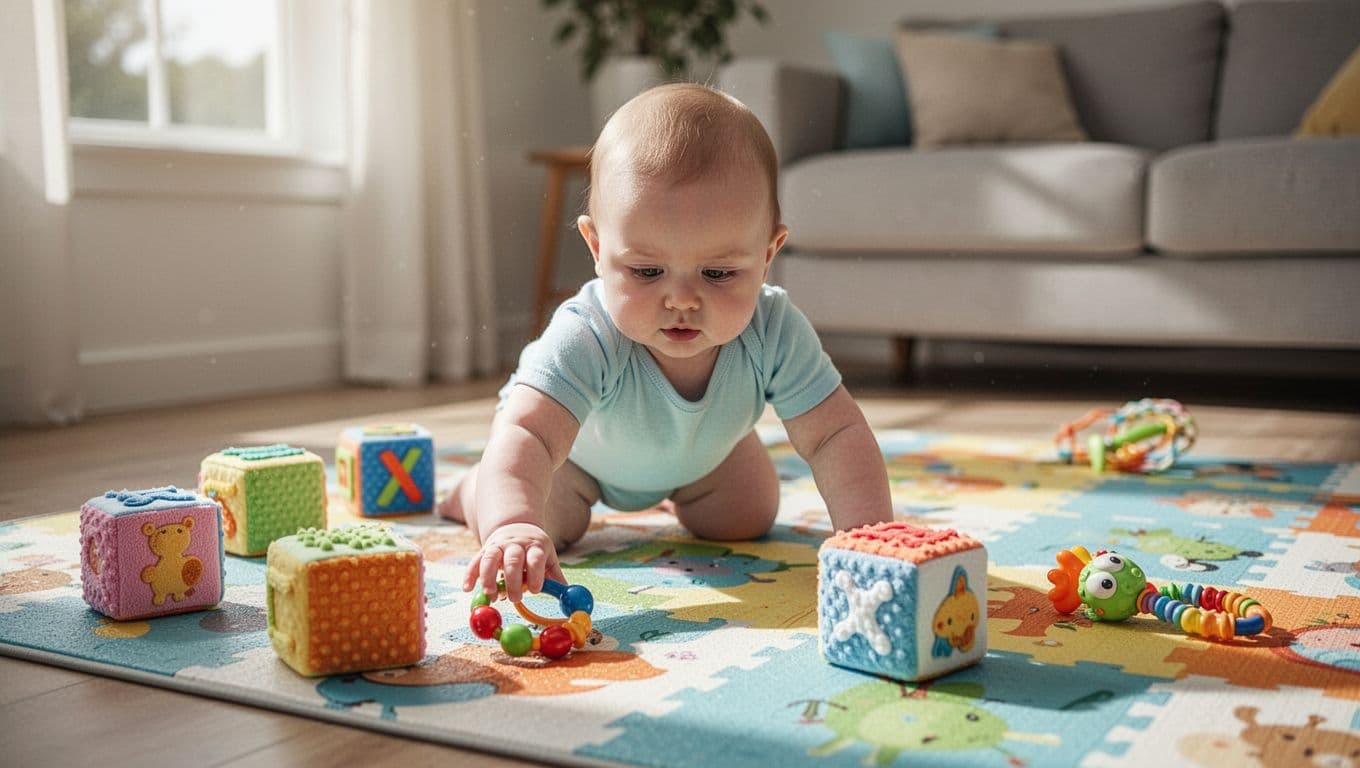
Why crawling, reaching, and exploring matter so much
Around this age, many babies start rolling both ways, sitting with less help, and reaching for toys that are just out of range. Mayo Clinic’s 7- to 9-month milestones and the CDC’s 9-month milestones both show how quickly movement opens up at this stage.
These skills build more than muscle. Crawling helps both sides of the body communicate, which supports balance and coordination. Reaching teaches planning, because the baby has to judge distance, shift weight, and try again if the toy moves.
That same play also helps with early problem-solving. A baby who rocks on hands and knees or pivots toward a toy is practicing memory, attention, and timing. Each attempt is a small brain workout.
This is why floor time matters so much. A baby on a mat can stretch, twist, push, and explore in a way that seats and swings don’t allow. If you want more ideas for simple play, engaging play activities for babies aged 1-12 months can give you easy ways to keep movement fun.
Repetition is what turns wobbly effort into steady skill.
Ways to support healthy sensory and motor growth
Healthy movement grows best in safe, open spaces. Babies need room to roll, scoot, sit, and reach without being held in one position too long.
A few simple habits help a lot:
- Tummy time builds neck, shoulder, and core strength, which babies need for rolling and crawling.
- Safe open play on the floor gives your baby space to shift weight and explore.
- Textured toys add touch input, so babies learn through soft, bumpy, smooth, and crinkly surfaces.
- Talking through activities connects movement with language, such as, “You reached for the red ball.”
- Limited passive screen time protects space for real play, because babies learn best from people and objects they can touch.
Textured toys and simple object play are helpful because they wake up more than one sense at once. A baby may look, grab, mouth, and shake the same toy within seconds. That mix of input helps the brain build stronger links.
You can also guide sitting and crawling with gentle support, but let the baby do the work. Small pauses matter. When a baby rocks, reaches, or shifts forward on the floor, the body is learning how movement feels.
For many families, this is also the time to watch for smooth progress, not perfect milestones. Some babies crawl early, some scoot, and some move straight to pulling up. What matters most is steady progress, curiosity, and a body that keeps trying.
The more your baby moves, the more the senses feed the brain. That back-and-forth between action and input is where a lot of learning starts.
The first year of language learning starts earlier than most parents think
Language learning starts long before a child says a first word. In the second half of the first year, babies are already sorting speech sounds, spotting patterns, and turning toward the voices they hear most often. That early listening work lays the ground for later talking.
By 6 to 12 months, the brain starts favoring the sounds of the home language. Research on the sensitive period for phonetic learning shows that babies become more tuned to familiar speech sounds during this window, while sounds they hear less often fade into the background. If you want a helpful reminder that babies hear before they speak, this look at how newborns hear familiar voices early fits the picture well.
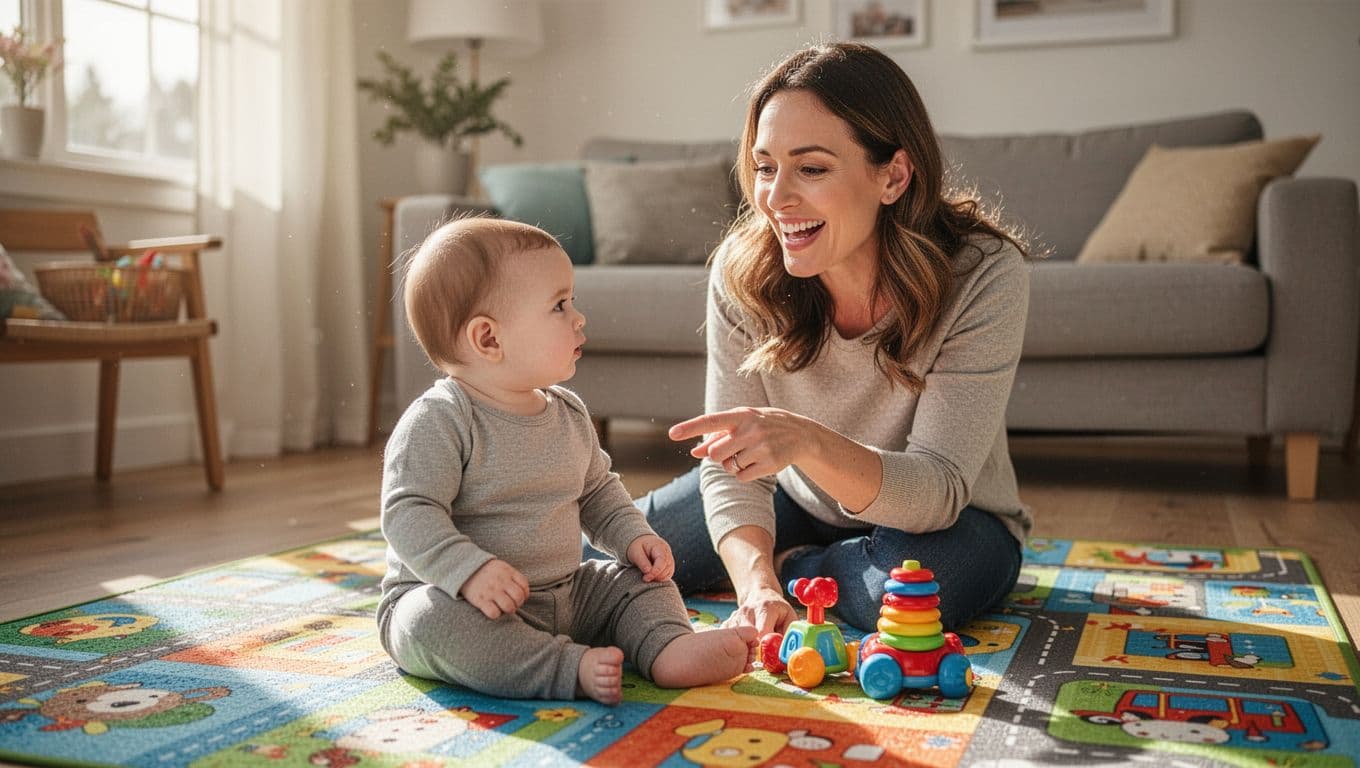
Babies do not wait for words to begin learning language. They start with sound, rhythm, and repetition.
How babies tune into the sounds of their home language
In the early months, babies can hear a wide range of speech sounds. Over time, that broad ear narrows. The brain starts paying more attention to the sounds used in the home language, because those are the sounds it hears again and again.
This change is called perceptual narrowing. It helps babies get better at the speech sounds that matter most in daily life. A baby who hears the same voices, words, and sentence patterns each day begins to pick up on them like a tune that gets easier to recognize after repeated plays.
That is why the first year matters so much. Babies are not just hearing noise, they are building a speech map. The more often they hear real language, the more practice their brains get at sorting those sounds into meaning.
Simple ways parents can build early language skills
You do not need special tools to support early language growth. Daily life already gives you plenty of chances to help.
A few small habits go a long way:
- Read aloud every day, even if your baby chews the book instead of sitting still.
- Repeat key words like “milk,” “ball,” and “up” so they become familiar.
- Pause for baby sounds after you talk, because those little coos are the start of conversation.
- Use songs and rhymes to make speech patterns easier to hear and remember.
- Narrate routines while you dress, feed, bathe, and fold laundry.
Naming objects also helps. When you say, “Here is your cup,” or “That’s a red block,” your baby hears the word tied to a real thing. That connection matters more than fancy vocabulary.
Back-and-forth talk works best when it feels relaxed. Smile, wait, answer, and keep going. Even if your baby only babbles, that exchange teaches turn-taking, which is the backbone of conversation.
Reading, singing, and talking during ordinary moments give babies more than words. They give rhythm, sound patterns, and a reason to listen.
Twelve to twenty-four months is a big leap for words, thinking, and independence
This stage can feel like a sudden jump because so much changes at once. A toddler may go from a few words to a burst of speech, from simple repeat actions to real problem-solving, and from leaning on you for everything to insisting on “me do it.”
That shift happens for a reason. The brain is busy strengthening the connections used most often and trimming the ones that are not needed as much. With repetition, familiar paths get faster and easier to use, so language, memory, and self-help skills all start to grow quickly.
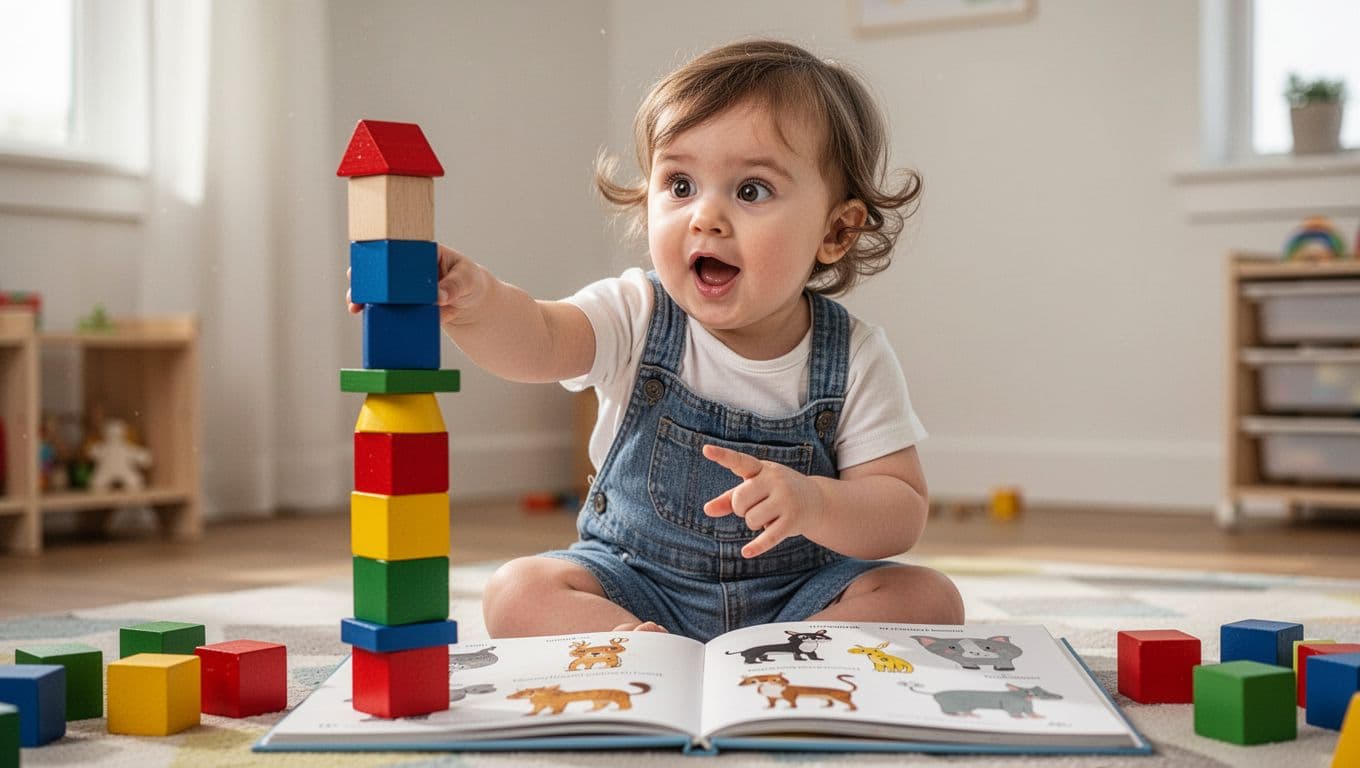
Toddler behavior often looks like defiance first, but it is usually practice.
Why toddlers seem to learn and change so fast
At this age, language often surges. Many toddlers understand far more than they can say, and they start linking words to actions, people, and objects with growing speed. A child might point to a nose, follow a simple request, then surprise you with a new word the next day. The CDC’s developmental milestones are a useful checkpoint if you want to compare typical skills with your child’s progress.
Memory also takes off here. Toddlers begin remembering routines, favorite places, and the steps in familiar games, which helps them repeat actions on purpose instead of by accident. That memory growth feeds problem-solving, because they can now use past success to try again.
The brain is doing cleanup work at the same time. Stronger connections get reinforced, while weaker ones fade. In plain terms, practice builds the roads your child uses most, and unused routes get less traffic. Recent research on toddler brain development points to this pruning process as a key reason language and thinking get sharper during these months.
A few changes often show up together:
- Vocabulary growth as children name people, foods, toys, and body parts.
- Better memory for routines, songs, and repeated games.
- Early problem-solving as toddlers figure out how to stack, open, fit, or reach.
- More independence as they want to feed themselves, dress with help, or try a task alone.
If your toddler loves hands-on play, DIY sensory play for toddlers can give those new brain paths even more practice.
How to guide toddlers without fighting every battle
Toddlers push back because they are learning where they end and the world begins. Saying “no,” copying adult behavior, and wanting to do things alone are signs of growth, not just stubbornness. The job is to guide that drive without turning every moment into a power struggle.
Simple structure works best here. Start with choices that are safe and limited, then keep your routine steady so your toddler knows what comes next. Short instructions help too, because long explanations usually get lost.
A few practical moves make daily life smoother:
- Give two good choices, such as “red cup or blue cup.”
- Keep wake-up, meals, and bedtime in a steady order.
- Use short directions like “Put shoes on” or “Hands down.”
- Praise effort, not just success, so trying becomes part of the habit.
- Let your child practice self-help skills when time allows, even if it takes longer.
That approach gives toddlers control without chaos. For example, self-feeding can take a messier path, but it also builds coordination and confidence. A guide like finger foods for toddler independence fits well here because mealtimes are one of the easiest places to let toddlers try.
Consistency matters just as much at night. A steady routine helps toddlers settle, and it lowers the number of battles that start when everyone is tired. The post on creating predictable sleep schedules is a helpful next step if bedtime has turned into a daily standoff.
When a toddler refuses, it helps to stay calm and keep your words brief. You can name the limit, offer the next step, and move on. That style teaches cooperation without crushing independence.
Trying to do everything alone is part of the learning process. A toddler who insists on lifting the spoon, zipping the coat, or turning the pages is building confidence one small win at a time. Your patience gives that practice room to grow.
Three to five years is a major window for self-control and school readiness
Ages 3 to 5 are when many children start to show real growth in self-control, attention, and social skill. They can still get overwhelmed fast, but they also begin to wait, listen, copy rules, and recover with help.
That makes preschool years a powerful practice period. The daily habits you build now, like turn-taking, routines, and language-rich talk, help children walk into kindergarten with more confidence.
What children should be able to practice before kindergarten
Preschoolers do not need perfect behavior before kindergarten. They do need lots of practice with the skills that make a classroom feel manageable. That includes waiting for a turn, listening to short directions, and calming down after frustration.
A child in this stage should have chances to practice:
- Sharing toys, space, and attention during short play sessions.
- Following one-step directions, then moving toward two-step directions.
- Talking in full sentences, even if the grammar is still rough.
- Naming feelings like mad, sad, worried, or excited.
- Managing big emotions with help instead of staying stuck in them.
- Focusing on a task for a short stretch, then trying again.
These skills matter because kindergarten asks kids to sit, listen, join a group, and switch tasks without falling apart. Recent research on self-regulation in the first five years points to the preschool years as a strong time for direct coaching and practice.
Preschoolers do best when adults treat self-control like a skill, not a personality trait.
Emotional support matters here too. If your child gets stuck in big feelings, emotional intelligence activities for preschoolers can help turn meltdowns into calm practice. Simple games, feeling words, and short repair moments teach kids how to come back from frustration.
That kind of practice pays off later. A child who learns to pause, ask for help, and recover is already building the habits school depends on.
Play, stories, and routines that build ready-for-school skills
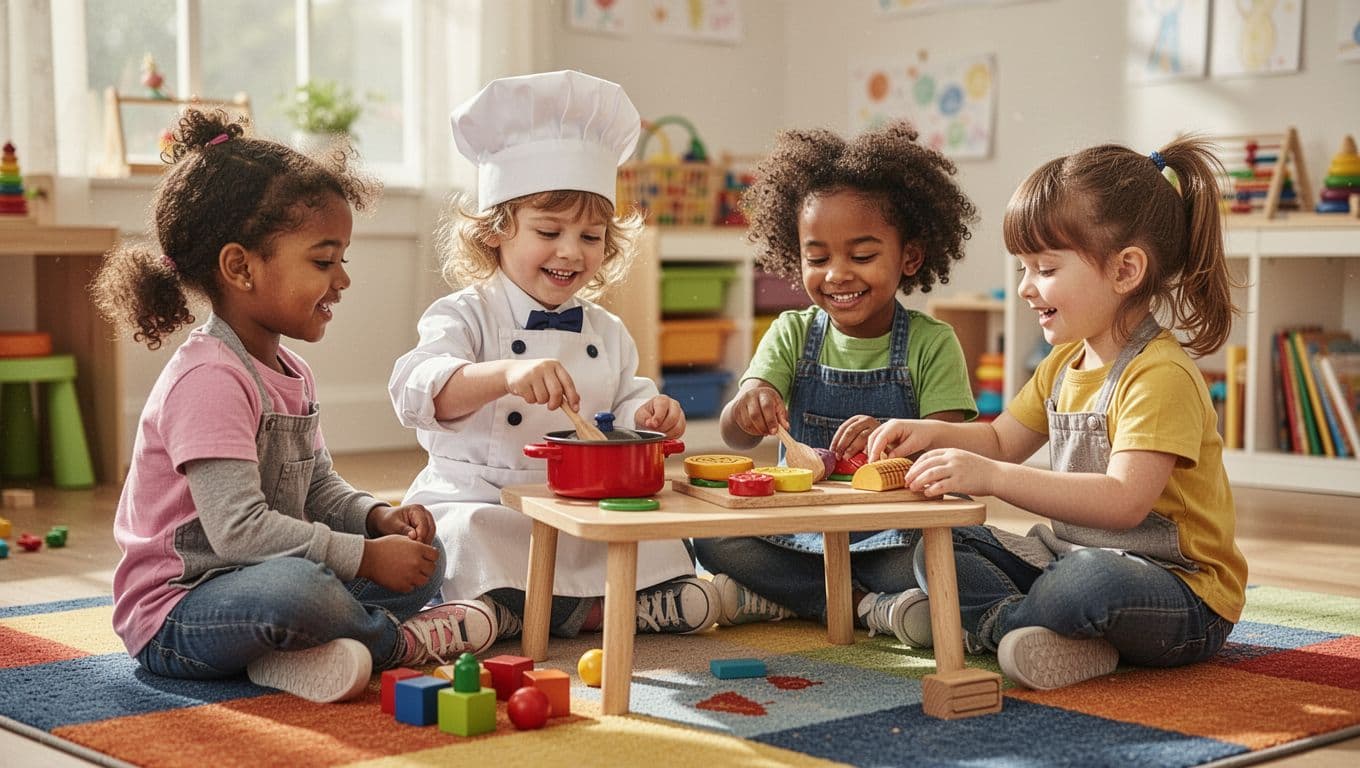
Play is not a break from learning at this age, it is the work. Pretend games help children try on roles, follow shared rules, and solve small problems with other kids. One child can be the doctor, another the patient, and both have to keep the story moving.
Reading together matters just as much. Story time grows attention, memory, vocabulary, and empathy, because children hear how people feel and why they act that way. Ask simple questions, point to pictures, and let your child finish familiar lines.
Daily life can teach the same skills. Simple chores like putting laundry in a basket, wiping a spill, or setting napkins on the table build independence. Clear routines help too, because children relax when they know what comes next, and that makes behavior easier to manage. For more ideas, kid-approved morning routines can show how structure builds confidence without making the day feel rigid.
Outdoor play adds another layer. Running, climbing, digging, and balancing give children a chance to test body control and practice patience in a looser setting. They also learn to take turns, handle small setbacks, and keep going after a fall.
Language-rich interactions tie it all together. Narrate what you see, label feelings, and use full sentences during everyday moments. A child who hears, “You waited your turn, now it’s your friend’s turn,” is learning the language of self-control at the same time.
Strong early experiences make later learning easier because the brain has already rehearsed the basics. By the time kindergarten starts, children who have practiced play, routines, and talk already have the first tools they need to learn in a group.
Conclusion
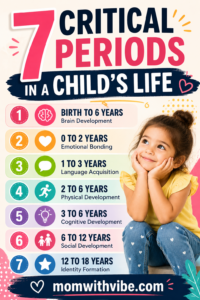
The seven critical periods show one clear pattern, early development builds on itself. From pregnancy through preschool, each stage adds a layer, and the strongest support comes from warm, responsive, consistent care.
That said, growth does not stop if a child misses a window or needs more help later. The brain still learns, especially when parents keep showing up with patience, structure, and attention to small daily needs.
What matters most is not perfection. It is the steady habit of feeding, talking, soothing, playing, and guiding your child one day at a time.
Save pin for later

- 10 Things You Shouldn’t Do in Front of Your Baby (and What to Do Instead) - September 22, 2026
- 15 Effective Ways to Deal With Stubborn Children (Without Yelling) - September 22, 2026
- Birth Order Influence: 8 Things Parents Should Know About Each Child - September 22, 2026