
Your mornings can go off the rails before you even pour coffee, especially when kids need things at once and the clock keeps moving. A productive mom morning routine gives you a simple system, so the day starts with less stress and more control, not a long to-do list you’ll never finish.
The best routines in 2026 are short, realistic, and built around a few high-impact habits, like waking before the kids, drinking water first, and planning ahead the night before. If you want a calmer start that fits real life, not a perfect one, this is where to begin, and these family organization systems for busy moms can help you set that foundation.
Why a mom morning routine works better when it stays simple
A morning routine works best when it feels almost automatic. The more steps you add, the more chances there are to stall, skip, or rush through the whole thing.
Simple routines help because they cut down on decision fatigue. You wake up, follow the same few actions, and start the day with less mental clutter. That matters on mornings when a child is crying, the lunch box is missing, or you only slept six hours. A short routine also gives kids a steadier tone to follow, which can mean fewer morning meltdowns and less yelling before school.
Choose the few habits that matter most
The best routine usually has three core habits. That might look like a little movement, one self-care step, and one house task. For example, you might stretch for 10 minutes, drink water while you enjoy coffee, and start a load of laundry.
That small list works better than trying to cram in 10 or 20 habits. Too many steps turn a routine into a chore list, and that creates guilt when real life gets in the way. A good morning routine should help you feel ready, not behind.
If you want a simple place to start, choose one habit for your body, one for your mind, and one for your home. A structured family morning routine can help your whole house feel more predictable without adding extra pressure. The goal is consistency, not perfection.
A short routine is easier to repeat, and repetition is what makes it work.
Set a routine that fits your current season
Your morning routine should match the life you have right now. A mom with a newborn needs a different start than a mom with school-age kids. Work schedules, school drop-off times, and sleep needs all shape what is realistic.
That means your routine may change by season. Some mornings only allow water, a quick stretch, and getting dressed. Other mornings leave room for breakfast, a calm shower, and a few minutes to reset the kitchen. Both can work.
The point is to build around your current days, not an ideal version of your life you hope to reach later. When your routine fits your real schedule, you’re more likely to keep it. If you want more structure at home, daily routines for busy moms can give you a good starting point without overloading your morning.
Prepare the night before so your morning feels lighter
A calm morning usually starts the night before. When you handle a few small tasks ahead of time, you cut down on the early rush and the constant “Where is that?” moments that drain your energy before breakfast.
The goal is simple, keep tomorrow easier. That can mean fewer choices, fewer searches, and fewer surprises when everyone wakes up at once.

Use a short evening reset checklist
A short reset checklist keeps the night from feeling messy without turning it into a second job. Focus on the things that cause the most morning friction, then stop.
A realistic checklist might include:
- Dishes put away or loaded in the dishwasher
- Backpacks packed and set by the door
- Breakfast prepped, like oatmeal ingredients, fruit, or lunchbox items
- Clothes laid out for you and the kids
- Water bottles filled and ready to grab
Keep it light. You do not need a spotless house or a perfect plan. A quick reset of 10 to 20 minutes can save you far more time in the morning, and a simple toddler bedtime routine can make that evening prep easier to repeat.
The best checklist is the one you can do even on tired nights.
Make the first 10 minutes of the morning easy
The first few minutes set the tone for everything else. If your phone is charged and your alarm is ready, you start with one less problem. If a water bottle sits by the bed, you do not have to search for it before you even stand up.
Small setup choices matter here. Clear the path to the coffee maker, place shoes where they are easy to grab, and keep the breakfast basics in one spot.
These tiny steps remove decision-making before your brain is fully awake. For more ideas on low-stress prep, this evening routine checklist for working moms is a useful reference. When the first 10 minutes are smooth, the rest of the morning feels more manageable too.
Build a realistic 45-minute routine that actually gets done
A good morning routine for moms does not need to be long. It needs to be repeatable on school days, sick days, and the mornings when nobody slept well. The best plan is one you can finish without rushing, so you start the day with a win instead of another unfinished task list.
A simple 45-minute flow works because it gives you a clear order. You wake, hydrate, move your body, get ready, and leave space for one calm habit before the house gets loud.

Start with water, not your phone
Begin with a glass of water before coffee or messages. After several hours of sleep, your body needs fluids, and that first drink can help you feel more awake and steady. It also gives you a small pause before the noise starts.
A no-scroll first rule makes this even better. If your phone comes first, the day starts reacting to everyone else. If water comes first, you set the pace. For a simple hydration habit you can keep, starting the day with water is an easy win.
That first minute can look like this:
- Sit up and drink water.
- Open the curtains or turn on a light.
- Breathe before you check anything on your phone.
Add a short movement or micro-workout
Next, give your body a little movement. In 2026, 5 to 15 minute workouts are still one of the most practical trends for busy moms. A short walk, a few stretches, yoga, or a quick strength circuit all count.
This works because it fits real life. You do not need a perfect workout plan to feel better. You need a plan you will actually do. Even a few minutes of movement can wake up stiff muscles and clear the fog in your head. If you want more ideas for gentle self-care, these self-care tips for busy moms fit well with a short morning reset.
Leave room for one calm habit
Finish with one habit that helps you feel centered before the day starts. That might be journaling, prayer, meditation, or simply sitting with your coffee for five quiet minutes. This part matters because a productive morning is about more than tasks.
A calm habit gives your mind a place to land. You’re less likely to rush into the day already frazzled, and that changes everything that follows. Even a short pause can make your routine feel more human and less like a checklist.
A realistic 45-minute morning might look like this: 5 minutes to wake up and drink water, 10 minutes to move, 15 minutes to get dressed and handle basic grooming, and 10 to 15 minutes for one calm habit before the kids need you. That kind of rhythm is simple enough to repeat, which is what makes it work.
Keep kids and home routines from derailing your plan
A smooth morning gets easier when everyone knows their role. Kids do not need a perfect routine, and your house does not need to look spotless before breakfast. What helps most is a clear path, a few shared jobs, and predictable steps that keep the whole family moving.
When mornings feel chaotic, the fix is usually not more effort from you. It’s less confusion for everyone else. Small routines, simple breakfast choices, and age-appropriate tasks can cut down on the constant reminders that drain your energy before the day even starts.
Create kid-friendly jobs that match their age
Give kids jobs they can actually do without a long pep talk. A toddler might put dirty clothes in a basket, while a school-age child can grab shoes by the door, brush teeth on time, or carry a backpack to the entryway. These little tasks keep kids involved without turning you into a morning manager.
The best jobs are simple, clear, and repeatable. If a child knows what to do every morning, you spend less time repeating yourself. You also build responsibility in a way that feels natural instead of forced, which makes the whole house easier to live in. For more ideas on building responsibility through chores, assign age-appropriate household tasks can help you shape expectations without overloading kids.
You can also keep a short list near the door or bathroom, so kids see what comes next. A few good options are enough:
- Put pajamas in the hamper.
- Carry dirty clothes to the laundry basket.
- Get shoes and backpack by the door.
- Brush teeth after breakfast.
- Clear a spot at the table.
The goal is cooperation, not control. When kids own a small part of the routine, mornings feel less like a battle.
If you want a quick model for this, age-based chore ideas from a morning routine checklist for kids show how small jobs can match different ages.
Use anchors that keep everyone on track
Anchors give the morning a beat everyone can follow. Wake-up time, breakfast time, and the time shoes go on are simple markers that help kids know what happens next. That predictability matters because it cuts down on repeated reminders like “Hurry up” and “We’re leaving soon.”
Once kids expect the same order, they settle into it faster. You don’t have to narrate every step, and they don’t have to guess what comes next. A timer can help too, especially when you give a five-minute warning before the next step. For families who need a little more structure, creating kids’ morning routines is a practical place to start.
Breakfast works best when it stays simple. Pick a few repeatable options, like yogurt and fruit, oatmeal, toast, or eggs on rotation. When kids already know breakfast choices, they stop hovering in the kitchen and asking for new ideas every day.
A few anchor points can keep the whole routine steady:
- Wake up at the same time.
- Eat breakfast after getting dressed.
- Put shoes on at the same point every morning.
- Head out when the timer ends.
That kind of rhythm makes the house feel calmer. It does not create a perfect morning, but it does create a smoother launch for everyone.
Make your routine stick on busy days
A morning routine only works when it survives real life. That means sick days, late nights, spilled cereal, and mornings when nobody is on their best behavior. If your plan falls apart the first time the house gets messy, it’s too rigid.
The strongest routines are flexible. They give you a clear path, but they also leave room for a backup version when the day starts rough. That way, you still get a win, even if the full plan is off the table.
Have a minimum version for hard mornings
Hard mornings need a minimum routine, not a perfect one. Keep it short and clear: drink water, wash your face, get dressed, and do one quick reset task like making the bed or clearing the counter.
That small routine keeps you moving without draining your energy. It also protects your momentum. Once you complete a few basic steps, the day feels less scrambled, even if breakfast is late or the kids wake up early.
On rough days, use a 10-minute version or a priority-only version:
- Get water and wash up.
- Put on clothes that help you feel human.
- Pick one small home task.
- Move on with the day.
Something done is better than nothing done. A short routine still counts.
This is also where consistency matters more than intensity. A routine you repeat often will do more for you than an ideal routine you only attempt on calm mornings. For more ideas on simple, repeatable structure, a morning routine that supports you offers a practical example of keeping things realistic.
Review what is working each week
A weekly check-in keeps your routine useful. Look at three things, what feels easy, what gets skipped, and what causes stress. Those small clues show you where the routine needs a lighter touch.
Maybe you always skip stretching, but you never miss water and getting dressed. Then the stretch can move to another time, or it can go away for now. Maybe breakfast takes too long, so you need faster options. Small changes like that help the routine last longer because it fits your life instead of fighting it.
Keep the review quick. Five minutes is enough. When you adjust the plan a little at a time, you protect your energy and keep the routine steady without starting over every Monday.
Conclusion
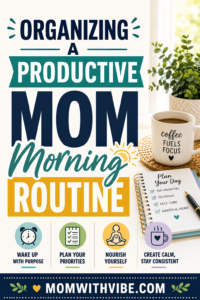
A productive mom morning routine works best when it stays simple and realistic. The biggest wins come from a few steady habits, a lighter night-before reset, and a plan that still works when the day starts messy.
When you keep your routine short, you lower stress and save energy for what matters most. That is the real goal, feeling more organized and more confident before the house gets loud.
Start with one or two habits you can repeat this week, then build from there. Small changes are easier to keep, and they add up to calmer mornings that feel much more doable.
Save Pin for Later

- What Causes a Flat Head Shape in Babies? - September 20, 2026
- Baby Massage for Gas Pain: Step-by-Step Instructions - September 20, 2026
- Newborn Skin Peeling: Common Causes and Warning Signs - September 20, 2026