
If your toddler goes from calm to screaming in seconds, you’re not alone. It can feel exhausting, but screaming is usually a communication problem, not a sign that your child is “bad.”
Toddlers often scream because they’re tired, frustrated, overstimulated, or don’t have the words yet. That’s why positive parenting techniques for toddlers can help so much, because the goal is to lower the yelling and teach better ways to cope, not to demand perfect behavior.
The good news is that small, steady changes can make a real difference. These 7 calm ways to stop a toddler from screaming focus on staying grounded, setting limits, and helping your child feel understood.
First, figure out what the scream is trying to say
Before you react to the volume, look at the message underneath it. A toddler scream often means, “I’m overwhelmed,” “I want help,” or “I don’t know how to say this yet.” Once you start reading the pattern, the noise feels less random and much easier to handle.

Common triggers that make a toddler scream
The most common triggers are usually simple, everyday needs. A toddler may scream when you say no, when they cannot get a toy, or when a transition happens too fast. They may also scream because they are hungry, tired, overstimulated, or stuck with big feelings and too few words.
You can spot patterns by watching what happens right before the scream. For example, a child who screams at pickup time may be struggling with separation or change. A child who screams during dinner may be hungry, tired, or frustrated because they want more control.
A few common triggers include:
- Being told no: The answer feels huge to a child who wants something now.
- Not having words: A toddler may scream when they cannot explain what hurts or what they want.
- Transitions: Stopping play, leaving the park, or starting bedtime can all set off a scream.
- Sharing struggles: Many toddlers scream when another child takes a toy.
- Sensory overload: Too much noise, bright light, or activity can push them over the edge.
If you want to reduce repeat behavior, strategies to stop recurring bad behavior can help you respond with more calm and less guesswork.
When screaming might be a health issue
Sometimes screaming is a sign of discomfort, not behavior. Check for ear pain, fever, teething, injury, stomach pain, or anything that makes your child seem off. If the crying is sudden, intense, or unusual, treat it as a health concern first.
The American Academy of Pediatrics recommends getting medical help when crying seems linked to pain, injury, or a child who is not acting like themselves. If the screaming lasts a long time or keeps happening in a way that feels out of the ordinary, call your pediatrician. You know your child best, and your concern matters.
If the sound feels different than a normal tantrum, trust that signal and look for the reason before trying discipline.
Stay calm first, because your reaction changes everything
Your child’s scream can push your stress up fast, but your first move matters more than the noise. Toddlers read your tone, face, and body language before they absorb your words, so a calm response can help the moment settle faster. That does not mean you are ignoring them. It means you are keeping the situation from turning into a bigger storm.

Use your voice, face, and body language to model calm
Soft speech can lower the pressure in the room. A relaxed face, loose shoulders, and slow movements tell your toddler that you are present and in control. You can kneel down, keep your hands open, and speak in short phrases like, “I hear you,” or “I’m here to help.”
That calm body language works like an anchor. Your child may still be upset, but they also get a clear message that the danger has passed and they can start settling too.
If you want more ideas for keeping your own tone steady, calming a toddler’s aggressive reactions gives a useful next step.
Why giving a big reaction can make screaming worse
A loud response can accidentally reward the scream. Toddlers often repeat what gets the biggest payoff, and big emotion gets their attention fast. Even scolding can feel like success if it means they got your full focus.
Staying neutral helps more than acting cold. Neutral means calm, clear, and connected. Cold means distant or harsh, and that can make a toddler feel even more out of control.
Try this simple reset:
- Pause before you speak.
- Take one slow breath.
- Lower your voice.
- Give a short limit, such as “I can help when your voice is calmer.”
That small pause helps you avoid pouring fuel on the fire. It also keeps screaming from becoming the fastest way your toddler gets a big response from you.
Use a simple quiet signal instead of a power struggle
When a toddler is already loud, the last thing they need is more noise from you. A simple quiet signal gives them a clear next step without turning the moment into a battle. It keeps the focus on behavior, not on who can be louder.

A small cue also feels easier for a toddler to follow. Instead of a long explanation, they get one clear message, then a chance to calm down and try again. That is often all they need in the moment.
Short phrases that work better than long lectures
Toddlers tune out long speeches fast, especially when emotions are high. Short phrases are easier to hear, repeat, and remember.
Use calm, plain words like:
- “Quiet voice.”
- “Show me your calm voice.”
- “Inside voice.”
- “Try again softly.”
- “Use gentle words.”
- “Hands down, voice soft.”
- “I can help when you are calm.”
A whisper can work well too. It changes the energy in the room and invites your child to lower their own voice. You can also pair your words with a finger to the lips or a hand on your chest to model the tone you want.
The goal is not to win the moment. It is to give your toddler a small, clear path back to control. For more on calm limit-setting, Mayo Clinic’s tantrum guidance backs up the value of consistent, positive directions.
Consistency matters more than saying it perfectly
Toddlers need the same cue many times before it sticks. If you say “inside voice” today, then “stop yelling” tomorrow, and “use that quiet mouth” the next day, the message gets fuzzy. Pick one or two simple phrases and use them often.
Repeat the same cue across settings, too. Use it in the car, at home, in the store, and at bedtime. That steady repetition helps your child connect the words with the expected behavior.
A quiet signal works best when it always means the same thing.
You do not need perfect wording. You need a predictable response. The more often your child hears the same calm cue, the faster they learn what to do next.
Give your toddler a safe place to let out big feelings
Sometimes the goal is not to stop the scream right away. The better move is to give it a safer place to land. A toddler who is flooded with emotion may need space to move, yell, or squeeze something before they can settle.
That can protect your home and still respect your child’s feelings. It also shifts the message from “stop that” to “use this instead,” which feels much more manageable for a young child.

Make the scream spot safe and simple
Pick one calm spot your toddler can use when emotions get big. It can be a corner with pillows, a small rug, a tent, or a soft chair away from breakable items. Keep it easy to recognize and easy to use.
The best spot is boring in the right way. It should feel safe, soft, and free of clutter. Add a pillow, a stuffed animal, or a blanket, but skip toys that can turn into projectiles.
You can say, “You can be mad here,” or “Let’s go to your calm corner.” That keeps the focus on redirection, not punishment. For more support with emotional coaching, the NHS toddler emotions guide gives a simple reminder to stay calm and name the feeling.
A safe spot works best when it feels like a break, not a penalty.
Offer a better outlet for loud energy
Some toddlers need to move before they can calm down. If your child is stomping, yelling, or flailing, give that energy a safer target.
A few good options are:
- Yell into a pillow when they need a loud release.
- Stomp on the floor or march in place on a soft rug.
- Jump a few times to burn off tension.
- Squeeze a pillow or stuffed animal.
- Yell outside in the yard, if that’s safe and nearby.
One toddler may settle after a hug and a quiet voice. Another may need five minutes of hard physical release first. That is normal. The First 5 California guide to big emotions also supports simple physical tools like stretching, movement, and deep pressure.
The point is to channel the scream, not shame it. When your child feels heard and gets a safe outlet, the noise often drops faster.
Meet the need behind the tantrum before it turns into more screaming
A toddler scream often means something simple is missing. Maybe it’s food, sleep, comfort, control, or just a chance to feel heard. When you focus on the need instead of the noise, you can calm the moment faster and avoid a bigger blowup.
The best approach is usually direct and practical. Get down at eye level, use a steady voice, and look for the real problem before you start correcting behavior. That small shift can turn a full meltdown into a fixable moment.

Use empathy words that help your toddler feel understood
Short validating phrases can lower the intensity fast. Try simple lines like, “You are really mad,” “You wanted that now,” or “That was hard.” These words tell your toddler that the feeling makes sense, even if the behavior still needs a limit.
Eye contact matters here too. When you crouch down and speak gently, your child feels seen instead of pushed away. That sense of being understood can lower the volume because the child no longer has to scream to get your attention.
Keep your words short and calm. A toddler in distress cannot process a long explanation, but they can hear a few clear words. If you stay with the feeling first, your child often settles enough to listen to the next step.
A few phrases that work well in the moment are:
- “You are upset.”
- “You wanted more.”
- “I see that you’re mad.”
- “This feels hard.”
- “You don’t like that.”
If you want a deeper look at this kind of response, positive parenting techniques for toddlers can help you keep the tone calm while still setting limits.
Offer choices to reduce power struggles
Toddlers scream when they feel blocked and powerless. Small choices give them a little control without handing over the whole situation. That sense of control can lower the urge to fight for it with noise.
Keep the choices simple and real. Offer two snacks, two shirts, or two ways to move, such as “Do you want to walk or hop to the car?” You can also say, “Blue cup or red cup?” or “Brush teeth first, or pajamas first?” The point is not to open every decision. The point is to give your child a safe way to feel some power.
Choices work best when both options are fine with you. If the answer doesn’t matter much, let your toddler choose. If the answer does matter, keep the boundary clear and skip the debate.
That small shift can save everyone a lot of stress. It turns a power struggle into a simple decision, and that often cuts the screaming before it grows.
Fix the basic need when possible
Sometimes the fastest way to stop the screaming is to solve the body need first. Check for hunger, thirst, a nap, a diaper change, or a break in a quieter space. A toddler who is tired or hungry usually cannot reason their way out of a meltdown.
If your child is rubbing their eyes, clinging, or getting clumsy, treat that as a clue. Offer water, a snack, a cuddle, or a short reset in a calm room. If the day has been loud and busy, moving to a quieter space can help more than a lecture ever will.
Sometimes the quickest way to stop the scream is to stop asking the child to push through it.
That is why it helps to act fast instead of talking too long. If the need is physical, meeting it is easier than trying to talk a toddler out of distress. The American Academy of Pediatrics recommends calming the situation first, then addressing behavior once the child is settled, and that advice fits real life well.
When a basic need is the trigger, meeting it can change everything:
- A hungry child may calm after a snack.
- A tired child may settle with a nap or early bedtime.
- A thirsty child may soften after water.
- An overstimulated child may relax in a dim, quiet room.
- A child who needs connection may calm with a short cuddle or lap sit.
The less your toddler has to scream to get the need met, the less often the screaming will repeat.
Build more connection so screaming happens less often
Toddlers often scream less when they feel noticed before they have to demand attention. A small dose of connection during the day can lower the odds of a big outburst later, because your child does not have to fight so hard to be seen. That attention does not need to be long or fancy, just steady and real.

Tiny moments of attention can prevent big outbursts
A child-led play session for 10 minutes can go a long way. Let your toddler choose the game, and follow their lead without correcting every move. That kind of focused time tells them, “You matter to me right now.”
Small check-ins help too. Make eye contact during diaper changes, shoes, meals, and bedtime. A warm “I see you” after a rough moment can calm the nervous system better than a long lecture.
Try simple connection boosts like these:
- 10 minutes of child-led play with no phone and no multitasking
- Eye contact during routines so your toddler feels your full attention
- A warm reset after hard moments, such as a cuddle, a kind word, or a calm hand on the back
- Brief one-on-one time before school, naps, or errands
If you want more ideas, simple ways to show your child love can help you build daily connection without adding stress.
Why connection works better than constant correction
Toddlers are less likely to scream for attention when they already feel safe and noticed. Connection gives them what they are often asking for in the loudest way possible. When that need is met early, the volume usually drops.
This is also where attachment matters. Research from the National Center for Biotechnology Information shows that early parent-child security is linked with better emotion regulation later on, which fits what parents see every day: calm connection helps children handle big feelings more smoothly.
So instead of waiting for the next scream, look for small chances to refill your toddler’s cup. A few minutes of warm attention can change the whole tone of the day.
Know when to step back and wait for the storm to pass
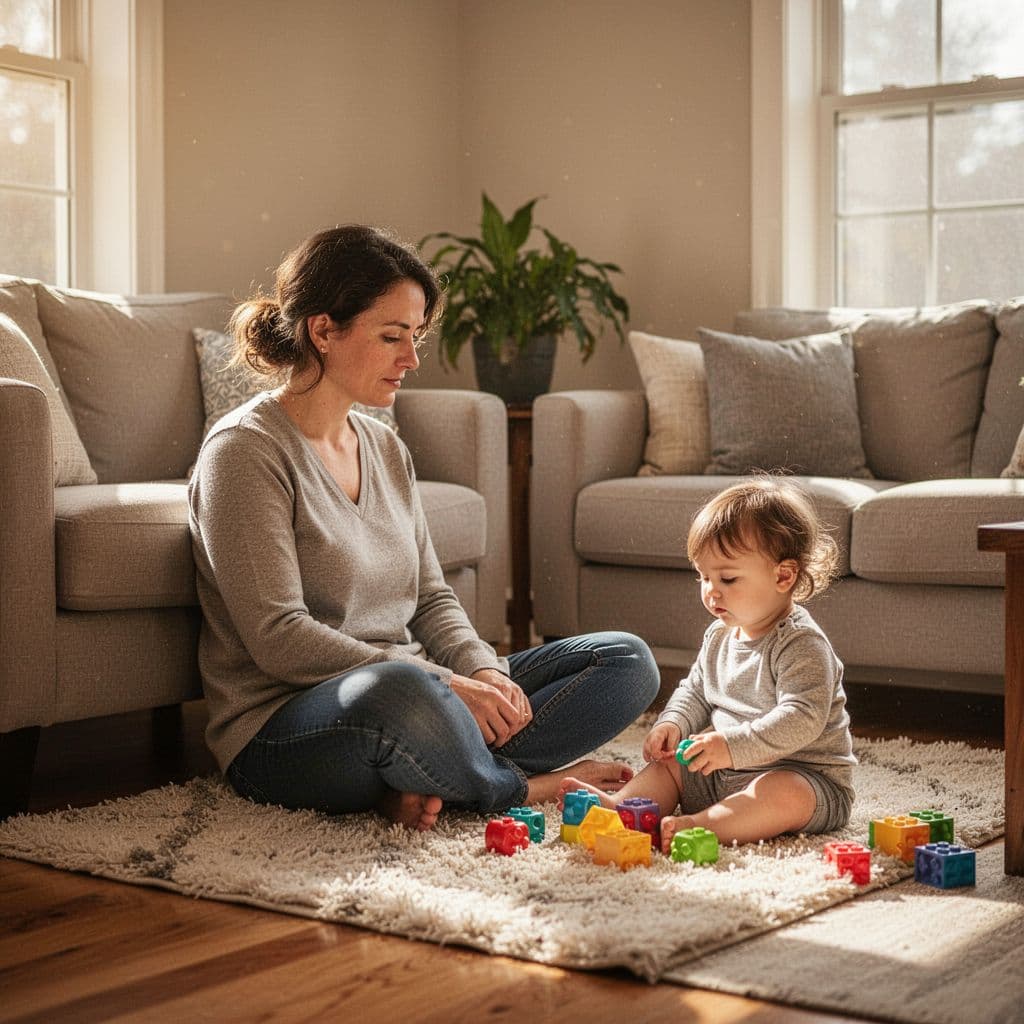
Sometimes the smartest choice is a calm pause. If your toddler is safe and no basic need needs fixing right away, step back instead of jumping in. Stay nearby so they know you are there, but avoid arguing or giving attention to the scream. This breaks the cycle because toddlers often yell harder when they get a big reaction. Your steady presence shows them the feeling will pass, and they can come back when ready.
A short wait works because their brain needs time to reset. Most tantrums last just a few minutes. You sit calm, maybe fold laundry or read a book quietly. They see you are not upset or scared, which helps them settle faster.
What to say while you wait
Keep words few and supportive. A steady tone reassures them without rewarding the noise. Try these simple lines:
- “I’m here when you’re ready.”
- “We can talk when your voice is calm.”
- “I see you are upset.”
Say it once, then pause. No lectures or questions. Your calm voice models what they need. If they look your way, nod or smile softly. That small connection helps without fueling the storm. Johns Hopkins Medicine on tantrum strategies notes this active ignore cuts future outbursts.
How to talk about the screaming after everyone is calm
Once quiet returns, review the moment briefly. Name the feeling first, like “You felt really mad.” Then remind them of the better choice: “Next time, use words or squeeze a pillow.” Keep it short, no blame.
Hug if they want one. Praise the calm down: “You did great settling.” This teaches without shame. For hands-on ideas, anger management activities for toddlers build these skills over time. Repeat often, and they learn faster.
Conclusion
Toddler screaming is a normal stage that passes with time and patience. It stems from big feelings and few words, not defiance.
Stay calm, spot the need behind the noise, and use simple cues like a quiet signal or safe outlet. Build daily connection, and step back when a pause helps most.
Consistency turns these steps into habits. Progress comes slow, one calm moment at a time. You’ll see fewer screams and a stronger bond soon.
Save pin for later

- 12 Things Pregnant Women Do When They’re Alone - June 7, 2026
- 25 Healthy Pregnancy Snacks You Should Try - June 7, 2026
- 100 Funny Baby Jokes That Will Make You Laugh - May 15, 2026