

Sharing a bed can feel comforting one night and exhausting the next, especially when your toddler starts waking more, moving more, and resisting sleep in new ways. The shift to a toddler bed is often bumpy, but steady progress matters more than perfection.
What helps most is preparation, a familiar bedtime routine, and calm consistency after lights out. A simple plan built around simple bedtime habits for your toddler can make the change feel safer for everyone, and this helpful video offers a useful visual starting point.
Know when your toddler is ready for the switch
The right time to leave bed sharing is not about the calendar alone. It’s about sleep quality, safety, and how your child acts at bedtime and overnight. A toddler who keeps waking, rolling around for more space, or fighting sleep may be telling you the shared bed no longer works well.
Many families find the move easier around 2.5 to 3 years old, but age is only part of the picture. Readiness matters more than hitting a certain birthday. If you want a simple way to frame the change, look at your child’s sleep habits first, then your family’s timing.
Look for sleep and safety clues, not just age
Frequent wake-ups are one of the biggest signs. If your toddler wakes easily, kicks, climbs over you, or seems restless for most of the night, bed sharing may be getting in the way of everyone’s sleep.
Other signs are easy to spot too:
- Your child asks for more room or pushes away at bedtime.
- They sleep better in other settings, like at daycare or in a crib during naps.
- They seem curious about a “big kid” bed.
- They try to climb out of the bed or can leave it on their own.
That last point matters for safety. Once a child can get out of bed without help, bed sharing can stop feeling secure, especially if they wander at night or end up near pillows and blankets in unsafe ways. If your toddler is climbing, turning bedtime into a nightly wrestling match, or leaving the bed while you are asleep, it’s a good sign to start planning the switch.
When bed sharing starts causing poor sleep or unsafe movement, the timing is usually right to change the setup.
A better bedtime routine for toddlers can also help you notice whether the bed itself is the problem or whether your child just needs more structure at night.

Decide if now is the right time for your family
Even when your toddler seems ready, your household timing matters. Parents often make the move because a new baby is coming, a move is planned, or bedtime has become a daily battle. Those are all valid reasons to start.
Still, the best time is usually a calm stretch with fewer changes. Avoid starting during travel, illness, teething flares, or big family transitions. Your toddler needs consistency, and you do too.
A quiet period gives the new bed a better chance to stick. It also makes it easier to stay patient when your child tests the new boundary, which they probably will. If bedtime already feels chaotic, wait for a steadier week and begin then.
Set up the toddler bed so it feels safe and exciting
The first night in a toddler bed goes better when the room already feels calm, familiar, and easy to trust. Your goal is simple: remove fear, add comfort, and make the new setup feel like a small upgrade instead of a big loss.
A toddler who feels safe is more likely to settle. A toddler who feels some control is more likely to accept the change. That means the room matters as much as the bed itself.

Make the room safe before bedtime starts
Start with the basics before your child ever climbs in. Lower the bed as much as possible, or use a mattress on the floor if that feels safer for now. The lower the sleep surface, the less scary the first few nights usually feel.
Next, anchor dressers, shelves, and other heavy furniture to the wall. Cover outlets, tuck away cords, and keep small objects out of reach. Clear the area around the bed too, so there are no toys, chairs, or bins your toddler can climb on in the dark.
If you want a quick safety check, use this order:
- Lower the mattress or bed frame.
- Secure furniture to the wall.
- Cover outlets and hide cords.
- Remove choking hazards and loose items.
- Keep the floor space beside the bed open.
A safe room helps your toddler relax because the space feels predictable, not full of surprises.
For a fuller room-safety checklist, these toddler bedroom safety tips are a useful reference.
Let your toddler help choose the new sleep space
Small choices make a big difference here. Let your toddler pick the sheets, a blanket, or a stuffed animal to sleep with. When they get a say, the bed feels like theirs instead of something handed to them.
You do not need to offer a huge range of options. Two or three choices are enough. For example, ask whether they want the blue blanket or the striped one, then let them pick a stuffed animal to keep nearby.
That little bit of control can turn worry into excitement. It also gives your child a clear message: this bed is for them, and they belong in it.
You can also make a simple “big kid bed” moment out of setup day. Put the chosen bedding on together, place the stuffed animal on the pillow, and talk about where everything goes. A bedtime routine for toddlers works even better when the room already feels like a place your child helped build.
Use familiar comforts to replace the closeness of bed sharing
Bed sharing often feels comforting because of the closeness, the sounds, and the routine. A toddler bed can still offer those same feelings in a new way. Favorite pajamas, a lovey, a special bedtime blanket, white noise, and a soft nightlight all help bridge that gap.
Choose one or two comfort items that your child already loves. Too many new things can feel busy, but a familiar blanket or stuffed animal can feel like a tiny anchor in a new space. White noise can also help soften household sounds, which is especially useful if your toddler is used to falling asleep near you.
A few families also like to use a parent-worn T-shirt under the fitted sheet for a night or two, since the familiar scent can feel reassuring. Others keep bedtime extra simple with the same pajamas, the same story, and the same tuck-in phrase every night.
If your child likes a gentle routine, this is a good time to keep it steady. Stanford Children’s Health also recommends keeping the room safe and the sleep setup simple when moving a toddler to bed, which fits this kind of smooth transition well. A healthy crib-to-bed transition starts with a room that feels secure and familiar.
The best setup feels like a soft landing. When the room is safe, the choices are theirs, and the comforts are familiar, the toddler bed starts to feel exciting instead of strange.
Create a bedtime routine your toddler can count on
A toddler who knows what comes next usually settles faster. That matters even more during a bed-sharing transition, because the routine becomes the new source of comfort. Keep it simple, repeat it the same way, and do it calmly enough that your child can follow the rhythm without stress.
The routine does not need to be long or fancy. It needs to feel familiar. When the steps stay the same, your toddler starts to trust bedtime instead of fighting it.
Keep the routine short, calm, and the same every night
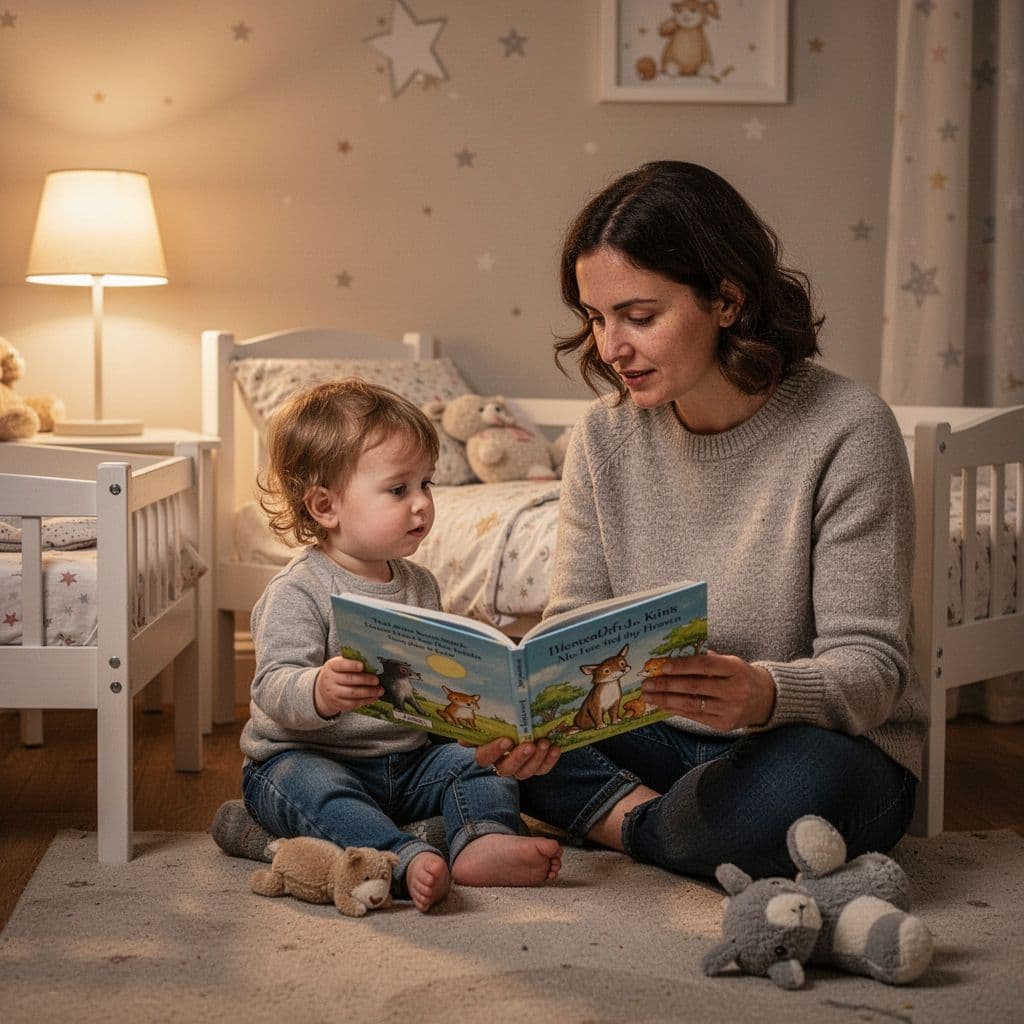
A predictable order helps toddlers relax because they know what is coming next. A good bedtime routine might look like this: bath, pajamas, teeth, books, songs, lights out. That clear order works like a signal, and it is easier for a child to settle when the steps never keep changing.
Keep each part low-key. Bright lights, rough play, and big choices can wake your toddler back up. Instead, use a soft voice, slow movements, and the same short phrases each night.
An earlier bedtime also helps. Overtired toddlers often fight sleep harder, cry more, and ask for more stalling. If bedtime has turned into a battle, moving it up by 15 to 30 minutes can make a real difference.
Consistency matters more than a perfect routine. A simple bedtime flow that happens every night will help more than a long routine you can only do once in a while.
If you want a parent-friendly example of a steady bedtime pattern, these toddler bedtime habits can help you keep your plan simple. Research on routine and sleep also backs this up, since consistent bedtime steps help young children fall asleep more easily and wake less often at night, as noted in Healthline’s toddler bedtime routine guide.
Use a visual bedtime chart if your child needs structure
Some toddlers do better when they can see the routine. A simple picture chart can show what happens next and take some of the mystery out of bedtime. That can reduce power struggles, because your child is no longer waiting for surprises.
Keep the chart basic. Use pictures for each step, such as a bath, pajamas, books, and sleep. You can point to each image as you move through the routine, which gives your toddler a clear path to follow.
A visual chart also helps when a child keeps asking, “What now?” Instead of repeating yourself ten times, you can point to the next picture and move on. That keeps bedtime calmer for both of you.
If your toddler loves order and repetition, a chart can make the routine feel steady even on hard nights. It turns bedtime into something they can track, which often cuts down on resistance. For more ideas on keeping sleep habits predictable, this bedtime routine guide has a few simple ways to build consistency.
Start new sleep habits before the big switch
Your toddler does not need to wait for the first full night in the new bed to start learning the routine. In fact, it helps to practice early. Read stories in the toddler bed, do the tuck-in there, or let your child nap in the new space before expecting overnight sleep.
Those small steps build comfort without pressure. A toddler who has already spent time in the bed is less likely to treat it like a strange place on night one. Even a few naps or one short story time each day can make the bed feel familiar.
You can also use the routine in the new bed while still keeping some old comfort nearby. For example, read the same book you used during bed sharing, then finish with the same goodnight phrase. That mix of old and new helps the change feel safe instead of sudden.
The goal is not a perfect first night. The goal is a routine your toddler can recognize right away, because familiar steps make new sleep spaces feel less scary and more like home.
Choose a transition method that fits your child’s temperament
The best sleep plan is the one your toddler can tolerate without a fight every night. Some children need a slow fade, while others settle better with a clear new routine in their own bed. Pick one approach and stick with it for several nights so your child can learn the pattern.
Changing tactics each bedtime usually creates more crying, not less. A calm, repeatable method gives your toddler a clear message: bedtime is different now, but it’s still safe. If you want a quick comparison of the gentle paths families use most, co-sleeping and smooth bed transitions can help frame the shift.

Try a gradual fade if your toddler needs more reassurance
A gradual fade works well for toddlers who want closeness but can handle tiny steps. Start by sitting beside the bed until your child falls asleep. After a few nights, move your chair a little farther away, then shift toward the door, then outside the room.
You can also reduce how much help you give. Maybe you begin with a hand on their back, then switch to a few calming words, then simply stay nearby. The idea is to keep comfort in place while slowly lowering your presence.
This method feels gentle because your toddler never loses support all at once. It works best for children who get upset with sudden change, but can adapt when the steps are small and steady.
Use the in-bed-to-own-bed approach to break the habit slowly
Some families prefer to stay with the child in the toddler bed at first, then leave once the child is sleepy. That keeps the new bed as the only sleep space, which helps your toddler connect it with bedtime right away.
This approach is simple and familiar. Your child still gets closeness, but the sleep happens in their own bed, not in yours. Over time, you can shorten the time you stay in the room until your toddler falls asleep more independently.
If your child likes routine and predictability, this can be a good fit. It keeps the comfort high while the habit changes in a controlled way. Cleveland Clinic also recommends a consistent bedtime routine when moving to a toddler bed, which supports this kind of steady shift. You can read more in Cleveland Clinic’s toddler bed transition tips.
Choose one method and give it time. A stable plan usually works better than a new strategy every night.
Use positive language so the move feels like growth, not loss
The words you use matter more than most parents expect. Say things like “big kid bed,” “your special bed,” or “sleeping in your own space” so the change sounds exciting and safe. That framing helps your toddler feel proud instead of pushed out.
Avoid phrases that sound like rejection. Lines such as “you have to sleep alone now” can make bedtime feel like punishment. Instead, keep the tone warm and confident. Try, “This is your cozy bed now, and I’ll help you get settled.”
Small language shifts can change the whole mood. Your child hears whether this move is a loss or a step forward, so keep your words simple, upbeat, and matter-of-fact.
Handle bedtime resistance and night wakings without undoing progress
Your toddler will test the new bed. They might pop out 20 times the first night, cry for you, or pad to your room in the dark. That’s normal. The key is a clear, boring response every time. You stay calm, keep words short, and give no extra attention. This builds the habit fast without mixed signals that drag out the process.

Use the same simple script every time they get out of bed
Pick one short phrase and repeat it exactly. Try, “Time for sleep. Back to bed.” Say it in a flat, quiet voice. Walk them there, tuck them in, and leave. No hugs, no chats, no eye contact.
Long talks invite negotiation. Questions like “Why are you up?” start a game. Instead, calm repetition teaches the rule: bed means sleep. Do this for every exit, even at 2 a.m. After a few nights, they get bored and stay put.
This works because toddlers crave patterns. Your steady script becomes the signal to settle. For more on dull responses that cut stalling, check these gentle techniques from Baby Sleep Site.
Expect pushback and know how to stay consistent
Rough nights happen, often three to seven. Your toddler cries harder or tries your bed because change feels big. But one “just this once” resets everything. It tells them the rule bends.
Stick to the plan even when you’re wiped out. Tag-team with a partner if possible. Praise big in the morning: “You slept in your bed all night!” That reward sticks better than night battles.
Consistency shortens the phase. Most kids settle in a week when parents don’t waver. Tired? Remind yourself: a few tough nights beat months of back-and-forth.
Know when to pause and try again later
Not every week suits a switch. If sickness hits, teeth hurt, or travel disrupts, resistance spikes. An upset toddler fights harder, and forcing it leads to tears for all.
Pause then. Return to bed sharing or the crib until calm returns. Restart with the same routine once they’re healthy and rested. Signs to wait: constant wakings from pain, high clinginess, or family stress.
A short break prevents burnout. Pick a steady stretch, like post-vacation, and go again. Your patience pays off faster that way.
Keep the new sleep routine working long term
The first week sets the habit, but long-term success comes from daily reinforcement. You build trust in the toddler bed with quick praise, light rewards, and smart tweaks. Toddlers thrive on positive feedback, so focus there instead of battles. That keeps sleep smooth for months, not just nights.

Praise small wins in the morning
Start each day with specific cheers. Toddlers love clear praise because it links their actions to good feelings right away. Say, “You stayed in your bed all night! Great job,” or “Your sleep buddy kept you cozy, just like we planned.”
Point out details like settling after a wake-up. Try, “You went back to bed so fast last night. I’m proud of you.” That immediate boost makes them want to repeat it. Do this before breakfast, with a hug or high-five. Over time, mornings become celebration time.
Specific lines work best. For example, after a full night, note, “You slept in your own bed without getting up. Awesome!” Kids respond to those words because they feel seen. As a result, the habit sticks without extra effort at night. Age-specific praise scripts from sleep experts offer more ready examples.
Use a reward system only if it stays low pressure
Sticker charts shine as optional tools. Pick one only if your child likes tracking progress. Each night in bed earns a sticker. After five or seven, offer a small treat like park time or extra story choice.
Keep it simple, not a bribe. The goal is fun celebration, not pressure. If they miss a night, skip the sticker but praise the effort anyway. That way, bedtime stays calm.
Some families add a toddler clock that glows green at wake-up time. Pair it with stickers for staying put until then. However, drop rewards if they cause stress. Focus on praise instead, because intrinsic pride lasts longer. Sticker chart ideas keep things light and motivating.
Watch for signs that the plan needs a tweak
Most kids adjust in a week or two, but watch for clues like longer wakings or daytime crankiness. Your toddler might need an earlier bedtime, more outdoor play, or an extra tuck-in check.
Test small changes first. Add 20 minutes of afternoon activity if energy runs high at night. Or offer a comfort item they outgrew before. Those shifts often fix issues without a full reset.
If resistance lasts over two weeks, check basics like hunger or teething. Adjust one thing at a time, then watch for two nights. Patience pays off, because minor fixes build lasting sleep. AAP tips on bedtime habits stress understanding those signals for better results.
Conclusion
The switch from bed sharing to a toddler bed rewards patience over perfection.
Spot readiness through sleep clues and safety needs, then build a secure room with familiar comforts. Pair that with a short, steady bedtime routine and one calm transition method. Handle tests with boring consistency, and praise wins each morning.
Consistency turns bumpy nights into smooth sleep for everyone. Most toddlers master their bed in time, so take it steady. You got this.
Save pin for later

- 12 Things Pregnant Women Do When They’re Alone - June 7, 2026
- 25 Healthy Pregnancy Snacks You Should Try - June 7, 2026
- 100 Funny Baby Jokes That Will Make You Laugh - May 15, 2026