When your child ignores directions, melts down in public, or keeps pushing the same limits, it can wear you down fast. Behavioral management techniques for children help you respond in a calm, steady way so your child learns what to do instead of just hearing “no.”
That matters because behavior problems are one of the biggest stress points for parents, and stress can make home life harder for everyone. The good news is that you don’t need harsh punishments or long lectures to get better results, you need clear expectations, consistent follow-through, and positive reinforcement.
These simple techniques can work at home, in the car, at bedtime, and even in the middle of a store. Keep reading for practical ways to handle tough behavior without turning every moment into a battle.
What Behavioral Management Really Means for Children
Behavioral management for children is about teaching, not overpowering. It gives kids clear limits, steady guidance, and a chance to learn better choices over time. When it works well, children know what to expect, and parents spend less time reacting to every small problem.
That matters because children usually do not misbehave just to make life hard. Their behavior often points to a need, a skill gap, or a moment when their self-control runs out. Calm adults can read those signals and respond in a way that helps instead of escalates.
Why kids test limits in the first place
Kids test limits for many ordinary reasons. They may want attention, feel tired, be hungry, or simply not understand what is expected. A child who keeps pushing a rule is often showing curiosity, frustration, or a need for more structure.
Age also matters. A toddler who says “no” all day is not acting like a small adult. They are learning independence and trying to figure out how the world works. Older children still need support too, because self-control develops slowly and depends on brain growth.
Recent brain research backs this up. Children who struggle with behavior can have a harder time shifting into the mental state needed for self-control, attention, and flexible thinking. In simple terms, their brains may get stuck when emotions run high, which makes limits harder to follow Yale research on disruptive behavior.
That is why a child may act one way at school and another way at home. The behavior usually changes with hunger, stress, sleep, and how clear the rules are. If you want a deeper look at repeated misbehavior, stopping repeated bad behavior in children can help you connect the pattern to the response.
How calm discipline supports long-term growth
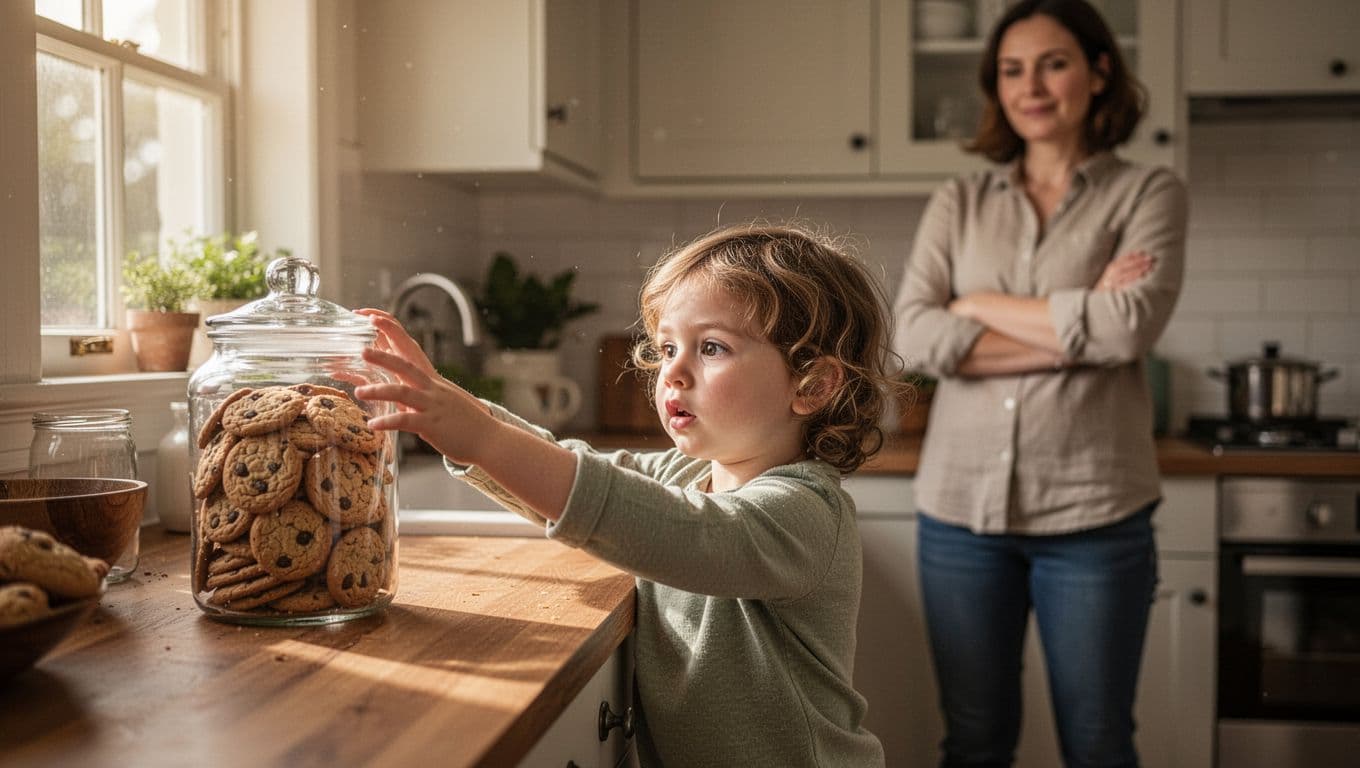
Calm discipline gives children something harsh reactions cannot: a clear path forward. When you stay steady, you show that rules are real and that mistakes can be corrected without shame. That builds trust, and trust makes children more likely to listen the next time.
Harsh yelling or quick punishment can stop a behavior in the moment, but it often leaves kids confused or defensive. Some children shut down. Others push back harder because every correction turns into a fight.
Children learn self-control best when the adult stays regulated first.
Calm, respectful guidance also helps children build confidence. They learn, “I can mess up and still recover.” That message matters because children who feel safe with limits are more willing to try, fail, and try again.
If you want a helpful next step, signs of being too strict with kids can help you spot where discipline may be crossing into pressure. The goal is not to give in. The goal is to teach behavior that lasts.
Start with the basics: clear rules, routines, and follow-through
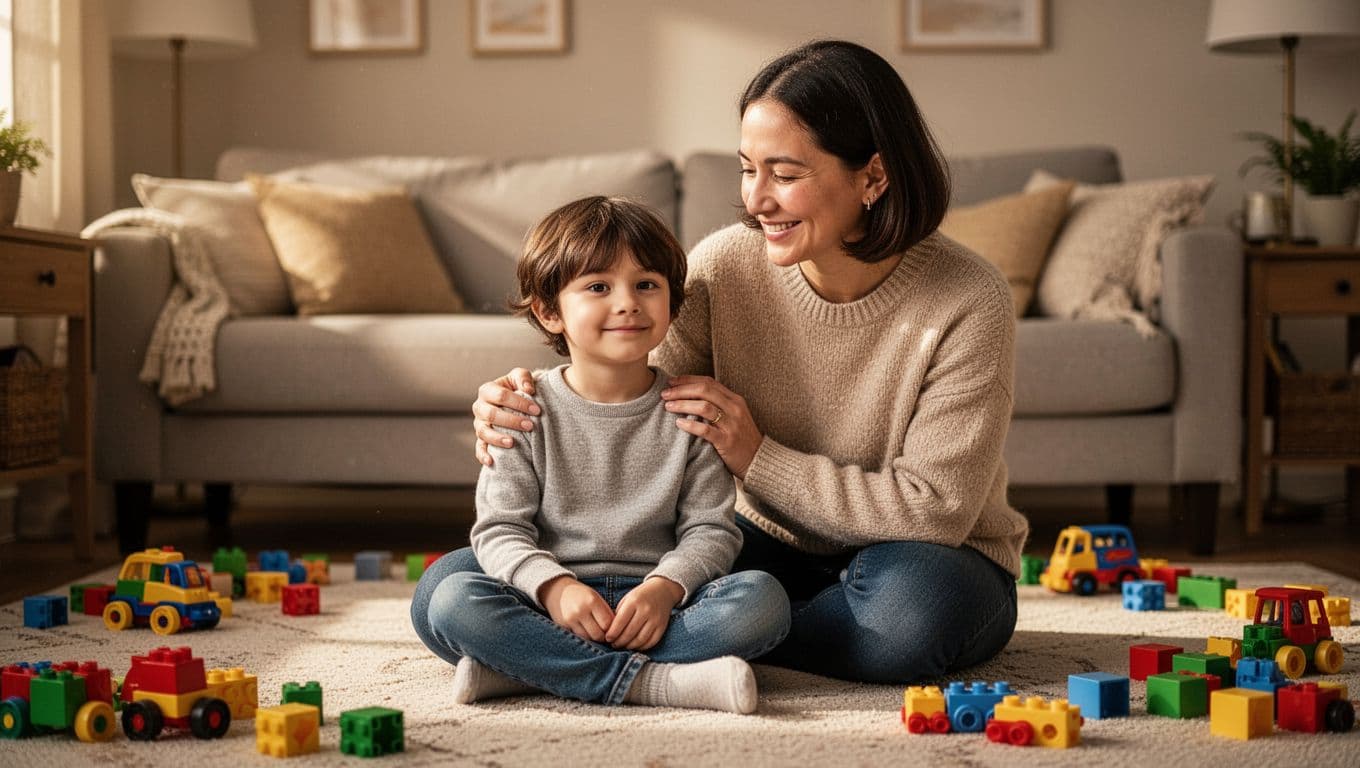
Children do best when the day feels predictable. Clear rules tell them where the line is, routines show them what happens next, and follow-through teaches them that the line stays in place. When those three pieces work together, home feels calmer and kids spend less time guessing.
That predictability matters because confusion often turns into resistance. A child who knows the routine is less likely to argue about every step, and a child who hears the same response every time is more likely to adjust. For a closer look at the morning side of this, organized morning routines kids love can help you build a smoother start to the day.
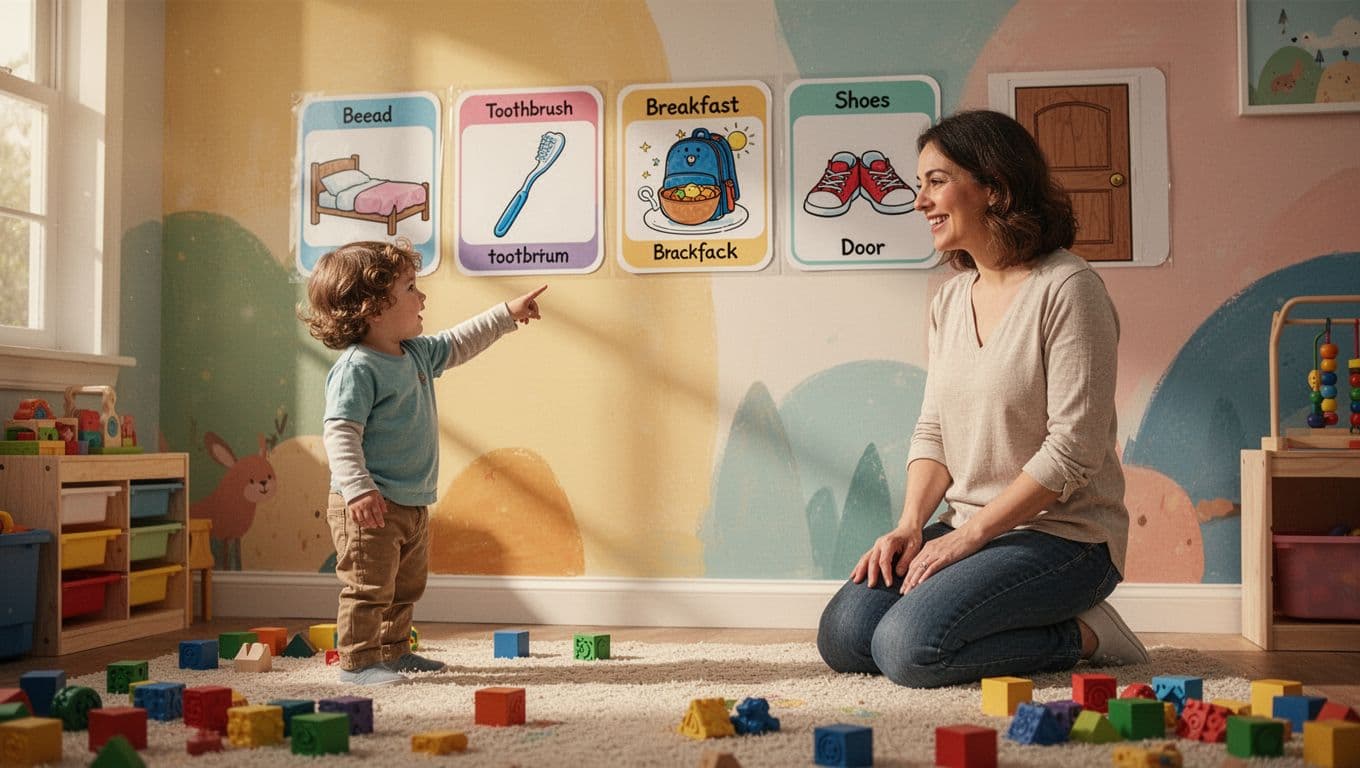
Make house rules short, specific, and easy to remember
Kids do better with a few clear rules than with a long list they cannot hold in their heads. Broad ideas like “behave” or “be nice” sound good, but they do not tell a child what to do next. Simple rules work better because they point to a clear action.
Try turning vague rules into plain, easy steps:
- Use kind hands.
- Walk indoors.
- Put toys away after play.
- Use a calm voice at the table.
These short phrases are easier for children to remember, and they are easier for you to repeat without sounding like a broken record. They also make it simpler to correct behavior in the moment, because you can point back to the rule instead of giving a long speech.
Fewer rules work better when they are clear enough for a child to repeat back.
If siblings are a big issue in your home, rules to curb sibling conflicts can help you shape the same kind of simple expectations around respect and cooperation.
Use routines to prevent problems before they start
Routines cut down on the little battles that happen when kids do not know what comes next. Morning, mealtime, homework, and bedtime all go more smoothly when the order stays the same. Children spend less energy fighting the structure, and you spend less time reminding them about every step.
Visual schedules, timers, and First-Then language can make routines even easier to follow, especially for younger kids. For example, “First finish math, then screen time” works better than a long explanation. A timer also helps children move between tasks without feeling surprised, while a picture chart gives them a simple cue they can see.
If you want bedtime or homework to stop feeling messy, consistency matters more than perfection. Keep the routine simple, repeat it often, and use the same order most days. The American Academy of Pediatrics also recommends clear, consistent discipline and predictable structure for children, and Children’s Hospital of Philadelphia gives a practical overview of that approach.
Give directions that children can actually follow
Short directions work better than long lectures. Say one thing at a time, and make the instruction concrete. “Put your shoes by the door” is much easier to follow than “Why can’t you ever get ready on time?”
It also helps to say what you want instead of what you don’t want. “Walk inside” is clearer than “Don’t run.” “Use a quiet voice” gives a child a target, while “Stop being loud” only points out the problem.
When safety matters, give a reason too. A simple explanation like “Hold my hand, because cars are coming” helps a child understand why the rule exists. That small detail can reduce pushback, especially with older children who want the logic behind the limit.
For younger kids, keep your voice steady and your words brief. Then wait. Children often need a few seconds to process the direction before they can act on it, and that pause is part of the follow-through, too.
Use positive reinforcement to get more of the behavior you want
Positive reinforcement works because kids repeat what gets noticed. When a behavior brings praise, attention, or a small reward, it becomes easier for a child to do it again. That makes this one of the most practical behavior management techniques for children, especially when you want more cooperation and less conflict.
The key is timing and clarity. Praise should land right after the behavior you want, and it should point to the exact action. A child who hears clear feedback can connect the dots much faster.
Praise the action, not just the child
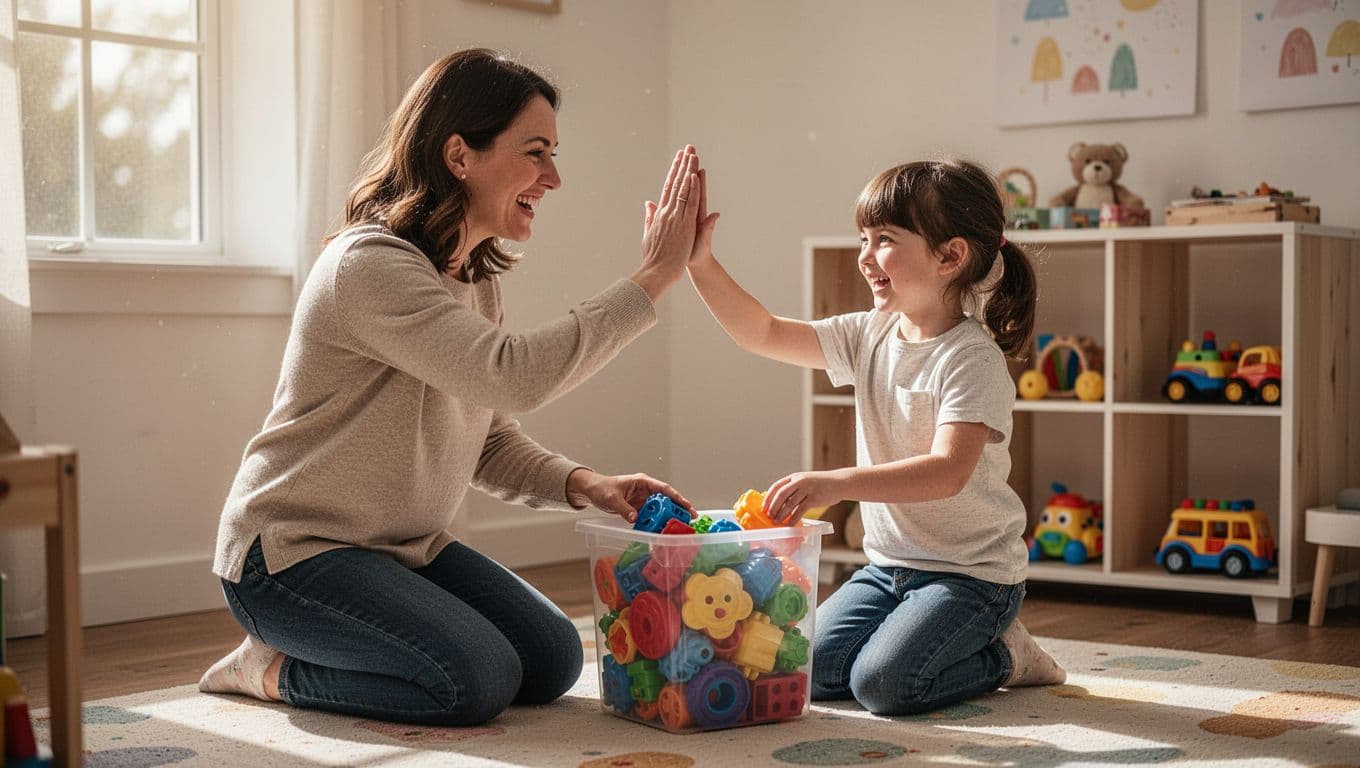
Vague praise sounds nice, but it does not teach much. “Good job” feels good in the moment, yet it leaves kids guessing about what worked. Specific praise tells them exactly what to repeat.
Try naming the behavior as soon as you see it:
- “You put your toys away right when I asked.”
- “I like how you shared your truck with your sister.”
- “You used a calm voice when you were upset.”
That kind of feedback is powerful because it connects the praise to the action. A child starts to learn, “When I clean up, share, or speak calmly, I get positive attention.” Over time, that connection helps good behavior stick.
Specific praise also builds confidence without sounding fake. It shows that you noticed effort, not just the outcome. For more on that idea, praising kids’ efforts over results can help you shape praise that feels both warm and useful.
Choose rewards that fit the child and the goal
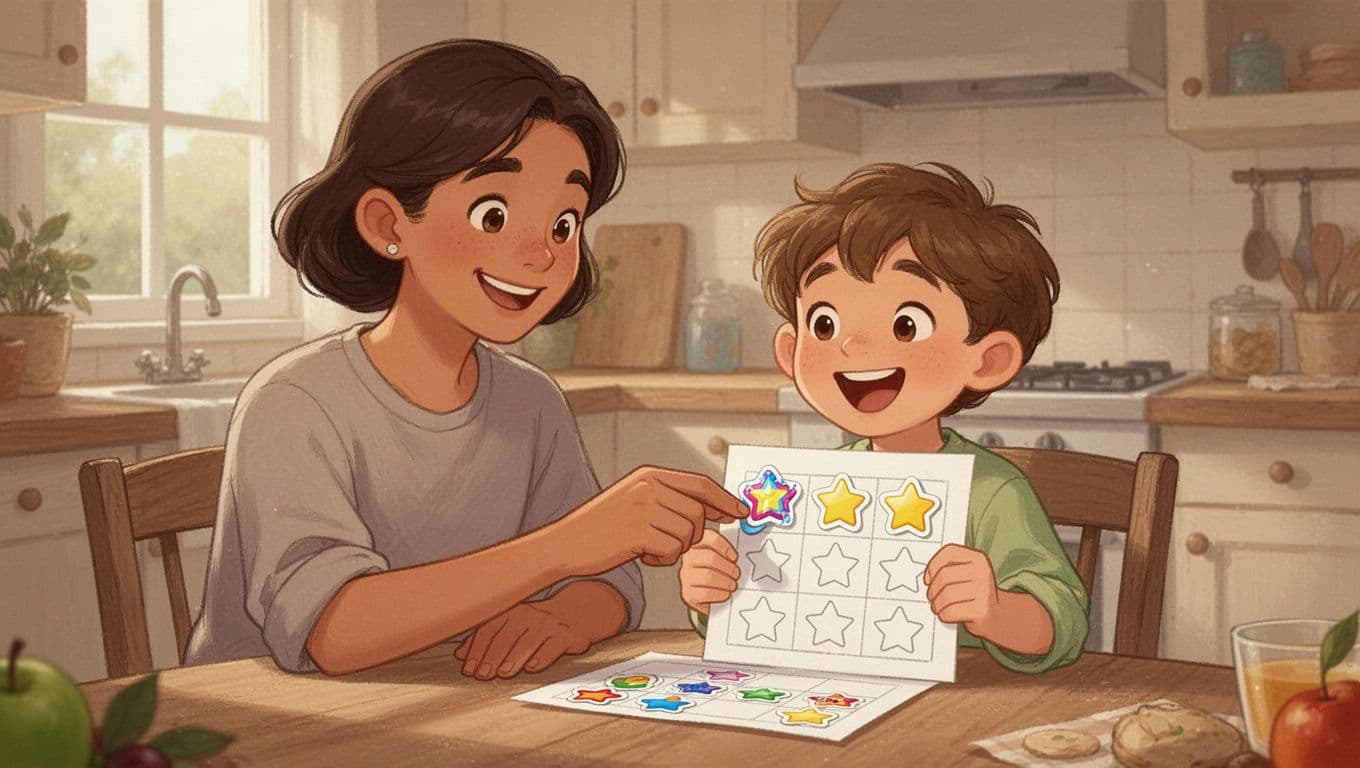
Rewards work best when they are simple, meaningful, and tied to the behavior. A sticker, extra story time, a special activity, or earning a privilege can all work well. The reward does not need to be big. It needs to matter to your child.
Match the reward to the goal. For a small win, a quick reward makes sense. For a bigger goal, like getting ready for bed without a battle, a longer-term reward can help.
A few good examples include:
- A sticker for putting shoes away after school
- Ten extra minutes of reading after finishing homework
- Choosing the family game after a week of kind sibling behavior
- A special outing after meeting a specific goal
Keep rewards fair and balanced. If they are too big or too frequent, kids may focus only on the prize. If they fit the goal, they support the habit without taking over the whole routine.
The American Academy of Pediatrics has also shared guidance on using rewards in ways that are clear and consistent, especially when the child understands what earns them positive reinforcement through rewards.
Catch good behavior early and often
Parents often wait until a child does something major before giving praise. That misses a lot of chances. Small wins matter, because kids need to know that progress counts, even when it is messy or incomplete.
Notice the little moments. A child who starts cleaning up without being asked, waits their turn, or lowers their voice deserves attention. That attention teaches the brain which choices work.
Children repeat behavior that gets more attention than the misbehavior.
This matters when a child uses silliness, whining, or arguing to get noticed. If those behaviors get the most reaction, they can grow. If calm, helpful behavior gets the most attention instead, positive attention slowly takes the lead.
You can start small. Praise one good choice at a time, and do it often enough that your child feels seen. A short sentence, a smile, or a quick high-five can carry more weight than a long lecture.
Research on positive reinforcement supports this approach, especially when praise is immediate and specific positive reinforcement with young children. When you make good behavior easier to notice, you make it easier to repeat.
Positive reinforcement works best when it feels natural. Catch the behavior, name it clearly, and give the child a reason to want to do it again.
Teach replacement behaviors instead of only saying no
Kids need more than a stop sign. If you only say “no,” they may freeze, argue, or try the same behavior again. When you teach a replacement behavior, you give them a better move they can use right away.
This shift matters because behavior usually has a purpose. A child may hit to get attention, grab to get a toy, or yell when a task feels too hard. If you only correct the problem, the need is still there. If you show a new way to meet that need, the child has a real option.
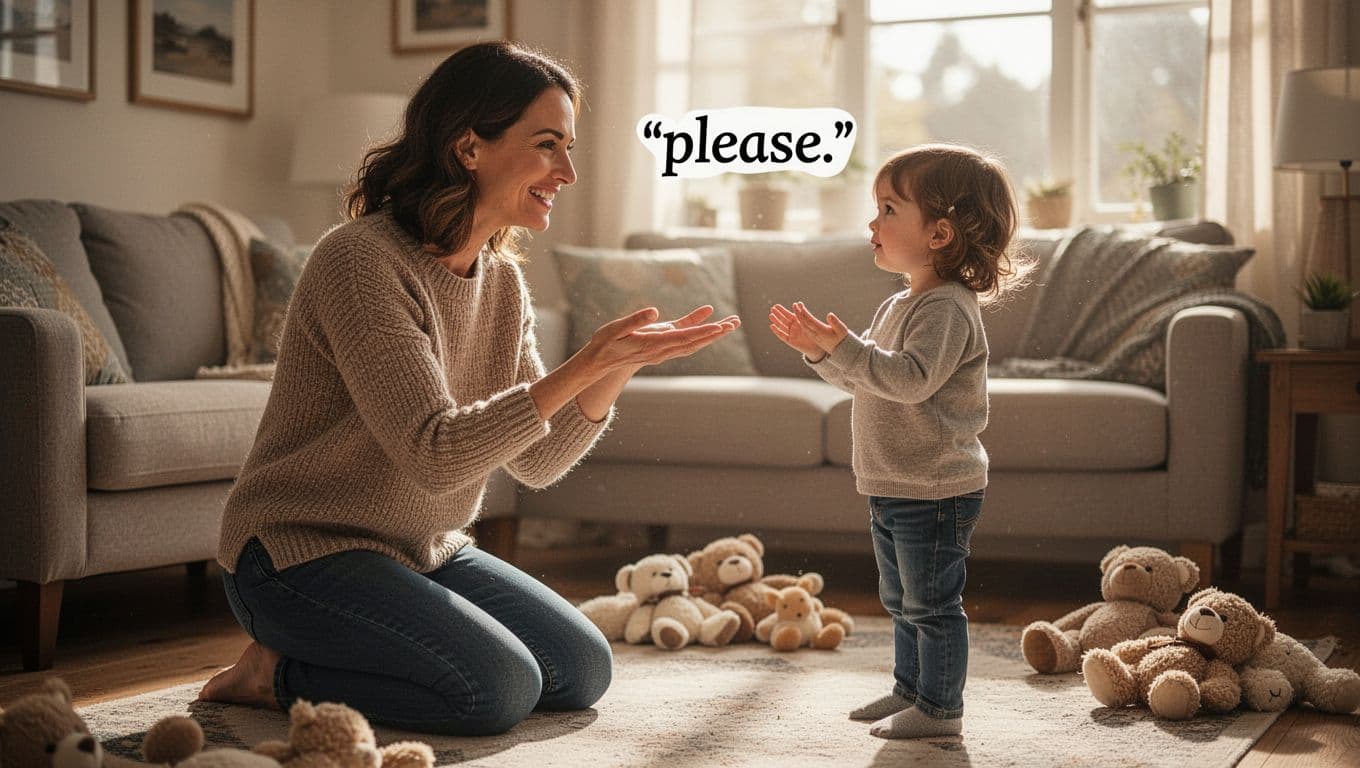
Show the exact behavior you want to see
Children learn by watching, copying, and practicing. That means you need to show the new behavior in a clear, simple way. If you want polite asking, model it. If you want gentle hands, show what that looks like, too.
Keep your examples short and concrete. You might say, “Say, ‘Can I have a turn, please?'” while holding out your hand calmly. For joining play, you can model, “Can I play too?” or “What are you building?” Then let your child try it right after you.
Role-play helps because it turns a hard moment into practice. You can pretend to ask for a toy, wait for a turn, or solve a small disagreement. That practice works best when it feels light and quick, not like a lecture.
If you want more ideas for helping kids label emotions while they practice new skills, emotional intelligence activities for kids can give you simple ways to build that foundation at home.
A few easy replacement behaviors look like this:
- Hitting -> use words: “I don’t like that” or “Stop, please.”
- Grabbing -> wait for a turn: “Can I have it when you’re done?”
- Yelling -> ask for help: “I need help” or “I’m mad.”
- Interrupting -> touch your arm and wait: a quiet cue that shows patience.
The child needs a clear script, not just a correction.
The goal is to make the better choice easy to see and easy to copy.
Practice the new skill when the child is calm
Children do not learn well in the middle of a meltdown. Their brains are focused on stress, not coaching. So the best time to teach a replacement behavior is before the problem starts, when your child is calm and ready to think.
Use small practice moments during the day. Before playtime, rehearse how to ask for a toy. Before a shared game, practice turn-taking phrases like “My turn next” or “Can I go after you?” When children repeat the skill in calm moments, they are more likely to remember it when real feelings show up.
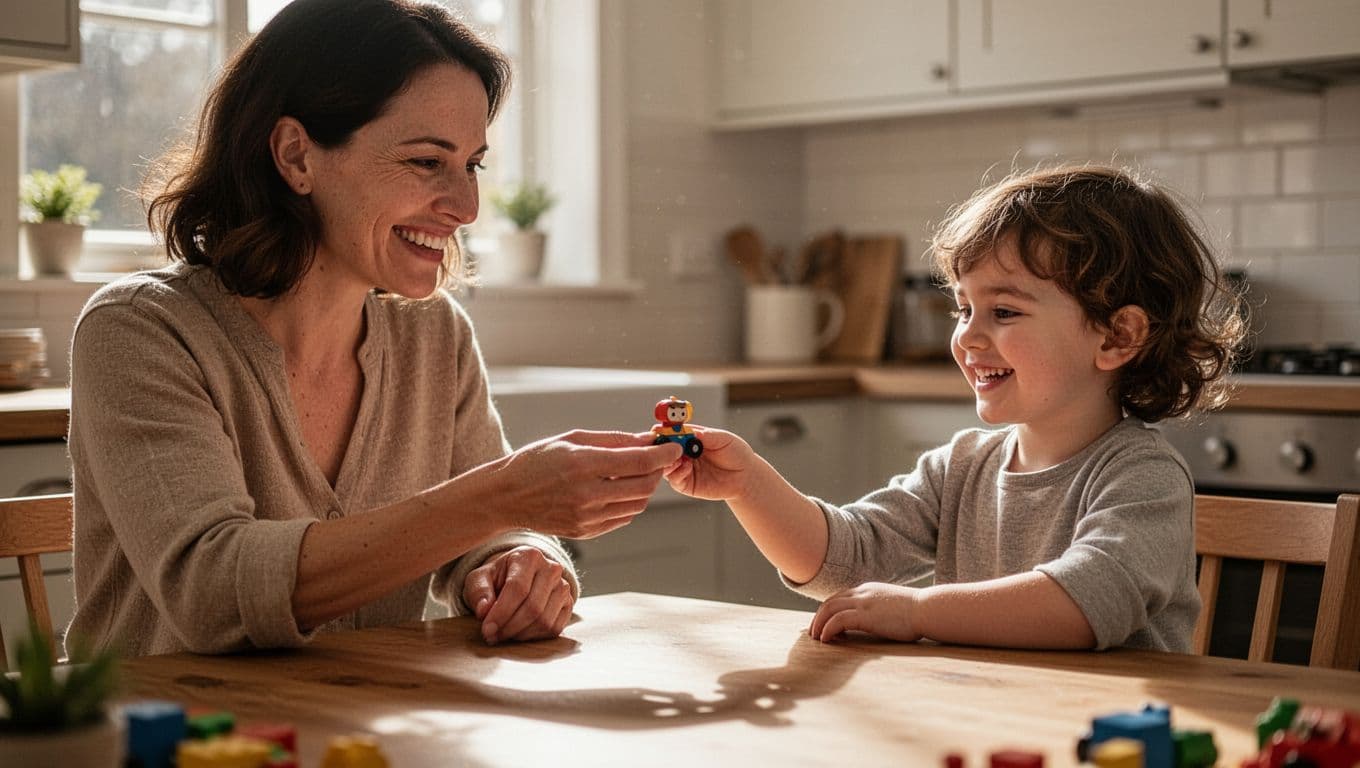
Praise matters here, too. When your child uses the new skill in real life, notice it fast and keep it specific. “You waited and asked for a turn. That was strong self-control.” That kind of feedback helps the new behavior stick.
You can also build in short practice rounds:
- Say the phrase first.
- Let your child repeat it.
- Act it out once or twice.
- Praise the effort right away.
This is where calm teaching pays off. A child who has practiced the script is less likely to default to hitting, yelling, or grabbing later.
Help kids use words when feelings run high
Big feelings often come before big behavior. When a child is upset, words can disappear fast, so your job is to make words easier to find. Start by naming the feeling for them. “You’re frustrated,” “You’re mad,” or “You’re disappointed” can calm things enough for the next step.
Then offer a sentence starter. Many kids need a little help getting started, especially when they are upset. Try phrases like:
- “Help me please.”
- “I need a break.”
- “Can I have a turn?”
- “I’m upset because…”
- “I don’t like that.”
These short lines give children a script when their own words get stuck. They also lower the chance that frustration turns into yelling, kicking, or crying. The behavior response flow for kids idea works for home, too, because it breaks a big moment into smaller, doable steps.
When the child starts to use language before the blow-up, praise it. A simple “You asked for help before you got too mad” tells them that words work. Over time, that becomes the habit you want.
If your child gets stuck often, focus on one replacement behavior at a time. Teach asking for help before you expect perfect sharing. Teach waiting before you expect smooth turn-taking. Small steps are easier to learn, and they build better behavior faster than repeated punishment ever will.
Handle misbehavior without turning every moment into a battle
Some behavior needs a response. Some behavior needs a pause. The trick is knowing which is which, then answering in a way that does not feed the drama.
Small annoyances often grow because adults react too much. A calm, brief response usually works better than a lecture, especially when the behavior is low-stakes and attention-seeking. Save your energy for the moments that truly matter.
Use active ignoring for low-level attention seeking
Active ignoring works best for whining, mild complaining, silly sounds, and similar attention grabs. If the behavior is safe, brief, and clearly aimed at getting a reaction, taking away your attention can stop the cycle. The goal is simple, do not give the behavior the spotlight.
That means no eye contact, no back-and-forth, and no big emotional response. You can stay nearby, but keep your face neutral and your words to yourself. As soon as the child shifts into more appropriate behavior, give attention right away.
This works because attention is often the reward. If whining gets a long argument, the whining gets stronger. If calm words get the response instead, the child learns what works better. The CDC’s guidance on ignoring explains this approach clearly.
Use it for things like:
- whining for a snack
- muttering under their breath for attention
- making goofy noises at the table
- mild complaining after you have already answered
Do not use ignoring for unsafe, aggressive, or destructive behavior. Hitting, biting, throwing, running into the street, or cruelty to siblings needs direct action, not silence. Ignoring is for annoying behavior, not dangerous behavior.
If the behavior can hurt someone, damage property, or spread, it needs intervention right away.
Redirect behavior before it escalates
Redirection works when you catch the problem early. Instead of wrestling with the bad choice, you move the child toward a better one. Your words should be calm, short, and clear: “Hands stay gentle. Use this ball instead” or “You look bored, let’s set up a new game.”
This is especially helpful with rough play, boredom, and frustration. If your child starts getting too physical, give them a fast replacement. “Throw the beanbag here” or “Race me to the couch” gives the same energy a safer outlet. For boredom, offer a fresh task before the whining starts. For frustration, break the job into one small step so the child can succeed.
A good redirect does three things:
- Names the limit.
- Shows the next step.
- Keeps moving.
That rhythm matters because long explanations usually lose a child who is already getting upset. If you want more ways to shift behavior before it blows up, redirecting children’s behavior can help you see how clear limits and practical next steps work together.
Stay consistent when consequences are needed
Some misbehavior needs a consequence, but the best ones are logical, brief, and related to what happened. If a child throws a toy, the toy gets put away for a while. If they make a mess, they help clean it up. If they cannot handle a privilege, that privilege pauses until they can try again.
Keep your tone calm and your message short. A long speech invites more arguing, while a steady follow-through keeps the focus on the behavior. The Oklahoma State University guide to logical consequences is a solid reminder that consequences work best when the child can see the connection.
Consistency matters more than intensity. If you sometimes follow through and sometimes let it slide, kids learn to test harder. If you stay firm without getting loud, the house feels less chaotic and the rule becomes easier to trust.
Match your approach to your child’s age and needs
Behavior management works best when it fits the child in front of you. A toddler, a preschooler, and a school-age child are not ready for the same kind of guidance, because they do not think, reason, or self-regulate the same way. When you adjust your approach, discipline feels clearer and less stressful for everyone.
Age matters, but so do a child’s needs. Some kids need more repetition, while others need more responsibility. Children with ADHD, anxiety, or sensory needs may also need extra structure, visual reminders, or a calmer setup to do well.
What works best for toddlers and preschoolers
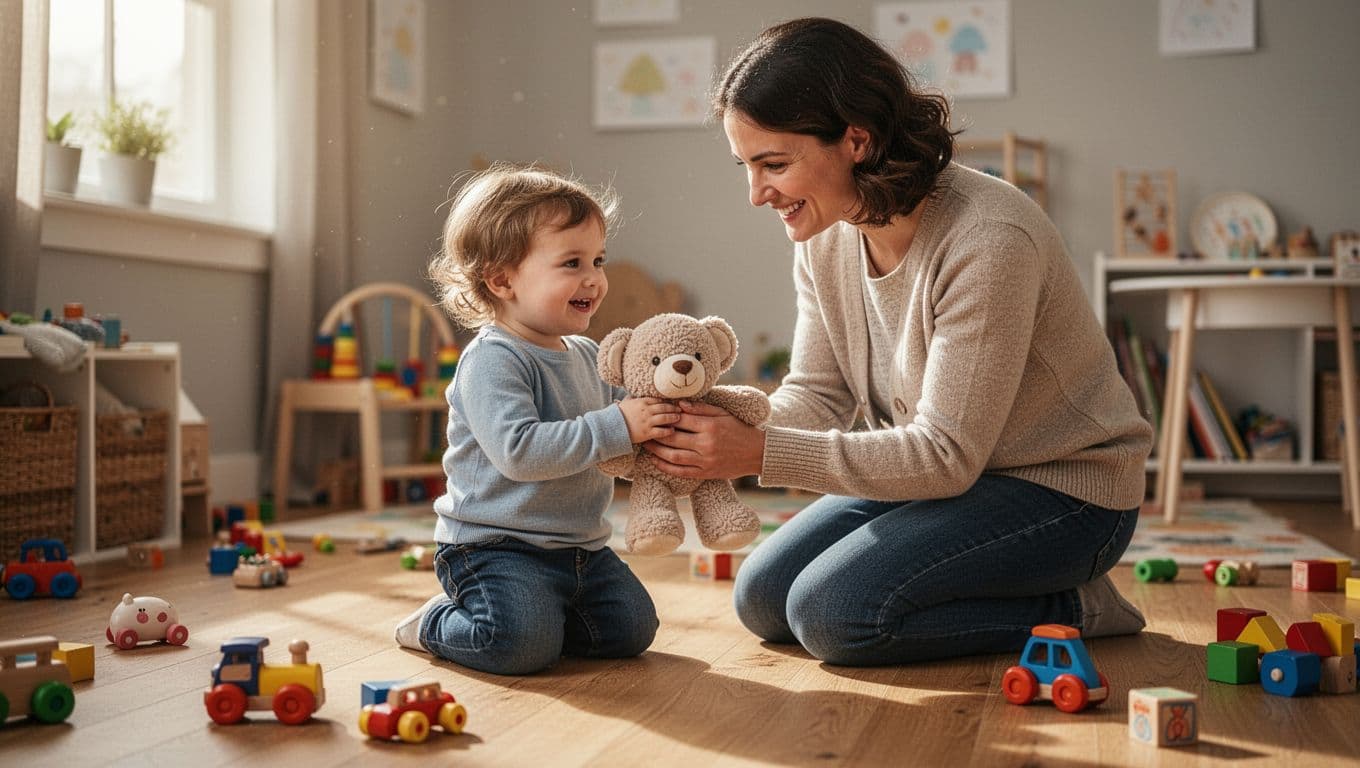
Young children learn through simple words, repetition, and modeling. Long explanations usually miss the mark, but short directions and immediate feedback help them connect action to result. If you want better behavior, keep your language plain and your response steady.
This age group also needs a lot of routine. Mealtimes, bedtime, cleanup, and transitions go better when they happen the same way most days. A visual schedule can help too, especially for children who get upset when the plan changes.
A few things work especially well:
- Immediate praise for small wins, like using gentle hands or following one direction
- Redirection when behavior starts to drift, like offering a toy, task, or movement break
- Modeling the behavior you want, then asking your child to copy it
- Repetition of the same rule, the same words, and the same follow-through
For toddlers and preschoolers, consistency matters more than big talks. If you stay calm and repeat the same response, your child learns faster. The CDC and CHADD both note that behavior therapy and parent training are strong early tools for young children, especially when families use structure at home and in other settings behavior therapy for young children.
Children this age also do better when you match the task to their stage. If your child is still learning to wait, share, or switch activities, expect small steps instead of perfect behavior. For more ideas on age fit, age-appropriate activities for toddlers can help you see how development shapes behavior.
Young kids need fewer words and more repeats.
What older children need more of
School-age kids can handle more responsibility, but they still need limits. At this stage, you can start giving choices that fit within the boundary. That might sound like, “Do you want homework first or after snack?” The rule stays the same, but the child gets some control.
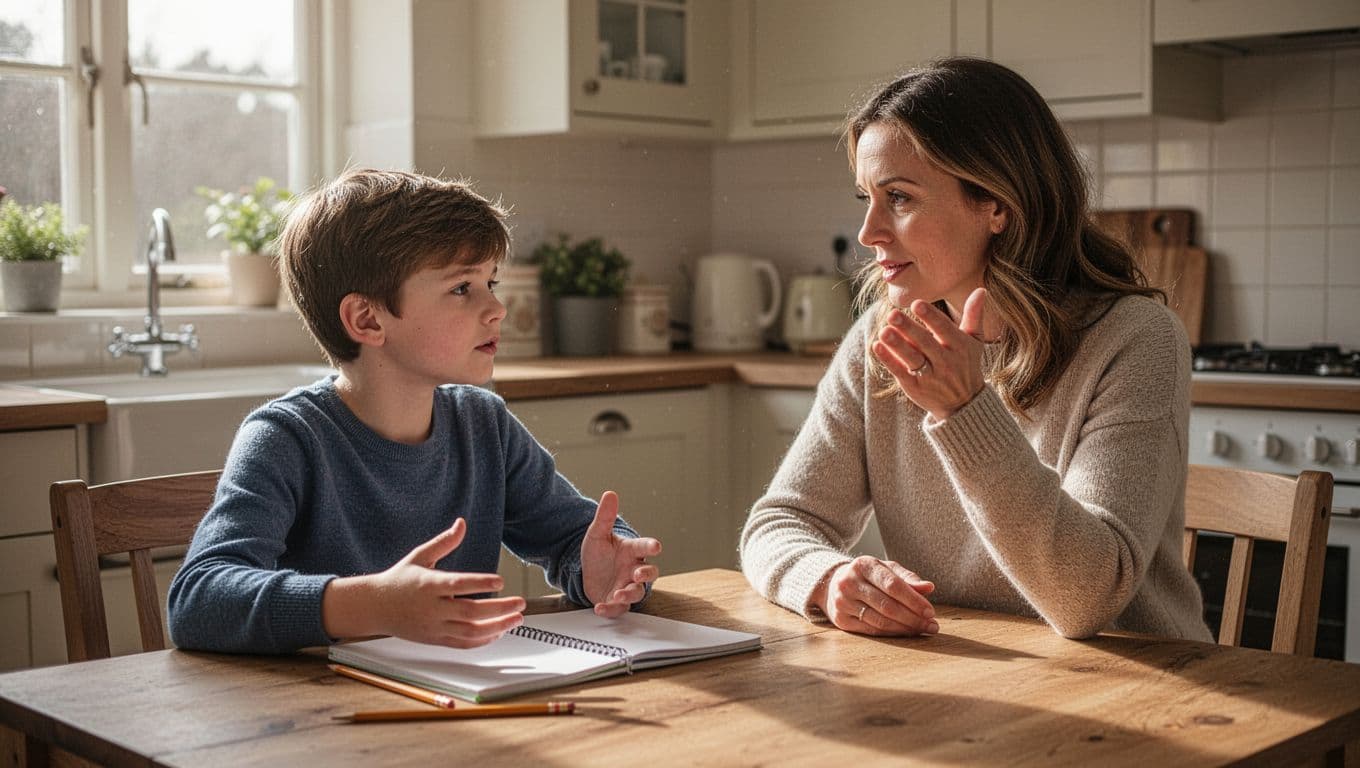
Older children also respond well to clear problem-solving. If they forget chores, argue about screen time, or rush through homework, talk through the pattern with them. Ask what got in the way, then help them fix the next step. This keeps the focus on learning instead of power struggles.
Natural consequences can work well here, as long as they are fair and related. If a child forgets a lunchbox, they feel the inconvenience. If they leave a bike outside, it gets put away. The lesson lands better when the outcome makes sense.
This age group often benefits from:
- More choice within clear limits
- Short problem-solving talks after the calm returns
- Consistent follow-through on responsibilities
- Help with planning, timers, and checklists
If your older child struggles with focus or impulse control, behavioral management tips for preschool children can also point you toward structure that helps with attention and transitions. The same basic ideas often carry into the early school years.
When a child needs extra support
Sometimes behavior is not just about limits. Constant aggression, poor sleep, frequent meltdowns, learning problems, or strong emotional outbursts can point to a deeper struggle. You do not need to panic, but you should pay attention to patterns.
Extra support often helps when a child:
- Has daily outbursts that feel bigger than the situation
- Struggles with school, reading, listening, or focus
- Gets upset by noise, clothes, food textures, or transitions
- Has trouble falling asleep or staying asleep
- Needs constant reminders just to get through basic routines
Kids with ADHD, anxiety, or sensory needs may need more structure than other children their age. That can mean visual schedules, shorter directions, extra warning before changes, or a calmer space to reset. For some families, the right support starts with parent coaching, and for others it includes school input or a pediatrician visit.
If you want a simple place to start, how to be an organized mom can help you build steadier routines at home, which often makes behavior easier to manage. When the support fits the child, home feels less chaotic and behavior improves with less force.
Conclusion
Behavior changes faster when children feel safe, know the rules, and get steady guidance. That is why the most effective behavioral management techniques for children focus on clear routines, positive reinforcement, replacement behaviors, and calm follow-through.
When you keep your expectations simple and respond the same way each time, kids learn what works. Small corrections, given with patience, do more than loud reactions ever will.
Progress takes time, but it does not have to be dramatic to matter. A few consistent changes can make daily life easier for both you and your child.
Save pin for later

- How to Help a Child Deal With Anxiety at Home - September 12, 2026
- How to Prepare Your Child for the First Day of School - September 12, 2026
- Age-Appropriate Chores for Kids by Age Group - September 12, 2026