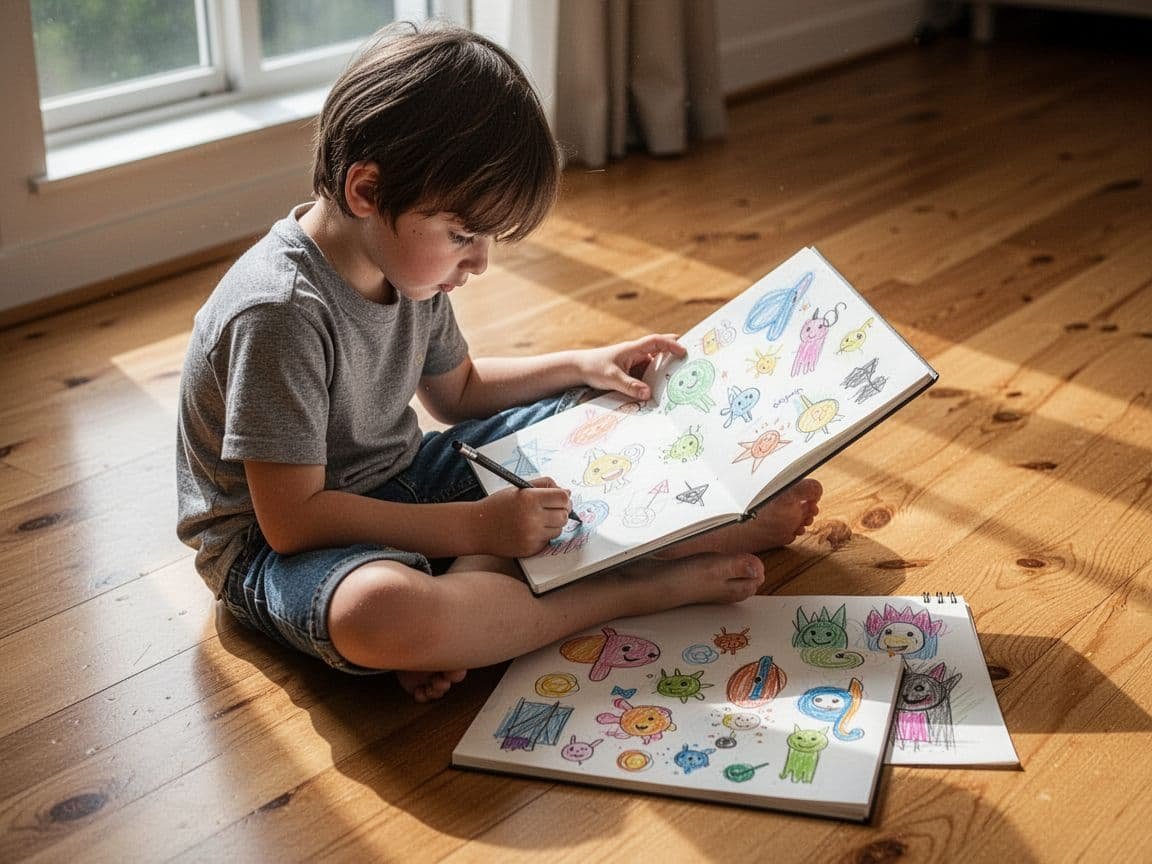
A tiny idea can turn into a wild little invention when kids get curious enough to test it. The best ones solve everyday problems, like spills, lost pencils, messy rooms, or safer travel at night.
That’s why 15 simple yet thrilling invention ideas for kids can be so much fun. They give kids a chance to build with things they already have at home or in class, while also making something useful, clever, or a little bit surprising. If you want more playful ideas for kids, these fun things to do with kids can keep the creative energy going.
The ideas below mix hands-on fun with real purpose, so kids can make, test, and improve as they go.
Why kid inventions are more than just fun projects
Kid inventions do more than fill an afternoon. They teach children to notice small problems, test simple fixes, and trust their own ideas. A messy bedroom, a spilled snack, or a missing pencil can become the start of real thinking.
That matters because invention starts with a question, not a perfect answer. When kids ask, “How can I stop this from happening?” they begin to think like builders, not just playmakers. If you want more hands-on inspiration that keeps kids moving and thinking, these screen-free learning activities for young children fit the same spirit.
How invention projects help kids think like problem-solvers
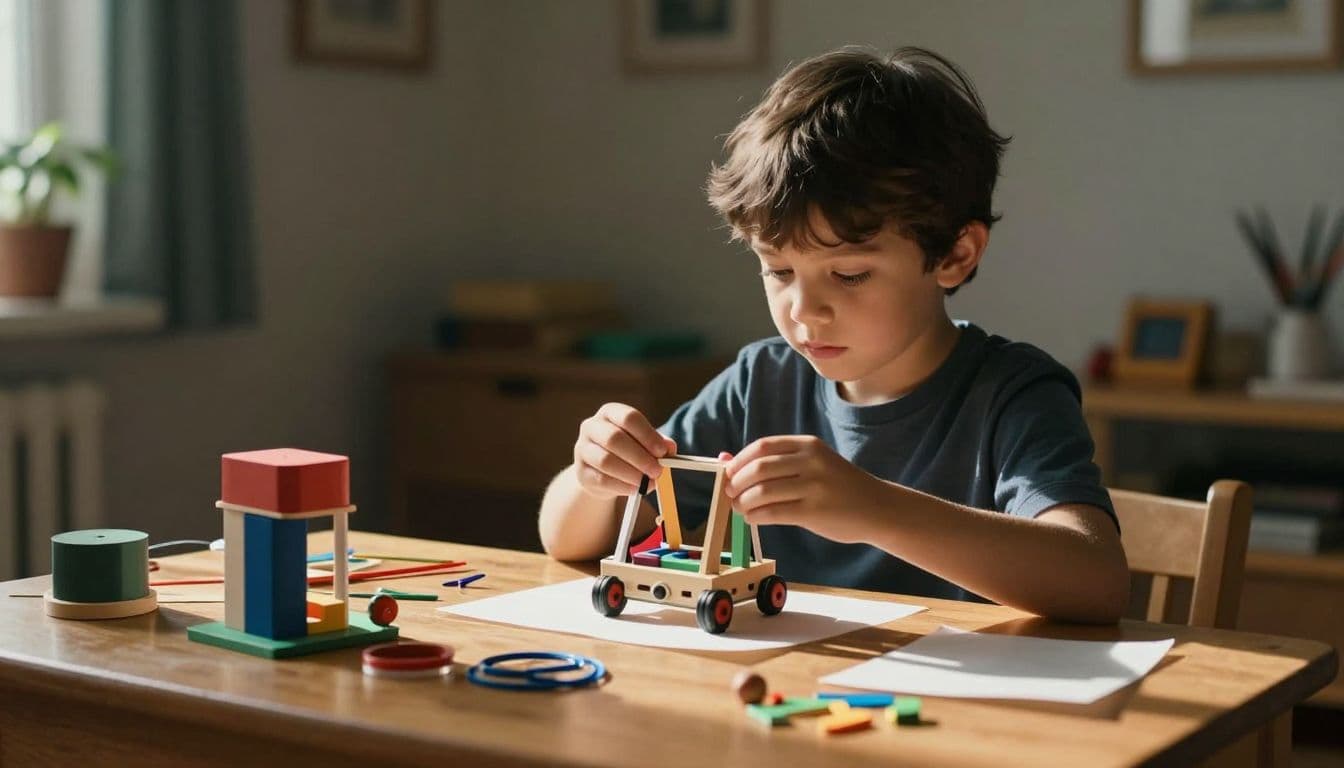
Invention projects push kids to look at everyday annoyances with fresh eyes. Instead of ignoring spilled crackers, they may build a snack tray that catches crumbs. Instead of losing markers under a bed, they may invent a storage box that keeps supplies close.
That shift is powerful. Kids learn that problems are not just interruptions, they are clues.
A simple invention often begins with questions like these:
- Why does this keep happening?
- What would make this easier?
- What can I change first?
Those questions train kids to notice details and try ideas one at a time. They also learn that a first draft can be messy and still useful. Invention becomes a process of observing, testing, and improving, which is a big part of STEM learning and critical thinking. The Lemelson-MIT Invention Education program shows how this kind of hands-on work helps children solve real problems with confidence.
Kids grow faster when they see their ideas work in the real world, even in small ways.
Why simple ideas often lead to the best results
Kids do not need fancy tools or expensive supplies to invent something useful. Cardboard, tape, string, paper cups, and recycled containers can do a lot of heavy lifting when a child has a clear idea.
Simple materials also make testing easy. If a launcher wobbles or a storage hook slips, kids can fix it right away. That quick back-and-forth keeps the project moving and gives them small wins, which helps them stay excited.
Simple inventions also make room for teamwork. One child can sketch, another can tape, and a third can test. That kind of shared effort builds communication as well as problem-solving. It also gives kids a chance to see how different ideas can fit together in one working project.
In short, the best invention ideas for kids are not about perfection. They are about trying, adjusting, and seeing what works. That is where confidence starts.
The first 5 simple invention ideas kids can build with everyday stuff
The best kid inventions start with ordinary messes and small annoyances. A snack spills. A pencil disappears. A bowl tips. Then a child turns that problem into something useful with cardboard, tape, cups, clips, or scraps from the junk drawer.
These first five ideas are easy to picture and easy to test. They work best at home, on a rainy afternoon, or during a school project where the goal is to build something clever without buying special supplies.
A snack holder that keeps books and crumbs apart
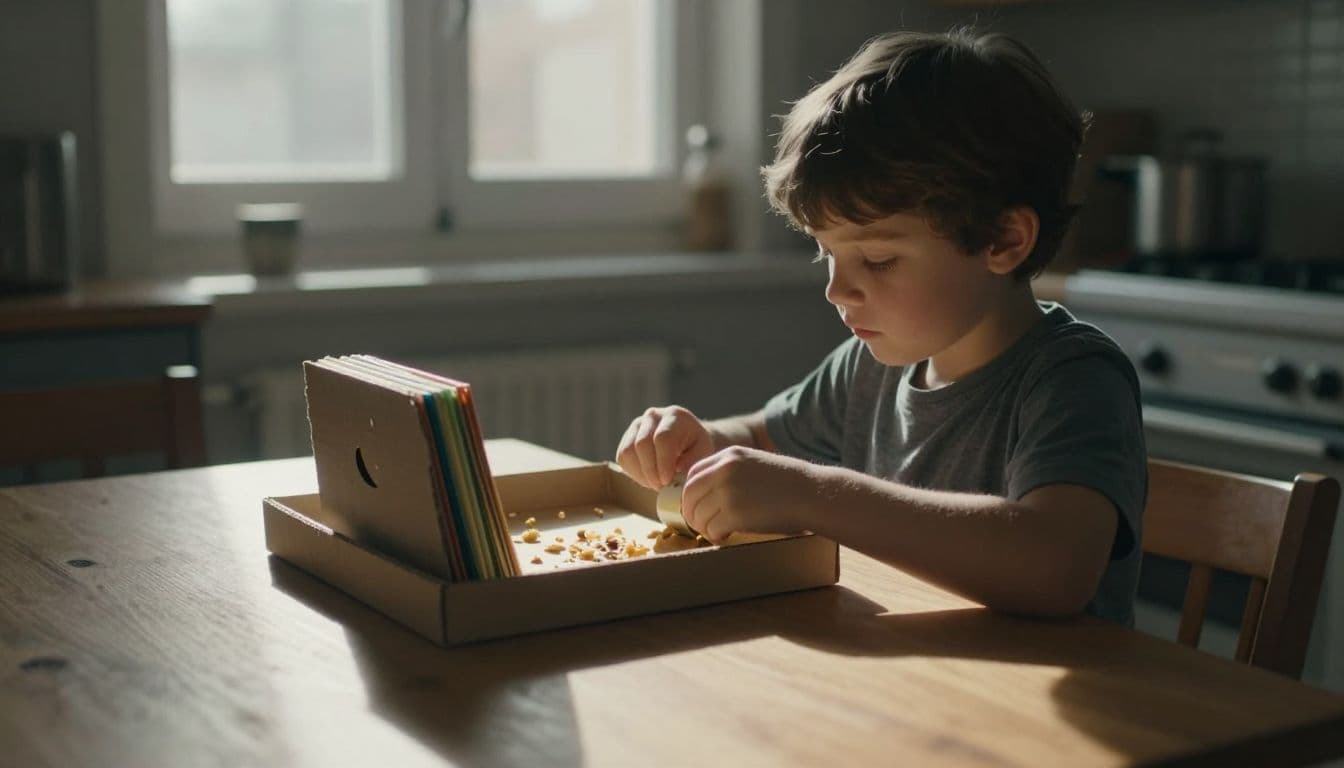
Reading and snacking don’t always mix well. A simple snack holder can fix that by giving kids a small tray or clip-on space for crackers, grapes, or popcorn while they keep a book open beside it. A flat piece of cardboard, a plastic lid, or a lightweight tray can do the job.
Add a raised edge so crumbs stay put, or clip the holder to the side of a table or chair arm. That tiny change solves a daily problem fast, because it keeps pages clean and snacks in one place.
A child can decorate it with markers, stickers, or colored tape. The result feels like a mini desk organizer and snack station in one.
A no-spill bowl for wiggly little hands
Some bowls tip the second a child bumps the table. A no-spill design helps by giving the bowl a wide base, soft grips, or a small guard around the rim. A plastic container, a bowl set inside a larger dish, or a cardboard ring wrapped in tape can help make the idea real.
Kids can test different shapes to see what stays steady best. A rubber pad under the bowl, for example, can keep it from sliding across the table.
This kind of invention is useful for cereal, soup, and snack time. It gives children a simple lesson in balance, too, which makes the project feel both fun and practical. For more kid-friendly activity ideas that fit busy afternoons, these age-appropriate activities for children can spark more easy builds.
A drip catcher for melting ice cream
Warm days and melting ice cream go hand in hand. A drip catcher solves that sticky problem with a cone holder or cup-style base that catches the drips before they hit hands or shirts. A paper cup with a hole cut in the top, a plastic lid, or a folded cardboard ring can work as the starting point.
Kids can make it playful by shaping it like a flower, star, or superhero shield. They can also test how wide the catcher needs to be to catch drips without making the cone awkward to hold.
This invention feels small, but kids notice the payoff right away. Fewer sticky fingers mean more time to enjoy the treat.
A backpack light that helps kids be seen at night
Early mornings and evening walks can be dim, so a backpack light or reflective add-on is a smart build. A small clip light, shiny tape, or reflective paper attached to a backpack, bike, or jacket can help kids stand out in low light.
Simple materials work well here because the goal is visibility, not decoration alone. A child can place the light on the top flap of a bag, then add reflective strips to the straps or sides.
The best part is how easy this invention is to adapt. It can hang from a zipper, clip onto a loop, or fasten with Velcro. That makes it a useful project for school days, after-dinner bike rides, and dark winter afternoons.
A pencil finder that saves classroom time
Lost pencils waste time at home and in class. A pencil finder can solve that by keeping supplies in clear slots, labeled sections, or easy-to-see holders. A shoebox, small container, or recycled organizer can become a tidy home for pencils, sharpeners, and erasers.
Kids can sort by color, size, or purpose. One slot can hold sharpened pencils, another can hold dull ones, and a third can keep extras ready.
A quick label helps too, especially if several children share a desk. When supplies have a clear place, the search ends faster and the school day runs smoother.
Simple inventions work best when kids can test them right away and change what does not fit.
For more ideas that children can build with low-cost materials, Begin Learning’s invention ideas for kids offer a helpful next step.
More invention ideas that make daily life smoother and safer
The best kid inventions often solve the small stuff adults deal with every day. A toy box that cleans up faster, a pet toy that keeps a dog busy, a window alarm that adds peace of mind, and a wrapping idea that skips tape all turn simple materials into useful tools.
These ideas keep the energy high because they mix movement, safety, and organization. They also give kids a chance to build something they can actually use at home, school, or with a pet.
A toy cleaner box for tiny cars and busy hands
A small box can make cleanup feel like part of the game. Kids can turn a shoebox, plastic bin, or cardboard container into a toy cleaner box with separate spots for cars, blocks, marbles, or other small pieces.
The idea is simple. One side can hold the toys that need washing or wiping, while another side keeps the clean ones ready to go back on the shelf. A cut-out slot, soft cloth, or paper towel strip can help with wiping off dust before the toys are put away.
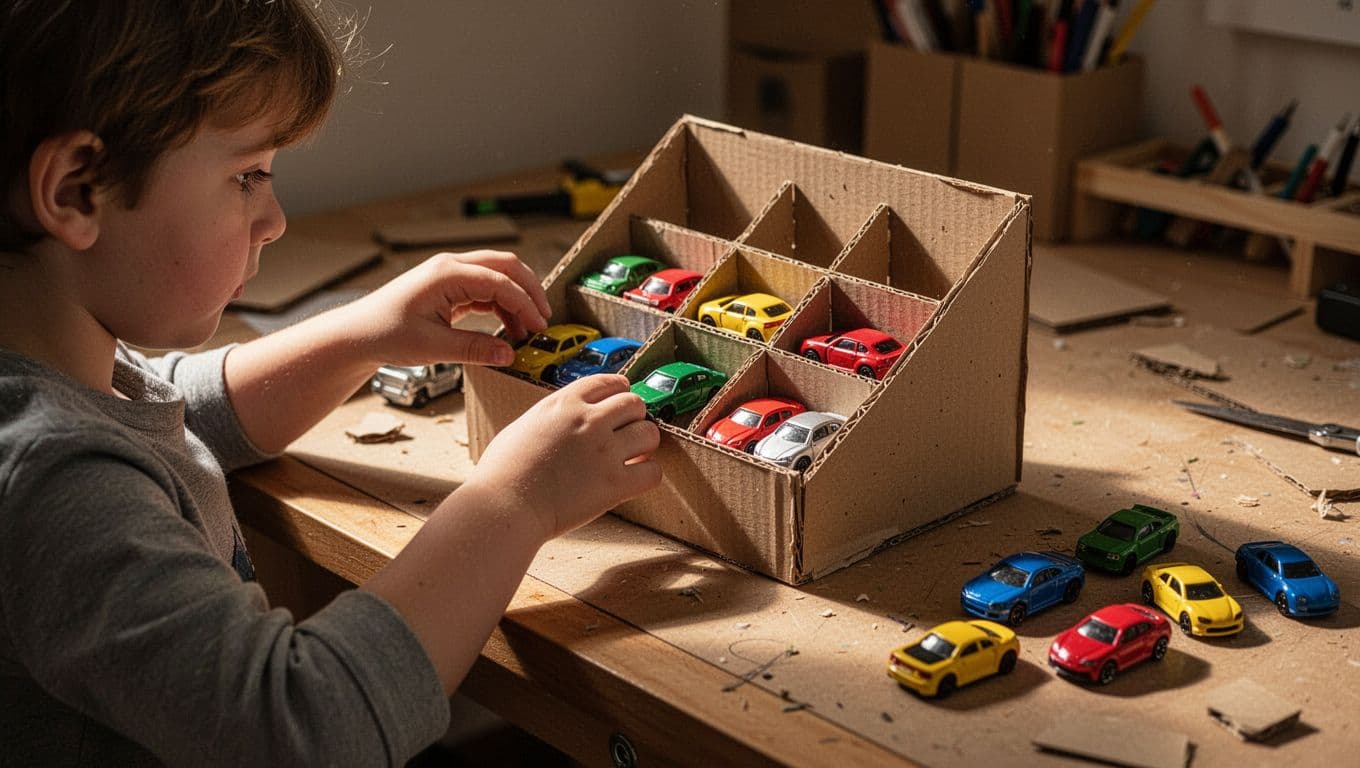
That makes cleanup feel less like a chore and more like a quick pit stop. For kids who love order, it also gives each toy a clear home. A few labels or color marks can make the system even easier to follow. For more ideas that help keep a busy home in order, these family organization systems fit the same practical spirit.
An automatic pet toy that keeps pets moving
Pets love movement, especially when it looks unexpected. A rolling tube, a wiggly string toy, or a bouncing ball inside a lightweight frame can grab a pet’s attention fast.
Kids can build a basic version with cardboard tubes, soft fabric strips, bottle caps, or a small ball that moves when nudged. The goal is to create fun motion with simple materials, not a perfect machine. A toy that tilts, rolls, or bobs can keep a cat interested or help a dog burn off extra energy.
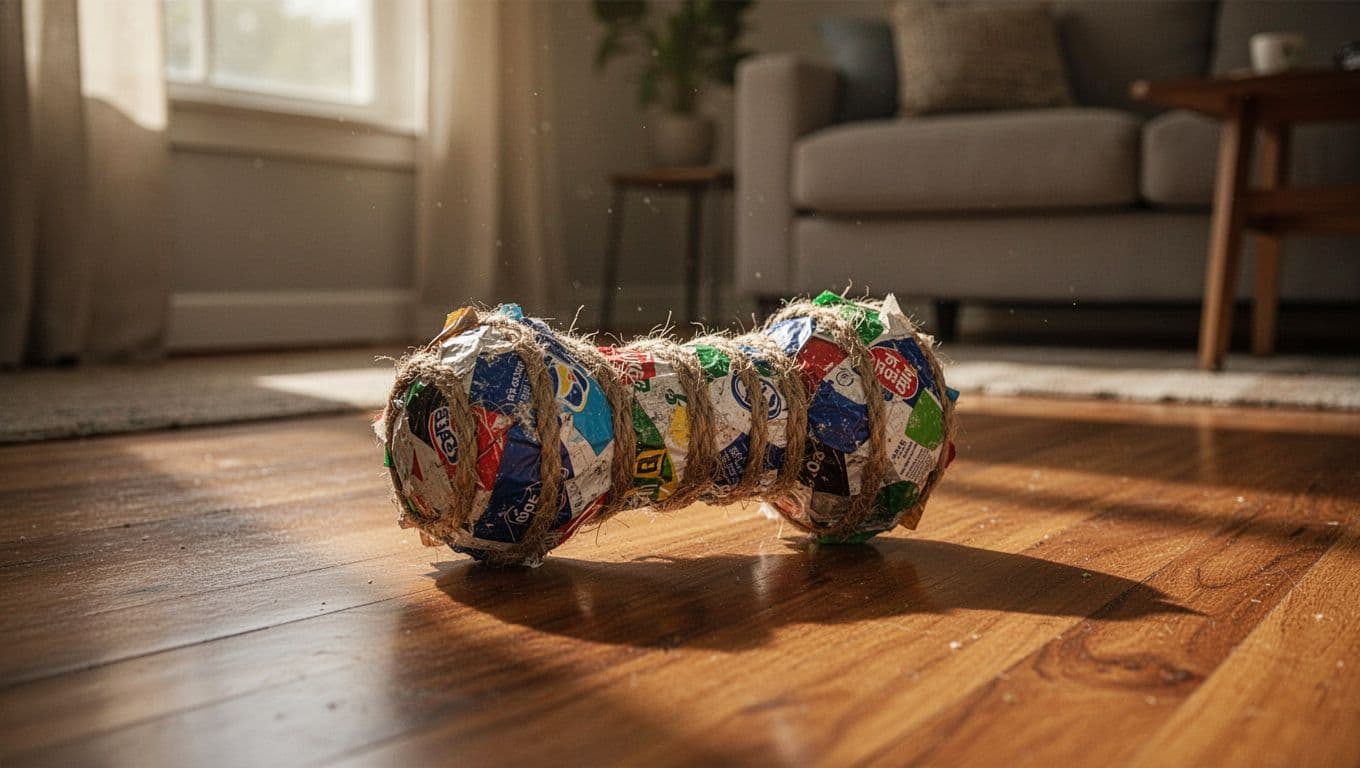
Pet toys work best when they move just enough to stay interesting, but stay safe for everyday play.
A child can test how far the toy rolls, how often it bounces, and what makes a pet chase it. That kind of trial and error turns playtime into a small engineering lesson. It also keeps the project light, fun, and easy to redo with different materials.
A window alarm that adds peace of mind
A window alarm can be a small but smart project for kids to model. It does not need complex electronics to make sense. A simple version can use a pull-tab, a clip, or a paper circuit idea that makes a sound or flashes when a window opens.
The point is awareness. When the window shifts, the alarm gives a clear sign that something changed. Kids can picture it as a helper for parents, especially in rooms where open windows matter for safety or for keeping track of what’s happening in the home.
To keep it age-appropriate, the build should stay basic. A bell, buzzer, or bright flag can work as the alert part. Even a homemade model with string and a paper marker helps children understand how warning devices work.
That lesson connects well with everyday safety habits. For more age-appropriate guidance on home protection, these child safety rules are a helpful companion to this kind of project.
Tape-free wrapping paper for faster gift giving
Gift wrap gets messy fast when tape tears, curls, or sticks to the wrong place. A tape-free wrapping design solves that with folds, tabs, tucked corners, or simple fasteners that hold the paper shut.
Kids can make a gift sleeve from folded paper, then add a flap that slips into a pocket on the other side. Another idea is a wrap that closes with string, paper clips, or little folded tabs. The result looks neat and clever, almost like a secret envelope for presents.
This kind of invention is easy to picture during holidays or birthdays. It also teaches kids how shape matters as much as decoration. A well-placed fold can do the work of tape and keep the package looking tidy.
A few decorations make it feel special. A ribbon, sticker, or stamped shape can finish the design without adding clutter. For kids who enjoy hands-on projects, that mix of style and function feels like a win.
An easy shoe organizer that keeps the floor clear
Shoes collect by the door like they have their own tiny gravity field. An easy shoe organizer helps stop that by giving each pair a clear spot to land.
Kids can build a simple rack from cardboard dividers, recycled crates, or a row of paper tubes sized for sneakers and small shoes. A low shelf works well because it keeps shoes easy to grab on the way out. That means less searching in the morning and less stepping over stray shoes at night.
A good organizer should feel obvious at a glance. Each pair gets a slot, a shelf, or a tray, so cleanup happens fast. Bright tape or labels can help younger children remember where each pair belongs.
This idea fits busy homes well because it saves time twice, once when shoes go away and again when they need to be found. A neat entryway makes the whole room feel calmer.
How kids can turn a simple idea into a real invention
A great invention rarely starts with something fancy. It usually starts with a small bother, like a spilled snack, a lost pencil, or a toy that never stays in one place.
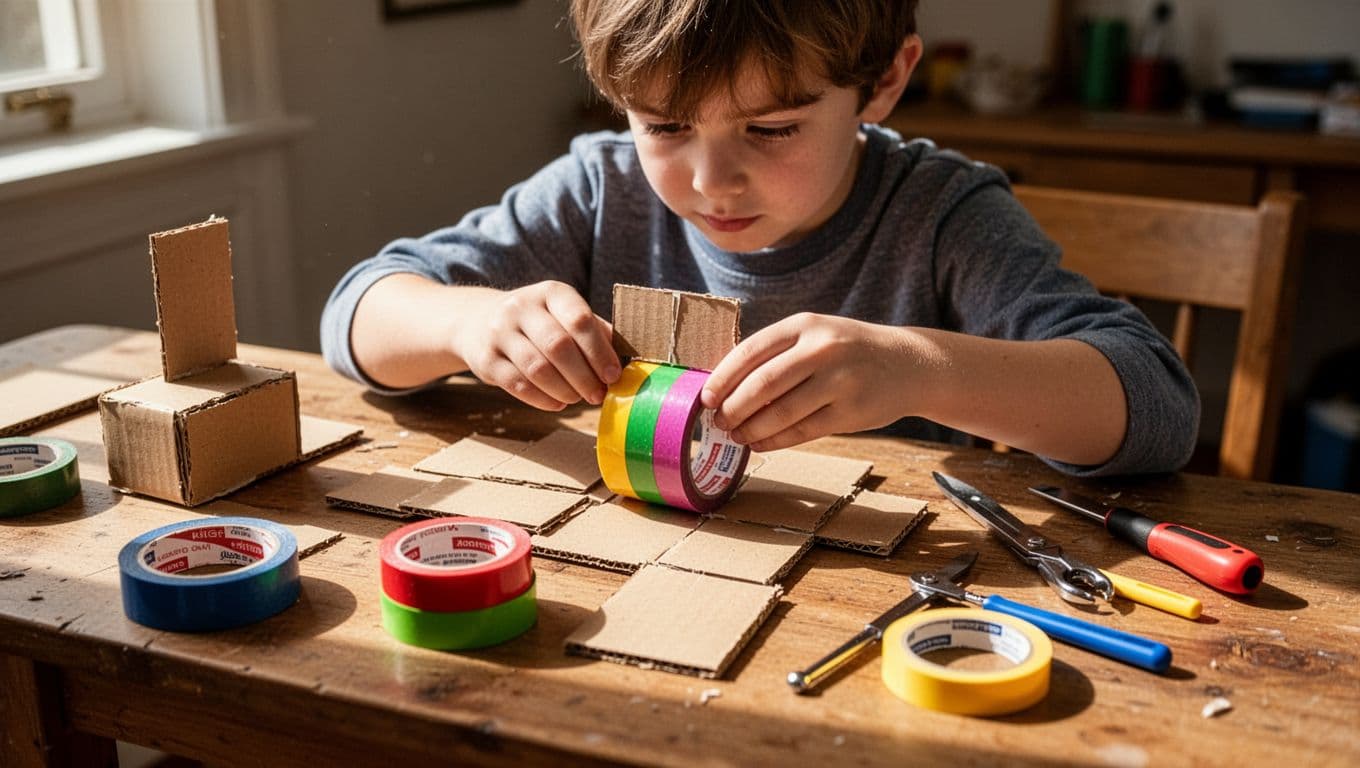
Kids can turn that little problem into something real by following a simple path. They notice what bothers them, sketch a fix, build a rough model, and test it. That process gives them something better than a finished project, it gives them a way to think like inventors.
Start with one everyday problem
A strong invention idea usually begins with one small frustration. Maybe the backpack zipper gets stuck, the cereal bowl slides around, or crayons always roll off the table.
Encourage kids to look for moments that feel messy, slow, annoying, or hard. Those moments are clues. A good question to ask is, “What keeps happening that I wish would stop?” That question helps kids focus on real needs instead of random ideas.
The best problems are the ones a child sees often. If they care about the problem, they’ll care more about fixing it. For more ways to keep that creative energy going indoors, creative indoor activities for children can spark more hands-on thinking.
Small problems make strong invention starters, because kids can see the need right away.
Sketch, build, test, and improve
Once the problem is clear, the next step is simple. Kids should draw the idea first, then make a rough version, then test it and make changes.
A sketch does not need to look perfect. It just needs to show the basic parts. After that, kids can use cardboard, tape, string, cups, paper, or recycled containers to build a model. The first version is only a starting point.
Testing is where the idea becomes stronger. If the invention tips, slips, or breaks, that’s useful information. Kids can ask:
- What worked well?
- What felt awkward?
- What needs to change?
That kind of feedback turns a rough idea into a better one. It also shows children that inventing is a process, not a one-time event. In other words, the first try is just the first try.
Use safe materials and ask an adult for help when needed
Invention should feel exciting, not risky. Kids can stay safe by using simple materials first and saving tools, heat, or sharp items for adult help.
A few things need extra care:
- Scissors and craft knives should be handled with help when needed.
- Glue guns and hot items should stay in an adult’s hands.
- Small parts should be kept away from younger children and pets.
- Loose wires or batteries should only be used with clear supervision.
Safety does not slow creativity down. It helps kids keep going without worry. A sturdy project with taped edges, smooth corners, and adult support feels much more secure to build and test.
When kids know they can ask for help, they take more creative risks in the right way. That makes the whole invention feel possible, and that matters more than perfection.
Conclusion
The best part of these 15 simple yet thrilling invention ideas for kids is how they turn ordinary stuff into something useful. A box, a clip, a cup, or a scrap of cardboard can become a real solution when a child looks at it with fresh eyes.
That kind of project builds confidence and problem-solving skills at the same time. It also gives kids a chance to test ideas, fix mistakes, and feel proud of what they made, which is exactly why play-based engineering activities for kids work so well at home and in class.
Great inventions do not have to be big, expensive, or complicated. They only need a small problem, a curious mind, and the courage to try.
So let kids look around the house, the classroom, or the backyard, and pick one little problem to solve. That is where the next clever idea begins.
Save pin for later


- Asperger’s Syndrome in Babies: Early Signs and Next Steps - October 7, 2026
- 12 Beautiful Baby Names That Mean Forest, Plus Woodland Picks - September 27, 2026
- 15 Fantastic Baby Nicknames for Boys, From Sweet to Playful - September 27, 2026