Two-year-olds learn best through short, playful, hands-on activities, not formal lessons. Their attention may last only 5 to 15 minutes, so a simple activity with a bowl, spoon, blocks, or paper can offer plenty of learning without requiring a complicated setup.
This list includes 15 easy ideas using common household items, with options that support language, fine motor, gross motor, sensory, social, and early problem-solving skills. Your child may repeat one favorite activity several times or lose interest quickly, and both responses are normal. Follow your child’s lead, offer choices, and keep the experience relaxed. You can also find more at-home activities for toddlers when you need fresh ideas.
Close supervision matters, especially during sensory, water, art, and movement play. Gather a few basic supplies, then start with the first activity and let your child’s curiosity guide the next step.
Watch toddler activity ideas on YouTube
Fun Learning Activities for Two Year Old Children
Each idea below should feel like play, not a test. Follow your child’s interest, repeat favorite activities, and celebrate trying rather than perfect results. The CDC’s 2-year developmental milestones include pointing to pictures, combining words, kicking a ball, and using one hand while holding something in the other.
Build Language Skills With Books, Songs, and Pretend Play
- Try a picture-book hunt. Choose a familiar book and ask, “Where is the dog?” Let your child point, then model, “The dog is running.” Pause before turning the page so your child can respond. This builds vocabulary, listening, and early two-word phrases. Use fewer questions for a simpler version, or ask about colors and actions for a challenge.
- Play a song-and-action game. Sing a nursery rhyme, or make up motions such as clapping, stomping, waving, or pretending to sleep. Name each action and pause so your child can copy you. Songs support imitation, memory, listening, and following directions. Slow the song down if needed, then add a new motion when your child is ready.
- Start pretend play. Use stuffed animals, dolls, toy food, or toy vehicles. Say, “The baby is hungry,” then offer pretend food and ask, “What should baby eat?” Name feelings and actions, such as happy, tired, driving, and eating. Pretend play supports emotional understanding and early storytelling. Add a short sequence, such as feeding, washing, and putting the doll to bed.
Repeat favorite books and songs often. Familiar words give your child more chances to join in without pressure.
Strengthen Fine Motor Skills With Sorting, Building, and Art
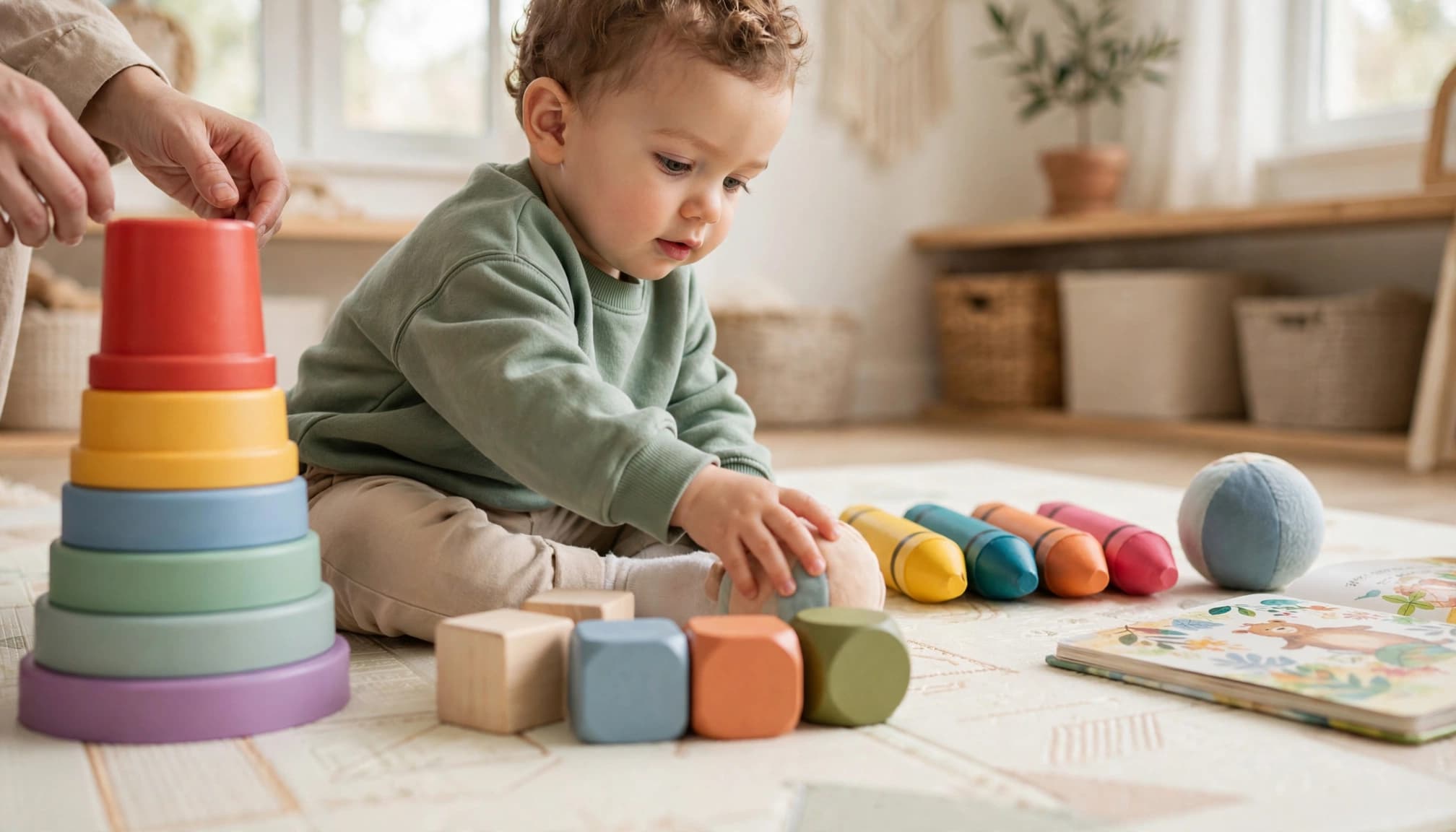
- Sort large household objects. Offer safe, oversized items such as plastic cups, washcloths, or large toy pieces. Ask, “Which one matches?” Your child can group items by color or type. Picking up and placing objects strengthens hand control and early sorting skills. Start with two groups, then add another color or category.
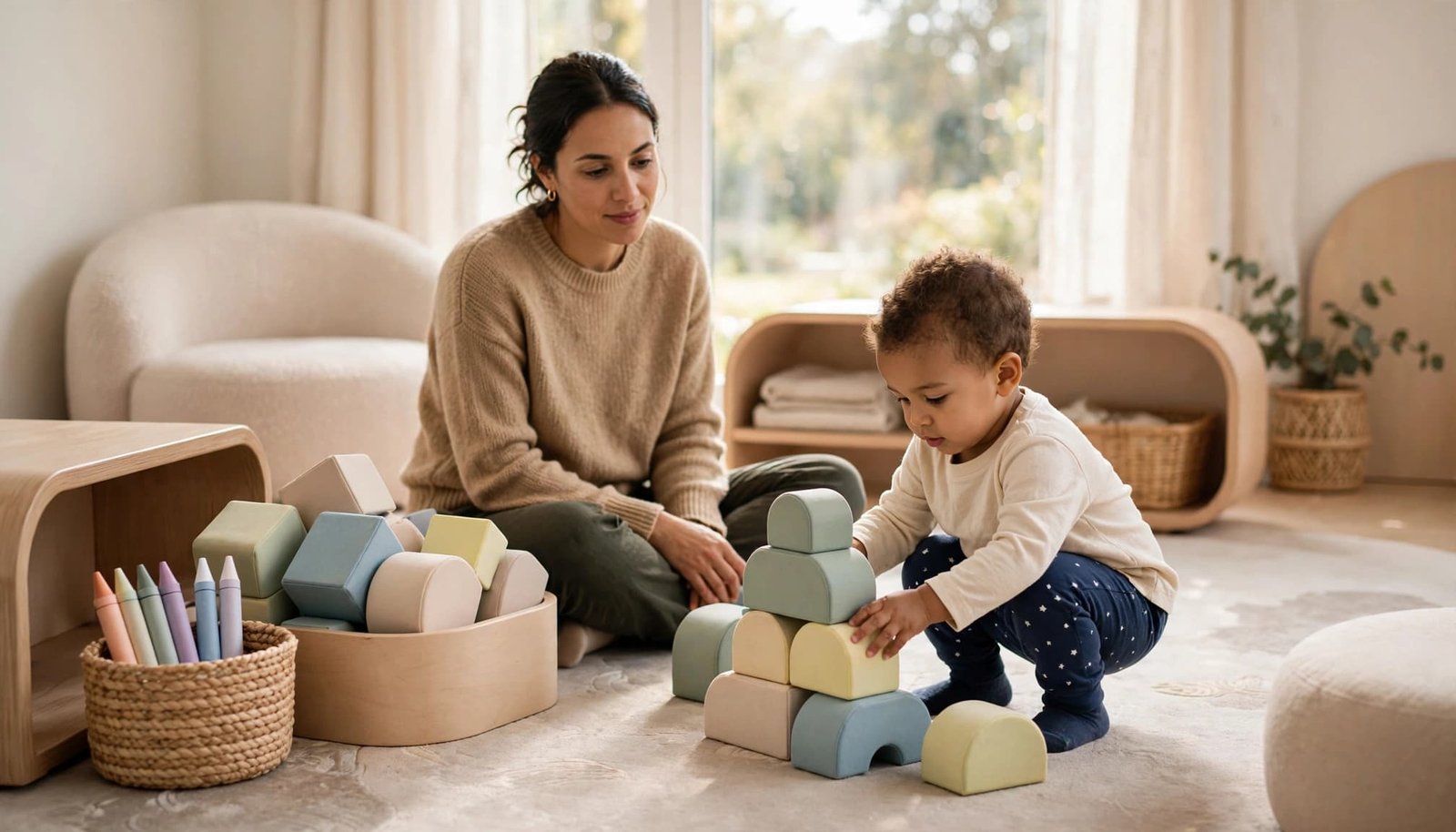
- Build a tower. Provide large blocks or stacking cups and ask, “What should we build next?” Stacking, balancing, and knocking down teach cause and effect while building coordination. Use only two or three pieces for an easier activity, or invite your child to make a bridge or garage.
- Create open-ended art. Give your child jumbo crayons, stickers, washable paint, or glue with large paper shapes. Scribbling, peeling, squeezing, and pressing develop finger control. Focus on exploration rather than a perfect picture. Use crayons and paper only when your child is tired, or add paint and shapes when they want more sensory variety.
Avoid small pieces, loose parts, and materials that could fit in your child’s mouth. Check toys often for broken pieces, as recommended in CDC toddler safety guidance.
Practice Early Math and Problem-Solving Through Play
- Match lids and containers. Offer large plastic containers and their lids, or use nesting cups. Say, “Find the same lid,” and describe “inside,” “under,” “big,” and “small.” Matching and fitting teach size, position, and cause and effect. Give fewer containers if your child feels overwhelmed.
- Complete a simple puzzle. Use a chunky wooden puzzle or shape-fitting toy with only a few pieces. Give one small hint, such as turning the piece, instead of solving it immediately. This supports persistence and hand-eye coordination. Demonstrate one turn, then let your child try.
- Go on a color or shape hunt. Ask your child to find something round, blue, or square around the home. Compare objects using “same” and “different.” Keep the hunt cooperative by searching together. Choose one color or shape for a simpler game, then add a second choice later.
Get Moving With Balls, Music, and Toddler Obstacle Play
- Roll, kick, or toss a soft ball. Aim toward a basket or an open box. Take turns and use one-step directions such as, “Roll the ball.” This builds balance, coordination, and body awareness. Move closer to the target if aiming feels difficult.
- Play stop-and-go music. Dance while the music plays, then freeze when it stops. Add “fast,” “slow,” and animal walks such as waddling like a duck. These changes support listening and movement control. Keep the game simple with only “go” and “stop” at first.
- Create a low obstacle path. Arrange cushions, a clear tape line, a low mat, or a sturdy chair for crawling underneath. Stay close while your child steps, crawls, or balances. Use a clear, level surface and soft equipment. Never use elevated furniture or unstable objects.
Explore Nature and Sensory Play Safely
- Take an observation walk. Point out leaves, birds, sounds, textures, and colors. Ask your child to notice one thing at a time. Wear weather-appropriate clothing, use sun protection, and shorten the walk when your child gets tired.
- Pour and scoop water. Use a shallow container with plastic cups and large sponges. Let your child fill, empty, squeeze, and compare. Water play teaches cause and effect, hand control, and early measuring. Stay within arm’s reach the entire time, since AAP water-safety guidance recommends close supervision around water.
- Make a nature-inspired sensory bin. Use large plastic cups, chunky toy animals, or big sponges. Describe how each item feels and invite your child to move it around. Never use water beads, magnets, button batteries, balloons, dry beans, uncooked rice, small beads, or other choking hazards. Keep every sensory activity hands-on and supervised.
How These Toddler Activities Support Early Development
Play gives your two-year-old a natural way to practice several skills at once. A ball game can build gross motor control, turn-taking, listening, and early communication. Stacking cups can strengthen fine motor skills while your child learns about size, balance, and cause and effect.
Language grows when you describe what your child is doing. Say, “You put the cup inside,” or “The ball rolled under the chair.” These short comments add vocabulary without turning play into a lesson. Songs, books, and pretend games also help your child understand gestures, emotions, simple directions, and back-and-forth communication.
Fine motor activities support the small hand movements your child needs for eating, dressing, drawing, and using toys. Gross motor play builds balance, coordination, body awareness, and confidence. Meanwhile, puzzles, matching games, and container play encourage early thinking as your child tests ideas and adjusts when something doesn’t fit.
Pretend play adds another layer. Feeding a doll, putting a stuffed animal to bed, or serving pretend food helps your child practice memory, sequencing, emotional understanding, and flexible thinking. When you take turns or follow your child’s ideas, play also strengthens social connection and teaches early cooperation.
A toddler may learn more from repeating one simple action than from rushing through several new activities.
Match the Activity to Your Child’s Mood and Skill Level
Start by noticing your child’s energy, attention span, interests, and current abilities. An active child may enjoy kicking a ball or moving through cushions, while a tired child may prefer books, stickers, or stacking cups. A cautious child may watch first, so model the activity without pressuring them to join.
Offer two simple choices, such as, “Do you want the ball or the blocks?” Then give one clear step: “Put the cup on top.” Demonstrate once, and let your child decide what happens next. If your child is easily frustrated, use fewer pieces, move closer to the goal, or provide a small hint. For a child who isn’t speaking much yet, accept pointing, gestures, sounds, and eye contact as communication while you model simple words.
Celebrate effort rather than speed or accuracy. Say, “You kept trying,” or “You found a way to make it fit.” Stop while your child still feels comfortable, before tiredness turns play into a struggle. Short daily play sessions are useful, and you don’t need to complete all 15 activities in one day. These play-based toddler learning ideas can fit into ordinary routines.
Watch for progress in everyday moments, such as:
- Pointing to a picture when you name it.
- Using a new word, gesture, or two-word phrase.
- Stacking objects or holding one item while using another.
- Following a simple direction.
- Attempting a new movement, such as kicking, climbing, or jumping.
- Taking a turn or noticing another person’s feelings.
Milestones vary, so one missed skill doesn’t define your child’s development. If you have ongoing concerns, share your observations with your child’s pediatrician. The American Academy of Pediatrics developmental guidance treats milestones as useful points for discussion, not a strict schedule every child must follow.
Simple Setup and Safety Rules for Learning Through Play
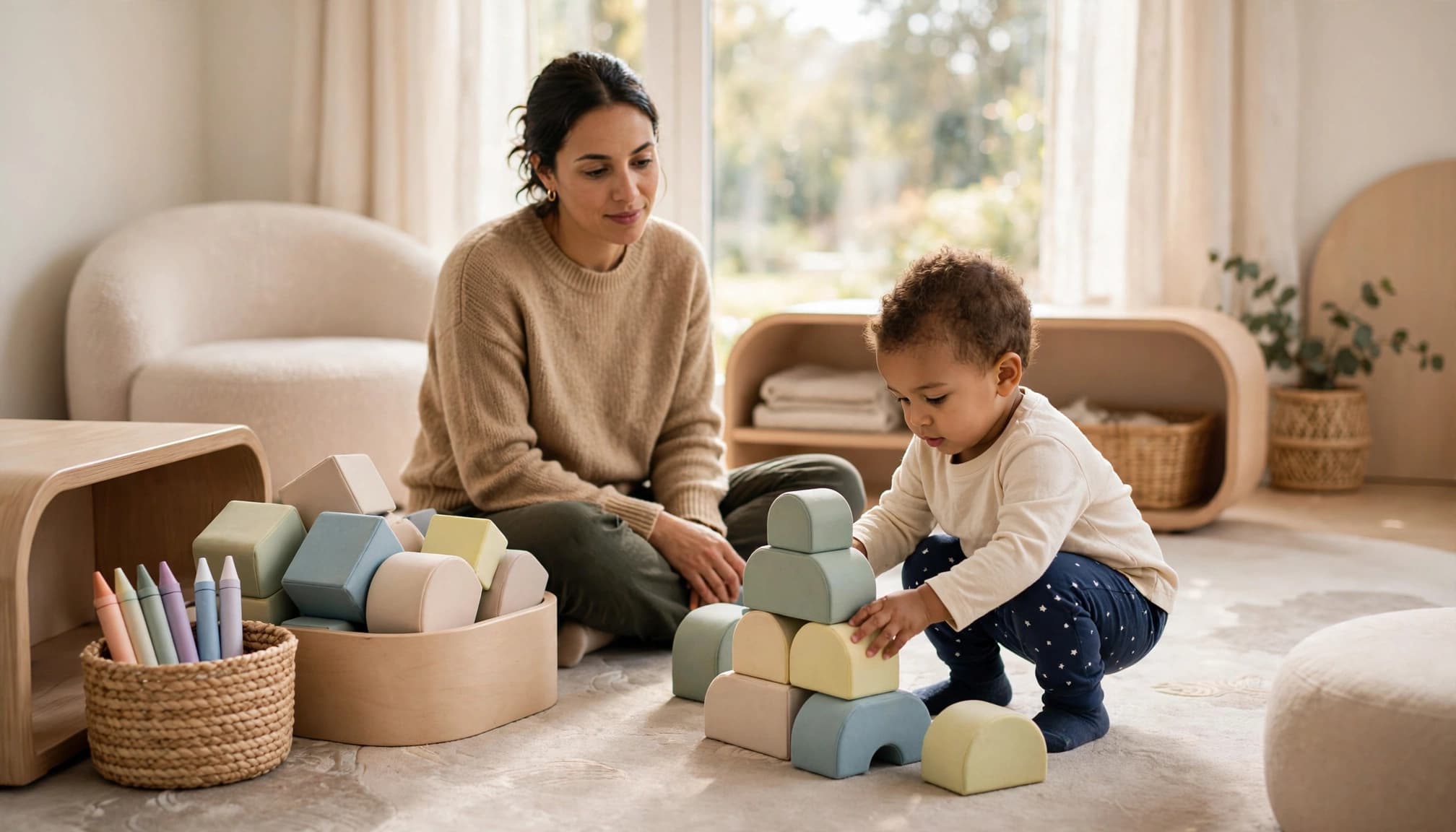
A safe play space lets your two-year-old explore without constant interruptions. Before starting, scan the area at your child’s eye level. Move cords, rugs that slide, sharp objects, and other trip hazards out of the way. Keep play on a clear floor with enough room to crawl, walk, stretch, and carry large toys.
Prepare Materials That Fit the Activity
Choose sturdy, age-appropriate materials with no loose or broken parts. Check blocks, puzzles, stacking cups, crayons, and pretend-play toys before each session. Throw away anything cracked, splintered, peeling, or missing a piece. The CPSC guidance on small parts explains why products with dangerous small components are not suitable for children under three.
Keep crayons, pencils, small objects, magnets, button batteries, balloons, and sensory fillers away from your child’s mouth. Water beads, dry beans, uncooked rice, and small beads can cause serious harm if swallowed. Offer large, washable materials instead, and stay close enough to redirect your child right away. Children should also sit while eating, rather than walking or playing with food in their mouths.
For sensory ideas with safer household materials, try these DIY sensory play activities for toddlers, then adjust each activity for your child’s age and habits.
Supervise Water, Outdoor, and Movement Play
Water play requires active supervision within arm’s reach. Keep your phone and other distractions away, even when using a shallow tub. Empty the container immediately after play, and never leave your child alone near a bathtub, bucket, pool, or water table.
Outdoor play needs a quick safety check, too. Remove sharp sticks, slippery items, trash, and animal waste from the area. Choose shade when possible, and dress your child in protective clothing, a hat, and sunglasses. For children older than six months, use sunscreen with at least SPF 15 and reapply it as directed. These outdoor play and safety tips can help you plan activities around weather and space.
During movement games, avoid stairs, high surfaces, unstable furniture, and rough play. Use soft equipment on a level floor, stay close during climbing or balancing, and stop the activity when your child becomes tired or frustrated.
Use a Simple Play Routine
Keep the setup predictable and brief:
- Gather a few safe materials.
- Explain one simple step and demonstrate it.
- Play together while your child gets started.
- Follow your child’s lead and adjust the challenge.
- Clean up with your child’s help.
A two-year-old may put toys away, carry a basket, or hand you one item at a time. That small cleanup routine teaches cooperation while ending play calmly.
Conclusion
The best learning activities for a two-year-old are simple, repeatable, and enjoyable. Reading, singing, sorting, building, moving, pretending, and exploring can all happen with everyday materials, so you don’t need special toys or a perfect project. For more ideas, explore these age-appropriate toddler activities and choose options that match your child’s interests.
Pick one activity that fits your child’s mood, then repeat it often while adding small changes over time. Your attention, encouragement, and safe supervision matter more than how much you prepare or how long your child plays. Ordinary play, shared with a caring adult, can build important skills in language, movement, problem-solving, and connection.
save pin for later

- Baby Development Stages: Milestones From Birth to 12 Months - September 20, 2026
- 5 Elegant Baby Pictures to Take at Home - September 20, 2026
- 14 Fun Ways New Moms Can Celebrate Their Baby Without Exercise - September 20, 2026