
Picture the appetizer table an hour into a party. The chips are gone, the warm dip has a ring of crumbs around it, and the vegetable platter sits at the far end with its lid still on. That platter shows up at almost every gathering, and the fix isn’t a bigger bowl of ranch.
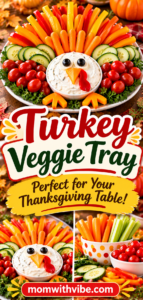
A turkey veggie tray is a vegetable platter arranged to look like a turkey. A wide bowl of dip sits near the bottom and becomes the body, while fanned vegetables spread behind it as tail feathers. The shape is simple, but it changes how people treat the food.
You’ll get the practical parts here: which vegetables hold up, how to shape the body, feathers, and face, and which dips stay thick enough to hold a carrot stick upright. I’ll also cover a make-ahead plan, food safety for a crowd, and easy swaps for kids and dietary needs.
Set it out as a holiday centerpiece, a light lunch addition, or a party platter, and it earns its counter space. Shaping the bird takes a little effort, but the result is a platter that actually gets eaten.
Why a Turkey Veggie Tray Belongs on the Holiday Table
A holiday table already carries rich food. Stuffing, dips, gravy, and buttered rolls crowd the spread, and a plain vegetable platter often sits untouched at the end. I think that changes when the vegetables arrive shaped like a turkey. The turkey veggie tray gives people a reason to look, then a reason to reach in.
Related; Cute Thanksgiving Desserts You Can Make With Kids
A Shaped Platter Gets Eaten
My view is simple: a shaped platter gets eaten while a plain one gets ignored. Guests graze with their eyes first, and a bird made of peppers and carrots invites a second look. Kids are more willing to grab vegetables when the arrangement looks like a character. That small shift matters at a party where sweets and crackers pull attention.
The tray doubles as decoration too. It brings color to the buffet and earns counter space because it looks intentional. You aren’t setting out a bowl of vegetables and hoping. You’re setting out a centerpiece people can eat.
Fresh Contrast for a Rich Menu
Before a heavy meal, guests want something crisp. A turkey veggie tray gives them that, with cool crunch instead of another warm, creamy appetizer. I like it best beside rich dips and fried bites because it resets the palate.
Seasonal produce keeps the platter affordable and bright. Carrots, bell peppers, and radishes add orange, red, and pink without much cost. Cucumber, broccoli, and snap peas fill in green. Buy what looks good at the market and build the feathers from there.
Related; Christmas Appetizer Ideas for an Easy, Festive Party
One Platter, Many Occasions
This idea isn’t limited to Thanksgiving. A turkey tray works at Christmas parties, game days, and casual lunches where you want something fresh on the table. Change the vegetables with the season and the shape still reads.
For a holiday spread, that flexibility matters. A turkey veggie tray looks festive, gives guests a lighter choice, and keeps the table from feeling one note. I’d set it where people land first.
Related; Christmas Party Food Ideas for Easy, Festive Hosting
How to Build a Turkey Veggie Tray, Step by Step
Set a large round or oval platter on the counter before you unpack the vegetables. Work from the back of the bird forward, so the feathers land first and the body and face sit on top at the end. Keep the cut vegetables and dip chilled as you build, and slide the platter back into the refrigerator if the kitchen runs warm. This order keeps the shape readable and stops you from smudging the face while you fuss with the tail. A turkey veggie tray should look generous, not crowded, and building in this sequence makes that easier.
Choose Vegetables That Hold Their Shape
Reach for vegetables that stay crisp under a thick dip. Carrot sticks, cucumber rounds, bell pepper strips, celery, radishes, broccoli florets, snap peas, and cherry tomatoes all hold their shape. Pick three to five rather than every option at the market, and aim for a mix of colors and textures so the feathers read clearly.
Cut everything to similar sizes. A tray looks even when the carrot sticks and pepper strips run about the same length, and the feathers fan without one piece towering over the rest. Pat the pieces dry after washing, because a wet vegetable sheds dip and leaves a bare spot on the platter.
Cool cucumber is mild, while radishes bring a sharper bite, so mixing both gives the tray range. Broccoli florets add height at the back, and cherry tomatoes give you small round accents near the front. Sturdy vegetables can be washed and cut a day ahead; store them in covered containers lined with a paper towel, then keep them chilled until you build.
Related; Christmas Cookie Ideas for Baking, Gifting, and Sharing
Shape the Body, Feathers, and Face
Place a wide bowl of dip near the bottom of the platter as the turkey’s body. If the dip goes in a side bowl, use a whole bell pepper or a small squash for the body instead. Fan the vegetables in rows behind it, tallest at the back and shortest up front, so the arrangement reads as tail feathers.
Build the head with a pear, a small pepper, or a rounded piece of vegetable. Add eyes from olives or peppercorns, a small carrot triangle for the beak, and a red pepper piece for the wattle. Leave small gaps between pieces so guests can grab a carrot without knocking the whole bird apart. A final scatter of herbs or a few cranberries adds color without hiding the shape.
A thick dip does structural work on this platter. If it can’t hold a carrot stick upright, it will slump before the first guest arrives.
Whip Up a Dip That Holds Its Shape
Thick Greek yogurt makes a sturdy base that clings to vegetables. For flavor, stir in chopped dill and lemon, or build a ranch-style blend with parsley, chives, and garlic. A lemon-garlic version works well with cucumber and snap peas, and hummus is a plant-based alternative that matches crisp vegetables.
The dip should be thick enough to hold a carrot stick upright if it sits in the center bowl. A splash of lemon juice or water loosens one that feels too dense, but add it a little at a time. Check packaged ingredient labels for dairy, sesame, and other allergens, then keep the dip covered and chilled until serving.
A few well-chosen vegetables beat a crowded platter. Build the bird with what looks good at the market, keep the pieces dry, and let the dip do the holding.
Make-Ahead Prep and Food Safety for a Crowd
Holiday mornings fill up fast. Between reheating dishes and setting the table, the last thing you need is a pile of unwashed carrots. I like to get the turkey veggie tray mostly finished before guests arrive, then spend the final hour on small touches. That means prepping the vegetables and dip the day before, building the bird close to serving time, and keeping the finished platter cold once it hits the table. The plan below keeps the spread calm, fresh, and safe without turning your kitchen into a production line.
Related; Gingerbread Christmas Tree Ideas
Prep What You Can the Day Before
Start with vegetables that can handle a night in the fridge. Carrots, celery, bell peppers, broccoli florets, and snap peas all hold up well. Rinse them under cool running water, dry them thoroughly, and cut them into similar lengths so the feathers fan evenly. Store the pieces in airtight containers lined with a paper towel. The towel absorbs extra moisture, which keeps the vegetables crisp instead of limp. Keep the containers toward the back of the refrigerator so they stay cold when the door opens and closes.
The dip can be mixed a day ahead, too. A thick Greek yogurt dip or hummus will hold a carrot stick upright, and a night in the refrigerator lets the herbs and garlic settle. Keep it covered and chilled, then stir it before serving. If it feels too stiff, loosen it with a teaspoon of lemon juice or water.
Build the bird within a couple hours of guests arriving. If you need the platter on the table earlier, arrange the vegetable feathers first and add the dip body and face last. That way nothing slides or smudges while you carry the platter from the kitchen. Keep a backup container of cut vegetables in the refrigerator. When the platter runs low, swap in a fresh arrangement instead of adding new pieces on top of what has been sitting out. A backup batch also saves you from chopping at the last minute if the first platter empties faster than you expected.
Keep the Platter Cold and Clearly Labeled
Perishable appetizers should not sit at room temperature for more than two hours. When the room or outdoor temperature climbs above 90°F, shorten that limit to one hour. Keep the dip and cut vegetables chilled until serving, and set out a modest amount rather than the whole batch. A small platter is easier to replace. When it runs low, bring out a fresh platter instead of topping up the old one. If you are serving outdoors, place the platter over a larger bowl of ice and keep it out of direct sun.
Place a small card beside the dip listing its ingredients. Guests with dairy, sesame, or other allergies can then decide quickly, and you won’t have to answer the same question at the table. Give the dip its own spoon and keep a separate utensil with the vegetables. Separate serving tools prevent cross-contact, especially when one item contains a common allergen.
A fresh platter looks better and stays safer than a topped-up one.
These habits are simple, and they let people graze without worry.
Easy Variations on the Classic Veggie Platter
Once you’ve built the bird a couple of times, the shape stops being the hard part. From there, the same turkey veggie tray bends to fit whoever is at the table. A kids’ party needs smaller pieces and less mess, while a guest with a dairy allergy needs a different dip and a clean serving spoon. None of these changes touch the outline of the turkey. They just swap the pieces inside it. I’ll walk through the two adjustments I reach for most, because they cover most crowds without extra shopping.
A Kid-Friendly Tray With Individual Dip Cups
Small hands and shared bowls don’t mix well. Instead of one big dip body, I tuck little cups of dip between the feathers so each child grabs their own and skips the communal bowl. Portion cups from the grocery store work fine, and a spoonful in each one is plenty. This also stops the double-dipping that turns a shared bowl unappetizing by mid-party.
Milder vegetables belong on a kids’ tray. Cucumber rounds, carrot sticks, and bell pepper strips sit comfortably beside the sharper radishes and broccoli, so there’s a gentle option and a bolder one. Keep every piece bite-sized, since a long carrot stick tends to end up half-eaten on a plate.
Let kids help with the face. They can press the eyes and place the beak, and the arrangement becomes something they made rather than something they were handed. A tray kids helped assemble tends to get eaten. For the dip, plain yogurt with a little lemon suits young palates better than anything spicy. Skip the chili and garlic, and the same cup works for the whole row.
Swaps for Gluten-Free, Dairy-Free, and Nut-Free Guests
A few ingredient swaps keep the turkey veggie tray workable for guests with dietary needs. Hummus or a bean dip replaces yogurt dip for dairy-free guests, and both hold a carrot stick upright just as well. For gluten-free guests, skip bread and crackers in favor of extra vegetables or crackers labeled gluten-free. Leave nuts and seeds off the garnish when someone at the table can’t have them; a scatter of herbs or cranberries adds color without the risk.
Packaged foods vary by brand, so read the label on every cracker, dip, and dressing you set out. Formulas change, and a product you bought before may carry a new ingredient. Keep a separate portion of dip with its own utensil so the safe food stays away from the shared bowl. Clear labeling matters most for dairy, nuts, and sesame, which show up often on holiday tables. A small card beside each dish does more than answering the same question five times.
A labeled dish and its own serving spoon take less time than a trip to the emergency room.
These swaps keep the bird looking the same while making it safe for more people.
Conclusion
A turkey veggie tray comes down to a handful of deliberate choices, not a long shopping list. Pick a few sturdy vegetables that hold their shape. Build the bird from the back forward so the feathers land first and the face stays clean. Then whip one thick dip that can stand a carrot stick upright without slumping.
Prep what you can the day before and keep the finished platter cold until guests arrive. Those small habits do more for the spread than any extra trip to the store.
Start with the vegetables you already enjoy and adjust from there. If radishes feel too sharp, leave them out. If your crowd loves snap peas, add more. The shape carries the platter, and the vegetables should taste like something you’d actually eat.
I’ve watched this bird get picked apart before the chips even opened, and that’s the point. When you’re ready for more ideas to fill out the table, browse our appetizers and snacks for easy bites that fit the season.
Save the pin for later

- Christmas Crafts for Preschoolers - November 20, 2026
- Turkey Treats for Kids - November 20, 2026
- Turkey Veggie Tray - November 20, 2026