

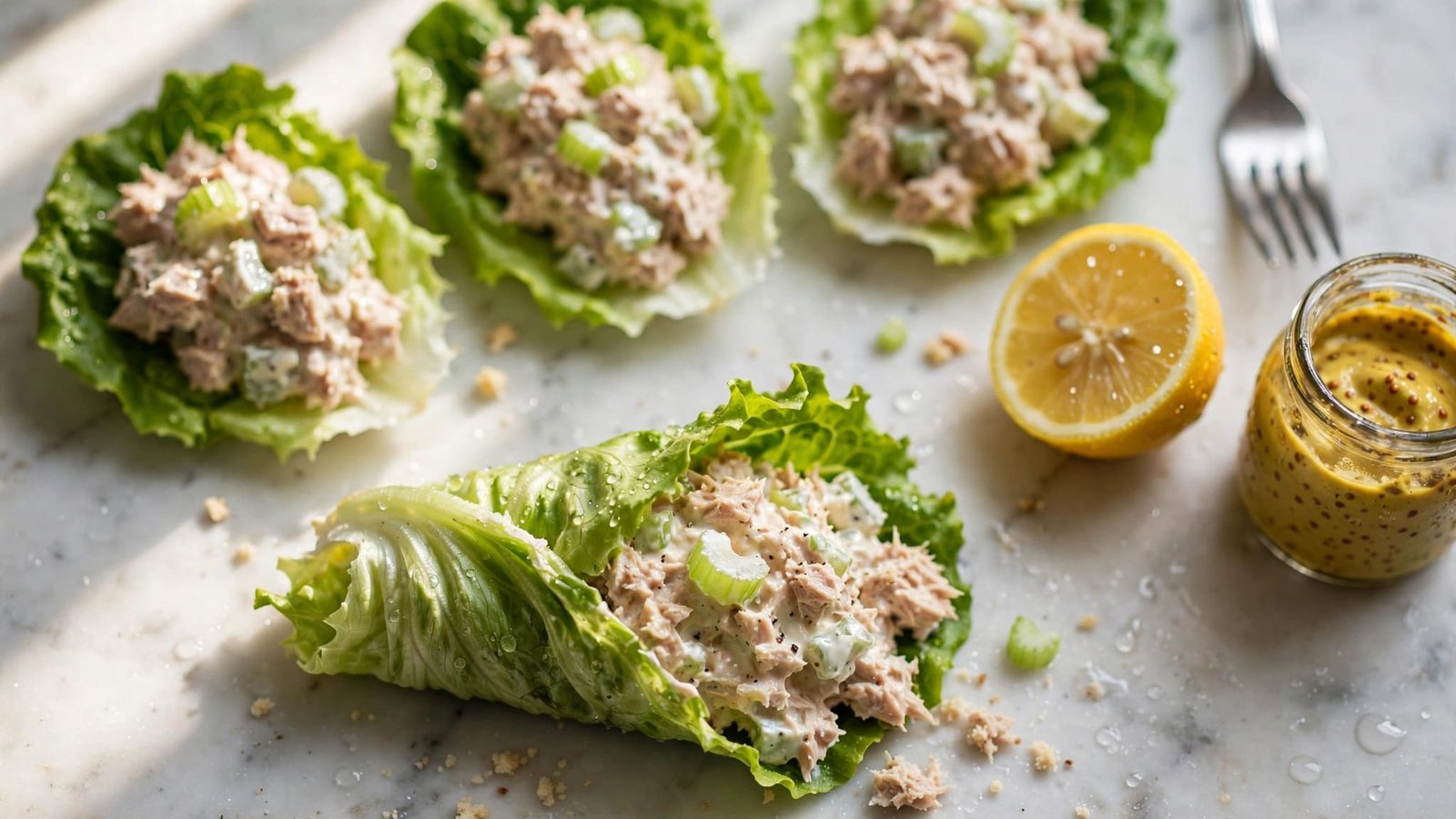
It’s 12:40 on a Tuesday, your next meeting starts in twenty minutes, and the fridge offers up half a lemon and a jar of mustard. That’s the moment tuna salad lettuce wraps earn a permanent spot in your lunch rotation.
Crunchy lettuce, creamy tuna salad, and a squeeze of lemon, all on the table in under ten minutes with nothing to cook. You don’t need a stove, a long ingredient list, or a plan you made on Sunday. Pile the salad into a crisp leaf, fold it, and eat it with your hands while you answer emails.
The whole thing stays low-carb and refreshing, which means it won’t leave you foggy at 3 p.m. the way a heavy sandwich does. If you’re watching carbs, eating lighter, or simply tired of the same turkey wrap, this one fits without feeling like a compromise.
Ready to see what goes into it? Here’s the short ingredient list that makes the whole thing work.
What You Need for Tuna Salad Lettuce Wraps
Two parts make this lunch work: a creamy tuna filling and a lettuce leaf strong enough to hold it. The ingredient list stays short on purpose, so you can mix everything in one bowl and spend your time eating instead of chopping.
The Tuna Salad Ingredients
For a batch that serves 2 to 4 people, start with these basics:
- 2 cans (5 ounces each) water-packed tuna, drained
- 1/3 cup mayonnaise
- 1 celery stalk, finely chopped
- 2 tablespoons minced red onion
- 1 tablespoon fresh lemon juice
- 1 teaspoon Dijon mustard
- 1/4 teaspoon salt
- Black pepper to taste
This makes about 2 cups of tuna salad, enough for 6 to 8 small wraps. Each ingredient does a job. Tuna brings lean protein and the base texture. Mayonnaise adds creaminess and helps the salad hold together in the leaf. Celery gives a fresh crunch, while red onion adds a sharp bite. Lemon juice cuts through the richness, and mustard gives a little tang.
For a lighter version, replace half or all of the mayonnaise with plain Greek yogurt. The yogurt keeps the salad creamy but adds a slight tang. Drain the tuna well so the salad doesn’t turn watery, then flake it with a fork before mixing. A tablespoon of chopped fresh dill or parsley is optional but wakes up the flavor.
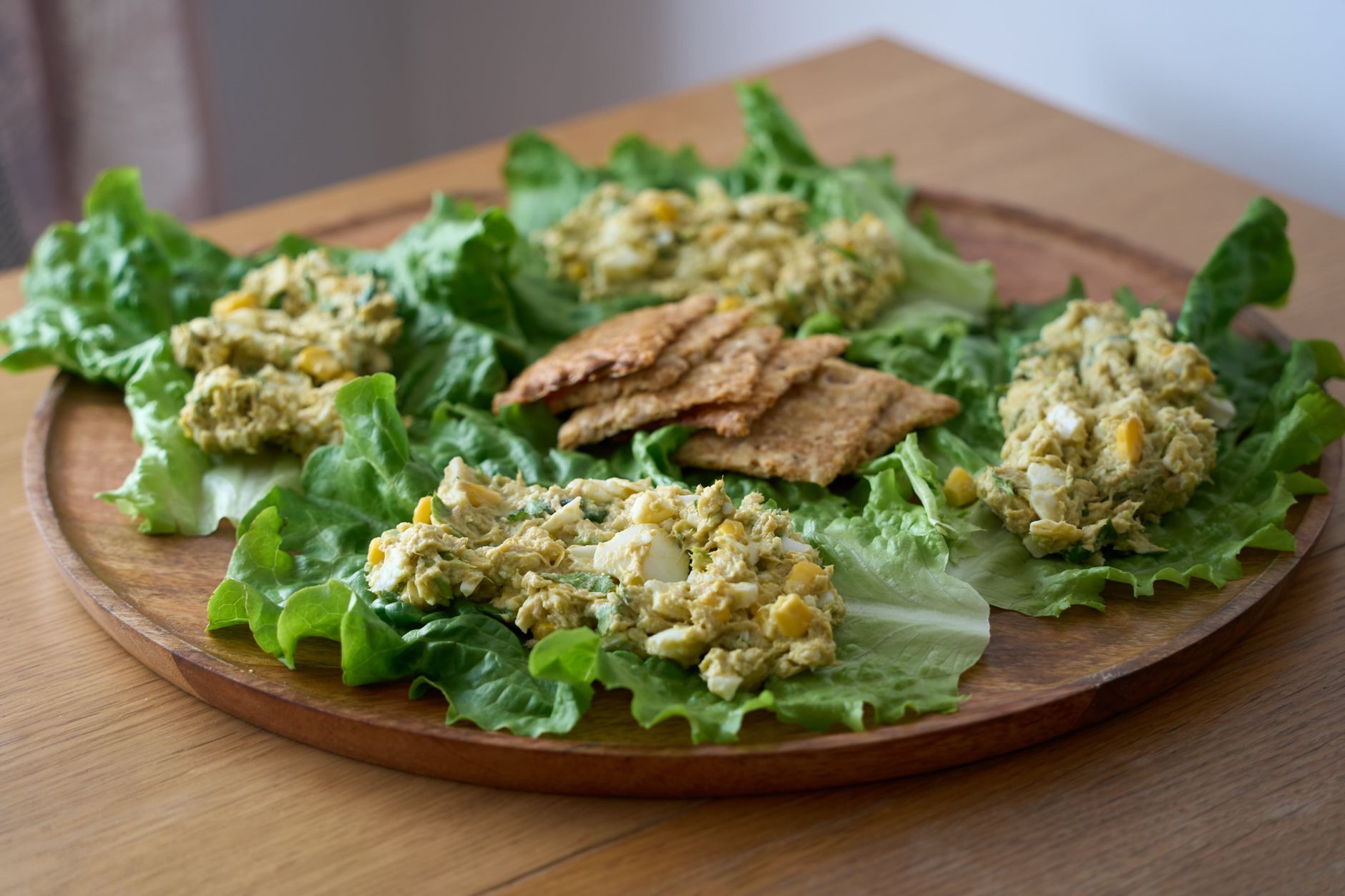
Photo by Mike Art 🎥 Visual Creator | Photography and Video 📸
Add extras if you have them: diced avocado for creaminess, halved cherry tomatoes for juiciness, or a spoonful of chopped pickles for acidity. Fold them in last so they don’t water down the salad. If you want a little heat, add a pinch of red pepper flakes. Let the salad sit for five minutes before filling the leaves; the flavors meld and the mixture thickens slightly.
Choosing the Best Lettuce for Wraps
The filling needs a leaf that bends without cracking and stays crisp under the weight of the tuna. Not every lettuce can do that. Three common options compare differently.
| Lettuce | Texture | Why it works for wraps |
|---|---|---|
| Romaine | Sturdy ribs, crisp leaves | Holds its shape and supports a generous scoop of tuna salad. |
| Butter lettuce | Soft, pliable leaves | Cups easily around the filling and has a mild, buttery flavor. |
| Iceberg | Very crisp, neutral taste | Adds a loud crunch, though the leaves can crack when folded. |
Romaine is the safest choice for beginners because its ribs act like a spine. Butter lettuce makes a tender wrap, but overfill it and the leaf will split. Iceberg brings the most crunch, so use the smaller inner leaves and fold gently.
To separate leaves without tearing them, cut the core out of the head and soak the whole head in cold water for five minutes. The leaves loosen and lift apart. Pat them dry before filling, because water makes the leaf slippery. If you skip the soak, run a knife around the core and peel leaves from the outside in. Avoid lettuce with brown edges or limp leaves; they won’t recover in cold water.
Use the largest outer leaves for your tuna salad lettuce wraps and save the small inner ones for a side salad. For a party, set out the leaves and the bowl of tuna salad separately so guests can build their own.
How to Make Tuna Salad Lettuce Wraps
This lunch comes together in one bowl and one platter, with no stove and no waiting. Start with the filling, then build each wrap just before you eat so the lettuce stays crisp.
Step 1: Mix the Tuna Salad
Set a colander in the sink and tip both cans of tuna into it. Press the lid against the fish to squeeze out every drop of water, because a wet salad will soak the lettuce and turn lunch into a mess.
Drop the drained tuna into a mixing bowl and flake it with a fork until no large chunks remain. Add the mayonnaise, Dijon mustard, lemon juice, salt, and pepper, then stir until the tuna looks creamy and holds together.
Fold in the celery and red onion with a spatula. Stop when the pieces are evenly scattered; overmixing turns the celery limp and the onion sharp.
The finished salad should feel creamy on the spoon but still give a small crunch when you bite into it. Taste a small spoonful before you fill the leaves. If it tastes flat, add a pinch of salt or a squeeze of lemon; if it’s too thick, stir in a teaspoon of mayonnaise.
Let the salad sit for five minutes so the flavors settle. A short rest in the fridge also makes the tuna salad easier to scoop and keeps the onion from overpowering the tuna.
Step 2: Assemble the Wraps
Rinse the lettuce leaves and pat them completely dry with a clean towel. A dry leaf grips the filling; a wet one lets the tuna slide right out.
Choose the largest, most flexible leaves and stack them in pairs for extra support. If the ribs are thick, shave them down with a paring knife so the leaf folds without cracking.
Spoon about 1/4 cup of tuna salad into the center of each leaf, slightly below the stem end. Leave a clean border around the filling so you can fold the sides in without the salad spilling over.
Fold the stem end over the salad, tuck in both sides, and roll the leaf forward like a small burrito. Press gently to seal the seam and set the wrap seam side down on a plate.
For extra crunch, tuck in a few sprouts or a thin slice of avocado before you roll. A ripe avocado adds creaminess, while sprouts give a fresh snap.
The perfect wrap looks full but not stuffed: the leaf stays closed in your hand and the tuna salad peeks out at the ends. Arrange the wraps on a platter and serve them right away, while the lettuce is still cold and crisp.
If you pack lunch ahead, keep the tuna salad and the lettuce in separate containers. Build the wraps at your desk so the leaves stay crisp.
Tips and Variations for Perfect Tuna Salad Lettuce Wraps
A great wrap comes down to small details before the first scoop. The filling should feel creamy but never wet, and the lettuce should crackle when you bite through it. A few adjustments keep the whole thing crisp instead of soggy.
Pro Tips for the Best Texture and Flavor
Drain the tuna like you mean it. Tip both cans into a colander, press the lid against the fish, and squeeze out every drop of water. Wet tuna turns the salad loose, and loose salad leaks through the leaf.
Chop the celery and red onion finely, about the size of a grain of rice. Large pieces create bumps that poke through the lettuce and make folding awkward. Fine pieces distribute evenly, so every bite tastes balanced.
Chill the salad for five to ten minutes before serving. The short rest firms up the mixture and lets the lemon and mustard settle into the tuna. It also keeps the filling cold against the lettuce, which helps the leaf stay crisp.
Pat the lettuce leaves completely dry, especially the ribs where water hides. A dry leaf grips the salad; a wet one lets it slide right out. If you rinse the leaves ahead, spin them dry and lay them on a clean towel.
Finally, brighten the flavor at the end. A squeeze of fresh lemon or a dash of hot sauce wakes up the whole bowl. Add either one just before filling the wraps, then taste and adjust.
If the salad looks wet in the bowl, it will leak in the wrap. Stop adding mayo and add a spoonful of drained tuna instead.
Too much mayonnaise is the most common mistake. Start with less than the recipe calls for, then add a spoonful at a time until the salad holds together without pooling.
Easy Swaps and Add-Ins
The basic formula bends easily, so use what you have and change the seasoning when you want a different lunch.
- Replace some or all of the mayo with plain Greek yogurt for tang and extra protein. Mashed avocado works too, though it adds a grassy flavor and a green tint.
- Fold in chopped nuts for crunch. Toasted almonds, pecans, or walnuts bring texture that lasts longer than celery.
- Add dried cranberries or chopped apple for a little sweetness. A tablespoon goes far and balances the salty tuna.
- Stir in fresh dill, parsley, or tarragon for a bright herbal note. Dried dill works in a pinch, but use half as much.
- Try curry powder or Cajun seasoning when the usual flavor feels tired. Start with half a teaspoon, mix, and taste before adding more.
- Swap lemon juice for lime juice or a splash of rice vinegar. Each one adds acid, but the flavor shifts in a useful way.
Crunchy add-ins like water chestnuts or jicama keep the filling light. Just chop them small and pat them dry before mixing. For a hotter version, mince a little jalapeno and fold it in with the onion.
These tuna salad lettuce wraps stay flexible on purpose. Change one or two ingredients at a time, and you can eat the same lunch all week without it tasting like the same lunch all week.
Storing and Making Tuna Salad Lettuce Wraps Ahead
Tuna salad lettuce wraps fit a busy week better than most lunches because the two parts store separately. The filling holds up for days; the lettuce just needs to stay dry. Set them up right on Sunday and you’ll have a grab-and-go lunch ready before the morning coffee finishes brewing.
How Long Tuna Salad Lasts in the Fridge
Spoon leftover tuna salad into a shallow container with a tight lid and refrigerate it within two hours of mixing. It stays fresh for up to 3 days, which covers most of a workweek.
Keep the container toward the back of the fridge, where the temperature stays coldest and steadiest. Give the salad a quick stir before serving, since a little liquid may collect at the bottom. If it looks watery, tip the container slightly and pour that liquid off.
The lettuce needs its own space. Wash and dry the leaves, then roll them in paper towels and tuck them into a sealed bag or container. Moisture is what turns a crisp leaf limp, so dryness matters more than cold here. Keep the leaves in the crisper drawer and use them within three days as well.
Never store the assembled wraps overnight. The salt in the tuna pulls water out of the lettuce, and by morning the leaf turns soft and the filling turns soupy.
Packing Tuna Salad Lettuce Wraps for Lunch
Packing ahead takes one extra container and about two minutes. Put the tuna salad in a small lidded container and stack the dry lettuce leaves in a separate bag or box. At lunch, spoon the filling into a leaf and eat.
For a desk lunch, add a fork and a small napkin, then keep the two containers side by side in your lunch bag. A cold pack helps if the bag sits in a warm car or office all morning. At work, store both containers in the fridge until you’re ready to eat.
A few packing habits keep the wrap tidy:
- Pack the tuna salad in a container with straight sides so it’s easy to scoop at your desk.
- Slip the lettuce leaves into a hard-sided container so they don’t crush under a water bottle.
- Bring add-ins like avocado or tomato in a tiny separate container and fold them in at the last minute.
- Tuck a wedge of lemon in with the lettuce for a fresh squeeze right before you eat.
This setup makes tuna salad lettuce wraps a great grab-and-go lunch. Grab both containers on your way out, and lunch is handled before the day gets away from you.

Photo by Kashish Lamba on Unsplash
Meal Prep Tips for a Week of Fast Lunches
Double the tuna salad recipe on Sunday and divide it into two or three small containers. Portioning ahead means you grab one container instead of scooping from a big bowl each morning.
Prep the vegetables at the same time. Chop celery and red onion once, store them in a sealed bag, and mix them into the tuna the night before you plan to eat it. This keeps the celery crunchier through the week.
Prep the lettuce in batches too. Rinse and dry a whole head at once, then store the leaves between paper towels. On busy mornings, everything is ready to assemble in under a minute.
Conclusion
Tuna salad lettuce wraps deliver on the promise of that 12:40 fridge raid: a lunch you can build in ten minutes, with no stove and nothing to clean up but a bowl and a knife.
The recipe bends to whatever you have on hand, whether that’s Greek yogurt in place of mayo, a handful of toasted almonds, or a pinch of curry powder when plain tuna starts to feel tired. Because the filling keeps for up to three days and the lettuce stores separately, it slots into a busy week without a single sacrifice to flavor or nutrition. Ten minutes is all this lunch asks of you.
Start with one batch this week and change a single ingredient the next time you make it. Small adjustments turn a good lunch into one you look forward to eating.
Save the pin for later

- Ground Turkey Stuffed Peppers With Brown Rice - November 23, 2026
- Lemon Garlic Baked Cod With Vegetables: 30-Minute Dinner - November 23, 2026
- Air Fryer Salmon: Crispy Skin, Simple Seasoning - November 23, 2026