
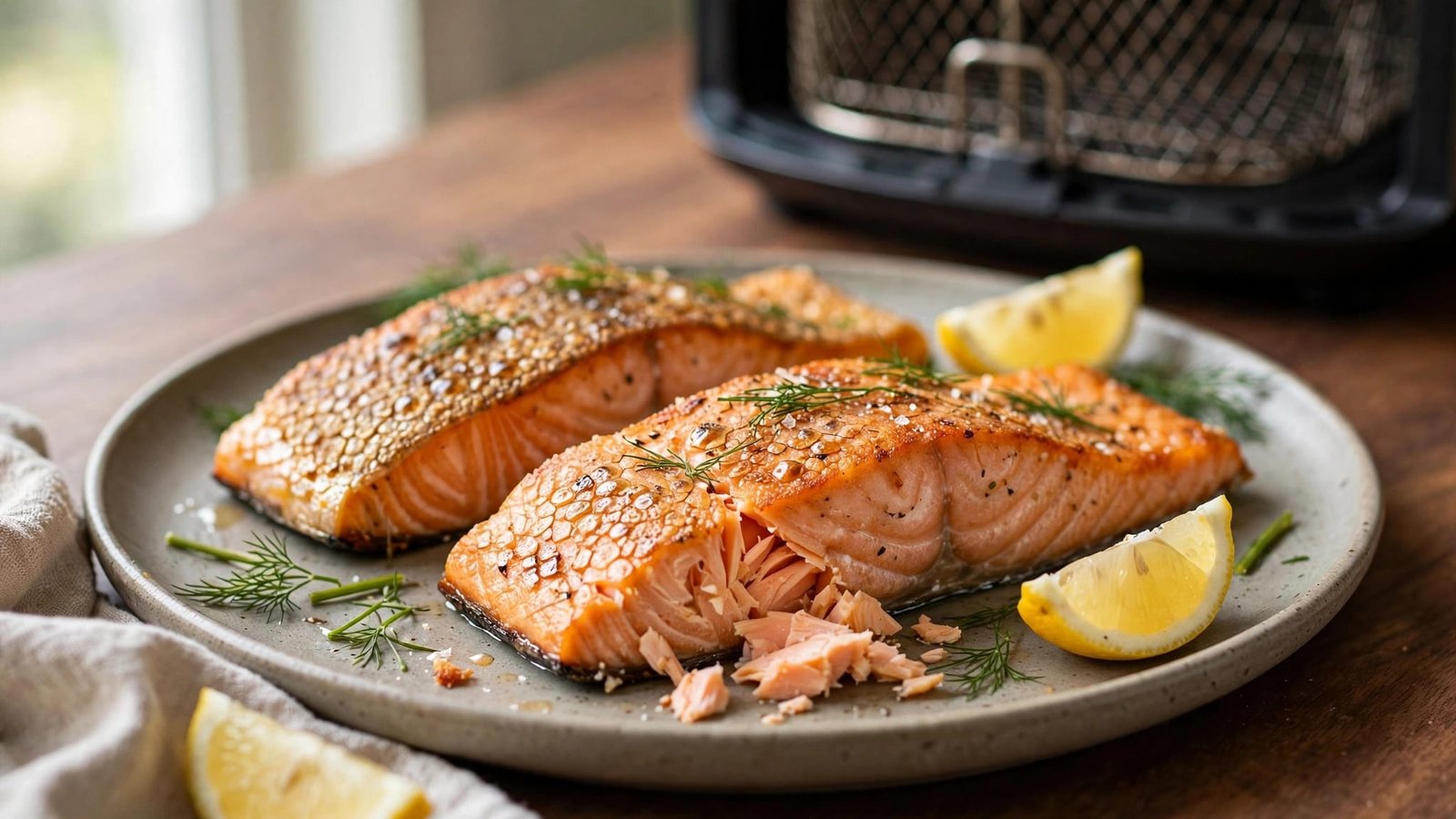
It’s 6:30 on a Tuesday, and you want salmon with skin that crackles under your fork and fish that stays soft in the middle. What you don’t want is a hot oven turning your kitchen into a sauna or a skillet flinging grease across the stove.
An air fryer gets you there in about ten minutes with a fraction of the mess. You don’t need much to make it work, either: skin-on fillets, a little oil, and a few spices already sitting in your cabinet.
Below you’ll find the exact cook time for fillets at 400°F, the steps that genuinely produce crisp skin, and a few seasoning blends you can stir together in under a minute. There are fast sides that cook while the salmon finishes, plus honest advice on storing what’s left over.
Grab your basket and a roll of paper towels, because everything starts with one rule: keep the skin dry.
Choosing Salmon and Air Fryer Setup for Crispy Results
The difference between salmon with shattering-crisp skin and a limp fillet comes down to two things: the fish you buy and the way you set up your air fryer. Get both right, and the cooking part becomes almost automatic.
Related; Christmas Appetizer Ideas for an Easy, Festive Party
Pick Skin-On Fillets That Fit Your Basket
Skin-on salmon is non-negotiable here. The skin acts as a shield, protecting the delicate flesh from direct heat while turning golden and crackly. Look for center-cut fillets with an even thickness of about 1 to 1.5 inches. That uniformity means the fish cooks at the same rate from edge to center.
Aim for 5 to 6 ounce portions. Smaller pieces will overcook before the skin crisps, and larger ones may brown too fast on the outside while staying raw inside. Avoid thin tail pieces entirely; they curl and dry out in the air fryer.
Check that the skin is intact, with no scales or tears. Also, make sure each fillet fits in a single layer in your basket. If the pieces overlap, the hot air can’t circulate, and you’ll end up with steamed salmon instead of crispy. For frozen fish, thaw it completely in the refrigerator overnight, then pat it dry with paper towels. Any moisture on the surface is the enemy of crispness.
Related; Non-Alcoholic Christmas Punch Recipes You Can Make Ahead
Set Up the Air Fryer for Even Heat
Preheat your air fryer at 400°F if the manufacturer recommends it. Many models benefit from a quick 3-minute preheat, which gives the skin a head start on crisping. If your model doesn’t suggest preheating, skip it.
Use the basket, not a flat tray. The basket’s perforated design lets hot air move around the fish, so the skin dries out and turns crisp. Never stack fillets; they need space. A crowded basket traps steam and softens the skin.
Pat the salmon dry one more time before it goes in. Moisture is the main reason skin sticks or turns soggy. Also, skip the foil. Aluminum foil blocks airflow and creates a steamy environment. If you must use a liner, choose perforated parchment paper made for air fryers, and only use it if your basket’s holes are large enough to let small pieces fall through.
Related; Non Alcoholic Christmas Sangria Recipes
How to Make Air Fryer Salmon With Crispy Skin and Simple Seasoning
Two fillets, four spices, and one preheated basket. That’s the whole recipe, and it lands on the plate in under fifteen minutes once the salmon is dry.
What You Need for This Air Fryer Salmon Recipe
This recipe serves two. Gather:
- 2 skin-on salmon fillets, 5 to 6 ounces each
- 1 tablespoon olive oil or avocado oil
- 3/4 teaspoon kosher salt
- 1/2 teaspoon black pepper
- 1/2 teaspoon smoked paprika
- 1/4 teaspoon garlic powder
- Lemon wedges, for squeezing after cooking
Equipment stays just as short: an air fryer basket, paper towels, a small bowl, and an instant-read thermometer. The thermometer is the one tool worth digging out of the drawer, since it removes any guesswork from doneness.
The seasoning is deliberately plain. Paprika and garlic powder add warmth without burying the salmon’s own flavor, and there’s no marinade time, no chopping, no extra bowls to wash. Lemon goes on at the end, not before. A squeeze over hot fish brightens the whole plate, while lemon added early can steam the skin and undo your work.
Related; Christmas Party Food Ideas for Easy, Festive Hosting
Step-by-Step Cooking Instructions
Set yourself up in order and the process moves fast. Preheat the air fryer at 400°F for 3 minutes if your model recommends it.
- Dry the fillets thoroughly. Press both sides with paper towels, then press again. Dry skin is the entire secret to crunch.
- Rub oil on both sides. Use your fingers and coat the skin, not just the flesh.
- Stir the spices together. Combine the salt, pepper, paprika, and garlic powder in a small bowl.
- Season the flesh generously. Coat the top of each fillet, then sprinkle the skin lightly with salt only.
- Place fillets skin-side down. Leave an inch between them so hot air reaches every surface.
- Air fry at 400°F for 8 to 11 minutes. Start checking at 8 minutes.
- Rest for 2 minutes. Move the salmon to a plate before serving.
Thickness drives the timing, so use the fillet’s build rather than a fixed clock. A 1-inch fillet usually finishes near the 8-minute mark, while a thicker 1.5-inch piece needs closer to 11. Air fryer models also vary in how aggressively they circulate heat, so treat these numbers as a range and let the thermometer make the final call.
How to Tell the Salmon Is Done
Push an instant-read thermometer into the thickest part of the fillet, away from the bone. Aim for 125°F to 130°F for medium or 135°F to 140°F for flaky and firm.
Visually, the flesh should flake under gentle pressure at the center while still looking glossy. Chalky white edges mean it went too long.
Salmon keeps cooking after it leaves the basket, so pull it 5 degrees shy of your target and let the carryover finish the job.
That 2-minute rest handles it. Serve skin-side up so the crust stays crisp.
Simple Seasoning Ideas That Let the Salmon Shine
Good salmon needs salt, heat, and not much else. Seasoning should sharpen the fish’s rich, buttery flavor rather than bury it.
Here’s the practical rule: skip anything with brown sugar, honey, or jam. Those rubs scorch at 400°F and leave a bitter black crust before the fish is cooked through. Keep the blends dry, savory, and light.
Start With a Simple Salt, Pepper, and Paprika Blend
This trio covers everything you actually need. Salt pulls moisture to the surface and deepens flavor, black pepper adds a clean bite, and paprika delivers color plus a mild smoky note that suits salmon’s richness.
Mix a small batch so it’s ready on busy nights. Combine 1 tablespoon kosher salt, 1 teaspoon black pepper, and 1 teaspoon smoked paprika in a jar. That makes enough for about six fillets.
Use sweet paprika if you want a gentler flavor, or hot paprika for a little warmth. Either way, the blend keeps for months in a sealed jar, so a double batch costs you nothing but thirty seconds.
Try Lemon Garlic, Smoky Chili, or Herb Butter Twists
Once the basic blend feels routine, three easy variations keep weeknight salmon from tasting the same every time.
For lemon garlic, stir together the zest of one lemon, 1 teaspoon garlic powder, and 1 teaspoon dried parsley. The zest carries bright citrus oil that survives the air fryer better than juice does.
The smoky chili version uses 1 teaspoon chili powder, 1/2 teaspoon cumin, and a squeeze of lime after cooking. Cumin can taste dusty when used heavily, so measure it with restraint.
Herb butter brings soft butter, chopped dill, and chives into play. Mash 1 tablespoon of butter with 1 teaspoon of herbs, then brush a thin film over the flesh only. Butter should stay sparing, because a heavy coating pools in the basket and steams the skin you worked to dry.
How Much Seasoning to Use Without Overpowering the Fish
Portion control matters more than the blend itself. Salmon has a delicate flavor, and a heavy hand turns it salty and one-note.
Aim for about 1/2 teaspoon of salt per 6-ounce fillet, plus a light dusting of spices across the top. Season the flesh first, then add just a pinch to the skin, since that surface needs salt to crisp but not a full coat.
Taste a small piece of the finished fish and note whether it needs more. Adjust the next batch rather than fixing it on the plate, and you’ll dial in your own preferred ratio within a few cooks.
Tips for Crispy Skin and Juicy Salmon Every Time
Crisp skin and tender flesh come from a few habits, not a secret ingredient. Control moisture, give the fish room, and stop cooking at the right moment. Set the air fryer to 400°F and the rest follows.
Dry the Skin Until It Feels Like Paper
Moisture is the enemy of crisp skin. Water on the surface steams the salmon instead of browning it, and steam leaves the skin pale and soft.
Pat the fillet with paper towels, then use a fresh towel to blot the skin again. If you have time, set it uncovered in the fridge for 10 minutes.
That short rest pulls surface moisture into the air. Feel the skin with your fingertip; it should feel like dry paper, not cool and slick.
A dry surface also helps a light coat of oil adhere evenly. Skip this step and the skin turns rubbery while the flesh overcooks. This step matters most for frozen fillets, which release extra water as they thaw.
Place Fillets Skin-Side Down and Leave Room
Put salmon skin-side down so the hot basket surface and moving air crisp the skin. Leave at least half an inch between fillets.
Do not stack them or let edges touch. A crowded basket traps steam, which softens the skin and cooks the fish unevenly.
If your basket is small, cook in batches. The second batch takes the same time as the first.
Use a light coat of oil on the skin; too much oil pools and fries the skin instead of crisping it. That gap lets moisture escape instead of collecting under the fish. A single layer is the goal.
Check Early and Rest Before Serving
Air fryers run hot and fast, so start checking at 8 minutes. Use an instant-read thermometer and look for flaky edges with a moist center.
The target temperature is 125°F to 130°F for medium. Rest the fish for 2 minutes before serving.
Carryover heat finishes the cooking and keeps the flesh juicy. Skip the rest and you risk dry salmon.
Also, don’t rely on the clock alone; thickness and model vary. Pull the fillet when it’s 5 degrees shy of your target. A 1-inch fillet often finishes near 8 minutes, while a thicker piece needs closer to 11.
Sides, Swaps, and Storage for Air Fryer Salmon
A ten-minute fillet deserves a side that keeps up. While the basket runs, you can put together something fresh and simple without turning on another burner. This air fryer salmon with crispy skin and simple seasoning pairs best with light, bright accompaniments and a small plan for leftovers.
Fast Sides That Come Together While the Salmon Cooks
Rice and quinoa are the easiest bases. Cook a batch ahead, or use a microwave pouch and fluff it with lemon, olive oil, and salt.
Bagged salad needs only a toss with the same dressing. Steamed green beans finish in about five minutes, and sliced cucumbers add cold crunch. Crusty bread works if you want something to mop up the plate. Keep the dressing simple: two tablespoons olive oil, a squeeze of lemon, and a pinch of salt. Those same flavors lift the salmon without competing with it. If you have fresh herbs, tear a few leaves over the top just before serving.
Easy Swaps for Cuts, Seasonings, and Doneness
Thicker fillets need more time, thinner ones need less. Check at 8 minutes and trust the thermometer. If you can’t find skin-on fillets, the method still works, though you won’t get crispy skin.
Swap smoked paprika for cumin or dried herbs if you want a different flavor. Add those herbs near the end so they don’t burn. Cook time should change with thickness, so a 1-inch fillet and a 1.5-inch fillet won’t finish together. Pull each fillet as it reaches 125°F to 130°F for medium.
Storing and Reheating Leftover Salmon
Cool the salmon first, then store it in an airtight container in the fridge for up to 3 days. Reheat gently at 300°F for 3 to 4 minutes, though the skin will soften. That crisp crust won’t survive storage, so treat leftovers as a different dish. Flake cold salmon into salads or grain bowls. The flakes hold their shape and taste great with lemon, olive oil, and a little salt. Skip the microwave if you can, since it can dry out the fish.
Conclusion
Crispy skin on air fryer salmon comes down to a short list: dry the skin, season it simply, lay it skin-side down, cook at 400°F, and start checking early. Nothing on that list is hard, and nothing on it requires special equipment beyond paper towels and a thermometer.
Dry skin does most of the heavy lifting. The rest is restraint with seasoning and trust in the thermometer over the clock.
Try the recipe as written first, then make it yours. Add more paprika, less salt, a different herb, whatever suits your table.
The same method carries you through a fast Tuesday dinner and a Sunday meal prep session, so the fillets you cook tonight can become tomorrow’s lunch.
What will you season yours with first?
Save the pin for later


- Ground Turkey Stuffed Peppers With Brown Rice - November 23, 2026
- Lemon Garlic Baked Cod With Vegetables: 30-Minute Dinner - November 23, 2026
- Air Fryer Salmon: Crispy Skin, Simple Seasoning - November 23, 2026