
Bathing a baby can feel stressful at first, but a simple routine makes each bath calmer and easier. The safest approach starts before your baby touches the water: gather your supplies, choose a stable time, and check that the water feels warm rather than hot.
You’ll then learn how to support your baby with one hand, wash delicate skin gently, protect the umbilical cord stump, and clean the face without rubbing. The final steps cover lifting your baby safely, drying every skin fold, and dressing them promptly so they stay warm. This guidance is intended mainly for healthy newborns and young infants, so follow your pediatrician’s instructions after circumcision or if your baby has a rash, skin condition, illness, or other health concern. Watch this step-by-step newborn bathing guide, then start with the first step: preparing for a safe, calm bath. You can also review how to give a newborn a sponge bath if your baby’s cord stump hasn’t fallen off yet.
Get the Baby Bath Area Ready Before You Begin
Preparation makes baby bath safety much easier. Before you place your baby in the water, gather everything you may need and keep it within arm’s reach. You should never step away, even briefly, to find a towel, diaper, or clean outfit.
Choose a clean baby tub, basin, or sink that sits on a stable surface. If you use a sink, turn off the faucet before placing your baby in the standing water. Keep the area free of electrical items, glass, and other breakable objects that could create a hazard.
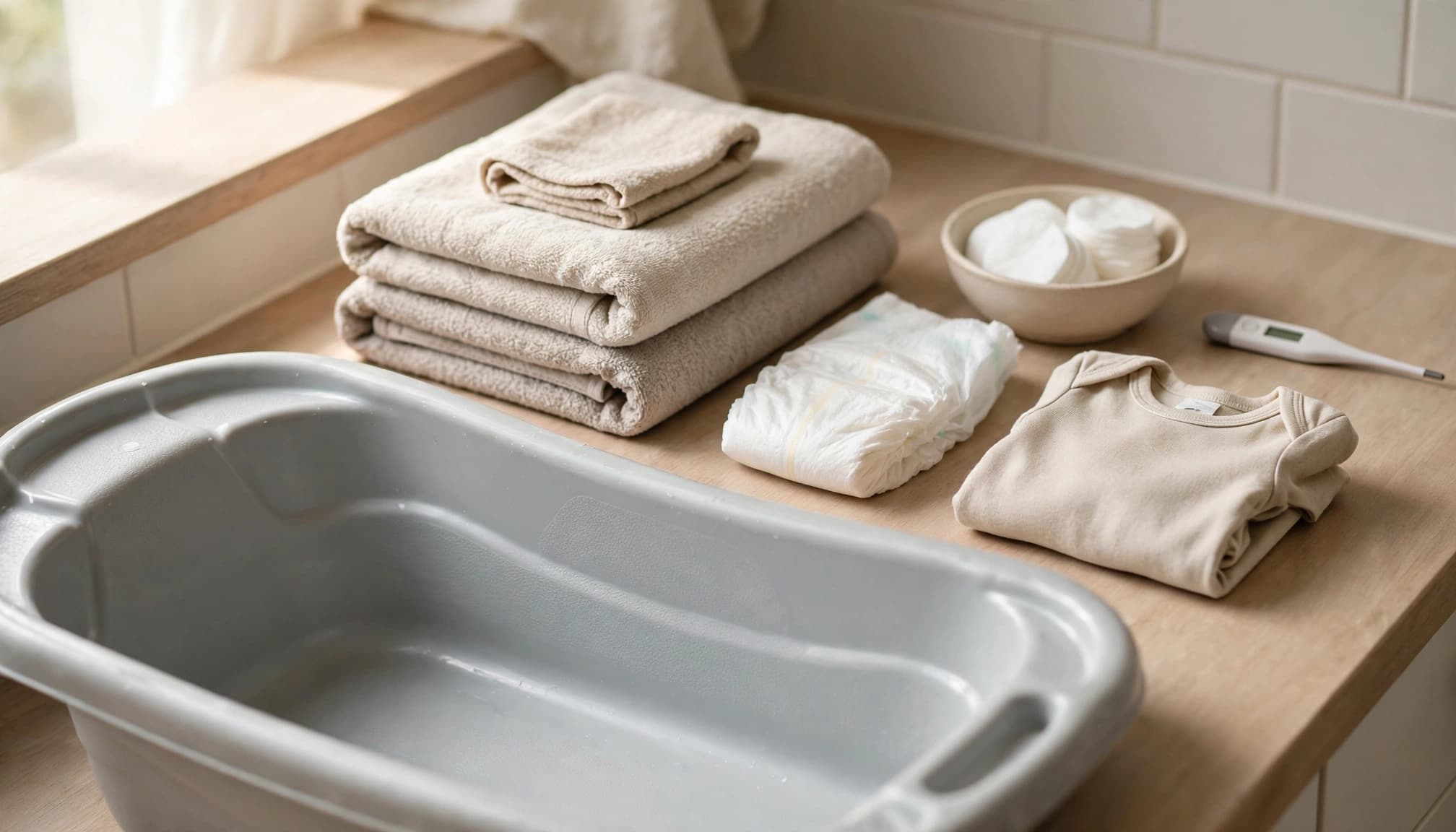
Gather every bathing supply first
Place the following items close enough to reach with one hand:
- Two soft towels, including one for wrapping your baby after the bath.
- A clean washcloth for washing the body and face.
- Cotton pads or extra soft washcloths for cleaning around the eyes.
- A clean diaper, opened and ready for use.
- Clean clothes that are easy to put on quickly.
- Mild, fragrance-free baby cleanser, if you plan to use one.
- A baby bath thermometer, if you have one.
You can also review this newborn bathing supplies checklist before starting. Plain water is often enough for a newborn’s skin, especially during the early weeks. If you use cleanser, choose a small amount of a mild product and avoid heavily scented formulas that may dry or irritate delicate skin.
A warm bathroom helps prevent your baby from getting chilled after the bath. Close windows, reduce drafts, and keep the clean towel and diaper beside the tub rather than across the room.
Choose a safe time and check the water
Pick a time when your baby is calm and alert. A hungry, overtired, or upset baby may cry and move more during the bath, making it harder to maintain a secure hold. Avoid bathing immediately after feeding, since movement and handling may cause discomfort or spit-up. Wait until your baby has had time to settle.
Fill the tub or basin with only a shallow amount of water. About 2 inches is enough for a newborn sponge bath or supported infant bath, depending on your pediatrician’s instructions and the type of tub you use.
Aim for water around 100 degrees Fahrenheit, or 37 to 38 degrees Celsius. A thermometer gives you the clearest reading, but you can also test the water with the inside of your wrist or elbow. It should feel comfortably warm, never hot. Stir the water before testing so warm and cool areas do not mislead you.
Keep your home’s water heater at 120 degrees Fahrenheit, or 49 degrees Celsius, or lower to reduce the risk of scalding at the faucet.
Check the temperature every time, even if the same setting worked during the last bath. Once your baby is in the water, keep one hand supporting them and stay within immediate reach. Preparation is complete only when the room, supplies, water, and caregiver are all ready.
8 Important Steps to Bathe a Baby Safely
Before your baby is ready for a tub bath, use a sponge bath instead. This method keeps the umbilical cord stump dry and avoids soaking a circumcision while it heals. Your baby still gets clean, but only one small area is washed at a time.
How to Give a Newborn a Safe Sponge Bath
Use sponge baths until the umbilical cord stump falls off. If your baby was circumcised, continue sponge baths until the circumcision has healed, unless your clinician gives different instructions. Nemours KidsHealth recommends sponge baths until both milestones are complete.
Choose a secure, flat, warm surface, such as a changing pad placed on the floor or a firm counter away from edges. Cover it with a clean towel, then place your baby on top. Keep one hand close to your baby at all times, even when you reach for the washcloth. Never leave your baby alone, even for a few seconds. An older child cannot replace direct adult supervision.
Gather a basin of warm water, a soft washcloth, and a dry towel before you begin. Undress only the area you are washing, and keep the rest of your baby covered. This helps prevent chills and keeps the bath calm.

Start with the face. Dampen a clean corner of the washcloth with plain water, then gently wipe around each eye using a separate area of the cloth for each eye. Clean the cheeks, forehead, nose, and mouth without rubbing. Avoid soap around the eyes and mouth.
Next, wash the scalp and hair only when needed. Support your baby’s head and neck with one hand, use a small amount of mild baby cleanser if necessary, and keep water away from the face. Wipe the cleanser away with a clean, damp section of the cloth.
Wash the neck folds, behind the ears, arms, hands, legs, and other skin creases one area at a time. Pay attention to damp folds, but don’t scrub. After cleaning each area, pat it dry and cover it before moving on. This keeps your baby warm and prevents moisture from sitting against the skin.
Clean the diaper area last, wiping gently from front to back. For a baby with a penis, follow your clinician’s instructions and don’t pull back the foreskin. Keep the umbilical cord stump clean and dry, and don’t soak it in the basin. Fold the diaper below the stump so urine doesn’t cover it. If the area gets wet, gently pat it dry rather than applying alcohol or pulling at the stump. More newborn hygiene and cord care guidance can help you recognize normal changes.
A small spot of blood may appear as the stump separates. However, contact your clinician if you notice redness, swelling, a foul smell, discharge, or bleeding more than a small spot. Keep following your clinician’s instructions if the stump looks irritated or your baby’s circumcision is still healing. A sponge bath should remain a brief wipe-down, not a tub bath, until those areas are ready for water.
When Can a Baby Move From Sponge Baths to Tub Baths?
Many pediatric sources recommend waiting until the umbilical cord stump has naturally fallen off and the belly button area has healed before giving your baby a tub bath. This often happens within the first few weeks, but the timing varies. Follow your baby’s condition and your healthcare provider’s instructions rather than a specific age or date.
Signs your baby is ready for a tub bath
Look at the cord area before switching methods. The stump should have fallen off on its own, and the skin around the navel should appear healed, without active bleeding, drainage, swelling, or spreading redness. A small spot of blood can occur as the stump separates, but ongoing bleeding or a foul smell needs medical advice.
Never pull off a stump that is still attached. Also, don’t soak the area while it is open, damp, or showing signs of irritation. Continue sponge baths until the navel has healed. For more guidance, see these safe baby bathing tips.
If your baby was circumcised, wait until the circumcision has healed too. The healthcare provider who performed the procedure can tell you when the skin is ready for water. Some guidance recommends avoiding tub baths until both the cord area and circumcision have healed, as explained by circumcision and umbilical cord care guidance.

Choose a small, safe bathing space
Once your baby is ready, you can use a clean sink, basin, or small baby bathtub. Choose the option that feels easiest for you, and always follow the product’s safety instructions. Fill it with only a shallow amount of warm water, usually about 2 to 3 inches, and check the temperature before placing your baby inside.
A regular bathtub is not safer because it is larger. Extra space can make it harder to support a young infant, and a baby can slip beneath even a small amount of water in seconds. Keep one hand on your baby at all times, support the head and neck, and stay within immediate reach for the entire bath.
A tub bath can begin after healing, but direct adult supervision remains necessary every second.
Prevent Burns, Slips, and Other Baby Bath Mistakes
Most baby bath injuries happen during ordinary moments: reaching for a towel, using water that feels too hot, or turning away for a few seconds. Babies can slip quickly and drown in only a small amount of water, so keep your attention and one hand on your baby throughout the bath.
Keep Bath Time Short and Comfortable
A quick, calm bath is usually enough. Your baby doesn’t need to stay in the water for a long time, especially when you’re washing only a few areas. Keep the water shallow and follow the tub manufacturer’s instructions. Position your baby’s shoulders safely above the water, while your hand supports the head and neck.
Never leave your baby alone, even if the water is shallow or you use a bath seat. Bath seats can tip, and they don’t prevent drowning. An older sibling can’t replace direct adult supervision either. If you need another towel, diaper, or product, take your baby with you after lifting them from the water and wrapping them securely.
Check the water before your baby goes in. Test it with the inside of your wrist or elbow, and turn off the faucet before placing your baby in standing water. Never carry your baby while holding hot water. A spill can cause serious burns, and running water can change temperature without warning. The American Academy of Pediatrics water safety guidance also recommends setting the hottest tap-water temperature at no more than 120 degrees Fahrenheit.
During a sponge bath, uncover only the area you’re washing and keep the rest of your baby wrapped. Keep the room warm, then dry your baby promptly. Crying doesn’t always mean something is wrong. Your baby may be hungry, tired, cold, or unfamiliar with the routine. However, if your baby becomes very distressed, stop, wrap them warmly, and try again later.
Care for Baby’s Skin After the Bath
Lift your baby carefully, supporting the head and neck, then place them on a dry towel. Gently pat the skin dry instead of rubbing, paying close attention to the neck, armpits, groin, behind the ears, and other folds. Moisture trapped in these areas can irritate the skin.
Most babies don’t need lotion after every bath. If your pediatrician recommends a moisturizer for dry skin, choose a fragrance-free product and apply it while the skin is still slightly damp. Avoid heavily scented soaps, bubble baths, essential oils, and vigorous scrubbing. These products can strip the skin’s natural oils and worsen dryness. For more guidance, see these baby bath tips for sensitive skin.
Newborns usually don’t need a full bath every day. Bathing too often, especially with soap, may dry the skin. Apply diaper cream only when needed, then put your baby in clean, comfortable clothing.
Call your pediatrician about persistent dryness, cracking, eczema, or a rash that spreads. Seek prompt medical care after a burn, breathing trouble following a slip or submersion, unusual sleepiness, or an unresponsive episode. Also contact a clinician if the cord area develops worsening redness, swelling, pus, or a foul odor.
Conclusion
A safe baby bath starts with preparation: gather every supply, use comfortably warm water, and begin with sponge baths when the cord stump or circumcision still needs to heal. Support your baby with one hand, keep constant adult supervision, and dry the skin folds promptly after lifting them from the water.
Confidence comes from repeating the same safe routine, not from rushing or trying to make bath time perfect. Keep each bath calm and brief, and pause if your baby becomes too upset. Contact your baby’s healthcare provider with questions about the umbilical cord, circumcision healing, burns, breathing changes, or unusual skin symptoms. These simple habits help make bath time safer for both of you.
Save pin for later


- 20 Tough Boy Names and Their Meanings - September 20, 2026
- 10 Reasons Babies Cry While Pooping and When to Worry - September 20, 2026
- 10 Signs Your Baby Can’t Breathe Properly - September 20, 2026