Many parents wonder whether a newborn can safely ride in a backpack-style carrier. Usually, back carrying isn’t appropriate at this stage because newborns have limited head, neck, and trunk control, making it harder to keep their airway clear and body properly supported.
This guide explains five key concerns, along with safer front-carry practices and the developmental signs that may show when back carrying becomes appropriate. Your carrier’s instructions and your pediatrician’s advice should guide the decision, especially if your baby was premature, has a low birth weight, or has breathing problems. You can also review these tips on how to support your newborn’s head and neck before choosing a carrying position.
First, let’s look at why a newborn’s developing body makes back carrying less safe. For a visual example of carrier positioning, see this baby carrier demonstration.
Why Newborns Are Not Ready for a Back Carrier
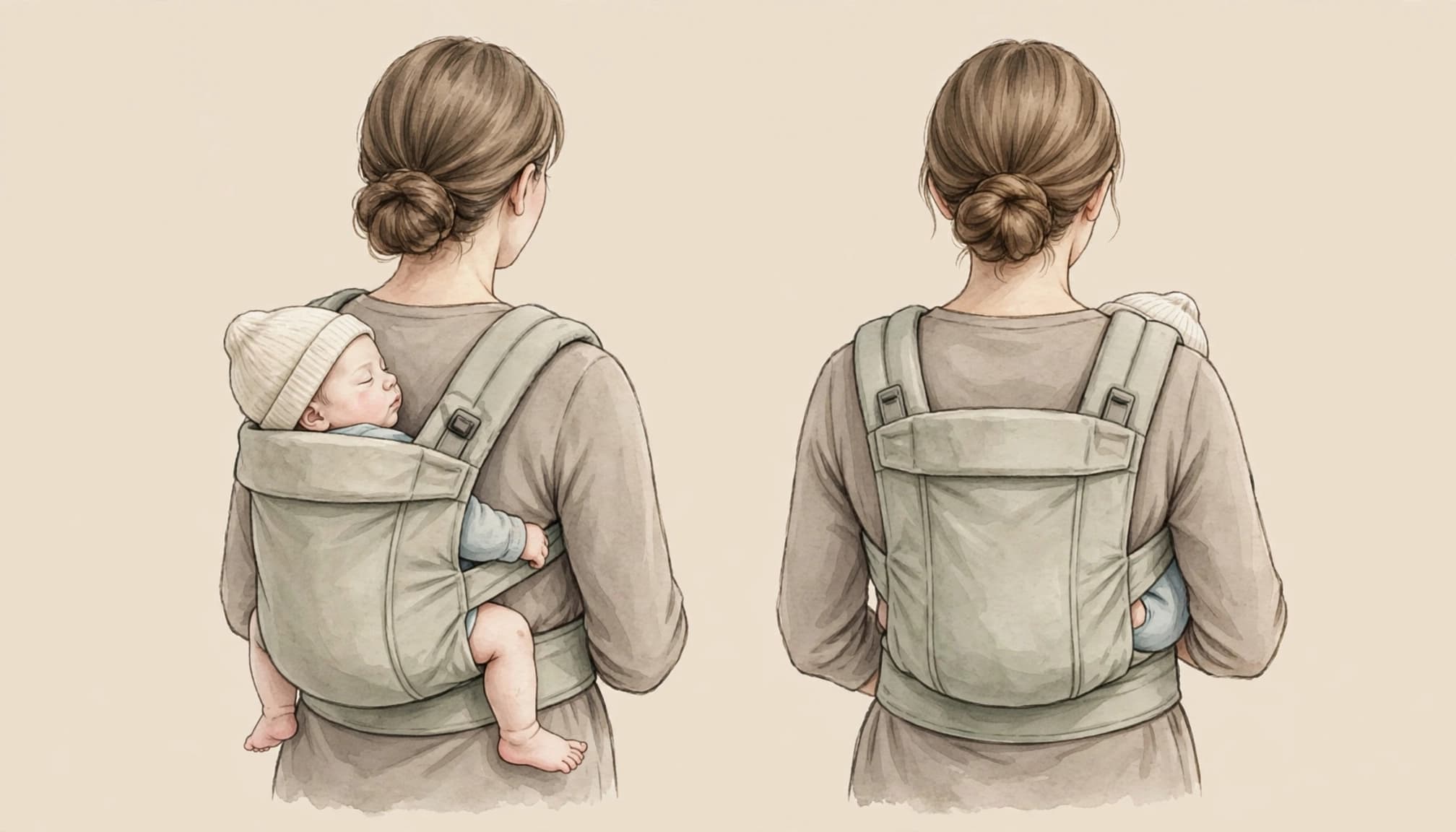
A newborn, a front inward-facing carry, and a back carry are not interchangeable. A newborn is still developing the strength needed to hold their head, neck, and upper body steady. In a front inward-facing position, the baby rests against your chest, where you can see the face and provide support with your body and hands. A back carry places the baby behind you, which reduces your ability to monitor and adjust them quickly.
That difference matters most during the first weeks and months. Most newborns cannot keep their head centered or maintain a stable trunk without help, so a back carrier may provide more freedom for the caregiver but less direct support for the baby.
Head, neck, and trunk control come first
Newborns often have limited control over their head and neck. Their heads are relatively heavy compared with their bodies, and their neck muscles fatigue quickly. Without steady support, the head may tip forward, sideways, or backward.
Their trunk also needs support. A young baby may slump, curl into an unsafe position, or shift lower in the carrier instead of staying upright. That movement can affect the baby’s airway, especially if the chin drops toward the chest or fabric covers the nose and mouth.
For this reason, developmental readiness matters more than age alone. A baby who can hold their head steady and maintain a supported upright position may be ready for certain carrying options later. A typical newborn usually isn’t there yet.
Front inward-facing and back carrying work differently
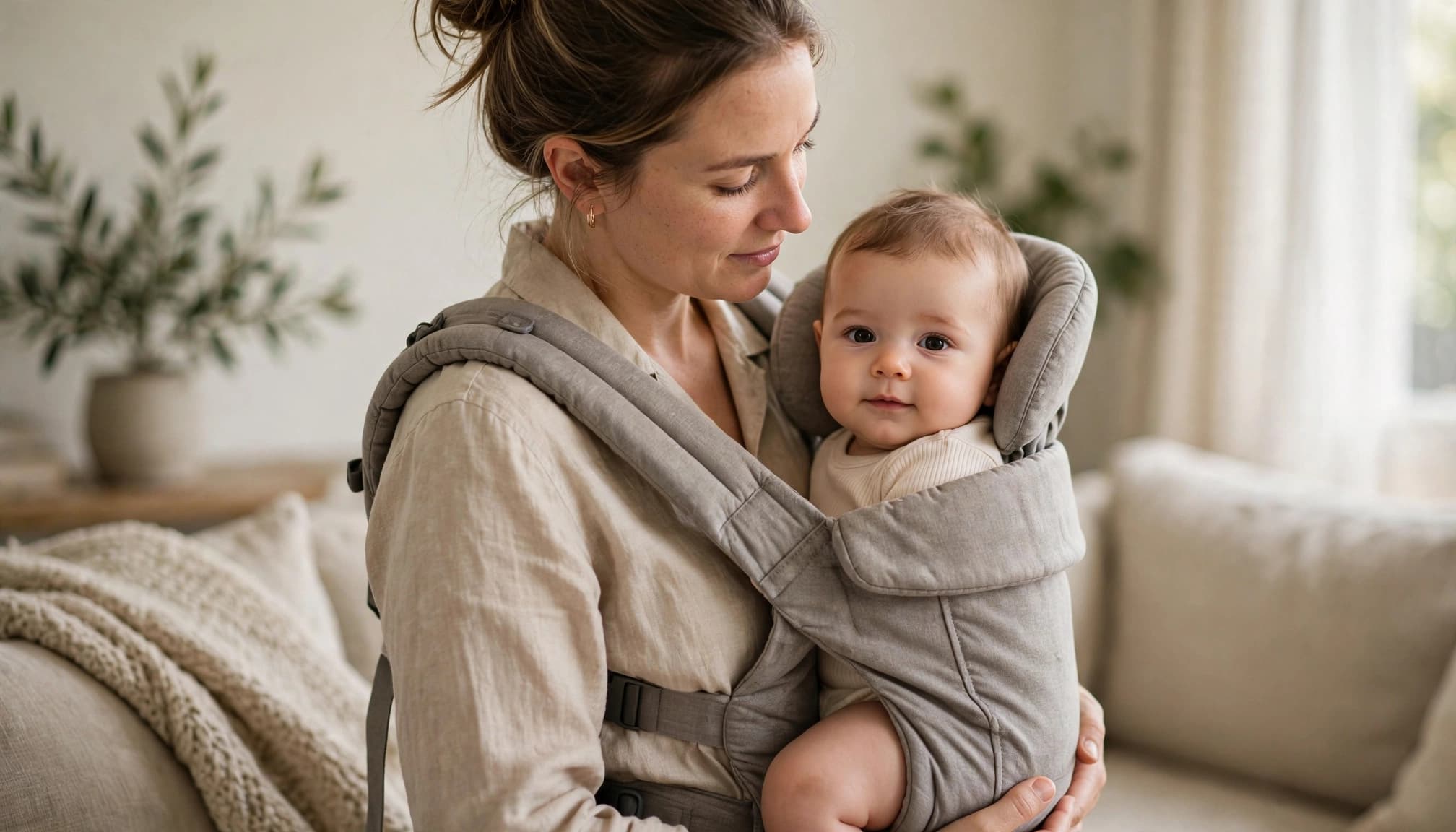
A front inward-facing carry keeps the baby close to your chest with the face turned toward you. When the carrier fits correctly, you can check the baby’s breathing, head position, back support, and overall comfort without removing the carrier. The baby should remain high enough to kiss, with the face visible and the nose and mouth clear. Babywearing safety guidance also emphasizes using the carrier according to the model’s instructions and the child’s developmental stage.
A back carry positions the baby behind your body. You may not see whether the head has fallen forward or whether the baby has slipped into a curved position. Adjusting the straps can also be harder because the baby is out of your direct view. Even a brief delay matters when a newborn cannot correct their own position.
A carrier can hold a baby securely while still placing the baby in a position that requires closer monitoring.
Some products allow newborn use in a front inward-facing position with an infant insert or specific adjustments. Others have higher minimum weights or prohibit newborn use altogether. Back-carry requirements often begin at a later weight or developmental stage. For example, one carrier may list a back-carry minimum of 15 pounds, while another may require 17.2 pounds and additional head and trunk control.
Those numbers are product rules, not universal proof of readiness. Always check the exact manual, because carriers differ in structure, support, and adjustment options. A label that says “newborn compatible” also doesn’t automatically mean every newborn is ready for every position. Premature babies, low-birthweight babies, and infants with breathing problems need extra medical guidance before using an upright carrier.
Why Newborns Shouldn’t Be Carried on the Back
Newborns need more support and closer observation than a back carrier usually allows. The American Academy of Pediatrics and consumer safety guidance emphasize an upright, snug position with the baby’s face visible and airway clear. A back carry may become appropriate later, but readiness depends on the baby’s development and the carrier’s instructions, not age alone.
Their head and neck control may not be strong enough
Newborns cannot reliably hold their heads upright or keep their necks centered. Their head is heavy compared with the rest of their body, and their neck muscles tire quickly. Without steady support, the head may tip forward or sideways while the baby shifts lower in the carrier.
A newborn also needs support through the trunk. If the body curls, slumps, or leans, the chin can fall toward the chest and affect breathing. Front inward-facing carrying keeps the baby close to your chest, where you can provide support and make quick adjustments.
Strong head, neck, and trunk control should come before back carrying is considered. A minimum age or weight listed on a carrier is only one part of the decision. Check whether your baby can stay upright without slumping and whether the carrier keeps the head supported in the approved position.
Premature babies and babies with low muscle tone may need extra guidance from a pediatrician. Their developmental readiness may differ from that of a full-term baby.
A blocked airway can become a serious emergency
A newborn’s airway is small and easy to obstruct. If the chin drops toward the chest, the neck can bend into a tight curve. Breathing can also become difficult when the baby’s face presses against your body or carrier fabric, or when clothing and blankets cover the nose and mouth.
The problem may develop quickly, especially after the baby falls asleep or shifts after feeding. When the baby is behind you, you may not notice a change as soon as you would during a front carry. That delay makes correct positioning especially important.
Before using any carrier, check that:
- Your baby’s face remains visible.
- The nose and mouth stay completely clear.
- The chin stays away from the chest.
- The baby’s back remains supported without a deep curl.
The baby’s head should sit high enough for you to see and kiss it easily. If you notice noisy, strained, or unusual breathing, remove the baby from the carrier and seek medical help when needed. Babies with congestion, respiratory problems, or a history of prematurity need medical advice before using an upright carrier.
You cannot monitor a newborn as easily from behind
Back carrying limits what you can see and feel. You may miss a change in breathing, skin color, temperature, head position, or body tension. A newborn cannot reliably correct their own posture, so a small shift can become a serious positioning problem before you notice it.
By contrast, a front inward-facing carry lets you check the baby’s face and feel the rise and fall of the body. You can also notice fussing, unusual quietness, sweating, or slumping sooner. The face must remain visible at all times, even during a short walk around the house.
A mirror can help with routine checks once a baby is older, but it does not replace direct observation. It also cannot fix a carrier that fits poorly or a baby whose face is hidden beneath fabric, clothing, or a blanket. For more warning signs, review these newborn breathing problems.
Newborns can slip, slump, or fall from a poor fit
A small newborn may not fill a carrier’s seat or body panel correctly. That gap can allow the baby to slide, lean, or curl into an unsafe position. Before every use, follow the manual and check each buckle, strap, snap, and adjustment.
Practice with the carrier over a bed or with another adult nearby. Keep one hand on the baby while positioning them, and bend your knees instead of folding at the waist. Avoid activities that raise the chance of falling, including biking, sports, climbing, and cooking near heat. A carrier does not make those activities safe.
Back carrying can affect comfort, hip position, and temperature
Newborns need a supported back and naturally bent legs. A poor fit may leave the legs dangling, place pressure on the hips, or force the spine into an uncomfortable curve. The carrier should never force the legs straight or press against the spine.
Heat is another concern. A baby carried against your body receives extra warmth and has less airflow around the face and torso. Dress the baby lightly, check for sweating or flushed skin, and avoid carrying in extreme heat. Stop and reposition the baby if the body feels hot or the posture changes.
What Is Safer for Carrying a Newborn?
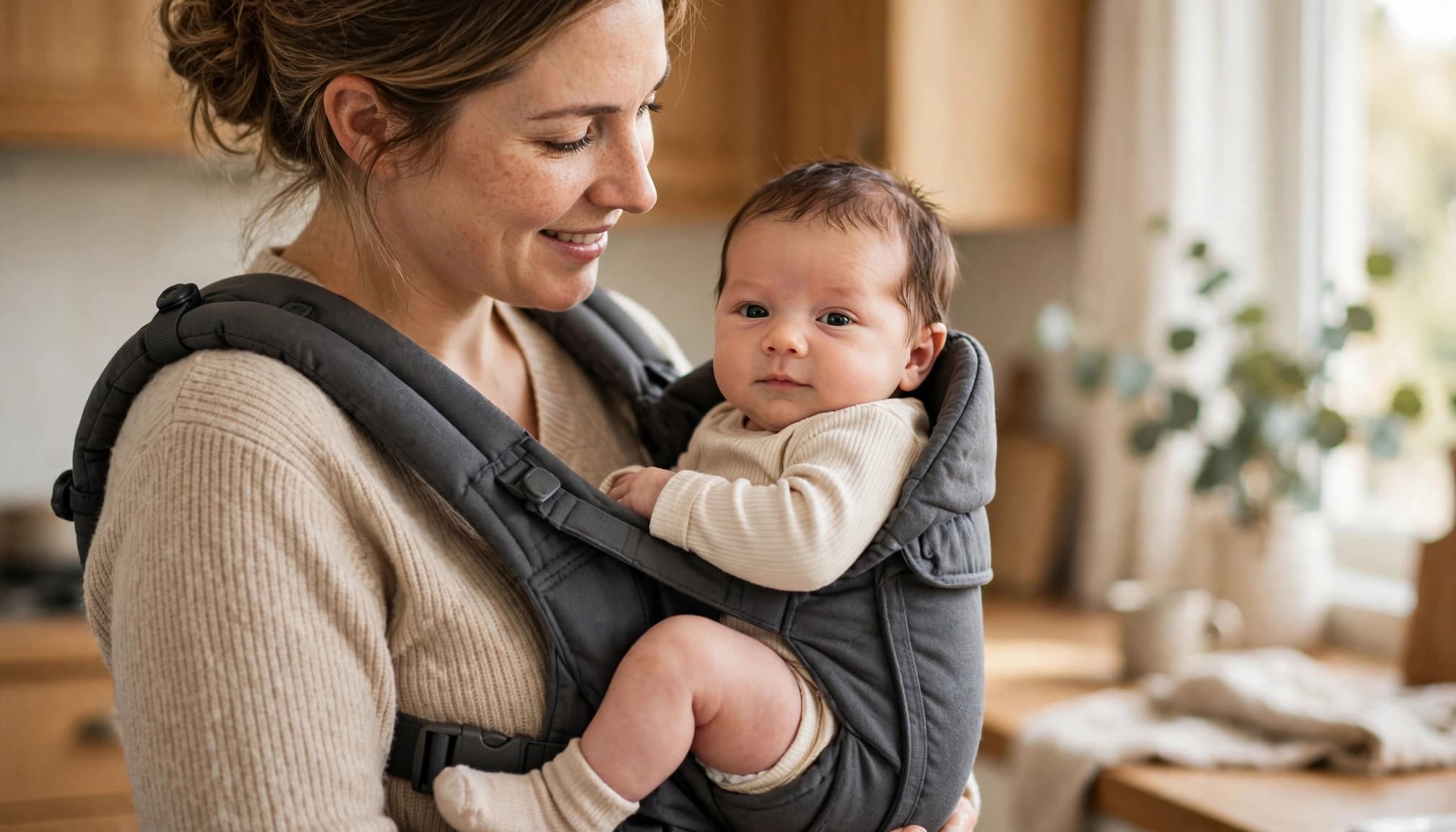
For a healthy newborn, the usual safer option is a front, inward-facing carry. The baby should sit high, snug, and fully supported in a carrier designed for newborn use. This position keeps the baby’s face within your view and makes it easier to notice changes in breathing or posture.
Use a front inward-facing position with a clear airway
Place your baby upright against your chest, with the back supported and the body held snugly without being compressed. You should be able to kiss the top of the baby’s head without bending forward. Keep the baby’s face visible, with the nose and mouth uncovered and the chin lifted away from the chest.
Use the T.I.C.K.S. checks: the carrier should be tight, your baby should remain in view, and the head should be close enough to kiss. The baby’s back needs support, while the legs should rest in a natural, supported position. HealthyChildren’s baby carrier guidance also recommends checking often so fabric or your body doesn’t block the baby’s mouth and nose.
Look at your baby regularly, especially after nursing, adjusting clothing, feeding, or changing position. Never drape a blanket over the baby’s face. Also, don’t use a carrier as a sleep substitute unless the product instructions and your medical provider specifically support that use. If your baby falls asleep, monitor the airway closely and move the baby to a safe sleep space when practical.
Check the carrier’s newborn requirements before using it
Read the carrier manual before placing your newborn inside. Check the minimum weight and age, whether a newborn insert is required, and which positions the manufacturer approves. A carrier marketed for infants may still require stronger head control for certain positions, especially forward-facing or back carrying.
Test the fit with a doll first, then have another adult watch while you position the baby. If the fit remains unclear, ask your pediatrician or a trained babywearing educator for help. You can also review babywearing during the fourth trimester for practical ways to keep your newborn close.
Use extra caution with premature babies, low-birth-weight babies, babies with poor muscle tone, or babies with breathing concerns. Their healthcare provider should confirm whether an upright carrier is appropriate and explain the support they need.
When Can a Baby Start Riding on Your Back?
Back carrying is generally considered during later infancy, often around 6 months or older. However, six months is not a universal starting age. Your baby also needs dependable head, neck, and trunk control, and the carrier must approve back carrying for your baby’s size and developmental stage.
A baby who recently reached a certain age may still need more time. The safest decision depends on how well your baby stays upright, how securely the carrier fits, and whether you can keep the airway clear throughout the carry.
Signs your baby may be developmentally ready
Independent sitting is a useful developmental marker, but it isn’t the only requirement. Before trying a back carry, your baby should hold their head steady without wobbling, keep the chin away from the chest, and maintain an upright torso without folding forward or slumping sideways.
Your baby should also fit the carrier correctly. Check the manufacturer’s minimum age, weight, height, and position requirements because they vary by model. Some carriers allow back carrying around 6 months, while others require more weight or stronger independent sitting skills. Review the instructions each time you use a different carrier. Baby sitting milestones can help you compare your baby’s posture with typical development, but milestones don’t replace a carrier’s rules or medical advice.
During a short, supervised trial, your baby should remain upright, supported, and comfortable. Stop immediately if you notice:
- Persistent slumping, folding, or leaning.
- A covered face or blocked nose and mouth.
- Unusual limpness, weakness, or difficulty holding the head up.
- Noisy, strained, shallow, or changed breathing.
- Pale, bluish, flushed, or sweaty skin.
- Fussing or distress that doesn’t settle after you check the fit.
If your baby was premature, has low muscle tone, or has breathing concerns, ask the pediatrician before attempting a back carry. Developmental readiness can differ from one baby to another.

How to make the first back carries safer
Start by reading the carrier manual from beginning to end. Inspect every buckle, strap, seam, and adjustment point, then set the carrier to the correct size before placing your baby inside. During the first attempts, ask another adult to help position the baby and check the fit.
Use a mirror for the initial check, but don’t rely on it alone. Confirm that your baby’s face remains visible, the back stays supported, and the chin doesn’t press toward the chest. The carrier should hold your baby upright without squeezing the body or forcing the legs into an unnatural position. Guidance from Carrying Matters on back carrying also places strong emphasis on protecting the airway and practicing with care.
Choose a flat, quiet setting for the first practice. Stay away from stairs, traffic, hot surfaces, open flames, and uneven ground. Keep the first carry brief, and check your baby often during the entire outing.
A back carrier is not suitable for driving, biking, running, cooking over heat, climbing, or any activity that would be unsafe while holding your baby. If the baby slumps, the face becomes covered, breathing changes, or distress begins, stop and remove them from the carrier immediately.
Conclusion
Newborns shouldn’t be carried on the back because they often lack steady head, neck, and trunk control. A back carrier can make it harder to spot airway obstruction, slumping, a poor fit, or a change in breathing. It may also leave the hips unsupported and increase the risk of overheating when the baby is pressed against your body.
For most newborns, a properly fitted front inward-facing carry is the safer choice. It keeps the baby close, supports the body, and lets you check the face, posture, and breathing throughout the carry.
Before using any carrier, read the manual and confirm that it approves newborn use and provides the needed support. Keep your baby’s face visible, leave the nose and mouth uncovered, and keep the chin away from the chest. Ask your pediatrician for guidance if your baby was premature, has breathing problems, or doesn’t seem developmentally ready.
Save pin for later


- 20 Mountain Baby Names for Boys and Girls With Meaning - September 20, 2026
- 20 Tough Boy Names and Their Meanings - September 20, 2026
- 10 Reasons Babies Cry While Pooping and When to Worry - September 20, 2026