

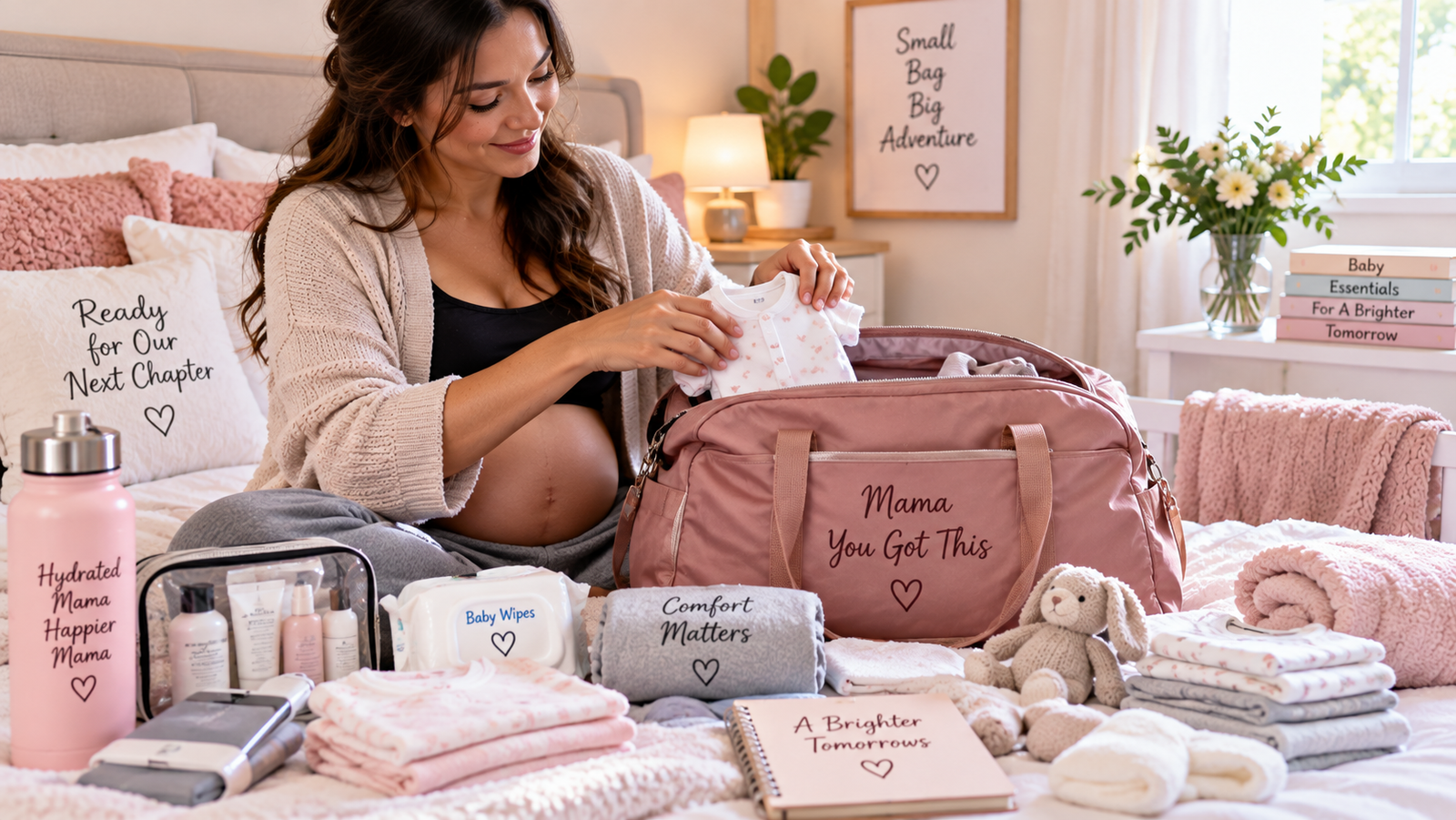
It usually happens around week 32 or 34: you’re folding laundry, and suddenly it hits you that the hospital bag doesn’t exist yet. Cue the frantic googling and the three-tab-deep rabbit hole of conflicting checklists.
Take a breath. Packing your bag doesn’t have to be stressful, and it definitely doesn’t require buying a specialty set of matching “labor outfits.” Most of what you need is already in your closet.
Below, you’ll find exactly when to pack, what goes in the bag for mom, baby, and your partner, which items the hospital hands out for free (so you can leave them at home), and the packing mistakes first-time parents make most often. Let’s start with timing.
When Should You Pack Your Hospital Bag?
The sweet spot for most pregnancies is between weeks 32 and 36. That gives you a comfortable window: you’re far enough along that an early arrival is possible, but you can still move around and think clearly while packing. If you’re carrying twins or your doctor has flagged your pregnancy as high risk, aim for week 30 or even earlier, since babies in these situations tend to arrive ahead of schedule.
Once the bag is packed, don’t bury it in the closet. Keep it by the front door or in the trunk of your car, so nobody has to hunt for it during a 3 a.m. contraction.
What if labor shows up before the bag does? Don’t panic. Hospitals provide basics like gowns, diapers, and wipes, so you can manage a day or two with whatever you grab on the way out. Have your partner or a family member swing by home later to collect the rest. A bag left behind is an inconvenience, not an emergency.
What To Pack In Your Hospital Bag for Mom
Your bag deserves the most attention, since you’ll be the one laboring, recovering, and living out of it for a day or three. The trick is packing for two very different phases: the hours of labor and the days of recovery after. Here’s what belongs in each.
Comfort Items for Labor and Delivery
Hospital rooms run cold, and I mean genuinely cold. Nurses keep them chilly because cooler temperatures are better for infection control and for keeping the staff comfortable during long shifts in scrubs. You, meanwhile, will be shivering under a thin hospital gown. Pack a soft robe (a lightweight robe or a warm button-up you don’t mind parting with) and slipper socks with grip soles, since hospital floors are hard and slick and you’ll be walking the halls during labor.
Beyond warmth, a few small items make a surprising difference:
- Lip balm, because breathing exercises and oxygen masks dry your lips out fast
- Hair ties and a headband to keep hair off your face
- A phone charger with a long cable (10 feet is ideal), since outlets sit far from the bed and a dying phone during labor is a real problem
- Snacks and drinks for early labor, like granola bars, honey packets, and electrolyte drinks, though check your hospital’s policy since many restrict eating once active labor starts
- Small comfort touches, whether that’s your own pillow with a colorful case (so it doesn’t get mixed up with hospital linens), a photo, or a small roller bottle of a calming essential oil
Postpartum Essentials You Will Actually Use
The hospital hands out mesh underwear and giant pads, and honestly, take everything they offer. But most moms find a few upgrades worth their suitcase space. High-waisted soft underwear (like disposable postpartum underwear or high-waisted cotton briefs) sits comfortably over a C-section incision or sore belly, unlike anything that digs in at the waist.
Also pack:
- Nursing bras (two, in a size up, since your milk will come in)
- Nursing pads, because leaks show up sooner than you expect
- Your own toiletries: shampoo, conditioner, a toothbrush, and deodorant. That first post-birth shower is emotional, and hospital soap doesn’t help
- A dark, loose going-home outfit that fits roughly a six-month-pregnant body. You will not leave the hospital in pre-pregnancy jeans, and that’s completely normal
If you prefer your own peri bottle (the angled Frida Mom version is gentler than the hospital’s), stool softeners, or perineal spray, toss those in too.
Documents and Practical Must Haves
This is the smallest pocket of your bag and the one you absolutely cannot forget. Put these in a single folder before week 36 so nobody is rummaging through drawers during contractions:
- Photo ID and insurance card for both you and your partner
- Hospital paperwork or your pre-registration confirmation
- Copies of your birth plan, one for your chart and one for each nurse who comes on shift
- Pediatrician contact info, since the hospital will ask which doctor will see your baby
Load your phone with important numbers beforehand too: your partner, your doctor’s after-hours line, and whoever is on pet-sitting or older-kid duty. Paperwork isn’t glamorous, but it’s the one category where a forgotten item causes genuine chaos at check-in.
Hospital Bag Checklist for Baby
Baby’s bag is the smallest of the three, and honestly, it needs the fewest things. Hospitals are well stocked for newborns, so your job is really just dressing your little one for the trip home and a few extras for comfort. Here’s what earns a spot.
What Baby Needs for the Ride Home
The going-home outfit deserves the most thought, and here’s the catch: pack two sizes. Newborn size fits the average 7 to 8 pound baby, but plenty of babies arrive at 9 pounds or come out petite at 6. Pack one newborn outfit and one 0-3 month outfit so you’re covered either way. Soft, footed pajamas with a zipper beat tiny buttons at 2 a.m. discharge.
On top of that outfit, tuck in:
- A newborn hat, though the hospital usually sends you home with the one they put on baby right after birth
- Socks or booties, since footed sleepers don’t always stay warm enough in the car
- A swaddle blanket or a favorite soft blanket for the car ride, tucked snugly but never under the car seat straps
- An optional photo outfit, because so many parents regret not having something special for those first family pictures (keep it simple, since hospital lighting is harsh and newborns spit up)
The Car Seat Comes Before the Outfit
Here’s the one item that isn’t optional: an installed car seat. Most hospitals won’t let you leave without one, and a nurse will often check that it’s installed correctly. Install it by week 36, not on delivery day. Rear-facing only seats click into a base; read your specific model’s manual or get a free inspection from a certified child passenger safety technician at many local fire stations. Practice buckling the harness at home so you’re not fumbling with straps while holding a brand new baby.
What To Leave at Home
Resist the urge to pack a month of supplies. The hospital provides diapers, wipes, onesies, and a beanie for your entire stay, plus formula and bottles if you’re bottle feeding. One extra diaper in your bag is plenty. Most parents leave the hospital with a diaper bag half full of stuff they never touched, and you can always send your partner home for more.
Pack smart, not heavy, and baby’s bag will weigh about two pounds.
What Your Partner or Support Person Should Bring
Your partner’s bag matters just as much as yours, because they’ll be working right alongside you. Labor can stretch on for a day or more, and a comfortable, well-fed support person makes better decisions and offers better help. This bag stays light: a duffel does the job.
Comfort Items for a Long Stay
Hospitals hand partners a thin recliner or an uncomfortable pull-out chair, so a pillow and blanket from home earn their place fast. Pack a change of clothes for at least two days, and choose layers, since delivery rooms run cold while recovery rooms warm up. Add their own toiletries: toothbrush, deodorant, face wash, and contact lens supplies if they wear them. A quick freshen-up in the family bathroom keeps morale high at hour twenty.
Snacks, Cash, and Small Practical Essentials
The hospital cafeteria closes at odd hours, and vending machines take cash more reliably than cards. A few smart items cover the gaps:
- Snacks like protein bars, trail mix, and jerky (nothing too smelly; delivery rooms are small)
- Small bills and quarters for vending machines and parking garages
- A phone charger, ideally a second one so nobody fights over outlets
- Earbuds, because rest comes in short bursts and often during naps
Your partner also carries a bigger job: they’re the runner. If you forget your peri bottle, need more snacks, or the going-home outfit turns out to be the wrong size, they’re the one making trips. Keep home easy to access for them, even if your bag is already packed.
Swimwear for Shower and Tub Support
If your hospital allows laboring in the shower or tub, ask your partner whether they want in. Many find that warm water and close contact help during contractions, and having their support right there matters. For that, they’ll need swim trunks and a plain t-shirt, packed in a separate bag so they’re easy to grab mid-labor. Skip anything white, and remember the hospital provides towels, so don’t double up.
What the Hospital Provides So You Do Not Waste Bag Space
Before you zip that bag shut, know this: hospitals supply far more than most expectant parents realize. They stock everything you need for labor, recovery, and newborn care, and nearly all of it is free. Every item you leave at home is space saved for the trip home, when you’ll be carrying extras like the diaper bag they send you off with, sample formula, and baby’s first keepsakes.
What Hospitals Typically Supply Free
Most US hospitals provide a generous baseline for both you and your baby. Yours will likely hand out:
- Diapers and wipes for your entire stay
- Formula and bottles if you’re bottle feeding or supplementing
- Postpartum pads and mesh underwear
- A peri bottle for postpartum care
- Hospital gowns (ugly, but functional and washable)
- Swaddle blankets and a newborn beanie
- Pacifiers, if you want them
- Pumping equipment and lanolin cream if you’re breastfeeding
- Dermoplast-style numbing spray and stool softeners after delivery
Even basics like socks, toothbrushes, and shampoo often sit in a drawer in your room. Ask your nurse; there’s no shame in it. Nurses hand these things out constantly, and taking home the extras is practically a tradition.
Whatever lands in your room, you’re paying for it, so pack it home. Hospitals tuck a goody bag of diapers, pads, and swaddles into your discharge paperwork for a reason.
Why Leaving Space Matters More Than Packing Extras
Think of your bag as a container, not a warehouse. Your return trip needs room for the take-home supplies, the car seat canopy, and whatever gift bags the nursery sends along. Parents who overpack end up hauling unused items both ways, and nobody wants to juggle luggage while managing a newborn.
One smart move: pack a foldable tote inside your bag. It flattens to nothing on the way in and expands for the ride home.
Confirm the List Before You Pack
Policies differ between hospitals, so the smartest step costs nothing. Call the labor and delivery floor or schedule a hospital tour (most offer them around the third trimester) and ask exactly what they supply. Some provide Nespresso machines and free photography; others are more bare bones. A five-minute call tells you which items to skip and which truly belong in your bag.
Common Hospital Bag Mistakes (And How to Pack Smarter)
Even well-planned bags go wrong in the same few ways. The good news: every mistake below is easy to avoid once you know it exists. Here’s where most parents stumble.
The Five Mistakes Parents Make Most
- Overpacking a huge suitcase. You’re staying one to three nights, not a week. A giant bag means digging through clutter at 2 a.m. and hauling it all back out while carrying a newborn.
- Bringing outfits that won’t fit postpartum. Your body after birth looks roughly six months pregnant, so pre-pregnancy leggings and jeans are a cruel joke. Pack soft, high-waisted options in your third-trimester size.
- Forgetting the car seat install. Hospitals won’t discharge you without one, and fumbling with a base in the parking lot is nobody’s idea of a first family moment. Install it by week 36 and get it checked if you’re unsure.
- Packing valuables or too much jewelry. Rings have to come off when hands swell during labor, and anything expensive is one misplaced item away from stress. Leave it at home.
- Bringing only newborn sizes for a bigger baby. Nine-pound newborns snap newborn pajamas at the seams. Pack one outfit in each of two sizes and you’re covered.
The smartest setup is simple: one small bag for labor and one larger bag for recovery, left in the car until you need it. A loaded car beats an overstuffed room every time.
Conclusion
Your hospital bag is about comfort, not perfection, and yours is probably closer to done than you think. Pack by week 36, keep this list handy, and trust that the hospital covers most of what you and your baby need. If you forget the peri bottle or a spare outfit, a nurse can hand you one in minutes.
The truly important items are simple: documents in one folder, the car seat installed, and a small labor bag tucked inside the bigger one. Everything else is a bonus, and your partner can always run home for whatever slipped through. A light bag also means room for all the free supplies on the ride home.
So pack light, zip it up, and set it by the door. Then turn your attention to the best part: meeting your baby. You’ve got this, and congratulations in advance.
Save pin for later


- Signs Your Baby Is Ready For Solid Foods - September 23, 2026
- First Trimester Survival Guide For Working Moms - September 23, 2026
- White Noise For Babies: Does It Really Help? - September 23, 2026