
Newborns don’t need a full bath every day. Gentle, focused cleaning is usually enough to keep your baby comfortable while protecting delicate skin.
Until the umbilical cord stump falls off, sponge baths are the safest choice. With careful water handling, prompt diaper changes, and a light touch on sensitive skin, daily care can stay simple. Start with these practical steps for cleaning your newborn, including how to give a newborn a sponge bath and protecting your baby’s delicate skin.
How to properly clean your newborn from head to toe
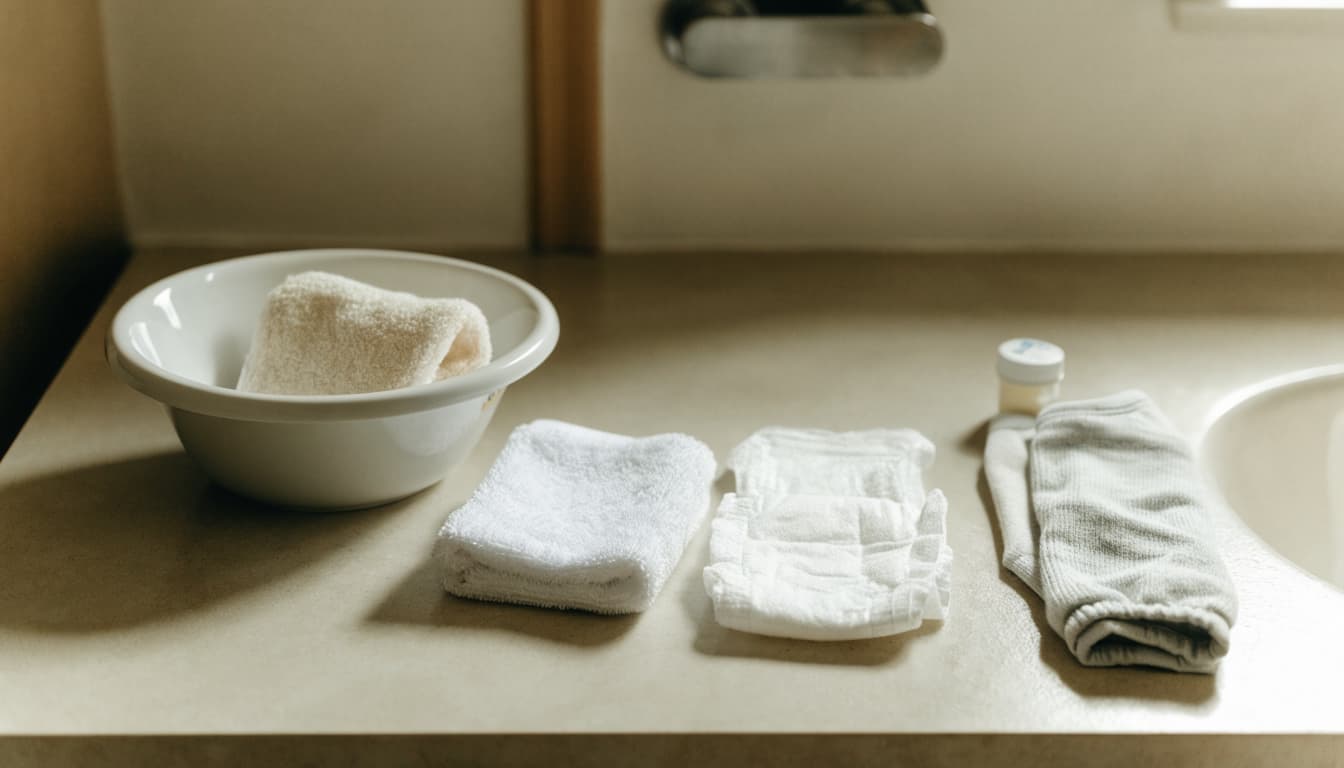
A newborn bath works best when you prepare everything first and keep your baby warm throughout. Set out a soft washcloth, a towel, clean clothes, a diaper, and a small basin of warm water. Keep the water warm, not hot, and never bathe your baby in running water.

Give a sponge bath until the cord stump falls off
Until the umbilical cord stump separates, give your newborn a sponge bath rather than placing them in a tub. The stump commonly falls off within one to three weeks. Let it come away on its own, and don’t pull it, even if it looks loose. For more on keeping the umbilical cord stump clean and dry, follow your pediatrician’s guidance.
Choose a safe, flat surface, such as a padded changing table or a towel on the floor. Keep one hand on your baby, and cover their body with a dry towel or blanket, uncovering only the area you’re washing. This helps your newborn stay warm and makes the bath less startling.
Wet a soft washcloth with warm water, then wring it out so it’s damp rather than dripping. Clean one small area at a time and dry it before uncovering the next. Take care around the cord stump, and keep the diaper folded below it. If the stump gets damp, gently pat it dry.
Wash the face, hair, and body in a gentle order
Start with your baby’s face using plain water. Wipe gently around the eyes, moving from the inner corner outward with a clean part of the cloth for each eye. Keep water away from the nose and mouth, then wash the rest of the face.
Next, support your baby’s head and neck as you clean the scalp with a damp cloth. You can use a small amount of mild baby wash if needed, then wipe away any residue. Move to the neck folds, arms, hands, chest, legs, and feet, cleaning gently without scrubbing. Clean the diaper area last, using a fresh part of the cloth.
Once the cord stump has fallen off, you can begin brief tub baths. Keep the water shallow and warm, and support your baby’s head and neck throughout. The American Academy of Pediatrics’ newborn bathing guidance also recommends sponge baths until the stump falls off.
Lift, dry, and dress your baby safely
Keep one hand on your baby whenever they’re near water, and never leave them alone, even for a moment. If you need to step away, lift your baby and take them with you. Before you start, place the towel and clean clothes within easy reach.
When the bath is over, support your baby’s head and neck as you lift them onto the towel. Pat the skin dry instead of rubbing, especially around the neck, underarms, and other skin folds. Then put on a clean diaper and clothes promptly in a warm room.
Prepare a safe, calm newborn bath
A little preparation makes bath time easier for you and less startling for your baby. Keep the room comfortably warm, close windows or doors that create drafts, and gather everything before you undress your newborn.
Gather supplies and choose a good time
Set out a clean washcloth, a towel, a fresh diaper, and clean clothes. Keep any mild baby cleanser you plan to use nearby, too. Once your baby is undressed, you shouldn’t have to turn away or leave to find something.
Newborns generally need only two or three baths a week. Between baths, you can clean the face, neck folds, hands, and diaper area as needed. Choose a time when your baby is calm and alert, rather than hungry, overtired, or just fed. A short pause after feeding can also help prevent discomfort.
If your newborn’s bath feels stressful, keep it simple and unhurried. Talk softly, support your baby securely, and wash only what needs cleaning. For more step-by-step guidance, see how to bathe a baby safely at home.
Check the water and keep your baby within reach
Fill the basin or baby tub with cold water first, then add warm water. Mix it well so there are no hot spots, and turn off the faucet before placing your baby in the bath. Test the water with the inside of your wrist or elbow. It should feel comfortably warm, never hot. The American Academy of Pediatrics’ newborn bathing guidance recommends checking the water before bathing and keeping a hand on your baby at all times.
Keep your baby’s head above the water and support the head and neck throughout the bath. Use continuous hands-on supervision, even if the water is shallow. If you need to answer the door, get a forgotten item, or step away for any reason, lift your baby, wrap them in a towel, and take them with you.
Keep your newborn clean between baths
A quick cleanup between baths usually takes only a damp, soft washcloth and warm water. Focus on areas where milk, spit-up, urine, stool, or trapped moisture can irritate delicate skin, and use a fresh, clean part of the cloth as you move from one area to another.
Wipe the face and clean skin folds gently
After feeding, wipe milk or spit-up from your baby’s face with a clean, damp cloth. Use plain water for everyday dirt, and move gently around the eyes, nose, and mouth. If milk collects under the chin, lift the chin carefully and clean the crease without rubbing.
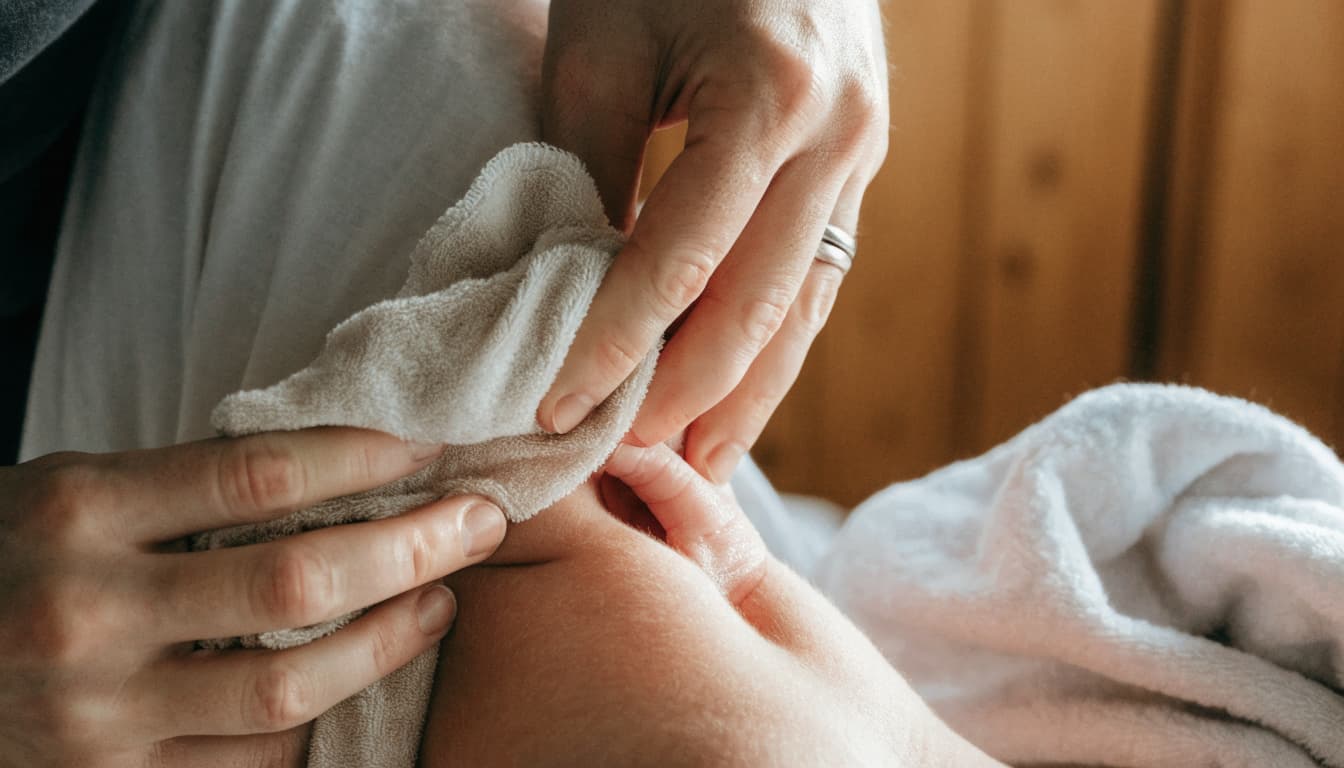
Check the neck, underarms, groin, behind the ears, and between the fingers and toes. These folds can stay damp after a feeding or diaper change, especially when your baby has soft, overlapping skin. Wipe away any residue, then pat each area dry with a soft towel before dressing your newborn. Scrubbing can irritate the skin, so let water and a light touch do the work.
You don’t need soap for every small cleanup. If you use a cleanser, choose a mild, fragrance-free baby wash, and rinse away any residue.
Clean the diaper area with each change
At every diaper change, gently wipe away urine and stool with a soft, damp cloth or baby wipes. For a baby girl, wipe from front to back, using a clean section of the cloth for each pass. Gently clean the outer genital area; there’s no need to scrub between delicate folds.
For a baby boy, clean the penis and surrounding skin gently. If he’s uncircumcised, wash the outside with warm water and don’t pull back the foreskin. The American Academy of Pediatrics’ foreskin care guidance explains that it separates naturally over time. If your baby was circumcised, follow the care instructions from your baby’s clinician.
After cleaning, pat the diaper area dry, including the creases at the thighs, before putting on a fresh diaper. If the skin still feels damp, give it a brief moment to air-dry. Frequent, gentle changes help keep stool and moisture from sitting against your baby’s skin. For a practical routine, see this step-by-step diaper changing guide.
Care for the umbilical stump, scalp, and delicate skin
Newborn care often involves small details beyond bath time. Keep the cord stump dry, treat scalp flakes gently, and use as few skin products as your baby needs.
Keep the umbilical stump clean and dry
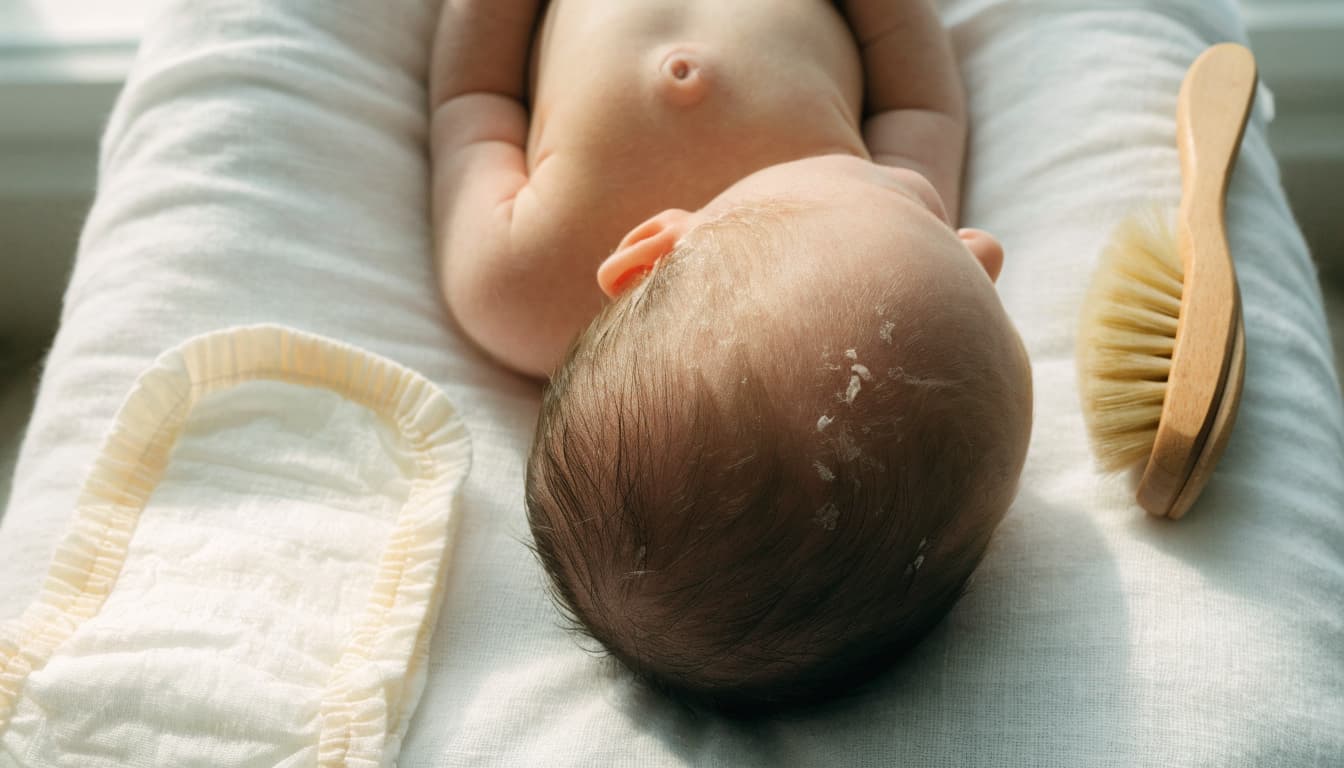
The stump needs time to heal, so leave it alone and let it fall off naturally. Fold the diaper below it to reduce rubbing and keep the area exposed to air. Routine rubbing alcohol isn’t needed, and applying creams or powders can irritate the skin. Follow your clinician’s directions if they recommend a different approach for your baby.
If the stump gets wet, gently pat it dry with a clean cloth. If it gets soiled, ask your clinician how they want you to clean it. A small spot of blood can appear as the stump separates, but contact your baby’s clinician if you notice spreading redness, pus, a foul smell, or bleeding that continues.
Handle cradle cap and scalp flakes gently
Mild cradle cap often improves with gentle scalp washing. While shampooing, loosen scales with your fingertips, a soft brush, or a fine-toothed baby comb. Avoid picking or scraping flakes, since that can irritate your baby’s scalp.
For stubborn scales, a small amount of mineral oil or petroleum jelly can help soften them before washing. However, wash the product out thoroughly. Leaving oil on the scalp can add to buildup. The American Academy of Pediatrics’ cradle cap guidance covers gentle ways to loosen flakes. If the scalp becomes sore, oozes, or the rash spreads, check with your clinician. You can also review gentle care for cradle cap and flaky skin.
Choose simple products for newborn skin
During the first month, plain water is often enough for routine cleaning when practical. Newborns usually don’t need lotion, oil, powder, or scented products. Fragrances and unnecessary products can irritate sensitive skin, while powders can be inhaled.
If your baby’s skin looks dry, irritated, or broken, ask a health care professional before applying a product. They can help you choose an appropriate option and check whether the skin needs more than basic care. For everyday washing, keep the routine simple and use cleanser only when water isn’t enough.
Know when cleaning concerns need medical advice
Routine care should be gentle, but some changes need a clinician’s attention. Contact your baby’s health care professional if the cord area develops spreading redness, swelling, pus, a bad smell, or bleeding that continues. The American Academy of Pediatrics’ umbilical cord guidance outlines signs that should prompt a call.

Watch for changes around the cord or skin
A rash that worsens, spreads, or doesn’t improve also deserves medical advice. Skin irritation can have different causes, so avoid trying to diagnose it or applying treatments for concerning symptoms without guidance. You can read more about warning signs with newborn skin peeling, but check with your baby’s clinician if a rash persists or changes.
If your newborn seems unwell, contact the clinician promptly. You know your baby’s usual behavior, so mention changes in feeding, alertness, or comfort along with what you see on the skin.
Follow care instructions for circumcision and other concerns
After circumcision, follow the specific aftercare directions your baby’s clinician provided. Instructions can vary depending on the procedure and your baby’s needs, so don’t substitute general bathing advice for those directions.
Contact the clinician promptly if your baby seems unwell or if the area changes in a way that concerns you. And if you’re unsure whether something is normal, ask rather than waiting for the next routine visit. A quick call can help you decide what care your baby needs.
Conclusion
Your newborn needs gentle, simple cleaning, not a daily bath or a shelf full of products. Prepare everything before you begin, keep one hand on your baby, and use a soft touch around delicate skin.
Between baths, clean areas as needed and follow your clinician’s directions for the healing cord stump or any skin concerns. For more help, see these newborn sponge bath and umbilical cord care tips. A calm, careful routine is enough to keep your baby clean and comfortable.
Save pin for later


- How to improve your baby’s hygiene - September 26, 2026
- 20 cortisol-reducing foods for moms - September 26, 2026
- How to properly clean your newborn - September 26, 2026