

Organized family morning routines that kids love can feel impossible when the day starts with lost shoes, skipped breakfasts, and everyone rushing out the door already stressed. If your mornings feel loud before 7 a.m., you’re not alone, and the problem usually isn’t your effort. Most families don’t need a minute-by-minute plan, they need a simple system kids can follow without constant reminders.
A calmer start often comes from small shifts that parenting advice still points to now: night-before prep, a clear visual routine, upbeat music, and age-appropriate jobs that give kids a sense of ownership. Those habits work because they cut down on decision fatigue and help kids know what comes next. If you already use family organization systems for busy moms, a good morning routine builds on that same idea, which is less chaos and more rhythm.
The goal is a morning that feels steady and doable, where kids know their part and even enjoy it, so let’s start with the pieces that make that happen.
Start with a morning routine that fits your real family life
A morning routine works best when it matches the life you’re already living. School drop-off time, parent work schedules, bathroom traffic, and your kids’ pace all matter. If the plan only works on a perfect day, it won’t last.
Start with the time you actually need to leave, then build backward from there. That simple shift turns a rushed morning into a flow your family can follow.
Work backward from the time you need to leave
Pick your true out-the-door time, not the time you hope to leave. If the car needs to move at 7:35, that’s your anchor. From there, map the morning in 10 to 15 minute chunks so every must-do task has a place.
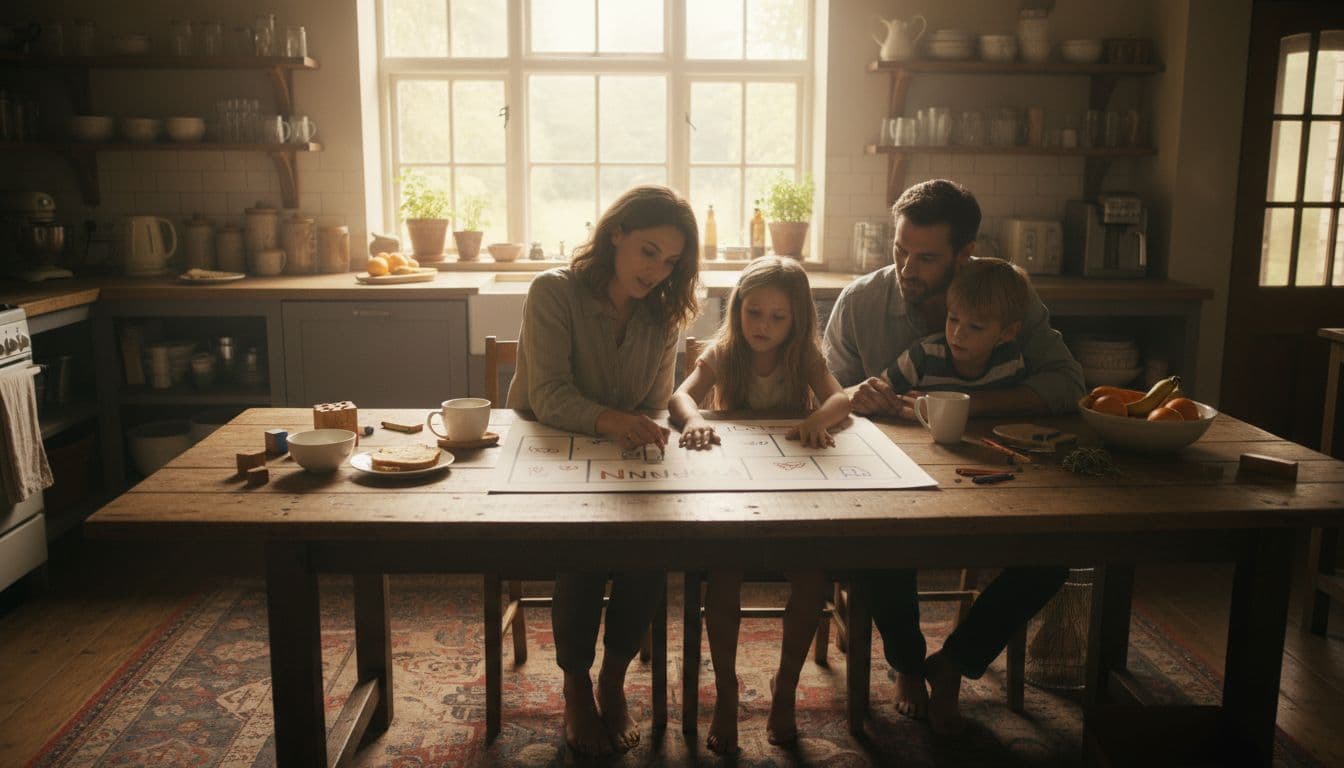
A simple timeline might look like this:
- 7:35 leave the house
- 7:25 to 7:35 shoes on, grab backpack, final bathroom trip
- 7:10 to 7:25 brush teeth, wash face, hair, get dressed
- 6:55 to 7:10 breakfast
- 6:45 to 6:55 wake up and get moving
That order gives your morning structure without turning it into a military drill. It also helps you spot problems fast. If breakfast always takes 20 minutes, but you only gave it 10, the issue isn’t your kid’s attitude. The plan is too tight.
Before you change anything, time your current routine for a few days. Use your phone clock and jot down how long each step really takes. That small test run gives you real numbers, and real numbers are much easier to work with than guesses. If you want a few more practical examples, this school day routine survival guide shows how families break the morning into manageable steps.
Choose a simple order kids can remember
Kids do better when the routine is easy to picture. A short, repeatable order is easier to follow than a long list of reminders shouted from another room. Keep it plain and keep it the same.
For many families, this sequence works well: wake up, get dressed, eat, brush teeth, shoes on, grab backpack. That’s simple enough for most kids to learn, and it covers the basics before the day starts pulling everyone in different directions.
The real win is repetition. When the order stays the same each day, kids stop using energy to figure out what comes next. They begin to move by habit, which means less arguing, less stalling, and fewer last-minute surprises. Current family routine advice also keeps coming back to the same idea, which is that visual order and repeat steps help kids build independence faster, especially in busy school-year mornings.
If your child is younger, use pictures or say the steps out loud in the same words every day. If your child is older, post the list where they can check it on their own. Either way, the goal is the same: fewer decisions, more rhythm.
The easier the order is to remember, the less you have to manage every minute.
Build in a small buffer for the unexpected
Most rough mornings don’t fall apart because the routine is bad. They fall apart because there’s no room for real life. Someone spills milk, a homework sheet disappears, the bathroom is occupied, or one child wakes up moving at half speed.
That’s why a 10-minute buffer matters so much. Add it near the end of the routine if you can. That extra space gives your family room to recover without the whole morning tipping over. Instead of feeling packed too tight, the routine feels calm and doable.
A buffer also changes your tone. When you’re not racing the clock every second, you’re more likely to stay steady and less likely to nag. Kids feel that shift right away. The morning still has structure, but it has breathing room too.
If those extra minutes aren’t needed, great. You leave early, read a quick book, or sit in the car without stress. That kind of margin is what makes a routine feel realistic enough to keep.
Make the routine easy for kids to follow on their own
Kids are more likely to cooperate when the routine is easy to see and easy to do. When they know what comes next and what their job is, you stop sounding like a broken record. That shift matters because clear expectations cut down on power struggles, and they give kids a real chance to succeed without constant prompting.
A good morning routine should feel almost self-guided. The simpler you make it, the more independence your child can build.
Use visual charts, checklists, and picture cues
Young kids do best with what they can see right away. A picture chart works well because it turns the morning into a set of clear steps, not a stream of spoken reminders. One picture for getting dressed, one for brushing teeth, one for breakfast, and one for shoes can do a lot of heavy lifting.
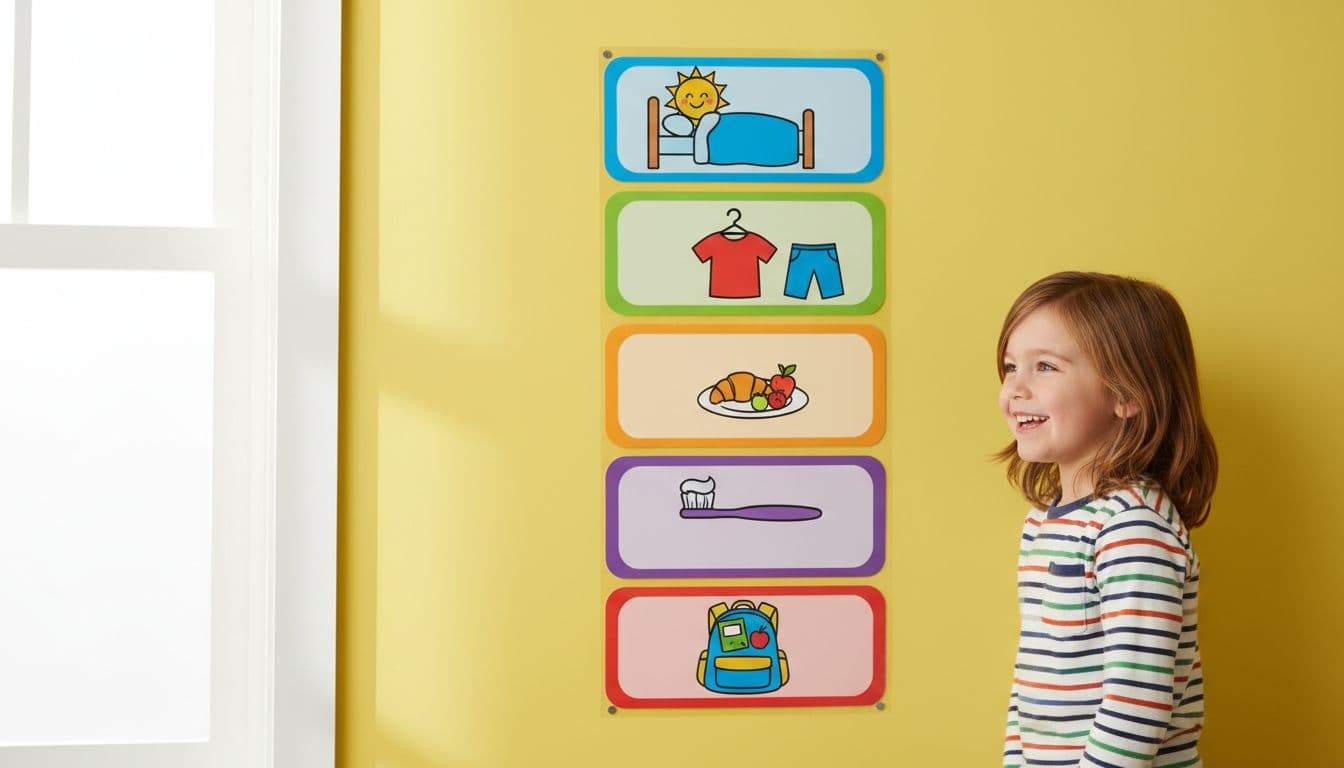
Older kids usually prefer a written checklist. At that age, checking off “get dressed,” “eat breakfast,” and “pack folder” feels more grown-up. It also helps them track their own progress, which means you don’t have to chase every step.
Keep the chart short. If it looks long, kids tune out. Aim for the few tasks that truly matter, then put the chart where the routine happens:
- In the bedroom for getting dressed and making the bed
- In the bathroom for brushing teeth and washing up
- In the kitchen for breakfast and lunch box reminders
Most importantly, let your child help make it. Kids follow routines better when they have a hand in building them. You can ask which pictures to use, what order makes sense, or whether they want a dry-erase list or simple paper checklist. A helpful example of how visual systems support independence is shared in this visual routine system for mornings.
When kids can look at the routine instead of waiting for you to repeat it, mornings feel calmer for everyone.
Give each child age-appropriate morning jobs
A child with a clear job often moves faster than a child who is just being managed. Small jobs give kids a reason to participate, and they make the morning feel like a team effort instead of a list of orders.
The key is to match the job to the child’s age and skill level. Keep it simple enough that they can actually finish it without frustration. For example:
- Toddlers can choose between two outfits you picked out.
- Preschoolers can put pajamas away or carry their bowl to the sink.
- Elementary-age kids can pack backpacks, fill a water bottle, or grab their library book.
- Older kids can help with breakfast, feed a pet, or do a final check of the launch pad.
These jobs don’t need to be big to matter. A preschooler who puts pajamas in the hamper learns, “I know what to do.” An older child who handles breakfast plates or pet food starts the day with purpose. That kind of ownership builds confidence over time, and it often leads to better follow-through in other parts of the day too.
If a child struggles, trim the job down. Instead of “pack everything for school,” try “put your folder in your backpack.” Success builds momentum. Then you can add more later.
Create one launch pad for everything that leaves the house
A launch pad is one spot near the door for the things that leave with your family every morning. Backpacks, shoes, jackets, lunch boxes, folders, and forms all go there. Once kids know that everything lives in one place, the last ten minutes of the morning get much easier.
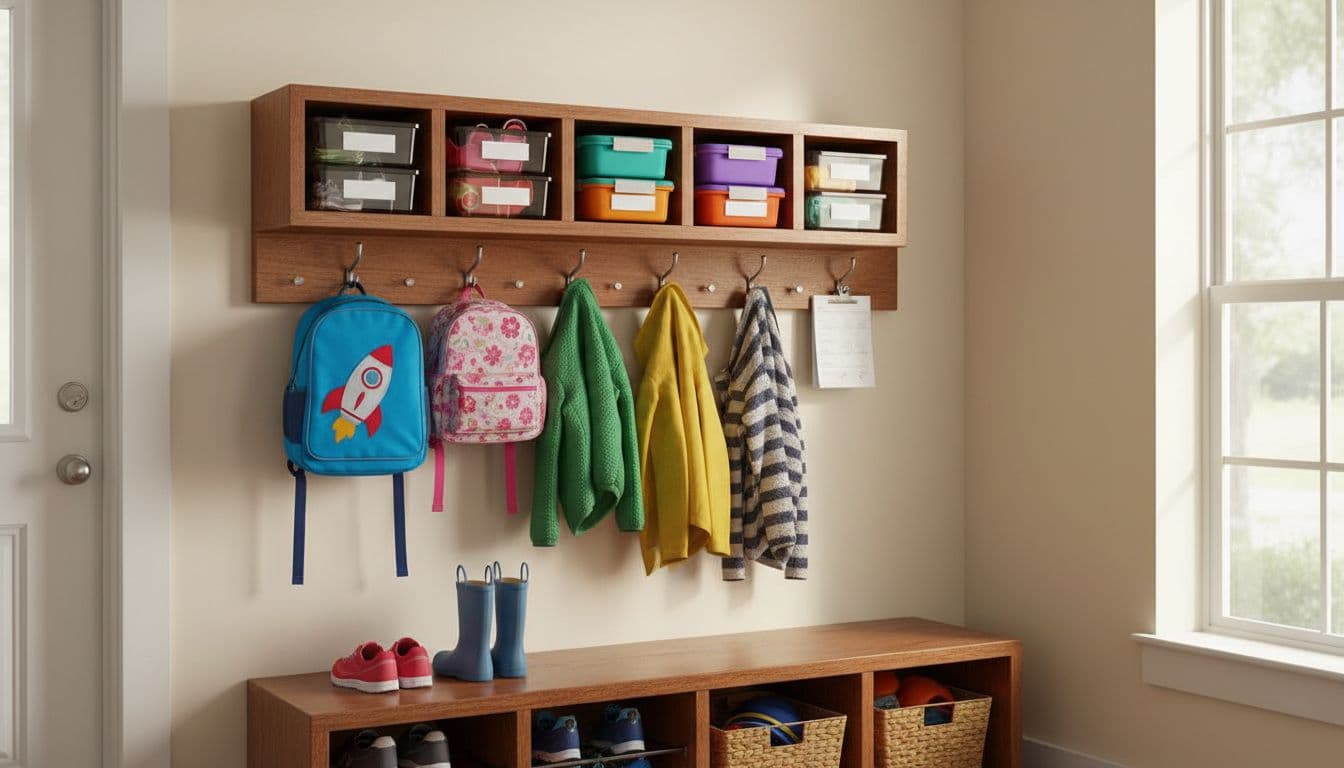
This works because it removes the daily scavenger hunt. You are not checking three rooms for one sneaker or digging through counters for a permission slip. Kids also learn a simple rule: if it leaves the house, it belongs at the launch pad.
You don’t need a fancy setup. A few hooks, a basket, a small shelf, or a row of cubbies can do the job. Keep the space easy to reach so kids can use it without help. If possible, assign each child one clear spot for their own gear.
A simple launch pad often holds:
- Shoes
- Backpacks
- Jackets
- Lunch boxes
- School papers or forms
This tiny system teaches a big habit. Kids stop asking where their things are because they already know where those things go. And when that happens, your morning routine starts to run with less nagging and more confidence.
Add fun so kids want to join the routine
An organized morning doesn’t have to feel stiff. In fact, a little fun often makes the routine work better because kids are far more likely to join in when the mood feels warm and doable.
The goal isn’t to turn school mornings into a party. It’s to add small, playful touches that lower resistance, build momentum, and help everyone move without constant pushing. Even simple changes, like music, choice, and tiny rewards, can make the routine feel less like a chore and more like something your kids know how to do.
Wake kids up with light, music, and a gentle start
The first few minutes matter a lot. A harsh alarm can put kids on edge before their feet hit the floor, and that early tension often spills into the rest of the morning. If you can, open the curtains, switch on a soft lamp, or let natural light do some of the work.
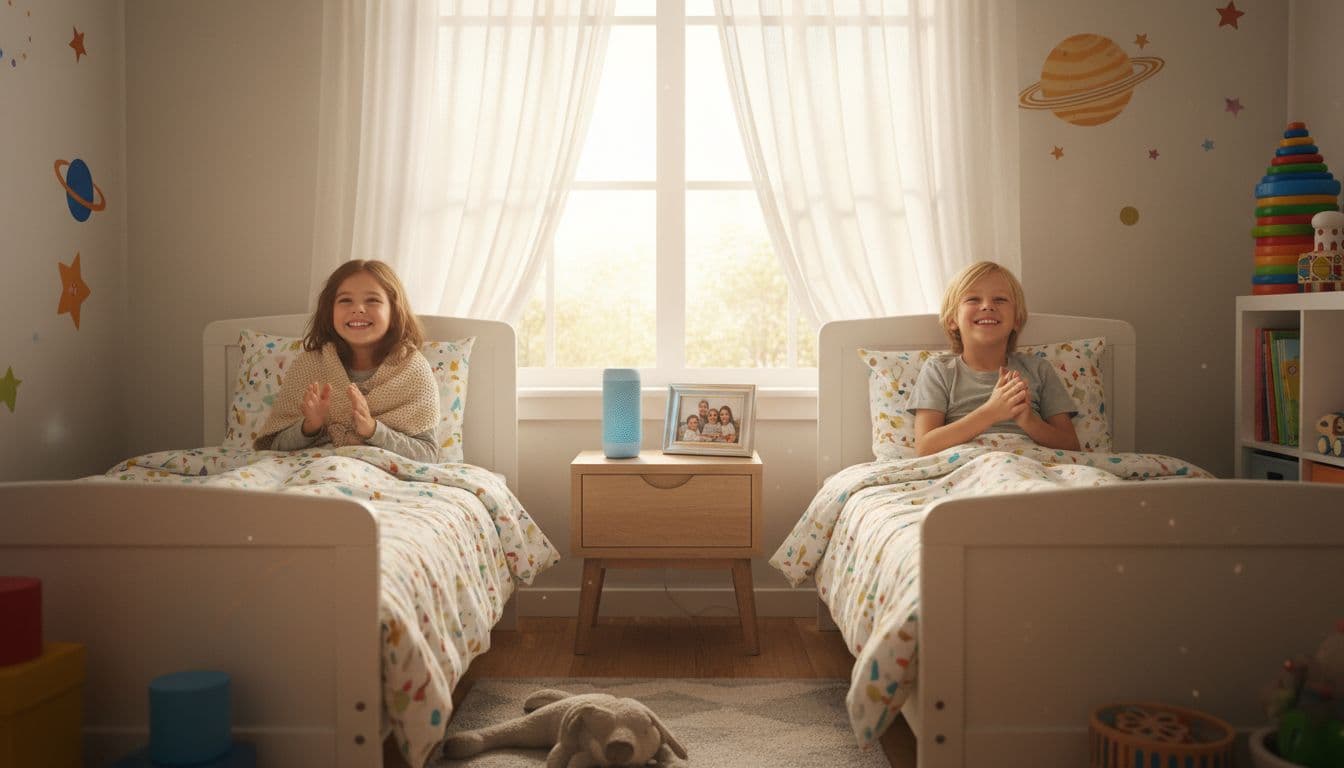
Soft music helps too. Try a favorite song, a calm playlist, or one cheerful “good morning” track your kids know well. That small cue can feel much better than a loud buzzer, and it gives the day a smoother on-ramp.
Recent routine tips still point to the same idea: gentle wake-ups, light, and music can improve mood and cooperation on school mornings. Parents’ guide to morning routines for kids also notes how fast stress can rise early in the day, which is why the tone at wake-up matters so much.
Keep this part simple and repeatable. You might:
- open curtains right away
- turn on one soft lamp
- play the same family playlist at low volume
- offer a hug, back rub, or quiet check-in
That gentler start can prevent the first power struggle. Kids who wake up feeling rushed often dig in their heels. Kids who get a calmer start are more likely to move with you instead of against you. If your child needs a little extra help getting going, playful sensory ideas can also help mornings feel less abrupt, especially for younger kids. These toddler sensory play ideas at home may spark easy ways to add a soothing touch before the rush begins.
Use simple rewards and the when-then approach
Kids do well when the payoff is clear and immediate. That’s where the when-then approach helps. In plain language, it means: when you do the needed task, then you get the small privilege.
For example, you might say, “When you’re dressed and your teeth are brushed, then you can pick the breakfast song.” Or, “When your shoes are on, then you can choose the car music.” This works because it keeps the focus on what comes first, and it avoids long lectures that kids usually tune out.
Small rewards work best when they happen right away and connect to the routine itself.
The key is to keep the reward light. You’re not bribing your child with a toy or promising something huge after school. You’re offering a quick, fun extra that fits naturally into the morning. Good examples include picking the playlist, choosing the breakfast seat, pressing the garage button, or being the one who carries the lunch bag.
A few tips make this work better:
- Say it once, clearly and calmly.
- Keep the reward immediate.
- Tie it to a real task your child can finish.
- Skip the debate if they refuse, just stay consistent.
This method works especially well because kids can see the path. Task first, fun second. That feels fair, predictable, and easy to understand. Over time, the routine itself starts to carry the reward. A child begins to think, “If I move now, I get to do the fun part sooner.”
Offer small choices that give kids control
Many morning battles are really about control. Kids want some say in what happens, but school mornings still need limits. Small choices solve both problems because they let your child feel included while you keep the routine moving.
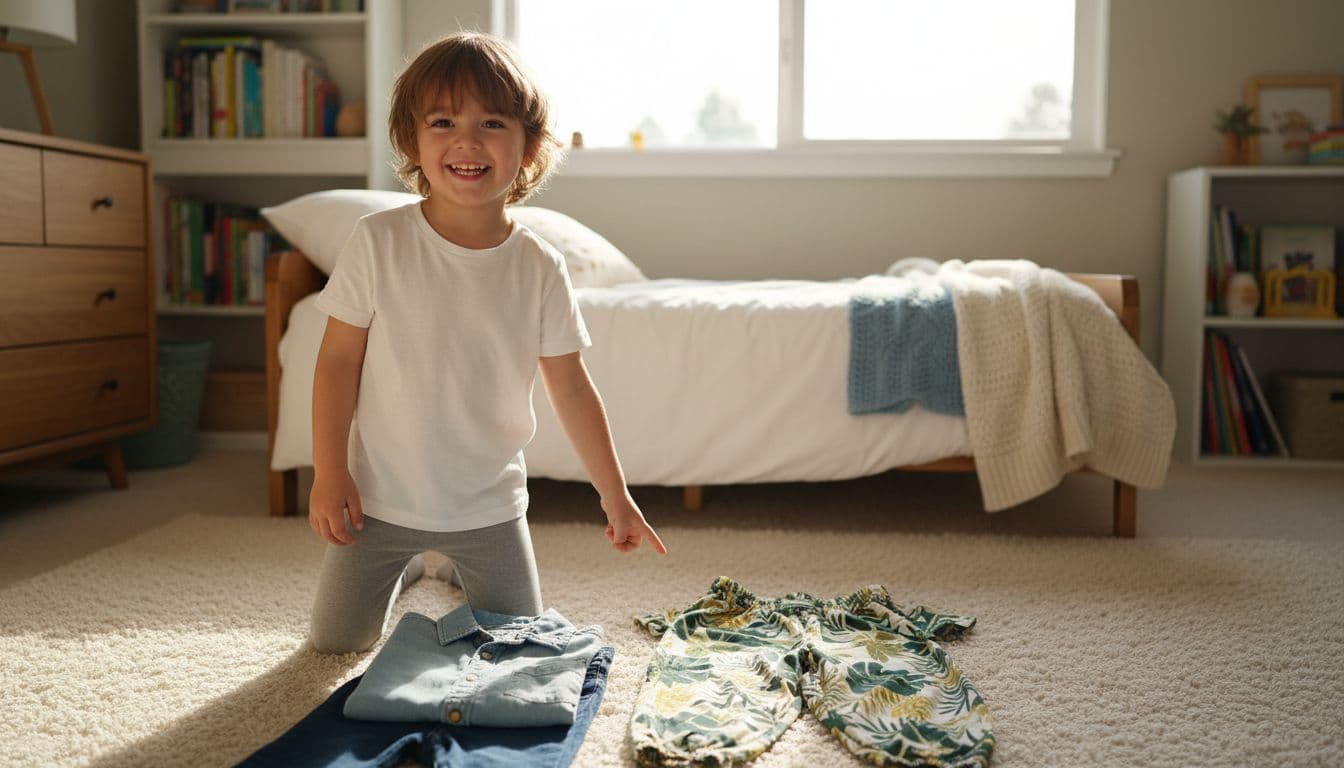
The trick is to offer two good options, not an open-ended menu. That means:
- two breakfast choices
- two hairstyles
- two pairs of socks
- two cups
- two jackets that fit the weather
This saves time because your child gets a voice without opening the door to a 10-minute negotiation. “Do you want yogurt or toast?” moves much faster than “What do you want for breakfast?” The same goes for clothes, shoes, and even the order of a few tasks.
You can also use choices to add connection. For example, “Do you want your dinosaur song or your dance song while you get dressed?” That keeps the mood light while still moving the routine forward. If you want more ideas for creating those small daily moments of connection, these ways to make kids feel special daily pair well with a calmer morning flow.
Choice works best when the options are both acceptable to you. If one answer will cause a problem, don’t offer it. Keep it short, friendly, and clear. Kids feel more capable when they get to decide something real, and that sense of ownership often cuts down on stalling. A little control can go a long way before 8 a.m.
Set up the night before so mornings run on less effort
The easiest morning routine usually starts the evening before. That one shift cuts decision fatigue, lowers the number of jobs that have to happen before school, and gives everyone a better shot at leaving on time.
You do not need a long evening reset. In most homes, 10 focused minutes can remove half the usual morning friction. Clothes are ready, bags are packed, breakfast is partly handled, and your brain is not trying to solve six small problems at 7 a.m.
Lay out clothes, pack bags, and prep breakfast early
The highest-impact prep is also the simplest. Pick the outfit, set out socks and shoes, and place everything in one spot. When kids can get dressed without hunting for a clean shirt or matching sneaker, the morning moves faster with less back-and-forth.
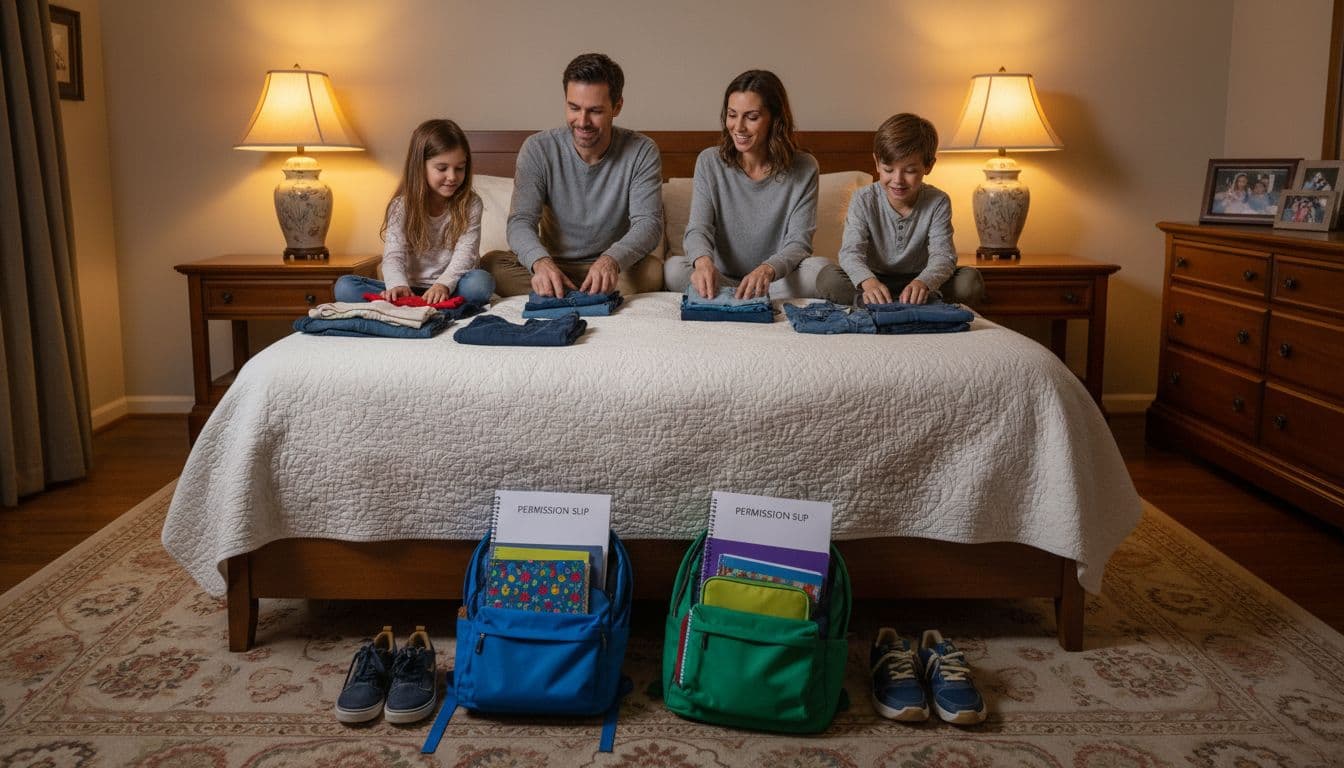
Backpacks matter just as much. Before bed, do a quick sweep for the things that tend to derail school mornings:
- backpacks by the door
- homework and folders inside
- lunch items grouped in the fridge
- water bottles filled and chilled
- permission slips signed and packed
- shoes, coats, and library books in place
This step works because it removes tiny decisions that pile up fast. A child deciding what to wear, then searching for shoes, then remembering a form, can lose ten minutes before breakfast even starts.
Breakfast prep also pays off right away. You do not need a full meal cooked in advance. You just want fewer moving parts in the morning. Good options include washing fruit, setting out bowls, portioning yogurt, hard-boiling eggs, or prepping overnight oats. Parents’ school morning tips also point to night-before prep as one of the quickest ways to reduce rush and stress.
If you want this habit to stick, keep the evening list short. Most families only need a quick reset like this:
- Choose tomorrow’s clothes and shoes.
- Pack backpacks and sign papers.
- Fill water bottles and group lunch items.
- Prep one easy breakfast item.
- Put everything in the launch spot.
That is often enough to save a stressful morning. Small prep creates a big payoff because the hardest part of early hours is not the work itself. It is the constant stopping to decide what happens next.
Protect sleep with a steady bedtime and wake time
A smoother morning starts with enough sleep. Kids who are rested usually move faster, cooperate more, and handle transitions better. Tired kids often drag their feet, argue over small things, and melt down over tasks they can usually do.
That is why a steady bedtime and wake time matter so much. Consistency helps your child’s body know when to wind down and when to wake up. Current sleep guidance still points to the same basic truth: regular sleep timing supports easier mornings, and screens too close to bedtime can make that harder by delaying sleepiness.
Keep this practical. You do not need a perfect bedtime routine every night. You do need one that is predictable enough to repeat. A simple wind-down for the last 30 to 60 minutes can help a lot:
- turn off tablets and TV early
- dim lights around the house
- use a bath, book, or quiet music
- keep bedtime and wake time close to the same each day
If your child is often slow, emotional, or combative in the morning, sleep is worth looking at before you change the whole routine. The issue may not be laziness at all. They may just be running on empty. For more general ideas on reducing school-morning stress, Care.com’s school morning tips are a helpful read.
When bedtime gets more consistent, mornings usually need fewer reminders.
This also helps parents. A child who wakes up rested needs less pushing, which means you can spend less energy managing moods and more energy getting out the door.
Plan around family bottlenecks before they happen
Most hard mornings have one or two repeat trouble spots. Maybe everyone needs the same bathroom at once. Maybe siblings start playing instead of getting dressed. Maybe one parent is making breakfast, packing lunches, signing papers, and answering questions all at the same time.
Those are bottlenecks, and they rarely fix themselves. It helps to plan for them the night before, while the house is calm.
Start by noticing where your routine jams up. Then give each problem a simple fix. For example, if you have one bathroom, assign turns instead of hoping it works out. If siblings distract each other, separate key tasks into different spaces. One child can dress in the bedroom while another brushes teeth first.
A few practical fixes can change the whole flow:
- Stagger bathroom turns so one child washes up while another gets dressed.
- Use assigned stations for clothes, hair, breakfast, and backpacks.
- Rotate parent tasks so one adult handles food while the other handles final checks.
- Split up siblings during the slowest part of the morning if they pull each other off track.
- Pre-decide problem points like who pours cereal, who checks folders, and who does the shoe check.
This kind of planning may sound small, but it keeps everyone from colliding at once. This evening routine guide makes a similar point: when you reduce the number of decisions and hand-offs in the morning, the whole house feels calmer.
If one parent often carries too much of the mental load, make that visible too. A simple swap can help. One adult can handle breakfast and lunches on Monday, Wednesday, and Friday, while the other handles backpacks, shoes, and forms. Clear roles beat last-minute guessing every time.
The goal is not a rigid system. It is a morning with fewer traffic jams, fewer repeated reminders, and less stress before the school day even starts.
Fix the most common morning routine problems without starting over
Even a solid routine can wobble. Kids grow, schedules shift, and some mornings just go sideways. That doesn’t mean your system failed. It usually means one part of it needs a small fix.
This is where a lot of parents get stuck. They assume they need a brand-new plan, when they really need a shorter list, a firmer response, or a better fit for the season they’re in. Small tweaks often work faster than a full reset.
What to do when kids move too slowly
When a child moves slowly, the answer usually isn’t more pressure. Most kids do better with less to process and a clearer next step. If the routine feels long or vague, they stall because the whole thing feels heavy before breakfast even starts.
Start by trimming the checklist. Instead of seven or eight steps, focus on the few jobs that matter most first, like get dressed, eat, brush teeth, shoes on. The Child Mind Institute’s school morning tips also support using simple, visible routines because kids follow them more easily when they aren’t overloaded.
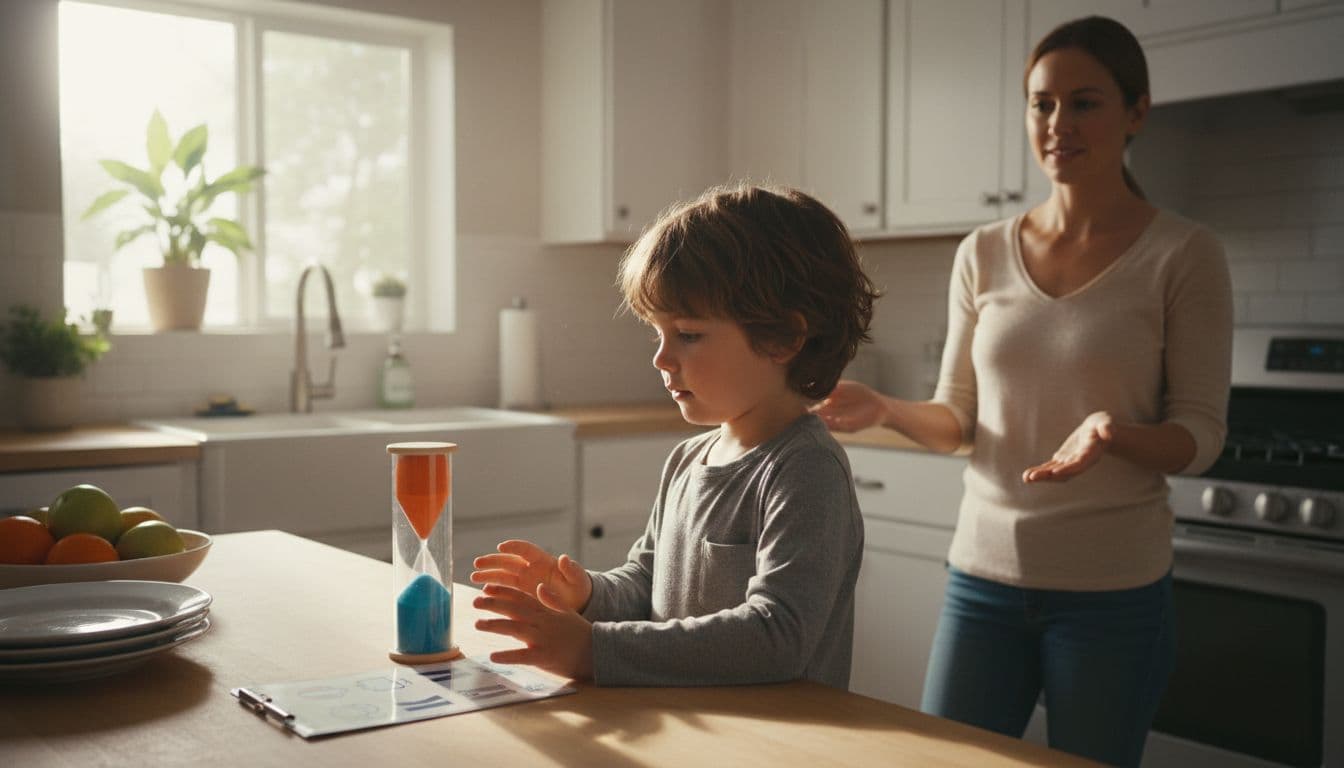
A visual timer helps too, especially for kids who lose track of time. Ten minutes to get dressed feels more real when they can see it passing. In the same way, cutting out distractions can speed things up fast. Turn off the TV, pause tablets, and keep toys out of the morning path.
If your child still drifts, break big jobs into tiny ones. “Get ready” is too broad. “Put on your shirt” is clear. Then give the next step after that. It may also help to wake them up 10 to 15 minutes earlier so the routine has more breathing room. A rushed child often moves even slower, like a car spinning its tires in mud.
A few small fixes usually work best:
- Keep the checklist short and easy to scan.
- Use a visual timer for one task at a time.
- Remove screens and extra distractions before school.
- Split one big task into smaller steps.
- Move wake-up a little earlier if the routine is always too tight.
How to handle pushback, whining, and repeated reminders
Pushback often gets bigger when every step turns into a conversation. If your child argues about socks, breakfast, or brushing teeth each morning, the routine may be getting renegotiated in real time. That wears everyone out.
A calmer response is usually more effective. Use fewer words, keep your tone steady, and point back to the chart instead of making a new speech. You don’t need to win a debate before 7:30 a.m. You need the routine to keep moving.
Try short phrases such as “Check your chart” or “Teeth are next.” Then stop talking. Repeated reminders often become background noise, so saying less can actually make your words land better. This also helps you avoid sounding frustrated, which can feed more whining.
Routines get stronger when parents stop reopening the plan every morning.
Consistency matters here. If the rule changes based on mood, kids learn to keep pushing. That doesn’t mean being harsh. It means being clear and steady. If you need help finding that balance, this post on fostering flexibility over rigid control is a helpful reminder that structure works best when it stays calm.
It also helps to expect a practice period. Kids rarely follow a new or updated routine perfectly right away. Improvement often shows up once parents stop bargaining, stop over-explaining, and stick with the same simple sequence for a week or two.
Refresh your routine as kids grow and seasons change
The best organized family morning routines don’t stay frozen. They change because your family changes. A routine that worked in kindergarten may feel babyish in third grade, and a summer flow may fall apart once school, sports, and cold-weather gear come back.
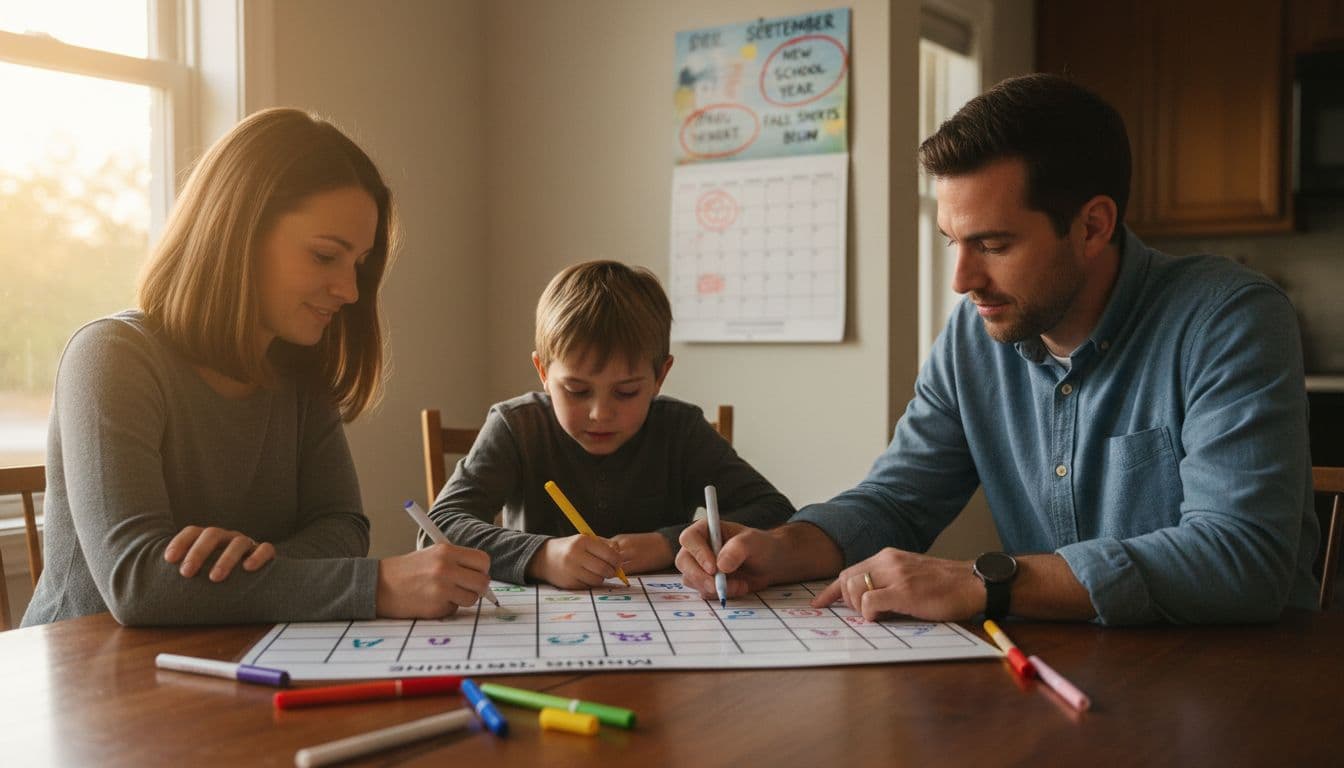
A quick routine check at the start of each school year helps a lot. Look at what your child can now do alone, what takes longer than it used to, and what new tasks need a place. For example, sports bags, instruments, heavier coats, and early practice times all change the morning rhythm.
Independence should grow with your child too. A younger child may need help choosing clothes, while an older one can handle their outfit, pack a snack, and double-check homework. As that shifts, your chart should shift too. The goal is to keep the routine useful, not keep it identical.
A seasonal refresh can be simple:
- Remove steps your child has outgrown.
- Add new school or activity tasks.
- Adjust wake-up time for the current schedule.
- Rework clothing and gear for the weather.
- Hand off more responsibility when your child is ready.
This matters because routines last longer when they fit real life. If mornings feel messy right now, don’t scrap the whole system. Change one weak spot, test it for a few days, and then adjust again. That’s often all it takes to turn a rough routine back into one your family can actually use.
Conclusion
A good family morning routine does not need to look perfect to work. What matters is a smoother start, one that helps kids feel capable and helps parents feel less rushed before the day even begins.
That is why small changes usually work best. Start with one or two simple fixes, such as a visual chart your child can follow or a launch pad by the door for backpacks, shoes, and school papers. Then give those changes time to stick before adding anything else.
Over time, those repeatable steps can do more than get everyone out the door. They help kids build independence, create more connection in the middle of busy weekdays, and make school mornings feel calmer for the whole family.
Save the pin for later

- Organized Family Morning Routines That Kids Actually Love - April 15, 2026
- Emotional Intelligence Activities for Kids and Their Parents - April 15, 2026
- 19 Christmas Crafts Ideas for Kids - November 30, 2025