
A bigger or smaller baby bump doesn’t tell you how your baby is growing on its own, and it doesn’t give a clear read on health. Belly size can change with your body shape, muscle tone, placenta position, fluid levels, and whether this is your first pregnancy.
That’s why a bump that looks tiny or huge can still be perfectly normal. What matters more is how your provider tracks growth through fundal height, ultrasounds, and your baby’s movement, not a quick glance in the mirror. If you want a calmer way to think about it, these reassuring signs your baby is doing fine can help put things in perspective.
Next, let’s look at what belly size can hint at, and where it stops being useful.
Why baby bumps look so different from one pregnancy to the next
There is no single normal bump shape. Two healthy pregnancies can look nothing alike because your body, your baby, and your pregnancy history all affect how the belly grows.
That means a bump can sit high, hang low, look wide, look narrow, or seem to “pop” early one time and later the next. The shape often reflects your frame and muscle tone more than baby size.
A baby’s growth and a bump’s shape are related, but they are not the same thing.
Your body shape and muscle tone play a big role
Your height and torso length change where the uterus has room to expand. Taller people often have more vertical space, so the bump may look higher and narrower. Shorter people often show outward sooner, which can make the belly look rounder or lower.
Abdominal muscles matter too. Stronger core muscles can hold the bump closer to the body, while looser muscles let it sit farther out. That is one reason a bump may look smaller or more compact in one person and more prominent in another.
Pregnancy history also changes the picture. In a first pregnancy, the abdominal wall is usually tighter, so the bump often shows later and sits higher. In later pregnancies, those muscles have already stretched, so the belly may appear earlier and look lower or softer. A plain-language overview of this is also covered in what pregnancy bump shape means.

A few body-related factors often shape the bump:
- Height changes whether the belly grows more upward or outward.
- Torso length affects how much room the uterus has before it starts pushing forward.
- Abdominal muscle tone can make the bump look firmer, flatter, or more rounded.
- Overall frame and pelvis shape can change how much the bump shows from the front or side.
Where the baby is positioned can change the bump’s shape
A baby’s position inside the uterus can change the whole look of the bump. If the baby lies more to one side, the belly may look uneven or lopsided. If the baby is stretched out across the uterus, the bump can look wide. If the baby is curled up or sitting lower, the bump may look pointed or lower on the abdomen.
That shape can also shift as the baby moves. One day the bump may look high and round, and the next it may sit lower or stick out more on one side. That kind of change is normal, because baby position is not fixed.
If you are trying to tell whether movement feels different, safe ways to feel baby kicks can help you understand what is typical and what to watch for.

This is why bump shape alone does not tell you much about growth. A baby can be healthy whether the belly looks high, low, broad, or pointed.
Amniotic fluid, bloating, and other pregnancy factors matter too
The belly does not only reflect the baby. Amniotic fluid can make the bump look fuller, rounder, or tighter. When fluid is lower, the belly may look smaller or less stretched. These changes can happen later in pregnancy, but they can affect appearance earlier too.
Bloating and digestion changes also play a part. Gas, constipation, and normal pregnancy bloating can make the belly look larger at the end of the day or after a big meal. In early pregnancy, that puffiness can show before the uterus is even high enough to create a true bump.
These changes are easy to mistake for baby size, but they are not the same thing. A belly that looks bigger or smaller because of fluid or bloating does not automatically mean anything is wrong. It just means pregnancy is changing your body in more than one way.
Keeping that in mind can save you a lot of stress. Two bumps can look very different and still point to perfectly healthy pregnancies.
What bump size can and cannot reveal about your baby’s growth
Bump size can give a rough clue that pregnancy is progressing, but it cannot tell the full story on its own. A belly can look big, small, high, low, or lopsided for reasons that have nothing to do with baby weight or health.
That is why providers do not judge growth by eye alone. They look at patterns over time, then compare them with measurements, ultrasounds, and movement checks.

A bigger bump does not always mean a bigger baby
A larger bump can happen for many normal reasons. More amniotic fluid can make the belly look fuller. Twins or other multiples also create a bigger abdomen because there is more than one baby growing inside.
Body shape matters too. A taller person with a longer torso may carry the uterus differently than someone with a shorter torso. Baby position can also change the look of the bump, especially if the baby is lying sideways or sitting lower in the uterus.
A big bump can still be completely normal. In fact, many healthy pregnancies look noticeably larger than expected and still follow a healthy growth pattern.
According to Mayo Clinic’s guidance on fundal height, this measurement is only a screening tool. It can point to possible concerns, but it does not give an exact baby weight.
Belly size can raise a question. It cannot answer it by itself.
A smaller bump is not always a problem
Some healthy pregnancies show less, especially early on. In the first and second trimesters, the uterus may not be prominent yet, so the bump can stay small longer. That can be completely normal.
Stronger core muscles can also keep the belly looking more compact. The bump may sit closer to the body and seem smaller, even when baby growth is on track. Body frame, fluid levels, and baby position all affect how much you show.
What matters most is the overall picture. A single glance at bump size cannot tell you whether a baby is growing well. It cannot replace fundal height checks, ultrasounds, or your provider’s judgment.
If you want a quick comparison point, look at the difference below:
| What bump size may reflect | What bump size cannot tell you |
|---|---|
| Body shape and torso length | Exact baby weight |
| Baby position in the uterus | Baby sex |
| Amniotic fluid level | Overall health on its own |
| Twins or multiples | Whether growth is truly normal |
| Core muscle tone | A final diagnosis |
That table is the key takeaway. The belly can hint at what’s happening, but it cannot confirm it.
Shape myths like high, low, wide, or pointy bumps are not reliable
People love to guess based on bump shape. High bumps, low bumps, wide bumps, and pointy bumps all get used as clues for sex or health. Those guesses are popular, but they are not backed by medical evidence.
A pointy bump does not mean a boy. A wide bump does not mean a girl. A high bump does not mean better health, and a low bump does not mean trouble. Shape changes with posture, muscle tone, baby position, and how your body carries pregnancy.
The image below shows how different normal bump shapes can look:
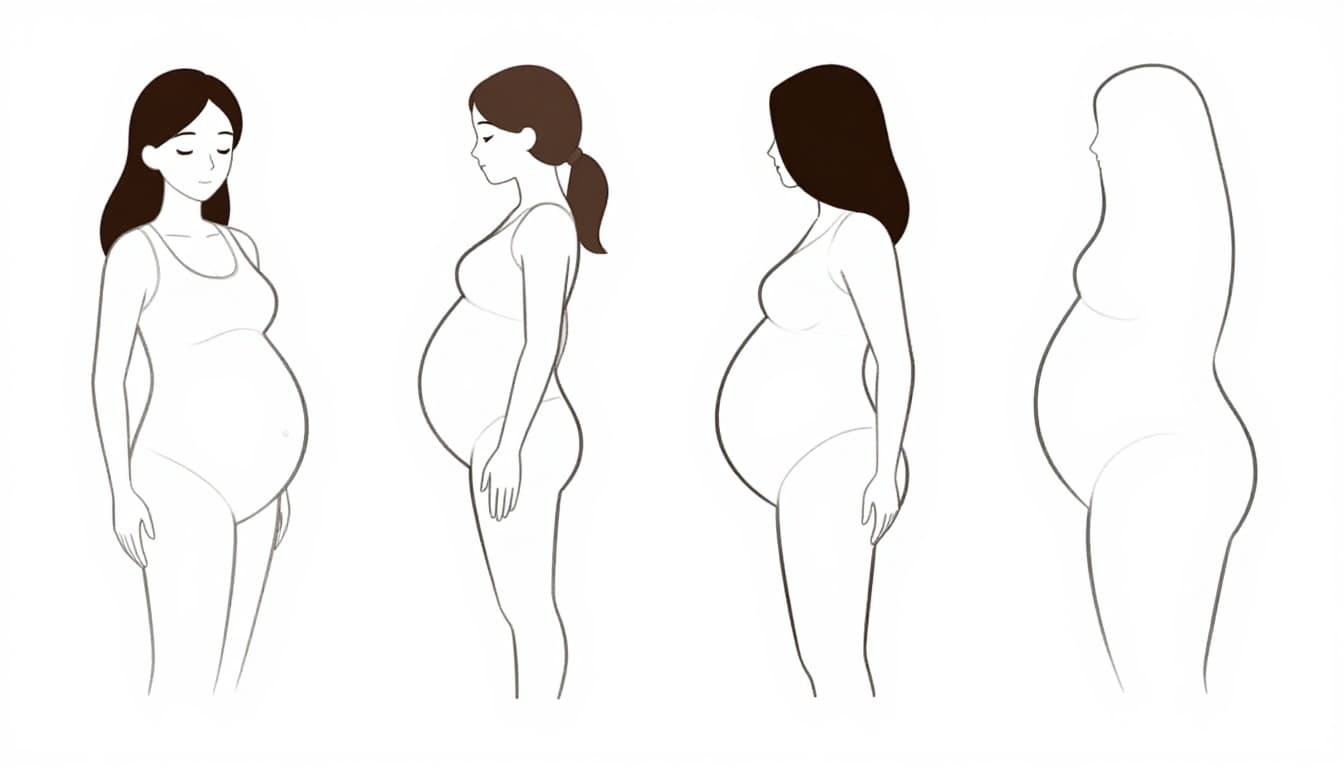
Old bump-shape myths can be fun, but they do not predict gender or health. Medical care relies on measurable signs, not belly folklore. If your provider is happy with fundal height, ultrasound results, and movement, the shape of your bump does not need to mean anything more.
In plain terms, bump size is a clue, not a verdict. It can reflect your body, fluid, and baby position, but it cannot reliably reveal baby weight, sex, or overall growth on its own.
How doctors actually check whether baby growth is on track
A bump can look bigger or smaller for all kinds of normal reasons, so doctors use measurements that tell a more reliable story. The goal is simple: see whether baby growth is steady over time, then follow up when something looks off.
That usually starts with a quick check at prenatal visits and moves to ultrasound if the numbers need a closer look. In other words, providers are watching patterns, not guessing from appearance.
The real peace of mind comes from repeat checks, because one measurement rarely tells the full story.
Fundal height is the main belly measurement at prenatal visits
Fundal height is the most common belly check in the second half of pregnancy. Your provider measures from the pubic bone to the top of the uterus, then compares that number with how far along you are.
This test is simple, fast, and useful as a screen. After about 20 weeks, fundal height often lines up with the number of weeks of pregnancy, give or take a few centimeters. Mayo Clinic explains that it is a screening tool, not an exact baby-size estimate, which is why small differences usually lead to more questions, not panic. You can read more in Mayo Clinic’s fundal height guide.
If the measurement is smaller or larger than expected, your provider may repeat it, check your dates, or ask about changes in fluid, baby position, or your health. That is the point, it helps spot patterns early.
Ultrasound gives a closer look when something seems off
When bump size or fundal height raises questions, ultrasound gives a much clearer picture. It can measure baby size, check how much amniotic fluid is around the baby, and look at the placenta.
That matters because a small or large belly can happen for different reasons. Ultrasound helps sort out whether the issue is baby growth, fluid level, placenta position, or something else that needs follow-up. Mayo Clinic notes that fetal ultrasound is used to check growth and development, plus the amount of amniotic fluid and the placenta’s location.
Ultrasound also gives your care team a chance to confirm a heartbeat during the scan, which adds another layer of reassurance. If you want a deeper look at that part of prenatal care, see ultrasound checks for baby’s heartbeat.
Common things ultrasound can help check include:
- Baby size: Head, belly, and leg measurements help estimate growth.
- Amniotic fluid: Too much or too little fluid can change how the bump looks.
- Placenta health: The placenta’s position and function can affect growth.
- Baby position: A baby lying sideways or low can change the shape of your belly.
A normal ultrasound can be very reassuring. If something looks unusual, it gives your provider a real starting point instead of a guess.
Personalized growth charts give a more accurate picture
Some care teams use customized growth charts that factor in things like your height, weight, ethnicity, and pregnancy history. These charts can be more helpful than one-size-fits-all expectations, especially if your body naturally carries a smaller or larger baby.
That said, the chart is only part of the picture. Doctors still rely on repeat measurements, ultrasound results, and your overall health. A single chart can point in the right direction, but it does not replace follow-up care.
These charts are most useful when they help answer a practical question: is this baby small because of family pattern and body size, or is growth slowing down? That difference matters, and it is exactly why providers look at the whole picture instead of one number.
When you put it all together, the most useful signs are the ones that can be tracked and compared over time. A belly check starts the conversation, then fundal height and ultrasound help confirm whether baby growth is staying on course.
When bump size deserves a call to your provider
A bump that looks a little different from week to week is often normal. Still, some changes deserve a closer look, especially if the bump seems to stop growing, grows very fast, or looks noticeably different over a short time. Providers watch for patterns, because bump size can change for harmless reasons, but it can also point to a growth issue, fluid change, or a baby who needs more monitoring.
A sudden jump, drop, or pause in growth should be checked
If your bump seems to stall, shrink, or change fast, mention it to your provider. One off measurement can happen because of baby position or how the uterus is sitting that day, but repeated changes matter more.
A provider may want to compare your current fundal height with past visits and see whether the numbers still follow the same pattern. If the change is large enough, they may ask for an ultrasound to get a clearer look at baby growth and amniotic fluid.
Pain, bleeding, or less baby movement should never be ignored
Bump size matters less than symptoms like pain, bleeding, fluid leakage, or reduced movement. These need medical advice right away, even if your belly size looks normal.
Call promptly if you notice:
- Bright red bleeding or any bleeding that worries you
- Regular pain or contractions, especially if they keep coming
- A gush or steady leak of fluid
- Less baby movement than usual, especially a clear drop in kicks
If movement feels off, try a quick check in a quiet place and focus on kicks for a while. If that still does not feel right, call your provider. For a helpful at-home checklist, see what to do if baby stops kicking.
When symptoms show up with a bump change, call sooner rather than waiting for the next appointment.
What your provider may do if they have concerns
If your provider wants a closer look, the next step is usually practical and calm. They may repeat the fundal height measurement, ask about your symptoms, and review things like blood pressure, weight gain, movement, and your pregnancy history.
If the numbers still seem off, they may order an ultrasound. Mayo Clinic notes that fundal height is a screening tool, and unusual measurements often lead to ultrasound for a better look at what is going on. Mayo Clinic’s fundal height guide explains why this follow-up is common.
Your provider may also check for things that can affect bump size, such as:
- baby position
- amniotic fluid level
- placenta issues
- multiples
- maternal health factors like blood pressure or blood sugar
That follow-up is not a reason to panic. It is a way to sort out whether the change is normal for your body or whether baby needs more monitoring.
How to think about your bump without getting caught in comparison
Your bump is part of your pregnancy, but it is not a scorecard. It can be easy to look around and wonder why someone else looks bigger, smaller, or rounder than you do. That comparison can steal your peace fast, especially when photos, comments, and old pregnancy myths keep piling up.
A calmer approach is to treat your bump as one small clue, then focus on the signs that actually matter. Your body, your baby, and your timeline are not meant to match anyone else’s.
Why comparing bumps can lead to unnecessary worry
Social media makes comparison harder because it rarely shows the full picture. Filters, flattering angles, posed photos, and selective posting can make one bump look far different from another. Even in real life, clothing, body shape, and height change how a belly appears.
A fitted dress can make one bump stand out. A loose top can hide another. Add different torso lengths, muscle tone, and baby position, and the comparison gets messy fast.
That is why bump envy usually says more about the view than the pregnancy. A study discussed by The Conversation on social media pressure in pregnancy found that many pregnant women feel more body dissatisfaction after seeing other pregnancy photos. If scrolling leaves you tense, it may help to step back for a while or follow accounts that feel calm and real.
Family comments can do the same thing. A casual “You look tiny” or “Are you sure you’re due when you say?” can stick in your head all day. You do not have to treat every remark as a meaningful update on baby growth.
If you want a steadier mindset, simple ways to stay happy during pregnancy can help you protect your headspace without adding more pressure.
Simple signs of healthy progress to focus on instead
A better way to track progress is to look at the things your provider tracks. Prenatal visits, fundal height, baby movement, blood pressure, and ultrasound results tell a much clearer story than bump comparisons ever will.
When you want a quick reality check, keep your attention on these basics:
- Prenatal appointments: Regular checkups help your provider see growth over time.
- Baby movement: Kicks, flutters, and rolls usually become more noticeable as pregnancy continues.
- Provider feedback: If your doctor or midwife is not concerned, that matters more than outside opinions.
- Growth trends: One visit is only one point. Patterns over time tell the real story.
Movement is one of the most reassuring signs because it gives you something consistent to notice. The NHS guidance on your baby’s movements explains that movement patterns change across pregnancy, and a drop in movement is worth calling about.
If your care team is checking growth and your baby is moving as expected, that matters more than how the bump looks in a mirror.
Try using this simple filter when anxiety starts to climb: “Has my provider said something is off?” If the answer is no, then comparison is probably creating a problem that is not there. Focus on the facts in front of you, not the bump next to you.
Conclusion
A baby bump can tell you that pregnancy is moving along, but it cannot tell the full story on its own. Your body shape, muscle tone, fluid levels, baby position, and pregnancy history all change how a bump looks from week to week.
That is why a small bump or a big bump is not a verdict. Medical measurements like fundal height, ultrasound, and baby movement give a far clearer picture than visual guesses ever will.
If your bump looks different and something feels off, trust that instinct and check in with your provider. Peace of mind comes from real monitoring, not from comparing bellies.
Save pin for later


- 10 Things You Shouldn’t Do in Front of Your Baby (and What to Do Instead) - September 22, 2026
- 15 Effective Ways to Deal With Stubborn Children (Without Yelling) - September 22, 2026
- Birth Order Influence: 8 Things Parents Should Know About Each Child - September 22, 2026