

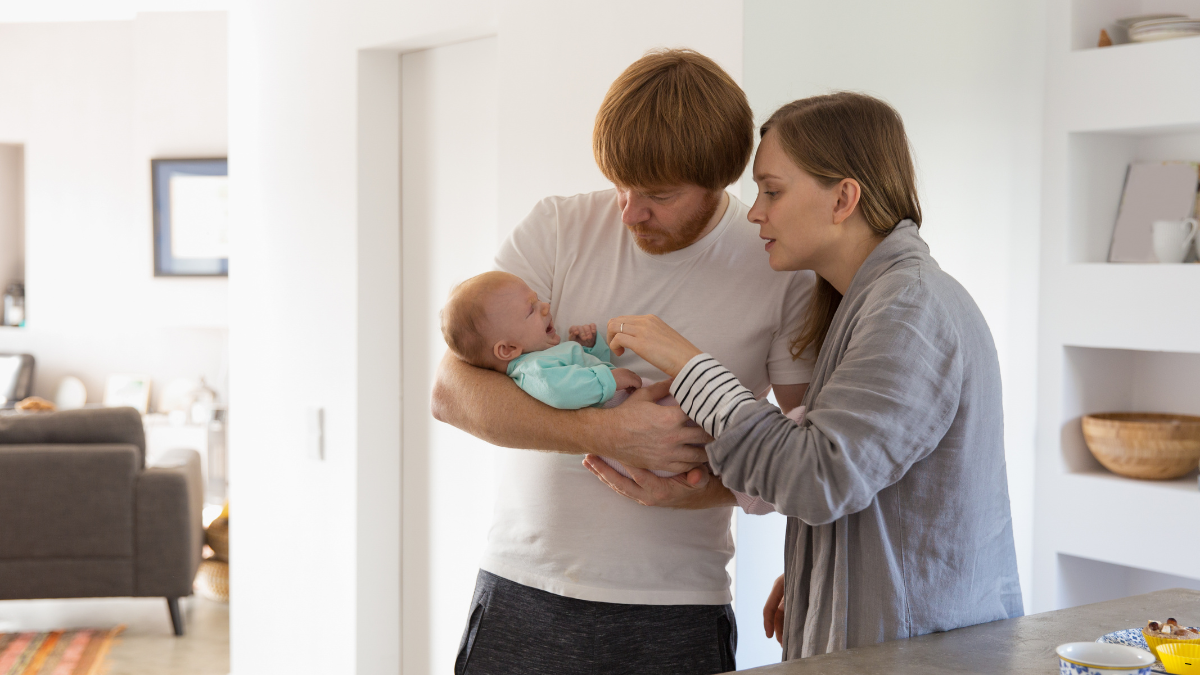
If your baby seems fine one minute and overwhelmed the next, you’re not alone. Overstimulation in babies happens because their brains are still learning how to handle sounds, lights, touch, movement, and faces all at once.
That can make an ordinary day feel like too much, especially after missed naps, busy outings, or a house full of noise. A calmer routine, like the one used in gentle sleep training for sensitive newborns, can make a real difference when your baby gets wound up fast.
In the sections ahead, you’ll see the most common causes, the signs that your baby is reaching their limit, and simple ways to prevent and soothe overstimulation before it turns into a long, hard cry.
What overstimulation means in a baby’s world
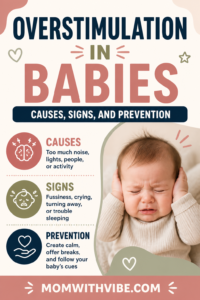
For a baby, overstimulation happens when too much input comes in at once and the brain cannot sort it out fast enough. Bright lights, loud voices, new faces, toys, movement, and even a rushed routine can pile up until your baby feels flooded.
That does not mean your baby is being difficult. It means the brain and body are working hard with a system that is still under construction. A baby’s world can feel a lot like a room that is too loud and too bright, where nothing settles long enough to feel safe.

How a baby’s developing brain processes input
A baby’s nervous system is still maturing, so it does not filter and organize the world the way an older child or adult can. Every sound, touch, and sight takes more effort to process, and that leaves less room for calm.
Babies can only handle small amounts of stimulation at a time. After a short burst of play, talking, or movement, many need a pause to reset. Without that break, their brain stays on high alert and their body starts to show it.
You may notice this after a busy visit, a long store trip, or even a loud family gathering. According to AboutKidsHealth’s guide on sensory development in babies, some babies are especially sensitive to sensory input, which is why simple moments can feel overwhelming fast.
A baby often needs a quiet pause before the next round of attention, movement, or noise.
Why some babies seem more sensitive than others
No two babies react the same way. Temperament plays a big part, so one baby may stay calm in a busy room while another falls apart after five minutes.
Sleep, hunger, and health also change how much a baby can tolerate. A tired baby has less patience. A hungry baby may get upset faster. A baby fighting a cold or teething discomfort may also seem far more sensitive than usual.
That sensitivity can shift day to day, too. A baby who handles a stroller ride one morning may hate it that afternoon. In other words, overstimulation depends on the baby, the moment, and everything happening around them.
When you start to see those patterns, it becomes easier to adjust the day before your baby hits the wall. Small changes, like fewer visitors, a quieter room, or a calmer break between activities, can make a big difference.
Common causes of overstimulation at home and on the go
Overstimulation usually builds up in layers. A baby might handle one loud thing, but then a bright room, a missed nap, and a busy car ride push them over the edge.
That is why the trigger is often a mix of small things, not one huge event. A normal day can feel too full when sounds, lights, movement, and handling stack up too fast.
Noise, bright lights, and busy environments
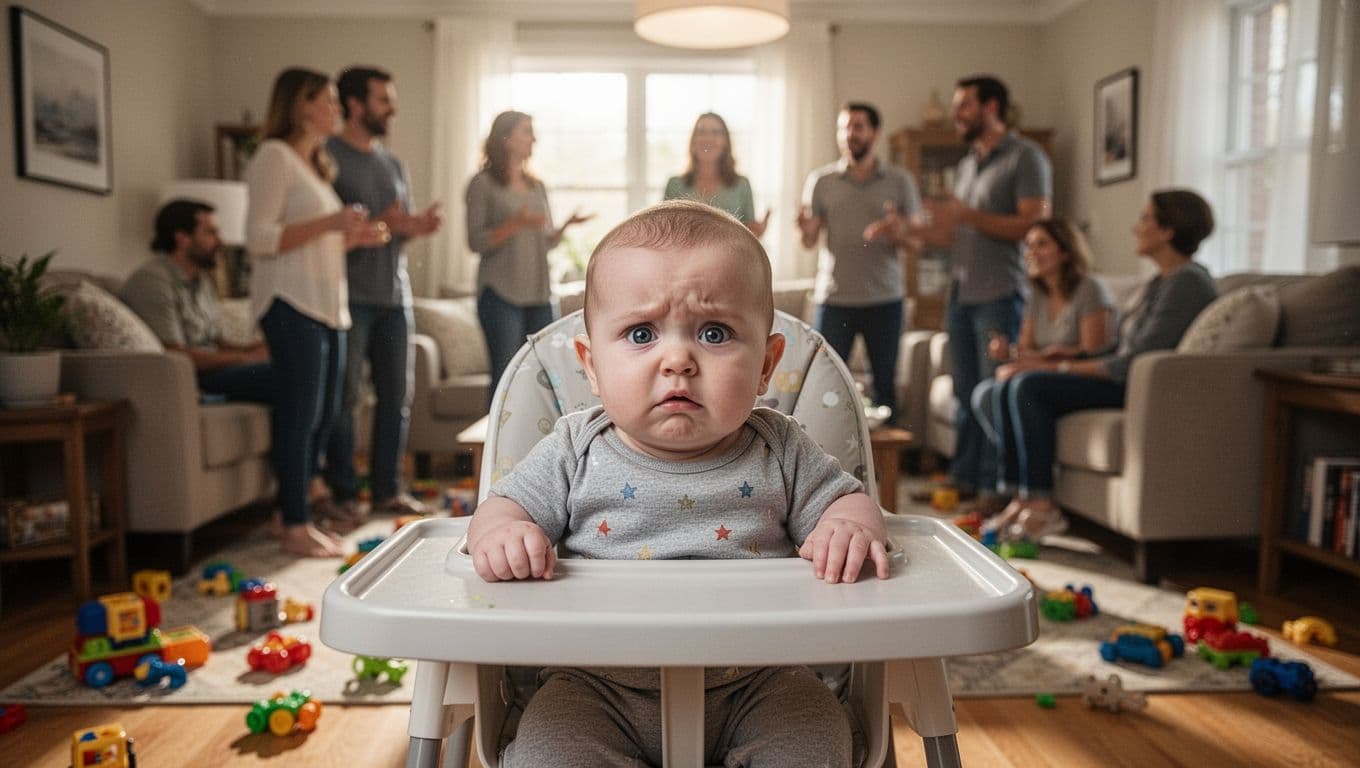
Household noise can wear a baby out faster than many parents expect. A vacuum, blender, loud TV, clanging dishes, or music playing in the background can all add pressure to a baby who is already tired or hungry.
Busy places can do the same. Family gatherings, shopping trips, restaurants, and crowded waiting rooms bring in faces, voices, motion, and touch all at once. Even a happy visit can become too much when people keep passing the baby around or leaning in close.
Strong lighting can also be a problem. Bright overhead lights, flashing toys, and sunny car rides can make it harder for a baby to settle. Add in constant movement, like siblings running by or adults moving from room to room, and the whole scene can feel overwhelming.
If your baby gets fussy after a noisy errand or a hectic afternoon at home, that pattern matters. A calmer room, softer voices, and fewer interruptions can help the nervous system settle.
Too much screen time and fast-moving visuals
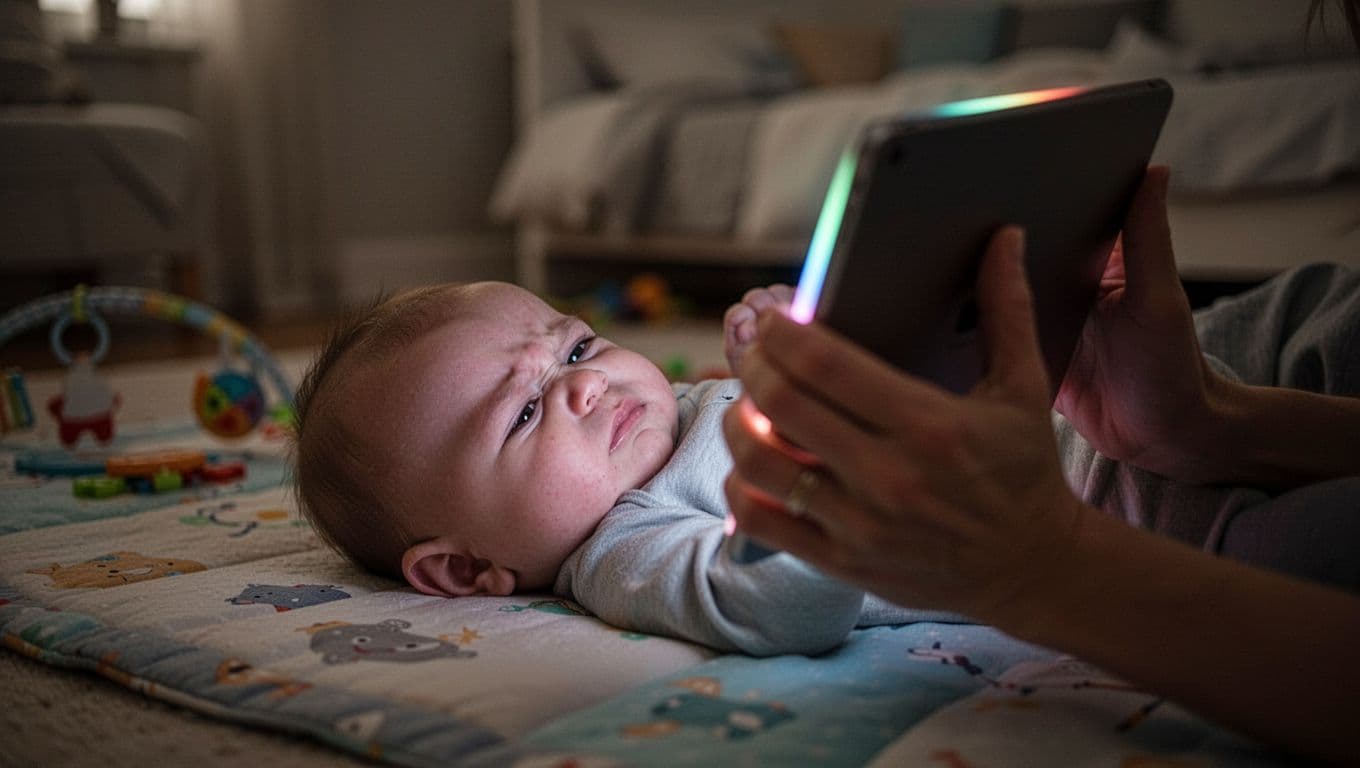
Babies do best with real human interaction, not screens. Their brains learn from faces, voices, touch, and back-and-forth response, so a screen cannot give the same kind of steady connection.
Fast-moving visuals can still flood a young baby’s senses. Bright colors, sudden scene changes, loud sounds, and rapid motion may hold attention for a moment, but they can also add stress that is hard to process.
The American Academy of Pediatrics recommends avoiding screen media for babies under 18 months, except for video chatting, because screen use is not the same as live interaction. You can read their screen time guidance for infants for more detail.
In daily life, this often shows up during:
- Background TV that stays on for hours
- A parent scrolling videos while holding the baby
- Fast cartoons or bright phone animations
- Screens used to calm a fussy baby for long stretches
A short, quiet pause with your face, your voice, and a slower pace usually works better than more stimulation.
Rough transitions, mixed signals, and caregiver stress

Babies often struggle with sudden changes. A nap that gets cut short, a rushed diaper change, or a quick handoff from one adult to another can leave them feeling unsteady.
Mixed signals can also be hard on them. A baby may hear a cheerful voice, then a tense one, then a new voice from another person, all within minutes. That shift can feel jarring, especially if touch is inconsistent or a caregiver keeps moving the baby before they are ready.
Adult stress matters too. Babies pick up on tight shoulders, sharp voices, and fast movements. A stressed caregiver is not doing anything wrong, but the baby may still feel that tension and react to it.
When the day feels chaotic, a few small resets help:
- Slow the pace before handing the baby to someone new.
- Keep your voice soft and steady.
- Stick to familiar routines when you can.
- Build in quiet time after outings or visitors.
Overstimulation at home and on the go usually comes from too much happening too quickly. Once you spot the pattern, it gets easier to trim back the extra noise, movement, and pressure before your baby reaches the point of no return.
Signs your baby may be getting overwhelmed
Babies usually show discomfort before they cry hard. The earliest clues often live in their body language, and they can look small if you do not know what to watch for.
The key is to catch the shift early. When you spot the first signs, you can lower the noise, slow the pace, and help your baby reset before things spiral.
Early cues that mean it is time to pause
The first signs are often subtle. Your baby may turn their head away, look away from your face or toy, or seem unable to focus on anything for long.
You might also see yawning, hiccups, squirming, clenched hands, or fussiness. These signs can show up when your baby is still trying to cope, so they are your cue to ease off, not push through.
A baby who suddenly stops engaging, stares past you, or seems to lose interest in a favorite toy may be telling you they have had enough. If you notice these early cues, reduce stimulation right away. Move to a quieter space, lower your voice, and give your baby a short break.

Early body signals usually come before a full cry, so a short pause can prevent a bigger meltdown.
Later signs of overstimulation that are harder to miss
As overstimulation builds, the signs get louder and harder to ignore. Crying often becomes more intense, and your baby may arch their back, stiffen, or seem angry and hard to comfort.
Irritability, sudden agitation, sleep trouble, and difficulty settling are also common. Your baby may act like they want comfort but cannot relax enough to accept it.
For older babies, the reaction can look even bigger. You may see meltdowns, clinginess, and strong reactions to simple changes, like a different room, a new person, or a small shift in routine. If you want a broader look at common patterns, signs of overstimulation in babies can help you compare what you are seeing.
When the crying becomes intense, the room usually needs to get calmer fast. Less talking, less handling, and fewer new sights or sounds can make a real difference.
When overstimulation looks like hunger, tiredness, or colic
Overstimulation can look a lot like other common baby needs. A baby may cry, root, rub their eyes, or seem hard to soothe, and the reason may be hunger, tiredness, colic, or all three at once.
That overlap can make things confusing. A hungry baby may also be overtired. An overtired baby may also get overwhelmed by noise and movement more quickly.
A simple check helps: offer a feed if it has been a while, look for sleepy cues, and note whether the crying started after a busy stretch. If your baby keeps acting upset after basic needs are handled, overstimulation may be part of the picture.
The safest habit is to scan the basics first, then reduce stimulation. In other words, your baby may need food, sleep, quiet, or all of the above.
How to prevent overstimulation before it starts
The easiest way to handle overstimulation is to stay a step ahead of it. Babies usually do better when the day feels steady, the room feels calm, and the next step is easy to guess.
That does not mean every day has to look perfect. Small changes matter most. A predictable rhythm, a quieter space, and less visual clutter can keep your baby from getting flooded in the first place.
Build a calmer daily rhythm with fewer surprises
Babies settle more easily when they know what comes next. Regular naps, feeding times, and quiet wind-down periods help the day feel safer and less jarring.
Try to keep the same order for sleep each night, even if the exact time shifts a little. A simple routine like feed, diaper, book, dim lights, then crib gives your baby clear cues. That same idea helps during the day, too, because steady timing lowers stress for both of you.
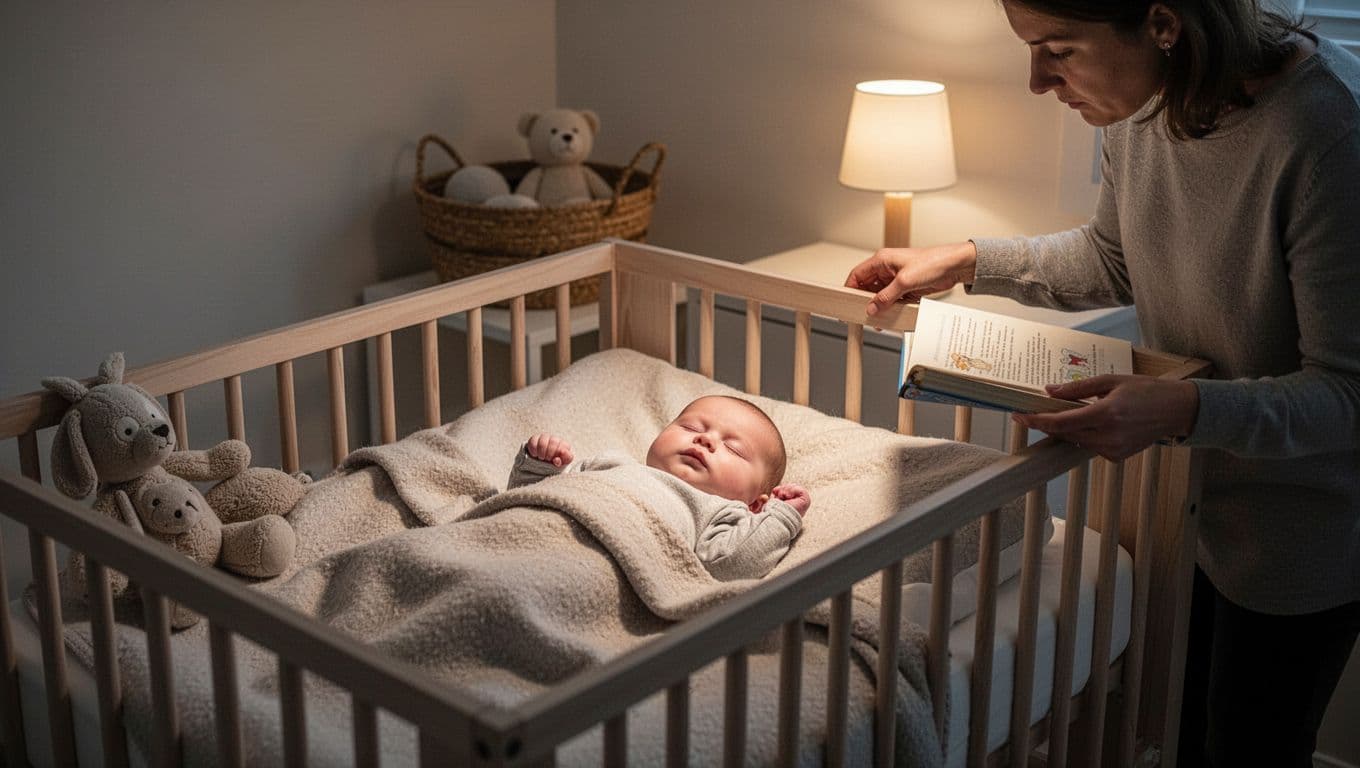
You can also protect your baby from the “too much too fast” feeling by slowing transitions. Give a few extra seconds before moving from play to feeding, or from the stroller to a new room. That small pause can make the whole day feel smoother.
Babies usually handle stimulation better when sleep, feeds, and quiet time happen on a steady pattern.
If your schedule changes, keep the order the same as much as possible. Consistency matters more than perfection.
Keep the environment soft, simple, and baby-friendly
A baby does not need a busy space to stay happy. In fact, fewer sounds, fewer lights, and fewer toys often work better.
Use dimmer lighting when you can, lower background noise, and keep only a few toys out at once. A simple room gives your baby less to sort through, which helps the brain stay calm. The same idea works for feeding and sleeping spaces, where soft, quiet settings are easier for babies to handle.
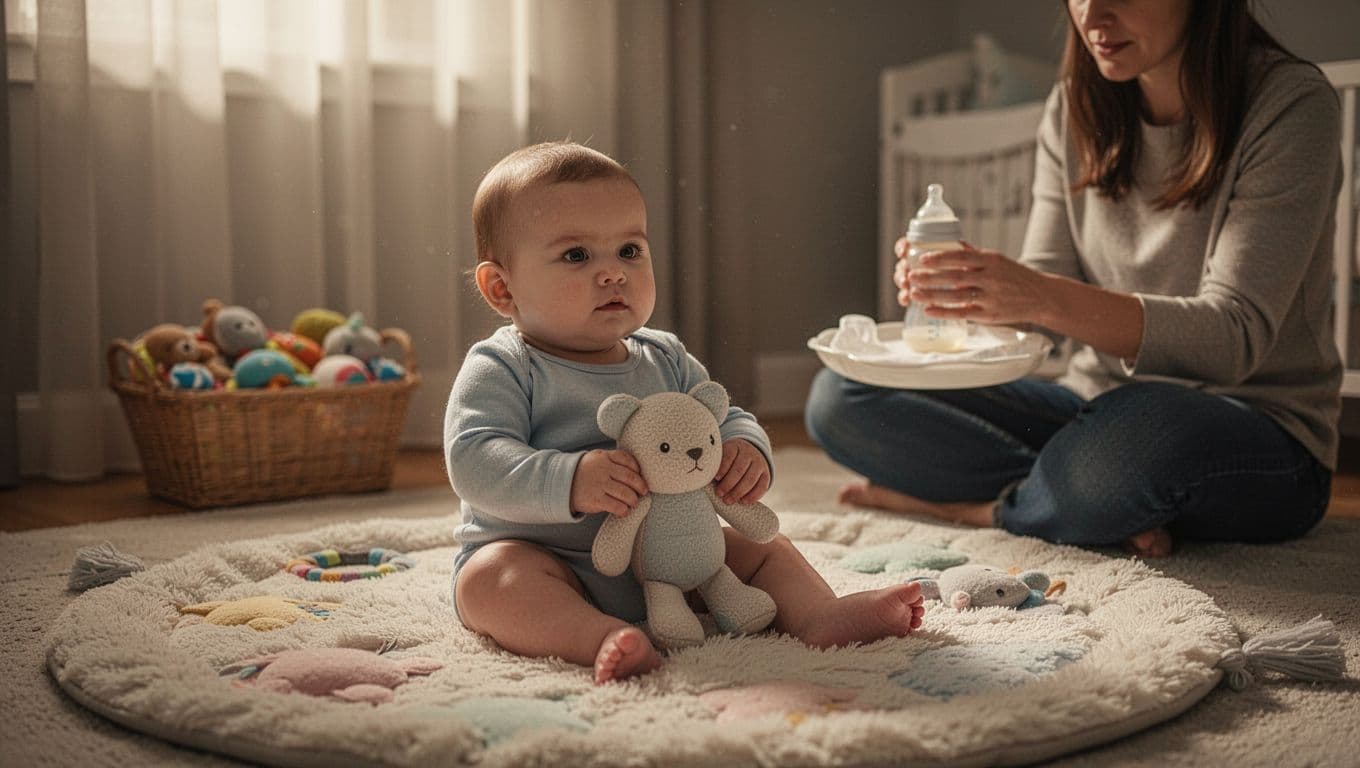
If your baby already looks tired or upset, cut stimulation even more. Turn off the TV, move to a quieter room, and keep your voice low. According to Healthline’s guide to soothing an overstimulated baby, a quieter and darker space can help baby reset faster.
A calmer setup can look like this:
- Soft, indirect light instead of bright overhead light
- One toy or book at a time
- Quiet feeding spots away from noise
- A low-clutter play area
That kind of environment gives your baby room to breathe.
Use screens less and real interaction more
Babies learn best from people, not from fast-moving screens. Your voice, your face, and your touch give them the kind of steady input their brains can actually use.
Talk to your baby during diaper changes, sing while you rock them, read a short board book, or play face-to-face on the floor. These small moments help without piling on extra noise or motion. They also let you read your baby’s cues, which makes it easier to stop before overstimulation builds.
The American Academy of Pediatrics advises avoiding screens for infants under 18 months, except for video chatting. That lines up with what most parents see at home, since live interaction usually calms better than background TV or fast clips.
A few easy swaps can help:
- Put on music you can sing along to instead of a video.
- Read one short book instead of scrolling on a phone near the baby.
- Use face-to-face play instead of keeping the TV on in the background.
Real-time connection gives your baby something screens can’t, a steady, responsive presence that feels familiar and safe.
What to do when your baby is already overstimulated
When your baby is past their limit, the goal is to lower the input, not push for a quick fix. The faster you reduce noise, light, and extra handling, the faster your baby can settle.
Start with the simplest changes first. Then add comfort in a steady, familiar way. A calm response often works better than trying harder.
Move to a quiet, low-stimulation space
First, get your baby out of the busy moment. A quieter room, softer light, and less movement can give their nervous system a chance to settle.
Turn off the TV, lower music, and ask others to step back for a bit. If the room is bright, close curtains or dim the lights. You can also hold your baby close if they seem to want that, since familiar contact often feels safer than being passed around.
If your baby likes a carrier, wrap, or your chest, that can help too. If they seem overwhelmed by touch, give them a short break from people, toys, and extra chatter.
A simple reset can look like this:
- Move to a calm room.
- Cut noise and bright light.
- Limit talking and new faces.
- Hold your baby, or give them space if they prefer that.
The best first step is usually less, not more.
Reset with soothing routines that feel familiar
Once the space is calm, return to soothing habits your baby already knows. Gentle rocking, soft singing, and slow movement can feel comforting because they are predictable.
If your baby is young enough and still swaddled safely, swaddling may help. Feed your baby if hunger could be part of the problem, since a hungry baby often has less room to cope. Keep your voice low and repeat the same calming pattern for a few minutes, such as hold, rock, sing, and pause.
That repetition matters. Familiar routines can help babies feel secure again, especially when everything around them has felt too much. If you already use a bedtime rhythm, like the one in a soothing baby sleep routine, use those same cues now.
Small, steady actions usually work better than switching strategies every few seconds. Your baby does not need a perfect routine in that moment. They need a calm one.
Know when to stop and try again later
Sometimes the kindest move is to pause. If your baby keeps crying, turning away, stiffening, or arching their back, they may need less stimulation, not more effort.
Watch their cues instead of trying to push through. A nap, a quiet cuddle, or even a short stretch of dark, still time may help more than another toy, another song, or another round of entertaining. If your baby seems too worked up to feed or play, let the moment pass and try again later.
That pause is not a setback. It gives your baby space to reset, which often makes the next attempt easier.
If overstimulation keeps happening at the same time each day, look for a pattern. Tired babies and hungry babies get overwhelmed faster, so the fix may be earlier sleep, a calmer schedule, or fewer activities in a row. A few well-timed breaks can prevent the whole spiral.
When to talk to a pediatrician about your baby’s reactions
Most babies get overwhelmed now and then, especially when they are tired, hungry, or in a noisy place. Still, some reactions point to more than a rough moment, and a pediatrician can help sort out what is normal and what needs a closer look.
If your baby seems sensitive often, or their reactions are getting stronger over time, bring it up. A short visit can give you peace of mind and help you rule out sleep, feeding, or developmental issues early.

Signs that need medical advice
Some overstimulation is expected, but certain patterns deserve medical input. Call your pediatrician if your baby has extreme difficulty calming, especially when the crying lasts well beyond the noisy moment or keeps happening in quiet settings too.
Feeding problems also matter. If your baby struggles to latch, refuses feeds, tires out during feeding, or seems upset around every bottle or nursing session, mention it. Poor sleep that keeps going over time is another sign to watch, since a baby who never settles may need more than a change in routine.
Other reasons to check in include unusual sensitivity to sound, light, touch, or movement, plus developmental concerns such as missed milestones or less response to familiar people. According to Texas Health Resources’ overview of overstimulation signs, reactions that keep showing up often point to a baby who needs extra support, not just a quieter room.
If your baby’s reactions happen often, last a long time, or seem stronger than you’d expect, it’s reasonable to ask for advice.
A few red flags deserve prompt attention:
- Crying or fussiness that happens daily and is hard to soothe
- Feeding or sleep trouble that does not improve
- Strong reactions to everyday things like dressing, bathing, or routine handling
- Milestones that seem delayed or less social engagement than before
- Symptoms that keep showing up even in calm, familiar settings
In short, trust the pattern. One rough day is common. Repeated distress is worth a conversation.
How to describe your baby’s patterns to the doctor
A good appointment starts with clear details. Before you go, jot down what happened before the reaction, what your baby did, how long it lasted, and what helped.
That kind of note gives the doctor a full picture. For example, you might say your baby cried after a loud visit, turned away from faces, stiffened when held, and calmed after a dark room and a feed. Those details help separate overstimulation from hunger, tiredness, reflux, or another issue.
It also helps to track patterns for a few days. Write down the time of day, sleep, feeding, visitors, noise, and any changes in routine. If the same reaction shows up after missed naps or long outings, that clue matters. A routine check of baby nap readiness signs can also help you notice whether poor sleep is part of the picture.
Use this simple format before your visit:
- What happened right before the reaction?
- What did your baby do?
- How long did it last?
- What seemed to help, even a little?
That small record makes the appointment easier and more useful. It also helps you speak with confidence, which can lead to a faster answer and a better plan.
Conclusion
Overstimulation in babies is common, and it usually makes sense once you look at the day around it. Missed naps, loud rooms, fast transitions, and too much sensory input can all push a baby past their limit.
The good news is that prevention is often simple. Watch for the early cues, cut back on noisy or busy moments, and lean on calm routines that help your baby reset. A steady wind-down, like the steps in creating a calming bedtime for toddlers, can also support a more peaceful rhythm at home.
You do not need a perfect setup. You just need a more predictable one, and that can make a real difference for both you and your baby.
Save pin for later

- 10 Things You Shouldn’t Do in Front of Your Baby (and What to Do Instead) - September 22, 2026
- 15 Effective Ways to Deal With Stubborn Children (Without Yelling) - September 22, 2026
- Birth Order Influence: 8 Things Parents Should Know About Each Child - September 22, 2026