

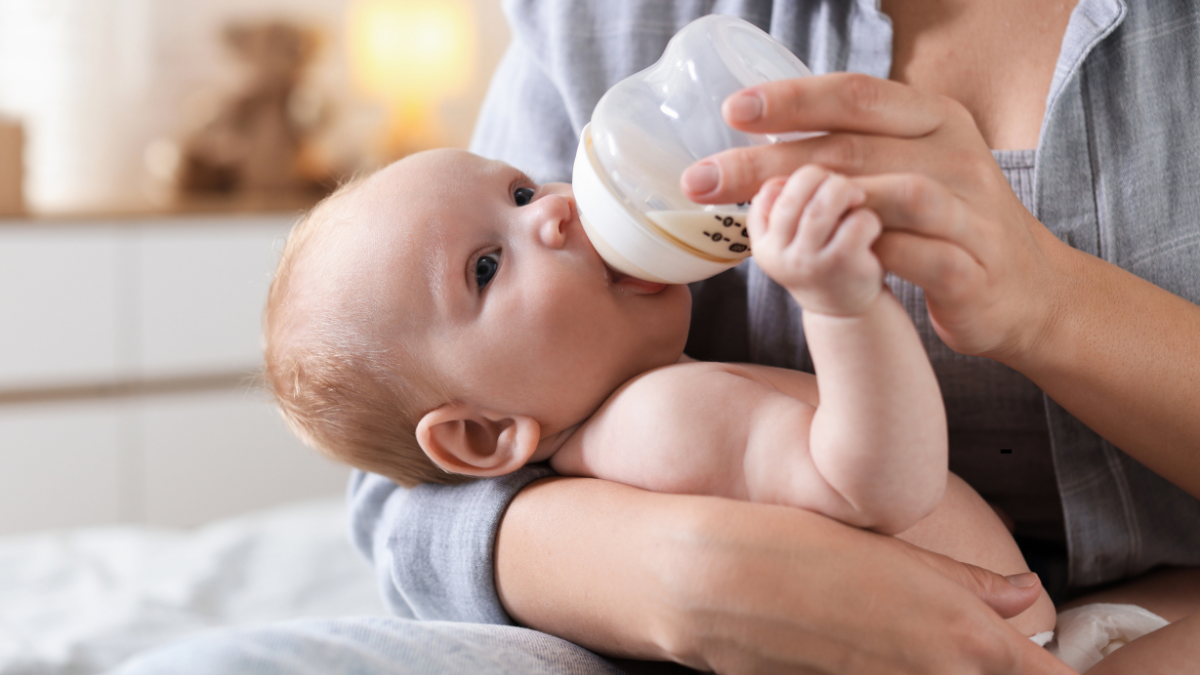
Most babies start holding their own bottle between 6 and 10 months, but the timing can vary a lot. Some grab it early, while others need more time to build strength and coordination. This milestone matters because it shows your baby is gaining control, confidence, and feeding skills at their own pace.
If your baby isn’t there yet, that’s usually normal. What matters more is readiness than age alone, and it helps not to force the process, especially if you want to avoid feeding stress or a bottle battle. For a gentle approach, it can help to watch for clear signs like steady sitting, strong hand control, and interest during feeds, along with a wait for baby’s readiness for bottle mindset.
A few things can shape when this happens, including muscle strength, hand-eye coordination, and whether your baby likes to take an active role during feeding. Next, let’s look at the signs your baby may be ready, what can slow the timeline, and how you can help safely.
What the usual bottle-holding timeline looks like
Bottle-holding usually happens in small steps, not all at once. Many babies start showing interest well before they can hold a bottle on their own, and that early practice matters just as much.
A simple timeline helps set expectations. Some babies begin reaching for the bottle around 3 to 5 months, many show clear readiness around 6 to 8 months, and a lot can hold it more fully by 8 to 10 months. That range is normal, and it gives you a better picture than any single age.

Early signs your baby is starting to practice
The first stage often looks like curiosity, not control. Your baby may grab the bottle during a feed, touch it with open hands, or bring both hands to the bottle while you hold it. Those little moves show coordination is starting to build.
You might also notice hands going to the mouth more often, or your baby trying to guide the bottle toward the face. These are good signs, but they are still practice. At this stage, your baby is learning where the bottle is, how it feels, and how to steady it with growing muscle control.
A few common early signs include:
- Reaching for the bottle during feeds
- Holding it for a few seconds with help
- Touching the bottle while feeding
- Bringing hands to the mouth often
- Trying to help guide the bottle
The CDC’s 4-month milestones include bringing hands to the mouth and holding a toy when placed in the hand, which fits this early practice stage well. That is why these movements matter, even before true bottle-holding starts.
Early bottle contact is a stepping stone, not a finish line.
Why some babies hold their bottle later than others
There’s no single clock for this milestone. Some babies need more time because their arm strength is still developing, or because sitting balance is not steady yet. Others are born early and simply need a longer runway.
Temperament matters too. A cautious baby may watch first, then try later. A bolder baby may grab the bottle fast, but that doesn’t mean the cautious one is behind.
The CDC notes that feeding skills develop over time, and that’s the right way to think about this milestone. Babies often move through it in layers, first reaching, then touching, then helping, and finally holding with more control.
If your baby is later than a sibling or a friend’s child, that alone does not point to a problem. Development moves at its own pace, and bottle-holding is no different.
The skills babies need before they can hold a bottle
Bottle-holding depends on more than small hands. Your baby needs enough body control to stay steady, aim well, and keep the bottle in place without tipping it over or getting frustrated.
That is why this milestone often shows up after other movement skills are already in place. Things like head control, sitting balance, and hand control all work together. If you want a helpful comparison, early motor skills like rolling over also depend on the same core strength and coordination.
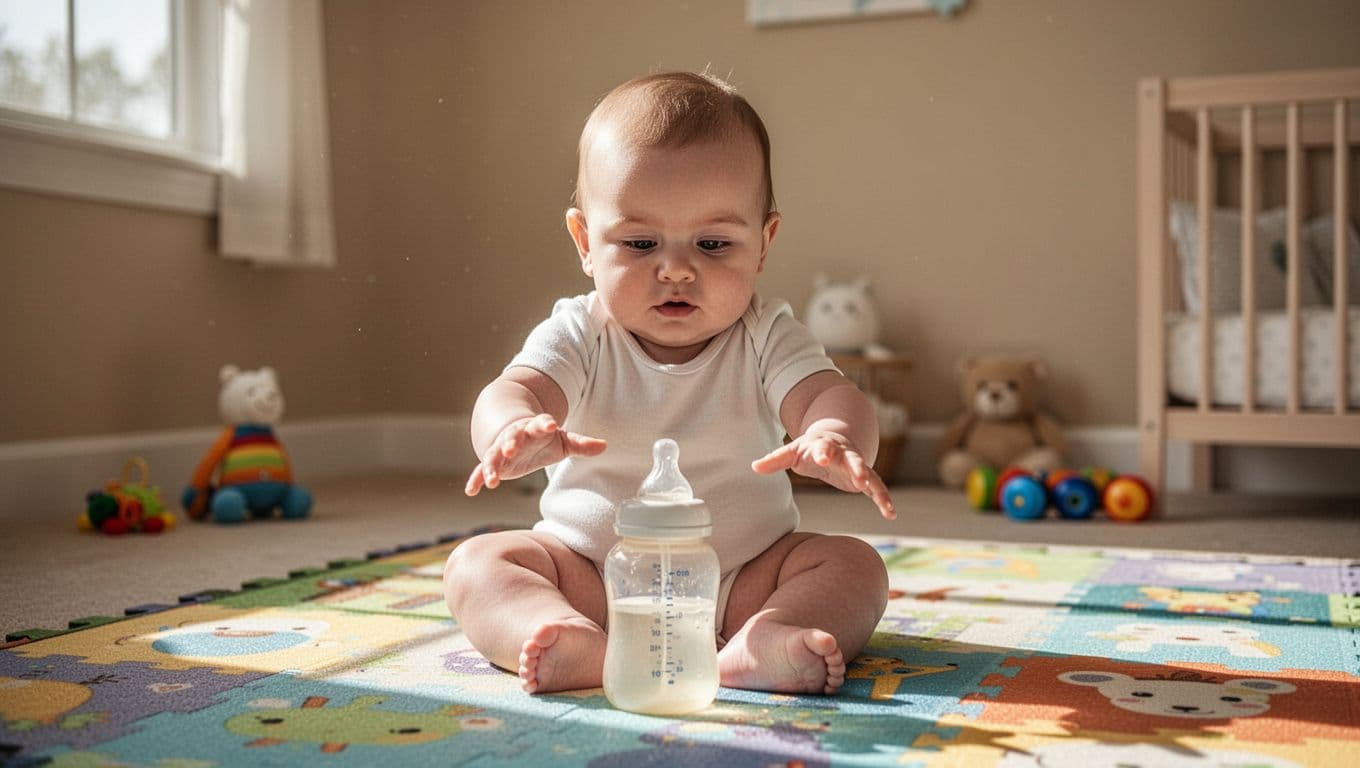
Head, neck, and core strength matter more than people think
A baby can’t hold a bottle well if the upper body keeps wobbling. Strong head control helps keep the face lined up with the bottle, while a stable trunk helps the whole body stay balanced during feeding.
Sitting balance matters too. When your baby can sit with better control, both arms are freer to work. That makes it easier to hold the bottle, adjust grip, and keep drinking without tipping too far to one side.
The CDC’s 6-month milestones include steady head control, reaching, and bringing things to the mouth, which all support this stage. In plain terms, the body has to be ready before the hands can do the job well.
A steady upper body gives your baby a better base for feeding control.
Hand-eye coordination helps babies aim and keep a good grip
Bottle-holding also asks a lot of the hands and eyes. Your baby has to notice the bottle, reach for it, close the fingers around it, and guide it toward the mouth without losing hold.
That takes practice. Many babies first touch the bottle, then grip it for a moment, then try again and again. Repetition is part of the learning process, just like with other early motor skills.
You may notice your baby:
- Reaching for the bottle during feeds
- Bringing both hands toward it
- Adjusting the grip after a few seconds
- Missing the target at first, then trying again
Each attempt builds control. Over time, those short, messy tries turn into smoother feeding.
Independent sitting is often a big clue
Many babies are much closer to holding a bottle on their own once they can sit with little or no support. That position gives them better balance, and better balance makes arm movement easier.
When a baby sits well, the shoulders, elbows, and hands can work with less effort. Feeding starts to look less like a full-body balancing act and more like a skill the baby can manage. That is why sitting often lines up with better bottle control, even before the movement looks perfect.
If your baby can sit, reach, and stay steady, you’re likely seeing the right building blocks come together.
Signs your baby may be ready to try holding a bottle
Readiness shows up in small, everyday moments. You do not need every sign on the list, but a few together usually mean your baby is gaining the strength and control for bottle-holding.
Watch how your baby moves during feeds and playtime. The clues often overlap, because hand strength, balance, and interest in feeding all grow at the same pace.
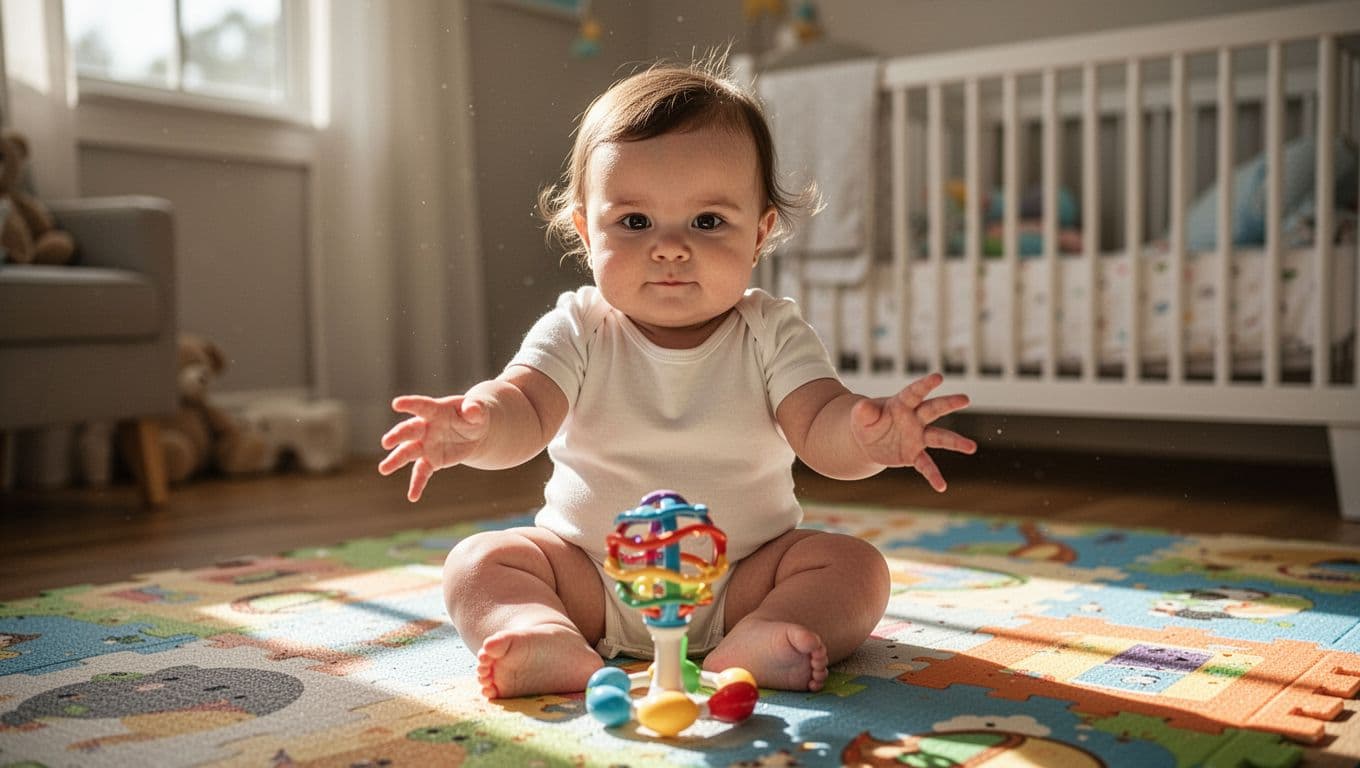
Your baby reaches for toys and holds them steadily
A baby who grabs toys well is often building the same hand strength needed for a bottle. Strong grasp, open hands, and steady control all help your baby keep a bottle in place without dropping it right away.
Look for simple signs during play. Your baby may reach out with purpose, hold a toy for a few seconds, or switch it from one hand to the other. Those small moves show better finger and wrist control, which usually helps with feeding too.
The CDC’s 6-month milestones include reaching for toys and bringing things to the mouth, which lines up with this stage. If your baby can hold a toy with some control, bottle-holding may be getting close.
Your baby wants to take part during feeding
Interest matters. When a baby leans toward the bottle, places hands on it, or gets excited when feeding starts, that is often a sign they want more control.
You may notice your baby:
- Reaching for the bottle as soon as it appears
- Putting both hands on it while you feed
- Pulling toward the bottle with more energy
- Opening their mouth or fussing with excitement when feeding begins
Those cues do not mean your baby can hold the bottle alone yet. They do show that your baby is aware of the bottle and wants to join in. That interest is part of readiness, because feeding starts to feel like a shared skill instead of something done entirely for them.
Your baby can stay balanced while sitting and playing
Steady sitting is a big help. When your baby can sit and play with less wobble, the arms have more freedom to work on holding the bottle.
A little wobble is normal at first. Babies are still learning balance, so perfect stillness is not the goal. What matters is that your baby can stay upright long enough to use both hands and keep attention on the bottle.
This is where everyday play gives you clues. If your baby sits with better control, reaches without toppling, and keeps the body centered, feeding control is usually improving too. In short, good sitting balance gives your baby a stronger base for bottle support.
How parents can help without rushing the milestone
Helping your baby hold a bottle works best when you treat it like practice, not a test. The goal is to give support, then step back little by little so your baby can join in at their own pace.
A gentle approach also keeps feeding calm. When babies feel rushed, they often tense up or lose interest, which makes learning harder. Small chances to explore during normal feeds are usually more useful than trying to make the skill happen on a schedule.
Offer the bottle and let your baby join in
Let your baby take part before expecting full control. Hold the bottle so your baby can rest a hand on it, touch it, or help guide it toward the mouth. That small amount of help gives your baby something to work with, without making the feed stressful.
You can also use a hand-over-hand approach for short moments. Place your hands over your baby’s hands, then ease off once they start to grip. Over time, that repeated practice helps the motion feel familiar and builds confidence.
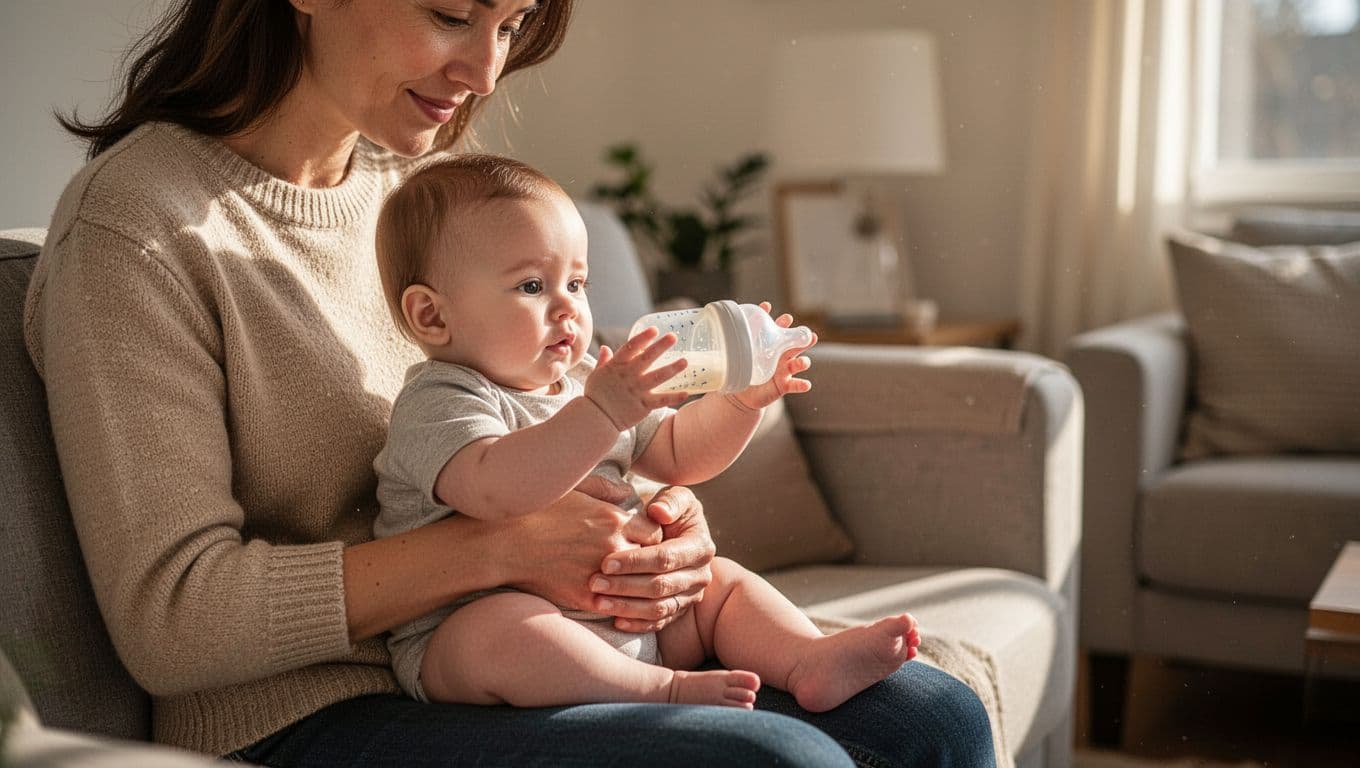
A little support goes a long way here. Babies usually learn best when they can feel success in small pieces, not all at once.
Use supervised practice during calm feeds
Choose moments when your baby is relaxed, alert, and not overly hungry. A calm feed gives your baby more patience for trying new movements, and it gives you a better chance to guide the process without frustration.
Short practice sessions work well. Try a few gentle attempts during a regular feeding time, then stop if your baby gets tired, fussy, or distracted. The AAP’s infant feeding guidance also supports responsive feeding, which fits this slow, baby-led approach.
Calm feeds help babies learn because they can focus on the bottle, not the stress.
Give tummy time and floor play a bigger role
Bottle-holding starts long before feeding time. Tummy time, reaching for toys, and floor play help build the strength and coordination your baby needs in the shoulders, arms, and core. Those same muscles help with gripping, balancing, and bringing the bottle to the mouth.
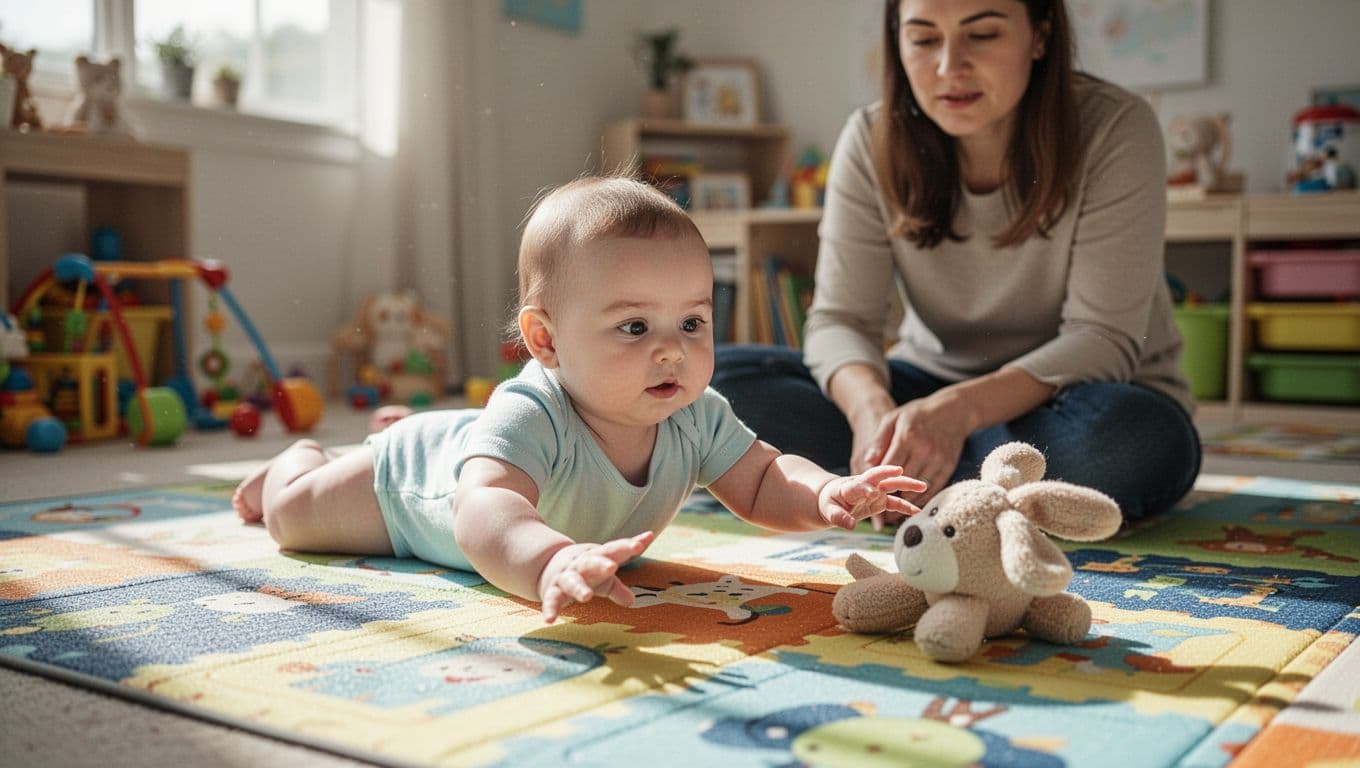
If your baby already enjoys floor play, you can build on that habit with a baby sitting development guide and more reach-based play. Reaching, pushing up, and grasping toys all give your baby more control, and that control carries over into feeding.
Bottle safety still matters even when your baby can hold it
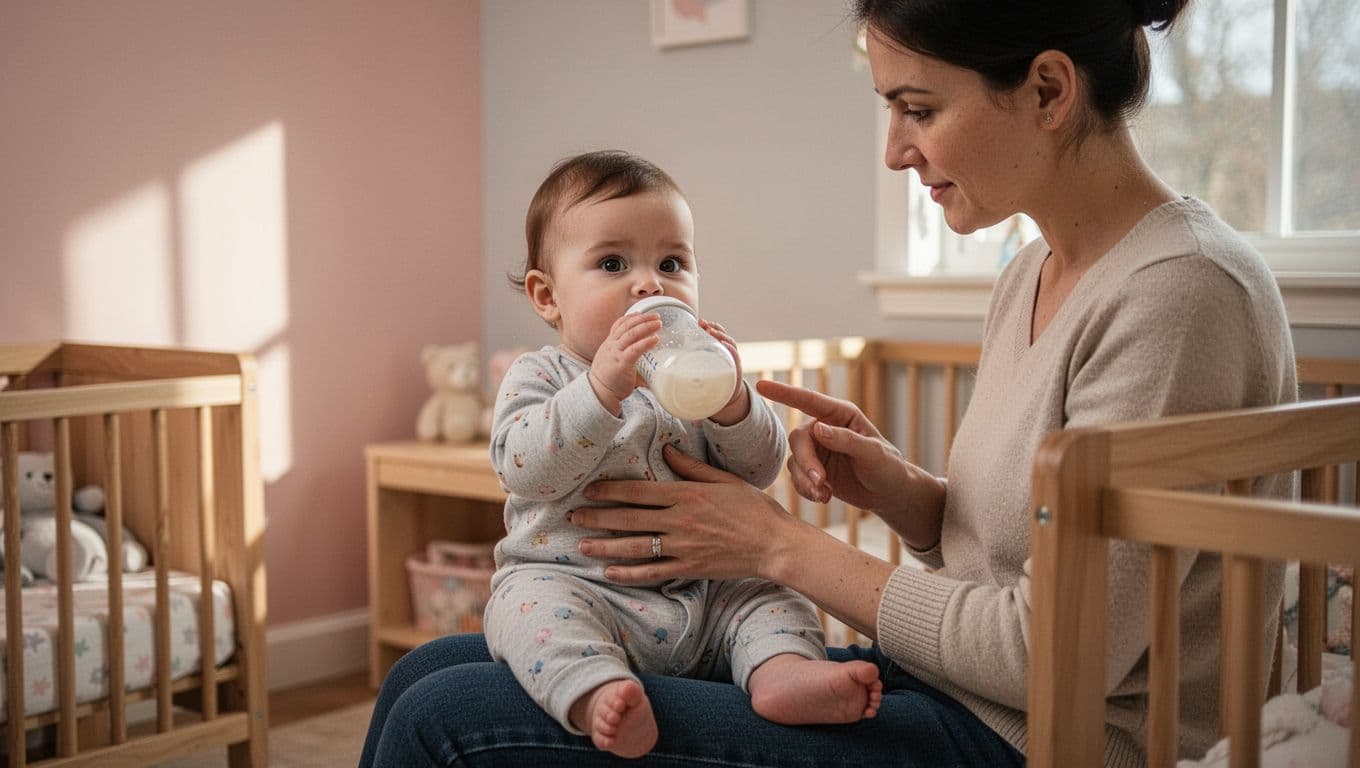
Once your baby can grasp a bottle, it can look like feeding is going smoothly on its own. Still, bottle-holding does not mean your baby is ready to feed completely alone. The safest approach is to stay close, keep your baby upright, and treat bottle time as a supervised moment every time.
Never prop the bottle during a feed
Bottle propping may seem harmless, but it creates real risks. If the bottle stays in place without your help, milk can flow too fast and raise the chance of choking. It can also lead to overfeeding, because your baby may keep sucking even after feeling full.
Ear problems are another concern. When milk pools in the mouth or flows while your baby is lying back, it can travel toward the ears and increase the risk of infection. The CDC bottle-feeding guidance is clear, do not prop or leave the bottle in your baby’s mouth.
The safest habit is simple, hold your baby during the feed and keep the bottle in your hand if needed. That way, you control the pace and your baby stays protected.
Stay close so you can watch swallowing and breathing
Even if your baby is holding the bottle, you still need to watch the whole feed. Look for smooth swallowing, steady breathing, and a relaxed pace. If anything changes, you can step in right away.
This matters most while your baby is still learning. Small babies can get tired, lose their grip, or take in milk too fast. Being nearby lets you notice those shifts before they turn into a problem.
A quick feed check helps:
- Watch for regular swallowing
- Notice pauses in breathing or noisy gulping
- Stay alert for coughing or fussing
- Keep your baby upright in your arms or on your lap
The AAP infant feeding guidance supports responsive feeding, which means you stay tuned in instead of letting the bottle do the work.
Watch for signs the feeding position needs adjusting
Some babies need more support before they can manage a bottle well. If your baby coughs, gulps hard, leaks milk from the mouth, or keeps letting the bottle slip, the position may need a change. A slower pace can help too.
These signs usually mean the feed is moving faster than your baby can handle. You may need to tilt the bottle less, give more head and neck support, or pause more often. If the problem keeps happening, stop and try again when your baby is calmer.
A safe feed should look steady, not rushed. When your baby gets the right support, bottle-holding feels easier and much more controlled.
When to talk with your pediatrician about bottle-holding concerns
Most babies move toward bottle-holding on their own timeline, and small delays are often normal. Still, if progress feels unusually slow or feeding looks hard, a quick check-in can give you peace of mind. The goal is simple, rule out a feeding or motor concern when needed and make sure your baby is getting the right support.

Your baby shows little interest in gripping or reaching
If your baby rarely reaches for toys, ignores objects placed nearby, or seems uninterested in touching the bottle, mention it at the next visit. A baby who is still not using the hands much by the later part of infancy may need a closer look at hand strength, coordination, or overall motor progress.
What matters most is the pattern. One sleepy day does not mean much, but a baby who consistently keeps the hands closed, avoids grabbing, or never tries to hold toys may need evaluation. You can also mention it if your baby used to reach and then stopped.
A pediatrician may want to check whether your baby:
- Reaches for toys during play
- Brings hands to the mouth
- Grasps objects when placed in the hand
- Tries to touch or hold the bottle
If you want more ideas for building these skills at home, play activities that build hand control can help support reaching and grasping through simple daily play.
Feeding seems hard or uncomfortable
Feeding should not feel like a struggle every time. If your baby coughs often, has trouble staying latched, arches away, cries during feeds, or seems tense with the bottle, bring it up. Poor weight gain, long feeds, or frequent spit-up with discomfort also deserve attention.
These signs can point to a feeding issue that needs medical input. Sometimes the problem is positioning. Other times, it can involve reflux, oral-motor control, or a swallowing concern that needs a closer exam. The HealthyChildren feeding difficulty guide lists coughing, choking, and slow weight gain as warning signs to discuss with your doctor.
Watch for these red flags:
- Frequent coughing or choking during feeds
- Trouble staying latched
- Fussiness that seems tied to feeding
- Slow weight gain or poor growth
- Milk leaking from the mouth with effort
If feeding looks painful, stressful, or inefficient, talk with your pediatrician sooner rather than later.
If your baby is also born early, your doctor may want to look at feeding progress with adjusted age in mind. That gives a fairer picture of development and helps avoid unnecessary worry.
Premature babies may follow a different timeline
Babies born early often reach bottle-holding and grasping skills later when you use adjusted age. That means their development is measured from the due date, not the birth date. For many preemies, this makes the timeline feel much more normal.
The AAP guidance for preemie milestones explains that adjusted age matters for tracking early development. If your baby was born weeks early, ask your pediatrician how that affects milestones like reaching, grasping, sitting, and feeding.
That small shift in timing can change everything. A baby who seems behind by calendar age may be right on track for corrected age.
If you are unsure, bring it up at a visit instead of waiting. The conversation is usually quick, and it can help you rule out a problem before it grows into one.
Conclusion
Most babies start holding a bottle between 6 and 10 months, but readiness matters more than the calendar. If your baby is reaching, sitting with better control, and showing interest during feeds, that progress is a good sign.
Keep practice gentle and supervised. A little support during calm feeds helps your baby build skill without pressure, and it keeps feeding safe.
Every baby moves at their own pace, and small steps count. What matters most is steady progress, not a perfect timeline.
Save pin for later

- 15 Fun Learning Activities for Two-Year-Olds - September 20, 2026
- Easy Ways to Make Baby Sleep and Save Time - September 20, 2026
- How to Stop Using a Pacifier: Benefits and Weaning Tips - September 20, 2026