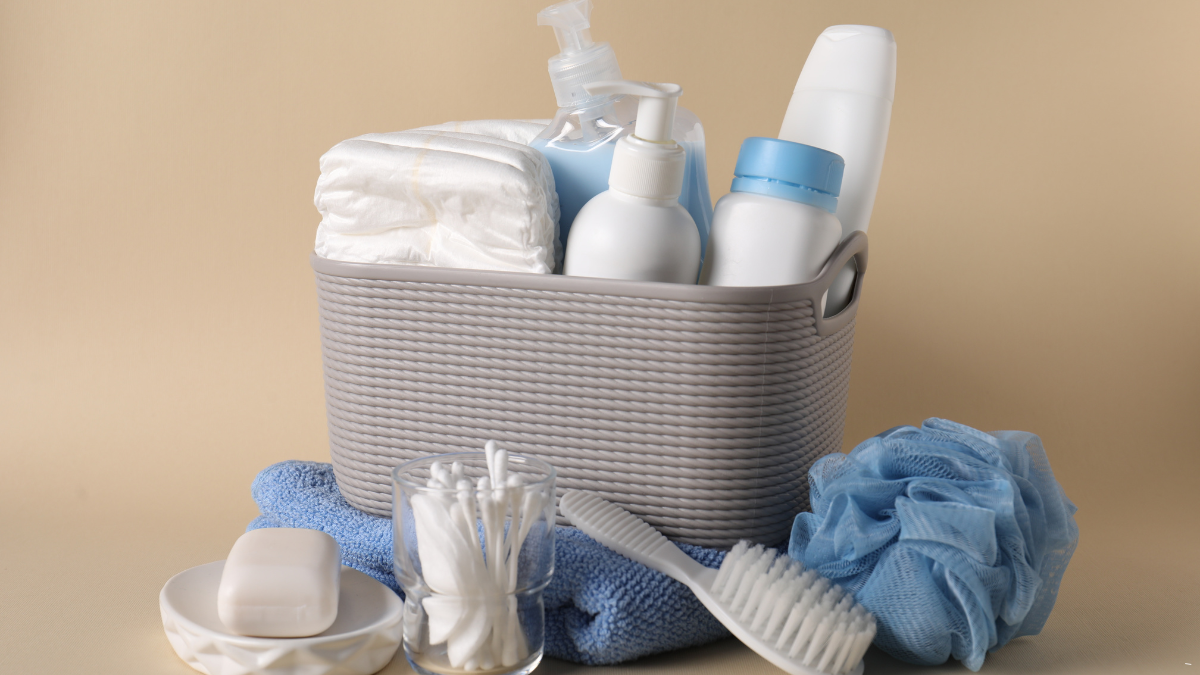
Parents want products that feel safer, simpler, and easier to trust, especially when a baby’s skin is part of the picture. That is why DIY non-toxic baby and home products are getting so much attention in 2026, with more families choosing fewer ingredients, less waste, and more control over what goes in the nursery and around the house.
That shift makes sense when store shelves are packed with long labels and hard-to-read additives. If you want a gentler place to start, safe daily lotions for sensitive newborn skin are a good example of how a small swap can make a big difference.
The same idea works at home, where simple ingredients can replace a few everyday products without adding stress. For families who want a cleaner routine, eco-friendly alternatives to chemical cleaners can keep things practical while lowering the number of harsh products in the mix.
You do not need to remake everything at once. Start with the recipes and habits that fit your home, then build from there, one safe swap at a time, with a quick visual guide like Nontoxic BABY ESSENTIALS if you want a simple place to begin.
What makes a product truly non-toxic for babies and families?
A truly non-toxic product is simple, gentle, and made without common irritants that can bother sensitive skin, lungs, or eyes. For babies, that matters even more because their skin is thinner than adult skin and absorbs more, so fewer ingredients usually means fewer chances for trouble.
That is why short ingredient lists are so appealing. They are easier to read, easier to trust, and easier to replace with a homemade version when you want more control over what touches your baby every day.
Ingredients and labels to avoid first
Start with the labels that tend to cause the most confusion. Fragrance, parabens, SLS and SLES, phenoxyethanol, and synthetic dyes are common red flags in baby lotions, wipes, shampoos, and cleaners. They are not always dangerous in every product, but many families choose to skip them when making swaps at home.
A few other label cues are worth watching too:
- Fragrance or parfum can hide multiple ingredients.
- Parabens are preservatives that many parents prefer to avoid.
- SLS and SLES can be harsh on delicate skin.
- Phenoxyethanol often shows up in baby care formulas as a preservative.
- Synthetic dyes add color, but they do not add care.
Strong chemical scents are another clue. If a product smells heavy before you even open it, that scent may be doing more than just making the room smell nice. For a deeper look at common baby-care label concerns, common ingredients to avoid in baby skin care is a helpful reference.
A clean-smelling product is not always a clean formula, so the ingredient list matters more than the marketing.
If you’re still sorting out powder choices, why skip baby powder for safer care is a useful next read.
Safer ingredients that do the job well
Simple DIY ingredients can clean, moisturize, soften, and help with texture without a lot of extra filler. Many plant-based options work well because they do one job clearly and do it gently.
A good starter list includes:
- Organic coconut oil for moisturizing and smoothing
- Shea butter for rich skin support
- Calendula oil for gentle skin care
- Aloe vera for cooling and soothing
- Jojoba oil for lightweight moisture
- Beeswax for thickness and barrier support
- Baking soda for deodorizing and light cleaning
- White vinegar for simple household cleaning
- Castile soap for washing and blending
- Arrowroot powder for texture and dryness control
These ingredients are popular because they do the basics well. In other words, they keep the recipe focused instead of loading it with extras your baby does not need.
How to read certifications without getting confused
Certifications are not the same as a homemade recipe, but they can help you shop smarter. When you buy fabrics, nursery items, or bedding, labels like GOTS, GREENGUARD, and OEKO-TEX give you a faster way to spot cleaner options.
Here is the simple version:
- GOTS helps you identify organic textiles with tighter production standards.
- OEKO-TEX checks finished textiles for harmful substances.
- GREENGUARD focuses on low chemical emissions, which matters for indoor air.
If you want a clear comparison of textile labels, GOTS and OEKO-TEX certification basics can help you sort through the terms. Certifications do not replace a thoughtful ingredient list, but they do help build a cleaner home one purchase at a time.
When you keep formulas short, skip the common irritants, and use trusted certifications for store-bought items, the whole routine gets simpler. That is the real goal, safer choices that fit into everyday life without adding stress.
The easiest DIY baby care products to make at home
If you want to start small, focus on products that touch baby skin often and use only a few ingredients. That keeps the routine simple, lowers clutter, and makes it easier to spot what works.
These recipes are gentle, beginner-friendly, and practical for everyday use. They also leave room to skip fragrance and essential oils, which is often the safest move for newborns and babies with sensitive skin.
A gentle cradle cap balm that uses only a few ingredients
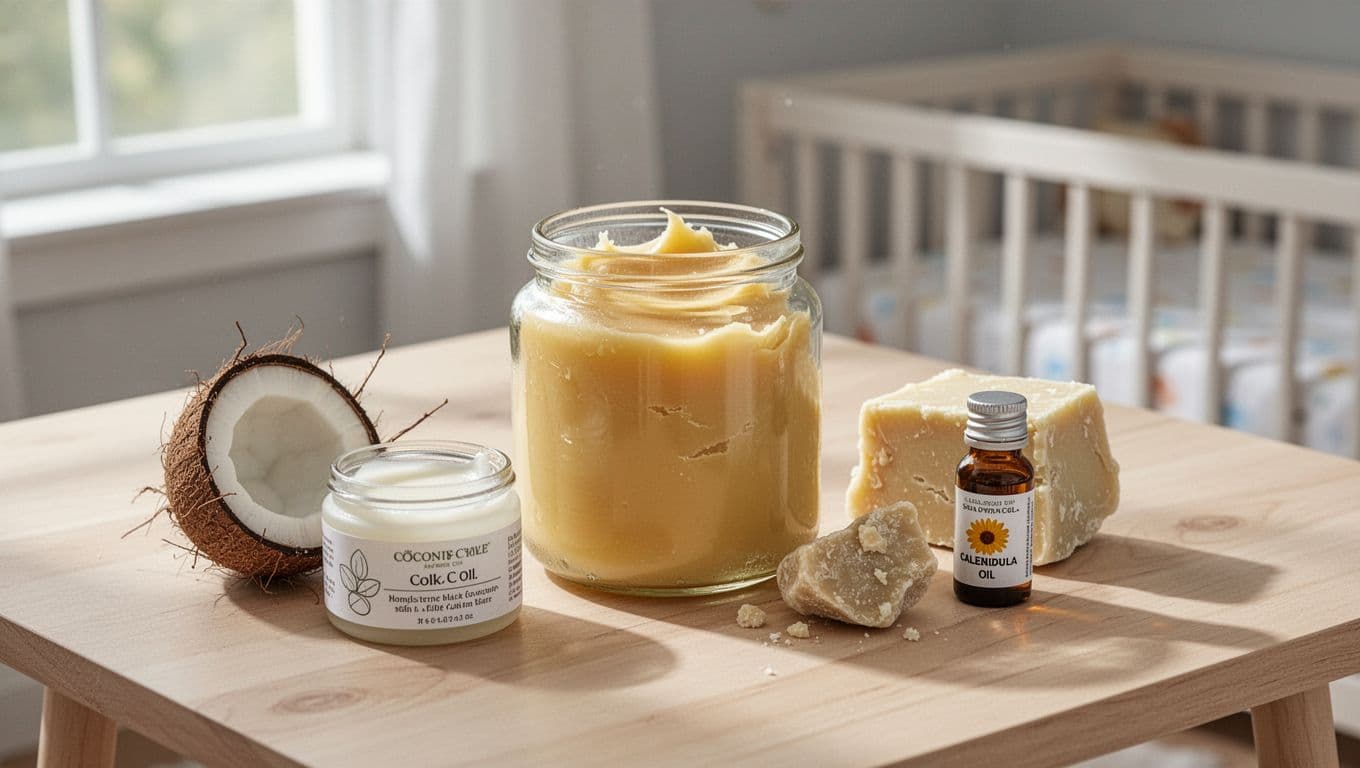
A simple cradle cap balm can be made with coconut oil, shea butter, and calendula oil. Blend them into a soft balm, then smooth a thin layer onto the scalp before a bath. That helps loosen flakes so they can lift away more easily with a gentle brush and a good rinse.
This kind of recipe works well because it stays focused. Fewer ingredients mean less guesswork, and that matters when you’re caring for delicate baby skin. Calendula adds a soothing touch, while coconut oil and shea butter bring moisture and softness without a heavy formula.
A short ingredient list is also easier to patch test. Try a small amount on the arm first, then wait and watch for redness or irritation. If the scalp looks red, feels warm, or seems infected, call the pediatrician before using any balm.
For a safe, simple balm idea, this herbal baby balm recipe gives a helpful starting point with baby-friendly ingredients.
A tear-free baby wash that cleans without stripping skin
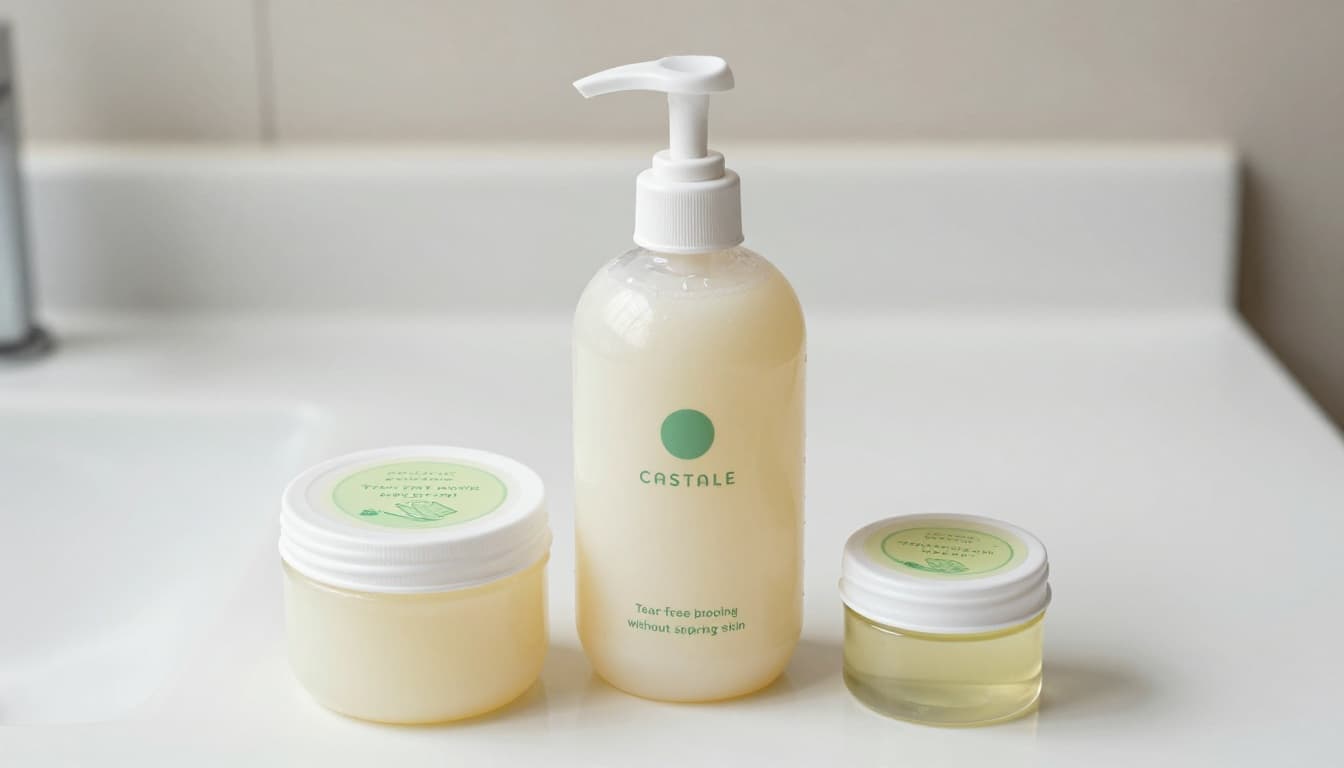
A mild baby wash can be made with castile soap, water, and aloe vera, plus a tiny bit of coconut oil if you want extra slip. Keep the recipe light and fresh, since baby wash does not need a long shelf life or a long ingredient list.
Fragrance-free versions are usually the best choice for newborns and babies with sensitive skin. Scent can seem harmless, but it adds another possible irritant to bath time. A plain, unscented wash is easier on the skin and usually easier on your nose too.
This mix is useful because it cleans without feeling harsh. Castile soap lifts away dirt, aloe vera adds a soft, calming feel, and water keeps the formula easy to rinse. For baby care, simple is often better than fancy.
If you want a practical, low-clutter routine, pair this with simplifying newborn care basics so bath time stays calm and manageable.
A petroleum-free diaper balm for everyday protection
A diaper balm made with shea butter, coconut oil, beeswax, and calendula oil gives baby skin a thick, protective layer. That texture matters during frequent diaper changes, when skin needs a little barrier support throughout the day.
Many families like this swap because it feels straightforward and familiar. It can replace some store-bought creams when you want a petroleum-free option with ingredients you can actually recognize. The beeswax helps the balm stay in place, while shea butter and coconut oil bring moisture and calendula adds a gentle skin-soothing element.
Use a thin layer on clean, dry skin. For daily care, the goal is protection, not a heavy coating. If you want more diaper routine help, how to change a diaper is a useful companion guide for keeping the skin clean before each application.
A safe hand and skin mist for quick cleanups
For quick cleanups, a hypochlorous acid spray can be a simple no-rinse option when it’s pediatrician-approved for your baby’s use. It has very little scent, leaves no sticky residue, and fits the moments when you need something fast and gentle.
Families also use it for baby-touch surfaces, especially when they want a cleaner option without a strong chemical smell. That convenience matters during busy days, but the formula still needs to be age-appropriate and approved for the way you plan to use it.
If you’re unsure, choose a pediatrician-approved mist for hands or surfaces instead of making your own guess. Baby skin is not the place for trial and error, especially when you want a product that feels light, fresh, and easy to use every day.
Simple non-toxic home cleaners that work around babies
When babies are crawling, touching, and putting everything in their mouths, your cleaning routine needs to be simple and low-fume. The best homemade cleaners do the job without filling the nursery with strong scents or sticky residue, and they usually cost very little to make.
That matters for more than comfort. Cleaner formulas can support better indoor air quality, which is a big win in small rooms like nurseries, laundry corners, and feeding spaces. If you keep the ingredients basic, the whole routine gets easier to repeat.
An all-purpose spray for nursery furniture, high chairs, and toys
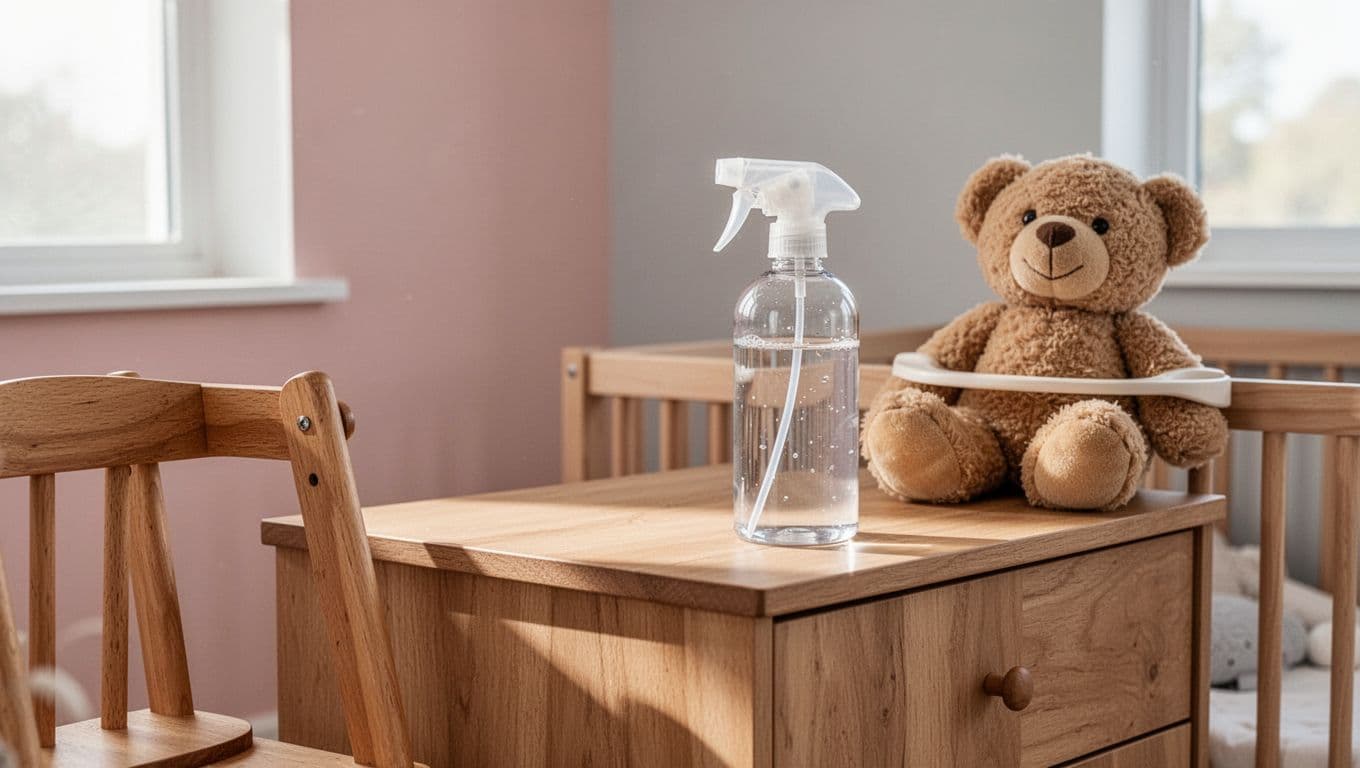
A simple spray made with equal parts white vinegar and water works well for nursery dressers, high-chair trays, and hard toys. Use a spray bottle, wipe with a microfiber cloth, and you get a quick clean that fits into the daily messes babies make.
This kind of spray is best for non-porous surfaces that need light cleaning and odor control. It is not the right choice for marble, stone, or other surfaces that vinegar can damage. Keep it off untreated wood too, since repeated use can wear it down.
If you want a little extra boost, you can add a tiny amount of tea tree oil, but only with care and only if your baby is not sensitive to it. Many families skip it altogether and stick with a scent-free version, which is often the better choice in baby spaces. A fragrance-free cleaner is easier on tiny lungs and less likely to hang in the air after you wipe.
For a quick reference on baby-safe cleaner basics, these DIY cleaning solutions for baby homes offer a practical starting point.
Wipe, rinse, and let the surface dry when babies touch it often, especially on trays and toys.
A laundry boost for crib sheets and baby blankets
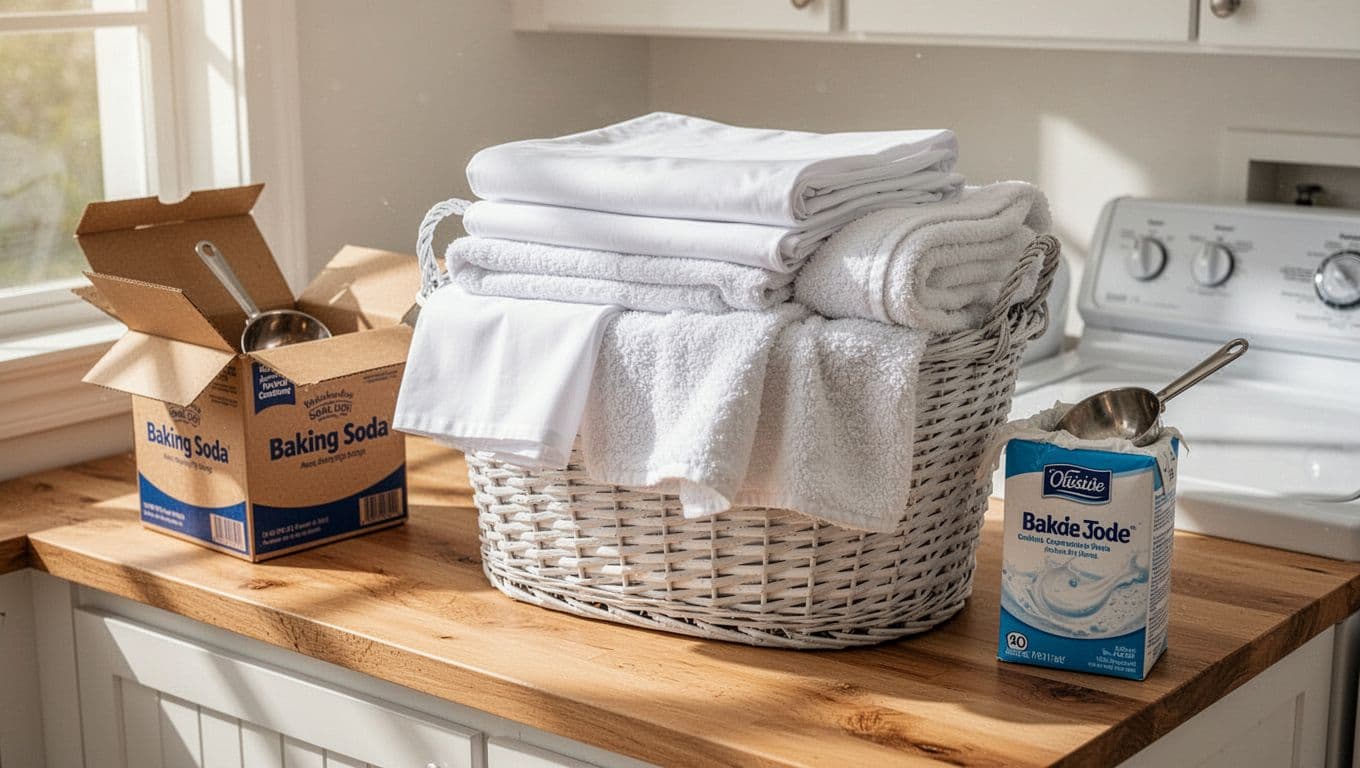
Crib sheets and baby blankets stay fresher with baking soda in the wash and a small splash of vinegar in the rinse cycle. Baking soda helps lift odors, while vinegar can help reduce that stale smell that builds up fast in laundry baskets and diaper laundry.
This swap is easy on delicate fabrics too. If you use organic bedding, air-drying can be a smart choice because it helps protect fibers and skips the extra heat. It also fits a low-waste routine, since you can reduce dryer use and avoid strong dryer sheets or heavy perfumes.
If laundry piles are part of your daily reality, these family organization systems for busy moms can help you build a better rhythm around washing, folding, and putting things away.
A simple bottle and feeding gear cleaner
For glass baby bottles, bottle rings, and feeding spoons, stick with hot water, baking soda, and vinegar for light cleaning between deeper washes. Hot water loosens milk residue, baking soda helps scrub away buildup, and vinegar helps cut lingering smell.
The key is to rinse well. Any cleaner left behind can become a problem, especially on items that touch milk or go straight into a baby’s mouth. Also check manufacturer instructions first, because some feeding gear has parts or coatings that need special care.
A practical routine works best for busy families:
- Rinse feeding items soon after use.
- Wash with hot water and baking soda.
- Rinse again until the water runs clear.
- Use vinegar only when the item is safe for it.
- Air-dry completely before storing.
If you want another low-cost option for the home, a homemade all-purpose cleaner can be a useful backup for counters and other baby-safe surfaces.
How to keep DIY recipes safe, fresh, and actually easy to use
Homemade baby care works best when it stays simple and clean. A good recipe is only helpful if you can use it safely, store it well, and remake it without stress.
That means starting small, watching how skin reacts, and keeping every batch easy to identify. A few smart habits can make DIY products feel calm and practical instead of messy or risky.
Test new products on a small area first
Patch testing matters because baby skin can react fast, especially if your child has eczema, dry skin, or allergies. A balm or lotion may look gentle, but the real test is how skin responds after it touches the body.
Use a tiny amount on a small patch of skin, then wait and watch for redness, rash, warmth, or discomfort. That simple pause can save you from spreading a product all over the skin or onto items that touch the skin often, like bibs, blankets, and high-chair straps. For a closer look at patch testing for sensitive skin, this guide for eczema-prone children is a helpful reference.
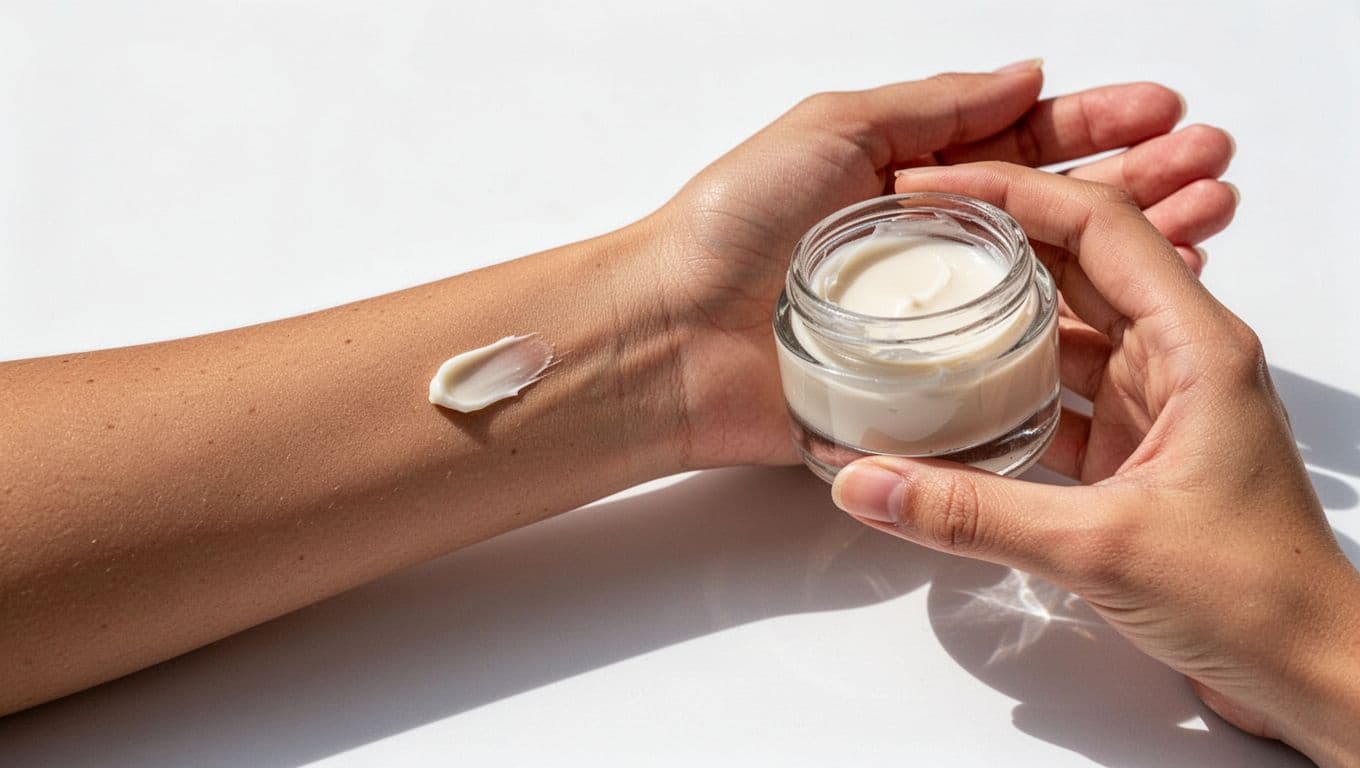
If a new product stings, burns, or leaves a mark, stop using it right away.
Store homemade products the right way
Storage changes everything. Keep DIY products in clean glass containers or tightly sealed jars, then place them in a cool, dark spot away from sun, heat, and bathroom humidity. That helps slow down spoilage and keeps textures more stable.
Water-based mixtures need the most caution because they spoil faster. Oil-based balms usually last longer, while recipes with water often need to be used sooner or kept refrigerated. For a useful breakdown of DIY shelf life, these homemade recipe storage tips are a solid place to start.
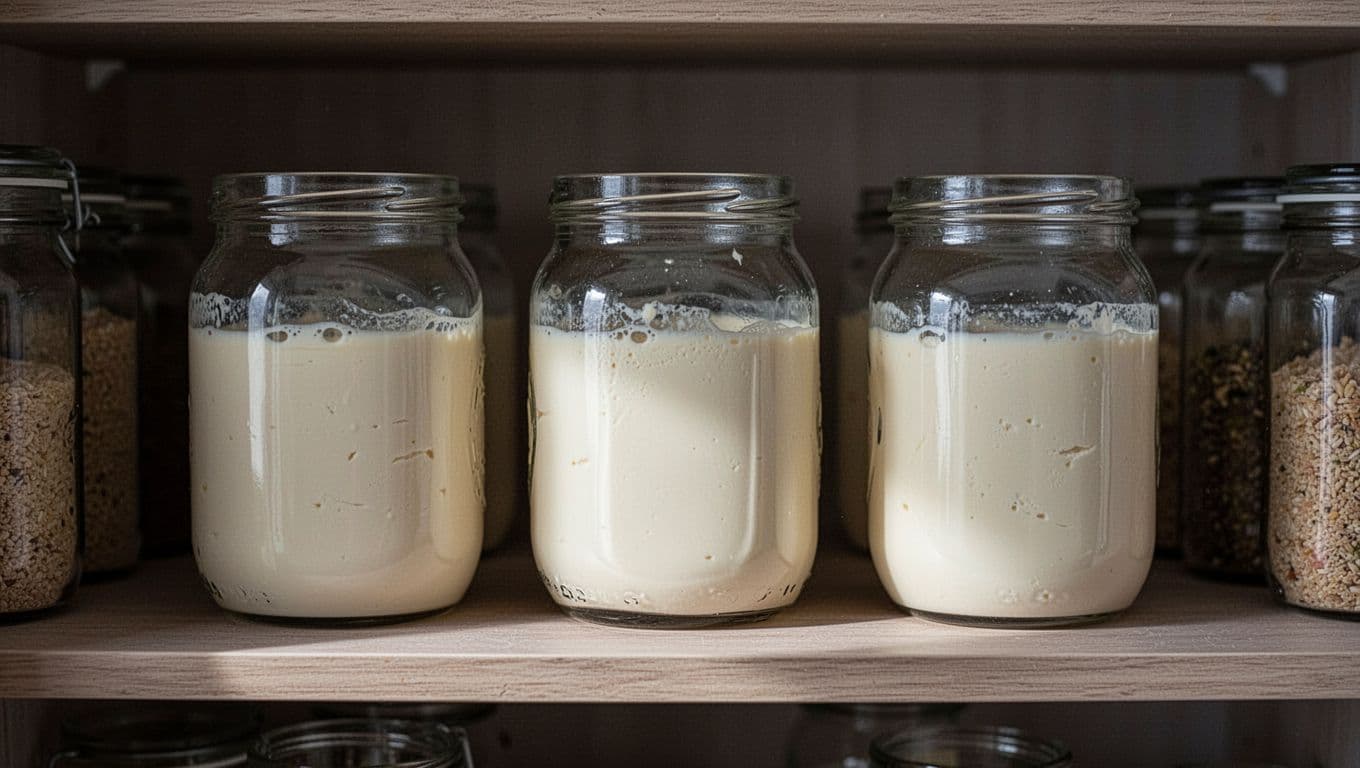
Labels help a lot here. Write the name, batch date, and use-by date on every jar so you know when to remake it. If a product smells off, changes color, or separates, toss it.
Keep the ingredient list short and the routine realistic
One recipe at a time is plenty. When you make too many DIY products at once, it gets harder to track what works, what irritates skin, and what needs to be replaced.
Short ingredient lists also lower the chance of irritation. Fewer ingredients mean fewer things to react to, and they make shopping and prep much easier. A cabinet full of complicated jars looks impressive, but a few well-made basics are far more useful.
A simple system works better for real family life:
- Pick one product to make first.
- Use a small batch.
- Store it in a labeled glass jar.
- Test it before regular use.
- Remake it on a set schedule.
That kind of routine keeps DIY care safe, fresh, and easy to repeat.
Building a cleaner, lower-waste routine without spending more
A lower-waste baby routine does not have to feel expensive or all-or-nothing. In many homes, the biggest savings come from using what you already buy, then replacing the most-used products with simple versions that rely on pantry staples, reused containers, and fewer plastic parts.
That approach also makes the routine easier to keep up. You use less packaging, throw out less, and avoid the trap of buying a new specialty product for every small problem. When you do shop, pair homemade basics with thoughtful choices for bedding, clothing, and nursery items, especially where materials touch baby skin every day. A practical eco-friendly nursery checklist can help you decide where to spend and where to save.
Start with the products you use most often
Begin with the items that disappear fastest, because those are the easiest places to cut waste without changing your whole routine. Diaper balm, baby wash, laundry care, and an all-purpose nursery spray are good first swaps since they get used again and again.
Small changes add up faster than trying to replace everything at once. If you switch one daily product and keep the rest of your routine the same, you save money, reduce clutter, and build a habit that sticks. That is a lot more useful than a cabinet full of half-used bottles.
Make swaps that fit your budget and schedule
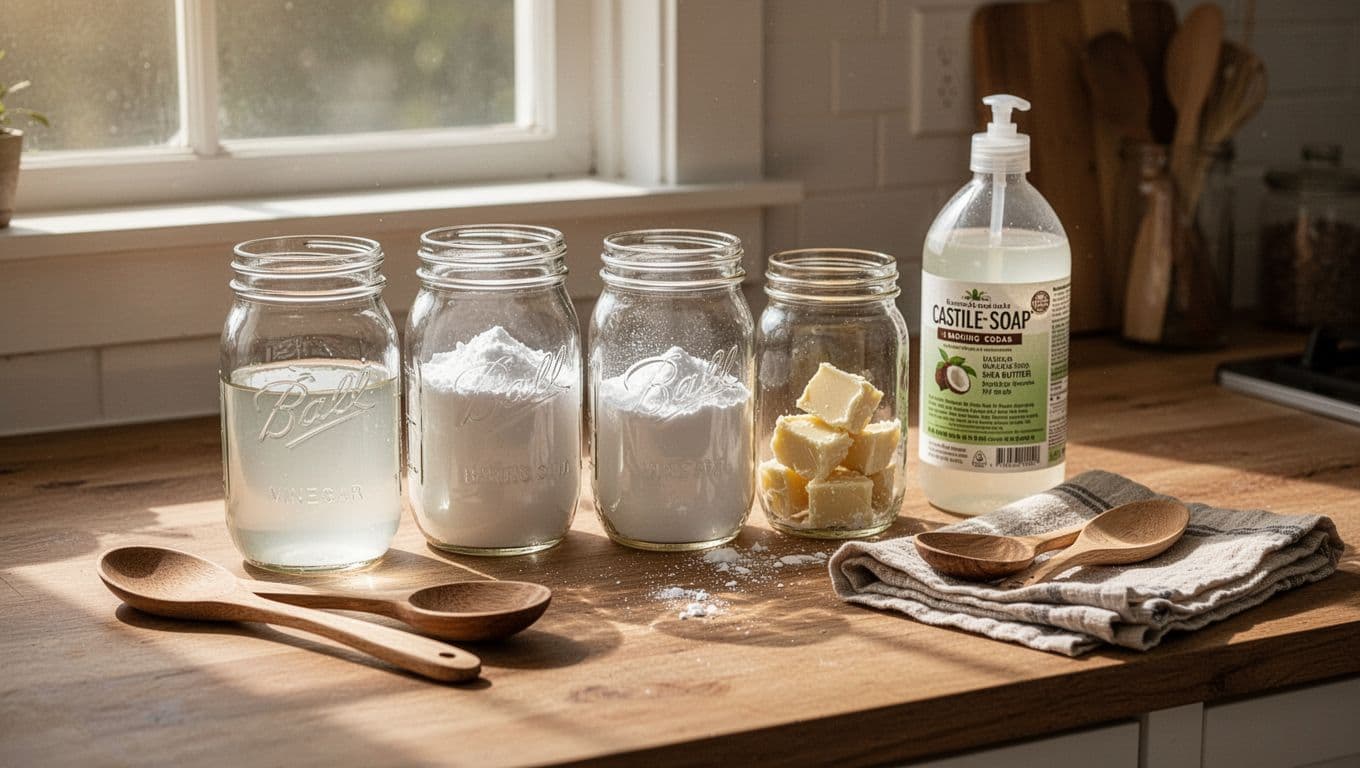
The best budget-friendly DIY choices are the ones that pull double duty. Buying ingredients in bulk, reusing glass jars, and choosing multipurpose staples like castile soap, baking soda, and coconut oil keeps costs down and cuts down on packaging.
A few simple habits make a real difference:
- Refill the same jars instead of buying new plastic tubs.
- Pick ingredients that work in more than one recipe.
- Make small batches so nothing sits unused for months.
- Use what’s already in your pantry before adding anything new.
That kind of routine works for busy parents because it is realistic. You don’t need a perfect zero-waste home, just a few steady swaps that save money and feel easy enough to repeat.
Conclusion
DIY non-toxic baby and home products work best when they stay simple. A short ingredient list, fewer harsh chemicals, and a few trusted staples can make daily care feel safer and easier for the whole family.
That kind of routine also gives parents more control. You know what goes into each balm, wash, or cleaner, and you can cut back on waste by reusing jars and skipping extra packaging. For many families, that is the real value of homemade products, they fit life without adding more clutter or confusion.
You do not need to change everything at once. Start with one product, one swap, or one room, and build from there. Small, steady changes still add up to a cleaner home and gentler care for your baby.
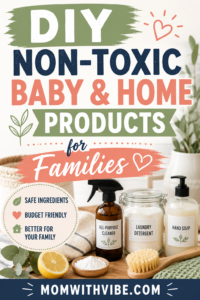
Save pin for later

- 10 Things You Shouldn’t Do in Front of Your Baby (and What to Do Instead) - September 22, 2026
- 15 Effective Ways to Deal With Stubborn Children (Without Yelling) - September 22, 2026
- Birth Order Influence: 8 Things Parents Should Know About Each Child - September 22, 2026