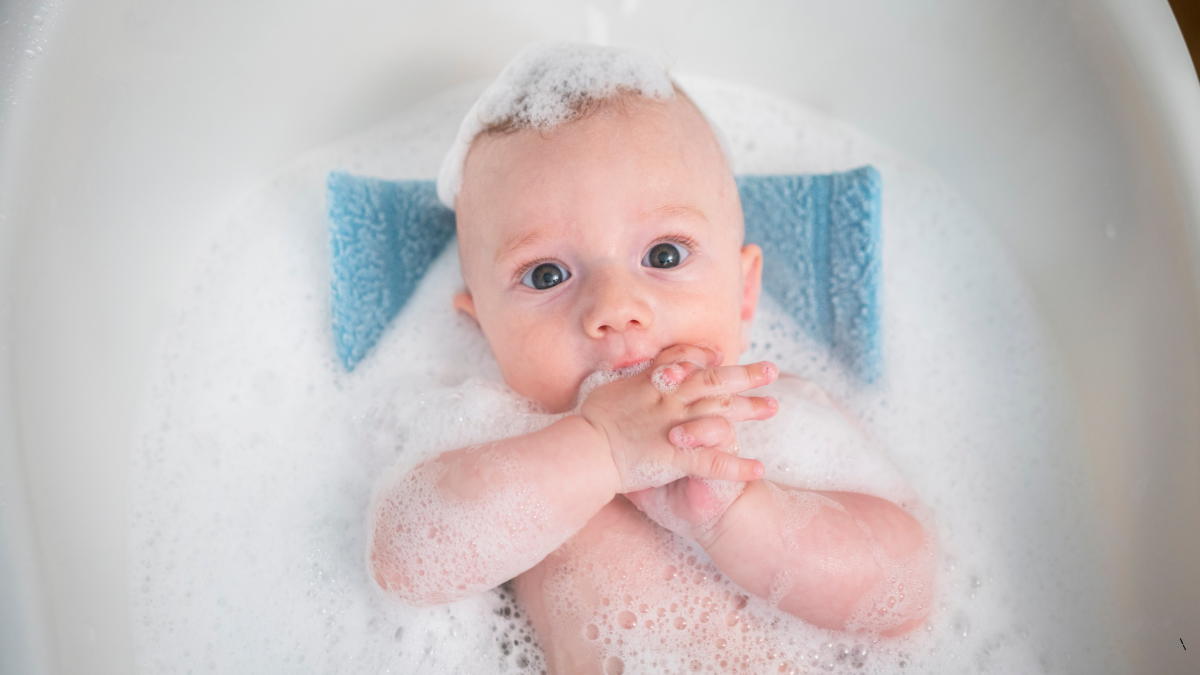
A newborn sponge bath can feel intimidating at first, but it’s a safe and simple way to keep your baby clean before the umbilical cord stump falls off. During those first weeks, a sponge bath is usually all your baby needs, and it helps keep the cord area dry while it heals.
You don’t need a lot of gear, and you don’t need to rush. With the right supplies, a few safety basics, and a calm step-by-step routine, bath time can feel much easier, even if you’re nervous the first few times. If you’re also choosing products for sensitive skin, these newborn skin care essentials can help.
This guide walks through exactly what to do, so you can bathe your baby with more confidence and less stress.
Why newborns need sponge baths instead of full baths
Newborns need sponge baths because their bodies are still adjusting to life outside the womb. A full tub bath can soak the umbilical cord stump, and that area needs to stay clean and dry while it heals. A sponge bath lets you clean your baby gently without putting the cord area in water.
It also makes daily care easier in the first days and weeks. You can wipe the face, neck folds, hands, diaper area, and any milk or spit-up without filling a tub or handling a slippery baby. If you want a simple skin-care routine alongside bath time, gentle newborn skin care tips can help you keep things simple.
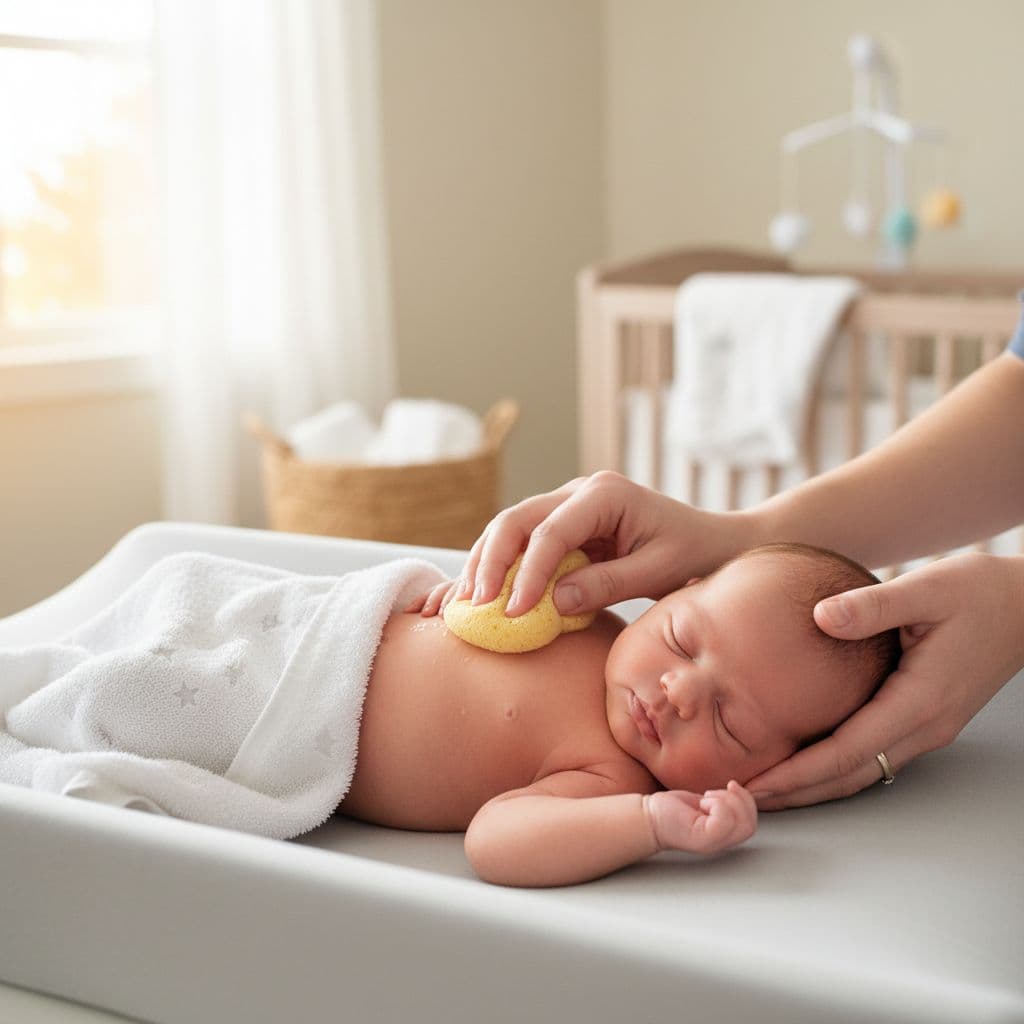
A small amount of washing is usually enough. Most newborns do not need a bath every day, and too much washing can dry out delicate skin. The American Academy of Pediatrics recommends bathing newborns only a few times per week, unless spit-up, diaper mess, or another clean-up issue calls for it. The HealthyChildren bathing guide also notes that sponge baths are the right choice until the cord stump falls off.
If the cord area looks irritated, swollen, or slow to heal, follow your pediatrician’s advice before switching to tub baths.
When to wait before tub bathing
Wait for full baths until the umbilical cord stump has fallen off and the area looks dry and healed. That is the clearest sign your baby is ready for the tub.
If healing seems slower than expected, or if you notice redness, drainage, or a smell, check with your pediatrician. Some babies need a little more time, and your doctor can tell you when bathing in water is safe. For more details on cord care, the MedlinePlus umbilical cord guide is a helpful reference.
How often a newborn really needs a bath
You do not need to bathe a newborn often. For most babies, 2 to 3 times per week is plenty, especially in the early weeks.
That usually gives you enough cleaning without stripping the skin’s natural oils. On the other days, spot-clean the messy areas as needed, then keep the rest of the skin dry and comfortable.
Gather everything before you start so bath time stays calm
A smooth sponge bath starts before the water ever touches your baby. When every supply is ready first, you can stay focused on your newborn instead of hunting for a towel or opening a drawer with one hand.
Set the space up like a small bath station. Keep it simple, warm, and close to everything you need.

The safest setup for bath time
Choose a flat, stable surface such as a changing table, bed, or padded counter near the sink. Put a towel underneath to soften the area and help keep your baby from sliding.
The room should feel warm, and drafts should be blocked before you begin. A chilly room can make a newborn squirm fast, so close windows, turn down fans, and keep the air still. Prepare the water before you undress your baby, so the bath starts right away.
Keep one hand on your baby whenever the surface is raised. Even a tiny wiggle can become a fall.
If you want more ideas for building a calm daily rhythm, these practical tips for new parents can help keep the rest of the day just as steady.
Water, soap, and other supplies you may need
You do not need a lot of products. For most of the bath, plain warm water is enough, and a small amount of mild, fragrance-free baby soap can help if your baby is especially dirty.
Keep these items within arm’s reach before you begin:
- A basin or bowl of warm water
- Two soft washcloths
- A dry towel
- A fresh diaper
- Clean clothes for after the bath
- A cup or small bowl for rinsing
Having everything close by matters because it lets you keep your attention on your baby. You should never need to step away, even for a second, once your newborn is on the table.
A step-by-step sponge bath routine that keeps your baby comfortable
A good sponge bath routine is calm, slow, and organized. You clean one small area at a time, keep the rest of your baby covered, and dry each section before moving on. That keeps your newborn warm and helps the bath feel gentle instead of rushed.
Use plain water for the most delicate areas, then add a little mild baby soap only where it helps. The goal is simple: clean the skin without upsetting it. If you want a trusted reference for basic newborn bath order, HealthyChildren’s newborn bathing guide follows the same head-to-toe approach.

Start with the face and eyes using plain water only
Begin with a clean, damp cloth and no soap. Gently wipe your baby’s face first, then use a fresh part of the cloth for each eye so you don’t spread any debris around.
Wipe each eye from the inner corner outward with light, careful strokes. Keep the cloth away from the mouth and nose, and avoid scrubbing. A newborn’s skin doesn’t need pressure, just a soft touch and a little patience.
If milk or spit-up has dried on the cheeks, hold the cloth on the spot for a few seconds before wiping. That helps it lift away without rubbing. After the face is clean, pat it dry right away so moisture doesn’t sit on the skin.
Wash the neck, hands, arms, chest, and belly
Once the face is done, move to the upper body one area at a time. Keep the rest of your baby wrapped in a towel so they stay warm while you work.
The neck needs close attention because milk, drool, and moisture collect there fast. Gently lift the chin and clean under the neck folds, behind the ears, and in the armpits. Then wash the hands, fingers, arms, chest, and belly with the same gentle motion.
Pay extra attention to skin folds and tiny spaces. These spots can trap moisture and leave your baby uncomfortable later. Use short, careful strokes, then pat each area dry as soon as you finish it.
A simple order helps here:
- Neck folds and behind the ears
- Armpits and arms
- Hands and between the fingers
- Chest and belly
Drying each section as you go keeps the skin comfortable and helps prevent dampness from sitting in folds. That small step matters more than most parents expect.
Clean the diaper area last for the easiest cleanup
Save the diaper area for the end because it is the most likely to get messy. That way, if you need a fresh cloth or a second wipe-down, you won’t have to clean another area again.
For girls, wipe front to back to keep the area as clean as possible. Use gentle strokes and change to a clean part of the cloth as needed. For boys, wash the diaper area carefully without rough handling, and clean around the folds and creases with a soft touch.
If your baby has been circumcised, be extra careful around that area. Follow your pediatrician’s instructions, keep the area clean and dry, and avoid any rubbing that could cause irritation. A newborn’s diaper area can get sore quickly, so slow, light cleaning is best.
The diaper area does not need a lot of scrubbing. Gentle cleaning and careful drying are enough.
After you finish, check for any damp skin under the diaper line, in the groin folds, and around the thighs. Pat those spots dry before putting on a fresh diaper.
Finish with the back, legs, feet, and scalp if needed
When the front is clean, you can turn your baby slightly to wash the back. Support the head and neck well, and keep one hand on your baby as you gently roll or tip them to the side. Never let the baby slide or twist quickly.
Wipe the back with a damp cloth, then move down to the legs and feet. Clean around the knees, ankles, and between the toes, since those little spaces can hold moisture and lint. Babies love to curl their toes, so open them gently and wipe carefully.
If your baby needs a hair wash, keep it simple. Use a damp cloth on the scalp, or add a tiny amount of baby soap only if there is buildup that water won’t remove. Then rinse with a clean damp cloth and dry the scalp well so your baby doesn’t get chilled.
A few final habits make the last step easier:
- Support the head and body while turning your baby
- Clean between the toes and around the heels
- Keep soap off the face and use only a little on the scalp if needed
- Dry the back, legs, and feet before dressing your baby
After the bath, put on a fresh diaper and clean clothes right away. That last part helps your baby stay warm and comfortable, which is exactly how a sponge bath should feel.
How to keep your newborn safe and warm during the bath
Safety and comfort go hand in hand during a newborn sponge bath. Your baby should feel secure, supported, and warm the whole time, so the bath stays calm instead of stressful.
A few small habits make a big difference. Keep one hand on your baby, support the head and neck, and dry each area as soon as you clean it. That simple rhythm helps prevent slips, chills, and fussing.
Check the water temperature before touching baby
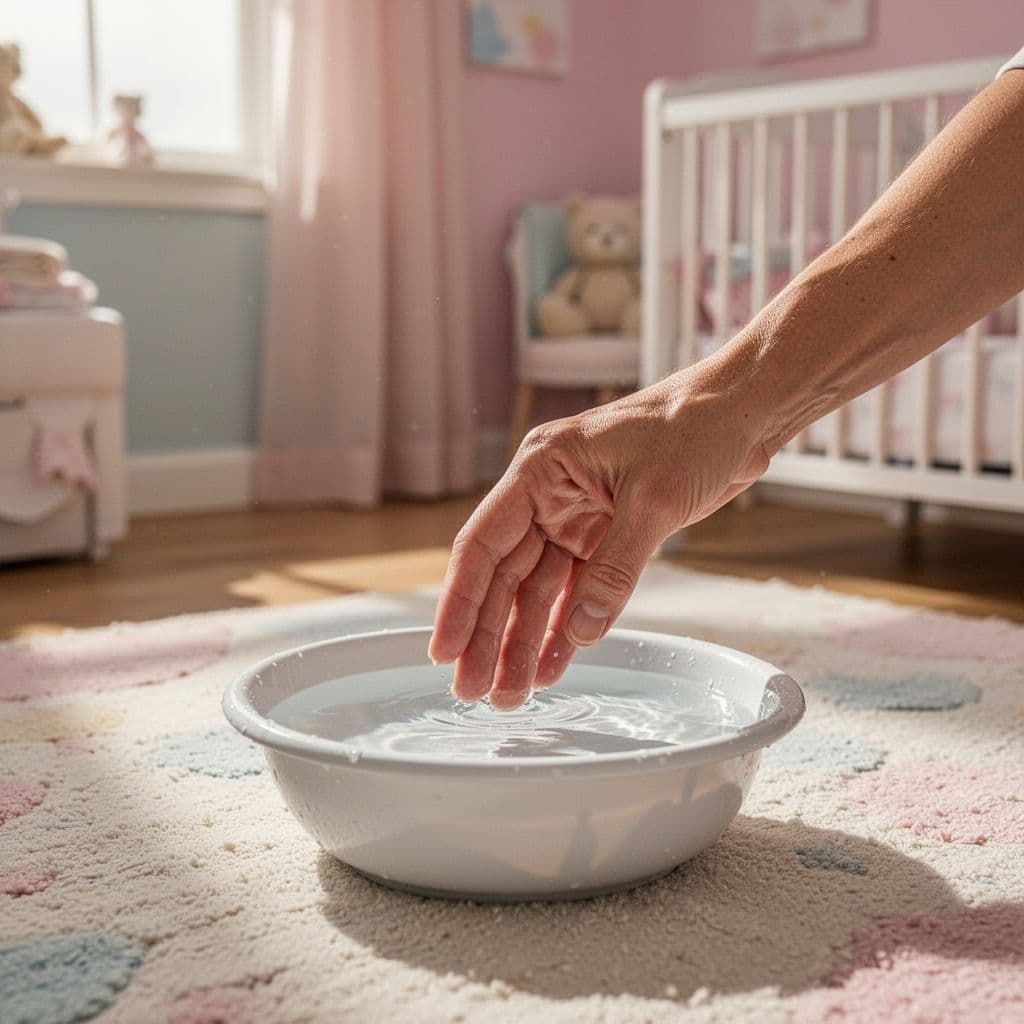
Test the water before your baby goes anywhere near it. The easiest way is to dip the inside of your wrist or elbow into the water. It should feel warm, not hot, and comfortable to your skin.
If it feels even a little too warm for you, it is too warm for a newborn. You can also use a bath thermometer if you want extra peace of mind, but a wrist check works well when you are careful. Recheck the water right before you begin, since temperature can shift fast.
The water heater matters too. Set it to a safe temperature, no higher than 120°F, to lower the risk of burns at the tap. Stanford Medicine Children’s Health also recommends a room that’s warm and draft-free for newborn baths, which helps your baby stay comfortable while you work. For more safety habits that fit into everyday care, these newborn safety mistakes to avoid are worth a quick look.
Prevent slips, chills, and skin irritation
Keep one hand on your baby at all times, even during a sponge bath. A newborn can wriggle more than you expect, and a raised surface makes that risk bigger. Always support the head and neck, and keep your baby partly covered with a towel while you clean one spot at a time.
Warmth matters just as much as safety. Dry each area right after washing it, then cover that section again before moving on. A warm room, a dry towel, and quick patting help your baby stay cozy.
Skin care should stay gentle. Skip strong soaps, lotions, powders, and oils unless your pediatrician recommends them. Newborn skin is delicate, so plain water and a mild baby cleanser are usually enough. The American Academy of Dermatology also recommends keeping one hand on your baby during the bath and drying skin folds well afterward.
Crying can happen, even when you do everything right. Some babies protest the change in temperature or the feel of a wet cloth. That does not always mean something is wrong, so stay calm, keep your pace slow, and finish the bath with steady hands.
What to do after the sponge bath is over
The last few steps matter just as much as the bath itself. Once your baby is clean, focus on drying, dressing, and keeping skin soft and calm. That helps your newborn stay warm and also gives you a good chance to spot any skin changes early.

Dress your baby and protect the skin afterward
Dry your baby well before putting on any clothes. Pay extra attention to skin folds under the neck, in the diaper area, and between the toes, because moisture hides there and can lead to irritation. A soft towel works best, and a gentle pat is better than rubbing.
Once the skin is dry, put on a fresh diaper first, then dress your baby in simple, soft clothes. Cotton onesies and loose sleepers are usually a good choice because they feel gentle on sensitive skin. Skip rough seams, scratchy tags, and tight waistbands that can press into delicate skin.
This is also a good time for a quick skin check. Look at the neck, diaper line, cheeks, and folds for redness, rash, or any dry patches. A small amount of irritation can happen, but catching it early makes it easier to watch and soothe.
Know when to call the pediatrician
Most skin changes after a sponge bath are mild and brief. Still, call your pediatrician if you notice redness around the cord stump, swelling, unusual irritation, or a rash that does not improve after a day or two.
You should also check in if the skin looks infected, feels warm, or starts to ooze. The HealthyChildren rash guide can help you compare common newborn rashes with warning signs that need a doctor’s advice.
A baby who seems very uncomfortable, has a fever, or acts sick needs prompt medical attention. For most families, though, the next step is simple: dress your baby, cuddle a little longer, and keep the skin clean and dry.
Conclusion
Sponge baths are a normal part of newborn care, but they don’t last forever. Once the umbilical cord stump falls off, you can switch to tub baths with ease.
You don’t need to be perfect on the first try. Stay calm, keep things gentle, and have your supplies ready. That approach makes bath time smooth for both you and your baby.
In the end, the goal stays simple: keep your newborn warm, clean, and safe. You’ll build confidence fast, and those early baths create sweet bonding moments along the way.
Save pin for later


- 12 Things Pregnant Women Do When They’re Alone - June 7, 2026
- 25 Healthy Pregnancy Snacks You Should Try - June 7, 2026
- 100 Funny Baby Jokes That Will Make You Laugh - May 15, 2026